Funding for Dumfries and Galloway communities

News story

Magnox and the Nuclear Decommissioning Authority have announced a £25,000 cash boost to help support vulnerable groups in Dumfries and Galloway.

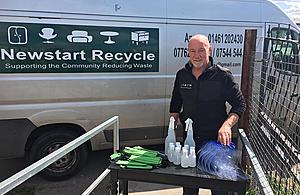
Newstart Recycle are one of the beneficiaries of the grant in Dumfries and Galloway

Newstart Recycle are one of the beneficiaries of the grant in Dumfries and Galloway

The money has been granted to Dumfries and Galloway Council to support the community during the coronavirus pandemic.

The funds will be administered on the council’s behalf by the Safe and Healthy Action Partnership (SHAP) and will be given to day centres in Annan; Ecclefechan; Moffat; Langholm and Gretna. Kates Kitchen, Annandale and Eskdale Food Train, Aberlour Trust and Newstart Recycle will also benefit.

The funding forms part of the 12 grants, worth £300,000 in total, Magnox has made available to local authorities or charities where a Magnox site is located.

Gwen Parry-Jones, Magnox Chief Executive, said:

Many community groups are carrying out positive work, supporting the most vulnerable in their areas. This work is vital, and a key part of Magnox’s response to COVID-19 is to help other organisations deal with the pandemic wherever we can.

In this time of national crisis, Magnox has agreed with the NDA that we should make available up to £25,000 at each site from the Magnox Socio-economic Scheme for use by local community groups on COVID-19 related activities. Magnox is committed to assisting the communities surrounding our sites, as our communities have supported us for over 50 years, and we hope this funding will go some way to supporting the essential work being delivered.

Elaine Lamont, Public Health Practitioner and Chair of the SHAP said: “There is some absolutely amazing work happening across Annandale and Eskdale to provide vital support to people who may be struggling during these challenging times. This funding will provide some extra help to our local services and community groups so that they can continue to reach out and provide a crucial lifeline to those in greatest need.”

Council Leader Elaine Murray said: “The Covid-19 emergency is clearly an unprecedented challenge for us all. Our Council is committed to supporting vulnerable people in our community. This funding from Magnox to help people in Annandale and Eskdale is very welcome and I would like thank them for their generous contribution. It will make a significant contribution to the local agencies striving to look after vulnerable people in difficult circumstances.”

Deputy Leader Rob Davidson added: “Magnox has been a long-standing supporter of its local community in Annandale and Eskdale. This contribution is very much appreciated as the council and partner agencies work tirelessly to ensure that vulnerable people are looked after during the Covid-19 crisis.”

Published 14 May 2020
Last updated 14 May 2020 + show all updates

  1. We have added quotes from Dumfries and Galloway Council

  2. First published.


A new bridge opens – a major milestone for Mytholmroyd flood defences

The new bridge, designed to help reduce flood risk in Mytholmroyd, is planned to open to motorists and pedestrians next week on Monday 18 May.

This is a major milestone in the £35m Mytholmroyd Flood Alleviation Scheme which will better protect around 400 properties.

The existing Caldene Bridge will start to be demolished shortly after and excavation works is already underway to widen this section of the river. All work is being carried out in line with government and industry guidance for safe working during the coronavirus pandemic.

The area beneath the new bridge will be nearly twice the size of the old bridge, which will help better protect homes and businesses from the risk of flooding in the future.

Replacement of the existing Caldene Bridge is a vital part of the Mytholmroyd flood defences. The old bridge was a major constriction to flood flow, and contributed towards the Boxing Day 2015 flood event in the village. Widening the river channel at Calder Grove, will have a significant benefit for reducing flood risk in the village and this required a new wider bridge.

The new bridge has been built at the widened channel, 30m upstream of the existing bridge. It is a two-span structure, with a central pier and is more than 12m wider than the existing Caldene Bridge. The height of the bridge deck was dictated by the existing road levels on both Caldene Avenue and Burnley Road

Paul Swales, senior flood risk advisor for the Environment Agency, said:

Completing the construction of the new bridge is a major milestone for our project team as this has been by far the most complex part of the Mytholmroyd Flood Alleviation Scheme – we have had to carry out diversions of many utility services.

It is a vital element of the new flood defences as the new bridge structure, channel widening, together with the new raised bridge parapets and flood defence walls will reduce flood risk for the local community.

However it is still really important that people sign up for our free flood warning service as we can never completely eradicate the risk of flooding, especially with climate change.

Calderdale Council’s Cabinet Member for Regeneration and Resources, Cllr Jane Scullion, said:

We’re very pleased to see another major component of the Mytholmroyd Flood Alleviation scheme nearing completion.

The scale and complexity of this project cannot be overemphasised, and we would like to thank those who live in, work in and travel through the area for their continued patience during this important work to help protect the village from future flooding. There is still more to do but this is a key part of in the overall work to make the valley safer.

The flood defences have been developed by the Environment Agency in partnership with Calderdale Council. Design and construction of the scheme is being carried out by main contractor VBA, a joint venture comprising VolkerStevin, Boskalis Westminster and SNC-Lavalin’s Atkins business. Work is continuing on the scheme in line with government and industry guidelines around safety during the coronavirus pandemic.

The cost of rebuilding the bridge has been around £7m from Government funding with a £1.6m contribution from the European Union, through the European Regional Development Fund (ERDF).This funding was provided under Priority Axis 5 of the ERDF which promotes climate change adaptation, risk prevention and management.

For more information about the Mytholmroyd Flood Alleviation scheme visit

If you have any queries about the scheme please email: mytholmroydFAS@environment-agency.gov.uk

To register for the Environment Agency’s flood warning service visit or contact Floodline on tel: 0345 988 1188. If you are already registered, do check that your details are correct.


Attestation forms for travel to and within France

Entry and travel

Border controls

On 20 March 2020, the French Government announced reinforced border controls with the UK.

You can still cross the border to return to the UK via France. If you live in France, the French Government has confirmed that you can continue to enter France to return to your principal residence.

Border checks are also in place on the borders with Italy, Spain and Germany.

Certificate requirements to enter France

If you are currently resident in France, travel within your department of residence or up to 100km from your place of residence is permitted without restrictions. Travel beyond 100km from your place of residence is only permitted for urgent professional or family reasons and you will need to complete a travel declaration to certify your reason for travel). This certificate can be downloaded onto smartphones or handwritten if you are unable to access a printer.

Certificate requirements for travel within France

To be able to travel in Île-de-France on public transport at peak hours (from 06h30 to 09h30 and from 16h00 to 19h00) you will need to complete a travel certificate to certify your reason for travel.

There is a certificate for journeys between the place of residence and the place of professional activity and business trips that cannot be postponed

Another certificate is for journeys taken for the following reasons:

  • journeys between principal residence and school carried out by the person attending school there or accompanying the person attending school and journeys necessary to complete exams or competitions,
  • for specialised consultations and care that cannot be provided online or near the home,
  • for compelling family reasons, assistance to vulnerable persons and childcare,
  • for an obligation to go to the police or gendarmerie services or to any other service or professional imposed by the administrative police authority or the judicial authority,
  • to take part in tasks of public interest at the request of the administrative authority and under the conditions it specifies.

Check the relevant prefecture’s website for information on local travel restrictions.

Travel between the EU and non-European countries

On 16 March, the French Government announced that the EU would suspend travel between the EU and non-European countries for an initial period of 30 days from midday 17 March. On 13 April, the government announced that travel between the EU and non-European countries is suspended until further notice.

Permanent residents of EU countries, including France, will be able to cross the UK/France border into France if they have proof of residence. The French Government confirmed that UK nationals can enter France if returning to their principal residence. You must, however complete the necessary “attestation” to enter France, confirming that your travel is an absolutely necessary journey.

Some countries are imposing a compulsory period of quarantine for all travellers from France. If you are travelling from or through France, check the situation at your destination before you travel.

Travel between metropolitan France and French overseas territories

Regular flights between metropolitan France and its overseas territories – including Martinique, Mayotte, Guadeloupe, Guyana, La Reunion, French Polynesia, Saint Martin and Saint-Barthelemy – have been suspended since 23 March. Journeys between the islands are also prohibited, except in exceptional circumstances.

Local measures

France began progressive deconfinement from 11 May. The Government has categorised each department as ‘red’ or ‘green’, dictating the extent to which measures can be relaxed.

Certain confinement measures may still apply depending on the department you are in. Most of the north and east of France, including Paris, are currently classified as red. For more information see the government website.

The French Government announced that public transport should only be used for essential travel with social distancing and mandatory mask wearing. Since 11 May, wearing masks on public transport is compulsory for all users aged 11 and over, with fines for those who are not compliant. Masks will also be compulsory in taxis and private hire vehicles without a plexiglass screen.

For those currently resident in France,travel within your department of residence or up to 100km from your place of residence is permitted without restrictions. Travel beyond 100km from your place of residence is only permitted for urgent professional or family reasons and you will need to complete a travel declaration to certify your reason for travel. All residents are strongly encouraged to remain vigilant and keep movement to a minimum.

Certain non-essential establishments remain closed to the public (i.e. restaurants, cafes, cinemas) until further notice. Food shops, pharmacies, petrol stations, post offices and banks remain open while other retailers have begun re-opening from 11 May.


Letter from the Chancellor of the Duchy of Lancaster to the Vice President of the European Commission

[unable to retrieve full-text content]A letter from the Chancellor of the Duchy of Lancaster Michael Gove to Maroš Šefčovič.


Chancellor of the Duchy of Lancaster’s statement on coronavirus (COVID-19): 3 May 2020

Coronavirus press conference 3 May 2020

Good afternoon and welcome to this No10 press conference on our progress in the fight against COVID 19.

I am joined today by Professor Steve Powis, the National Medical Director at NHS England.

In a moment or two I will hand over to Steve to take us through the slide updates from the Cabinet Office briefing room.

But first I want to set out the latest coronavirus data.

1,206,405 tests for coronavirus have now been carried out in the UK, including 76,496 yesterday.

Overall, 186,599 people have tested positive. That’s an increase of 4,339 cases since yesterday.

14,248 people are currently being treated in hospital for coronavirus, compared to 14,695 yesterday.

Sadly, of those who have tested positive for coronavirus across all settings, 28,446 have died.

Behind the numbers there has been an increase of 315 deaths since yesterday across all settings.

This pandemic has claimed more than 28,000 lives, and each one of them is precious, each one valued, each one irreplaceable.

The pain of bereavement and heartbreak is deeply personal.

But as a society, we are showing care and compassion across boundaries, offering support and a chance to talk through grief together.

For those experiencing the first Ramadan without a loved one, this will be a particularly painful time. I send my sincere condolences to all families who are grieving.

As with Christians who could not celebrate Easter together in church, and the Jewish community whose Passover rituals were affected by social distancing, our thoughts are with Muslim neighbours who cannot break their fast together and must adapt their religious and cultural practices because of the crisis.

We have all learned to adapt, and we must carry on doing so after the Prime Minister sets out how we will get back to work later this week. His comprehensive plan will explain how we can get our economy moving, how we can get our children back to school, how we can travel to work more safely and how we can make life in the workplace safer.

But before we can ease the existing restrictions we must ensure the government’s five tests are met – that the number of cases are falling, that death rates are declining, that the NHS has what it needs and that measures are in place to stop a second peak overwhelming the NHS.

I am particularly conscious that those in the frontline of our public services will need clear guidance on safe working, they’ll need the right personal protective equipment and appropriate access to testing if we are to make all the progress that we want in the weeks ahead.

We are consulting with employers and unions, professionals and public health experts, to establish how we can ensure that we have the safest possible working environments and the Prime Minister will be saying more later next week.

On personal protective equipment for key workers, we are increasing the spread of distribution and supply.

From February 25 to May 2 we have delivered over 1.08 billion items of PPE across the health and social care system within England – and tens of millions more have been distributed by our colleagues in the Devolved Administrations.

This overall figure includes:

  • 149 million masks
  • 173 million aprons
  • 2 million gowns
  • 614 million gloves

On 2 May alone, we delivered an additional 20 million items of PPE within England.

But there is much more to do and the work led by Lord Deighton to improve domestic production of PPE is vital to our efforts.

And on testing, thanks to the hard work of so many across the NHS, Public Health England, our pharmaceutical sector and our universities, we have tested over 200,000 key workers and their families, allowing those who don’t have the virus to go back to work, and protecting those who do.

We have now, of course, extended the criteria for testing beyond key workers to anyone over 65 displaying symptoms, and anyone who has to travel to get to work.

And this week we will be piloting new test, track and trace procedures on the Isle of Wight with a view to having them in place more widely later this month.

All of these steps will help us to get more people back to work and help to support the delivery of our public services.

And I want to thank those who have done so much to maintain the provision of critical public services during this crisis.

Our teachers have worked incredibly hard to provide educational support to millions.

And the government has committed £100m to boost remote learning for those who need it most. Our newly-launched Oak National Academy is supplementing all the work going on by schools and teachers by providing 180 video lessons each week.

We are particularly keen to help vulnerable and disadvantaged children carry on with their education during the pandemic. Schools continue to receive additional funding in the form of the pupil premium, for those pupils who most deserve it – worth around £2.4 billion annually.

We have ordered laptops to help disadvantaged young people who will be sitting key exams next year. We are also providing laptops and tablets for those children with social workers and care leavers, to help them stay in touch with the services they need, keeping them safe and supporting home learning.

And if disadvantaged secondary school pupils and care leavers who are preparing for exams do not have internet access, we will provide free routers to get them connected while schools are closed.

Over the Easter holidays, we were able to ensure that more than 60 percent of schools were open every day, with places for both vulnerable children and those of critical workers.

And the Free School Meal Voucher Scheme ensured that children who needed it can continue to access food despite school closures. So far, 15,500 schools have placed orders for vouchers, of which over £35 million has been redeemed.

The latest available data shows that around 49,000 of the children in attendance on April 24 were classed by schools as vulnerable – more than double the figure from a week earlier.

While this is going in the right direction, we estimate this still represents only around one in ten of all children and young people classified as vulnerable. We want to see this figure go up further, and we’re working with local authorities, schools and colleges to provide improved support to vulnerable young people.

Support for local authorities/military

All this additional support of course takes time, puts pressure on existing staff and costs money.

That is why we have pledged an additional £1.6bn to councils across England to support their essential frontline services including adult social care. This sum takes the funding given to councils to over £3.2billion, to help communities through the crisis.

We have also deployed military support to assist the public sector. The Covid Support Force mobilised by the MoD is now 20,000-strong.

Today, over 3,600 personnel are deployed in support of 86 separate projects in which military aid is being given to civil authorities.

On a national level, they are helping the Ministry of Housing, Communities and Local Government, the Department of Health and Social Care and also the NHS, with planning and logistics in England, Scotland and Wales.

On the ground, they are helping to build and to staff temporary Nightingale hospitals, and to operate both Regional Testing Centres for coronavirus, of which there are now 49 around the country. And also the Mobile Testing Units that we are rolling out: to date there are 77 of them.

Across the country, 156 military planners are embedded at grass-roots level with our existing Local Resilience Forums – partnerships of emergency services, local authorities, the NHS, the Environment Agency and others. They are helping to coordinate and protect our vital local services and supplies, with the additional support of senior Whitehall officials.

In addition, we have to thank local government for their energetic work, because since the end of March, 90 percent of rough sleepers known to councils have been made an offer of accommodation, reassuring them about their safety.

The government, more widely, is also working hard to support those who have not been identified as ‘shielded’ but are still vulnerable. In the coming days, we will be delivering our one millionth parcel of essential food to those at highest risk across the country.

Up to 200,000 telephone calls a day are being made to the shielded, and councils are helping to support them in other ways – including organising regular calls from volunteers to those who are isolated.

In our communities, the support put in place by many local organisations has been inspirational as people step up to help friends and neighbours.

The government has helped to mobilise another important lifeline through the NHS Volunteers Responders programme.

Over 600,000 people have had their ID verified and are helping with the daily errands that make such a significant difference – collecting shopping, making contact as a human voice on the end of a telephone, transporting patients and supplies for the NHS.

And, of course, we are all working with supermarkets to ensure that a greater number of online delivery slots are made available to those most in need.

Importance of working as a team across the UK

In every one of these areas, the government in Westminster has been working with ministers from the Scottish Government, the Welsh Government and the Northern Ireland Executive. This has helped us to monitor and react to the path of the virus across the nations, enabling us to intervene wherever people are in need.

At each of these daily press conferences, we have paid tribute to the compassion and dedication of our key public-sector workers.

I recognise how much we all owe to their stoicism and steadfastness. Nurses, doctors, porters, cleaners, paramedics, pharmacists, care home staff, prison and police officers, teachers, social workers, those preparing and delivering food, collecting our refuse and administering our welfare system. They deserve our gratitude, they deserve our support, they are in all our minds. They are the very best of us.

We owe them so much – and we in government will do everything we can to support them during the next phases of our pandemic response.

I will now hand over to Professor Steve Powis to take us through the latest developments on the pandemic.