Launch of LGBT+ Group Network – be yourself and be proud

The network’s mission is to advance the safety, equality and wellbeing of the LGBT+ community across the Nuclear Decommissioning Authority (NDA) group and to support people who are in a minority sexual orientation or gender identity.

Recent times have understandably taken their toll on all of us in different ways. So the help and support of our family, friends, work colleagues and other organisations is particularly important right now.

This Sunday is the International Day Against Homophobia, Biphobia and Transphobia (IDAHOBIT) with the theme ‘Breaking the Silence’.

We are marking the day by raising visibility and awareness, while encouraging people to join our LGBT+ Group Network. We want to ensure that we can all be ourselves at home and at work, while also enjoying the strong support being part of a network can bring – as well as the positive mental health benefits.

Membership of the network is open to both members and allies of the LGBT+ community. As a member you will be invited to attend various events throughout the year, with access to research publications, workshops, webinars and opportunities to build your network and friendships across the group.

Ryan Maxwell, PA to the Group Chief Financial Officer and Lucie Brown, Communications Assistant, are joint chairs of the steering group.

Ryan said:

Our One NDA vision states that we are ‘creating great places to work and taking pride in what we do’, so help us to continue creating a safe and inclusive place to work – while taking pride in how we do it. Everyone deserves to feel safe and accepted for who they are – both in and out of the workplace – regardless of our individual differences.

Craig Calvin, one of the co-chairs of the Sellafield Ltd network said:

Our aim is to support and make sure all LGBT+ workers are comfortable, included, valued and have the opportunity to thrive within our business.

Statistics show businesses with a diverse workforce that are valued are more successful, so we want to do our bit to help this through our growing network. I’d encourage any Sellafield Ltd employees who are interested in joining to get in touch.

Ross Gardner, Sellafield Ltd network member said:

It’s great to finally see and be involved in the launch of both the Sellafield Ltd and One NDA LGBT+ networks. Both networks have a part to play in helping us drive closer to becoming a more inclusive and open-minded work place, not only for our current employees, but also for our future workforce.

Everyone deserves to work in an environment in which they feel respected and valued, no matter what their differences.

If you are interested in becoming a member of the network and would like to find out more, please email: onelgbt@sellafieldsites.com.

The introduction of One NDA has helped all businesses across the group to think and act collaboratively. We have made some real progress in transforming how we manage some of our businesses, and it’s essential that our thinking should also continue to transform.

There are a number of resources that are available if you need some support or just need someone to talk to:

LGBT Switchboard and Helpline can be contacted for any reason, such as confidential support or just for someone to talk to when self-isolating.

Rethink are a mental health support organisation who have a phone line, email address and online communication service for anyone that needs advice or support, and they have some great informative resources online too.

Mind is another mental health charity who have specific LGBT+ support services which can be found here.

Mind Out are an LGBT+ specific mental health service and they have an online messaging service for urgent support, as well as an open email for any advice or information.


eAlert: 15 May 2020 – working hard to provide our services

[unable to retrieve full-text content]This eAlert details our operational response to coronavirus, the extension to the annual claim deadline, support for Urban Tree Challenge Fund applications and tree health surveillance flights.


Funding supports North Ayrshire community work

News story

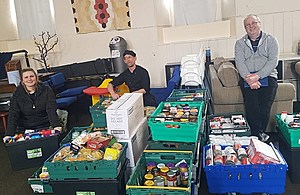
Magnox and the Nuclear Decommissioning Authority have announced a £25,000 cash boost to help support vulnerable groups in North Ayrshire.

Volunteers from the North Ayrshire foodbank

Volunteers from the North Ayrshire foodbank

The money has been granted to North Ayrshire Council to support the community during the coronavirus pandemic.

The council plans to invest the money into both North Ayrshire and Largs foodbanks towards food stock, PPE for volunteers and delivery costs.

The funding forms part of the 12 grants, worth £300,000 in total, Magnox has made available to local authorities or charities where a Magnox site is located.

Gwen Parry-Jones, Magnox Chief Executive, said:

Many community groups are carrying out positive work, supporting the most vulnerable in their areas. This work is vital, and a key part of Magnox’s response to COVID-19 is to help other organisations deal with the pandemic wherever we can.

In this time of national crisis, Magnox has agreed with the NDA that we should make available up to £25,000 at each site from the Magnox Socio-economic Scheme for use by local community groups on COVID-19 related activities. Magnox is committed to assisting the communities surrounding our sites, as our communities have supported us for over 50 years, and we hope this funding will go some way to supporting the essential work being delivered.

Councillor Louise McPhater, North Ayrshire Council’s Cabinet Member for Communities, said: “On behalf of everyone at North Ayrshire Council, I would like to whole-heartedly thank Magnox for their generous donation. “We have arrangements in place in every locality to ensure emergency community food provision is available – free of charge – for those who need it.

“This significant Magnox donation will go some way in ensuring that we have sufficient foodbank stock ready as we continue to keep our volunteers, foodbank and community hub staff safe as they continue to provide a lifeline service to some of the most vulnerable residents in our communities.

“I have seen first-hand the work carried out by the foodbank and their volunteers over the last few weeks who are doing such a fantastic job in very challenging circumstances and I can’t praise them highly enough.”

Published 15 May 2020


UK aid boost for charities fighting coronavirus

Today, International Development Secretary Anne-Marie Trevelyan has announced which charities and NGOs (Non-Governmental Organisations) have received UK aid funding to help fight coronavirus in the developing world.

  • 40 charities and NGOs are now receiving new UK aid funding to tackle coronavirus.
  • Among other projects, the funding will support healthcare systems in developing countries so they can cope with the effects of coronavirus, helping to stop the global spread and keep us all safer.
  • Next week, small-to-medium sized British charities tackling coronavirus can apply for new grants of up to £4 million each.

A total of 40 charities and NGOs will receive funding from the Department for International Development’s (DFID) £20 million humanitarian support package, announced last month, or the £100 million global hygiene partnership with Unilever, unveiled in March.

From 18 May 2020, up to £30 million of new grants will also be made available to small and medium-sized UK charities through the next round of the UK Aid Direct programme. Each charity will be able to bid for a grant up to £4 million for programmes that focus on tackling the coronavirus crisis.

The Small Charities Challenge Fund (SCCF) is also open for grants of up to £50,000 for the very best small British development charities tackling coronavirus.

Health experts have identified the weakness of developing countries’ healthcare systems as one of the biggest risks to the global spread of the virus. They have also warned that if coronavirus is left to spread in developing countries, this could lead to the virus re-emerging in the UK and put further pressure on our NHS.

DFID is therefore rapidly reprioritising its programmes around the world to better tackle the pandemic. Many of these in-country programmes are currently run directly by civil society organisations, including charities and NGOs.

International Development Secretary Anne-Marie Trevelyan, said:

This pandemic is having a devastating impact on people all over the world and I am very grateful to charities and NGOs for their vital work to keep people safe.

These organisations are often best placed to help those most at risk and are crucial to slowing the pandemic’s spread in the developing world. This in turn helps reduce the risk of future waves of infection globally, which could otherwise come to the UK.

British charities, such as Humanity & Inclusion, Action Against Hunger, CARE and Christian Aid, have received funding from DFID’s £20 million humanitarian package, which will provide healthcare, water and sanitation, food and shelter to meet the basic needs of some of the world’s most vulnerable people, including in Yemen, Afghanistan, Somalia and Africa’s Sahel region.

More than £24 million has also been allocated from DFID’s £100 million partnership with Unilever, one of the largest producers of soap in the world, to Action Aid, PSI, WaterAid, International Rescue Committee, World Vision, the African Medical and Research Foundation and Water & Sanitation for the Urban Poor.

Ms Trevelyan recently wrote to suppliers, including British charities and NGOs, to set out the DFID support available to them amid fears over the pandemic’s impact on their operations. This included bringing forward payments and help with the ongoing costs of delivering life-saving programmes.

Plan International is also receiving support through UNICEF’s Education Cannot Wait fund which has provided £5m of UK aid to support over 11.5 million children in some of the poorest and most disadvantaged areas of the globe.

Helen Thompson, CARE International UK’s Head of Humanitarian Programme, said:

With DFID’s support, CARE will work with communities in conflict-affected regions of Niger, Mali and Chad to prevent the spread of coronavirus and deal with the knock-on impacts of lockdown, particularly on women and girls.

From responses such as the West Africa and DRC Ebola crises, we know that strong community engagement and risk messaging is essential to stop the spread of disease. DFID’s support will help us rapidly scale up work at community level with trusted messengers.

Notes to editors

  • The next UK Aid Direct funding round will open to organisations with an annual income of under £10 million on 18 May. Those helping to tackle coronavirus or its impact on some of the world’s poorest people will be given priority for the grants, totalling £30 million. The Small Charities Challenge Fund (SCCF) is also currently open for grants of up to £50,000 from the very best small British development charities tackling coronavirus. For more information on UK Aid Direct, including the SCCF, visit ukaiddirect.org.

  • Of the £20 million of new UK aid funding for NGOs announced last month, £18 million has been allocated through DFID’s Rapid Response Facility, which provides urgent funding to NGOs responding to humanitarian crises and £2 million through the Humanitarian 2 Humanitarian Network (H2H) for organisations, which are improving the global humanitarian response.

  • The International Development Secretary wrote this month to all DFID’s supply partners to set out the support available to them during the coronavirus pandemic.

  • DFID is providing £145 million for UN coronavirus appeals, including: £75 million for the World Health Organization, £20 million for UNICEF, £5 million to Education Cannot Wait, £20 million for the UN Refugee Agency (UNHCR), £15 million for the World Food Programme, and £10 million for the UN Population Fund (UNFPA).


UK Statement to the WTO General Council

Thank you, Chair, and thank you Director General, for your opening remarks.

In line with others, I want to thank you, on behalf of the United Kingdom, for calling this meeting on the multilateral trade response, to the most serious global challenge in a generation, one that is also transforming the global trading system, and as the WTO’s own analysis shows, risks seriously undermining it.

But first, I would like to recall my statement at the Heads of Delegation meeting yesterday, conveying the United Kingdom’s warmest wishes to Director General Azevedo, upon the announcement of his stepping down, and thanking him for all he has done – and will continue to do – throughout his term. The United Kingdom heeds the DG’s call for Members to move quickly to appoint a successor, and stands ready to support Ambassador David Walker with the next steps in the process.

Now, let me turn to today’s discussion on the Covid-19 crisis.

This is a global crisis. This pandemic is already the worst international health crisis for a century. By the time it it finished, it risks also becoming the worst economic crisis since the Great Depression, and a global social and political crisis into the bargain.

The multilateral system has a critical role to play in mitigating this worst case scenario, and, to coin a phrase, bending the curve of this crisis below the ability of the global political and economic system to cope. Geneva has already responded well, and after a difficult negotiation, the World Health Assembly will adopt an important resolution on Monday, to guide us through the next phase of the pandemic, and ensure we learn and adapt as we go forward.

The WTO also has a major role to play. While we understand the challenges for the organisation in meeting formally, it is still the world’s leading platform for discussing global trade, with senior trade representatives from around the world. It is the place where the impact on COVID-19 on the global trading system should be discussed, where ideas and solutions should be shared, and were initiatives to mitigate the global economic crisis to come, launched.

In that spirit, the UK welcomes today’s meeting of the General Council, and looks forward to much more debate in the future.

Now, let me turn to the WTO response more specifically.

So far, the Secretariat has proactively collated information and published useful analytical pieces. In support of that effort, the United Kingdom has provided relevant information, including regularly contributing to the Covid specific surveillance platform hosted on the WTO webpage and submitting a return to the Director General for the Trade Monitoring Report.

The United Kingdom would welcome more frequent Trade Monitoring reports – for example, returning to the quarterly reports during the financial crisis. We agree with Switzerland that there is much more that the WTO and is Members can do. The WTO needs to be the place where the trade restricting measures that have been introduced in response to COVID-19 are reported, their consequences debated, and our collective determination to resist serious damage they could do to the global economy expressed.

The UK also welcomes the fact that Members have started to coordinate responses to Covid, informally through the WTO, as well as through other groupings like the G20.

So, together with a range of other WTO Members, the United Kingdom has cosponsored statements on key issues.

For example, we believe in the importance of keeping global agricultural supply chains open, especially given the relatively high levels of food stocks and production we see globally, so signed the statement led by our Canadian colleagues. We welcome the idea of holding a dedicated meeting in June to discuss this.

We were also pleased to support the Swiss-led statement in support of the multilateral trading system, and the statement in support of MSMEs led by our Uruguayan, Canadian and Mexican colleagues.

As this crisis evolves, we will continue to work with Members on appropriate initiatives supporting free, fair and inclusive rules-based trade. We will also seek to advance this agenda elsewhere, and like the DG, we welcome the the outcomes agreed at the virtual extraordinary G20 Trade Ministers’ meeting yesterday.

We are keenly aware that many developing country partners, as well as small island states and other vulnerable economies, are experiencing a serious period of trade shock, as currency depreciations combine with sharp declines in important export sectors like tourism. This potentially jeopardises decades of hard-fought, trade-led prosperity.

Today I’d like to announce that, through the UK’s Trade and Investment Advocacy Fund and our funding to the World Bank, we are providing support to eligible developing country Members to better understand the trade-related impacts of COVID-19 on their economies, notify COVID-related measures to the WTO’s monitoring exercise, and tackle the COVID crisis through better trade facilitation.

Lastly, Chair, let me turn to the importance of continuing with regular business.
   It is important that this crisis does not set back the important work that the WTO has been tasked with. Beyond ensuring the reinstatement of a fully functioning dispute resolution system, and continuing the crucial regular monitoring and transparency work, we need to continue to work on live negotiations.

These negotiations – including on fisheries subsidies, e-commerce, MSMEs, domestic regulation in services and investment facilitation for development– are a critical part of a broader discussion on how this institution should better meet the needs of 21st century business and society.

Thank you Chair.