Coronavirus Statutory Sick Pay Rebate Scheme set to launch

A new online service will be launched on 26 May for small and medium-sized employers to recover Statutory Sick Pay (SSP) payments they have made to their employees, the government announced today (19 May 2020).

The Coronavirus Statutory Sick Pay Rebate Scheme was announced at Budget as part of a package of support measures for businesses affected by the COVID-19 outbreak.

This scheme will allow small and medium-sized employers, with fewer than 250 employees, to apply to HMRC to recover the costs of paying coronavirus-related SSP.

Employers will be able to make their claims through a new online service from 26 May. This means they will receive repayments at the relevant rate of SSP that they have paid to current or former employees for eligible periods of sickness starting on or after 13 March 2020.

Secretary of State for the Department of Work and Pensions, Therese Coffey, said:

We are committed to supporting Britain’s small and medium businesses through this pandemic with a comprehensive package of support.

This rebate will put money back in the pockets of millions of employers, ensuring they can hit the ground running as the economy re-opens.

Angela MacDonald, HMRC’s Director General of Customer Services, said:

Our teams have worked hard to deliver this scheme for employers and their employees to ensure they get the support they need. We want employers to be secure in the knowledge they will receive help as they care for their staff during this difficult period.

Employers are eligible if they have a PAYE payroll scheme that was created and started before 28 February 2020 and they had fewer than 250 employees before the same date.

The repayment will cover up to 2 weeks of SSP and is payable if an employee is unable to work because they:

  • have coronavirus; or
  • are self-isolating and unable to work from home; or
  • are shielding because they’ve been advised that they’re at high risk of severe illness from coronavirus

The current rate of SSP is £95.85 per week[1]. Employers can choose to go further and pay more than the statutory minimum. This is known as occupational or contractual sick pay.

Where an employer pays more than the current rate of SSP in sick pay, they will only be able to reclaim the SSP rate.

The scheme covers all types of employment contracts, including:

  • full-time employees
  • part-time employees
  • employees on agency contracts
  • employees on flexible or zero-hour contracts

Other SSP eligibility criteria apply.

Connected companies and charities can also use the scheme if their total combined number of PAYE employees is fewer than 250 on or before 28 February 2020. Employees do not have to provide a doctor’s fit note for their employer to make a claim under the scheme.

Employers can furlough their employees who have been advised to shield in line with public health guidance and are unable to work from home, under the Coronavirus Job Retention Scheme. Once furloughed, the employee should no longer receive SSP and would be classified as a furloughed employee. Where an employee has been notified to shield and has not been furloughed, the rebate will compensate up to 2 weeks of SSP from 16 April 2020.

[1] For the period 13 March 2020 to 5 April 2020 the SSP rate was £94.25 per week
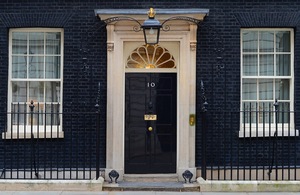


‘Sobriety tags’ come into force

  • ankle tags to monitor offenders’ alcohol intake
  • drinking could see offenders returned to court for further sanctions
  • national rollout to begin later this year after successful pilots

The ankle tags, which are to be rolled out across England and Wales, perform around-the-clock monitoring of an offender’s sweat to determine whether alcohol has been consumed. If they drink – breaching their alcohol abstinence order – they can be returned to court for further sanctions. These might range from a fine, extending the length of the order or in some cases imprisonment.

It follows 2 successful pilots, one across Humberside, Lincolnshire and North Yorkshire, and another in London, which showed offenders were alcohol free on 97% of the days monitored.  Wearers also reported a positive impact on their lives, wellbeing and behaviour.

Courts will be able to order offenders to wear a tag for up to 120 days. The tough community sentence not only punishes offenders but aids their rehabilitation by forcing them to address the causes of their behaviour –  in turn helping to reduce alcohol-related harm.

A national rollout will commence later this year.

Crime, Policing and Justice Minister Kit Malthouse MP said:

Alcohol-fuelled crime blights communities and puts an unnecessary strain on our frontline services.

Smart technologies like sobriety tags not only punish offenders but can help turn their lives around.

While prison will always be the right place for many criminals, tough community sentences like this can help cut reoffending and protect the public.

Keith Hunter, Police and Crime Commissioner (PCC) for Humberside, said:

I welcome the use of the alcohol tags being rolled out across England and Wales. During the trial in our area they provided rehabilitation agencies a real opportunity to work with the individual and get them to recognise and change their behaviour.

Undoubtedly their use will help reduce the number of victims of alcohol-related crime, many in domestic situations, and aid the rehabilitation of offenders as they become a standard feature of the Criminal Justice System.     

This shows Humberside is at the forefront of influencing innovative Criminal Justice policy, shining a light on our area for the right reasons.

An estimated 39% of violent crime involves an offender under the influence of alcohol – with the social and economic cost of alcohol-related harm being £21.5 billion per year. 

The technology works by fitting a tag around the ankle of an offender. This then samples their sweat every half-hour to determine whether alcohol has been consumed. They can distinguish between alcohol-based products, such as hand sanitiser, that could be used to mask alcohol consumption and can detect when contact between the skin and the tag has been blocked.

An offender who wore one of the tags in the Humberside, Lincolnshire and North Yorkshire pilot scheme and was managed by HLNY CRC said:

Since I had the tag removed I feel 100% in control of my drinking. I was worried to begin with that when I had the tag taken off I might go back to drinking again but the process gave me a better understanding of alcohol.  I also didn’t want to go back to court.

I no longer need a drink to manage my emotions which is down to the tag and my probation officer – I’m much happier with my life now and pleased that more people can benefit from my experience of wearing the tags.

The tags are a further example of using technology to better monitor offenders in the community and follow last year’s rollout of GPS tags that monitor an offender’s location 24/7.

It builds on government action to overhaul the criminal justice system – recruiting 20,000 new police officers, investing £2.75 billion in prisons and ensuring the most serious violent and sexual offenders spend longer in jail.

Notes to editors

  • The Ministry of Justice will start a national roll out of the Alcohol Abstinence Monitoring Requirement from Winter 2020.
  • The tags will not be used on people who are alcohol-dependent or have certain medical conditions.
  • The Ministry of Justice has supported two pilots of the Alcohol Abstinence Monitoring Requirement in London (MOPAC) and in Humberside, Lincolnshire and North Yorkshire (HLNY). Findings for HNLY show that 94% of offenders successfully completed the requirement and compliance with the alcohol ban was 97.4% (HLNY), and for the MOPAC pilot 94% of offenders successfully completed the requirement with 98% days being alcohol free.
  • The Crime Survey for England and Wales estimates that the proportion of violent incidents where the victim believed the offender(s) to be under the influence of alcohol, for year ending March 2018, was 39%.
  • Public Health England estimate that the total social and economic cost of alcohol-related harm was £21.5 billion (2018).


Progress is still needed if a political settlement is to be reached in Syria

Thank you very much, Mr. President. And may I thank the Special Envoy for being here today and for his comprehensive briefing, as always.

Mr. President, we remain concerned about the security situation in Syria. Now whilst we’re not seeing the levels of violence in the north-west that we saw at the beginning of this year, we know recent clashes between armed groups and regime forces south of the M4, as well as ongoing regime shelling into the Idlib de-escalation zone. The cease fire in Idlib, as well as that in the north-east, must be upheld in practice and not in name only. And we also fully condemn continued attacks by extremist forces, including by Daesh.

We remain concerned about a rise in violence in the south of the country and the risk that this violence causes reconciliation agreements there to fall apart. And we’d be grateful for an update, including from our Russian colleagues, on implementation of those reconciliation agreements reached in summer 2018. It remains vital colleagues that localised ceasefires lead to a nationwide ceasefire, as called for by the United Nations Special Envoy and the Secretary-General. This is necessary not only to bring an end to this devastating conflict in accordance Resolution 2054, but to enable full attention to be devoted in the fight against COVID-19.

Now on that, we’re continuing to support efforts led by the World Health Organization to confront the real risk posed by COVID-19. to all parts of Syria. We recognise the efforts made by authorities across the country, and we urge practical cooperation between them all to confront a disease which knows no boundaries.

There remains an urgent need for medical supplies and other necessary humanitarian aid to reach recipients in need without hindrance. And we should not be dogmatic about the modalities of doing so, including by renewing cross-border assistance to all areas which need it. And we’ll have an opportunity to discuss this, of course, further tomorrow.

Let me just say a note on sanctions, in support of what some others have said, goods and medical supplies used for humanitarian purposes are not subject either to EU sanctions or to UK national sanctions. And additional exemptions from sanctions are available for humanitarian activity in Syria. I’d just like to note that the United Kingdom and our US and European partners are the leading donors for humanitarian aid in Syria, including in regime held areas. The problems facing the Syrian health sector and the economy are a result not of sanctions, but of the Syrian regime’s actions through its cronyism, corruption and its brutal conduct of the war which includes, I am afraid, politically motivated punitive restrictions on humanitarian aid. If the Syrian regime and its allies want to see removal of sanctions, then they know what they have to do. Engage seriously with the Special Envoy and the UN led political process to achieve a peaceful end to the Syrian conflict.

Now, regarding the political process, we are disappointed that notwithstanding the urgent humanitarian needs, the deteriorating economy and the continued threat of COVID-19. 19, there still appears to be no urgency in working with the UN Envoy to achieve political progress towards a political settlement. Like others, we welcomed the formation of the Constitutional Committee last year. But it’s been over a month since the agenda for the Constitutional Committee was agreed and nearly six months since its last meeting. We cannot let hard won progress on this front be lost because of lethargy and disinterest from Damascus. I call on Russia to bring its influence to bear on its Syrian clients.

In order to maintain momentum and keep the progress alive. We encourage at least the co-chairs of the Committee to convene urgently by video conference to discuss issues including how a full meeting can work in practice.

And we also urge the regime to make widespread releases of political prisoners and vulnerable people and ensure medical care is available for those still in detention. While we welcome negotiated releases, we would note that One for One releases are insufficient in a context where the regime holds far more detainees than opposition forces. And I’d like to emphasise once again and for the record, that there cannot be any reconstruction funding from the United Kingdom without the regime’s genuine engagement with a credible and sustainable political process.

Let me conclude colleagues, by reiterating what I believe we all have said that the deliberate targeting of humanitarian infrastructure and civilians is never acceptable. Whether through ground attacks, barrel bombs, air strikes or chemical weapons. We note Amnesty International’s recent report detailing 18 attacks on medical facilities and schools between May 2019 and February 2020, which only adds to the evidence provided by the Board of Inquiry and Commission of Inquiry. As with the chemical weapons attacks carried out by the Syrian regime and detailed in the OPCW IIT report.

Those responsible must and will be held to account. In the meantime, such disregard for international humanitarian law must cease.

Thank you, Mr. President.


PM call with Crown Prince Mohammed Bin Zayed: 18 May 2020

Press release

Prime Minister Boris Johnson spoke to His Highness Sheikh Mohammed Bin Zayed al Nahyan, Crown Prince of Abu Dhabi, UAE.

placeholder

The Prime Minister spoke to His Highness Sheikh Mohammed Bin Zayed al Nahyan, Crown Prince of Abu Dhabi, UAE, today.

He expressed his gratitude to the United Arab Emirates for their support and cooperation in the fight against coronavirus.

The two leaders also discussed how to further develop the UK and UAE’s close economic and security ties.

The Prime Minister invited the Crown Prince to participate at the upcoming virtual Global Vaccine Summit, which the UK is hosting on June 4th.

Published 18 May 2020


Everyone in the United Kingdom with symptoms now eligible for coronavirus tests

  • Anyone experiencing a new, continuous cough; high temperature; and now also a loss of or change in your normal sense of smell or taste can book a test by visiting www.nhs.uk/coronavirus
  • 21,000 contact tracers in England now recruited

The government has today announced that anyone with symptoms of coronavirus is now eligible to book a test, ahead of the rollout of the test and trace service.

The expansion in testing eligibility comes after all 4 UK Chief Medical Officers confirmed that anosmia has been added as a symptom of COVID-19. Anosmia is the loss of or a change in your normal sense of smell, and it can also affect your sense of taste.

This means people should self-isolate immediately if they have:

  • a new, continuous cough
  • a high temperature, or
  • a loss of or change in their normal sense of smell or taste

All members of their household must also self-isolate according to current guidelines, unless the symptomatic individual receives a negative test result.

Testing

The extension in testing eligibility comes ahead of the rollout of the new test and trace service and is possible thanks to increased testing capacity across the country as the government expands total testing capacity towards 200,000 tests a day.

The government has more than doubled the capacity of the NHS/Public Health England (PHE) laboratory network, set up 50 regional test centres and 116 mobile testing units, and introduced home testing kits and 3 Lighthouse laboratories.

The number of tests available for the general population will increase as capacity continues to expand.

Health and Social Care Secretary Matt Hancock said:

Following the massive ramping up of our national testing programme, anybody with symptoms of coronavirus in the United Kingdom is now eligible for a test.

This is a huge step forward in our plan to slow the spread of the virus, protect the NHS and give the peace of mind these tests can bring.

We will continue to give priority to NHS staff and care home residents and workers in order to protect our most vulnerable.

The tracing element of the service in England, due to be launched shortly, will be supported by 21,000 contact tracers who have now been recruited, and will play a vital role working to reach those who have been in close contact with someone who has developed coronavirus.

The new workforce in England of more than 21,000 contract tracers will be overseen by experts from Public Health England and local government.

PHE Deputy Chief Executive Richard Gleave said:

Test and trace will require a huge team effort bringing together PHE and local government leaders, experts in logistics and thousands of new staff to carry out contact tracing. It’s great to see people from a wide range disciplines coming forward to play their part.

NHS Professionals’ CEO Nicola McQueen said:

We have seen a fantastic response to join the virtual frontline of home-based clinical contact caseworkers for the test and trace service. This service is key to the national response to COVID-19. We know that so many of our bank members, as well as other registered healthcare professionals, are keen to help in any way they can and this unique position will allow them to do just that.

Background information

Anyone in England, Wales, Scotland and Northern Ireland experiencing a new, continuous cough, high temperature or a loss of or change in your normal sense of smell or taste can book a test by visiting www.nhs.uk/coronavirus.

Those unable to access the internet can call 119 to book a test in England, Wales and Scotland, or call 0300 303 2713 in Northern Ireland.

A team of PHE public health professionals, linking with the local government sector and other partners, will oversee the contact tracing workforce as well as continuing to manage complex cases.

PHE is working with local government colleagues including the Association of Directors of Public Health, Society of Local Authority Chief Executives and Senior Managers, Local Government Association and UK Chief Environmental Health Officers on this part of the test and trace service.

NHS Professionals, the Department of Health and Social Care and NHS Business Services Authority are key partners in delivery of the model helping with recruitment, logistics and integration of the various elements of the service.