Areas urged to ‘go for growth’ as Investment Zone applications open

  • Pushing ahead with its mission to level up, the government is encouraging councils to take full advantage of its offer to lower taxes and streamline planning rules

  • The Department for Levelling Up, Housing and Communities is inviting expressions of interest for Investment Zones from all local areas in England from today

  • Investment Zones will boost growth, deliver homes, spread opportunity and create jobs across the country.

Local areas wanting to turbocharge economic growth can apply to host a new Investment Zone from today (Saturday 1st October).

The government is encouraging councils to take full advantage of its offer of lower taxes and streamlined planning rules for specific sites to boost investment and development – both commercial and residential.

These offers will, as part of the government’s wider levelling up measures, drive serious economic growth that will be transformational for towns and cities across the country. They will create jobs, deliver new homes and spread opportunity.

Investment Zones could benefit from a range of tax incentives over the next 10 years, such as reliefs on business rates, stamp duty land tax and employer national insurance contributions.

Through Investment Zones, the government will also empower local places to deliver planning that is right for their area, while maintaining high environmental outcomes and keeping national green belt protections in place. To ensure this, local areas must agree in the EOI process to require mitigation of any adverse environmental impacts of the proposed development.

The government has been working with local areas to identify bureaucratic requirements, processes and red tape that needlessly slow down development or make it more complex than it should be – with Investment Zones set to benefit from simplified planning rules. This includes reviewing ineffective EU requirements, lengthy consultations with statutory bodies and onerous national and local policy rules.

The government has had encouraging discussions with 38 councils, from Cornwall to Cumbria, about proposals for specific, defined areas within the local authority that could become an Investment Zone. The Department for Levelling Up, Housing and Communities is now inviting expressions of interest from those initial places and all other Mayoral Combined Authorities or Upper Tier Local Authorities and Freeports in England by Friday 14 October.

To ensure Zones have the infrastructure and skilled workforce that they need, the government will give greater control over local growth funding to local leaders.

Local authorities are being asked to keep growth at the front and centre of their plans by setting out the potential economic opportunities of an Investment Zone in their area, how they fit into the area’s wider economic strategy and how they will support long-term UK economic growth.

Investment Zones will be open to all but the government will set a high bar for establishing them, honing in on areas where they will have the greatest impact on growth and housing supply.

Bids will also be considered on the pace at which development can be delivered and should set out any live or potential, public, private or foreign direct investment that is likely to come forward.

Freeport governing bodies will be able to convert their existing tax sites to Investment Zones, should they wish to.

The UK government wants the offer of Investment Zones to be extended across Scotland, Wales and Northern Ireland and is working with the devolved administrations on the best way to do this.

The deadline for expressions of interests is noon on Friday 14 October, and successful areas will be announced within weeks.


Foreign Secretary statement on the truce in Yemen

Press release

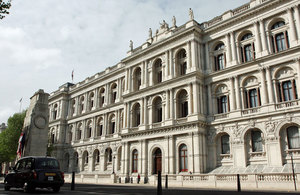
Foreign Secretary James Cleverly has called on the Houthis to engage constructively with UN efforts to broker an extension to the truce in Yemen.

Foreign Secretary James Cleverly said:

Yemen must not return to conflict. The truce expires tomorrow, but the Houthis continue to endanger the talks and deny Yemenis a peaceful future.

The truce has brought tangible benefits to both Yemenis and regional security and we welcome the Government of Yemen’s commitment to extend it further if an extension can be agreed.

We call on the Houthis to engage constructively with UN Special Envoy Hans Grundberg’s efforts to broker an extension to the truce, so that serious dialogue about achieving a peaceful, inclusive and Yemeni-led future can take place.

During the truce period, civilian casualties have fallen dramatically in Yemen and cross-border attacks by the Houthis into Saudi Arabia and the United Arab Emirates have stopped.

The UK commends the Government of Yemen’s commitment to continue delivering the benefits of the truce through enabling Yemeni people to move more freely and safely around Yemen, to access fuel throughout the country, to fly in and out of Yemen to visit families and access healthcare, and through restarting payments for civil servants. The Yemeni people will only experience these benefits beyond Sunday if the parties agree to extend.

Published 1 October 2022


PM meeting with Prime Minister Mette Frederiksen: 1 October 2022

Press release

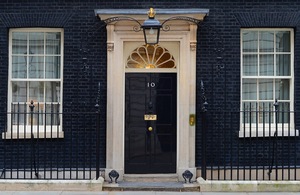
The Prime Minister welcomed Danish Prime Minister Mette Frederiksen to Downing Street today.

The Prime Minister welcomed Danish Prime Minister Mette Frederiksen to Downing Street today.

The leaders stressed the need to stay united in the face of Russia’s despicable actions in Ukraine.

Prime Minister Frederiksen updated the Prime Minister on the damage caused to the Nord Stream pipelines last week. They agreed the incidents were clearly an act of sabotage. The Prime Minister offered the UK’s support for the ongoing investigation.

The leaders agreed that the safety and security of the Baltic Sea is in everyone’s interest, and welcomed increased cooperation through the Joint Expeditionary Force.

On energy security more widely, the Prime Minister and Prime Minister Frederiksen agreed on the need for likeminded democracies to work together to increase our energy independence.

The Prime Minister outlined the steps the UK has taken to decrease energy bills in the short-term and bolster our energy supply in the longer term. The leaders agreed to further UK-Danish cooperation in areas like wind power, where our countries are global pioneers.

Published 1 October 2022


Civil news: Specialist Quality Mark contract from 1 October 2022

News story

New Specialist Quality Mark contract awarded to existing supplier Recognising Excellence which comes into force on 1 October 2022.

Woman athlete leaping across mountain peaks

A new Specialist Quality Mark (SQM) contract begins on 1 October 2022 following a successful tender from Recognising Excellence, the existing supplier.

Has anything changed for providers?

An early booking discount is being introduced for SQM holders who apply for reaccreditation early. We have also managed to reduce the cost of an audit for the majority of SQM holders and applicants.

These improvements were introduced through the tender by the Legal Aid Agency (LAA) as part of efforts to achieve better value for SQM holders and applicants.

For the most part, the terms of the SQM contract remain broadly the same.

Recognising Excellence will now continue to administer the SQM scheme on behalf of the LAA.

Standard and guidance updates

Changes to the standard and guidance for the SQM also come into force on 1 October 2022. These apply to all requests for an SQM audit made after this date.

Advance notice of the changes was given in the early part of 2022. A summary can be found on our legal aid pages on GOV.UK.

Further information

Legal Aid Agency quality standards – for changes to the standard and guidance for the SQM

SQM – Recognising Excellence – how to apply for the SQM through Recognising Excellence

Published 1 October 2022


Government support for energy bills begins for households and businesses

  • The Energy Price Guarantee reduces household energy bills over the next two years, with a typical family paying around £2,500, saving £1,000 per year
  • Businesses, charities and public sector organisations will pay less than half the expected prices this winter under the Energy Bill Relief Scheme from October
  • Government energy support makes up the largest single component of the Growth Plan, protecting jobs and livelihoods and curbing inflation by 5 percentage points

Households, businesses and public sector organisations across the country will be protected from significant rises in energy bills, thanks to new government support taking effect from today (Saturday 1 October).

Without Government action, average household energy bills under the energy price cap had been due to rise to around £3,500 a year in October – a rise of 80% on current bills. Next year, they were estimated to increase even further to as high as £6,500.

From today, the Government’s Energy Price Guarantee will limit the price households pay per unit of gas and electricity they use.

It means a typical household in Great Britain will pay around £2,500 per year, starting this month for the next two years – saving an average £1,000 a year on their energy bills.

Households will also see the first instalment of the £400 Energy Bill Support Scheme in their October electricity bill. The discount will be automatically applied monthly in six instalments between October 2022 and March 2023.

Thanks to the government’s support, energy bills will now be close to where they’ve been for the past six months – and it will curb inflation by 5 percentage points, boosting economic growth, controlling the rising cost of goods, and reducing the cost of servicing the national debt.

This necessary intervention makes up the biggest proportion the Government’s fiscal package set out in the Growth Plan.

Prime Minister Liz Truss said:

I know people across the country are anxious about their energy bills, which is why we have acted quickly to help them.

Livelihoods and businesses were at stake. The government’s energy support limits the price they pay for gas and electricity, shields them from massive bill increases, and is expected to curb inflation too.

The cost of not acting would have been enormous. To make sure the British public is not left in this position again, we are also fixing the problem at its source by scaling up home-grown energy and reducing reliance on foreign supplies to boost our energy security and independence.

The UK Government is also urging people today to stay alert to scams and fraudulent messages. There is no need to apply for the schemes, with most customers receiving today’s support automatically through their electricity bill.

Households in Northern Ireland will also receive the same support through the Energy Price Guarantee from November, with support for October bills backdated so they see the same benefit overall.

Those who might live in an area of the UK that is not served by the gas grid or use alternative fuels such as heating oil to heat their home will receive a £100 payment to support them with their energy bills.

Business and Energy Secretary Jacob Rees-Mogg said:

While Putin’s weaponisation of energy has driven energy prices to record highs, we will not let his regime harm this country’s businesses and households.

Unprecedented government support is beginning this weekend, protecting families and businesses across the country from what was going to be an 80% increase in energy bills this winter.

“I also urge people today to stay alert to scams. This support will reach people automatically and there is no need to apply.”

British businesses have also been experiencing significant increases in energy costs, with some reports of more than 500%. Businesses, charities and public sector organisations will also be protected through the Government’s Energy Bill Relief Scheme from October over the next six months.

This support is equivalent to the Energy Price Guarantee put in place for households and similarly discounts price per unit of gas and electricity, meaning businesses and others will pay wholesale energy costs well below half of expected prices for this winter.

In parallel, the Government is also taking decisive steps to tackle the root cause of the issues in the UK energy market through boosting British energy supply and increasing independence to ensure this doesn’t happen again. This includes the work of our Energy Supply Taskforce, a new oil and gas licensing round, lifting the moratorium on UK shale gas production, and driving forward progress on nuclear and renewables.