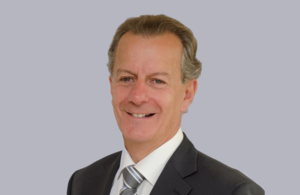
Alok Sharma, COP26 President, to return to Kenya to advance African climate leadership ahead of COP27

  • Mr Sharma will meet newly-elected President Ruto and cabinet ministers to discuss Kenya’s continued climate leadership ahead of COP27

  • The COP President will visit wind and geothermal sites contributing to Kenya’s clean energy transition

  • Mr Sharma will also meet with youth, civil society and private finance representatives to discuss local implementation of policies that honour the Glasgow Climate Pact

COP26 President Alok Sharma will travel to Kenya from 5-7 October, following his attendance at Pre-COP in the DRC. The visit is an opportunity to engage with the new Kenyan administration on its commitment to maintain global climate leadership, and make a final call ahead of COP27 for countries to honour the Glasgow Climate Pact by accelerating their own clean energy transitions.

On his third visit to the country, Mr Sharma will spotlight key progress being made in this sector towards limiting global temperature rises to below 1.5 degrees. He will encourage President Ruto and his senior ministers to help build momentum for further change ahead of COP27 in the face of challenging global circumstances.

The COP President will travel to several renewable energy generation sites around Nairobi including Ngong Hills Wind Farm and Olkaria Geothermal Power Station, which has grown to the largest geothermal facility in Africa since being seed funded

by the UK Government in 1981. He will highlight this infrastructure as a model of how other countries can deploy renewables.

While in Nairobi, Mr Sharma will attend a roundtable with youth climate leaders and members of civil society to hear about how climate policy can be transformed into impactful local action.

The COP President will also engage with key figures in Kenyan finance at a climate finance event to understand how private capital is being mobilised in the country to combat climate change through green bonds, carbon credits, and climate-related financial disclosures.

Alok Sharma, COP26 President, said:

“Kenya continues to set an example to the rest of the African continent and the world, demonstrating an appetite to pursue green economic growth and achieve a just, renewable energy transition.

“I am pleased to see President Ruto reaffirm Kenya’s commitment to transition to 100% clean energy by 2030, and look forward to the positive impact this will have on growth, jobs and access to energy.

“But the drought currently afflicting this country is a stark reminder that, in order to save and safeguard lives from the devastating impacts of climate change, we must all redouble our efforts to go further and faster in delivering on the promises of the Glasgow Climate Pact.”

After his visit to Kenya, the COP26 President will travel to Washington DC to attend the 2022 Annual Meetings of the International Monetary Fund (IMF) and the World Bank Group (WBG) from 14-16 October.

-ENDS-


UK appoints new British Defence Attaché to strengthens defence relationship with the Guatemalan army

Colonel Stewart initiated his new role as the UK’s Defence Attaché to Guatemala. He takes on the role with over 20 years of operational experience in the USA, the Middle East, Europe and Africa.

During this initial visit, Colonel Stewart and the British Ambassador, Nick Whittingham, met with the Guatemalan Minister of Defence, Major General Henry Yovani Reyes Chigua. Colonel Stewart reiterated the UK’s eagerness to work alongside Guatemalan counterparts while enhancing cooperation between armed forces.

Colonel Stewart also met with the Commander of the Guatemalan Air Force, Colonel Juan Carlos Ponce and visited the Air Force Defence Unit along with Colonel Roderico Stoardo Guzmán Barrera, head of the Unit. Colonel Stewart discussed new opportunities for cooperation, training and exchange programmes between the UK and Guatemala.

Colonel Stewart also paid a visit to Ms Claudia Herrera, Director of the Coordination Centre for Disaster Prevention in Central America and the Dominican Republic (CEPREDENAC), an organisation that promotes and coordinates international cooperation and the exchange of information, experiences and technical and scientific advice on disaster prevention, mitigation, care and response.

The British Ministry of Defence’s (MOD) mission is to protect the security, independence and interests of the UK at home and abroad, working closely with allies and partners. Colonel Stewart is also the UK’s observer for the Conference of the Central American Armed Forces (CFAC), he will be residing in Mexico and he will visit Guatemala on a regular basis.

During his visit to Guatemala Colonel Stewart said:

Guatemala is a strategically important country for the entire region and I look forward to working closely with the Armed Forces of Guatemala in partnership and friendship. I was very impressed by the military professionalism and innovation I witnessed and I have also taken inspiration from the drive, determination and skill displayed with regard to humanitarian assistance at CEPREDENAC. Guatemala is a stunningly beautiful country with a great culture and I am excited to explore it more.


Hillsborough: independent forensic pathology review established

News story

The Home Office has established an independent review of the forensic pathology response to the Hillsborough disaster.

Forensic science expert Mr Glenn Taylor

The review will consider what went wrong with the original pathological report and ensure similar mistakes are not made in the future.

The review reflects recommendations made in Right Reverend James Jones’ report The patronising disposition of unaccountable power, a report to ensure the pain and suffering of the Hillsborough families is not repeated, which identified failings in the pathological reporting of the deaths at Hillsborough Stadium on 15 April 1989.

The review will be chaired by forensic science expert Mr Glenn Taylor.

The review began on 1 July 2022, following the conclusion of the final criminal trials relating to the Hillsborough disaster.

Mr Taylor is expected to report his findings to the Home Secretary next summer.

It will consider what went wrong with the original pathological report from the disaster to ensure that similar mistakes will not be made in the future.

As set out in the Terms of Reference published today, the review will:

  • recognise the failures in pathology following the Hillsborough disaster
  • make an assessment as to whether there is risk of similar failings being made again in the event of a similar mass fatality
  • assess the adequacy of safeguards currently in place in terms of clinical governance and pathology provision in England and Wales
  • look at accountability of practitioners and how it has changed since the original inquests
  • consider if there are lessons learnt from the Hillsborough disaster which can built into the development of Home Office register forensic pathologists and wider provision of pathology services

Mr Taylor is a retired forensic scientist who was in charge of a local authority laboratory. He has extensive experience in major incident planning and oversight of coronial services on behalf of local authorities.

The review has been commissioned by the Pathology Delivery Board (PDB) and is overseen by the Home Office. The PDB is responsible for the provision of forensic pathology services to police and coroners for suspicious death and homicide cases in England and Wales.

Published 5 October 2022


Government Office for Technology Transfer: events and conferences

News story

Details about Government Office for Technology Transfer events and conferences.

Two events are being held to formally launch Government Office for Technology Transfer (GOTT).

GOTT launch – London

Location: : The Royal Institution of Great Britain, London. Nearest tube Green Park.

Date: Tuesday 18 October 2022.

Time: 1pm.

Registration: Book now on Eventbrite.

This event will:

  • explore innovation in the public sector, its importance and GOTT’s role in driving that agenda
  • give attendees an opportunity to network and make connections

It will also include speakers from government and the wider public sector.

GOTT launch – Manchester

Location: Science and Industry Museum, Manchester.

Date: Thursday 20 October 2022.

Time: 3pm.

Registration: Book now on Eventbrite.

GOTT is proud to be headquartered in the North West. This event will celebrate public sector innovation in the region and:

  • establish GOTT as a North West based hub for government tech transfer
  • focus on investment and public sector spinouts
  • tap into the regional growth and levelling-up agenda

There will also be a panel of speakers, including industry experts and investors.

For more information, email KAguidance@beis.gov.uk

Published 5 October 2022


First launch from the UK

The first ever orbital satellite launch from the UK is happening soon, marking a new era in the UK’s space history.

Launches are part of the UK’s commercial spaceflight programme, meeting goals set out in the government’s National Space Strategy.

All launches are subject to receiving a licence from the Civil Aviation Authority

Read more about our vision for establishing and promoting launch from the UK.

How the launch will work

The LauncherOne rocket launching from Virgin Orbit’s Cosmic Girl plane in the US. Credit: Virgin Orbit.

The first launch will take place from Spaceport Cornwall in the south-west of England. It will be what is known as a ‘horizontal launch’.

A specially modified Boeing 747 from Virgin Orbit called Cosmic Girl, with a rocket attached under its wing, will take off from a runway. In flight, the LauncherOne rocket will launch from the wing, taking multiple small satellites into orbit.

The plane will then return to the Spaceport, able to launch more satellites in future.

Launch UK

Spaceport Cornwall is situated at Newquay Airport, near the coast of Cornwall. The 747 will fly out over the sea and launch its rocket far away from populated areas.

Why launch from the UK

The UK has a growing space sector, which employs 47,000 people. UK space companies have a strong track record in satellite manufacturing, spacecraft design and data applications. In fact, Glasgow builds more satellites than anywhere outside the United States. Soon we’ll be able to launch them from the UK too.

The UK is also located relatively far north, which means it’s perfect for launching satellites into polar and Sun-synchronous orbits, which go over the north and south poles. These orbits are ideal for satellites that monitor the Earth and provide telecommunications.

With a long coastline and many islands, the UK offers a range of suitable locations for launching rockets safely out over the sea – away from settlements and people.

What are we launching

DOVER Pathfinder satellite under construction with structure and solar panels. Credit: Open Cosmos.

Several small satellites will be launched into orbit on the first UK launch.

The satellites will do many different things, including improving navigation and communications.

Several of the satellites have been built in the UK, including a research satellite from RHEA Group, which was built by Open Cosmos in Oxfordshire.

The first Welsh satellite will also be on the launch, from Cardiff-based Space Forge. It will test the process of using the unique microgravity environment of space to manufacture special materials that are much more difficult to make on Earth.

What benefits will it bring

Launch services are worth a potential £3.8 billion to the UK economy over the next decade.

UK spaceports will need new skills, supply chains and supporting services, creating high-skilled jobs and opportunities across the country. For example, Spaceport Cornwall and the Centre for Space Technologies expect to create 150 jobs.

Through initiatives such as our LogoLiftOff! and Nanosat Design competitions, the UK Space Agency is also harnessing launch as a platform to encourage young people to pursue STEM subjects in order to help grow the UK’s future space talent pipeline.

Safety and the environment

Safety, security and protection of the environment are top priorities for the UK government.

We have progressive regulations for launch which make it safe for the public and protect the environment, while allowing new technologies to be used as they are developed.

The government is very careful about the impact launches have on the environment and won’t allow launches to happen before a detailed assessment of their environmental effects has been done.

Rocket launches do release some CO2 and other by-products, but they take place infrequently and the satellites being launched bring significant benefits.

Half of the data we need to monitor climate change can only come from satellites – so it’s vital to get them into space.

UK rocket manufacturers are also working to make rocket launches better for the environment, including turning unrecyclable plastic waste and even beeswax into rocket fuel!

How to get involved in the launch

There are lots of ways you can take part in the launch.

You can:

  • come along to our event at the Science Museum in London on 15 and 16 October 2022 to see a full-scale replica of the LauncherOne rocket!
  • check out educational resources from Spaceport Cornwall.
  • watch the launch live via a Virgin Orbit livestream (more info to come closer to launch)

After first launch

There are several other spaceports currently planned or under construction in the UK. These are in England, Scotland and Wales.