Ensuring security of electricity supplies for winter 2022 to 2023

Published 27 May 2022
Last updated 18 October 2022 + show all updates

  1. Letter from BEIS Secretary of State to the UK Country Chairman at Uniper.

  2. Added letter to staff and management of Drax.

  3. Added letter to staff and management of West Burton A.

  4. First published.


CMA orders Meta to sell Giphy

The Competition and Markets Authority (CMA) has found that Meta’s takeover of Giphy could allow Meta to limit other social media platforms’ access to GIFs, making those sites less attractive to users and less competitive. It also found the deal has removed Giphy as a potential challenger in the UK display advertising market, preventing UK businesses from benefiting from innovation in this market.

The CMA published its original Phase 2 decision on this case in November 2021, finding that the deal could harm social media users and UK advertisers, and ordering Meta to sell Giphy. Meta subsequently appealed that decision to the Competition Appeal Tribunal (CAT). In July 2022, the CAT upheld the CMA’s decision on 5 of the 6 challenged grounds. In particular, the CAT said it had “no hesitation” in concluding the CMA’s finding – that the merger substantially reduced dynamic competition – was lawful.

The Tribunal only found in Meta’s favour on a procedural ground relating to the sharing of third-party confidential information. In light of the finding, the CMA reconsidered its decision. The CMA has conducted an expedited review and is issuing its final decision today.

Over the past 3 months, an independent CMA panel has analysed additional third-party evidence, as well as new submissions from Meta and Giphy. Following its review, the CMA concluded Meta would be able to increase its already significant market power by:

  • denying or limiting other social media platforms’ access to Giphy GIFs, thereby pushing people to Meta-owned sites, which already make up 73% of user time spent on social media in the UK, or
  • changing the terms of access – for example, it could require Giphy customers, such as TikTok, Twitter and Snapchat, to provide more data from UK users in order to access Giphy GIFs

The CMA found that GIFs continue to be an important driver of user engagement on social media platforms, with people making billions of searches globally each month for Giphy GIFs.

The CMA also found the merger would negatively impact the display advertising market. Before the merger, Giphy was offering innovative advertising services in the US and was considering expanding to other countries, including the UK. These services allowed businesses, such as Dunkin’ Donuts and Pepsi, to promote their brands through visual images and GIFs.

The CMA found that Giphy’s advertising services had the potential to compete with those of Meta, and would have encouraged greater innovation from Meta and other market players. However, Meta terminated Giphy’s advertising services upon acquisition, removing a potential ad tool for UK businesses. The CMA considers this particularly concerning given Meta controls almost half of the £7 billion display advertising market in the UK.

The CMA has concluded the only way to avoid the significant impact the deal would have on competition is for Giphy to be sold off in its entirety to an approved buyer.

Stuart McIntosh, Chair of the independent inquiry group carrying out the remittal investigation, said:

This deal would significantly reduce competition in 2 markets. It has already resulted in the removal of a potential challenger in the UK display ad market, while also giving Meta the ability to further increase its substantial market power in social media.

The only way this can be addressed is by the sale of Giphy. This will promote innovation in digital advertising, and also ensure UK social media users continue to benefit from access to Giphy.

For more information, visit the Meta/Giphy case page.

  1. For media queries, please contact the press office on press@cma.gov.uk or on 020 3738 6460.
  2. Members of the general public can contact the CMA for information about this update on 020 3738 6000 or general.enquiries@cma.gov.uk.
  3. The CMA found that the merger would lead to a Substantial Lessening of Competition (SLC) in the following markets: (i) social media services worldwide (including in the UK) due to foreclosure of rival social media platforms; and (ii) display advertising in the UK due to a loss of dynamic competition.
  4. Meta was known as Facebook, Inc until October 2021 when the company changes its corporate name.
  5. The Competition Appeal Tribunal issued its judgment on Meta’s appeal on 14 June 2022.


Inspection report published: An inspection of juxtaposed controls, April – May 2022

News story

This inspection team visited the UK Border Force juxtaposed controls at Paris Gare du Nord and Coquelles. The report makes 3 recommendations.

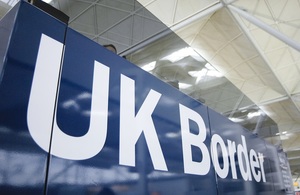
UK Border Sign

Publishing the report, David Neal, the Independent Chief Inspector of Borders and Immigration (ICIBI), said:

I welcome the publication of this report, which examined the quality of decision making at juxtaposed controls. Inspectors conducted a sample of 109 Border Force records for passengers subjected to further examination at all juxtaposed controls throughout March 2022, and visited Paris Gare du Nord and Coquelles, France, to observe practices on the ground.

Overall, this inspection found that staff were generally doing an effective job and that decision making was generally conducted in line with guidance, policy and the Immigration Rules, though this was caveated by the fact that poor record keeping sometimes made it difficult to tell whether a decision was correct. I was particularly pleased to see that the principles of the ‘ethical decision-making model’ were being applied.

I made three recommendations. First, on improving record keeping and ensuring the rationale underpinning decisions was clearly articulated. Second, on introducing guidance and policy instructions for Border Force staff on the use of ‘elect to embark’, which I found was currently being applied inconsistently and possibly incorrectly. Finally, in light of transparency data that suggested Romanian nationals are subjected to greater levels of questioning at juxtaposed controls than other nationals, I recommended that the Home Office conduct a review to ascertain on what grounds particular nationalities were being subjected to greater levels of scrutiny.

It is disappointing that, of the three recommendations made, one has been rejected, and two were only partially accepted on the basis of the Home Office being unable to meet the stated timeframe for implementation. This was partly due to the Home Office already having some projects in train (such as the Border Crossing project), though receipt of my report does not appear to have influenced a more rapid introduction of this technical solution.

Further, it is disappointing that the Home Office has rejected my recommendation regarding the disparate treatment of certain nationalities at the juxtaposed controls. While I accept that immigration functions are exempt from certain elements of the Public Sector Equality Duty and the Home Office has provided an assurance that passengers are not being targeted on the basis of nationality, my inspectors could not be satisfied that the current approach taken by Border Force in respect of the questioning and examination of arriving passengers of certain nationalities at juxtaposed controls could be objectively justified.

Published 18 October 2022


Inspection Report Published: An inspection of the Home Office’s processing of family visas September 2021 – February 2022

News story

This inspection examined the Home Office’s processing of indefinite leave to remain applications on the family visa route.

Visa Vignette

The inspection report focused on:

  • the efficiency of the process and the quality of decisions
  • the accessibility of the application process for applicants
  • the impact on an applicant (and their family) when they are placed on a 10-year route to settlement
  • whether assurances are in place to ensure that discretion is being exercised in decision-making, where appropriate, to put the applicant at the forefront of the process.

Publishing the report, David Neal, the Independent Chief Inspector of Borders and Immigration (ICIBI), said:

I welcome the publication of my report into the processing of indefinite leave to remain (ILR) applications on the family visa route (under Appendix FM).

This was a positive inspection and my inspectors found that decision makers were employing evidential flexibility rather than automatically refusing applications. This demonstrates a team that is taking steps to see the ‘face behind the case’ and is encouraging to see in the post-Windrush era.

However, clearer and more readily accessible guidance on how to submit an application and the evidence required, with updates on application progress from the Home Office, would represent better ‘value for money’ for the applicant. I hope that the focus on Customer Services as part of the transformation of the Home Office (“One Home Office”) will go some way to address the complexity of the application process.

Home Office data indicates that the vast majority of applications that reach the ILR stage are granted, so delay, complexity and barriers to full integration into our society seem unnecessary.

I find the 6-month service standard difficult to reconcile when compared with the shorter service standards for entry clearance and further leave to remain applications on the same route. The lack of an effective triage system, which results in straightforward applications (95% of which will be granted ILR) sometimes being delayed until the 5-month point, is unfair and needs to be fixed quickly.

Finally, given that it is 10 years since Appendix FM was introduced, the Home Office should collect targeted data to understand the impact of the 10-year route on low-income families and those who become undocumented due to the protracted route to settlement, which should inform a refresh of the Equality Impact Assessment.

This report made 4 recommendations. The Home Office has accepted 2 of them and partially accepted 2. I am pleased that work is already underway to implement them.

Published 18 October 2022


Support for new affordable green finance products to drive up energy efficiency

  • New fund to boost the choice of affordable green finance products for homeowners to help them reduce energy consumption
  • government encourages lenders to innovate in the green finance market so families can lower their energy bills and reduce their carbon emissions
  • research shows houses with Energy Performance Certificate (EPC) rating C sell for 5% more than less energy efficient ones

New support launched by the government today will help banks, building societies and the wider finance industry to create more green finance products for homeowners.

The new products will be designed specifically for those looking to improve the energy efficiency of their properties.

Ministers are keen to scale up the green finance market and provide households with more choice of affordable finance options to retrofit their homes, helping them spend less on energy. It is part of wider efforts towards ensuring as many homes as possible to EPC band C by 2035 as possible.

Up to £20 million is being made available for lenders and other organisations, through the Green Home Finance Accelerator, to develop new lending products which provide upfront and affordable capital to those who can afford it, to help make their homes more comfortable, cheaper to run and with lower carbon footprints.

The funding will be used to support lenders and other providers to develop, test, and pilot new and innovative green finance products that can help a wide range of homeowners overcome the upfront costs of larger retrofit. It also seeks to boost knowledge and understanding about green finance and how energy efficiency can make homes cheaper to run.

It follows the launch of the new Energy Price Guarantee, which has capped the bill for a typical UK household to an average of around £2,500 a year until April next year. It also comes in addition to the £400 energy bills discount for all UK households.

20% of emissions come from buildings and nearly 2 thirds of owner-occupied homes are below EPC C rating, meaning their energy bills could be hundreds of pounds more than homes with a higher EPC rating.

The average EPC rating of owner-occupied homes is D. Owners of these properties can help push their homes to EPC C through various measures, depending on the property. This can often be by fitting small things like LED bulbs or heating controls. On other properties it might mean installing cavity wall and loft insulation and possibly insulating draughty floors, which together would cost on average £6,500. But these could save households over £300 a year on their energy bills. The financial products today’s funding will help create would ensure households have access to the money they need to make this kind of investment in their homes.

Minister for Business, Energy and Corporate Responsibility, Lord Callanan, said:

Driving up the energy efficiency of homes won’t only reduce our impact on the climate, but will also help houses stay warmer for longer.

Green finance products will allow households with greater means to spread costs over time, empowering them to be able to invest in their properties, improving their energy efficiency and resale value.

Today’s funding will give more companies in the financial sector the opportunity to create and offer these products, and in so doing help households reap the benefits both in the investment to their properties, and in the savings they can make on their energy bills.

Today’s announcement is the latest in a raft of measures designed to help improve the energy efficiency of the country’s housing stock.

The government’s £12 billion Help to Heat schemes includes the £450 million Boiler Upgrade Scheme, which opened to voucher applications in May 2022. This is already incentivising people to move towards low carbon heating, offering grants of £5,000 towards the upfront cost of the installation of an air source heat pump, and £6000 for a ground source heat pump.

The government is providing £4 billion between 2022 and 2026 to improve the energy efficiency of buildings, with 450,000 low-income households having their homes retrofitted with the likes of wall and loft insulation, solar panels and modern heating controls.

Homes Director for Lloyds Banking Group, Andrew Asaam, said:

Around 2 thirds of homes don’t currently achieve an EPC C rating, meaning millions of people are living in colder, draughtier, more expensive to heat homes than they need to.

We are committed to helping people improve their properties, cut their carbon emissions, lower their fuel bills, and live more comfortably in their homes. We will continue to develop, test, and launch products that incentivise, support, and reward energy efficiency home improvements.

It follows the Green Home Finance Innovation Fund in 2019, which supported the likes of Monmouthshire Building Society and Lloyds Banking Group to develop online home energy saving tools and green mortgages. They help customers work out how energy efficient their homes are and create an individualised plan for improving this, with additional borrowing at preferential rates to existing customers and tailored green mortgages to new ones.

  • Funded through the £1 billion BEIS Net Zero Innovation Portfolio, the Green Home Finance Accelerator programme (GHFA) competition opens to applications today (18 October 2022). There are no restrictions on the types of organisations who can apply, other than that they must be UK based businesses; however applicants must demonstrate that their project proposal will lead to a viable green finance product and that they have the resources and expertise to deliver this. Consortiums of different partners (for example a lender and an energy efficiency supplier, installer or advice provider) are encouraged. Information on the competition, including the application form, guidance documents and other resources, are available from the GHFA website.
  • the GHFA has an emphasis on encouraging novel and innovative finance product and service proposals which the market is unlikely to deliver on its own, and which will target and support consumer types less well served by existing green finance offers
  • energy efficiency and low-carbon heating measure costs and savings will vary by property type and size. Likely bill savings will also be influenced by energy price fluctuation, and the costs and savings detailed above are illustrative only. Individual property owners and households can use the government’s new digital energy efficiency advice service to assess the efficiency of their home and determine suitable improvements. Through the advice service households will be able to obtain information on the estimated costs of installing any recommended improvement(s), how much a measure could save on household bills and get information on next steps if they wish to make the improvement(s)
  • the typical UK house price was reported as £273,751 by Nationwide in August 2022.
  • a pricing study commissioned by BEIS demonstrated a 5% increase in property value in homes with an EPC Band C rating, compared to those with an EPC Band D, when building size and archetype were controlled for. Similar price benefits were identified by a study commissioned by Monmouthshire Building Society as part of their BEIS funded Green Home Finance Innovation Fund project
  • find further information on the Boiler Upgrade Scheme and how to apply