Driving collaboration in Swansea

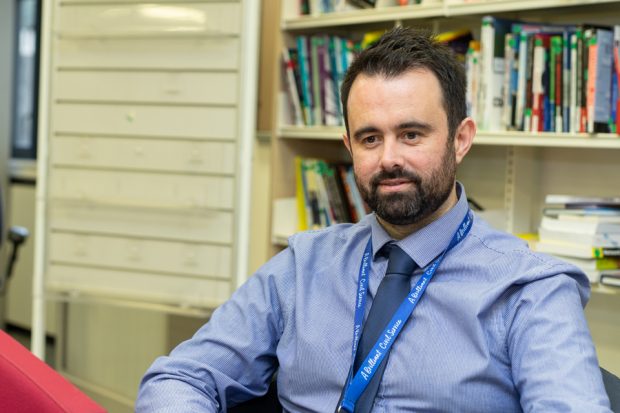
Andrew Falvey, DVLA’s Commercial Director, tells us all about the work he’s been doing to foster better networking relationships within the public sector in Swansea.

Andrew Falvey, DVLA's Commercial Director

Before I joined DVLA in 2010, I worked at Swansea Council as a Head of Service. At the time I often pondered that I knew very little about the place, even though I’m from Swansea and it was literally just up the road. I’d never been there, and I didn’t know anyone in a senior position that I could call up. I was told that there was a large commercial team there, for example, surely we’ve some things in common? Why weren’t we talking? This seemed like a missed opportunity to me.

Making the first move

Fast forward a few years, and I’m a director in DVLA, wondering if there is a way of improving communication and collaboration between Swansea’s largest public sector employers. Throughout my career I’ve always been wary of being too inward looking – I think it’s important to share best practice and learn from others, this helps organisations flex and adapt to challenges and opportunities.

So I emailed a few senior people in other local public sector bodies, some that I knew personally and some names plucked from the internet, and asked if they would be interested in forming some kind of group. Despite my cold calling, to my delight I had very positive responses and before long the Swansea Large Employers Forum was born.

Who we have on board

We’ve top level representation from ABMU Health Board, Swansea Council, Swansea University and University of Wales Trinity St David, plus of course DVLA. Between us, we employ around 40,000 staff. When you add on the local supply chains that support our organisations, it adds up to a huge impact on the working population of the Swansea area.

Why these organisations? Well, there was nothing scientific in our approach, we simply looked at public sector organisations in Swansea that employed over 1,000 people. We’ve kept it to the public sector as there are similarities in our working practices and legal frameworks that we operate under. We don’t ignore the progress and best practice that the private sector brings, so this often influences our conversations.

Given the ongoing work on the Swansea Bay City Deal, the forum provides a really useful opportunity for members to consider how we can work together in support of the Deal, for example around the skills agenda.

Taking the time to meet

We meet 4 times a year for a couple of hours – not a huge time commitment, but enough to provide a regular chance to catch up, and we always seek to take away actions that we can work on. It’s no surprise that when we meet we often have the same business challenges: skills shortages, recruitment, retention of staff, transport and parking. We also discuss how we work with local businesses, both in partnership and as part of a supply chain.

The forum has met several times, and we’re seeing the increasing value of sharing our views. We’re all from large and complex organisations to those outside, and the ability to be able to email or pick up the phone to someone who can advise, or simply help you to navigate to the correct person or team, is hugely helpful.

The group has also spawned some topical sub-groups. The ones that have already met are Cyber Security, Cloud, Human Resources, GDPR, and IT Strategy. These groups are introducing people with similar expertise to each other, often for the first time. The knowledge sharing and the willingness to co-operate has been great to see.

I’m grateful to my colleagues on the forum who continue to bring enthusiasm and ideas to our meetings. We all share a common purpose and that is to find ways we can improve public services, while supporting local people and businesses.

Keep up to date with the latest news about DVLA, including our latest vacancies.

Follow DVLA on TwitterFacebook and LinkedIn and subscribe to our Digital Services Blog.

Let’s block ads! (Why?)


What I learned from teaching schoolchildren about DVLA

They say never work with children (or animals). But Nicola Braun, of DVLA Vehicle Business Services, proved this wrong recently when she visited a class of local schoolchildren to tell them all about DVLA.

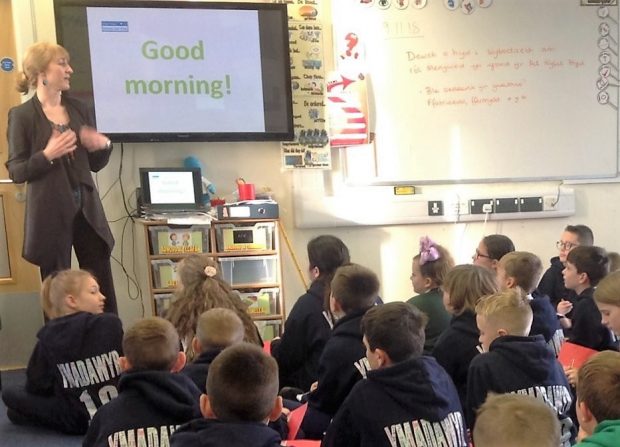
I’ve always been nervous about public speaking as I’m quite shy by nature. But when I was asked to give a presentation about the agency to around sixty 10 to 11 year olds, I jumped at the challenge!

DVLA's Nicola Braun speaks to children about the agency

How it happened

At my daughter’s parents evening I was having a chat with her teacher when he asked me where I worked and what my role was. I explained about DVLA and what we do and talked a bit about my role in Vehicle Business Services.

He was really interested and asked if I’d like to present to year 6 pupils (including my daughter!) about my place of work and career. I immediately said yes. It’s something I’ve always wanted to do – as well as helping the children to develop and learn about something new, I knew I’d learn a lot from it as well.

Getting started

I got the clearances I needed from work to go ahead, then I started on my presentation. I made sure I included the kind of stats and numbers which would help to keep my young audience’s attention. For example, did you know that last year we issued more than 11 million driving licences? Or that our contact centre took around 14 million calls from customers? I felt it was important to get across the scale of what we do.

Presentation done, next it was on to the tricky bit…

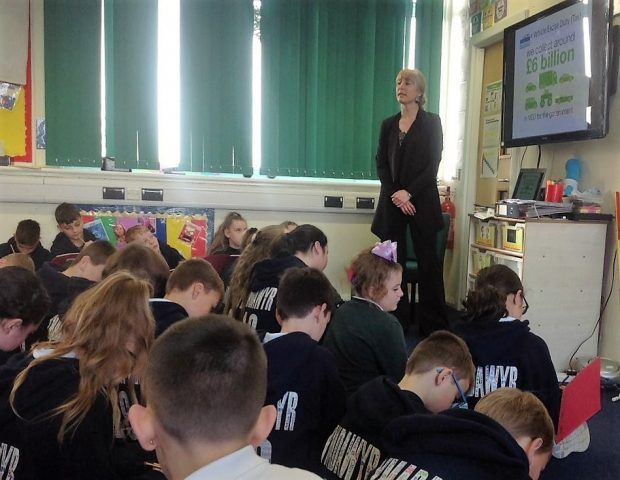
DVLA's Nicola Braun speaks to primary school children about DVLA

New teacher nerves

Soon, it was ‘Presentation Day’. That morning I felt sick with nerves, thinking ‘Oh my gosh! I’ve never done this before, I hope I do well…’ But as soon as I went into the classroom, my butterflies went. I introduced myself and began my presentation.

The children really seemed to be paying attention, as they were scribbling away and making notes of my slides. I had to slow down so they could capture all the information I was relaying.

I think it’s important to teach children about staying on the right side of the law as early as possible, so I mentioned this in my presentation. Maybe the bit where I talked about the ‘consequences of not abiding by the law’ did the trick, as they gasped when I told them they could get a fine of up to £1,000 for not taxing a vehicle!

Any questions?

I was keen to make it a two-way presentation. I wanted the children to feel part of it, so we had a question and answer session next.

I was asked plenty of really good questions. “Do you enjoy your job?”, “What did you want to be when you were in school?”… When I was asked “How long have you worked for DVLA?”, I answered “17 years”. I got a “Wow!” for that one.

The most popular question I asked the children was “What type of vehicle would you like to drive?” Nearly every hand went up. From Maseratis to limousines, I must say that they had great taste in vehicles!

When I finished and left the school, I was on cloud nine with a real sense of accomplishment. I’d faced up to my fears of speaking in front of large crowds of people, and spread the word about DVLA into the bargain.

The verdict

Was it worth it? Definitely! Not only did it help my confidence, but I hope I gave the children some tips on how to abide by the law when they grow up.

I would say to anyone thinking of doing something similar, if you ever get the chance to do something like this, give it a go. Chances are you could be speaking to your future customers, stakeholders or even colleagues.

Keep up to date with the latest news about DVLA, including our latest vacancies.

Follow DVLA on TwitterFacebook and LinkedIn and subscribe to our Inside DVLA blog.

Let’s block ads! (Why?)


Keep an eye on your vision for driving

New Vision Panel Secretary Dr Cathy Armstrong shares her professional advice on getting your eyesight checked for driving, and the extra challenges of driving in winter.

I was recently appointed joint DVLA Vision Panel Secretary alongside Dr Gareth Rees, and I’ve worked at DVLA for 2 and a half years. As it’s Road Safety Week, I thought it would be a good time to blog about eyesight and driving.

As drivers we often forget just how complex driving is, and being able to meet the vision standards for this complex activity is extremely important for road safety. It’s particularly important that if someone has been prescribed glasses or contact lenses for driving, they must wear them every time they drive to stay legal on the road.

Many of us wear glasses; maybe just for reading, maybe for all aspects of daily life – or a bit of both. However many people are prescribed glasses to make sure their eyesight meets the vision standards required by law for driving. Unfortunately, forgetfulness, vanity and difficulty tolerating glasses can result in unloved spectacles cluttering up car gloveboxes and handbags. But if they’re not worn, drivers are risking their own and other road users’ safety.

All drivers must be able to meet these eyesight standards as a legal requirement. They test both visual field and acuity – that is, the area your sight covers and how clearly you can see. A defect in your visual field may mean you struggle to see approaching hazards without having to look away from the road ahead. A reduction in your visual acuity could give you difficulty in reading road signs and signals. It’s also important to remember that those who drive for a living and have a group 2 (vocational) licence must meet higher standards for vision. This is because of the size and type of vehicles they drive, and the longer time spent behind the wheel.

Winter sky

Driving during the winter months can be particularly challenging, since weather conditions can make it difficult to see clearly. There are the darker mornings, glare from the low setting winter sun, reduced visibility in rain and fog, as well as wet and icy weather and shorter daylight hours… All of these factors can make driving conditions more hazardous at this time of year, particularly if you have any problems with your eyesight.

Eyesight deteriorates over time and this can happen at any age. Some drivers may be noticing some of the tell-tale signs that their eyesight is not as good as it used to be. You might be finding it harder to judge distances, struggling to read a newspaper, or maybe it’s getting more difficult for you to drive at night. That’s why we recommend that all drivers have their vision tested at least every 2 years. If you notice any change in your eyesight, go and see your optician straightaway – don’t wait until your next check-up or when your driving licence is due for renewal.

If you don’t meet the eyesight standards, stop driving immediately and tell DVLA. It’s better to be safe than sorry.

Let’s block ads! (Why?)


Inside DVLA 1970-01-01 00:00:00

[unable to retrieve full-text content]


A diverse and inclusive workplace

Uche Williams has been working in DVLA’s Contact Centre for 2 years. Here, Uche shares her experiences of working at DVLA.

My background…

I was raised in Lagos, Nigeria. My educational background is in Law, having completed my undergraduate degree in Nigeria. I moved to Swansea as an international student, doing my postgraduate degree and masters in International Maritime and Commercial Law.

I have now been living in Wales for just over 9 years. I am married and have a wonderful 3 year old daughter.

How I came to work at DVLA

After my studies I worked with the African Community Centre in Swansea. While I was working there DVLA’s HR department invited myself and my colleagues to exchange some ideas on how to increase the number of Black, Asian and minority ethnic (BAME) representation in the Civil Service. We looked at what we could do to make working at DVLA more appealing, and to help others understand what roles were on offer at DVLA.

Time for a change

This meeting was also an opportunity for me to find out a little more about DVLA. I decided it was somewhere I was interested in working and as soon as I saw a vacancy advertised I applied. My application was successful, which is how I came to work in DVLA’s Contact Centre.

I really enjoy my job!

The Contact Centre is a great starting point because it’s the core of the business. Once you have this background knowledge you can progress and use this information to build a career and branch off in different directions. DVLA is so much more than a Contact Centre; there’s actually a huge variety of other departments.

Approachable and supportive workplace

Working in a fast paced, contact centre environment can be demanding with customers having high expectations. We have to know a lot about a diverse range of topics and if we can’t give customers everything they want this can be difficult. My accent has, on occasions, caused a negative reaction from customers but my line manager has been amazing throughout and his support has really helped me to develop.

Opening up opportunities

DVLA’s Staff Networking Group, Unity, is an open supportive networking group, committed to upholding equality and diversity of race throughout the whole organisation.

As the secretary of Unity I have been able to look into issues that need to be tackled and make sure resolutions are reached. I am proud to perform this role at DVLA to try and make things better.

Check out the latest vacancies at DVLA right now. http://bit.ly/dvla-jobs

Let’s block ads! (Why?)