Consultation outcome: Rationalising the main river network: de-maining proposals

Updated: Details of final outcome published for South Forty Foot catchment.

The Environment Agency proposes to transfer flood risk management activities on a number of stretches of watercourses to internal drainage boards (IDBs), lead local flood authorities (LLFAs) and district councils. This means that IDBs, LLFAs and district councils can take on more responsibility for their local flood risk where appropriate. The Environment Agency has been working with a number of IDBs, LLFAs and district councils to consider proposals to re-designate sections of watercourses in a number of locations. The watercourses will be re-designated from main river to ordinary watercourse – a change we refer to as de-maining.

The proposal is to re-designate sections of the watercourse in:

  • Suffolk, East Anglia
  • South Forty Foot Catchment, Lincolnshire and Northamptonshire
  • Stour Marshes, Kent and South London

All of these sections of watercourse have low levels of flood risk to people and property, and are not associated with major rivers or major population centres. The proposal is that this will strengthen local decision making. This helps IDBs, LLFAs and district councils to manage these stretches of watercourse and carry out works where they see fit for the benefit of local people.

This consultation explains all of the information in our proposals, including information about how the proposed sections of watercourses are currently managed and funded. The consultation also provides details on future management and funding if de-maining goes ahead.


Consultation outcome: Marine licensing application fees: proposed changes 2017

Updated: Summary of responses (including government response) added.

We want to know what you think about our proposals to revise the marine licensing application fees. These fees apply to England, Wales and Northern Ireland offshore marine areas. The changes are needed to make sure that the application fee remains in-line with the costs incurred by the Marine Management Organisation when managing applications.

We’re also seeking views on plans to introduce an online self-service portal.


News story: We’re half way there

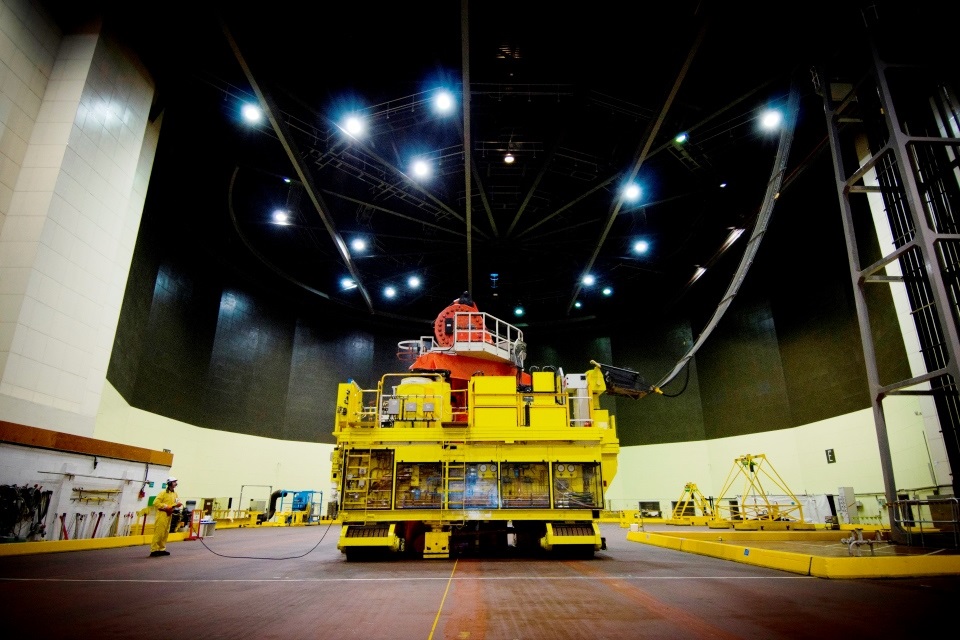
When operating, Wylfa’s 2 reactors together contained nearly 100,000 fuel elements. Since the end of generation, on 30 December 2015, the site’s main focus has been to empty both reactors and send all the remaining used fuel to Sellafield for reprocessing. When Wylfa completes defueling, this will mark the end of one of the UK’s largest programmes of nuclear and hazard reduction work.

Britain’s pioneering fleet of 11 Magnox reactors were the world’s first commercial nuclear power stations. The earliest, Calder Hall, came online in 1956 and Wylfa was the last to finish generating low-carbon electricity. In almost 60 years, around 5 million Magnox fuel elements were manufactured for UK nuclear power stations.
Once the reactors are empty, and all the fuel elements have been dispatched to Sellafield, over 99 per cent of the site’s radiological hazard will have been removed.

This marks a significant achievement for Magnox Ltd’s and for the Nuclear Decommissioning Authority’s (NDA) mission of safely cleaning up the legacy from the earliest days of the UK’s nuclear industry.

Defueling at Wylfa
Defueling at Wylfa

Stuart Law, Wylfa Site Director, said:

This is a landmark achievement for the site, which has involved a lot of hard work and dedication from the highly skilled team at Wylfa.

It’s a meticulous process and it takes time but we have the skills, the knowledge and the people to safely and securely deliver the Magnox work programme.

Tim Dunham, Magnox Head of Nuclear Operations, commented:

This is a proud moment for the site in its vital contribution to closing out the Magnox fuel cycle. My congratulations go to the team for safely reaching this point. We envisage that the defuelling programme will complete in mid to late 2019 with everyone working hard to achieve this target.

Geoff Suitor, Head of the Magnox Programme for the NDA, said:

Removing all the used nuclear fuel from a station, when it finishes generating electricity, is the first major step in removing the all the hazards and decommissioning the site. Passing the half-way stage is a great sign of the progress being made by our colleagues at Magnox.


Notice: Michael Francis Trafford trading as Wroxham Home Farms: application made to abstract water

The Environment Agency consult the public on certain applications for the abstraction and impoundment of water.

These notices explain:

  • what the application is about
  • which Environment Agency offices you can visit to see the application documents on the public register
  • when you need to comment by


National Statistics: Household Energy Efficiency National Statistics, headline release December 2017

This release includes measures installed under the Energy Company Obligation (ECO) and the Green Deal schemes. It also includes further analysis and geographical breakdowns of ECO measures, ECO delivery costs, estimated carbon and energy savings from measures installed and the supply chain. These statistics are provisional and are subject to future revisions.