Notice: IP26 4RJ, Nova Farming Ltd: environmental permit application advertisement
The Environment Agency consults the public on certain applications for waste operations, mining waste operations, installations, water discharge and groundwater activities. The arrangements are explained in its Public Participation Statement
These notices explain:
what the application is about
how you can view the application documents
when you need to comment by
The Environment Agency will decide:
whether to grant or refuse the application
what conditions to include in the permit (if granted)
The Environment Agency consults the public on certain applications for waste operations, mining waste operations, installations, water discharge and groundwater activities. The arrangements are explained in its Public Participation Statement
These notices explain:
what the application is about
how you can view the application documents
when you need to comment by
The Environment Agency will decide:
whether to grant or refuse the application
what conditions to include in the permit (if granted)
The Environment Agency consults the public on certain applications for waste operations, mining waste operations, installations, water discharge and groundwater activities. The arrangements are explained in its Public Participation Statement
These notices explain:
what the application is about
how you can view the application documents
when you need to comment by
The Environment Agency will decide:
whether to grant or refuse the application
what conditions to include in the permit (if granted)
Press release: North east rivers get fish stocks boost
The Environment Agency has released more than 40,000 young fish into north east rivers during last year to give stocks a boost.
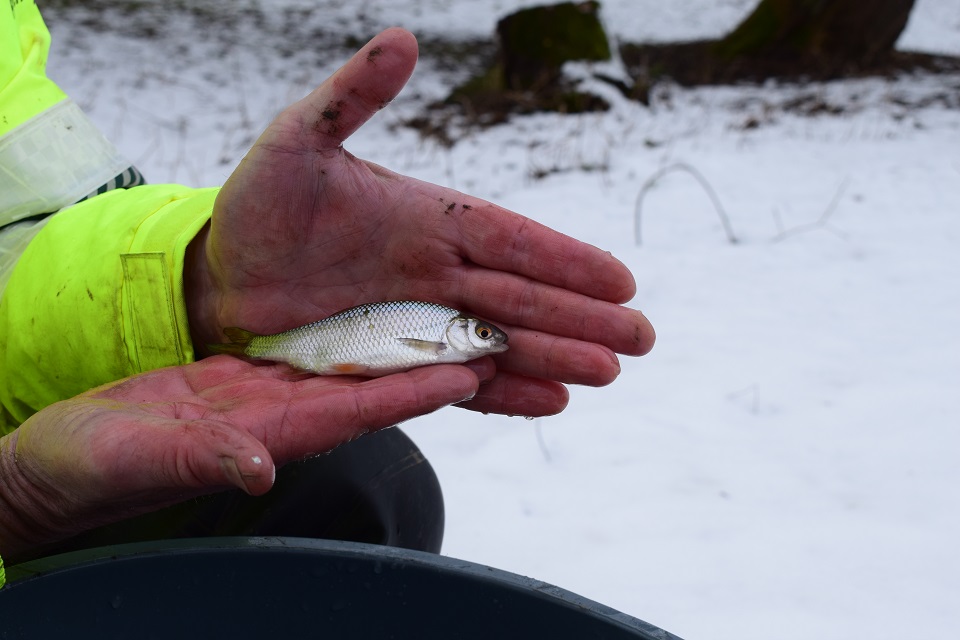
The fish – chub, dace, roach, bream, barbel, tench, grayling, crucian carp and rudd – are just some that were released right across the region during 2017.
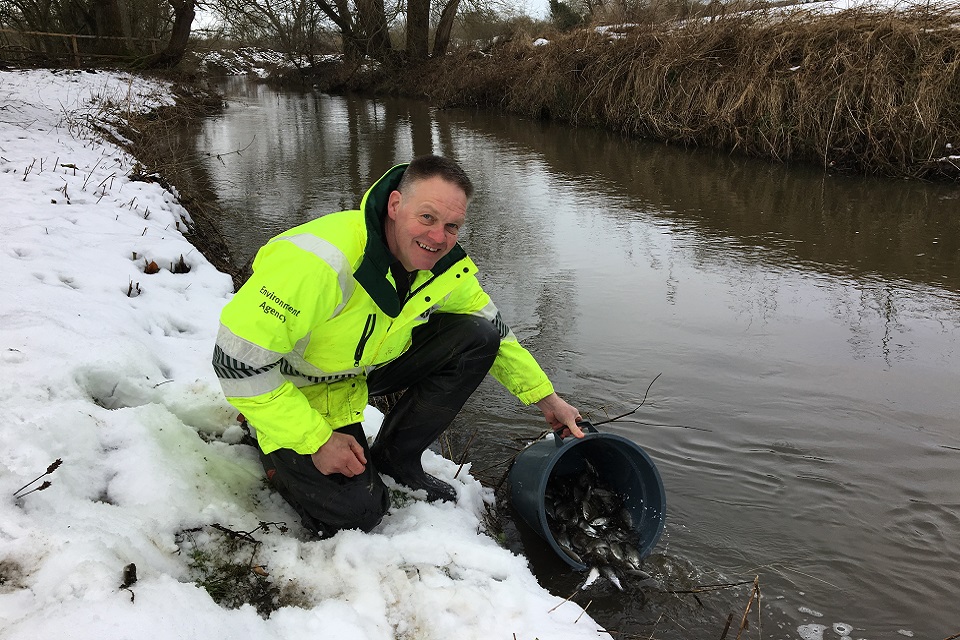
And on Monday (22 January), the Environment Agency’s north east fisheries team started off the new year by releasing 4,000 chub and 5,000 roach into the River Skerne at Darlington.
All the fish were reared at the Environment Agency’s fish farm near Calverton, Nottinghamshire, using funding from rod licence sales.
Last year fish were released into rivers such as the Tees, Wear, Skerne, Gaunless, Browney, Blyth, Pont, Clow Beck and Langley Beck as well as Stillwater fisheries.
The work is part of the Environment Agency’s ongoing plan to develop and restore rivers and fisheries in the region, targeting those which have previously been affected by pollution or where barriers affect fish passage.
Paul Frear, Fisheries Officers for the Environment Agency in the north east, said:
Restocking is one of many things we do together with our partners to develop fisheries, including reducing the impact of pollution, improving habitats and removing barriers to fish migration.
The Environment Agency releases fish into our waterways annually. Fisheries officers target fish stocking activity using data from national fish surveys to identify where there are problems with poor breeding and survival. Paul added:
By releasing fish into the rivers it helps the process of natural recovery and development. We’re pleased to be able to provide these young fish as part of our commitment to rod licence paying anglers. Restoration and the creation of new fisheries for all people to enjoy is a very important aspect of our work.
Many of our industrialised rivers have improved dramatically in water quality in the last 30 years and targeted and appropriate restocking has helped the restoration of natural fish stocks and viable fisheries.
Angling is a great way to keep healthy and enjoy the natural environment. All rod licence income is used to fund work to protect and improve fish stocks and fisheries.
Fishing is free for children under 16, although those aged between 12 and 16 still need a junior licence. For anyone over 16, a full annual licence costs from just £30, with some short term and concessionary licences also available. You can buy your rod licence online at the gov.uk website
News story: New emission controls will help improve air quality
Restrictions on air pollution from combustion plants and generators were passed by parliament this week, as the government continues to take action against poor air quality.
Air pollution is the biggest environmental risk to public health in the UK, and currently unregulated medium sized combustion plants (MCPs) and generators, commonly used to heat hospitals, hotels, offices, prisons and other large buildings as well as powering some industries, are a significant source of pollution.
A statutory instrument was debated and passed in the house of Commons and House of Lords on Monday and will come into force shortly, implementing a new Medium Combustion Plant Directive.
However, the government is going even further by introducing additional domestic emission controls on generators to tackle pollution from small scale, flexible generators which not covered by the Directive but are highly polluting and have been increasingly used in recent years.
The new regulations are expected to provide 43% of the sulphur dioxide emissions reduction, 9% of the reduction for particulate matter, and 22% of the nitrogen oxides emissions reduction needed to meet the UK’s 2030 targets.
Environment Minister Therese Coffey said:
Air pollution has improved significantly since 2010, but we recognise there is more to do which is why we have put in place a £3.5billion plan to improve air quality and reduce harmful emissions.
These regulations will help deliver further substantial reductions in emissions, while minimising the impact on energy security and costs to businesses. Poor air quality affects public health, the economy, and the environment, which is why we are determined to do more, and later this year we will publish a comprehensive clean air strategy which will set out further steps to tackle air pollution.
These regulations will require new medium combustion plants to reduce emissions from 20 December 2018 and existing medium combustion plants from 2025 or 2030, depending on their size – larger plants must comply sooner than smaller plants.
Additionally, newer generators will need to comply with a nitrogen oxides emissions limit from 1st January 2019. Older generators, operating prior to December 2016, and those providing certain services to the National Grid will need to comply from a later date, depending on their size, emissions, operating hours, duration of their agreements with National Grid and whether they sign up to new agreements.
Dr Penny Woods, chief executive of the British Lung Foundation, said:
Breathing in toxic pollutants increases all our chances of getting lung cancer, it can worsen symptoms for people who have a lung condition and it can stunt the growth of children’s lungs. We therefore welcome these restrictions on generators that will see a reduction in the invisible but deadly pollutants harming our health.
We need action on all sources of pollution, from traffic emissions to generators, if we are truly going to clean up the air in our towns and cities.