CFS urges public not to consume a kind of bottled fruit juice drink contaminated with patulin

     The Centre for Food Safety (CFS) of the Food and Environmental Hygiene Department today (April 17) announced that a sample of a bottled fruit juice drink imported from Australia was found to be contaminated with a mycotoxin, patulin, at a level exceeding the action level adopted by the CFS. A follow-up is in progress.
 
     "The CFS collected the abovementioned sample at a supermarket in Hung Hom for testing under its routine Food  Surveillance Programme. The test result showed that the sample contained patulin at a level of 260 parts per billion (ppb), exceeding the action level of 50 ppb adopted by the CFS. The level is the same as the standard of the Codex Alimentarius Commission on patulin in apple or apple juice," a CFS spokesman said.

Product details are as follows:

Product name: Organic Apple & Blackcurrant Juice
Brand: Pure Tassie
Country of origin: Australia
Importer/Distributor: PARKnSHOP (HK) Limited
Volume: 1.5 litre per bottle
Best-before date: October 6, 2020

     The CFS has informed the importer/distributor concerned of the irregularity. The importer/distributor has stopped sale and removed from shelves all batches of the affected product and initiated a recall according to the CFS' instructions. Members of the public may call the importer/distributor's hotline at 2606 8658 for enquiries about the recall during office hours. Prosecution will be instituted should there be sufficient evidence.
 
     "Patulin mostly occurs in rotten apple and its products. Animal studies showed that ingesting high doses of patulin can induce liver, spleen and kidney damage, as well as toxicity to the immune system. For humans, nausea, gastrointestinal disturbances and vomiting have been reported," the spokesman said.

     According to Section 54 of the Public Health and Municipal Services Ordinance (Cap 132), all food for sale in Hong Kong, locally produced or imported, should be fit for human consumption. An offender is subject to a maximum fine of $50,000 and imprisonment for six months upon conviction. 
 
     The CFS will alert the trade, continue to follow up on the case and take appropriate action to safeguard food safety and public health. An investigation is ongoing.

Public hospitals daily update on COVID-19 cases

The following is issued on behalf of the Hospital Authority:

     As at noon today (April 17), public hospitals had reported to the Department of Health the admission of 28 patients (17 male and 11 female, aged 13 to 83) in the past 24 hours who met the reporting criteria of COVID-19. Appropriate tests have been arranged for the patients.
      
     There are 510 patients under isolation currently. So far, 532 patients who had COVID-19 confirmed or probable infections have been discharged upon recovery.
      
     The Hospital Authority will maintain close contact with the Centre for Health Protection to monitor the latest developments and to inform the public and healthcare workers on the latest information in a timely manner.


Hong Kong Customs announces eight types of surgical masks suspected of exceeding bacterial limit in one month (with photos)

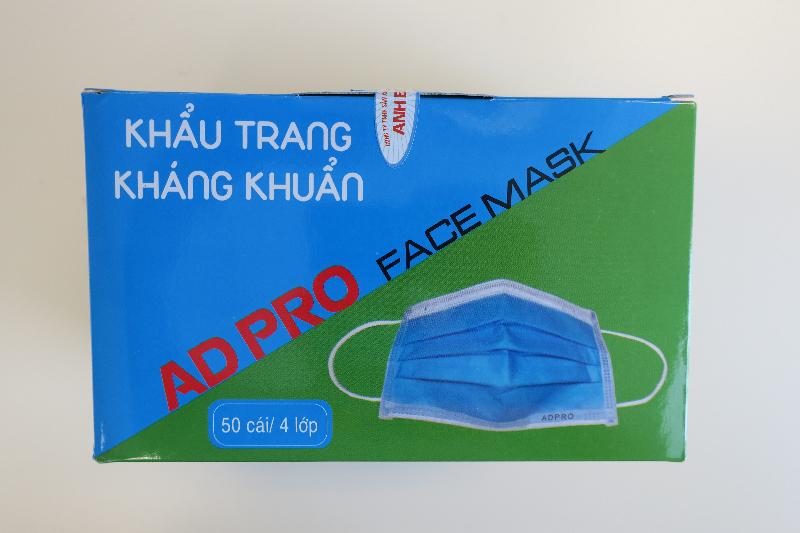
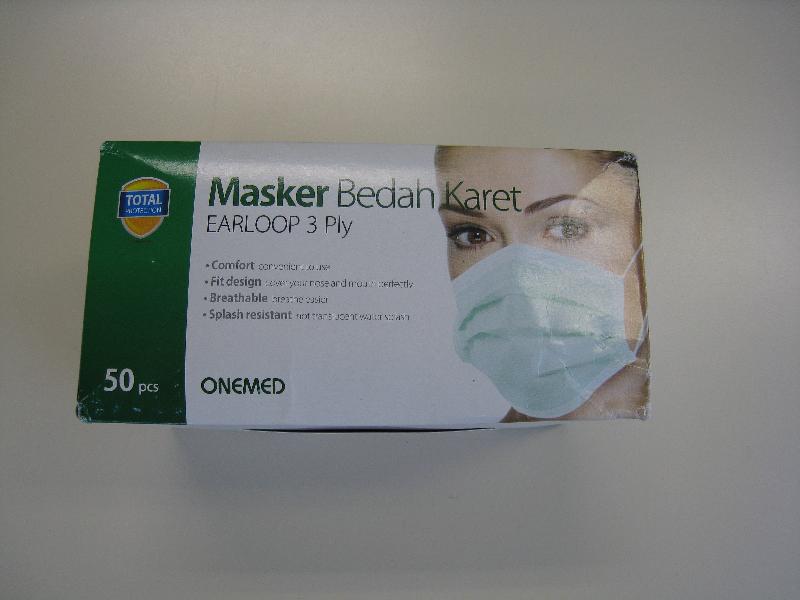
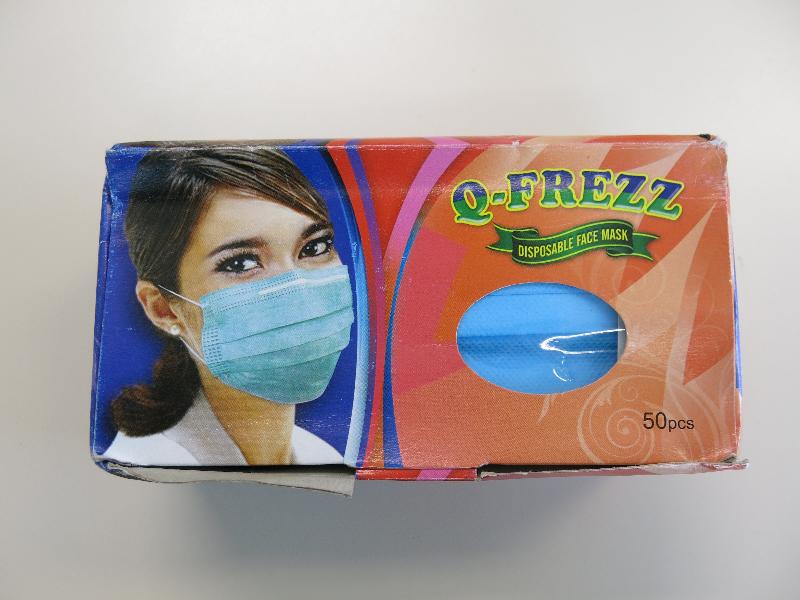
     Hong Kong Customs today (April 17) appealed to members of the public to stop using four types of surgical masks as test results revealed that the bacterial counts of those four types of surgical masks exceeded the maximum permitted limit. Traders should remove the products from shelves as well. Including these four types of surgical masks, Customs has in the past month or so announced a total of eight types of surgical mask products with bacterial counts exceeded the maximum permitted limit, in contravention of the Consumer Goods Safety Ordinance (CGSO).

     Customs yesterday (April 16) received the test results of the latest batch of 24 test-purchased surgical mask samples. According to the relevant hygienic standard for disposable sanitary products, the total bacterial counts of samples of four types of surgical masks exceeded the maximum permitted limit by 0.2 to 1.35 times, in contravention of the CGSO.

     The four types of surgical masks were packed in boxes of 50 pieces each, with the selling prices ranging from $150 to $280. All four samples had no manufacturing place labels. It is believed that they came from Southeast and West Asian countries according to initial investigation.

     Noting the test results, Customs today conducted immediate enforcement action and searched four retail spots located in Causeway Bay, North Point and Sheung Shui, comprising a pharmacy, a grocery store, a shop selling daily necessities and a fruit store. Four directors were arrested. No further seizure of the four types of surgical masks suspected of exceeding the limit of total bacterial count was made.

     The three men and one woman arrested, aged between 34 and 54, are now being detained for further investigation. Customs will further examine the four types of surgical masks to establish the types of bacteria present.

     Apart from the four retail spots in connection with the cases, Customs officers also checked multiple retail spots in various districts today and no such products were found for sale. Customs is undertaking in-depth investigation on the source of those surgical masks. The likelihood of further arrests is not excluded.

     In view of the development of the COVID-19 epidemic, Customs launched a large-scale territory-wide special operation codenamed "Guardian" on January 27 this year to conduct spot checks, test purchases and inspections in various districts on surgical masks available in the market. Samples of masks were also sent to the laboratory for tests on bacterial counts. To date, Customs has already test-purchased over 160 types of surgical masks for tests on bacterial counts. A total of 111 samples have been tested for bacterial count, among which 103 samples of surgical masks complied with the bacterial count standard.

     Apart from the four samples announced in this round, Customs has also announced another four types of surgical masks with bacterial counts exceeding the maximum permitted limit on March 14, of which the total bacterial counts exceeded the maximum permitted limit by 0.4 to 11.5 times

     Customs reminds members of the public to observe the following tips when purchasing and using surgical masks:
 

  • Read carefully the instructions on the packages in the purchasing process;
  • Check if there is any damage or dirt on the packages and stop using surgical masks with stains or odd smells;
  • Pay attention to the proper way of using surgical masks;
  • Change surgical masks at a suitable time;
  • Store surgical masks in dry places; and
  • Purchase at reputable retail shops.

     The "Guardian" operation has been running for over 80 days to date. More than 4 000 officers have been mobilised to conduct over 27 000 inspections at retail spots in various districts to ensure that common protective items sold in the market comply with the CGSO and the Trade Descriptions Ordinance.

Photo  Photo  Photo  Photo  


SCED speaks on Local Mask Production Subsidy Scheme

     Following is the transcript of remarks by the Secretary for Commerce and Economic Development, Mr Edward Yau, on the Local Mask Production Subsidy Scheme at a media stand-up after attending the Legislative Council Finance Committee meeting today (April 17):

Reporter: Mr Yau, will the Government demand these companies not to use those titles or brandings (of the Local Mask Production Subsidy Scheme) before they actually sign the agreement (with the Government), or before they actually get the certifications to provide the masks? If there is no way for the Government to rein these companies in, is it really fair to customers? Will the authorities be at least punishing some of these?

Secretary for Commerce and Economic Development: I have mentioned from the outset that all products sold in Hong Kong, in particular surgical masks, have to fulfil (requirements under) the Trade Descriptions Ordinance and the Consumer Goods Safety Ordinance. These are the prerequisites, irrespective of whether they are produced in Hong Kong or under any schemes. They need to be subject to these consumer protection (requirements). The Customs and Excise Department has been carrying out a lot of inspections. Since late January till now, they have conducted no less than 270,000 (should be 27,000) inspections, involving 40 likely prosecutions and arrests. These are very stringent standards that everybody would need to comply with.

     As for the subsidy scheme that we are running for local mask production, we impose very stringent requirements on the quality of masks produced to meet the surgical mask standard, which is ASTM Level 1 (American Society for Testing and Materials Level 1 standard). They also need to fulfill certain clean room production requirements. Only when they have produced certifications in these areas that we would formally engage them and procure (masks) from them. We are in this process. While giving some approvals-in-principle (to some applications), we also allow these successful applicants to go through this certification process to start formal production. In the meantime, I would urge any of these companies to be very cautious in promoting themselves through the scheme because there will be a lot of misunderstanding created to the consumer market. Essentially they should produce for the Government. The production under the scheme could commence only when they meet these standards.

(Please also refer to the Chinese portion of the transcript.)


Government to sell site in Ap Lei Chau by public tender

     The Lands Department (LandsD) announced today (April 17) that a site, Ap Lei Chau Inland Lot No. 137 at Ap Lei Chau Praya Road, Ap Lei Chau, Hong Kong, listed in the 2020-21 Land Sale Programme will be disposed of by public tender. The tender invitation for the lot will commence on April 24, and close on May 22.
      
     Ap Lei Chau Inland Lot No. 137 has a site area of about 1,128.8 square metres and is designated for non-industrial (excluding godown, hotel and petrol filling station) purposes. The minimum gross floor area is 4,921 sq m. The maximum gross floor area for private residential purposes that may be attained is 8,201.6 sq m. The maximum gross floor area for non-industrial (excluding private residential, godown, hotel and petrol filling station) purposes is computed according to the relevant special condition in the Conditions of Sale.
 
     Land sale documents including the Form of Tender, the Tender Notice, the Conditions of Sale and the sale plan of the lot will be available for downloading from the LandsD website (www.landsd.gov.hk), and the sale plan will be available for distribution and inspection by the public from April 24, when the particulars of the tender will also be gazetted.