CFS announces results of seasonal food surveillance on rice dumplings (first phase)

     The Centre for Food Safety (CFS) of the Food and Environmental Hygiene Department today (May 25) announced that the test results of 64 rice dumpling samples collected under a recently completed seasonal food surveillance project on rice dumplings (first phase) were all satisfactory.
 
     Rice dumplings are a popular festive food for the Tuen Ng Festival. The project aims to provide information on the safe consumption of rice dumplings to consumers and the trade in a timely manner.
 
     "The CFS collected samples of rice dumplings from different food premises such as restaurants, food factories and other retail outlets for chemical and microbiological analyses. The chemical analyses included tests for colouring matters, preservatives, metallic contamination and pesticides. The microbiological analyses covered pathogenic bacteria including Salmonella, coagulase-positive staphylococci organisms, Clostridium perfringens and Bacillus cereus," a spokesman for the CFS said.
 
     The spokesman reminded members of the public to observe the following food safety tips in purchasing, preparing, storing and consuming rice dumplings:

Buying rice dumplings
————————-
* Buy rice dumplings from reliable outlets;
* When purchasing non-prepackaged rice dumplings, choose those that are securely wrapped in wrapping leaves; and
* When purchasing prepackaged rice dumplings, check the expiry date and whether the packaging is intact.
 
Home-made rice dumplings
——————————-
* Buy wrapping leaves from reliable suppliers and avoid leaves that are unnaturally bright green or with chemical smells;
* Choose healthier ingredients as fillings (e.g. dry beans, lean meat and mushrooms) by following the "3 Low 1 High" dietary principle of low fat, low sugar, low salt and high fibre;
* Wash hands and utensils thoroughly before and after handling food; and
* Handle raw and cooked food separately to avoid cross-contamination.
 
Storing and preparing rice dumplings
——————————————
* Consume rice dumplings as soon as possible and avoid prolonged storage;
* Store rice dumplings at 4 degrees Celsius or below, or store them properly according to the instructions on the package if they are not consumed or cooked immediately;
* Keep cooked rice dumplings that are not consumed immediately in a covered container and put them in the upper compartment of the refrigerator. Keep raw food in the lower compartment to prevent cross-contamination;
* Reheat rice dumplings thoroughly until the core temperature reaches 75 degrees Celsius or above before consumption;
* Do not reheat rice dumplings more than once; and
* Consume reheated rice dumplings as soon as possible.
 
Consuming rice dumplings
——————————
* Wash hands with running water and liquid soap, and rub for at least 20 seconds before consumption; and
* Reduce seasonings such as soy sauce or granulated sugar during consumption.
 
     The spokesman said, "Rice dumplings in general are relatively high in energy, fat and salt. During the festival, people should maintain a balanced diet, and consume rice dumplings moderately, with due consideration of their health condition. People are recommended to share rice dumplings with their family members and friends, as this not only enhances the festive atmosphere, but also allows them to taste rice dumplings of different flavours and avoid over-consumption. People are also advised to make use of nutrition labels on prepackaged food to compare their nutritional contents for healthier food choices."
 
     He also reminded food manufacturers to purchase food ingredients from reliable suppliers, adhere to Good Manufacturing Practice for preparation of food products and comply with legal requirements when using food additives.
 
     The CFS will continue to conduct surveillance on rice dumplings and the second phase results will be released in a timely manner to ensure food safety.


Hong Kong Customs combats sale of infringing goods at mobile hawker stalls in Central (with photos)

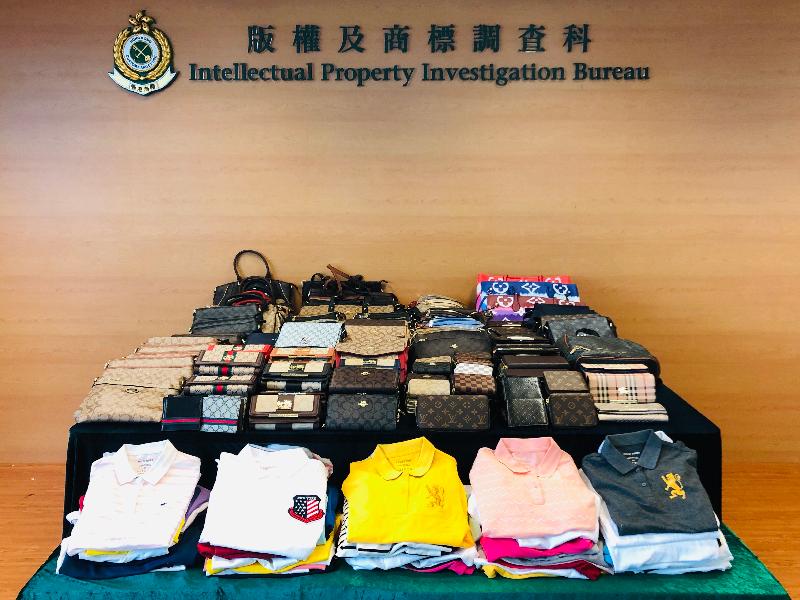
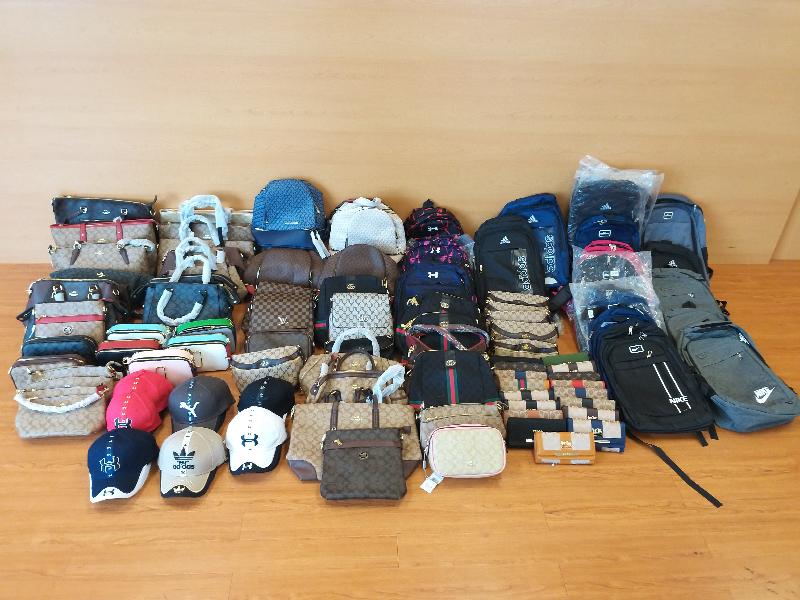
     Hong Kong Customs conducted operations against the sale of infringing goods at mobile hawker stalls in Central district for three consecutive weekends between May 10 and yesterday (May 24). About 2 300 items of suspected infringing goods were seized with an estimated market value of about $400,000.

     During the said period, joint operations were conducted by Customs, the Food and Environmental Hygiene Department, the Hong Kong Police Force and the Immigration Department to combat illegal hawking and the sale of infringing goods. During the operations, Customs officers raided multiple mobile hawker stalls selling suspected infringing goods in Central district and seized about 2 300 items of suspected infringing goods, including clothing, bags and wallets.

     Customs will continue to step up inspections and enforcement to vigorously combat infringing activities.

     Under the Trade Descriptions Ordinance, any person who sells or possesses for sale any goods with a forged trademark commits an offence. The maximum penalty upon conviction is a fine of $500,000 and imprisonment for five years.

     Under the Copyright Ordinance, any person who sells or possesses for sale any infringing goods commits an offence. The maximum penalty upon conviction is a fine of $50,000 per infringing copy and imprisonment for four years.

     Members of the public may report any suspected infringing activities to Customs' 24-hour hotline 2545 6182 or its dedicated crime-reporting email account (crimereport@customs.gov.hk).

Photo  Photo  


CHP announces no new local confirmed cases of COVID-19 today

     The Centre for Health Protection (CHP) of the Department of Health has announced that as of 4pm today (May 25), no new local confirmed cases of coronavirus disease 2019 (COVID-19) had been recorded, and that the number of cases in Hong Kong remained at 1 066 so far (comprising 1 065 confirmed cases and one probable case).
 
     In addition, the CHP has issued a letter to schools today to urge them to maintain vigilance against COVID-19 at school when classes resume.
 
     A spokesman for the CHP said, "As schools are collective assembly places, infectious diseases such as COVID-19 could be easily spread among people through their daily contacts. Sources of infection could come from staff, students or visitors (especially those having symptoms). Students or staff with fever (oral temperature higher than 37.5 degrees Celsius, or ear temperature higher than 38 degrees C), regardless of the presence of respiratory symptoms, should not be allowed to attend school. They should wear a mask and consult doctors promptly."
 
     The spokesman reminded that it is of prime importance to measure and record temperature properly. Schools should actively check the body temperature of all students every day when they arrive at school so as to identify students with fever. Staff should also check their temperature before work every day. Students and staff with fever or respiratory illnesses should refrain from attending school and seek medical advice as soon as possible. This additional measure should continue until further notice by the CHP.
 
     If a school notices an increase in fever or respiratory illnesses among students or staff, it should make a report promptly to the CHP. If a case of COVID-19 affecting a staff member or student is detected, the CHP will carry out epidemiological investigations and contact tracing, and provide advice to the school on the necessary prevention and control measures to be taken, including possible school closure.
 
     The CHP again urged members of the public to maintain an appropriate social distance with other people as far as possible in their daily lives to minimise the risk of infection. In particular, they should go out less and avoid social activities such as meal gatherings or other gatherings to reduce the chance of contacting infected persons who may not present any symptoms, and minimise the risk of outbreak clusters emerging in the community.
   
    The spokesman said, "Given that the situation of COVID-19 infection remains severe and that there is a continuous increase in the number of cases reported around the world, members of the public are strongly urged to avoid all non-essential travel outside Hong Kong.
 
     "The CHP also strongly urges the public to maintain at all times strict personal and environmental hygiene, which is key to personal protection against infection and prevention of the spread of the disease in the community. On a personal level, members of the public should wear a surgical mask when having respiratory symptoms, taking public transport or staying in crowded places. They should also perform hand hygiene frequently, especially before touching the mouth, nose or eyes.
 
     "As for household environmental hygiene, members of the public are advised to maintain drainage pipes properly, regularly pour water into drain outlets (U-traps) and cover all floor drain outlets when they are not in use. After using the toilet, they should put the toilet lid down before flushing to avoid spreading germs."
 
     The CHP has set up hotlines (2125 1111 and 2125 1122), which operate from 8am to 8pm daily, for public enquiries. As at 3pm today, a total of 121 701 calls had been received.
 
     Moreover, the Government has launched the website "COVID-19 Thematic Website" (www.coronavirus.gov.hk) for announcing the latest updates on various news on COVID-19 infection and health advice to help the public understand the latest updates.
 
     To prevent pneumonia and respiratory tract infection, members of the public should always maintain good personal and environmental hygiene. They are advised to:
 
• Wear a surgical mask when taking public transport or staying in crowded places. It is important to wear a mask properly, including performing hand hygiene before wearing and after removing a mask;
• Perform hand hygiene frequently, especially before touching the mouth, nose or eyes, after touching public installations such as handrails or doorknobs, or when hands are contaminated by respiratory secretions after coughing or sneezing;
• Maintain drainage pipes properly and regularly (about once a week) pour about half a litre of water into each drain outlet (U-trap) to ensure environmental hygiene;
• Cover all floor drain outlets when they are not in use;
• After using the toilet, put the toilet lid down before flushing to avoid spreading germs;
• Wash hands with liquid soap and water, and rub for at least 20 seconds. Then rinse with water and dry with a disposable paper towel. If hand washing facilities are not available, or when hands are not visibly soiled, performing hand hygiene with 70 to 80 per cent alcohol-based handrub is an effective alternative;
• Cover your mouth and nose with tissue paper when sneezing or coughing. Dispose of soiled tissues into a lidded rubbish bin, then wash hands thoroughly; and
• When having respiratory symptoms, wear a surgical mask, refrain from work or attending class at school, avoid going to crowded places and seek medical advice promptly.


Appeal for information on missing man in Sha Tin (with photo)

     Police today (May 25) appealed to the public for information on a man who went missing in Sha Tin.

     Hui Hin-kwong, aged 80, went missing after he left his residence on Sui Wo Road yesterday morning (May 24). His family made a report to Police on the same day.

     He is about 1.52 metres tall, 65 kilograms in weight and of medium build. He has a round face with yellow complexion and short white hair. He was last seen wearing a pair of glasses with black and brown rim, a yellow cap, a blue short-sleeved shirt, a black vest, black trousers, black shoes and carrying a crutch.

     Anyone who knows the whereabouts of the missing man or may have seen him is urged to contact the Regional Missing Person Unit of New Territories South on 3661 1173 or 5962 7223 or email to rmpu-nts-2@police.gov.hk, or contact any police station.

Photo  


Effective Exchange Rate Index

     The effective exchange rate index for the Hong Kong dollar on Monday, May 25, 2020 is 109.2 (up 0.1 against last Saturday's index).

     The effective exchange rate index for the Hong Kong dollar on Saturday, May 23, 2020 was 109.1 (up 0.1 against last Friday's index).