Members of public invited to Hospital Authority Board Meeting

The following is issued on behalf of the Hospital Authority:

     Members of the public are invited to attend the Hospital Authority (HA) Board Meeting to be held on June 18 (Thursday) at 3.30pm. 
      
     The HA Board Meeting has been open to members of the public since 1998 to demonstrate the continuous effort of the Authority to enhance its transparency and public accountability. The HA Board will hold meetings at regular intervals to discuss major health policy issues which have an impact on the public.
      
     Through these open meetings, the community will be able to understand more about the role and functions of the HA Board as well as the operation and services of the HA and its hospitals.
      
     The HA Board will discuss the following agenda items in the coming meeting:
 

  • Situation Update on COVID-19;
  • Annual Report on the Operation of the Community Care Fund Medical Assistance Programmes;
  • Annual Report on Public Appreciation, Feedback and Complaints Management 2019/20;
  • Progress Report on Strategic Priorities; and
  • Cluster Presentation Programme – New Territories West Cluster (NTWC) – Enhancement of Sterilisation System – Reverse Osmosis Water Treatment System in NTWC.

     The meeting agenda and papers will be made available to the public at the meeting. Members of the public are reminded that they may attend the Board Meeting only as observers and will not be participating in the meeting discussions. 

     In view of the epidemic situation, corresponding seating arrangements will be made at the venue to maintain proper distancing. Members of the public who are interested to attend the coming Board Meeting have to make an advance booking by contacting the Secretariat of the HA Board at 2300 6797 during office hours. To facilitate booking arrangements, members of the public are advised to provide their name and contact telephone number. In view of the limited seating available in the Public Gallery of the meeting venue, seating will be reserved on a first-come, first-served basis.


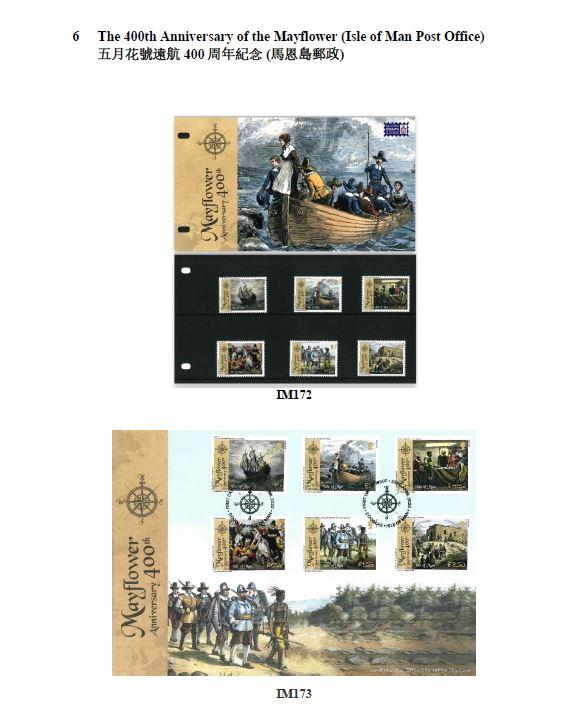
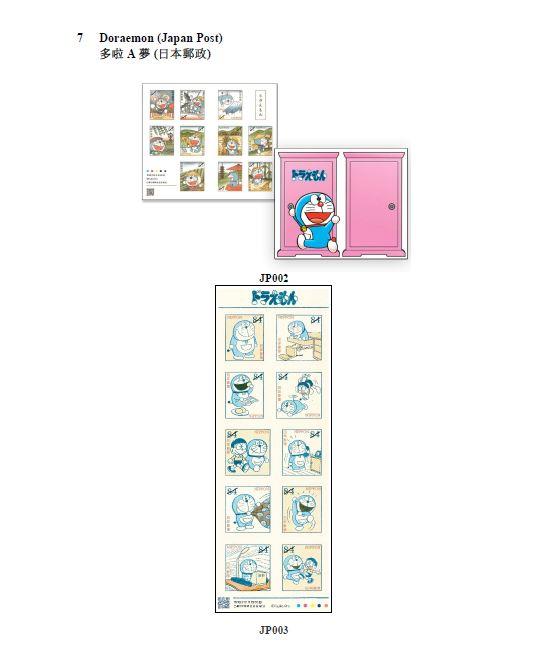
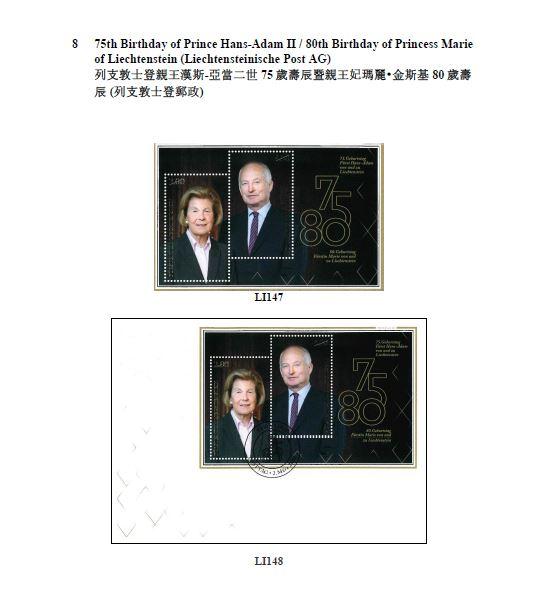
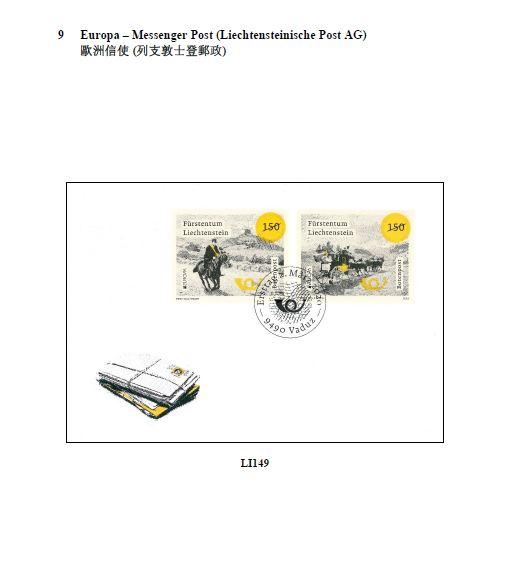
Hongkong Post announces sale of Macao and overseas philatelic products including “Doraemon” series seal-type stamps (with photos)

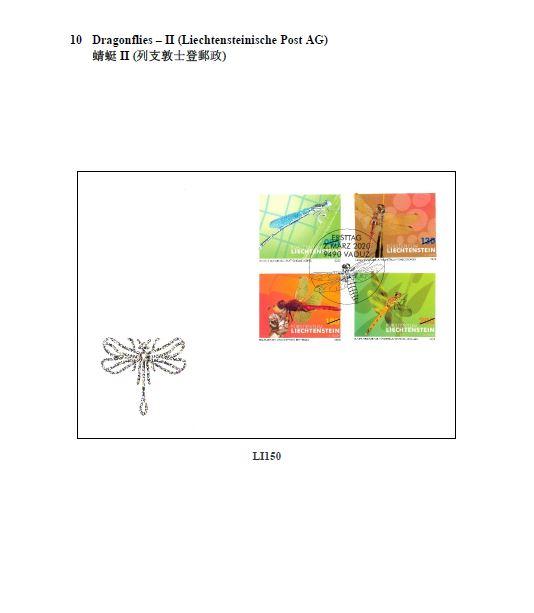
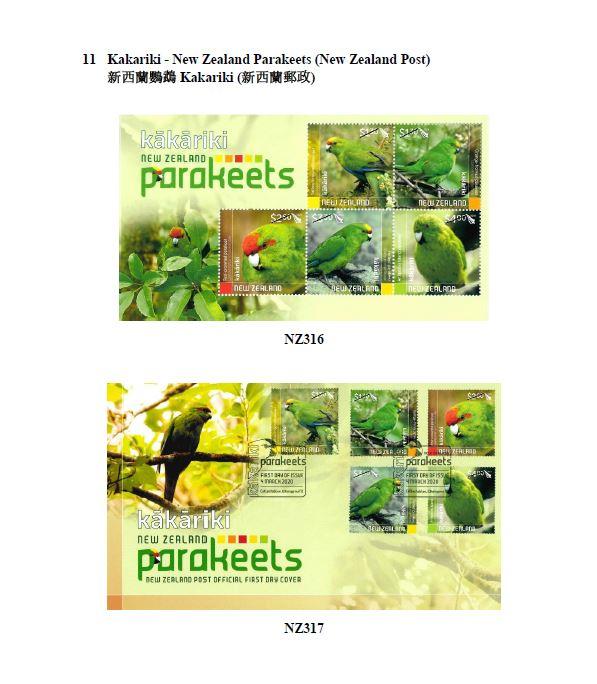
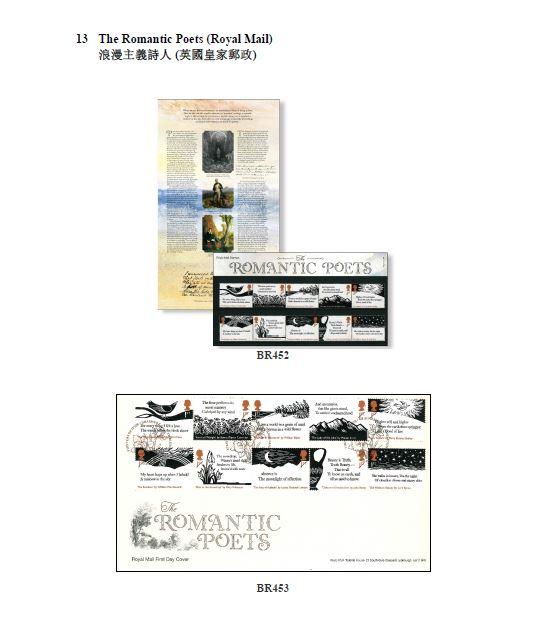
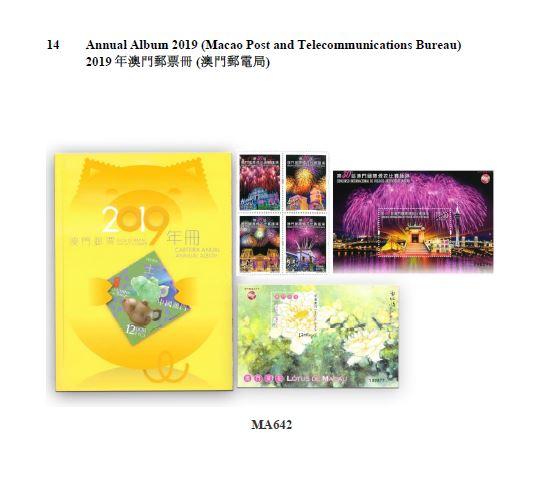
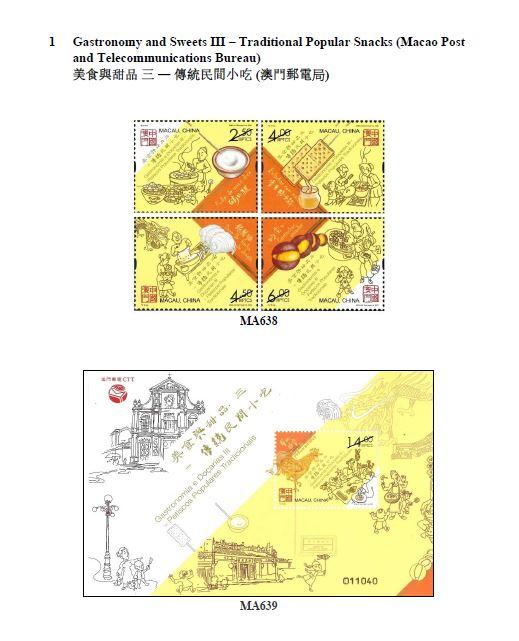
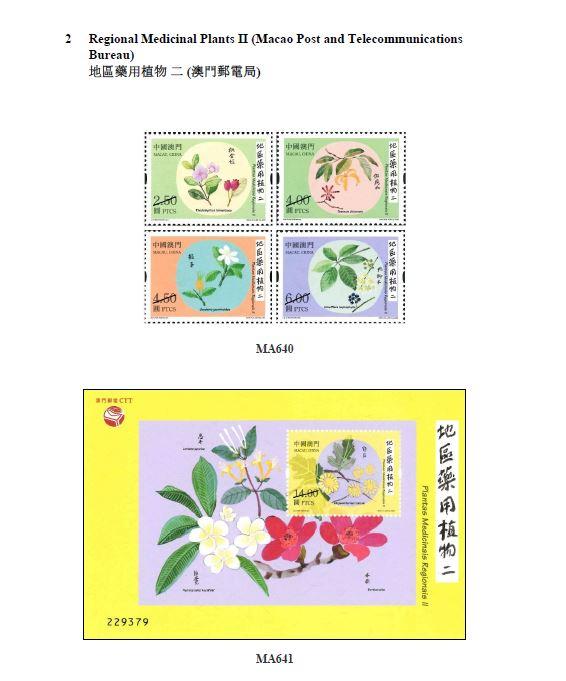
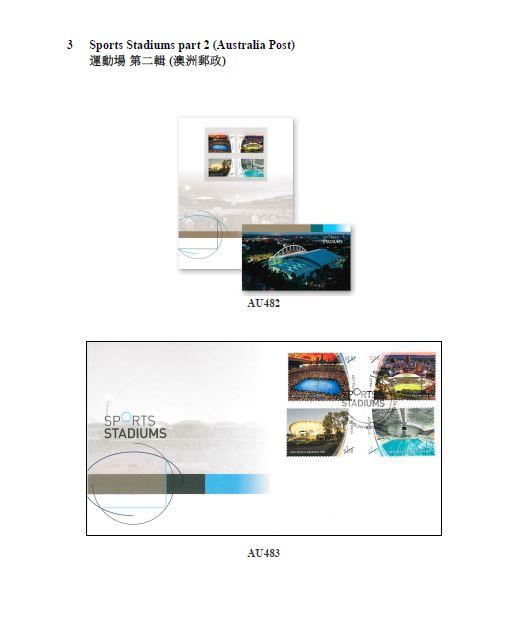
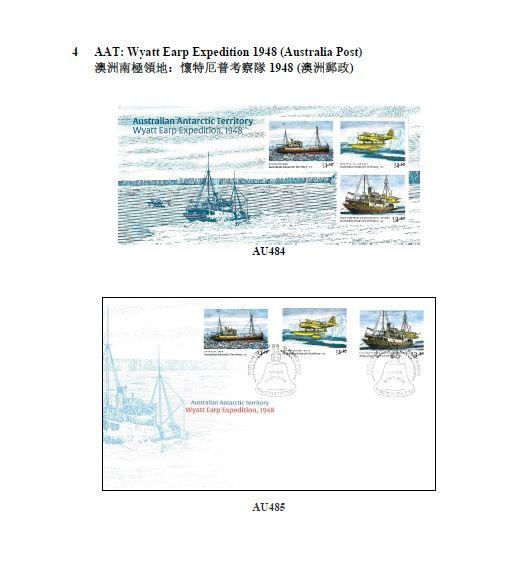
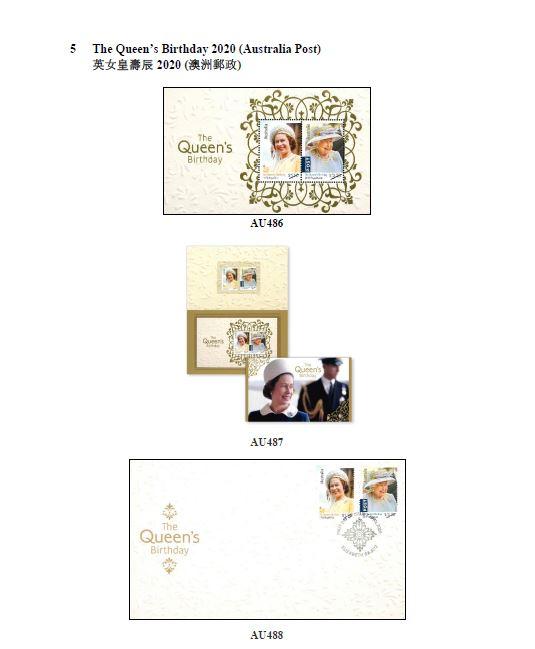
     Hongkong Post announced today (June 16) that selected philatelic products issued by Macao and overseas postal administrations will be put on sale at all 38 philatelic offices from June 18. All these products will also be available at the Hongkong Post online shopping mall ShopThruPost (shopthrupost.hongkongpost.hk) from 8am on that day.
      
     To commemorate the 50th anniversary of the "Doraemon" comic series, which has entertained generations and won the hearts of young and old alike, Japan Post issued two seal-type stamps with the theme "Doraemon". The design of the Doraemon Souvenir Sheet of JPY84 Postage Stamp (Seal Type) depicts the initial series of episodes with Doraemon and Nobita, evoking memories of different generations with a nostalgic style of painting. The image of "Doraemon with Dokodemo Door" is printed on the cover of the Stamp Booklet of Doraemon JPY63 Postage Stamp (Seal Type), making it highly collectible.
      
     For those who are fond of nature, the stamp products "Dragonflies – II" and "Kakariki – New Zealand Parakeets" issued by Liechtensteinische Post AG and New Zealand Post respectively are not to be missed. In addition, the long-awaited "Annual Album 2019" issued by the Macao Post and Telecommunications Bureau will also be put on sale at the General Post Office, Tsim Sha Tsui Post Office, Sha Tin Central Post Office, Tuen Mun Central Post Office and Tsuen Wan Post Office on the same day.
      
     Details of the philatelic products are set out in the Appendix. For further information, please visit stamps.hongkongpost.hk or call the Hongkong Post Philatelic Bureau hotline 2785 5711.

Photo  Photo  Photo  Photo  Photo  Photo  Photo  Photo  Photo  Photo  Photo  Photo  Photo  Photo  


Red flags hoisted at Hung Shing Yeh Beach and Pui O Beach

Attention TV/radio announcers:

Please broadcast the following as soon as possible:

Here is an item of interest to swimmers.

     The Leisure and Cultural Services Department announced today (June 16) that due to big waves, red flags have been hoisted at Hung Shing Yeh Beach and Pui O Beach in Islands District. Beach-goers are advised not to swim at these beaches.


Employers and employees should take precautions against heat stroke

     As the Hong Kong Observatory has issued the Very Hot Weather Warning, the Labour Department (LD) reminds employers and employees to take appropriate precautions to prevent heat stroke when working in a hot or humid environment.
 
     Heat stroke could occur if an employee works in a hot or humid environment for prolonged periods of time, as the body may fail to regulate its temperature by effective heat dissipation through sweating.
 
     The symptoms of heat-related illnesses include feeling thirsty, fatigue, nausea, vomiting, headache, dizziness, muscle spasm or even mental confusion, and loss of consciousness or convulsion in severe cases.
 
     Construction workers, cleaning workers, kitchen workers and porters, for example, are more prone to heat stroke as they may be working for long hours in such an environment, especially if appropriate preventive measures have not been taken.
 
     The LD reminds employers to arrange for a suitable assessment of the risk of heat stress in the work environment and take appropriate preventive measures. The LD has produced two leaflets entitled "Checklist for Heat Stress Assessment at Construction Sites" and "Checklist for Heat Stress Assessment at Outdoor Cleansing Workplaces" respectively. Employers engaged in construction or outdoor cleaning work are advised to refer to these checklists in assessing the risk of heat stress at their workplaces. As for heat stress assessment at a workplace in general, employers can refer to a booklet entitled "Risk Assessment for the Prevention of Heat Stroke at Work" produced by the LD.
 
     The LD also reminds employers and employees to take the following precautions to prevent heat stroke:
 
Employers
———
(1) Take heed of the weather report and adopt shift work arrangements for employees to reduce their exposure to the hot environment, or arrange appropriate rest breaks for them during very hot periods;
(2) Avoid working under direct sunlight and set up temporary sunshade wherever possible;
(3) Provide cool potable water for employees at all times during work. If necessary, provide drinks containing electrolyte for employees to replenish loss of salt during profuse sweating;
(4) Minimise physical demands by using tools or mechanical aids at work;
(5) Increase air flow by enhancing ventilation or air-conditioning as appropriate;
(6) Isolate heat-generating facilities at the workplace and use insulating materials to minimise heat dissipation to the other work areas; and
(7) Provide relevant information and training for employees on heat stroke such as preventive measures and first aid treatment.
 
Employees
———
(1) Wear clothing made of suitable materials (for example, cotton) that is loose-fitting and light-coloured to help heat dissipation, minimise heat absorption and allow sweat evaporation;
(2) Wear a wide-brimmed hat when working outdoors;
(3) Drink plenty of water or other appropriate beverages with electrolytes to replenish the fluids and salt lost through sweating; and
(4) Whenever there are any symptoms of heat-related illnesses, rest in a cool or shady place and drink water, inform supervisors to take appropriate actions immediately.
 
     Some employees may have difficulty in adapting to a hot working environment owing to their own health conditions. Employers should take this into account and consider the recommendations of their doctors when assigning work to these employees.
 
     In addition to the publications on risk assessment, the LD has produced a leaflet entitled "Prevention of Heat Stroke at Work in a Hot Environment" for the public. The publications can be obtained free of charge from the offices of the Occupational Health Service of the LD, or downloaded from the department's webpage at www.labour.gov.hk/eng/public/content2_9.htm.
 
     The LD organises occupational health talks in public places and at its own training venues regularly to raise employers' and employees' awareness of occupational health. Details of health talks on the prevention of heat stroke at work in a hot environment from June to August are as follows:
 
(A)
Dates: June 29, July 7 and 27, August 7, 13 and 28, September 7 and 18
(am);
June 23, July 3, 20 and 29, August 4, 10 and 20, September 3, 14 and 24
(pm)
Time: Half-day
Venue: Occupational Safety and Health Training Centre of the Labour Department, 13/F, KOLOUR·Tsuen Wan I, 68 Chung On Street, Tsuen Wan, New Territories
 
(B)
Dates: July 6 and 24, August 4 and 20
Time: Half-day, morning
Venue: Occupational Safety and Health Centre of the Labour Department, G/F,
Kwun Tong Community Health Centre Building, 60 Hip Wo Street, Kwun Tong
(MTR Kwun Tong Station Exit A1)
 
(C)
Date: June 18, July 20 and August 3
Time: 3pm to 4.30pm
Venue: Lecture Hall, Hong Kong Space Museum, 10 Salisbury Road,
Tsim Sha Tsui, Kowloon (MTR Tsim Sha Tsui Station Exit E)

(Taking into account the latest epidemic development, relevant infection control measures are adopted in different venues of health talks.)

     For enrolment or enquiries about these occupational health talks, please call 2852 4040 or 2361 8240 (for talks organised at the Occupational Safety and Health Centre). Moreover, the LD also provides an outreach health education service and occupational health nurses will, on invitation, disseminate occupational health information at workplaces at a convenient time. Please contact the nursing officer at 2852 4062 for details. All these health talks are free of charge.
CHP reminds public on precautions against heat stroke during very hot weather

     The Centre for Health Protection (CHP) of the Department of Health (DH) today (June 16) reminded members of the public, particularly those undertaking outdoor activities, to take heed of necessary measures against heat stroke and sunburn in very hot weather.

     "The public should carry and drink plenty of water to prevent dehydration while engaging in outdoor activities," a spokesman for the CHP said.

     "Those engaged in strenuous outdoor activities should avoid beverages containing caffeine, such as coffee and tea, as well as alcohol, as they speed up water loss through the urinary system," the spokesman explained.

     "The obese, the sick, including those with heart disease or high blood pressure, the old and the young are more vulnerable to heat-related illnesses. They should pay special attention," the spokesman added.

     The public should adopt the following precautions:
 

  • Wear loose and light-coloured clothing to reduce heat absorption and facilitate sweat evaporation and heat dissipation;
  • Avoid vigorous exercise and prolonged activities like hiking or trekking as heat, sweating and exhaustion can place additional demands on the physique;
  • Perform outdoor activities in the morning or late afternoon;
  • For indoor activities, open all windows, use a fan or use air-conditioning to maintain good ventilation; and
  • Reschedule work to cooler times of the day.

     If working in a hot environment is inevitable, introduce shade in the workplace where practicable. Start work slowly and pick up the pace gradually. Move to a cool area for rest at regular intervals to allow the body to recuperate.

     The public should also note the latest and the forecast Ultraviolet (UV) Index released by the Hong Kong Observatory (HKO). When the UV Index is high (6 or above):
 

  • Minimise direct exposure of the skin and the eyes to sunlight;
  • Wear long-sleeved and loose-fitting clothes;
  • Wear a wide-brimmed hat or use an umbrella;
  • Seek a shaded area or put on UV-blocking sunglasses;
  • Apply a broad-spectrum sunscreen lotion with a Sun Protection Factor (SPF) of 15 or above. Apply liberally and reapply after swimming, sweating or toweling off; and
  • While using DEET-containing insect repellents for personal protection against mosquito-borne diseases, apply sunscreen first, then insect repellent.

     If symptoms develop, such as dizziness, headache, nausea, shortness of breath or confusion, rest and seek help immediately, and seek medical advice as soon as possible.

     The public may obtain more information from the DH's Health Education Infoline (2833 0111), heat stroke page and UV radiation page; the HKO's Dial-a-Weather (1878 200), latest weather and forecastUV Index and weather information for hiking and mountaineering; and press releases of the Labour Department on precautions against heat stroke for outdoor workers and their employers when the Very Hot Weather Warning is in force.