CHP reminds public on precautions against heat stroke during very hot weather

     The Centre for Health Protection (CHP) of the Department of Health (DH) today (June 22) reminded members of the public, particularly those undertaking outdoor activities, to take heed of necessary measures against heat stroke and sunburn in very hot weather.

     "The public should carry and drink plenty of water to prevent dehydration while engaging in outdoor activities," a spokesman for the CHP said.

     "Those engaged in strenuous outdoor activities should avoid beverages containing caffeine, such as coffee and tea, as well as alcohol, as they speed up water loss through the urinary system," the spokesman explained.

     "The obese, the sick, including those with heart disease or high blood pressure, the old and the young are more vulnerable to heat-related illnesses. They should pay special attention," the spokesman added.

     The public should adopt the following precautions:
 

  • Wear loose and light-coloured clothing to reduce heat absorption and facilitate sweat evaporation and heat dissipation;
  • Avoid vigorous exercise and prolonged activities like hiking or trekking as heat, sweating and exhaustion can place additional demands on the physique;
  • Perform outdoor activities in the morning or late afternoon;
  • For indoor activities, open all windows, use a fan or use air-conditioning to maintain good ventilation; and
  • Reschedule work to cooler times of the day.

     If working in a hot environment is inevitable, introduce shade in the workplace where practicable. Start work slowly and pick up the pace gradually. Move to a cool area for rest at regular intervals to allow the body to recuperate.

     The public should also note the latest and the forecast Ultraviolet (UV) Index released by the Hong Kong Observatory (HKO). When the UV Index is high (6 or above):
 

  • Minimise direct exposure of the skin and the eyes to sunlight;
  • Wear long-sleeved and loose-fitting clothes;
  • Wear a wide-brimmed hat or use an umbrella;
  • Seek a shaded area or put on UV-blocking sunglasses;
  • Apply a broad-spectrum sunscreen lotion with a Sun Protection Factor (SPF) of 15 or above. Apply liberally and reapply after swimming, sweating or toweling off; and
  • While using DEET-containing insect repellents for personal protection against mosquito-borne diseases, apply sunscreen first, then insect repellent.

     If symptoms develop, such as dizziness, headache, nausea, shortness of breath or confusion, rest and seek help immediately, and seek medical advice as soon as possible.

     The public may obtain more information from the DH's Health Education Infoline (2833 0111), heat stroke page and UV radiation page; the HKO's Dial-a-Weather (1878 200), latest weather and forecastUV Index and weather information for hiking and mountaineering; and press releases of the Labour Department on precautions against heat stroke for outdoor workers and their employers when the Very Hot Weather Warning is in force.


Assess the risk of heat stroke to employees

Attention duty announcers, radio and TV stations:
 
     Please broadcast the following special announcement immediately, and repeat it at frequent intervals when the Very Hot Weather Warning is in force:
 
     The Labour Department reminds employers that as the Very Hot Weather Warning is in force, they should assess the risk of heat stroke to their employees and adopt effective preventive measures such as providing cool drinking water, setting up temporary sunshade and providing mechanical aids to reduce physical exertion of employees. Employees should drink water regularly and be mindful of their physical condition. If early heat stroke symptoms such as headache and thirst appear, they should rest in a cool or shady place and drink water immediately. They should also inform their supervisors to take appropriate actions.


Very Hot Weather Warning issued

Attention TV/radio announcers:

Please broadcast the following as soon as possible:

     The Hong Kong Observatory has issued the Very Hot Weather Warning.

     To prevent heat stroke, avoid prolonged activities outdoors.

     If engaged in outdoor work or activities, wear a wide-brimmed hat and light-coloured, loose-fitting clothes. Stay in shaded areas as much as possible.

     Drink plenty of water, and avoid beverages containing caffeine or alcohol.

     If you feel sick, consult a doctor right away.


S for S and heads of six disciplined services departments fully support legislative work for safeguarding national security in HKSAR

     An official of the Legislative Affairs Commission of the Standing Committee of the National People's Congress (NPC) made an explanatory statement at the 19th session of the Standing Committee of the 13th NPC on June 18 on a draft law on safeguarding national security in the Hong Kong Special Administrative Region (HKSAR) of the People's Republic of China.

     The Secretary for Security, Mr John Lee; the Commissioner of Police, Mr Tang Ping-keung; the Commissioner of Customs and Excise, Mr Hermes Tang; the Director of Fire Services, Mr Joseph Leung; the Commissioner of Correctional Services, Mr Woo Ying-ming; the Director of Immigration, Mr Au Ka-wang and the Controller of the Government Flying Service, Captain Wu Wai-hung fully support the enactment of the legislation by the Central Authorities to safeguard national security in the HKSAR. The Secretary for Security, Mr John Lee, will lead the disciplinary forces to discharge their duties, ensuring the effective implementation of the relevant law in Hong Kong for safeguarding national security.

     The HKSAR Government agrees that, as proposed in the draft law, HKSAR should establish a commission for safeguarding national security to be chaired by the Chief Executive, as well as set up dedicated units in the Hong Kong Police Force and the Department of Justice which will shoulder the major responsibilities in implementing the relevant enforcement work. The Security Bureau will render its full support and is undertaking the relevant preparatory work.

     The enactment of the legislation for the HKSAR to safeguard national security aims to prevent, curb and sanction criminal acts of secession, subversion of state power, terrorist activities, and collusion with foreign or external forces which endanger national security. It will only target an extremely small minority of criminals who endanger national security, while the safety and basic rights of the vast majority of law-abiding Hong Kong citizens will be protected, and safeguarding the prosperity and stability of Hong Kong. The draft law requires the protection of the rights of suspects, as well as the legitimate rights enjoyed by members of the public, legal persons or organisations in accordance with the Basic Law. The relevant legislation will not affect the various rights and freedoms enjoyed by Hong Kong residents under the law.

     Mr Lee said, "Each country has its national security laws and specific enforcement agencies. It is the duty of every responsible government to have such laws. Safeguarding national security and the rule of law in Hong Kong is the cornerstone to maintain 'One Country, Two Systems', ensuring the long-term stability and safety of Hong Kong. People can enjoy a peaceful life, society restores peace, people's livelihood and the economy resume development, and Hong Kong's long-term prosperity and stability are preserved."


Hong Kong Customs breaks records of this year’s largest airborne inbound dangerous drugs case (with photos)

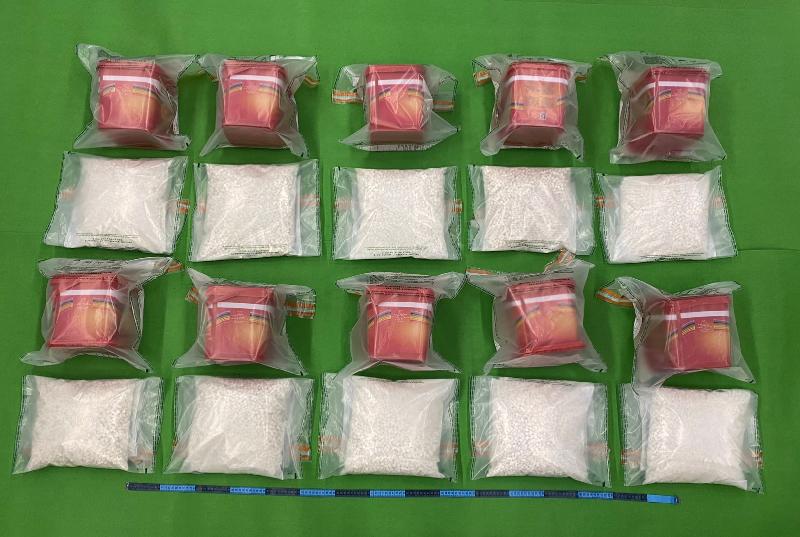
     Hong Kong Customs seized about 25 kilograms of suspected cocaine at Hong Kong International Airport (HKIA) on June 19 and about 270 grams of suspected ketamine in Tsuen Wan yesterday (June 20) with an estimated market value of about $29 million and $150,000 respectively. This has broken the record of this year's largest inbound dangerous drugs case detected by Customs at the airport on June 3 in terms of seizure amount and value.

     Customs officers inspected an air consignment arriving in Hong Kong from the Netherlands at HKIA on June 19. The batch of suspected cocaine was found concealed inside ten buckets of fish food.

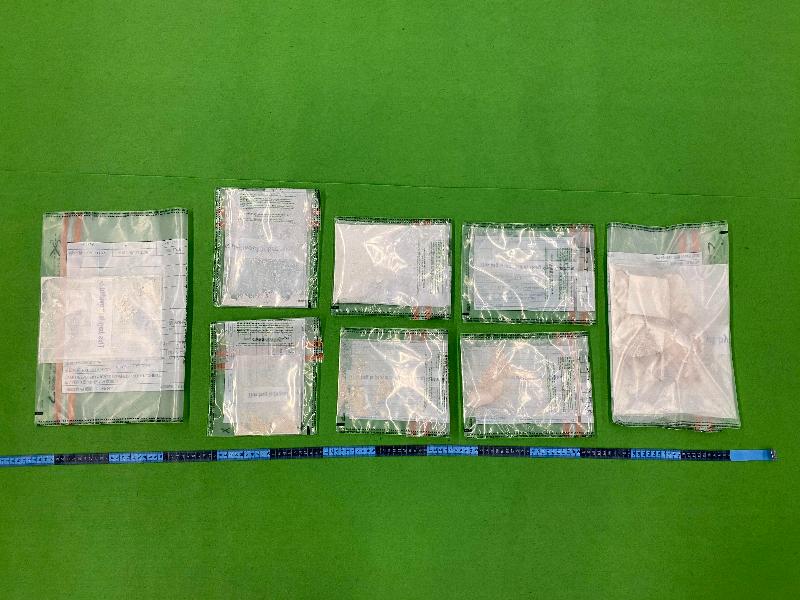
     After follow-up investigation, Customs officers yesterday arrested a 17-year old man suspected to be in connection with the case at an industrial building in Tsuen Wan, where the batch of suspected ketamine as well as a batch of drug manufacturing and packaging paraphernalia were further seized.

     The arrested man has been charged with two counts of trafficking in a dangerous drug. He will appear at West Kowloon Magistrates' Courts tomorrow (June 22).

     Customs will continue to step up enforcement actions against drug trafficking activities through air cargo, postal parcel and express courier channels, as well as maintain close contact with Hongkong Post and the logistics industries, with a view to intercepting the inflow of drugs to Hong Kong.

     Under the Dangerous Drugs Ordinance, trafficking in a dangerous drug is a serious offence. The maximum penalty upon conviction is a fine of $5 million and life imprisonment.

     Members of the public may report any suspected drug trafficking activities to Customs' 24-hour hotline 2545 6182 or its dedicated crime-reporting email account (crimereport@customs.gov.hk).

Photo  Photo