LCQ2: Epidemic prevention in hospitals

     Following is a question by Dr the Hon Chiang Lai-wan and a written reply by the Secretary for Food and Health, Professor Sophia Chan, in the Legislative Council today (January 20):

Question:

     Recently, some patients of public hospitals have been confirmed, after discharge from the hospital, to have been infected with the Coronavirus Disease 2019 (COVID-19), and it is suspected that they were infected during their stay in the hospital. Besides, there were cluster outbreaks in two public hospitals, with a number of patients and healthcare personnel being infected. On the other hand, it has been reported that as the Hospital Authority (HA) has limited stock of surgical masks reaching the Level 3 requirement of the America Society for Testing and Materials (ASTM) F2100 Standard, healthcare personnel are normally provided with ASTM Level 1 or Level 2 surgical masks only, which have lower protection efficacy. Regarding epidemic prevention in hospitals, will the Government inform this Council:

(1) of a breakdown of the up-to-date number of local COVID-19 confirmed patients by the place where they possibly contracted the disease (including hospital, residence, office, bar, restaurant, supermarket and beauty salon), as judged from epidemiological investigation results; if such information is unavailable, whether it will compile the relevant figures;

(2) whether it knows if HA will conduct COVID-19 tests for all patients of public hospitals before they are discharged and allow them to be discharged only when their test results are negative, so as to cut the transmission chains as far as possible; if so, of the details; if not, the reasons for that;

(3) as HA plans to conduct regular COVID-19 tests only for certain categories of healthcare personnel, whether it knows if HA will consider conducting regular tests for all healthcare personnel of public hospitals;

(4) whether it knows the respective quantities of surgical masks of various protection levels and specifications currently kept in stock by HA, and the numbers of days for which the stock can last; the channels through which surgical masks are procured, as well as the criteria for allocating surgical masks of different protection levels to healthcare personnel; and

(5) as certain private hospitals have stipulated that they only accept visits by persons wearing surgical masks but not those wearing CuMasks, whether it knows the relevant requirements of public hospitals at present?

Reply:

President,

     In consultation with the Hospital Authority (HA), my consolidated reply to the various parts of the question raised by Dr the Hon Chiang Lai-wan is as follows:

(1) The Centre for Health Protection (CHP) of the Department of Health classifies confirmed cases of COVID-19 as follows: imported case, epidemiologically linked with imported case, possibly local case, epidemiologically linked with possibly local case, local case, epidemiologically linked with local case. Among the above, "local case" from unknown source includes locally infected sporadic case, i.e. with no travel history during the incubation period, or the first case to develop symptom in a local cluster, while "epidemiologically linked with local case" refers to case with epidemiological linkage with an existing local case.

     For large clusters with 10 or more cases, CHP would release relevant information in due course via press conference and the "COVID-19 Thematic Website" launched by the Government. Small clusters mostly involve cases in family, friends or workplace.

     CHP will continue to closely monitor the latest situation of COVID-19, including epidemiological investigations and contact tracing on the confirmed cases, etc. The latest local situation of COVID-19 has been updated to the "COVID-19 Thematic Website” launched by the Government (www.coronavirus.gov.hk/eng/index.html), which includes the document "Latest local situation of COVID-19" (www.chp.gov.hk/files/pdf/local_situation_covid19_en.pdf).

(2) HA has arranged admission screening to all newly admitted patients as far as practicable since September 2020, and enhanced the admission screening in end-December 2020. If a patient has respiratory symptoms upon admission, even if the patient is tested negative for COVID-19 for the first time, it is recommended that at least one more test should be conducted within two days, with a view to reducing the risks of transmission and outbreak in hospital. If an inpatient develops respiratory symptoms during his stay in the hospital, healthcare staff will provide test for COVID-19 according to clinical needs. Inpatients will only be discharged after they have been assessed by medical practitioners on their clinical conditions.

(3) HA has been working on the provision of regular tests for targeted staff providing care for vulnerable patients on pilot basis since January 11, 2021. The targeted staff groups include those working in day centres providing chemotherapy or radiotherapy for cancer patients; outreach teams visiting institutions, e.g. Community Geriatric Assessment Teams and Psycho-geriatric Outreach Teams; Palliative Care Outreach Teams; and staff of oncology wards and haemodialysis centres. HA will timely review the arrangement of regular tests having regard to the epidemic situation.

(4) With the development of the COVID-19 outbreak, HA has expedited the procurement of personal protective equipment (PPE) since January 2020 and increased the stockpiling target to six months. Besides increasing the procurement from existing suppliers, HA proceeded with global procurement through the flexible approach of direct purchase, with a view to procuring the appropriate PPE soonest possible.

     As for the procurement of surgical masks by HA, it has mainly made reference to the United States Food and Drug Administration's standards on surgical mask, ASTM F2100-11. HA also takes into consideration other international standards including European Standards, EN14683. The current stockpile of surgical masks amounts to approximately 79 million pieces, sufficient for use for more than six months.

     HA has all along established stringent guidelines on infection control and training, allowing frontline healthcare staff of various positions to understand and get familiar with infection control measures required for different medical procedures. In accordance with guidelines, healthcare staff will put on suitable PPE depending on the type of infectious disease that the patient has, including whether it can be transmitted by droplets, by airborne or by contact. Under normal circumstances, healthcare staff should adopt standard protective measures. When undergoing procedures that may generate splashes of blood, body fluid, excretions and secretions, or droplets, healthcare staff would select and put on proper PPE based on risk assessment.

     The surgical masks currently provided by HA has Bacteria Filtration Efficiency exceeding 99.9 per cent and Particle Filtration Efficiency at 99.7 per cent. The resistance to penetration by synthetic blood is 80 mmHg. The configurations are in compliance with the recommendations of infectious control guidelines of the World Health Organization, the Centres for Disease Control and Prevention of the United States and CHP.

     Having regard to the development of the COVID-19 epidemic, HA has formulated recommendations on corresponding infection control measures and usage of PPE under the Serious or Emergency Response Level. Although COVID-19 is mainly transmitted through droplets and contact, HA has enhanced the relevant protective measures as a precautionary measure. When handling confirmed or probable cases, healthcare staff must adopt preventive measures against transmission through contact, droplets and airborne, and put on appropriate PPE, including surgical respirators, eye protection (full face shield or goggles), protective gowns, gloves and cap. Furthermore, healthcare staff are also required to wear full PPE while performing aerosol-generating procedures.

(5) Public hospitals are currently at Emergency Response Level and all visitors and patients entering public hospitals and clinics are required to put on masks. The hospitals will not impose any mandatory requirement on the model and standard of the masks.
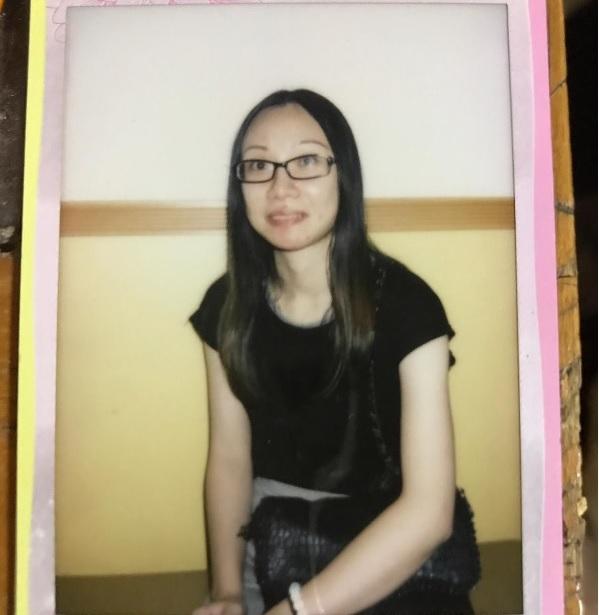


Appeal for information on missing woman in Kwun Tong (with photo)

     Police today (January 20) appealed to the public for information on a woman who went missing in Kwun Tong.

     Hui Mei-ling, aged 38, went missing after she left her residence in Hing Tin Estate on January 12 afternoon. Her boyfriend made a report to Police on January 19.
         
     She is about 1.6 metres tall, 50 kilograms in weight and of medium build. She has a long face with yellow complexion and long black hair. She was last seen wearing a white jacket, black trousers, black shoes and black-rimmed glasses, carrying an orange recycle bag.

     Anyone who knows the whereabouts of the missing woman or may have seen her is urged to contact the Regional Missing Person Unit of Kowloon East on 3661 0335 or email to rmpu-ke-2@police.gov.hk, or contact any police station.

Photo  


Import of poultry meat and products from areas in India, France and Poland suspended

     The Centre for Food Safety (CFS) of the Food and Environmental Hygiene Department announced today (January 20) that in view of notifications from the World Organisation for Animal Health (OIE) about outbreaks of highly pathogenic H5N8 avian influenza in Panchkula District of Haryana State in India, and in Gers Department in France, and a notification from the General Veterinary Inspectorate of Poland about outbreaks of highly pathogenic avian influenza in MyÅ›liborski District of Zachodniopomorskie Region in Poland, the CFS has instructed the trade to suspend the import of poultry meat and products (including poultry eggs) from the above-mentioned areas with immediate effect to protect public health in Hong Kong.

     A CFS spokesman said that Hong Kong has currently established a protocol with India for the import of poultry eggs but not for poultry meat. According to the Census and Statistics Department, in the first nine months of last year, no eggs were imported from India; and Hong Kong imported about 8 740 tonnes of chilled and frozen poultry meat and about 1.1 million poultry eggs from France; and about 9,900 tonnes of frozen poultry meat and about 21.32 million poultry eggs from Poland.

     "The CFS has contacted the Indian, French and Polish authorities over the issues and will closely monitor information issued by the OIE and the relevant authorities on the avian influenza outbreaks. Appropriate action will be taken in response to the development of the situation," the spokesman said.


LCQ5: Quality of coastal waters of Victoria Harbour

     Following is a question by Dr the Hon Priscilla Leung and a written reply by the Secretary for the Environment, Mr Wong Kam-sing, in the Legislative Council today (January 20):

Question:

     Some members of the public complained to me that the coastal waters (particularly in the vicinity of the Hung Hom Promenade) of Victoria Harbour (the Harbour) give off unbearable stenches from time to time, causing nuisance to members of the public. It is learnt that one of the sources of the stenches is the discharge of sewage from certain private buildings in the Kowloon West District into the Harbour as their foul water pipes have been wrongly connected to the stormwater drainage systems (misconnections of foul water pipes). On the other hand, the Environmental Protection Department commenced a consultancy study in 2016 to further enhance the quality of coastal waters of the Harbour. In May 2019, the Government indicated that the consultant would submit a report of the entire study within that year. In this connection, will the Government inform this Council:

(1) of the annual Water Quality Objectives compliance rate of the Victoria Harbour Water Control Zone in each of the past two years;

(2) of the number of cases of misconnections of foul water pipes which the Government followed up in each of the past three years and, among such cases, the number of those which have been rectified, with a breakdown by District Council district;

(3) among the cases mentioned in (2), of the respective numbers of those in which (i) rectifications were made after the owners had been given warnings/advice, (ii) rectifications were made after the owners had received statutory repair/removal orders or had been prosecuted, (iii) rectifications were still not yet made after the Government had taken law enforcement actions, and (iv) rectification works were carried out by government contractors; whether it has reviewed the effectiveness of the relevant law enforcement actions; if so, of the outcome; and

(4) when it will publish the report of the aforesaid consultancy study; what measures the Government will take to follow up the recommendations put forward in that report for improving the quality of coastal waters of the Harbour and addressing the problem of near-shore stenches, as well as the implementation timetable and estimated expenditure for such measures?

Reply:

President,

     The Government has all along been attaching great importance to improving the water quality of Victoria Harbour and has devoted significant resources to improve the sewage collection and treatment systems through implementing the Harbour Area Treatment Scheme and works for enhancing the quality of coastal waters of Victoria Harbour, stepping up enforcement on misconnections of sewage pipes, and clearing sediment from the stormwater drainage systems. These efforts have brought noticeable improvement in the water quality of Victoria Harbour.

     My reply to the question raised by Dr the Hon Priscilla Leung is as follows:

(1) The overall Water Quality Objectives (WQOs) compliance rate for the Victoria Harbour Water Control Zone (WCZ) in the past two years are tabulated below:
 

Year Overall marine WQOs compliance rate for
the Victoria Harbour WCZ
2018 97 per cent
2019 97 per cent

Note: The overall WQOs compliance rate for 2020 is pending computation as the water samples collected in December 2020 are still under testing.

(2) The statistics of Government’s follow-up actions on foul sewer misconnection in various districts in the past three years are tabulated below:

Cases of foul sewer misconnection found in Victoria Harbour WCZ

District Number of foul sewer misconnection cases
(Number of cases rectified)
2018 2019 2020
Central and Western 7 (3 cases) 6 (2 cases) 3 (0 case)
Eastern 15 (6 cases) 11 (6 cases) 4 (3 cases)
Wan Chai 15 (13 cases) 7 (2 cases) 1 (All)
Kowloon City 15 (7 cases) 8 (0 case) 5 (1 case)
Kwun Tong 10 (8 cases) 0 1 (All)
Sham Shui Po 7 (4 cases) 1 (0 case) 4 (1 case)
Wong Tai Sin 7 (3 cases) 4 (3 cases) 2 (1 case)
Yau Tsim Mong 45 (31 cases) 63 (23 cases) 38 (8 cases)
Kwai Tsing 2 (All) 0 2 (1 case)
Tsuen Wan 7 (4 cases) 7 (5 cases) 3 (0 case)
Total 130
(81 cases)
107
(41 cases)
63
(17 cases)

(3) Among the 300 cases mentioned in (2) above, 118 cases were rectified by owners after issuance of warnings or advice, 21 cases were rectified by owners after the statutory repair or removal orders were served, while 57 cases have not been rectified after statutory repair or removal orders were served. There were no rectification works carried out by government contractors in the same period. We will continue to follow up on the remaining cases, urge or order the respective owners to fulfil their responsibility to rectify the pipe misconnection problems. For cases of non-compliance with the orders, the Buildings Department will take appropriate enforcement actions according to the circumstances, including consideration to initiate prosecution under the Buildings Ordinance.

(4) The consultancy study on further enhancement of the near-shore water quality and the general environment of Victoria Harbour has been completed. The consultants are now working on the final collation and editing of the study report and the Government will publish the study report summary in the second quarter this year.

     The findings of field surveys on pollution sources show that the near-shore pollution problems of Victoria Harbour are mainly caused by pollutants discharged from stormwater outfalls. This is probably due to misconnection of sewage pipes to stormwater drains and non-point source pollution (e.g. leakage from ageing sewers, street activities and cleansing of public places, etc.).

     The Government is gradually implementing a series of measures based on the study results and recommendations, including expediting the rectification of sewer misconnections; carrying out inspection, maintenance and desilting for public sewers and stormwater drainage systems on a regular basis; and expanding the application of “odour-control hydrogel” to mitigate the odour problem of stormwater outfalls, etc.

     At the same time, the Government is also progressively implementing targeted pollution control works projects, including construction and modification of dry weather flow interceptors (DWFIs) and rehabilitation of ageing sewers. The Government is now executing works under two projects of a total value of $1,000 million on the construction and modification of 52 DWFIs at various locations of West Kowloon and Tsuen Wan. Four of the DWFIs in Tsuen Wan had been completed in advance in October 2019, and the works are expected to be wholly completed in 2022. Another project with $100 million approved by the Legislative Council in 2020 for the construction of DWFIs at eight locations in Tsuen Wan and Kwai Chung had started in the same year and is expected to be completed in 2023. Furthermore, the programme on installation of compact and high-efficiency DWFIs along Victoria Harbour has also commenced, with projects covering locations of Hung Hom, Wan Chai East, Causeway Bay Typhoon Shelter, Shau Kei Wan Typhoon Shelter and Tsuen Wan Bay included in the Public Works Programme in 2019 and 2020 and associated engineering studies progressively commenced. These projects, each of an initial cost estimate of about several hundred million dollars, are anticipated to be completed in the period from 2026 to 2028. On the other hand, sewage leakage from ageing sewers may also be a source of pollution to the coastal waters. Regarding the rehabilitation of ageing sewers, five works projects with total funding of $3,600 million approved by the Legislative Council are in progress. Twenty-six kilometres of sewers will be rehabilitated and 75 kilometres will be investigated across the territory within five years under these projects. The Government will continue to formulate works projects for rehabilitation of other ageing sewers.

     The Government will continue to take enforcement actions, implement works projects for reducing the discharge of pollutants along Victoria Harbour and raise public awareness on reducing discharge of pollutants to stormwater drains at source, in order to improve the near-shore environmental and odour problems.


Service arrangements of Public Records Office of Government Records Service

     In view of the latest epidemic situation and extension of special work arrangements for government employees, the Government Records Service (GRS) announced today (January 20) that the Search Room of the Public Records Office (PRO) will continue to open only on Wednesdays (until further notice) from 9am to 5.45pm to provide services for members of the public who have made reservations for holdings through the online catalogue. The quota is seven users, which will be allocated on a first-come, first-served basis. Services will be limited to:
 
1. Loan and circulation service for reserved holdings; and
 
2. Self-service reproduction of holdings.
 
     The above services will be suspended for those who have not made an online reservation for holdings. Members of the public are required to wear masks at all times when they are inside the Hong Kong Public Records Building, and follow the infection control measures implemented by the GRS, including temperature checks upon entering the building and applying hand sanitiser.
 
     The PRO has recently launched free-of-charge online group visits enabling members of the public to know more about the PRO's holdings and services, while appreciating the thematic exhibitions and visual materials at their fingertips. For details, please visit www.grs.gov.hk/pdf/Group_visit_en.pdf.
 
     Meanwhile, the Exhibition Hall in the Hong Kong Public Records Building will be temporarily closed. Onsite visits and public education programmes will continue to be suspended until further notice.
 
     For latest updates, please visit the GRS website (www.grs.gov.hk) or the PRO Facebook page (www.facebook.com/grs.publicrecordsoffice). For enquiries, please email proinfo@grs.gov.hk.