Home Affairs Department provides cleaning support services to old buildings and “three-nil” buildings under the pandemic (with photos)

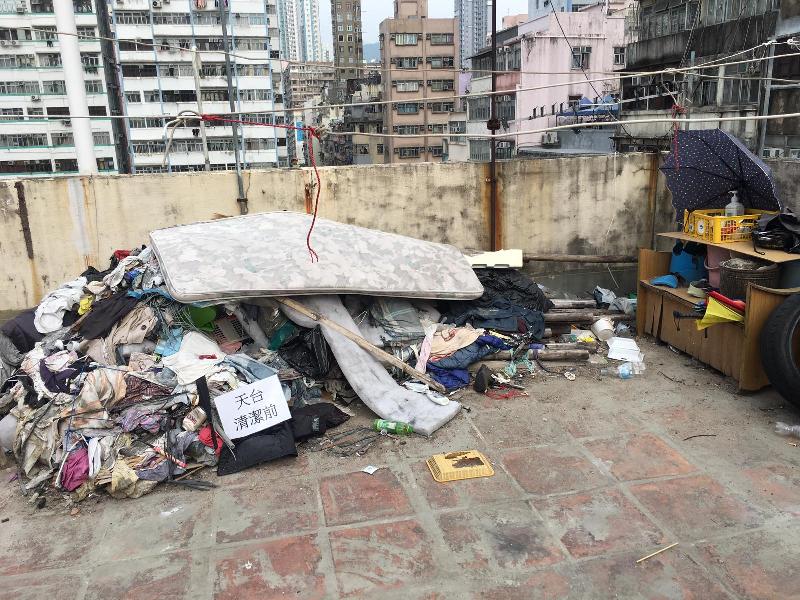
     The Home Affairs Departments (HAD) summed up today (February 11) the cleaning support services provided to old buildings and "three-nil" buildings (i.e. buildings which do not have owners' corporations (OCs) or any form of residents' organisations, or do not engage property management companies (PMCs)) for more than a year.

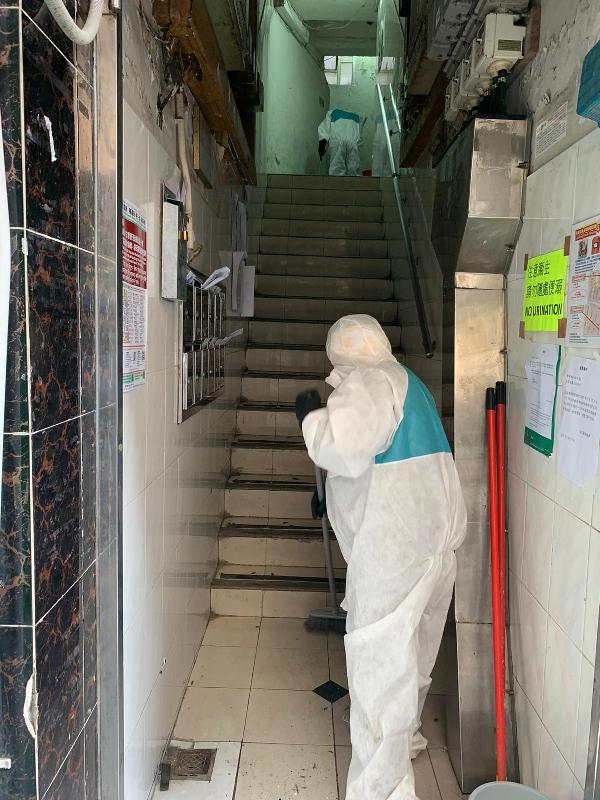
     HAD said that maintaining building hygiene can enhance residents' quality of life and help reducing the risk of spreading and infecting COVID-19. To demonstrate good building management, HAD Headquarters and District Offices (DOs) have been providing one-off cleaning service to old buildings in need, including "three-nil" buildings, through various arrangements (including the District-led Actions Scheme) having regard to actual circumstances, and calling on them to keep good environmental hygiene.

     To help fight against COVID-19, HAD Headquarters and DOs have enhanced the cleaning support services to old buildings and "three-nil" buildings for more than a year. From December 2020 to February 7, 2021, around 4 500 times of cleaning service had been provided to over 2 200 "three-nil" buildings.

     As the pandemic persists recently, some buildings (including "three-nil" buildings) have reported confirmed cases or been subject to compulsory testing. HAD has since January 25, 2021 been providing one-off enhanced cleaning service to buildings in need. As at today, HAD provided enhanced cleaning service to over 140 buildings (around half of which were "three-nil" buildings) and is expected to provide services to another 70 buildings by end February 2021. Moreover, DOs have also contacted the management bodies of buildings which had confirmed cases or been included in the Compulsory Testing Notices to remind them to step up cleaning of their buildings. From the onset of the outbreak up to today, DOs contacted the relevant building management bodies over 7 900 times.

     Besides, DOs have also issued letters to OCs in their districts to remind them to enhance the cleaning of their buildings, and that OCs or PMCs should follow the relevant guidelines issued by the Centre for Health Protection to clean and disinfect their buildings where confirmed COVID-19 cases are found.

     The Chinese New Year is around the corner. In the coming new year, HAD Headquarters and DOs will continue to enhance cleaning support services to the old buildings and "three-nil" buildings to raise the awareness of the relevant owners and residents on good building management and maintaining environment hygiene, with a view to reducing the risk of spreading and infecting COVID-19, and enabling the public to resume normal life as soon as possible.

Photo  Photo  Photo  


CE visits Contact Tracing Office and inspects anti-epidemic measures at construction site (with photos/video)

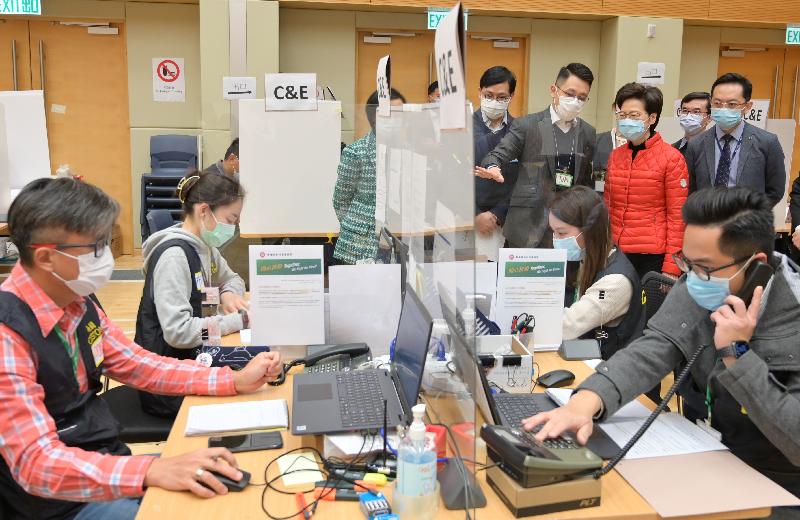
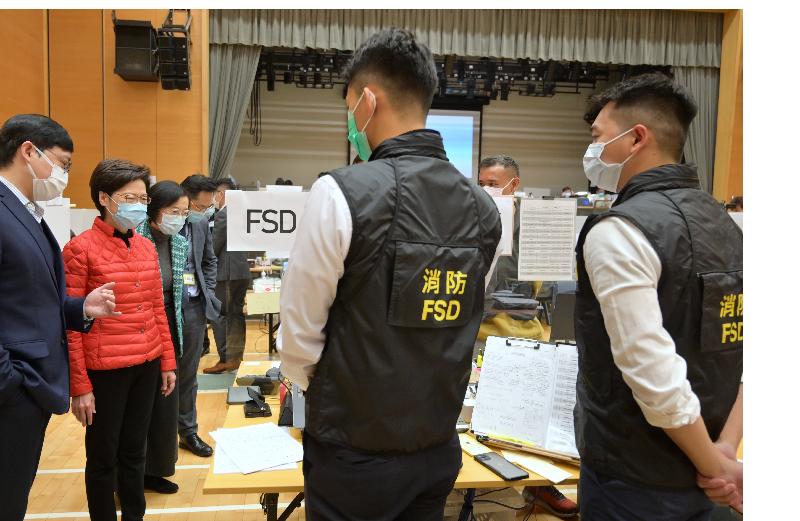
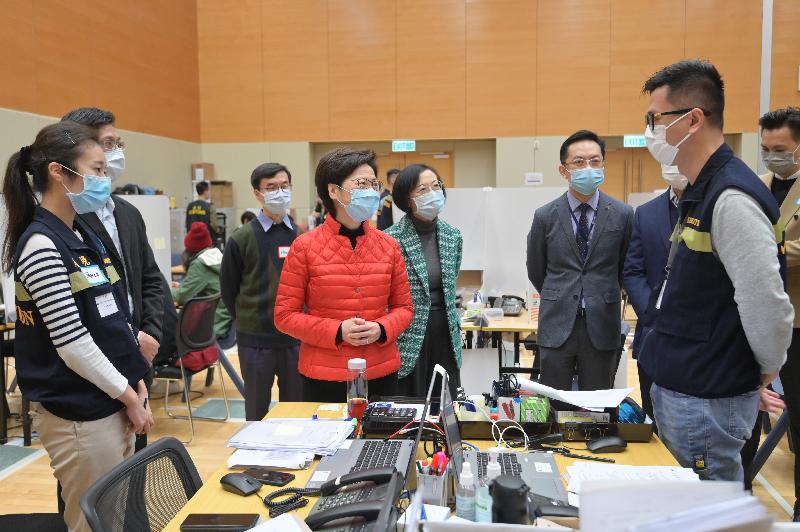
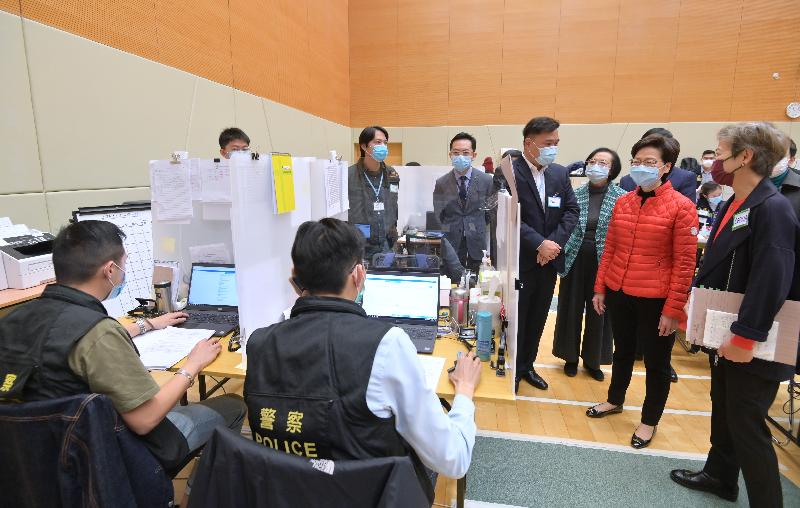
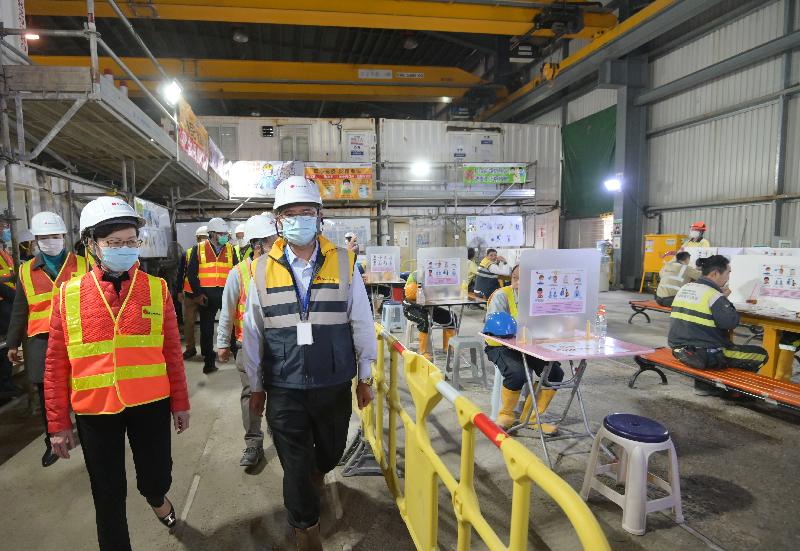
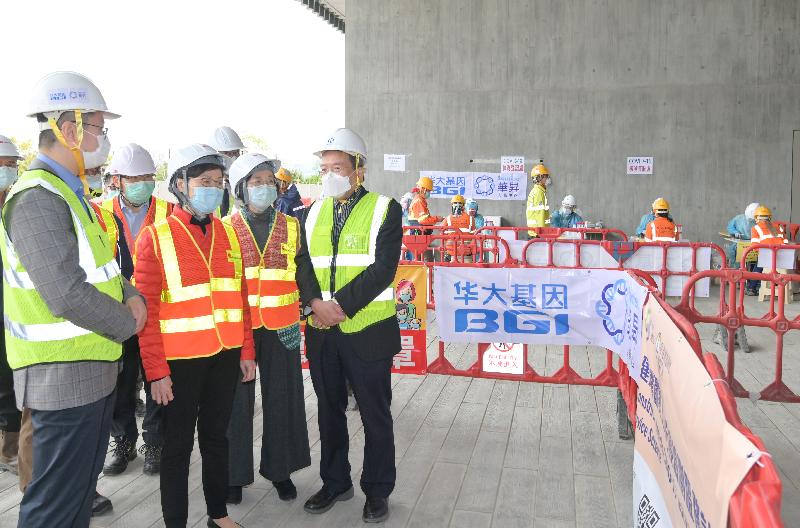
     The Chief Executive, Mrs Carrie Lam, today (February 11) visited the Contact Tracing Office at Kai Tak Community Hall to learn more about the work of tracing the contacts of COVID-19 confirmed cases. She then inspected the anti-epidemic measures at the construction site of the M+ Museum in West Kowloon Cultural District. During the visits, she extended her New Year greetings to people.
      
     Accompanied by the Secretary for Food and Health, Professor Sophia Chan, Mrs Lam visited the Contact Tracing Office of the Communicable Disease Branch of the Centre for Health Protection and was briefed on the work of tracing the contacts of confirmed cases since the establishment of the Office a month ago. Currently, some 200 members from different disciplinary services are participating in the work at the Contact Tracing Office, including the Hong Kong Police Force, the Customs and Excise Department, the Immigration Department and the Fire Services Department. Having received training from the Centre for Health Protection, they assist in locating and liaising with the contacts of confirmed cases and arrange for their admission to quarantine centres as needed. Mrs Lam was pleased to note that the Office has successfully helped trace more than 7 500 contacts of confirmed cases, which translates to the identification of five contacts for each confirmed case. Since the setting up of the Office, more than 250 contacts per day have been traced on average, which is far higher than the 100 contacts traced daily before its establishment. She thanked the colleagues for their hard work to help cut the virus transmission chain as soon as possible.
      
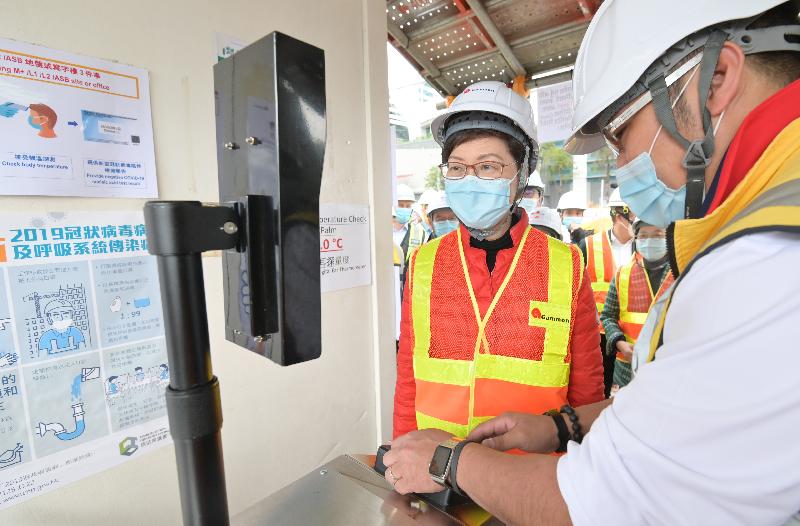
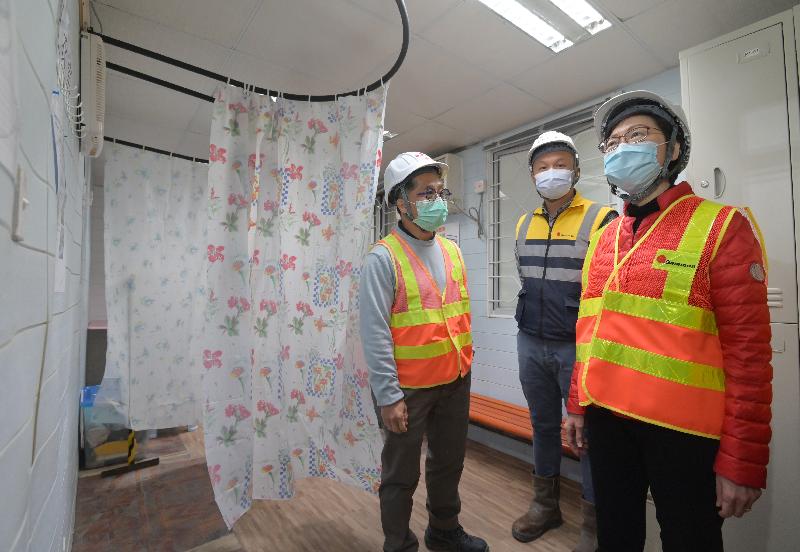
     Mrs Lam and Professor Chan then visited the construction site of the M+ Museum in West Kowloon Cultural District. Also joining were the Secretary for Development, Mr Michael Wong; members of the Legislative Council, Dr Lo Wai-kwok and Mr Tony Tse; the Chairman of the Construction Industry Council (CIC), Mr Chan Ka-kui; and the President of the Hong Kong Construction Association (HKCA), Mr Allan Chan. There, they learned more about the anti-epidemic measures implemented by the contractor at the construction site, which include the taking of body temperatures and presentation of negative virus test results at the entrance, as well as the adoption of social distancing and cleaning and disinfection measures at the canteen and rest area of workers. This construction site is also a participant of the testing programme rolled out by the CIC and the HKCA, in which a private testing agency has been arranged to provide a specimen collection service for workers at construction sites. To date, over 33 000 workers from 150 construction sites have undergone the free testing service. Mrs Lam was pleased to note that to further step up anti-epidemic measures at construction sites, the CIC and the HKCA announced that starting from February 22, all personnel will be required to present a negative result of tests conducted within the past 14 days before they are allowed to enter the construction sites for work, with a view to further reducing the risk of transmission at such sites.
      
     "Anti-epidemic work requires community-wide participation. No matter whether it is compulsory testing, the strengthening of the contact tracing work in recent days, the 'restriction-testing declaration' operations or the upcoming vaccination programme, colleagues from various departments work together to safeguard public health. Nevertheless, the support and co-operation of members of the public is indispensable. The construction industry and many other sectors rolled out different measures recently in the hope of continuing works as scheduled and resuming business at various premises. I thank colleagues and those in various sectors in the community for their efforts to fight the virus. I hope that the epidemic can continue to subside so that people's daily lives can return to normal gradually after the Lunar New Year holidays," Mrs Lam said.
      
     During the visit, Mrs Lam was also briefed by Mrs Betty Fung, Acting Chief Executive Officer of the West Kowloon Cultural District Authority, on the latest progress of the works of the M+ Museum and the adjacent sites. 

Photo  Photo  Photo  Photo  Photo  Photo  Photo  Photo  


Queen Elizabeth Hospital announcement concerning a corpse testing positive for COVID-19

The following is issued on behalf of the Hospital Authority.

     The spokesperson for Queen Elizabeth Hospital (QEH) made the following announcement today (February 11) concerning a corpse that tested positive for COVID-19:
 
     An 84-year-old male patient (case number: 10722) who was found unconscious at home on February 8 morning was sent to QEH by ambulance. Upon arrival at the Accident and Emergency Department (AED) of QEH at 11.15am, the patient was sent to a resuscitation room in negative pressure for cardiopulmonary resuscitation and intubation to assist his breathing. His condition continued to deteriorate and he eventually succumbed at 12.15pm.
 
     A domestic helper of the male patient attended the AED of QEH at about 1am on February 10. She was arranged to have a COVID-19 test and the test result was preliminary positive. The hospital contacted Kwai Chung Public Mortuary this morning (February 11) and was informed that the corpse tested positive for COVID-19 virus.
 
     The Department of Pathology this morning retrieved the patient's blood specimens collected on February 8, and confirmed that the SARS-CoV-2 antibody was present on February 8. Hence no staff or patients were identified as close contacts.
 
     The hospital has completed a thorough cleaning and disinfection of the AED, resuscitation room, patient waiting area, public washrooms, staff washrooms and a rest room. The hospital will continue to closely monitor the health condition of staff members and communicate with the Centre for Health Protection on the latest progress.
 
     The hospital has again reminded staff to conduct risk assessments and test the deceased for COVID-19 if needed before transferring a deceased person to a public mortuary.


Scientific Committees under CHP publish consensus recommendations on use of COVID-19 vaccine BNT162b2 among frail elderly

     The Scientific Committee on Vaccine Preventable Diseases and the Scientific Committee on Emerging and Zoonotic Diseases under the Centre for Health Protection of the Department of Health (DH) today (February 11) published the consensus recommendations on the use of the COVID-19 vaccine by Fosun Pharma/BioNTech (BNT162b2) among frail elderly in Hong Kong.

     The Advisory Panel on COVID-19 Vaccines (Advisory Panel) issued a report last month, advising the Secretary for Food and Health that under the current pandemic situation, the benefits of BNT162b2 outweigh its risk for use in Hong Kong for active immunization to prevent COVID-19 caused by SARS-CoV-2 virus, in people aged 16 or above.  

     Noting reports of death cases among very frail subjects following the use of BNT162b2 in some European countries, the Advisory Panel suggested more information be sought and provided to the Joint Scientific Committee on Emerging and Zoonotic Disease and Scientific Committee on Vaccine Preventable Diseases together with the Expert Advisory Panel to the Chief Executive (JSC-EAP) for examination.  

     The DH had obtained information from various sources, including overseas health and drug regulatory authorities and media reports, for the review by the JSC-EAP. 

     Based on the available information and recommendations from overseas jurisdictions and the World Health Organization as of January 2021, the JSC-EAP considered that there is currently no evidence suggestive of any unexpected or untoward increase in mortality in frail elderly following the use of BNT162b2. There is also no clear evidence suggesting the reported deaths were due to the use of BNT162b2. 

     Adverse events following immunization is defined as any untoward medical occurrence which follows immunization and which does not necessarily have a causal relationship with the usage of the vaccine.  For the very frail elderly, any mild adverse event from pharmaceutical products including vaccines might worsen their original disease course or condition. 

     For elderlies with severe frailty (e.g. bedridden elderly in residential care homes), especially those at the most extreme age groups (such as those above 85 years old), the benefits and risks of receiving BNT162b2 should be evaluated separately by attending clinicians and such clinical assessment should be exercised with greater caution.  As stated in the consensus interim recommendation published in January 2021, any individual who is experiencing acute febrile diseases should delay their vaccination and this recommendation applies to the use of BNT162b2 among frail elderly. 

     The JSC-EAP also considered that reports and data regarding the safety and efficacy of BNT162b2 should be closely monitored and the benefit-risk balance should be re-evaluated as more information regarding rare adverse events and long term side effects from mass vaccination programmes continue to emerge.

     Details of the consensus document is available at CHP website www.chp.gov.hk/en/static/24008.html.


Government gazetted compulsory testing notice

     â€‹The Government exercised the power under the Prevention and Control of Disease (Compulsory Testing for Certain Persons) Regulation (Cap. 599J) and published in the Gazette a compulsory testing notice, which requires any person who had been present at eight specified premises during the specified period (persons subject to compulsory testing) to undergo a COVID-19 nucleic acid test.
     
     Currently, in all districts in Hong Kong, if one or more new confirmed cases are found in the residential buildings (including buildings for both commercial and residential uses), or there are sewage samples tested positive which implied possible infection risks, the buildings will be included in the compulsory testing notice.

     For testing targeting at workplaces, if two or more confirmed cases are found in a workplace, it will be included in the compulsory testing notice.
     
     Eight buildings fulfilling the above criteria were included in the compulsory testing notice today (February 11).

     Details of the compulsory testing notice are as follows:
 
     Any person who had been present at any specified premises listed in Annex 1 for more than two hours at any time during the period from January 29 to February 11, 2021 (including but not limited to visitors, residents and workers), have to undergo testing by February 15, 2021. If persons subject to compulsory testing have previously undergone testing between February 9 and February 11, 2021, they would be taken to have complied with the requirements set out in the compulsory testing notice.
       
     The Government will set up mobile specimen collection stations at Shek Lei (II) Estate in Kwai Chung and Wo Che Estate in Sha Tin on February 14 (Sunday). The service period of the mobile specimen collection station at MacPherson Playground in Mong Kok will be extended to February 15 (Monday). The opening dates and operating hours of the mobile specimen collection stations in various districts providing free COVID-19 nucleic acid testing services for the general public are stated in Annex 2. Apart from mobile specimen collection stations, persons subject to compulsory testing can also choose to attend any of the community testing centres in all districts to receive testing free of charge.

     Persons subject to compulsory testing may choose to undergo testing via the following routes:
 
1. To visit any of the mobile specimen collection stations (see the list and target groups (if applicable) at www.coronavirus.gov.hk/eng/early-testing.html) for testing;
2. To attend any of the community testing centres (see the list at www.communitytest.gov.hk/en/);
3. To obtain a deep throat saliva specimen collection pack from any of the 121 post offices, vending machines set up at 20 MTR stations or 47 designated general outpatient clinics (GOPCs) of the Hospital Authority and return the specimen to one of the designated specimen collection points (see the distribution points and times, and the specimen collection points and times, at www.coronavirus.gov.hk/eng/early-testing.html);
4. To undergo testing at any of the GOPCs of the Hospital Authority as instructed by a medical professional of the Hospital Authority;
5. To self-arrange testing provided by private laboratories which are recognised by the Department of Health (DH) and can issue SMS notifications in respect of test results (see the list at www.coronavirus.gov.hk/pdf/List_of_recognised_laboratories_RTPCR.pdf);or
6. To use a specimen bottle distributed to the relevant specified premises by the Centre for Health Protection (if applicable), and return the specimen bottle with the sample collected as per relevant guidelines.

     A spokesman for the Food and Health Bureau cautioned that testing received at accident and emergency departments of the Hospital Authority or during hospital stays, or testing provided by private laboratories which cannot issue SMS notifications in respect of test results, does not comply with the requirements of the aforementioned compulsory testing notice.
 
     "If persons subject to compulsory testing have symptoms, they should seek medical attention immediately and undergo testing as instructed by a medical professional. They should not attend the mobile specimen collection stations or the community testing centres."

     Persons subject to compulsory testing must keep the SMS notification containing result of the test for checking by a law enforcement officer when the officer requires the persons to provide information about their undergoing the specified test.

     Furthermore, persons subject to testing under the compulsory testing notices should, as far as reasonably practicable, take appropriate personal disease prevention measures including wearing a mask and maintaining hand hygiene, and, unless for the purpose of undergoing the specified test, stay at their place of residence and avoid going out until the test result is ascertained as far as possible.

     Any enquiries on compulsory testing arrangements may be addressed to the hotline at 6275 6901, which operates daily from 9am to 6pm. If persons subject to compulsory testing plan to conduct testing at any of the community testing centres, they can check the centre's appointment status in advance. The hotlines of the community testing centres are available at www.communitytest.gov.hk/en/info/.

     The Government will continue to trace possibly infected persons who had been to the relevant premises, and seriously verify whether they had complied with the testing notices. Any person who fails to comply with the testing notices commits an offence and may be fined a fixed penalty of $5,000. The person would also be issued with a compulsory testing order requiring him or her to undergo testing within a specified time frame. Failure to comply with the order is an offence and the offender would be liable to a fine at level 4 ($25,000) and imprisonment for six months.

     Relevant officers of different government departments are empowered to perform certain functions under the relevant Regulations under the Prevention and Control of Disease Ordinance (Cap. 599), including requesting individuals to provide information and assistance when necessary. Any person who fails to comply with the relevant request commits an offence and would be liable to a fine at level 3 ($10,000). Collection and use of any personal data for conducting COVID-19 tests must meet the requirements under the Personal Data (Privacy) Ordinance (Cap. 486). Government departments or testing service providers which handle the relevant information may provide the data to DH or other relevant departments for anti-epidemic purpose as necessary. The workflow does not involve the provision of any personal data to organisations or persons outside Hong Kong.

     The spokesman said, "The Government urges all individuals who are in doubt about their own health conditions, or individuals with infection risks (such as individuals who visited places with epidemic outbreaks or contacted confirmed cases), to undergo testing promptly for early identification of infected persons."