COVID-19 Vaccination Programme healthcare services arrangements

     The Government announced the latest information regarding arrangements of healthcare services of the COVID-19 Vaccination Programme (Vaccination Programme).

     With the Sinovac vaccine's debut arrival in Hong Kong, the Vaccination Programme arranged by the Government will start receiving bookings online from February 23 for members of the public who are in the priority groups to receive the Sinovac vaccine at five Community Vaccination Centres (CVCs) and 18 General Out-patient Clinics (GOPCs) under the Hospital Authority (HA) starting from February 26. It is also expected that private doctors who participate in the Vaccination Programme can start providing the administration of Sinovac vaccine to members of the public before mid-March. To tie in with the arrival of the Fosun Pharma/BioNTech vaccine which will arrive shortly in end-February, more CVCs will gradually commence operations.

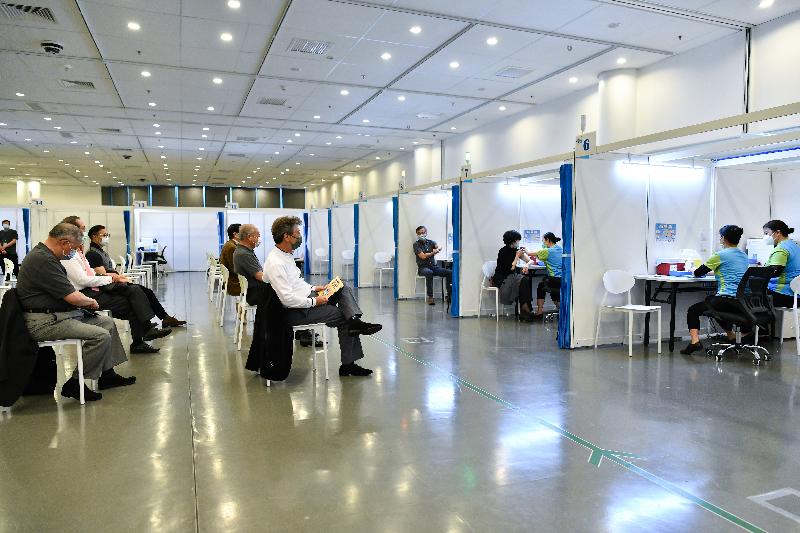
CVCs

     The Government will set up 29 CVCs in Hong Kong to provide vaccination services for citizens who have made bookings through the Government online booking system. The first five CVCs to commence operations will provide the Sinovac vaccine while the 24 CVCs which will subsequently commence operations are planned to provide the Fosun Pharma/BioNTech vaccine. To mobilise sufficient medical manpower to support the smooth operations of the many CVCs, the Government will partner with the HA and a number of healthcare professional bodies, medical organisations and private hospitals (collectively as "partner healthcare organisations" thereafter) to take charge of the medical-related tasks at the CVCs. The partner healthcare organisations participating in the operation of the CVCs must be of a certain scale with medical network, ability to mobilise staff as well as resources. The Government had earlier issued invitations to 40-plus healthcare organisations which meet the aforesaid criteria (not including public medical organisations) and chose the partner healthcare organisations out of the 17 proposals received. The locations, number of vaccination booths and partner healthcare organisations for operating the 29 CVCs are stated at Annex1.

     Regarding the operational arrangements at the CVCs, the Government will be responsible for the booking, registration, waiting, management, venue, ancillary facilities, equipment and consumables, etc for the CVCs, as well as the storage of the vaccines and arranging sufficient doses for vaccination. The partner healthcare organisation will provide the medical staff to administer the vaccines for members of the public and also handle medical-related tasks, including dilution of the vaccines (if applicable), providing emergency medical services, explaining medical information and handling of enquiries, as well as the medical support at the vaccination booths and resting areas, etc. During opening hours, a CVC must have one doctor-in-charge and one registered nurse with emergency care training on site, so as to provide overall supervision and emergency management. Furthermore, the partner healthcare organisation also needs to mobilise a medical team comprising doctors, registered nurses, enrolled nurses or other registered healthcare professionals or healthcare workers with relevant training to handle tasks related to vaccination. Generally speaking, it is expected that a CVC with 15 booths can provide around 2 500 doses of vaccines on a daily basis at maximum throughput.

     To support the above arrangement, the Government will provide the partner healthcare organisation a subsidy of $72 per dose of vaccine (not including public medical organisations viz. the HA and Department of Health (DH)). The relevant subsidy amount has made reference to the DH's current Vaccination Subsidy Scheme and took into account the fact that the venue and related ancillary facilities, etc are provided by the Government. Having considered that a basic number of staff is need on site at the CVCs regardless of the number of doses administered by the partner healthcare organisation, the Government will provide a "Basic Subsidy Amount", which is calculated on the basis of one third of the maximum subsidy amount per day. In other words, if a CVC administers 2 500 doses of vaccines per day, the maximum subsidy amount will be $180,000, whereas the "Basic Subsidy Amount" per day will be $60,000.

Private Clinics

     Apart from providing vaccination services of Sinovac and Fosun Pharma/BioNTech vaccines at CVCs, the Government will also provide the Sinovac vaccine to members of the public at over 1 500 clinics operated by over 1 200 private doctors who participate in the Vaccination Programme. The list of participating private doctors and clinics will be uploaded to the designated website of the Vaccination Programme later. Members of the public can choose a private doctor or clinic under the Vaccination Programme, and make an appointment for vaccination direct with the private doctor or clinic without going through the Government online booking system designated for the CVCs and public clinics. Private clinics participating in the Vaccination Programme must ensure that the storage requirements of the relevant vaccine are met, including that the relevant fridge can maintain a stable and suitable temperature and equipment is available to continuously monitor the temperature of the fridge.

     The DH will host a briefing on February 23 for participating private doctors on the concrete details of the Vaccination Programme, including that each private doctor will be allocated a certain number of doses of the Sinovac vaccine at the onset. After the first batch of doses was used, the private doctors may make orders according to their needs. The DH will centrally coordinate the delivery of the vaccines and follow up on the usage situation, having regard to the private doctors' use of the vaccines and the supply. The DH will reserve the second dose for citizens at the same clinic where they received their first dose. Hence, private doctors should remind and actively follow up with the citizens to receive the second dose on schedule.

     Healthcare staff at CVCs, private doctors and the relevant healthcare staff at their clinics must participate in a free training course provided by the Hong Kong Academy of Medicine. Private doctors will receive a subsidy of $80 per dose of vaccine administered to members of the public. If the same private doctor/clinic completes the administration of two doses of vaccine for the same citizen, an additional subsidy of $40 will be given. Private doctors cannot charge members of the public any extra fees for vaccination under the Vaccination Programme.

Clinics of the HA and DH

     The 18 GOPCs under the HA will also provide the Sinovac vaccine. Members of the public can book the time for receiving the two doses of the vaccine via the Government online booking system. The list of GOPCs providing COVID-19 vaccination service is at Annex 2.

     The DH will also provide the Sinovac vaccine to patients or citizens receiving services at DH's designated clinics, including Elderly Health Centres, Chest Clinics, Social Hygiene Clinics, Dermatological Clinics, Education and Training Centres in Family Medicine and Integrated Treatment Centres, etc. Members of the public who are in the priority groups and receiving services at the above DH clinics can make an appointment at the relevant clinic to receive vaccination there. Booking for vaccination services at DH clinics is not opened to the public.

     To facilitate members of the public in keeping their vaccination records, in addition to a hard copy, their vaccination records will also be kept in electronic format. Members of the public can subsequently view their vaccination records via the website (www.evt.gov.hk) developed by the Office of the Government Chief Information Officer for travel and other community purposes in the future. The Government also encourages members of the public to join the Electronic Health Record Sharing System (eHRSS). The eHRSS is an electronic platform developed by the Government. The medical records and vaccination records of its participants will be saved in encrypted files. With the participants' informed consent, there can be two-way sharing of their vaccination and medical records between medical organisations in the public and private sectors and hence facilitate the Government to strengthen the pharmacovigilance system to further ensure the safety of the vaccines.

     The Government spokesman said, "Vaccination is a top priority of the anti-epidemic measures. Members of the public are encouraged to fight the virus by getting vaccinated early so as to enable Hong Kong to overcome the pandemic completely as soon as possible. For information about the vaccination, please visit the designated website at www.covidvaccine.gov.hk."   


Government gazettes compulsory testing notice

     The Government exercised the power under the Prevention and Control of Disease (Compulsory Testing for Certain Persons) Regulation (Cap. 599J) and published in the Gazette a compulsory testing notice, which requires any person who had been present at seven specified premises during the specified period (persons subject to compulsory testing) to undergo a COVID-19 nucleic acid test.

     Currently, in all districts in Hong Kong, if one or more new confirmed cases are found in the residential buildings (including buildings for both commercial and residential uses), or there are sewage samples tested positive which implied possible infection risks, the buildings will be included in the compulsory testing notice.

     For testing targeting at workplaces, if two or more confirmed cases are found in a workplace, it will be included in the compulsory testing notice.

     Seven buildings fulfilling the above criteria were included in the compulsory testing notice today (February 22).

     Details of the compulsory testing notice are as follows:

     Any person who had been present at any specified premises listed in Annex 1 for more than two hours at any time during the period from February 9 to February 22, 2021 (including but not limited to visitors, residents and workers), have to undergo testing by February 24, 2021. If persons subject to compulsory testing have previously undergone testing between February 20 and February 22, 2021, they would be taken to have complied with the requirements set out in the compulsory testing notice.

     Furthermore, a spokesman for the Food and Health Bureau reminds the public that in accordance with the compulsory testing notice issued earlier, all household members of close contacts are required to undergo compulsory testing. Any person who had lived with a person who is placed under quarantine pursuant to section 22 of the Prevention and Control of Disease Regulation (Cap. 599A) (person under quarantine) in the same residential unit on the date of commencement of quarantine or during the 14 days before that day, and who becomes aware of the quarantine of the person under quarantine when the relevant quarantine has not yet been completed, have to undergo testing within two days of he/she becoming aware of the person under quarantine has been placed under quarantine and report to the Government the result of the test by phone (at 6275 6901), fax (at 2530 5872) or email (ct@csb.gov.hk) within three days of undergoing the test.

     The Government will set up mobile specimen collection stations at the following locations tomorrow (February 23) for local residents and workers subject to compulsory testing: 

  • Wah Kwai Community Hall, Pokfulam
  • Open carpark of Wiseman Building, North Point
  • Carpark of Quarry Bay Community Hall
  • Podium of Tung Shing Court, Shau Kei Wan
  • Badminton court of Affluence Garden, Tuen Mun
  • Heng On Estate Community Centre, Ma On Shan

     The service period of the mobile specimen collection station at Edinburgh Place, Central will be extended to February 25 (Thursday). The opening dates and operating hours of the mobile specimen collection stations in various districts providing free COVID-19 nucleic acid testing services for the general public are stated in Annex 2. Apart from mobile specimen collection stations, persons subject to compulsory testing can also choose to attend any of the community testing centres in all districts to receive testing free of charge.

     Persons subject to compulsory testing may choose to undergo testing via the following routes:

1.  To visit any of the mobile specimen collection stations (see the list and target groups (if applicable) at www.coronavirus.gov.hk/eng/early-testing.html) for testing;
2.  To attend any of the community testing centres (see the list at www.communitytest.gov.hk/en/);
3.  To obtain a deep throat saliva specimen collection pack from any of the 121 post offices, vending machines set up at 20 MTR stations or 47 designated general outpatient clinics (GOPCs) of the Hospital Authority and return the specimen to one of the designated specimen collection points (see the distribution points and times, and the specimen collection points and times, at www.coronavirus.gov.hk/eng/early-testing.html);
4.  To undergo testing at any of the GOPCs of the Hospital Authority as instructed by a medical professional of the Hospital Authority;
5.  To self-arrange testing provided by private laboratories which are recognised by the Department of Health (DH) and can issue SMS notifications in respect of test results (see the list at www.coronavirus.gov.hk/pdf/List_of_recognised_laboratories_RTPCR.pdf); or
6.  To use a specimen bottle distributed to the relevant specified premises by the Centre for Health Protection (if applicable), and return the specimen bottle with the sample collected as per relevant guidelines.

     The spokesman cautioned that testing received at accident and emergency departments of the Hospital Authority or during hospital stays, or testing provided by private laboratories which cannot issue SMS notifications in respect of test results, does not comply with the requirements of the aforementioned compulsory testing notice.

     "If persons subject to compulsory testing have symptoms, they should seek medical attention immediately and undergo testing as instructed by a medical professional. They should not attend the mobile specimen collection stations or the community testing centres."

     Persons subject to compulsory testing must keep the SMS notification containing result of the test for checking by a law enforcement officer when the officer requires the persons to provide information about their undergoing the specified test.

     Furthermore, persons subject to testing under the compulsory testing notices should, as far as reasonably practicable, take appropriate personal disease prevention measures including wearing a mask and maintaining hand hygiene, and, unless for the purpose of undergoing the specified test, stay at their place of residence and avoid going out until the test result is ascertained as far as possible.

     Any enquiries on compulsory testing arrangements may be addressed to the hotline at 6275 6901, which operates daily from 9am to 6pm. If persons subject to compulsory testing plan to conduct testing at any of the community testing centres, they can check the centre's appointment status in advance. The hotlines of the community testing centres are available at www.communitytest.gov.hk/en/info/.

     The Government will continue to trace possibly infected persons who had been to the relevant premises, and seriously verify whether they had complied with the testing notices. Any person who fails to comply with the testing notices commits an offence and may be fined a fixed penalty of $5,000. The person would also be issued with a compulsory testing order requiring him or her to undergo testing within a specified time frame. Failure to comply with the order is an offence and the offender would be liable to a fine at level 4 ($25,000) and imprisonment for six months.

     Relevant officers of different government departments are empowered to perform certain functions under the relevant Regulations under the Prevention and Control of Disease Ordinance (Cap. 599), including requesting individuals to provide information and assistance when necessary. Any person who fails to comply with the relevant request commits an offence and would be liable to a fine at level 3 ($10,000). Collection and use of any personal data for conducting COVID-19 tests must meet the requirements under the Personal Data (Privacy) Ordinance (Cap. 486). Government departments or testing service providers which handle the relevant information may provide the data to DH or other relevant departments for anti-epidemic purpose as necessary. The workflow does not involve the provision of any personal data to organisations or persons outside Hong Kong.

     The spokesman said, "The Government urges all individuals who are in doubt about their own health conditions, or individuals with infection risks (such as individuals who visited places with epidemic outbreaks or contacted confirmed cases), to undergo testing promptly for early identification of infected persons."


Hong Kong Customs seizes suspected liquid cocaine and suspected ketamine (with photos)

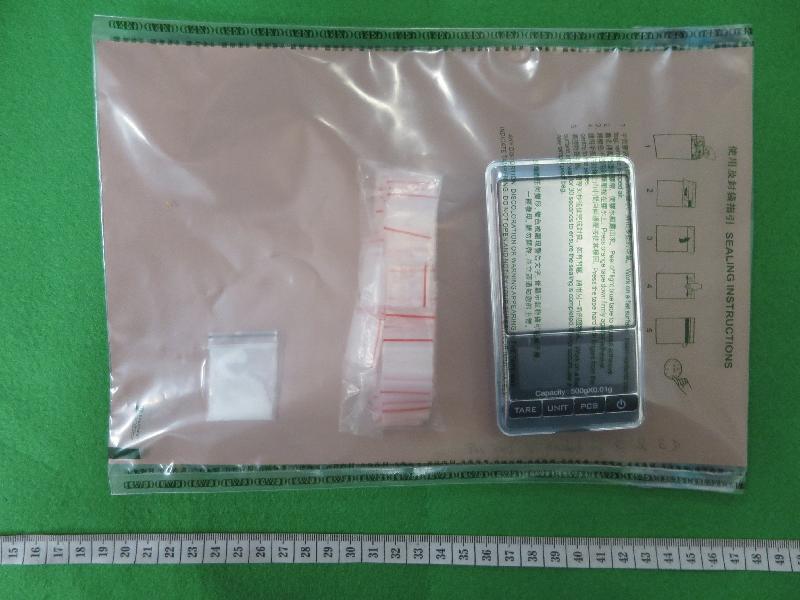
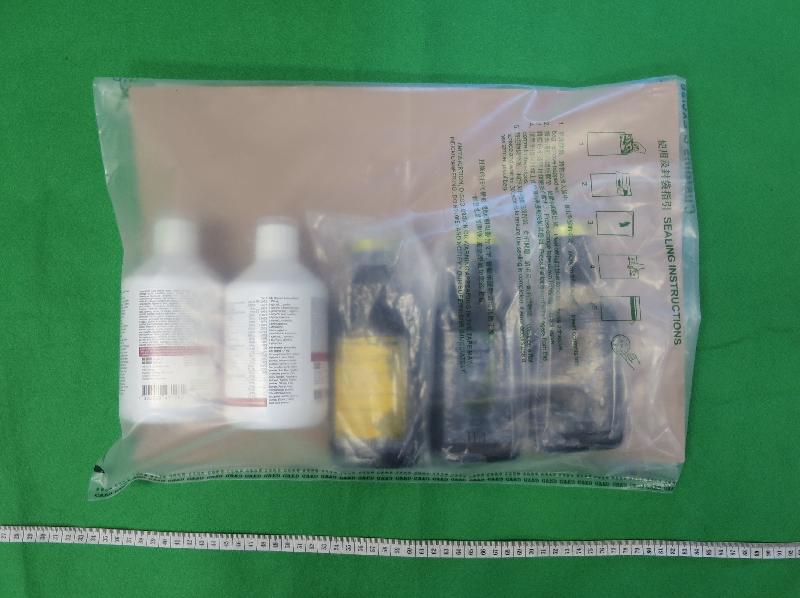
     â€‹Hong Kong Customs seized about 1.7 kilograms of suspected liquid cocaine and a small quantity of suspected ketamine with a total estimated market value of about $2.25 million in Kwai Chung and Tseung Kwan O respectively on February 17 and today (February 22). 

     Customs officers examined a Speedpost parcel arriving in Hong Kong from Suriname which was declared as carrying food stuff at Kwai Chung Speedpost Operations Centre on February 17 and found the batch of suspected liquid cocaine concealed inside five bottles of health food.  

     Upon follow-up investigation, Customs officers today arrested two men, aged 25 and 22, suspected to be in connection with the case in Sha Tin. About 0.6 grams of suspected ketamine and a batch of suspected drug packaging paraphernalia were further seized inside the 22-year-old man's residence in Tseung Kwan O. 

     Investigation is ongoing.

     Customs reminds members of the public to stay alert and not to participate in drug trafficking activities for monetary return. They must not accept hiring or delegation from another party to carry controlled items into and out of Hong Kong. They are also reminded not to carry unknown items for other people, nor to release their personal data or home address to others for receiving parcels or goods.

     Under the Dangerous Drugs Ordinance, trafficking in a dangerous drug is a serious offence. The maximum penalty upon conviction is a fine of $5 million and life imprisonment.

     Members of the public may report any suspected drug trafficking activities to Customs' 24-hour hotline 2545 6182 or its dedicated crime reporting email account (crimereport@customs.gov.hk).

Photo  Photo  


Response to untrue report by Apple Daily on Immigration Department’s handling of applications for search of marriage records

     The Immigration Department (ImmD) today (February 22) responded to the Apple Daily's untrue report on the ImmD's handling of applications for search of marriage records and expressed regrets over such report.
      
     The ImmD said that the Office of the Ombudsman (the Ombudsman) is an independent monitoring institution and has been conducting independent, unbiased, impartial and professional investigation. Meanwhile, the ImmD stated that it has all along been facilitating the investigation by the Ombudsman in an open, transparent and responsible manner, without any intent to mislead or withhold any information. The ImmD attaches great importance to the recommendations made by the Ombudsman regardless of the complaints being substantiated or not, the department will proactively study practicable measures to implement the recommendations of the Ombudsman, with a view to constantly enhancing and raising the ImmD's service quality to strive for excellence and introduce necessary measures to suit the situation.
      
     The ImmD emphasised that the department has all along been handling such applications fairly and impartially in accordance with the established procedures and the stipulations under the Personal Data (Privacy) Ordinance. While respecting press freedom, the ImmD also attaches great importance to protecting personal data privacy, hence its staff members have been upholding high professional and ethical standards to assess each of the application in a fair and impartial manner. With a view to tackle malicious doxxing, the ImmD has the responsibility to assess the reasons of applications made by data requestors or searchers whom are not the data subject so as to prevent abuse or illegal use of the personal data in such records.
      
     Concerning Apple Daily disregarding of the Ombudsman's concluded investigation and unscrupulously made unfounded accusations against the ImmD to diminish its integrity and professionalism in the eyes of the public, the ImmD once again expressed deep regrets.  


CE appeals to public to get vaccinated against COVID-19 (with photos/video)

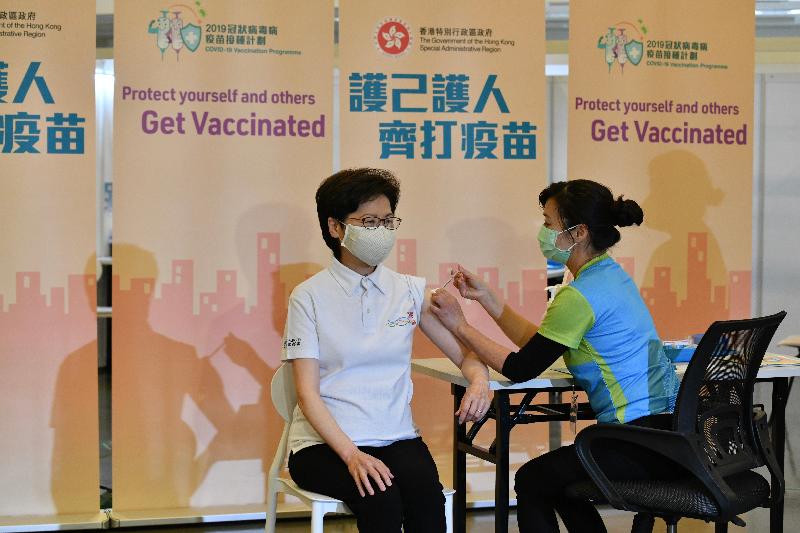
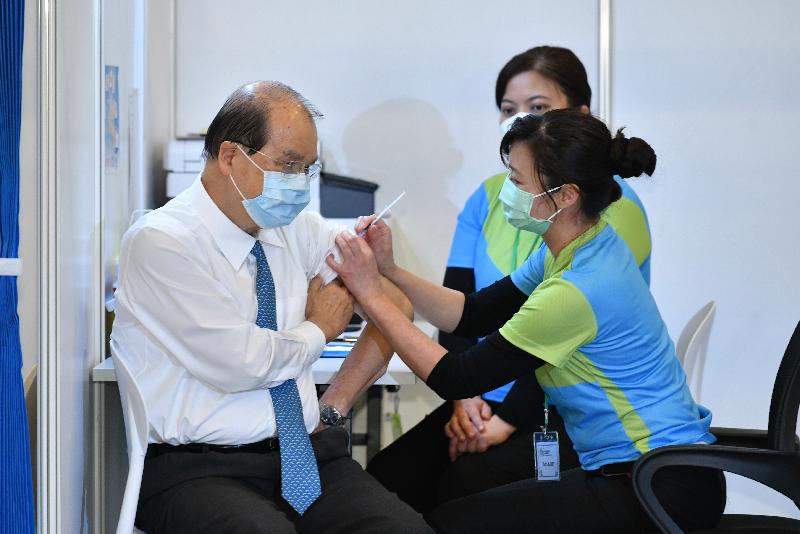
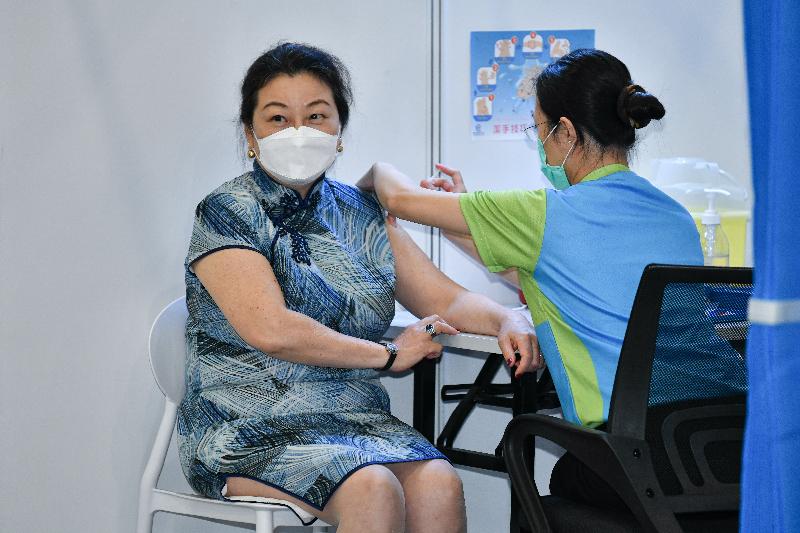
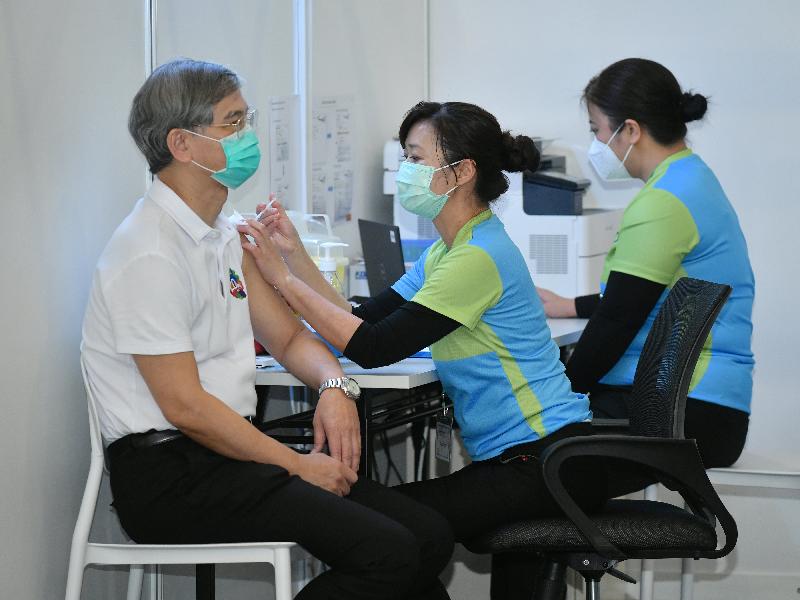
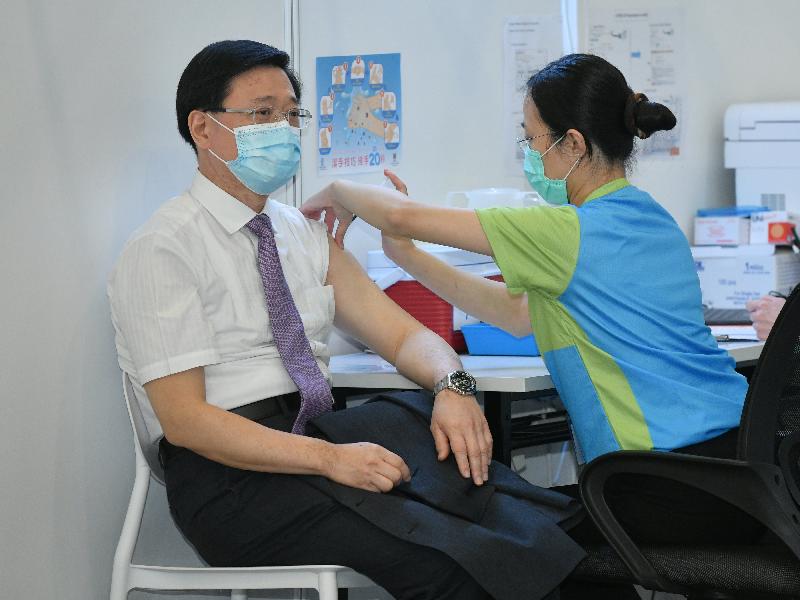
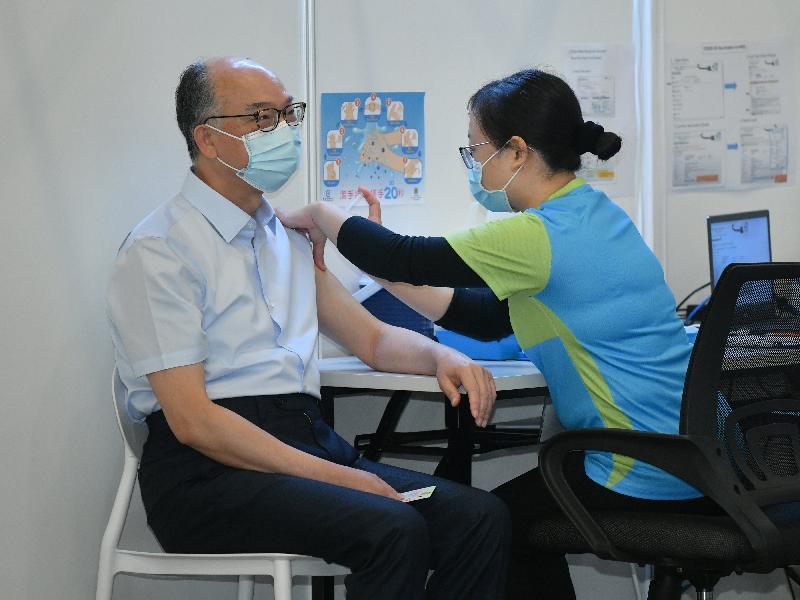
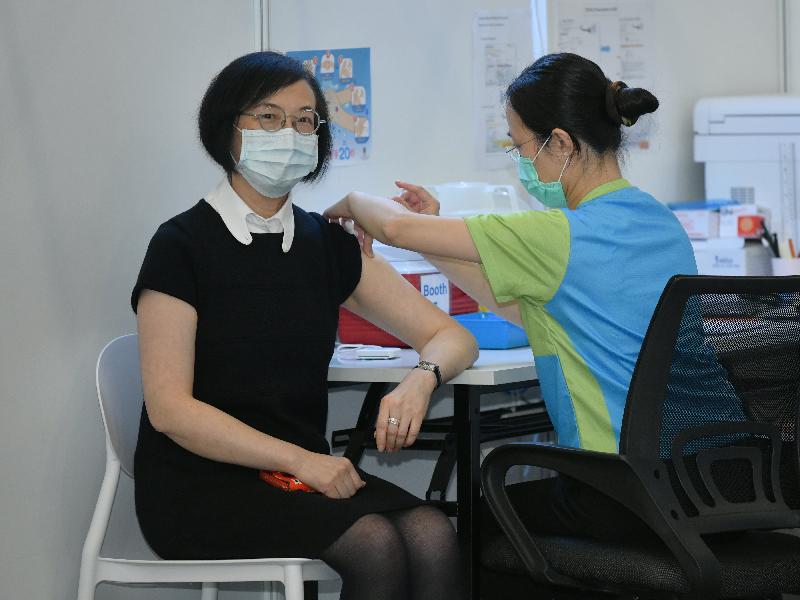
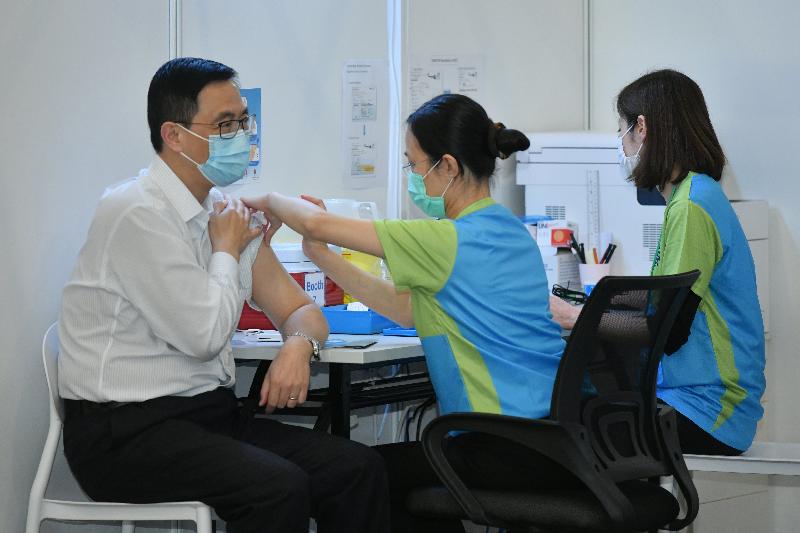
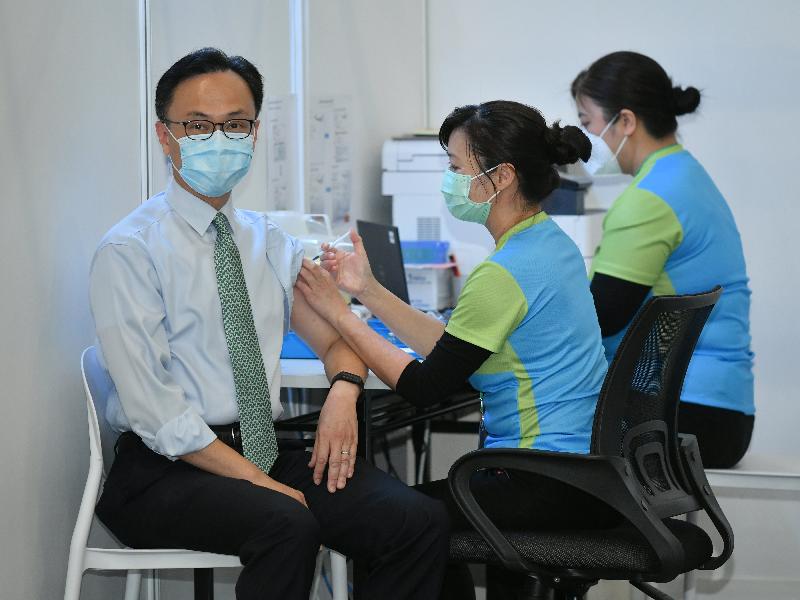
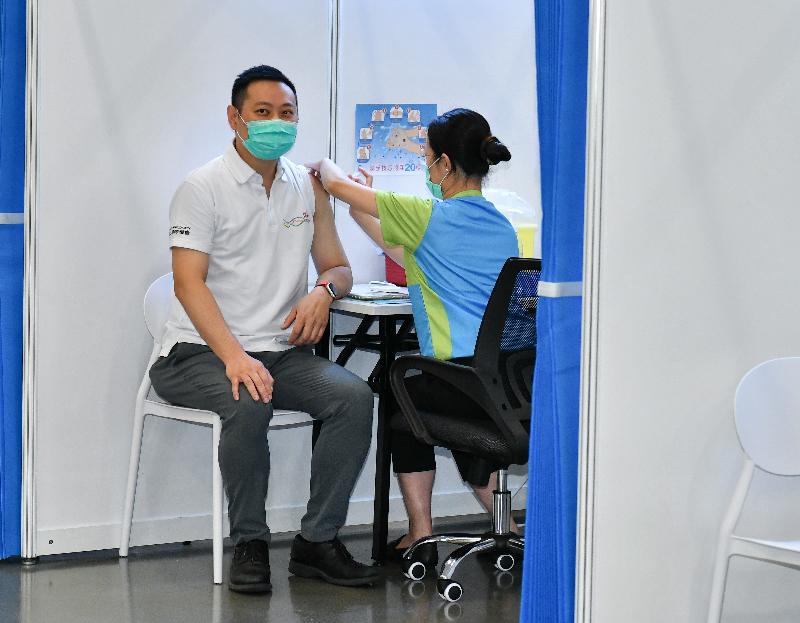
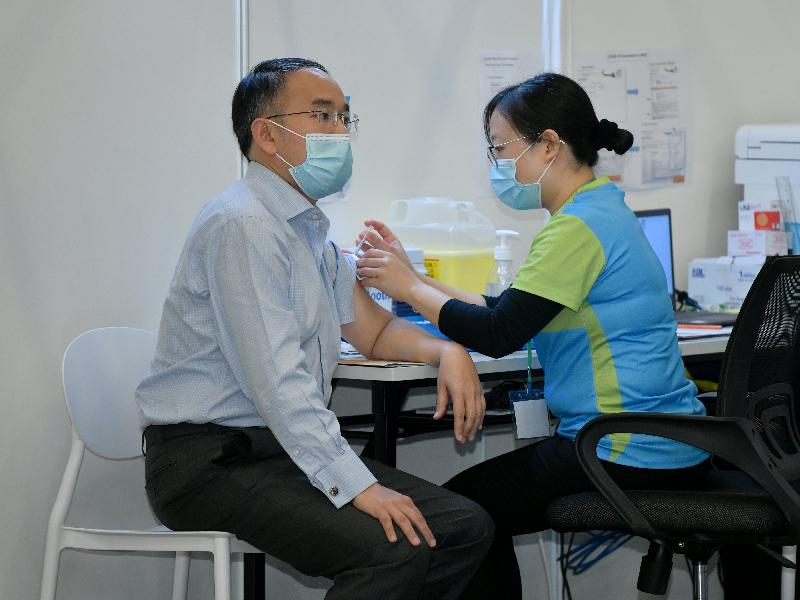
     The Chief Executive, Mrs Carrie Lam, and a number of Principal Officials today (February 22) took the lead to receive their first dose of the Sinovac vaccine, developed and produced in the Mainland. They appealed to the public to get vaccinated against COVID-19 early to protect themselves and others, with a view to safeguarding public health in the community and restoring the local economy and people's livelihood to normal later.

     Mrs Lam said, "I and a number of Secretaries of Departments and Directors of Bureaux take the lead to get vaccinated today. We hope that by taking action ourselves, we can serve as an example and encourage members of the public to join the COVID-19 Vaccination Programme. Vaccination is free of charge. We appeal to the public to actively participate in the programme so that Hong Kong can put a stop to the epidemic as early as possible.

     "Vaccination is an extremely important anti-epidemic measure. Given the tight supply of vaccines worldwide, the Government has strived to provide COVID-19 vaccines that are in compliance with the safety, efficacy and quality requirements and to arrange for the public to get vaccinated in an orderly manner.

     "I am delighted that, with the support of the Central Government, the first batch of one million doses of the Sinovac vaccine arrived in Hong Kong smoothly from Beijing last Friday. People belonging to the five priority groups can be vaccinated from February 26 onwards. They are: persons aged 60 or above (a maximum of two carers who accompany elderly people aged 70 or above can also receive vaccination); personnel in healthcare settings and those participating in anti-epidemic related work; residents and staff of residential care homes for the elderly/persons with disabilities; personnel maintaining critical public services; and personnel performing cross-boundary related work. A batch of the Comirnaty vaccine will be transported to Hong Kong before the end of this month and we would arrange vaccination for the public soon afterwards.

     "With COVID-19 raging across the globe, the year-long epidemic has impacted significantly on Hong Kong, no matter in the economic and social aspects or people's livelihood. In the face of the epidemic, vaccines give us light and hope for winning the battle against the virus. I call on citizens to grasp the opportunity to get vaccinated early and muster our efforts to win over the fight against the virus."

     After the Chief Executive and the officials received the vaccination at the Community Vaccination Centre (CVC) run by the Department of Health at the Exhibition Gallery of the Hong Kong Central Library, some members of the Executive Council and the Legislative Council also received their first dose of the COVID-19 vaccine there.

     There will be four channels for vaccination. Members of the public can get vaccination at 29 CVCs in the 18 districts across the territory, more than 1 500 private clinics, and 18 general out-patient clinics of the Hospital Authority. Outreach teams will also go to residential care homes for the elderly and homes for persons with disabilities to provide on-site vaccination service.

   Healthcare staff will provide vaccination services to the public at the CVCs. Among the CVCs, five of them will provide the Sinovac vaccine while 24 of them will provide the Comirnaty vaccine. The CVCs will commence operation in phases, depending on the arrival of the vaccines in Hong Kong, the quantity of vaccines and the situation of vaccination.

     From 0.00am tomorrow (February 23) onwards, people belonging to the priority groups for vaccination can make appointments online to receive the Sinovac vaccine at five CVCs and the 18 general out-patient clinics of the Hospital Authority starting from February 26. Private doctors participating in the vaccination programme will commence administering the Sinovac vaccine for the public before mid-March.

     Members of the public can visit the thematic website, www.covidvaccine.gov.hk, to make reservation for vaccination and to learn more about COVID-19 vaccines.

Photo  Photo  Photo  Photo  Photo  Photo  Photo  Photo  Photo  Photo  Photo  Photo  Photo  Photo  Photo  Photo