Government further strengthens compulsory testing

     The Government exercised the power under the Prevention and Control of Disease (Compulsory Testing for Certain Persons) Regulation (Cap. 599J) and published in the Gazette a compulsory testing notice, which requires any person who had been present at 29 specified premises during the specified period (persons subject to compulsory testing) to undergo a COVID-19 nucleic acid test.

     Currently, in all districts in Hong Kong, if one or more new confirmed cases are found in the residential buildings (including buildings for both commercial and residential uses), or there are sewage samples tested positive which implied possible infection risks, the buildings will be included in the compulsory testing notice.

     To strengthen testing targeting at workplaces, starting from February 27, if one or more confirmed cases are found in a workplace, it will be included in the compulsory testing notice.

     Twenty-eight buildings fulfilling the above criteria were included in the compulsory testing notice on February 27.  Among them, since preliminary confirmed cases were found in more than one shop in K11 Musea, Victoria Dockside, 18 Salisbury Road, Yau Tsim Mong, persons who had been engaged to work or had been on duty at the mall have to undergo compulsory testing. In addition, since there was staff confirmed positive in St. Hilary's Kindergarten (Hung Hom), G/F-2/F, Metro 6, 121 Bulkeley Street, Hung Hom, apart from the staff, students attending that school also have to undergo compulsory testing taking into account the possible higher infectious risks.

     Details of the compulsory testing notice are as follows:

1. Any person who had been present at any specified premises listed in Part A of Annex 1 for more than two hours at any time during the period from February 14 to February 27, 2021 (including but not limited to visitors, residents and workers), have to undergo testing by March 1, 2021. If persons subject to compulsory testing have previously undergone testing between February 25 and February 27, 2021, they would be taken to have complied with the requirements set out in the compulsory testing notice.

2. Any person who had been engaged to work or had been on duty (including full-time, part-time and relief staff) at any specified premises listed in Part B of Annex 1 at any time during the period from February 14 to February 27, 2021, have to undergo testing by March 1, 2021. If persons subject to compulsory testing have previously undergone testing between February 25 and February 27, 2021, they would be taken to have complied with the requirements set out in the compulsory testing notice.

3. Any person who had been engaged to work or had been on duty (including full-time, part-time and relief staff) or students who had studied at any specified premises listed in Part C of Annex 1 at any time during the period from February 14 to February 27, 2021, have to undergo testing by March 1, 2021.  If persons subject to compulsory testing choose to undergo testing using the specimen bottles distributed by the Centre for Health Protection (CHP), they have to return the specimen bottle with the sample by March 3, 2021. If persons subject to compulsory testing have previously undergone testing between February 25 and February 27, 2021, they would be taken to have complied with the requirements set out in the compulsory testing notice.

     Since the number of confirmed cases in the cluster related to K11 Musea has been increasing, CHP has further expanded the coverage of notifications of the "LeaveHomeSafe" mobile app in relation to the relevant venues in K11 Musea for users to download. Members of the public who had been to the relevant venues in K11 Musea and scanned the "LeaveHomeSafe" QR codes from February 19 to February 26, 2021 will receive exposure notifications. Citizens who receive the relevant notifications are advised to undergo testing as soon as possible.

     Persons who receive the exposure notifications under "LeaveHomeSafe" (including those related to K11 Musea cases and other cases) can make appointments online to receive testing free of charge once at community testing centres by showing the notifications in the mobile phones.

      A spokesman for the Food and Health Bureau reminds the public that in accordance with the compulsory testing notice issued earlier, all household members of close contacts are required to undergo compulsory testing. Any person who had lived with a person who is placed under quarantine pursuant to section 22 of the Prevention and Control of Disease Regulation (Cap. 599A) (person under quarantine) in the same residential unit on the date of commencement of quarantine or during the 14 days before that day, and who becomes aware of the quarantine of the person under quarantine when the relevant quarantine has not yet been completed, have to undergo testing within two days of he/she becoming aware of the person under quarantine has been placed under quarantine and report to the Government the result of the test by phone (at 6275 6901), fax (at 2530 5872) or email (ct@csb.gov.hk) within three days of undergoing the test.

     The Government will set up mobile specimen collection stations at the following locations today (February 28) for local residents and workers subject to compulsory testing: 

  • Block 45 of Heng Fa Chuen
  • Fortress Garden, Fortress Hill
  • Choi Wan (1) Estate, Choi Hung
  • Lok Wah South Estate, Kwun Tong
  • Kai Ching Estate, Kowloon City
  • Ning Fung Court, Kwai Chung
  • Yan Tin Estate, Tuen Mun
  • Fu Shin Estate, Tai Po
  • Yat Tung (1) Estate, Tung Chung

     The service period of the mobile specimen collection station at Lai Chi Kok Community Hall will be extended to February 28, and that of the station at Arthur Street in Yau Ma Tei will be extended to March 7 (Sunday). Starting from March 1, the mobile specimen collection station at Wong Chuk Hang Recreation Ground will be relocated to Wah Kwai Community Hall and will be open to March 7 (Sunday) tentatively. The opening dates and operating hours of the mobile specimen collection stations in various districts providing free COVID-19 nucleic acid testing services for the general public are stated in Annex 2. Apart from mobile specimen collection stations, persons subject to compulsory testing can also choose to attend any of the community testing centres in all districts to receive testing free of charge.

     Persons subject to compulsory testing may choose to undergo testing via the following routes:

1.  To visit any of the mobile specimen collection stations (see the list and target groups (if applicable) at www.coronavirus.gov.hk/eng/early-testing.html) for testing;
2.  To attend any of the community testing centres (see the list at www.communitytest.gov.hk/en/);
3.  To obtain a deep throat saliva specimen collection pack from any of the 121 post offices, vending machines set up at 20 MTR stations or 47 designated general outpatient clinics (GOPCs) of the Hospital Authority and return the specimen to one of the designated specimen collection points (see the distribution points and times, and the specimen collection points and times, at www.coronavirus.gov.hk/eng/early-testing.html);
4.  To undergo testing at any of the GOPCs of the Hospital Authority as instructed by a medical professional of the Hospital Authority;
5.  To self-arrange testing provided by private laboratories which are recognised by the Department of Health (DH) and can issue SMS notifications in respect of test results (see the list at www.coronavirus.gov.hk/pdf/List_of_recognised_laboratories_RTPCR.pdf); or
6. To use a specimen bottle distributed to the relevant specified premises by the CHP (if applicable), and return the specimen bottle with the sample collected as per relevant guidelines.
 
     The spokesman cautioned that testing received at accident and emergency departments of the Hospital Authority or during hospital stays, or testing provided by private laboratories which cannot issue SMS notifications in respect of test results, does not comply with the requirements of the aforementioned compulsory testing notice.

     "If persons subject to compulsory testing have symptoms, they should seek medical attention immediately and undergo testing as instructed by a medical professional. They should not attend the mobile specimen collection stations or the community testing centres."

     Persons subject to compulsory testing must keep the SMS notification containing result of the test for checking by a law enforcement officer when the officer requires the persons to provide information about their undergoing the specified test.

     Furthermore, persons subject to testing under the compulsory testing notices should, as far as reasonably practicable, take appropriate personal disease prevention measures including wearing a mask and maintaining hand hygiene, and, unless for the purpose of undergoing the specified test, stay at their place of residence and avoid going out until the test result is ascertained as far as possible.

     Any enquiries on compulsory testing arrangements may be addressed to the hotline at 6275 6901, which operates daily from 9am to 6pm. If persons subject to compulsory testing plan to conduct testing at any of the community testing centres, they can check the centre's appointment status in advance. The hotlines of the community testing centres are available at www.communitytest.gov.hk/en/info/.

     The Government will continue to trace possibly infected persons who had been to the relevant premises, and seriously verify whether they had complied with the testing notices. Any person who fails to comply with the testing notices commits an offence and may be fined a fixed penalty of $5,000. The person would also be issued with a compulsory testing order requiring him or her to undergo testing within a specified time frame. Failure to comply with the order is an offence and the offender would be liable to a fine at level 4 ($25,000) and imprisonment for six months.

     Relevant officers of different government departments are empowered to perform certain functions under the relevant Regulations under the Prevention and Control of Disease Ordinance (Cap. 599), including requesting individuals to provide information and assistance when necessary. Any person who fails to comply with the relevant request commits an offence and would be liable to a fine at level 3 ($10,000). Collection and use of any personal data for conducting COVID-19 tests must meet the requirements under the Personal Data (Privacy) Ordinance (Cap. 486). Government departments or testing service providers which handle the relevant information may provide the data to DH or other relevant departments for anti-epidemic purpose as necessary. The workflow does not involve the provision of any personal data to organisations or persons outside Hong Kong.

     The spokesman said, "The Government urges all individuals who are in doubt about their own health conditions, or individuals with infection risks (such as individuals who visited places with epidemic outbreaks or contacted confirmed cases), to undergo testing promptly for early identification of infected persons."

Statistics for COVID-19 Vaccination Programme

     A total of about 7 000 persons received their first doses of the vaccine under the COVID-19 Vaccination Programme today (February 27), while a cumulative total of about 13 600 persons have been vaccinated since February 22.   

     "Getting vaccinated can not only protect oneself, but also family members and friends, and will help reduce the risk of a community outbreak. We call on the citizens in the five priority groups to get vaccinated early so that our economy and way of life could return to normal as soon as possible," a Government spokesman said.


CE visits Lai Chi Wo and inspects recycling facilities in various districts in New Territories (with photos/video)

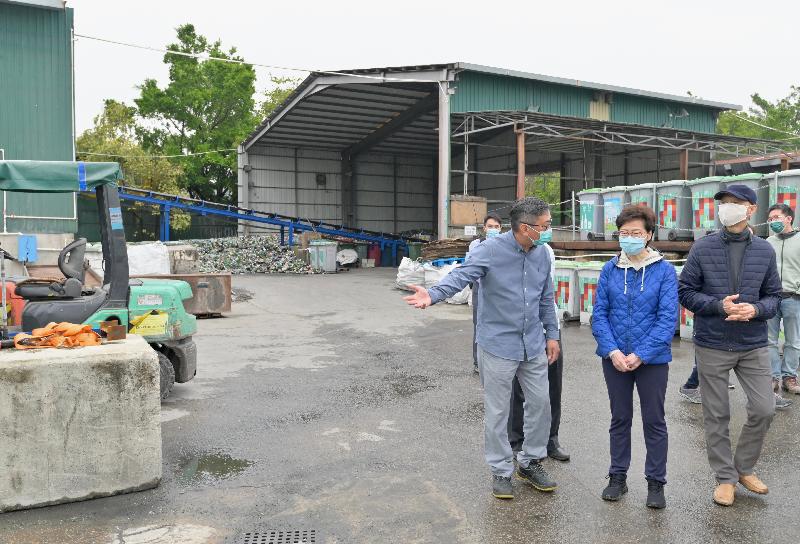
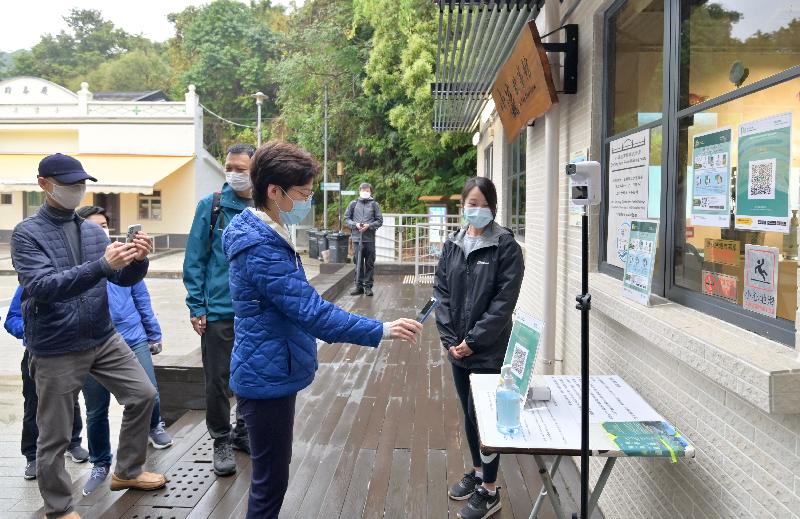
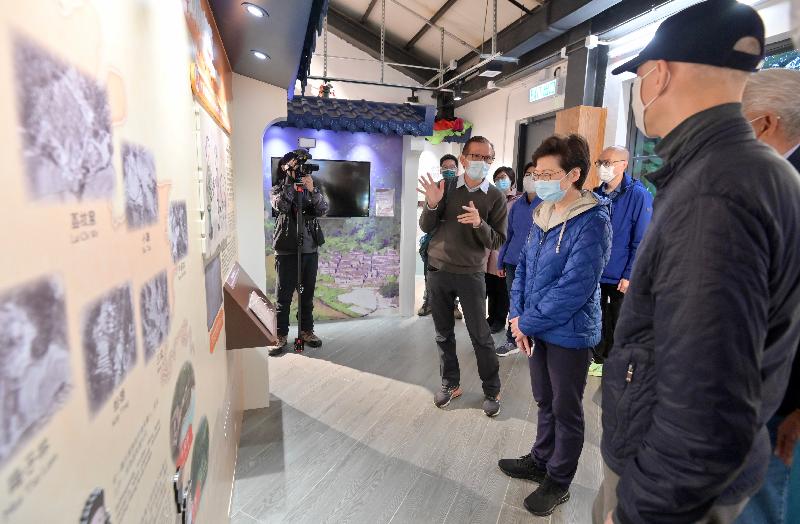
     The Chief Executive, Mrs Carrie Lam, went to Lai Chi Wo this morning (February 27) to learn more about the work of the Countryside Conservation Office (CCO) under the Environmental Protection Department (EPD) in co-ordinating countryside conservation projects and promoting the sustainable development of remote countryside areas. She then visited various recycling facilities under the EPD and its contractors.

     The CCO was established in 2018, and $1 billion was earmarked by the Government to support its work on conservation of the remote countryside, with half of the funding dedicated to minor improvement works in remote countryside areas, and half reserved for supporting non-profit-making organisations to promote conservation and revitalisation projects in the remote countryside via the Countryside Conservation Funding Scheme (CCFS). Mrs Lam and the Secretary for the Environment, Mr Wong Kam-sing, visited Lai Chi Wo in the morning, and were briefed by CCO colleagues on minor improvement works carried out at Lai Chi Wo.

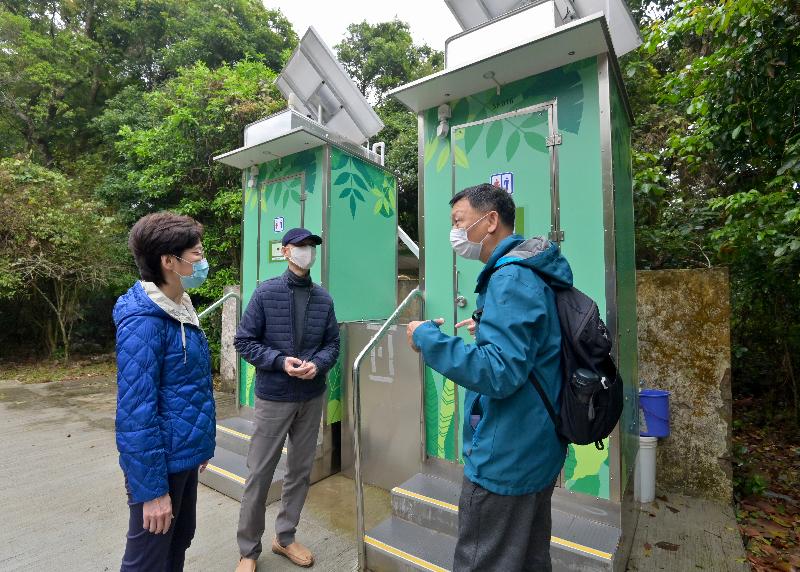
     The relevant works near Lai Chi Wo covered trail restoration, public toilet improvements, the commissioning of a consultancy study on feasible options for improving sewage collection at Lai Chi Wo, conducting geospatial analyses via photogrammetry to show the landscape, topography and facilities of Lai Chi Wo, etc. Mrs Lam was pleased to note that the relevant projects have not only benefitted local villagers and the villagers who have returned to live there by providing them with basic living facilities, the projects have also brought convenience to visitors, promoted local eco-tourism and created job opportunities. A total of 17 projects were approved by the CCFS from the end of 2019 to February this year, of which seven were related to Lai Chi Wo and its neighbouring villages with a subsidy totalling $33 million.
    
     Mrs Lam also received a briefing from colleagues on the work to help people who are interested in operating guesthouses and catering businesses at Lai Chi Wo to discuss with relevant departments matters relating to the application of licences. She said that as pointed out in the 2020 Policy Address Supplement, the Government will develop a set of licensing requirements and procedural guidelines designed especially for guesthouses and catering businesses in countryside areas, having regard to the special nature and restrictions of rural settings. Various government departments will support and co-operate with the relevant work of the CCO to revitalise villages and promote eco-tourism. The CCFS promotes diverse and innovative conservation projects and activities, which will also help create more job opportunities in the green industry.

     After departing Lai Chi Wo, Mrs Lam, accompanied by Mr Wong, visited the facilities of EPD contractors providing recycling services in relation to glass containers and plastics. To prepare for the full implementation of the Producer Responsibility Scheme on Glass Beverage Containers, the EPD's glass management contractors have undertaken free collection and treatment services for waste glass containers across the territory since early 2018. Mrs Lam visited the contractor responsible for the collection and treatment services for waste glass containers in Kowloon, noting that the quantity of waste glass containers collected in 2018 has exceeded 13 000 tonnes since the commencement of the services, representing an increase of 60 per cent when compared with the volume collected under the relevant voluntary recycling programme in 2017. The quantity collected in 2019 was about 21 000 tonnes, which was a further increase of nearly 60 per cent over the quantity collected in 2018. There was also a significant increase in the total number of glass container collection points set up across the territory, with the number of collection points doubling from about 2 000 at the commencement of the services in early 2018 to about 4 000 at present.

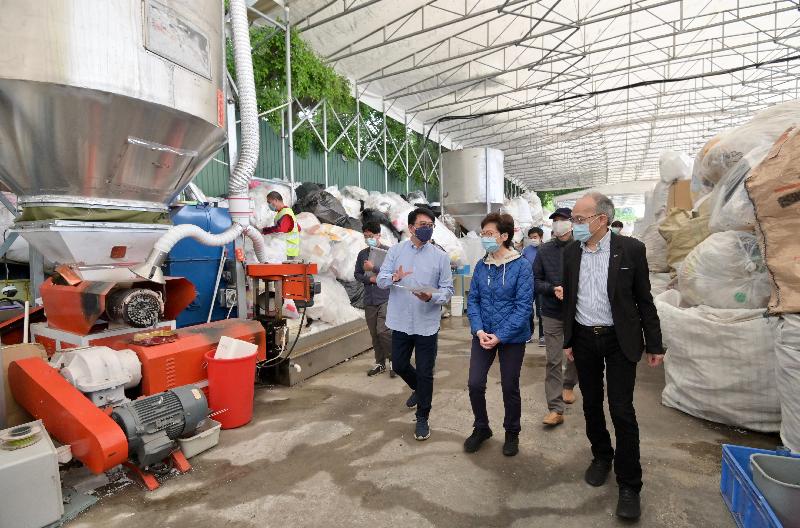
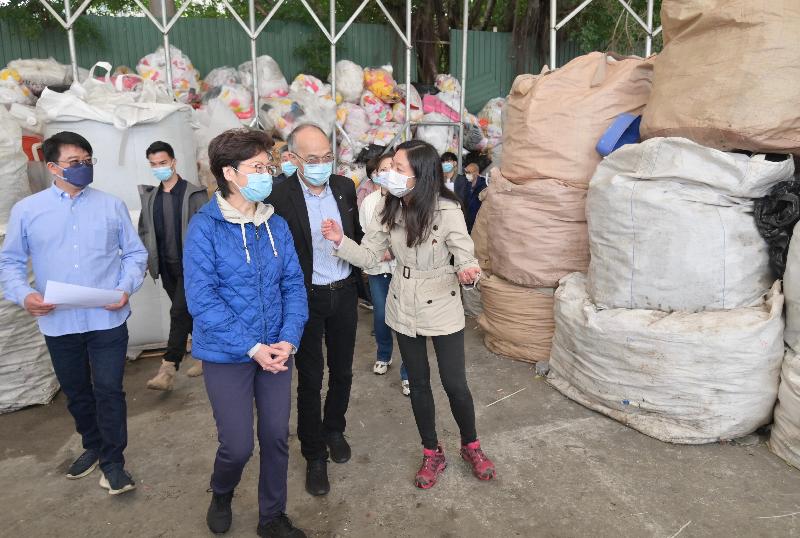
     In addition, the EPD has commenced a two-year pilot scheme on the collection and recycling of waste plastics in Eastern District, Kwun Tong and Sha Tin progressively since January last year. The pilot scheme can help raise local recycling capabilities, support the development of the recycling industry producing environmental-friendly products, and enhance the recovery rate of waste plastics. Mrs Lam visited the contractor of the pilot scheme on recycling of waste plastics in Eastern District and Kwun Tong to learn more about its plastics recycling facilities. She noted that since the pilot scheme started in Eastern District and Kwun Tong in January last year and July respectively, about 156 and 144 housing estates and buildings in the two respective districts have registered for the pilot scheme service as at January this year, covering about 47 per cent and 73 per cent of the population of Eastern District and Kwun Tong, achieving a collection volume of about 360 tonnes (for about a year) and 85 tonnes (for about half a year) respectively.

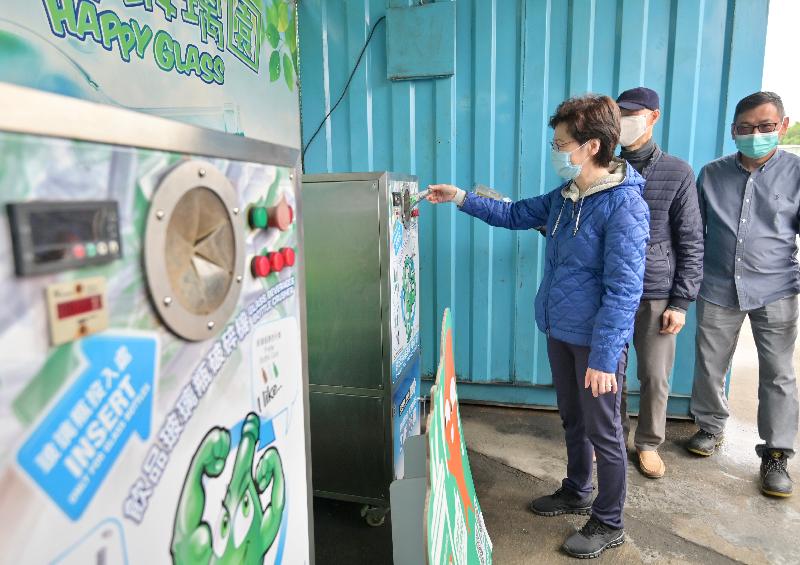
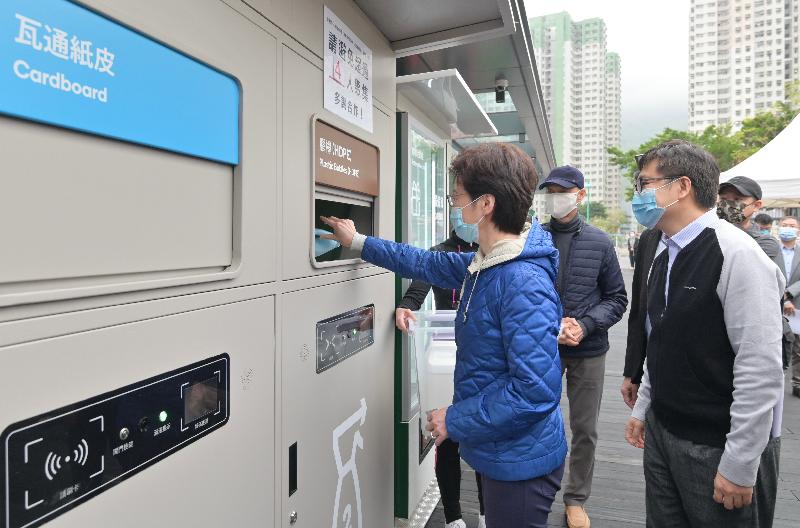
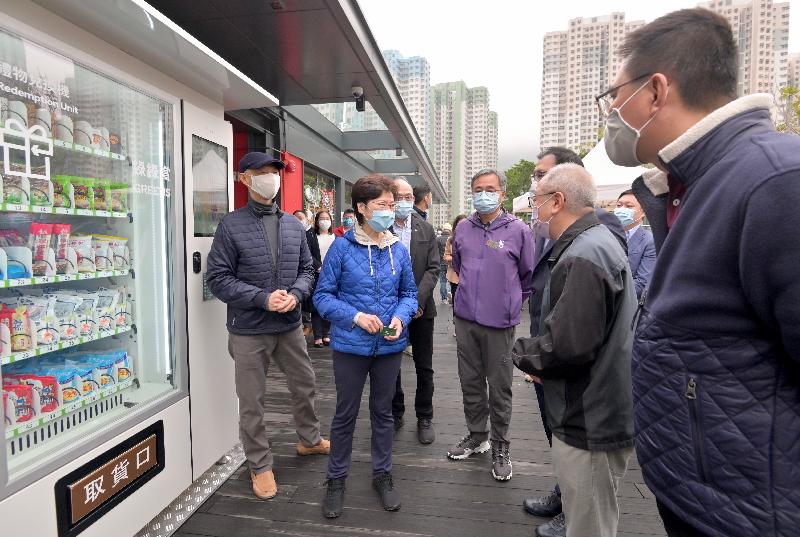
     The last stop of the visit was the Tuen Mun Community Green Station (CGS), which is an EPD recycling station in Tuen Mun with smart waste bins and Reverse Vending Machines (RVMs). Mrs Lam was briefed by EPD personnel on the pilot programme on the smart recycling system. Under the pilot programme, the Eastern CGS, the Tai Kok Tsui CGS and the Tuen Mun CGS installed a round-the-clock smart recycling system with an overflow alert. The system can automatically measure and record the weight of recyclables collected, and save recycle bonus points. It can also help provide more appropriate education, promotion and services to the community and individuals in accordance with big data analysis.

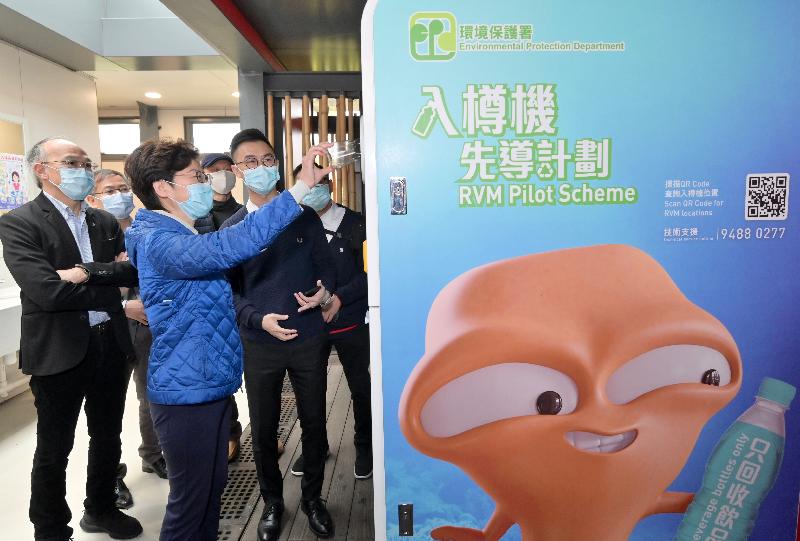
     The EPD launched a three-month public consultation on the Producer Responsibility Scheme on Plastic Beverage Containers (PPRS) on February 22 this year. To facilitate the future implementation of the scheme, the EPD has rolled out a one-year RVM Pilot Scheme in phases in the first quarter of this year to test whether the RVMs help with the recovery of plastic beverage containers in Hong Kong. Mrs Lam noted that instant rebates will be provided for each plastic beverage container properly returned to an RVM. Members of the public may also choose to donate the rebate to designated charities (the Community Chest of Hong Kong, the Scout Association of Hong Kong or the Hong Kong Girl Guides Association).

     The Chairman of the Advisory Committee on Recycling Fund, Mr Jimmy Kwok, also joined the visit to inspect recycling facilities with Mrs Lam and Mr Wong. The Recycling Fund was established in 2015 to promote the sustainable development of the recycling industry, while the advisory committee would advise and make recommendations to the Government on matters relating to the overall administration and operation of the fund. Mrs Lam was pleased to note that since its establishment, the Recycling Fund has approved 1 670 applications with a total subsidy of about $600 million, involving various recyclable materials such as waste paper, plastics, metal, wood and food waste.

     "Reducing carbon emissions and waste is a global trend. The Government has been adopting a multi-pronged approach to promote waste reduction at source and clean recycling for various materials. I conducted two visits to different recycling facilities of the EPD this month and note that the EPD has been leveraging innovation and technology, coupled with the enhancement of the awareness of waste reduction among members of the public, to expand the recycling network in the community and the local recycling services, in order to achieve the goal of transforming waste to energy and turning waste into resources. I believe that the series of measures implemented in recent years will take root to encourage clean recycling in the community and nurture green living habits of the public, help realise the vision of 'Waste Reduction‧Resources Circulation‧Zero Landfill' set out in the Waste Blueprint for Hong Kong 2035, and support the move towards carbon neutrality in Hong Kong before 2050," Mrs Lam said.

Photo  Photo  Photo  Photo  Photo  Photo  Photo  Photo  Photo  Photo  Photo  Photo  Photo  


Queen Mary Hospital announces a staff member tested positive for COVID-19

The following is issued on behalf of the Hospital Authority:

     The spokesman for the Queen Mary Hospital (QMH) made the following announcement today (February 27) regarding an operation assistant who has tested positive for COVID-19:
 
     An operation assistant of the Department of Obstetrics and Gynecology was arranged to quarantine on February 23 as her household member was tested positive for COVID-19. She developed low grade fever two days later and underwent a COVID-19 test on the same day. The test result available today was positive. She has been admitted to the Community Treatment Facility.
 
     Upon learning that the staff would be quarantined, hospital infection control team conducted contact tracing. It was noted that her last duty day was February 22. The staff member was arranged for COVID-19 test at the time and the result was negative. The staff is mainly responsible for transportation of document and environmental cleansing. She had no contact with patients and had been wearing surgical masks during work. No patient and staff was identified as a close contact. The hospital will arrange COVID-19 tests for six staff members in the same office.
 
     Thorough cleansing and disinfection have been conducted at the office. The hospital will continue to closely monitor the health condition of staff and communicate with the Centre for Health Protection on the latest progress.


Public hospitals daily update on COVID-19 cases

The following is issued on behalf of the Hospital Authority:

     As at 9am today (February 27), 25 COVID-19 confirmed patients were discharged from hospital in the last 24 hours. Including a patient (case number: 10928) discharged earlier on February 25, a total of 10 519 patients with confirmed or probable infection have been discharged so far.
 
     At present, there are 673 negative pressure rooms in public hospitals with 1 202 negative pressure beds activated. A total of 203 confirmed patients are currently hospitalised in 23 public hospitals, a community treatment facility and the North Lantau Hospital Hong Kong Infection Control Centre, among which 17 patients are in critical condition, 13 are in serious condition and the remaining 173 patients are in stable condition.
 
     The Hospital Authority will maintain close contact with the Centre for Health Protection to monitor the latest developments and to inform the public and healthcare workers on the latest information in a timely manner.
 
     Details of the above-mentioned patients are as follows:
 

Patient condition Case numbers
Discharged 9424, 9680, 10302, 10406, 10431, 10437, 10546, 10698, 10738, 10757, 10767, 10771, 10777, 10783, 10808, 10835, 10838, 10840, 10847, 10860, 10861, 10870, 10902, 10923, 10928, 10933
Critical 1989, 3496, 6125, 6607, 6794, 8018, 8078, 9049, 9135, 9612, 9907, 9953, 10358, 10367, 10379, 10585, 10904
Serious 6386, 7076, 7468, 8221, 9055, 9550, 9733, 9793, 10023, 10083, 10611, 10898, 10942