Public hospitals daily update on COVID-19 cases

The following is issued on behalf of the Hospital Authority:

     As at 9am today (March 2), 16 COVID-19 confirmed patients were discharged from hospital in the last 24 hours. So far, a total of 10 563 patients with confirmed or probable infection have been discharged.
 
     At present, there are 673 negative pressure rooms in public hospitals with 1 202 negative pressure beds activated. A total of 226 confirmed patients are currently hospitalised in 22 public hospitals, a community treatment facility and the North Lantau Hospital Hong Kong Infection Control Centre, among which 14 patients are in critical condition, 12 are in serious condition and the remaining 200 patients are in stable condition.
 
     The Hospital Authority will maintain close contact with the Centre for Health Protection to monitor the latest developments and to inform the public and healthcare workers on the latest information in a timely manner.
 
     Details of the above-mentioned patients are as follows:
 

Patient condition Case numbers
Discharged 9847, 10733, 10763, 10788, 10801, 10815, 10817, 10831, 10852, 10862, 10877, 10903, 10909, 10914, 10918, 10971
Critical 1989, 3496, 6125, 6607, 6794, 8018, 8078, 9049, 9612, 9907, 10358, 10367, 10379, 10904
Serious 6386, 7076, 7468, 8221, 9055, 9135, 9550, 9793, 10083, 10585, 10942, 10953


EPD successfully intercepts illegal import of municipal waste by sea (with photos)

     The Environmental Protection Department (EPD) intercepted earlier a case of illegal import of municipal waste from Canada at the Kwai Tsing Container Terminals (KTCTs). The importer involved, namely SIRG HK Limited, was convicted and fined $15,000 at Fanling Magistrates' Courts today (March 2) for contravening the Waste Disposal Ordinance (WDO).

     In November 2019, EPD enforcement officers inspected two sea containers, which were claimed to contain ABS plastics, at the KTCTs. They intercepted about 41 tonnes of waste with a mix of waste plastics, waste printed circuit boards, waste wires, waste paper and waste wood, etc. The EPD immediately repatriated all the intercepted waste to the place of origin and notified the local enforcement authorities concerned about the return shipment. The EPD also instituted prosecution against the importer involved under the WDO.

     An EPD spokesman said that to prevent Hong Kong from becoming a dumping ground for imported waste, or a distribution hub for the illegal re-export of waste, the department has been closely exchanging intelligence and collaborating with the Customs and Excise Department (C&ED) on the interception of waste of various types entering Hong Kong illegally through different channels. In recent years, the cases of illegal import of municipal waste, mainly originating in Europe and the United States, have been rising. The EPD intercepted five cases and six cases of illegal import of municipal waste in 2020 and 2019 respectively, a significant increase as compared to only one case over the three-year period from 2016 to 2018. In view of this increasing trend, the EPD will continue to enhance intelligence exchanges and risk analyses with overseas competent authorities, and work with the C&ED to inspect suspicious containers to combat these illegal activities.

     The spokesman stressed that municipal waste is a controlled waste, and its import is subject to control under the WDO. The imported municipal waste generally does not have a high recycling value, thus most of the waste will eventually be delivered to the landfills for disposal, taking up the limited landfill space in Hong Kong. Improper disposal of municipal waste will also pollute the environment and cause harm to public health. The EPD will continue to rigorously combat the illegal import and export of controlled waste and bring offenders to justice.

     The spokesman reminded importers and exporters of the waste recycling trade that anyone who imports or exports controlled waste without obtaining a valid permit beforehand commits an offence under the WDO. First-time offenders are liable to a maximum fine of $200,000 and six months' imprisonment. For subsequent offences, offenders are liable to a fine up to $500,000 and two years' imprisonment.
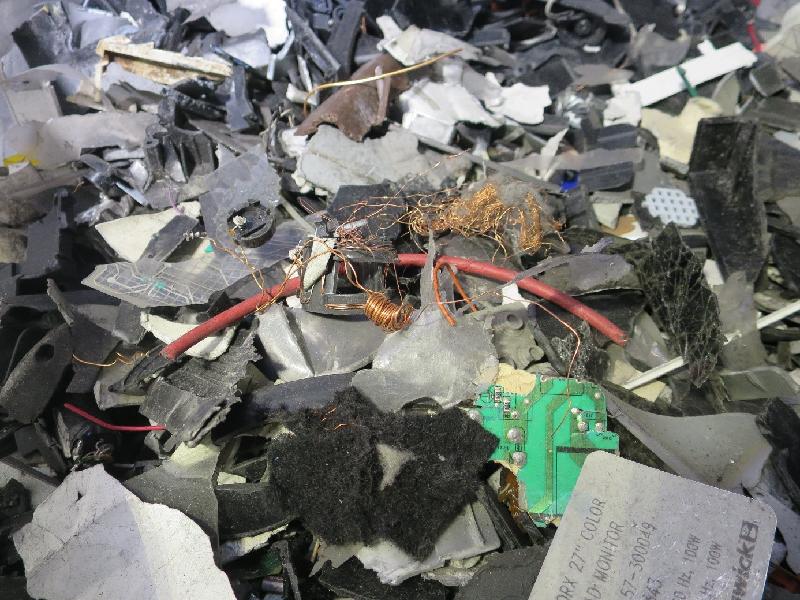
Photo  Photo  


Fraudulent websites and phishing instant messages related to Bank of China (Hong Kong) Limited

The following is issued on behalf of the Hong Kong Monetary Authority:
 
     The Hong Kong Monetary Authority (HKMA) wishes to alert members of the public to a press release issued by Bank of China (Hong Kong) Limited on fraudulent websites and phishing instant messages, which has been reported to the HKMA. Hyperlink to the press release is available on the HKMA website for ease of reference by members of the public.
 
     Anyone who has provided his or her personal information to the websites concerned or has conducted any financial transactions through the websites should contact the bank concerned using the contact information provided in the press release, and report to the Police or contact the Cyber Security and Technology Crime Bureau of the Hong Kong Police Force at 2860 5012.


LegCo Public Accounts Committee to hold public hearing tomorrow

The following is issued on behalf of the Legislative Council Secretariat:
 
     The Legislative Council (LegCo) Public Accounts Committee (PAC) will hold a public hearing on "Collection and removal of marine refuse by the Marine Department" (Chapter 1) of the Director of Audit's Report No.75 tomorrow (March 3) at 9am in Conference Room 1 of the LegCo Complex. 
 
     Seven witnesses have been invited to appear before the above hearing to respond to points raised in the Report and answer questions asked by the PAC members.
 
     The programme for the public hearing is as follows:
 
Date: March 3 (Wednesday)
Time: 9am
Venue: Conference Room 1
 
Subject: Collection and removal of marine refuse by the Marine Department (Chapter 1 of the Director of Audit's Report No.75)
 
Witnesses:
 
Secretary for the Environment
Mr Wong Kam-sing
 
Deputy Director of Environmental Protection (1)
Dr Samuel Chui
 
Assistant Director (Water Policy),
Environmental Protection Department
Mr Chen Che-kong
 
Director of Marine
Ms Carol Yuen
 
Deputy Director of Marine (2)
Mr Raymond Sy
 
Assistant Director/Planning and Services,
Marine Department
Mr Tony Chan
 
General Manager/Services,
Marine Department
Mr Warren Li
 
     The PAC is chaired by Mr Abraham Shek, and its Deputy Chairman is Mr Paul Tse. Other members include Mr Steven Ho, Mr Shiu Ka-fai, Ms Yung Hoi-yan, Mr Lau Kwok-fan and Mr Tony Tse.


CHP investigates 13 additional confirmed cases of COVID-19

     The Centre for Health Protection (CHP) of the Department of Health (DH) announced that as of 0.00am, March 2, the CHP was investigating 13 additional confirmed cases of coronavirus disease 2019 (COVID-19), taking the number of cases to 11 033 in Hong Kong so far (comprising 11 032 confirmed cases and one probable case).
 
     Among the newly reported cases announced, six are imported cases.
 
     A total of 231 cases have been recorded in the past 14 days (February 16 to March 1), including 196 local cases of which 68 are from unknown sources.
 
     The CHP's epidemiological investigations and relevant contact tracing on the confirmed cases are ongoing. For case details and contact tracing information, please see the Annex or the list of buildings with confirmed cases of COVID-19 in the past 14 days and the latest local situation of COVID-19 available on the website "COVID-19 Thematic Website" (www.coronavirus.gov.hk).
 
     In view of the latest epidemic developments in the Mainland, the previous arrangement to provide specimen collection containers to inbound travellers arriving via land boundary control points who have been to Beijing in the past 14 days will be cancelled from today (March 2). These travellers, if they are not exempted persons, are subject to compulsory quarantine for 14 days at a designated place (home or other accommodation) upon arrival in Hong Kong. The arrangement of distributing specimen collection containers to inbound travellers who have been to Heilongjiang Province, Hebei Province, Jilin Province and Shanghai in the past 14 days arriving via land boundary control points, which has come into effect earlier, remains unchanged.
 
     Meanwhile, the CHP reminded those who had visited specified venues under the Prevention and Control of Disease (Compulsory Testing for Certain Persons) Regulation (Cap. 599J) to receive COVID-19 nucleic acid testing according to the compulsory testing notice. The public are also urged to seek medical attention early if symptoms develop.
 
     The CHP called on members of the public to avoid going out, having social contact and dining out. They should put on a surgical mask and maintain stringent hand hygiene when they need to go out. The CHP strongly urged the elderly to stay home as far as possible and avoid going out. They should consider asking their family and friends to help with everyday tasks such as shopping for basic necessities.
 
     The spokesman said, "Given that the situation of COVID-19 infection remains severe and that there is a continuous increase in the number of cases reported around the world, members of the public are strongly urged to avoid all non-essential travel outside Hong Kong.
 
     "The CHP also strongly urges the public to maintain at all times strict personal and environmental hygiene, which is key to personal protection against infection and prevention of the spread of the disease in the community. On a personal level, members of the public should wear a surgical mask when having respiratory symptoms, taking public transport or staying in crowded places. They should also perform hand hygiene frequently, especially before touching the mouth, nose or eyes.
 
     "As for household environmental hygiene, members of the public are advised to maintain drainage pipes properly, regularly pour water into drain outlets (U-traps) and cover all floor drain outlets when they are not in use. After using the toilet, they should put the toilet lid down before flushing to avoid spreading germs."
 
     Moreover, the Government has launched the website "COVID-19 Thematic Website" (www.coronavirus.gov.hk) for announcing the latest updates on various news on COVID-19 infection and health advice to help the public understand the latest updates. Members of the public may also gain access to information via the COVID-19 WhatsApp Helpline launched by the Office of the Government Chief Information Officer. Simply by saving 9617 1823 in their phone contacts or clicking the link wa.me/85296171823?text=hi, they will be able to obtain information on COVID-19 as well as the "StayHomeSafe" mobile app and wristband via WhatsApp.
 
     To prevent pneumonia and respiratory tract infections, members of the public should always maintain good personal and environmental hygiene. They are advised to:
 
• Wear a surgical mask when taking public transport or staying in crowded places. It is important to wear a mask properly, including performing hand hygiene before wearing and after removing a mask;
• Perform hand hygiene frequently, especially before touching the mouth, nose or eyes, after touching public installations such as handrails or doorknobs, or when hands are contaminated by respiratory secretions after coughing or sneezing;
• Maintain drainage pipes properly and regularly (about once a week) pour about half a litre of water into each drain outlet (U-trap) to ensure environmental hygiene;
• Cover all floor drain outlets when they are not in use;
• After using the toilet, put the toilet lid down before flushing to avoid spreading germs;
• Wash hands with liquid soap and water, and rub for at least 20 seconds. Then rinse with water and dry with a disposable paper towel. If hand washing facilities are not available, or when hands are not visibly soiled, performing hand hygiene with 70 to 80 per cent alcohol-based handrub is an effective alternative;
• Cover your mouth and nose with tissue paper when sneezing or coughing. Dispose of soiled tissues into a lidded rubbish bin, then wash hands thoroughly; and
• When having respiratory symptoms, wear a surgical mask, refrain from work or attending class at school, avoid going to crowded places and seek medical advice promptly.