Cluster of Vancomycin Resistant Enterococci cases at Tuen Mun Hospital

The following is issued on behalf of the Hospital Authority:

     The spokesperson for Tuen Mun Hospital (TMH) made the following announcement today (March 31):
 
     During a routine Vancomycin Resistant Enterococci (VRE) screening conducted by the hospital, a 64-year-old male patient in a medical and geriatrics ward of TMH was confirmed to carry VRE on March 15. In accordance with the prevailing infection control guidelines, the hospital has conducted contact tracing for the index patient. Nine more male patients (aged 51 to 95) were found to be VRE carriers without any symptom of infection. A 78-year-old patient passed away because of his underlying disease. Six other patients (aged 51 to 95) have been discharged and the remaining patients are still hospitalised with stable condition.
 
     The ward concerned has adopted the following enhanced infection control measures:

1. Enhanced hand hygiene and stringent contact precautions;
2. Enhanced attention to contamination-prone procedures; and
3. Enhanced disinfection and cleaning of the concerned ward.  

     The hospital will continue the enhanced infection control measures and closely monitor the situation of the ward. The cases have been reported to the Hospital Authority Head Office and the Centre for Health Protection for necessary follow up.


Task Force for the Study on Tenancy Control of Subdivided Units submits report to the Government (with photo/video)

     The Task Force for the Study on Tenancy Control of Subdivided Units (Task Force) submitted its report to the Government today (March 31), setting out the current situation of subdivided units (SDUs) in Hong Kong and providing views and recommendations to the Government on whether tenancy control on SDUs should be introduced in Hong Kong and the possible options. The Government would carefully consider the recommendations put forward by the Task Force, and introduce the relevant bill into the Legislative Council as soon as possible within the current legislative session.
 
     The Secretary for Transport and Housing, Mr Frank Chan Fan, thanked the Task Force, under the chairmanship of Professor William Leung, for conducting a comprehensive, in-depth and professional study on the issues relating to tenancy control on SDUs in Hong Kong, and for advancing the completion of the study and submission of the report to the Government by three months in view of the public's concerns about the subject.
 
     The Government noted that the Task Force considered in principle that the Government should implement suitable tenancy control on SDUs in order to safeguard the interests of SDU tenants, and recommends that the tenancy control measures on SDUs be effected through legislation. The tenancy control measures recommended by the Task Force included:
 
     (a) formulate a "standard tenancy agreement" with mandatory terms, such as the term of a regulated tenancy shall be fixed for two years, and only the tenant shall have the right to terminate the tenancy agreement after 12 months into the tenancy by giving one month's notice to the landlord; the tenant shall not be liable to make payment to the landlord other than the rent, deposit and reimbursement of utility charges as apportioned by the landlord; the total of the utility charges (including electricity and water charges) payable by all tenants of the unit shall not exceed the amount charged in the relevant utility bill; the deposit shall be refunded to the tenant by the landlord within a specified period; and the landlord shall be responsible for the stamp duty of the tenancy agreement;
 
     (b) if the SDU landlord and tenant have not entered into a written tenancy agreement at the outset, the tenant shall have a right to demand the landlord to provide a written tenancy agreement within a specified period. If the landlord fails to do so, the tenant can withhold the payment of the rent of one month or of a longer period until the landlord has fulfilled this requirement;
 
     (c) as a deterrent, a landlord of a regulated tenancy may commit an offence and be subject to penalties if he requests the tenant to make payments other than for the rent, deposit and utility charges as apportioned by the landlord, or requests reimbursement of utility charges from the tenant where the total of apportioned utility charges for all tenants of the unit exceeds the amount charged in the relevant bill;
 
     (d) on security of tenure, the tenant of a regulated tenancy shall have the right to renew the tenancy once, thus enjoying four years of security of tenure; 
 
     (e) on tenancy renewal, there shall be a cap on the rate of rent increase, which shall not be more than the percentage change of the private domestic rental index (all classes) of the Rating and Valuation Department (RVD) in the relevant period; or 15 per cent, whichever is the lower. If the relevant change of the above RVD rental index is negative, the rent of the renewed regulated tenancy shall be decreased by at least the same percentage; and
 
     (f) to address the issue of subletting, the head lessor, when terminating the head lease and regaining possession of the premises, shall be obliged to provide the affected SDU tenants a sufficiently long notice period (such as 60 days) to enable them to look for alternative accommodation.
 
     The Government further noted that to ensure that the proposed tenancy control measures would be effectively administered, the Task Force recommended that the Government should increase resources for the RVD to promote public awareness of the new regulatory regime, provide related advisory and mediatory services, collect and publish information about SDU rentals, and take enforcement action. Resources should also be enhanced for the Lands Tribunal and relevant courts to expedite the processing of relevant disputes arising from the implementation of the proposed tenancy control measures. The Task Force further suggested that the Government may consider entrusting a non-governmental organisation to set up and run an SDU rental information portal, to arrange briefing sessions at the district level, and to provide the necessary support for SDU landlords and tenants. 
  
    The THB set up the Task Force on April 16, 2020. Since its establishment, the Task Force has held a series of meetings and appointed independent scholars/institutions to conduct thematic researches on the social, economic and legal issues involved and to carry out a survey on the actual situation of SDUs and the socio-economic characteristics of SDU tenants. Despite the COVID-19 pandemic, Task Force members have paid visits to SDU tenants in various districts, and held a number of online meetings with a total of 36 concern groups and organised two public forums to gather the views of stakeholders and members of the public on introducing tenancy control on SDUs in Hong Kong. 
 
     The report of the Task Force has been uploaded to the website of the THB (www.thb.gov.hk/eng/contact/housing/matter_tc.htm).
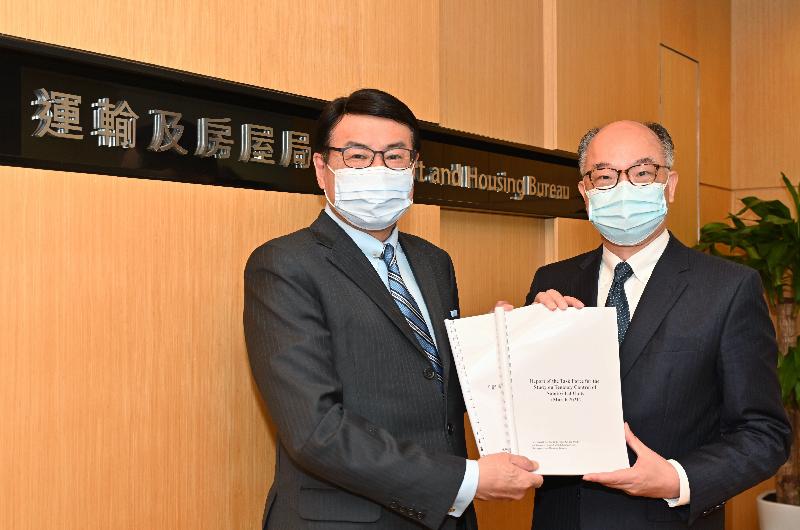
Photo  


Hong Kong Infection Control Centre to continue taking care of patients with mild symptoms

The following is issued on behalf of the Hospital Authority:

     The Hospital Authority (HA) announced today (March 31) that starting from tomorrow, it will discontinue the use of Hall 1 and Hall 2 of AsiaWorld-Expo (AWE), while Halls 8-11 will remain in standby mode as a community treatment facility.
 
     "The Hong Kong Infection Control Centre of North Lantau Hospital (HKICC) has commenced operation since February 26 to provide hospital-grade isolation and treatment facilities. With the launching of the Government COVID-19 Vaccination Programme and the stabilising epidemic situation, it is believed that the 800-bed HKICC, together with around 1 000 beds on standby in Halls 8-11, should be able to take care of most of the COVID-19 patients with relatively stable conditions," the HA spokesperson said.
 
     The HA is grateful to the Central Government, the Food and Health Bureau and other government departments for their strong support, as well as to the AWE for providing the venues, relevant facilities and the retrofitting to meet the infection control requirements. The community treatment facility was, hence, set up within a short period of time to provide isolation services for around 3 500 number of patients so far.
 
     "The HA also appreciates the solidarity showcased by the frontline and backend supporting staff from various hospital clusters, as well as the active participation of the locum doctors and nurses. Their participation has helped double the capacity in public hospitals to receive suspected and confirmed patients and enhance the flexibility in managing the rapidly evolving epidemic," the spokesperson remarked.
 
     The community treatment facility at AWE began operation on August 1 last year to receive COVID-19 confirmed patients with mild symptoms and able to live independently. Along with the changing epidemic situation, the community treatment facilities in Hall 1, Hall 2 and Halls 8-11 were put in service by phases. In accordance with the latest epidemic situation, the community treatment facility has turned to standby mode on March 13 this year.


PlanD promulgates recommendations of second phase review on brownfield sites

     The Planning Department (PlanD) has promulgated the recommendations of the second phase review on brownfield sites, the Development Bureau (DEVB) announced today (March 31).
      
     Among the 290 hectares of brownfield sites reviewed in the second phase:

(a) 62 ha are being/will be covered by other studies, have development under planning, or are areas already zoned for development; and
(b) 11 ha have been shortlisted as having potential for public housing development in the short to medium term.
      
     The 62 ha in (a) above include 12 ha incorporated in the revised study boundary for the San Tin/Lok Ma Chau Development Node, which is being planned as a new development area supporting an estimated housing yield of 31 000 units together with economic and community facilities; 18 ha to be covered in a land use review study for the Ngau Tam Mei area to unleash the development opportunities to be brought about by the proposed Northern Link; and some 32 ha falling within areas already zoned for various development uses.
      
     Subject to further study, it is roughly estimated that the 18 ha of scattered brownfield sites in the Ngau Tam Mei area may contribute to the production of a mix of over 6 000 public and private housing units in due course, assuming that the area would all be used for housing developments.
      
     The 11 ha shortlisted for public housing development in (b) above involve four brownfield clusters in Sheung Shui and Yuen Long. When amalgamated with adjacent land parcels, the areas to be examined for public housing are about 31 ha in total (see Annex). At this stage, it is roughly estimated that these four clusters and the adjoining land would produce over 10 000 public housing units in the short to medium term.
      
     The Civil Engineering and Development Department (CEDD) aims to kick start engineering feasibility studies (EFSs) on these four shortlisted clusters and adjoining land parcels progressively starting from the second quarter of this year to establish the development parameters.
      
     "At this stage, we expect to transform them into spade-ready sites in about six years or less, through completing EFSs, rezoning, detailed design, land resumption, clearance, land decontamination and site formation works, and handing over of sites to the relevant authority for construction of public housing," a spokesperson for the DEVB said.
      
     Taking into account the above review recommendations and other ongoing efforts to develop brownfield sites already announced, a total of over 860 ha of brownfield sites would be gradually redeveloped for housing and other land uses, accounting for over 54 per cent of all the brownfield sites in the New Territories and reflecting the importance of redeveloping brownfield sites as a key component of the multi-pronged land supply strategy. This aggregate figure has not yet taken into account the 18 ha of scattered brownfield sites that are located in the vicinity of the proposed Ngau Tam Mei Station along the Northern Link and are subject to land use review.
      
     "That said, it would be unrealistic to expect an outright eradication of brownfield sites as they are a source of space for industrial or storage operations that support different industries of our economy and affordable or compatible premises cannot easily be found at developed areas.
      
     "Brownfield sites permissible under the planning regime may continue to be used for open-air operations. On the other hand, we will continue to strengthen enforcement actions under the planning and land regimes against unauthorised brownfield operations," the spokesperson said.
      
     The Government has today circulated a paper reporting the results of the second phase review to the Development Panel of the Legislative Council.
      
     The first phase review covering 160 ha of brownfield sites closer to existing infrastructure was completed in 2019. Eight brownfield clusters, with a total size of 36 ha, and expanded to 63 ha through amalgamation with adjoining parcels, were shortlisted for potential public housing developments capable of producing over 20 000 public housing units based on rough estimates. The CEDD has progressively commenced EFSs for these clusters, located in Yuen Long, Tuen Mun and Tai Po, since June 2020.


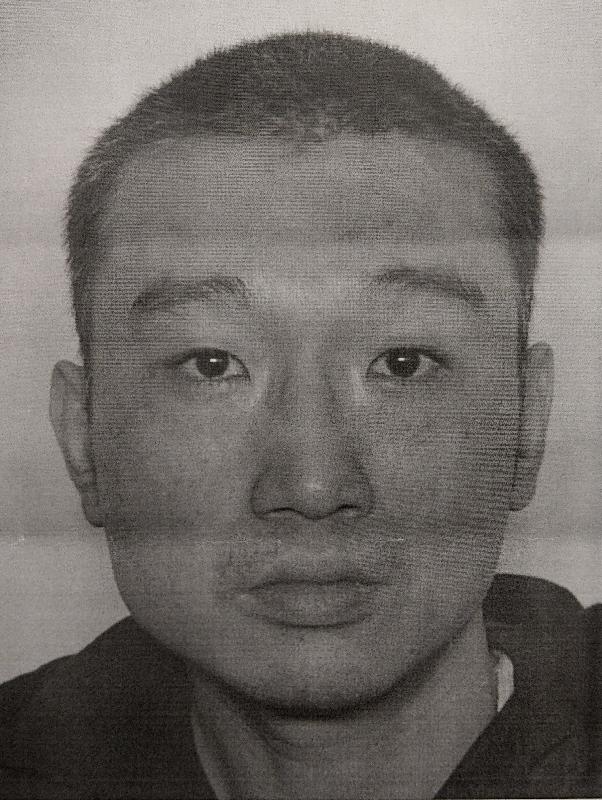
Appeal for information on missing man in Kwai Chung (with photo)

     Police today (March 31) appealed to the public for information on a man who went missing in Kwai Chung.

     Chan Chi-kit, aged 44, went missing after he left a rehabilitation centre on Tai Loong Street on February 4. Staff of the centre made a report to Police on February 8.

     He is about 1.6 metres tall, 61 kilograms in weight and of medium build. He has a pointed face with yellow complexion and short black hair. He was last seen wearing a dark blue jacket, a black hoodie, dark trousers and slippers.

     Anyone who knows the whereabouts of the missing man or may have seen him is urged to contact the Regional Missing Person Unit of New Territories South on 3661 1176 or 6124 8205, or email to rmpu-nts-2@police.gov.hk, or contact any police station.
     

Photo