Government extends social distancing measures under Prevention and Control of Disease Ordinance

     The Government gazetted the directions and specifications under the Prevention and Control of Disease (Requirements and Directions) (Business and Premises) Regulation (Cap. 599F), the Prevention and Control of Disease (Prohibition on Group Gathering) Regulation (Cap. 599G) and the Prevention and Control of Disease (Wearing of Mask) Regulation (Cap. 599I) to maintain the social distancing measures currently in place, and specify that staff members of premises who have completed a COVID-19 vaccination course will not be required to undergo regular testing. The directions and specifications will take effect on April 15 for a period of 14 days till April 28 (Wednesday) (the specified period).
 
     A spokesman for the Food and Health Bureau said, "The number of local confirmed cases has declined to a lower level. However, to continue containing the spread of the disease and to strive for 'zero case' as soon as possible, taking into account the pressure for potential rebound of the epidemic brought by earlier relaxation of social distancing measures and the frequent gatherings among members of the public during the long holiday, we still need to maintain existing social distancing measures for the coming two weeks for prudence's sake."
 
     "At the same time, the COVID-19 Vaccination Programme has been smoothly implemented for a while. Some staff members of the catering business premises or scheduled premises have completed the vaccination course (i.e. after 14 days following the administration of two vaccine doses for production of antibodies). In view of the protection brought by the vaccination, the relevant staff member will not need to undergo regular testing starting from the fourteenth day upon his or her completion of a COVID-19 vaccination course. However, any person who has symptoms should seek medical attention immediately and undergo testing."
 
     "If the epidemic situation remains stable, starting from April 29, in line with the new direction in fighting the pandemic as announced by the Chief Executive on April 12, we will adjust social distancing measures orderly with 'vaccine bubble' as the basis. The Government will liaise with the trades and announce the details later. We appeal to members of the public to support the new direction in fighting the pandemic and get vaccinated sooner rather than later to protect themselves and the others."

     The details of the latest requirements and restrictions (see Annex 1 for requirements and restrictions under Cap. 599F) are as follows:
 
Catering business

(1) The existing requirements and restrictions applicable to catering business will be maintained during the specified period, including:

(a) Dedicated staff must be arranged in catering business premises for clearing used utensils and cleaning and disinfecting used tables and partitions. If this arrangement is not practicable, it must be ensured that the staff member carrying out the aforementioned duties must adopt hand hygiene measures before switching to perform other duties, and should adopt hand hygiene measures as necessary during each round of cleaning-up duties. Hand hygiene measures include using alcohol-based hand sanitisers, washing hands or changing gloves; and
 
(b) If a person responsible for carrying on a catering business adopts specified infection control measures (including ensuring that users (excluding persons who only order takeaways) scan the "LeaveHomeSafe" QR code using the "LeaveHomeSafe" mobile application on their mobile phones or register their names, contact numbers and the dates and times of their visits before the persons are allowed to enter the premises; and arranging for all staff members involved in the operation of the premises to undergo a polymerase chain reaction-based nucleic acid test for COVID-19 once every 14 days), the catering premises can provide dine-in services from 5am to 9.59pm every day, with the number of customers at the catering premises at any one time not exceeding 50 per cent of the normal seating capacity of the premises and no more than four persons seated together at one table.
 
(2) Regarding the regular testing arrangement as mentioned in (1)(b) above, the staff member involved in the operation of the business on the premises will not need to undergo the required testing arrangement starting from the fourteenth day upon his or her completion of a COVID-19 vaccination course. Relevant staff member should keep the vaccination record as proof of vaccination. The fourteenth day upon a person's completion of a vaccination course is counted by taking the next day after the person received all of the recommended dose(s) of vaccine as the first day. For example, for a person who has not been infected with COVID-19 and received the second dose of vaccine on April 15, the "first day" would be April 16 and the "fourteenth day" would be April 29.
 
(3) Other requirements and restrictions applicable to catering business will continue during the specified period, including:

(a) If a person responsible for carrying on a catering business does not adopt the specified infection control measures, the catering premises can only provide dine-in services from 5am to 5.59pm every day, with the number of customers at the catering premises at any one time not exceeding 50 per cent of the normal seating capacity of the premises and no more than two persons seated together at one table;

(b) Bars or pubs will continue to be closed;

(c) No live performance, dancing activity, karaoke or mahjong-tin kau activity is allowed in catering premises;

(d) The number of persons participating in any one banquet at any one time may not exceed 20 persons;

(e) Catering business premises should comply with specified requirements on air change or air purifier(s) by April 30; and

(f) Other requirements and restrictions, including that all persons must wear masks at any time in the premises except when eating or drinking, body temperature screening on persons before entering the premises and providing hand sanitisers, etc.

Scheduled premises 

(4) During the specified period, the existing requirements and restrictions applicable to the scheduled premises under Cap. 599F will be maintained. Some scheduled premises can be opened when the relevant requirements and restrictions are fulfilled (including arranging for all staff members involved in the operation of the premises to undergo a polymerase chain reaction-based nucleic acid test for COVID-19 once every 14 days).
 
(5) Regarding the regular testing arrangement as mentioned in (4) above, the staff member involved in the operation of the business on the premises will not need to undergo the required testing arrangement starting from the fourteenth day upon his or her completion of a COVID-19 vaccination course. Relevant staff member should keep the vaccination record as proof of vaccination.
 
(6) Following scheduled premises under Cap. 599F will continue to be closed: 
(a) bathhouses;
(b) premises (commonly known as party rooms) that are maintained or intended to be maintained for hire for holding social gatherings;
(c) establishments (commonly known as clubs or nightclubs) that are open late into the night, usually for drinking, and dancing or other entertainment;
(d) karaoke establishments; and
(e) mahjong-tin kau premises.

     Persons responsible for carrying on catering businesses and managers of scheduled premises that contravene the statutory requirements under Cap. 599F would have committed a criminal offence. Offenders are subject to a maximum fine of $50,000 and imprisonment for six months.

Group gathering

(7) Unless exempted, the prohibition on group gatherings of more than four persons in public places will continue during the specified period. The requirement is also applicable to group gatherings in catering business and scheduled premises regulated under Cap. 599F in which the relevant requirements or restrictions are not complied with.
 
     Any person who participates in a prohibited group gathering; organises a prohibited group gathering; owns, controls or operates the place of such a gathering; and knowingly allows the taking place of such a gathering commits an offence under Cap. 599G. Offenders are liable to a maximum fine of $25,000 and imprisonment for six months. Persons who participate in a prohibited group gathering may discharge liability for the offence by paying a fixed penalty of $5,000.
 
Mask-wearing requirement 

(8) The mandatory mask-wearing requirement under Cap. 599I will be extended during the specified period. During the aforementioned period, a person must wear a mask at all times when the person is boarding or on board a public transport carrier, is entering or present in an MTR paid area, or is entering or present in a specified public place (i.e. all public places, save for outdoor public places in country parks and special areas as defined in section 2 of the Country Parks Ordinance (Cap. 208)).
 
     Under Cap. 599I, if a person does not wear a mask in accordance with the requirement, an authorised person may deny that person from boarding a public transport carrier or entering the area concerned, as well as require that person to wear a mask and disembark from the carrier or leave the said area. A person in contravention of the relevant provision commits an offence and the maximum penalty is a fine at level 3 ($10,000). In addition, authorised public officers may issue fixed penalty notices to persons who do not wear a mask in accordance with the requirement and such persons may discharge liability for the offence by paying a fixed penalty of $5,000.


Government implements various measures to improve workflow of COVID-19 vaccination

     Having regard to earlier incidents in which some citizens received vaccination at Community Vaccination Centre (CVC) that was different from the CVC they had selected during booking, the Government has conducted a review of the relevant procedures at CVCs and implemented a host of improvement measures, including strengthening the checking steps and displaying clear signage inside and outside the CVCs, in order to prevent the recurrence of similar incidents.
      
     "The COVID-19 Vaccination Programme has a set of stringent procedures. The type of vaccine is mentioned throughout the vaccination process including online registration, as well as during the reception, information provision and consent-seeking stages in the CVCs. Thus, cases of citizens being vaccinated at a venue different from that of their own booking and went unnoticed by CVC staff should not have happened. Although these are isolated cases, we are highly concerned and need to handle them seriously," a Government spokesman said today (April 13).
      
     "Government bureaux and departments and the relevant operators have as such conducted a comprehensive checking of the vaccination records of the CVCs. Together with the incidents discovered earlier, we notice that a total of 24 persons have received vaccination at a CVC different from the one they booked. To our understanding, some people changed their mind after making an appointment and just went to another CVC. There were also cases where people went to another CVC by mistake and received a vaccine not of their choice. On learning about the cases, the Government has taken expeditious follow-up action to ensure that the citizens concerned will receive a second dose vaccine of the same make."
      
     To prevent the recurrence of similar incidents in future, the Government has implemented the following improvement measures: 
 
1. Enhance staff training and require all CVCs to raise their level of vigilance. CVC supervisors are to strengthen their monitoring of centre management and the work of staff;
 
2. to facilitate the public's identification of the correct venue for vaccination, each of the CVCs and designated general outpatient clinics of the Hospital Authority have been assigned a unique code number. The code number for venues administering Sinovac vaccine will start with the prefix "S", while those for BioNTech vaccination will start with the prefix "B". For example, S01 is the code number of the Hong Kong Central Library CVC which administers Sinovac vaccine, and B02 is the code number of the Sun Yat Sen Memorial Park Sports Centre CVC which administers BioNTech vaccine. The SMS messages for persons to be vaccinated will also start right-away with the code number of the vaccination venue chosen. In addition, the CVCs will also display their code number at prominent positions at the venue entrance. These arrangements will help reception staff and the public alike to tell if the latter has come to the correct vaccination venue; and
 
3. the public will receive an A5 folder and a leaflet on the vaccine to be administered at the venue. The name of the vaccine will be shown clearly on the folder.

     "We have apologised to the persons affected on the failure of staff members to have carefully checked their booking information and would take follow-up actions. We would also urge the public to check, prior to getting vaccinated, the location of the CVC and the vaccine they booked, so as to avoid going to the wrong venue," the spokesman said.


Hong Kong’s art sector shows resilience and innovation to adapt to pandemic

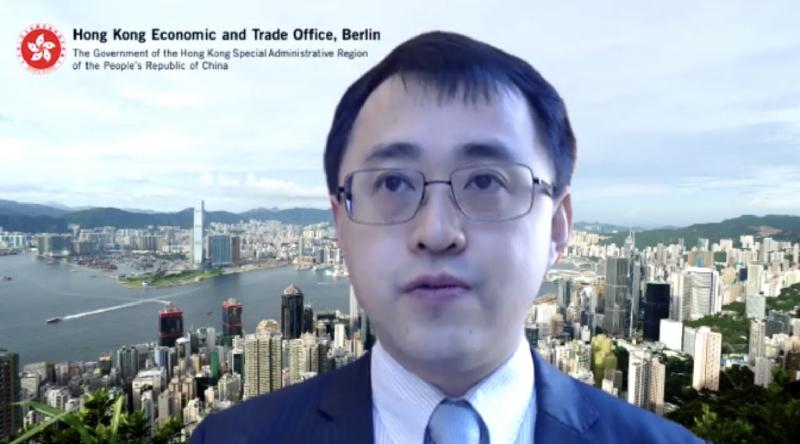
     The Hong Kong Economic and Trade Office, Berlin (HKETO Berlin), together with the THINKTANK, Centre for International Relations (CIR), have organised an online event on April 13 with high-ranking artists, scientists and managing directors from the creative industry in Poland and Hong Kong to talk about the future of art amidst the increasing influence of technology and artificial intelligence on artists and their creation process.
      
     The panel included Dr Pascale Fung, Professor, Department of Electronic and Computer Engineering; Director, Centre for Artificial Intelligence Research, HKUST; Prof Jeffrey Shaw, Veteran new media artist, Chair Professor of the School of Creative Media, CityUHK; Mr Piotr Mieczkowski, President, Digital Poland Foundation; Dr Katarzyna Stanny, Head of Media Imaging Lab at Department of Media Art, Academy of Fine Arts in Warsaw; Dr Ewa Maria Åšmigielska, lecturer, Department of Sculpture at Sichuan Fine Arts Institute in Chongqing; and Mr Michal Znaniecki, opera director.
           
     In the event's opening, Mr Bill Li, Director of HKETO Berlin, highlighted that despite the pandemic, Hong Kong has emerged as one of the largest art trading centres in the world in recent years. Its unique history and geo-strategic location made it the connecting point of Western and Chinese artists and collectors. With Asian economies' strong performance and fast recovery from the pandemic, the Asian and Hong Kong art scenes flourish, attracting both artists and entrepreneurs who are looking to expand their presence here.
      
     "In 2020, Hong Kong's global art market share rose from 17.5 per cent in 2019 to 23.2 per cent in 2020, overtaking London for the first time. I think these figures speak for themselves", Mr Li pointed out.
      
     While others had to cancel all activities, Hong Kong's art scene also kept going in a physical way. Swiss art fair giant, Art Basel, held its only physical event of 2020 in Hong Kong. Another example took place in June 2020. The Hong Kong Art Gallery Association partnered with 12 of the city's art galleries to stage a boutique art fair. Drawing nearly 3 000 visitors, their "Unscheduled at Tai Kwun" was one of the world's first fairs to open since the pandemic broke out.
      
     When looking into the future, the Hong Kong Special Administrative Region Government has been making significant investments in the city's arts infrastructure. "The key development is the West Kowloon Cultural District, a flagship project designed to boost Hong Kong's art and cultural landscape, with the vision to attract people across all demographics to a vibrant district to explore new cultural experiences. It is one of the world's largest cultural projects", Mr Li added. 
      
     The centrepiece of the District is the M+, Hong Kong's new visual cultural museum that will dramatically change the Asian art landscape in 2021. With most Asian museums operating as silos, telling the story of art in their own countries but seldom how artists influenced one another across borders, M+ being a multi-disciplinary museum with an international collection is set to become one-of-a-kind in Asia.
      
About HKETO Berlin
 
     HKETO Berlin is the official Hong Kong Special Administrative Region Government representative in commercial relations and other economic and trade matters in Poland as well as Austria, the Czech Republic, Germany, Hungary, the Slovak Republic, Slovenia and Switzerland.

Photo  


COVID-19 Vaccination Programme statistics

     The COVID-19 Vaccination Programme has been implemented for the 47th day since February 26, 2021.
 
     So far, about 918 700 doses of COVID-19 vaccines have been administered for members of the public (please see Annex 1). Among them, about 615 300 persons have received their first dose, with about 355 500 persons receiving the Sinovac vaccine and about 259 800 persons receiving the BioNTech vaccine. About 303 400 persons have received their second dose, with about 165 600 persons receiving the Sinovac vaccine and about 137 800 persons receiving the BioNTech vaccine.
 
     In the last 24 hours ending at 8pm today (April 13), about 40 500 persons have received vaccination and about 22 900 new vaccination bookings have been made online, detailed as follows:
 
(i) About 3 800 persons received their first dose of the Sinovac vaccine, including about 1 600 persons vaccinated at eight Community Vaccination Centres (CVCs) and about 2 200 persons at private doctors and clinics participating in the programme;
 
(ii) about 9 400 persons received their second dose of the Sinovac vaccine, including about 5 800 persons vaccinated at the CVCs and about 3 600 persons at private doctors and clinics;
 
(iii) about 14 000 persons received their first dose of the BioNTech vaccine at 21 CVCs, and about 13 300 persons received their second dose of the BioNTech vaccine;
 
(iv) the overall percentage of people who have received the Sinovac vaccine at the eight CVCs is about 97 per cent; while the overall percentage of people who have received the BioNTech vaccine at the 21 CVCs is about 97 per cent; and
 
(v) about 5 400 persons have made online bookings for receiving their first and second doses of the Sinovac vaccine, while about 17 500 persons have made online bookings for receiving their first and second doses of the BioNTech vaccine.
 
     In the last 24 hours ending at 0.00am today, there were eight cases of ambulance transfers to hospitals. Among them, five persons were discharged, two persons were discharged against medical advice and one person left the hospital without seeking any consultation (please see Annex 2).
 
     As background information, in the last 24 hours ending at 0.00am today, there were 44 cases of stroke or myocardial infarction that required admission to the Intensive Care Unit, Acute Stroke Unit and Cardiac Care Unit of public hospitals. The state of new cases admitted to the wards concerned is provided as a cross reference to enhance fuller public understanding of cases of the kind recorded on vaccine recipients.


CHP investigates 13 additional confirmed cases of COVID-19

     The Centre for Health Protection (CHP) of the Department of Health (DH) announced that as of 0.00am, April 13, the CHP was investigating 13 additional confirmed cases of coronavirus disease 2019 (COVID-19), taking the number of cases to 11 608 in Hong Kong so far (comprising 11 607 confirmed cases and one probable case).
      
     Among the newly reported cases announced, 10 are imported cases and one is a local case with unknown source, while the remaining two cases are epidemiologically linked with a local case.
      
     Meanwhile, the CHP is continuing its investigation at Block 3, Oi Fai House, Yau Oi Estate in Tuen Mun. Subsequent to the announcement of seven cases involving five units 09, 31 and 32 earlier (two units of which on 22nd Floor), the CHP today has detected one more confirmed case on 22nd Floor of Block 3, Oi Fai House. The CHP decided to carry out more prudent measures on infection control and will further issue quarantine orders to all the remaining asymptomatic residents on 22nd Floor of Block 3, Oi Fai House and transfer them to quarantine centres; symptomatic residents will be sent to the hospital for treatment.
      
     A total of 140 cases have been recorded in the past 14 days (March 30 to April 12), including 28 local cases of which nine are from unknown sources.
           
     The CHP's epidemiological investigations and relevant contact tracing on the confirmed cases are ongoing. For case details and contact tracing information, please see the Annex or the list of buildings with confirmed cases of COVID-19 in the past 14 days and the latest local situation of COVID-19 available on the website "COVID-19 Thematic Website" (www.coronavirus.gov.hk).
           
     As a passenger flight (EK384), operated by Emirates arriving from Dubai, United Arab Emirates and Bangkok, Thailand to Hong Kong on April 11, had five passengers confirmed to have COVID-19 through specimens collected at the DH's Temporary Specimen Collection Centre, the DH thus invoked the Prevention and Control of Disease (Regulation of Cross-boundary Conveyances and Travellers) Regulation (Cap. 599H) to prohibit landing of passenger flights from Dubai and Bangkok operated by Emirates in Hong Kong from April 13 to 26.
           
     In addition, the Government will further tighten the flight suspension mechanism. With effect from tomorrow (April 14), the criteria for invoking Cap. 599H to prohibit landing of passenger flights in Hong Kong will be tightened to: (a) A same passenger flight has 3 or more [current 5 or more] passengers confirmed to have COVID-19 by arrival test; or (b) A passenger flight has 2 or more passengers confirmed to have COVID-19 by arrival test on any two flights from the relevant original port of the same airline within a 7-day period [current 3 or more in two consecutive flights], the passenger flights from the relevant original port of the airline concerned will be prohibited from landing in Hong Kong for 14 days. While the remaining current criteria, i.e. a passenger flight has 1 or more passenger(s) confirmed to have COVID-19 by arrival test and 1 or more non-compliant case(s) – i.e. failed to comply with the requirement(s) specified under Cap.599H, on the same flight, will remain unchanged.
           
     Meanwhile, the Government will impose an additional flight suspension criteria to run in parallel that if a total of 5 or more passengers with N501Y mutant strain are confirmed by arrival tests from any flight(s) originating from a specific country within a 7-day period, all flights from all airlines departing that specific country will be prohibited from landing in Hong Kong for 14 days.
           
     Meanwhile, the CHP reminded those who had visited specified venues under the Prevention and Control of Disease (Compulsory Testing for Certain Persons) Regulation (Cap. 599J) to receive COVID-19 nucleic acid testing according to the compulsory testing notice. The Regulation (Cap. 599J) also requires all household members of close contacts of confirmed cases to undergo a COVID-19 nucleic acid test within a specified period according to compulsory testing notices published in the Gazette. The public are also urged to seek medical attention early if symptoms develop and undergo testing as soon as possible.
           
     The Government has launched the COVID-19 Vaccination Programme. Members of the public are encouraged to get vaccinated. Details of the programme can be found at the designated website (www.covidvaccine.gov.hk).
           
     The CHP called on members of the public to avoid going out, having social contact and dining out. They should put on a surgical mask and maintain stringent hand hygiene when they need to go out. The CHP strongly urged the elderly to stay home as far as possible and avoid going out. They should consider asking their family and friends to help with everyday tasks such as shopping for basic necessities.
           
     The spokesman said, "Given that the situation of COVID-19 infection remains severe and that there is a continuous increase in the number of cases reported around the world, members of the public are strongly urged to avoid all non-essential travel outside Hong Kong.
           
     "The CHP also strongly urges the public to maintain at all times strict personal and environmental hygiene, which is key to personal protection against infection and prevention of the spread of the disease in the community. On a personal level, members of the public should wear a surgical mask when having respiratory symptoms, taking public transport or staying in crowded places. They should also perform hand hygiene frequently, especially before touching the mouth, nose or eyes.
           
     "As for household environmental hygiene, members of the public are advised to maintain drainage pipes properly and regularly pour water into drain outlets (U-traps). After using the toilet, they should put the toilet lid down before flushing to avoid spreading germs."
           
     Moreover, the Government has launched the website "COVID-19 Thematic Website" (www.coronavirus.gov.hk) for announcing the latest updates on various news on COVID-19 infection and health advice to help the public understand the latest updates. Members of the public may also gain access to information via the COVID-19 WhatsApp Helpline launched by the Office of the Government Chief Information Officer. Simply by saving 9617 1823 in their phone contacts or clicking the link wa.me/85296171823?text=hi, they will be able to obtain information on COVID-19 as well as the "StayHomeSafe" mobile app and wristband via WhatsApp.
           
     To prevent pneumonia and respiratory tract infections, members of the public should always maintain good personal and environmental hygiene. They are advised to:
 
• Wear a surgical mask when taking public transport or staying in crowded places. It is important to wear a mask properly, including performing hand hygiene before wearing and after removing a mask;
• Perform hand hygiene frequently, especially before touching the mouth, nose or eyes, after touching public installations such as handrails or doorknobs, or when hands are contaminated by respiratory secretions after coughing or sneezing;
• Maintain drainage pipes properly and regularly (about once a week) pour about half a litre of water into each drain outlet (U-trap) to ensure environmental hygiene;
• After using the toilet, put the toilet lid down before flushing to avoid spreading germs;
• Wash hands with liquid soap and water, and rub for at least 20 seconds. Then rinse with water and dry with a disposable paper towel. If hand washing facilities are not available, or when hands are not visibly soiled, performing hand hygiene with 70 to 80 per cent alcohol-based handrub is an effective alternative;
• Cover your mouth and nose with tissue paper when sneezing or coughing. Dispose of soiled tissues into a lidded rubbish bin, then wash hands thoroughly; and
• When having respiratory symptoms, wear a surgical mask, refrain from work or attending class at school, avoid going to crowded places and seek medical advice promptly.