Scientific Committees under CHP update interim recommendations on COVID-19 vaccination

     The Scientific Committee on Vaccine Preventable Diseases and the Scientific Committee on Emerging and Zoonotic Diseases  under the Centre for Health Protection (CHP) of the Department of Health (JSC) convened a meeting today (April 22), joined by the Chief Executive's expert advisory panel (EAP), to discuss and update recommendations on the use of mRNA COVID-19 vaccines in pregnant and lactating women and the use of AstraZeneca COVID-19 vaccine.
      
     The JSC-EAP acknowledged there is emerging data on the use of mRNA COVID-19 vaccines in pregnant and lactating women. Given there are no known risks associated with administering mRNA COVID-19 vaccines to lactating women, they are recommended to receive the mRNA vaccines as for the rest of the population. Pregnant women who consider mRNA COVID-19 vaccines should consult their obstetricians on the risks and benefits of vaccination.
      
     During the meeting, the JSC-EAP discussed the use of AstraZeneca COVID-19 vaccine. Reports of extremely rare adverse events of thrombosis with thrombocytopenia syndrome (TTS) following vaccination with AstraZeneca COVID-19 vaccine was noted. Causal relationship between the vaccine and TTS is possible but still under investigation. Currently, evidence and data on the occurrence of TTS following vaccination of AstraZeneca COVID-19 vaccine is still emerging. In view of the local epidemiological situation and the availability of alternative COVID-19 vaccines in Hong Kong, there is no need for the introduction of AstraZeneca COVID-19 vaccine in Hong Kong.
      
     In addition, Members discussed the possibility of exempting close contacts of confirmed COVID-19 cases from the existing quarantine measures, if they are fully vaccinated with COVID-19 vaccines. In view of limited data, and concerns about emerging COVID-19 variants, the JSC-EAP considered that the current quarantine practice on close contacts should continue until more supporting evidence becomes available.
      
     Details of the interim recommendation are available at CHP website www.chp.gov.hk/en/static/24008.html.


Government gazettes compulsory testing notice

     The Government exercised the power under the Prevention and Control of Disease (Compulsory Testing for Certain Persons) Regulation (Cap. 599J) and published in the Gazette a compulsory testing notice, which requires any person who had been present at seven specified premises during the specified period (persons subject to compulsory testing) to undergo a COVID-19 nucleic acid test.
 
     Currently, for testing targeting at workplaces, if one or more confirmed cases are found in a workplace, it will be included in the compulsory testing notice. 

     In view of the confirmed cases announced today (April 22), two premises fulfilling the above criteria and one school are included in the compulsory testing notice. In addition, since there were outbreaks of upper respiratory tract infection (URTI) in four schools, and the symptoms of URTI are similar to those of COVID-19, for prudence's sake, the four schools are also covered in the compulsory testing notice.
 
     Details of the compulsory testing notice are as follows:
 
1. Any person who had been present at any specified premises listed in Part A of Annex 1 for more than two hours at any time during the period from April 9 to April 22, 2021 (including but not limited to full-time, part-time and relief staff and visitors), has to undergo testing by April 24, 2021. If persons subject to compulsory testing have previously undergone testing between April 20 and April 22, 2021, they would be taken to have complied with the requirements set out in the compulsory testing notice.  
 
2. Any person who had been present at any specified premises listed in Part B of Annex 1 for more than two hours at any time during the period from April 9 to April 22, 2021 (including but not limited to full-time, part-time and relief staff, students and visitors), has to undergo testing by April 24, 2021. If persons subject to compulsory testing who had been present at the second to the fifth specified premises in Part B choose to undergo testing using the specimen bottles distributed by the Centre for Health Protection (CHP), they have to return the specimen bottle with the sample by April 26, 2021. If persons subject to compulsory testing have previously undergone testing between April 20 and April 22, 2021, they would be taken to have complied with the requirements set out in the compulsory testing notice.

     A spokesman for the Food and Health Bureau reminded the public that in accordance with the compulsory testing notice issued earlier, all household members of close contacts are required to undergo compulsory testing. Any person who had lived with a person placed under quarantine pursuant to section 22 of the Prevention and Control of Disease Regulation (Cap. 599A) (person under quarantine) in the same residential unit on the date of commencement of quarantine or during the 14 days before that day, and who becomes aware of the quarantine of the person under quarantine when the relevant quarantine has not yet been completed, has to undergo testing within two days of him or her becoming aware that the person under quarantine has been placed under quarantine and report to the Government the result of the test by phone (at 6275 6901), fax (at 2530 5872) or email (ct@csb.gov.hk) within three days of undergoing the test.
     
     The Government will set up mobile specimen collection stations at the following locations tomorrow (April 23) for persons subject to compulsory testing:
 
•  Gate of Container Terminal 2, Kwai Chung
•  C.U.H.K. F.A.A. Thomas Cheung School, Tai Wai
 
     The service period of the mobile specimen collection stations at Edinburgh Place in Central and Maple Street Playground in Sham Shui Po will be extended to May 3 (Monday).
 
     The opening dates and operating hours of the mobile specimen collection stations in various districts providing free COVID-19 nucleic acid testing services for the general public are stated in Annex 2. Apart from mobile specimen collection stations, persons subject to compulsory testing can also choose to attend any of the community testing centres in all districts to receive testing free of charge. Persons with "LeaveHomeSafe" COVID-19 exposure notification or SMS notification from the Centre for Health Protection reminding them to undergo testing as soon as possible may receive free testing at community testing centres or mobile specimen collection stations (if the service scope is applicable).

     Persons subject to compulsory testing may choose to undergo testing via the following routes:

1. To visit any of the mobile specimen collection stations (see the list and target groups (if applicable) at www.coronavirus.gov.hk/eng/early-testing.html) for testing;
2. To attend any of the community testing centres (see the list at www.communitytest.gov.hk/en);
3. To obtain a deep throat saliva specimen collection pack from any of the 121 post offices, vending machines set up at 20 MTR stations or 47 designated general outpatient clinics (GOPCs) of the Hospital Authority and return the specimen to one of the designated specimen collection points (see the distribution points and times, and the specimen collection points and times, at www.coronavirus.gov.hk/eng/early-testing.html);
4. To undergo testing at any of the GOPCs of the Hospital Authority as instructed by a medical professional of the Hospital Authority;
5. To self-arrange testing provided by private laboratories which are recognised by the Department of Health (DH) and can issue SMS notifications in respect of test results (see the list at www.coronavirus.gov.hk/pdf/List_of_recognised_laboratories_RTPCR.pdf); or
6.To use a specimen bottle distributed to the relevant specified premises by the CHP (if applicable), and return the specimen bottle with the sample collected as per relevant guidelines.

     The spokesman cautioned that testing received at Accident and Emergency Departments of the Hospital Authority or during hospital stays, or testing provided by private laboratories which cannot issue SMS notifications in respect of test results, does not comply with the requirements of the aforementioned compulsory testing notice.

     "If persons subject to compulsory testing have symptoms, they should seek medical attention immediately and undergo testing as instructed by a medical professional. They should not attend the mobile specimen collection stations or the community testing centres."

     Persons subject to compulsory testing must keep the SMS notification containing the result of the test for checking by a law enforcement officer when the officer requires the persons to provide information about their undergoing the specified test.

     Furthermore, persons subject to testing under the compulsory testing notices should, as far as reasonably practicable, take appropriate personal disease prevention measures including wearing a mask and maintaining hand hygiene, and, unless for the purpose of undergoing the specified test, stay at their place of residence and avoid going out until the test result is ascertained as far as possible.

     Any enquiries on compulsory testing arrangements may be addressed to the hotline at 6275 6901, which operates daily from 9am to 6pm. If persons subject to compulsory testing plan to conduct testing at any of the community testing centres, they can check the centre's appointment status in advance. The hotlines of the community testing centres are available at www.communitytest.gov.hk/en/info.

     The Government will continue to trace possibly infected persons who had been to the relevant premises, and seriously verify whether they had complied with the testing notices. Any person who fails to comply with the testing notices commits an offence and may be fined a fixed penalty of $5,000. The person would also be issued with a compulsory testing order requiring him or her to undergo testing within a specified time frame. Failure to comply with the order is an offence and the offender would be liable to a fine at level 4 ($25,000) and imprisonment for six months.

     Relevant officers of different government departments are empowered to perform certain functions under the relevant Regulations under the Prevention and Control of Disease Ordinance (Cap. 599), including requesting individuals to provide information and assistance when necessary. Any person who fails to comply with the relevant request commits an offence and would be liable to a fine at level 3 ($10,000). Collection and use of any personal data for conducting COVID-19 tests must meet the requirements under the Personal Data (Privacy) Ordinance (Cap. 486). Government departments or testing service providers which handle the relevant information may provide the data to the DH or other relevant departments for anti-epidemic purposes as necessary. The workflow does not involve the provision of any personal data to organisations or persons outside Hong Kong.

     The spokesman said, "The Government urges all individuals who are in doubt about their own health conditions, or individuals with infection risks (such as individuals who visited places with epidemic outbreaks or contacted confirmed cases), to undergo testing promptly for early identification of infected persons."


COVID-19 Vaccination Programme statistics

     The COVID-19 Vaccination Programme has been implemented for the 56th day since February 26, 2021.
 
     So far, about 1 196 700 doses of COVID-19 vaccines have been administered for members of the public (please see Annex 1). Among them, about 789 300 persons have received their first dose, with about 392 900 persons receiving the Sinovac vaccine and about 396 400 persons receiving the BioNTech vaccine. About 407 400 persons have received their second dose, with about 258 000 persons receiving the Sinovac vaccine and about 149 400 persons receiving the BioNTech vaccine.
 
     In the last 24 hours ending at 8pm today (April 22), about 23 500 persons have received vaccination and about 14 600 new vaccination bookings have been made online, detailed as follows:
 
(i) About 3 800 persons received their first dose of the Sinovac vaccine, including about 1 600 persons vaccinated at Community Vaccination Centres (CVCs) and about 2 300 persons at private doctors and clinics participating in the programme;
 
(ii) about 8 000 persons received their second dose of the Sinovac vaccine, including about 5 600 persons vaccinated at CVCs and about 2 400 persons at private doctors and clinics;
 
(iii) about 11 500 persons received their first dose of the BioNTech vaccine at CVCs, and about 200 persons received their second dose of the BioNTech vaccine;
 
(iv) the overall percentage of people who have received the Sinovac vaccine at CVCs is about 98 per cent; while the overall percentage of people who have received the BioNTech vaccine at CVCs is about 94 per cent; and
 
(v) about 3 300 persons have made online bookings for receiving their first and second doses of the Sinovac vaccine, while about 11 400 persons have made online bookings for receiving their first and second doses of the BioNTech vaccine.
 
     In the last 24 hours ending at 0.00am today, there were eight cases of ambulance transfers to hospitals. Among them, five persons were discharged, two persons were admitted for observation and one person was discharged against medical advice (please see Annex 2).
 
     As background information, in the last 24 hours ending at 0.00am today, there were 40 cases of stroke or myocardial infarction that required admission to the Intensive Care Unit, Acute Stroke Unit and Cardiac Care Unit of public hospitals. The state of new cases admitted to the wards concerned is provided as a cross reference to enhance fuller public understanding of cases of the kind recorded on vaccine recipients.


CE attends thematic meeting of Leading Group for Development of Guangdong-Hong Kong-Macao Greater Bay Area in Guangzhou

     The Chief Executive, Mrs Carrie Lam, attended the thematic meeting of the Leading Group for the Development of the Guangdong-Hong Kong-Macao Greater Bay Area in Guangzhou this afternoon (April 22). The meeting was hosted and convened by the Vice Premier of the State Council, Mr Han Zheng. The Secretary for Innovation and Technology, Mr Alfred Sit, and the Secretary for Financial Services and the Treasury, Mr Christopher Hui, sat in on the meeting.
      
     In her remarks, Mrs Lam said that with the guidance of the Leading Group, the strong support of the relevant ministries and commissions, and the joint efforts of the Governments of Guangdong, Hong Kong and Macao, work is in full swing in many different areas with remarkable results. The vast majority of the policies and measures announced after Leading Group meetings have been implemented and have greatly assisted Hong Kong residents, enterprises and professionals to reside, work and develop in the Mainland cities of the Greater Bay Area.
      
     Mrs Lam said that the Shenzhen/Hong Kong Innovation and Technology Co-operation Zone provides key impetus to developing an international innovation and technology hub in the Guangdong-Hong Kong-Macao Greater Bay Area. She expressed gratitude to the Central Authorities for their support in the 14th Five-Year Plan of the country for the Shenzhen- Hong Kong Loop to be a platform for co-operation among Guangdong, Hong Kong and Macao, and said that Hong Kong and Shenzhen have established a working group with a view to realising the "one zone, two parks" concept under the auspices of "One Country, Two Systems" as soon as possible.
      
     On co-operation in Qianhai, the Hong Kong Special Administrative Region (HKSAR) Government fully supports and wishes to see Qianhai continue to leverage its function as an area for "early and pilot implementation" to introduce more policy breakthroughs to advance the development of a high-end modern service industry. The policy initiatives in respect of the legal and construction professions in recent years have been well received by the sectors in Hong Kong.
      
     Mrs Lam pointed out that it is clear from the Central Authorities' overall requirements for the development of the Guangdong-Hong Kong-Macao Greater Bay Area that the guiding ideology is the full and faithful implementation of the principle of "One Country, Two Systems", under which the people of Hong Kong administer Hong Kong and the people of Macao administer Macao with a high degree of autonomy. It also includes acting in strict adherence to the Constitution and the Basic Law, as well as fully understanding and utilising the institutional strengths of "One Country, Two Systems". In the past year, the Central Authorities have made two major moves, comprising the enactment and implementation of the national security law and improving the electoral system of the HKSAR, to put the implementation of "One Country, Two Systems" in the HKSAR back on the right track, safeguarding the institutional strengths of the development of the Guangdong-Hong Kong-Macao Greater Bay Area. She said that the development of the Guangdong-Hong Kong-Macao Greater Bay Area and the support for Hong Kong in the 14th Five-Year Plan of the country will provide ample room for Hong Kong's development.


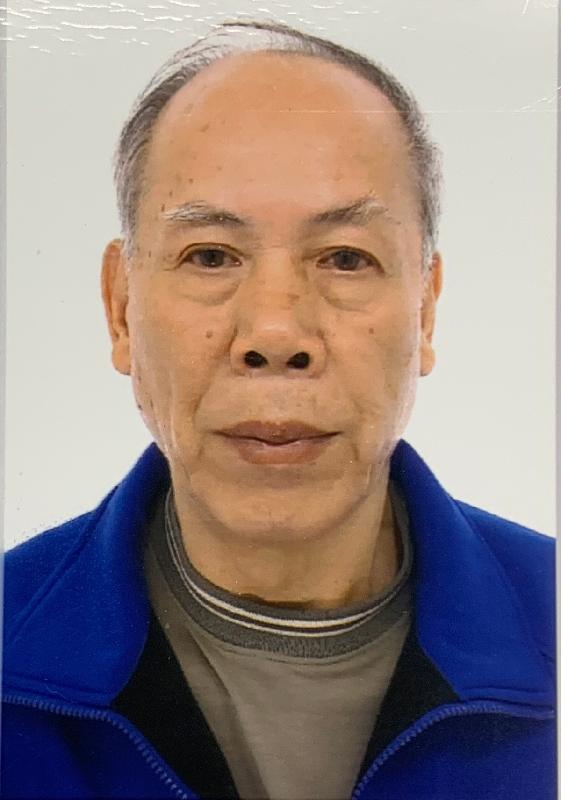
Appeal for information on missing man in Sham Shui Po (with photos)

      Police today (April 22) appealed to the public for information on a woman who went missing in Sham Shui Po.

     Chan Yuen-but, aged 67, went missing after he left his residence in Shek Kip Mei Estate on April 19 night. His family made a report to Police yesterday (April 21).

     He is about 1.76 metres tall, 63 kilograms in weight and of medium build. He has a pointed face with yellow complexion and white short hair. He was last seen wearing a dark blue jacket, light blue trousers, dark-coloured shoes and carrying a dark-coloured backpack.

     Anyone who knows the whereabouts of the missing man or may have seen him is urged to contact the Regional Missing Person Unit of Kowloon West on 3661 8038 or 9020 6542 or email to rmpu-kw@police.gov.hk, or contact any police station.

Photo