Seventeen persons arrested during anti-illegal worker operations (with photo)

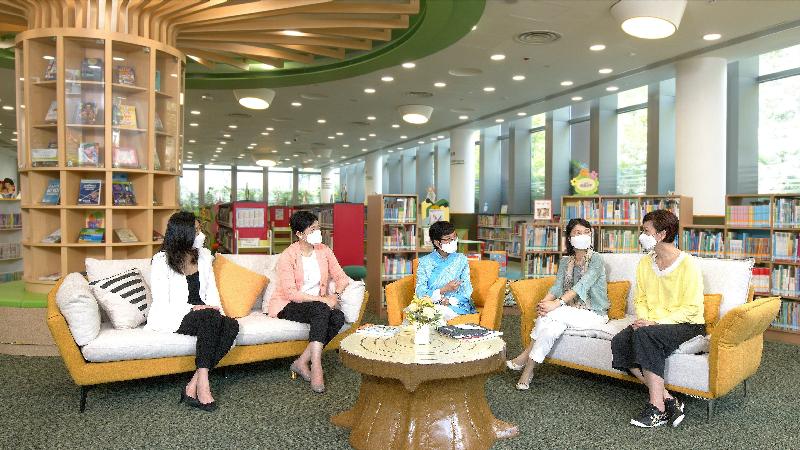
     The Immigration Department (ImmD) mounted a series of territory-wide anti-illegal worker operations codenamed "Twilight" from April 19 to yesterday (April 22). A total of 12 suspected illegal workers and five suspected employers were arrested.
 
     During operations "Twilight", ImmD Task Force officers raided 45 target locations including a commercial building, a container yard, food processing factories, a garbage collection depot, a manicure shop, a massage parlour, premises under renovation, recycling yards, residential buildings, restaurants, a wet market and a vegetable stall. Twelve suspected illegal workers and five employers were arrested. The suspected illegal workers comprised seven men and five women, aged 27 to 59. Among them, four men were holders of recognisance forms, which prohibit them from taking any employment. In addition, a man was suspected of using and being in possession of a forged Hong Kong identity card. Meanwhile, three men and two women, aged 44 to 60, were suspected of employing the illegal workers.

     "Any person who contravenes a condition of stay in force in respect of him shall be guilty of an offence. Also, visitors are not allowed to take employment in Hong Kong, whether paid or unpaid, without the permission of the Director of Immigration. Offenders are liable to prosecution and upon conviction face a maximum fine of $50,000 and up to two years' imprisonment. Aiders and abettors are also liable to prosecution and penalties," an ImmD spokesman said.
 
     The spokesman warned that, as stipulated in section 38AA of the Immigration Ordinance, illegal immigrants or people who are the subject of a removal order or a deportation order are prohibited from taking any employment, whether paid or unpaid, or establishing or joining in any business. Offenders are liable upon conviction to a maximum fine of $50,000 and up to three years' imprisonment. The Court of Appeal has issued a guideline ruling that a sentence of 15 months' imprisonment should be applied in such cases. It is an offence to use or possess a forged Hong Kong identity card or a Hong Kong identity card related to another person. Offenders are liable to prosecution and a maximum penalty of a $100,000 fine and up to 10 years' imprisonment.
 
     The spokesman reiterated that it is a serious offence to employ people who are not lawfully employable. The maximum penalty is imprisonment for three years and a fine of $350,000. The High Court has laid down sentencing guidelines that the employer of an illegal worker should be given an immediate custodial sentence. According to the court sentencing, employers must take all practicable steps to determine whether a person is lawfully employable prior to employment. Apart from inspecting a prospective employee's identity card, the employer has the explicit duty to make enquiries regarding the person and ensure that the answers would not cast any reasonable doubt concerning the lawful employability of the person. The court will not accept failure to do so as a defence in proceedings. It is also an offence if an employer fails to inspect the job seeker's valid travel document if the job seeker does not have a Hong Kong permanent identity card. The maximum penalty for failing to inspect such a document is imprisonment for one year and a fine of $150,000.
 
     Under the existing mechanism, the ImmD will, as a standard procedure, conduct initial screening of vulnerable persons, including illegal workers, illegal immigrants, sex workers and foreign domestic helpers, who are arrested during any operation with a view to ascertaining whether they are trafficking in persons (TIP) victims. When any TIP indicator is revealed in the initial screening, the officers will conduct a full debriefing and identification by using a standardised checklist to ascertain the presence of TIP elements, such as threats and coercion in the recruitment phase and the nature of exploitation. Identified TIP victims will be provided with various forms of support and assistance, including urgent intervention, medical services, counselling, shelter, temporary accommodation and other supporting services. The ImmD calls on TIP victims to report crimes to the relevant departments.

Photo  


Student interns equip themselves for the future by accumulating experience (with photos)

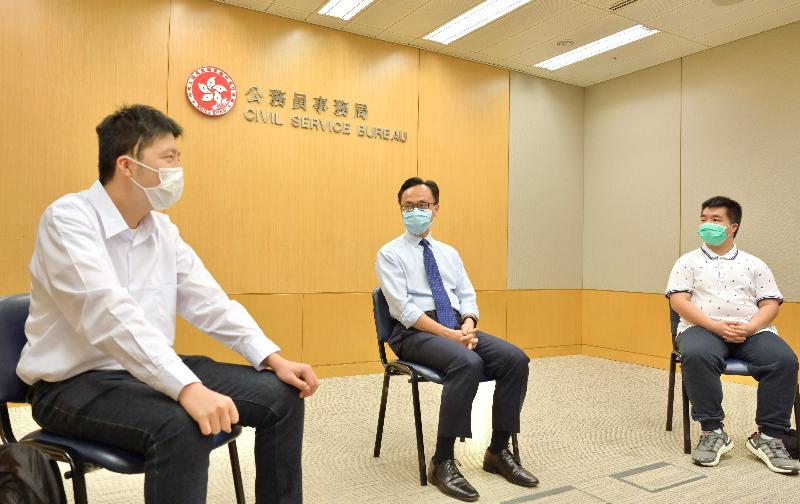
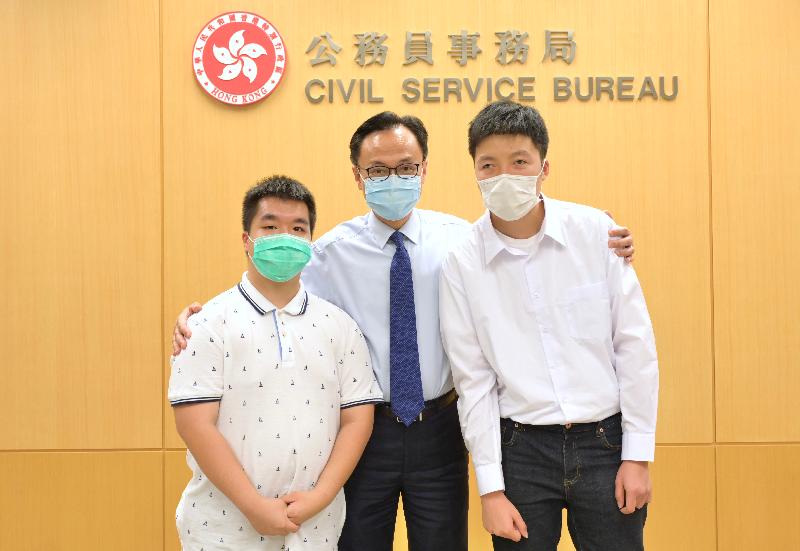
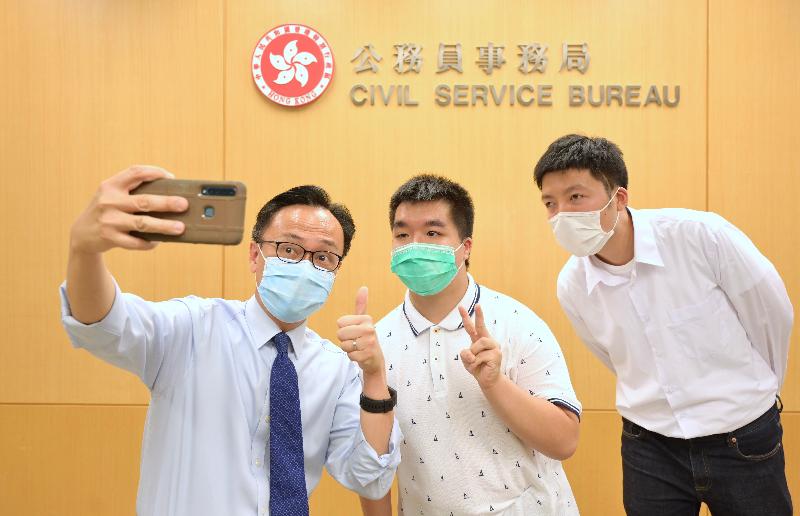
     Students of the Shine Skills Centre of the Vocational Training Council who participated in a government internship scheme this year have served their internships at various government departments for eight weeks, and today (April 23) is the last day of their internships. The Secretary for the Civil Service, Mr Patrick Nip, met with students who were assigned to the Civil Service Bureau (CSB) yesterday (April 22) to learn about their internship experience, and encouraged them to continue to equip themselves for the future.

     A total of 35 students from the Shine Skills Centre participating in the scheme were assigned to 23 government bureaux and departments for around eight weeks of internships. Among them, upon completion of their internships, Mr Yan Yuk-wang and Mr Wong Ka-chun started missing the days of their internships. They said they appreciated the guidance and support from their mentors while being able to meet with many colleagues.

     Mr Yan is taking the course of Programme Assistant Practice at the Shine Skills Centre. He was attached to the Training and Development Section of the General Grades Office of the CSB, where he mainly assisted in preparing programmes and course materials. He said that the precious internship enabled him to accumulate practical experience and understand his interests more.

     Mr Wong was deployed to the Official Languages Division, where he mainly assisted in handling clerical work and classification of files. Mr Wong said that the internship had given him an opportunity to experience a real work environment for the first time and provided him with opportunities to learn to communicate and get along with others, helping him to integrate with society in the future.

     "It is a valuable opportunity to have an internship at a government department. I believe the students will appreciate that internship is also a kind of training. I hope they will share their experience with other students taking part in the scheme," Mr Nip said.

     Mr Nip was pleased to know that other than the students deployed to the CSB, students deployed to other bureaux and departments also made efforts in gaining new knowledge and worked actively throughout their internships. Their good conduct and work performance have been highly commended by their colleagues of participating departments and mentors.

     The CSB launched the internship scheme in 2016 to enable students with special education needs to have internship opportunities in the Government and gain practical work experience, as well as to allow civil service colleagues to better appreciate their talents and potential. 

     Mr Nip said that the internship scheme assigned students to take up diverse jobs having regard to their aptitudes and interests, such as graphic design, editing and processing databases, arranging course materials, and event co-ordination and support, to enable students to develop their strengths. He expressed the belief that the two-month work experience would help students orient their future development as well as cultivate their personal growth.

Photo  Photo  Photo  Photo  


2021 World Book Day Fest e-sharing sessions promote reading culture (with photos)

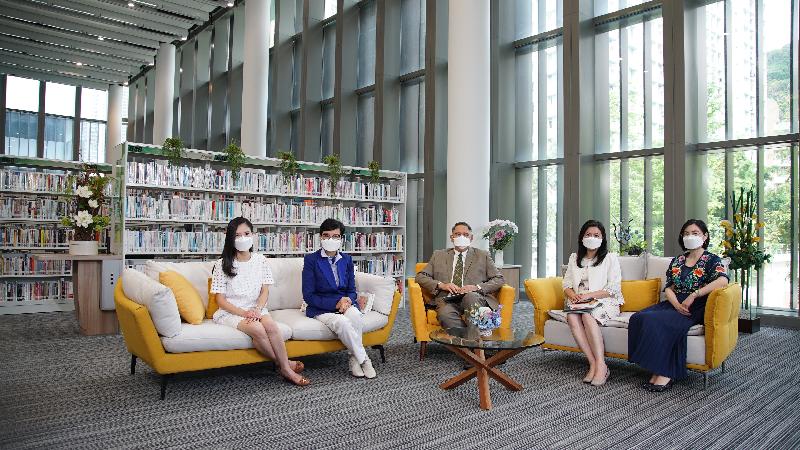
     To continue fostering a reading culture in Hong Kong, the Standing Committee on Language Education and Research (SCOLAR) and the Education Bureau (EDB) co-organised the annual World Book Day Fest. Teachers, students and members of the public are welcome to view the two pre-recorded e-sharing sessions on "Reading in the New Normal" and "Parent-child Reading".

     A spokesman for the EDB said, "In the sharing sessions, renowned guests shared their insightful thoughts and their joy of reading, and delved into topics related to reading so as to encourage students to cultivate an interest in reading. The SCOLAR and the EDB aspire to encourage members of the public and families to read more and share more, and to foster a sustainable reading atmosphere and culture across the city under the new normal of the epidemic situation."

     The EDB will continue to adopt a multi-pronged approach to support kindergartens (KGs), primary and secondary schools in promoting reading, the spokesman noted. The various enhanced measures include providing the recurrent "Promotion of Reading Grant" and "Promotion of Reading Grant for Kindergartens" to public sector primary and secondary schools (including special schools) and all KGs joining the Kindergarten Education Scheme respectively. In addition, the EDB offered a one-off grant to primary and secondary schools last year, as well as to KGs in this and the coming school year for their procurement of printed books as a gift for each student, so as to nurture students' interest in reading and encourage them to develop a reading habit from a young age. Other measures include inviting celebrities and authors to share their reading experiences and recommend books to students, and collaborating with the publishing sector and professional organisations to organise large-scale reading promotion activities.

     In the first e-sharing session this year, entitlted "Reading in the New Normal", guests shared their views on how to nurture children or students' love of reading under the new normal in order to develop their good reading habits. The guests also introduced some reading materials under the new normal and recommended a number of quality books. 

     Guest speakers included the Chairman of SCOLAR, Mr Lester Huang; the Principal of SKH Holy Trinity Church Secondary School, Ms Chan Shin-kwan; the Board Chair of Bring Me A Book Hong Kong, Ms Alison Chan; the General Secretary of the Family Development Foundation, Dr Shirley Loo; and the Principal of the Hong Kong Federation of Youth Groups Lee Shau Kee Primary School, Dr Tse Wai-lok. Through this inspiring discussion among the guests, the audience may appreciate the importance of having good reading habits for personal growth.

     In the second e-sharing session entitlted "Parent-child Reading", guests shared their experiences in parent-child reading and their views on how to create a good reading atmosphere for children through pleasurable parent-child reading. The guests also discussed the role of parents in parent-child reading and the types of books which appeal to children, as well as recommendations of quality parent-child reading books for parents' reference.
      
     Guest speakers of the second session included the General Secretary of the Family Development Foundation, Dr Shirley Loo; the Principal of Ying Wa Primary School, Ms Sylvia Chan; the founding director of a kindergarten Dr Joyce Chun; the daughter of Mr Ho Chi, who was a renowned Hong Kong children's literature writer, Ms Carmen Ho; and the Chairperson of the Character Education Foundation, Ms Christine Ma-Lau. Through the experience sharing among the guests, the audience can feel the joy of parent-child reading and understand the key to parent-child reading.
      
     Members of the public are welcome to view the two reading sharing sessions and share the joy of reading. Videos (in Chinese only) of the sharing sessions have been uploaded on the SCOLAR's website (scolarhk.edb.hkedcity.net/en/25a/world-book-day-fest) and the EDB's website (www.edb.gov.hk/en/index.html).

Photo  Photo  


Speech by FS at ASIFMA China Capital Markets Week (English only)

     Following is the video speech by the Financial Secretary, Mr Paul Chan, at the Asia Securities Industry & Financial Markets Association (ASIFMA) China Capital Markets Week today (April 23): 

Mark (Chief Executive Officer of the ASIFMA, Mr Mark Austen), distinguished guests, ladies and gentlemen,

     Good afternoon from Hong Kong on the final day of ASIFMA's China Capital Markets Week.

     I have the privilege – and the challenge – of ending this memorable, week-long summit on capital markets in Hong Kong, the Mainland and throughout the region.

     The pandemic may have derailed our progress. But only for the moment. After all, with the continuing shift in global economic significance from West to East, China's capital markets present boundless promise. 

     Allow me, for the next 10 minutes or so, to talk about some of those opportunities, most important ones being the National 14th Five-Year Plan and the Guangdong-Hong Kong-Macao Greater Bay Area (Greater Bay Area) development, as well as Hong Kong's critical role in realising these outsized prospects.

     Speaking of our critical role, I should start by saying this owes much to our unique and strategic position stemming from the "one country, two systems" principle, which also gives us the singular strengths as both an international financial centre and the business bridge between the Mainland and the rest of the world.

     With the enactment of the national security law and the impending improvements to our electoral system, we are gradually seeing social and political stability being restored in our city. This is essential for businesses and provides a stable environment for local and foreign investments to flourish. 

     Now, on Hong Kong's economic development direction, our country's 14th Five-Year Plan continues to promote Hong Kong's status as an international financial centre, global offshore Renminbi business hub, and an international asset management and risk management centre. 

     The Plan also outlines high-quality Greater Bay Area development, not least supporting the expansion of mutual access between the financial markets of Hong Kong and the Mainland.

     This emerging cluster-city development, integrating Hong Kong, Macao and nine Mainland cities in Guangdong Province, will reward our financial services sector in a great many ways.

     First, Hong Kong's premier listing platform.

     We have topped the world in funds raised through initial public offerings (IPOs) for seven of the past 12 years. And despite the disruptions caused by the pandemic, we finished second last year, raising nearly US$52 billion, up a resounding 27 per cent year-on-year.  

     And we have continued to build on that unrivalled advantage over the years. Embracing the new economy, innovative companies with a weighted voting rights structure, pre-revenue or pre-profit biotech companies and qualifying Mainland companies seeking a secondary listing have all been allowed to list on our stock exchange since April 2018.

     The reformed listing regime has been remarkably successful. Some 45 such companies have since listed with us. We are also now the world's second-largest fundraising venue for biotech companies. 

     All these companies, let me add, have raised more than US$59 billion in IPO funds, accounting for about one-quarter of our total market capitalisation.  

     In search of new impetus to our capital market, our Stock Exchange and the Securities and Futures Commission have been exploring the possibility of a "Hong Kong version" listing regime for special purpose acquisition companies (SPACs). While keeping in view the need to enhance our competitiveness, we are mindful of the importance to safeguard the interests of the investing public.

     Second, Hong Kong will continue to power the internationalisation of the Renminbi.  

     We are home to the world's largest offshore pool of Renminbi funds and the leading foreign exchange and interest rate derivatives market.  

     The People's Bank of China has established a regular central bank bill issuance programme in Hong Kong. That enriches our Renminbi financial products and, in doing so, promotes the Renminbi's internationalisation.

     Hong Kong has indeed been serving as a two-way platform connecting the Mainland and international markets, providing a convenient channel with sufficient risk management safeguards for Mainland capital to "go global" on one hand, and on the other hand, helping overseas investors invest in Renminbi-denominated assets.  

     As you know, we continue to enhance mutual access between the capital markets of Hong Kong and the Mainland. We have launched a variety of mutual access programmes – Bond Connect being one of them, which enjoyed a banner year in 2020, with its Northbound trading up 85 per cent, year-on-year. 

     The next in line will be the much-anticipated launch of the Southbound Bond Connect, which will open up another ground-breaking conduit for Mainland investors to access the international bond market via Hong Kong. 

     With an increasing proportion of Chinese bonds in global investors' portfolios and the prospect of two-way traffic, more financial institutions are expected to step up their bond arranging and trading operations in Hong Kong, thereby further consolidating our leading position in the Asian bond market.

     And rest assured that we will continue to work towards expanding our mutual capital market access schemes, while strengthening the existing programmes. 

     Third, we have put in place a wide-ranging strategy to boost our asset and wealth management prowess.

     Following the introduction of the open-ended fund company and limited partnership fund regimes in 2018 and 2020 respectively, our investment fund regime has become more comprehensive and competitive. The new limited partnership regime, for example, has attracted more than 200 funds registered in just seven months. 
 
     And to encourage more foreign funds to migrate to Hong Kong, we will offer tax concessions for the carried interest of private equity funds operating here. Direct subsidies will be granted for those setting up open-ended fund companies or real estate investment trusts in Hong Kong.  

     Meanwhile, we are also beavering away at the legislative amendments to provide for a re-domiciliation mechanism to attract more foreign funds to move onshore to Hong Kong as open-ended fund companies or limited partnership funds. 

     We also hope to launch Wealth Management Connect soon. It will provide a new avenue for cross-boundary investment by Greater Bay Area residents, giving investors greater product diversity and asset allocation options. With cross-boundary wealth management and flow of capital within the region much facilitated, the Scheme would greatly expand the sector's prospective market. 

     A prudent start of the Scheme on a risk-controlled basis will stand us in good stead when we go further down the road. Therefore, at the initial stage, cross-boundary remittance under the Scheme will be conducted and managed in a closed loop and products eligible for investments will mainly be those with relatively low risk.

     We are confident that a smooth launch and operation, along with proper safeguards for investors, will prepare the ground for future enhancements to the Scheme.

     Fourth, we will continue to champion Hong Kong as a regional green and sustainable finance hub

     Against the backdrop of concerted efforts around the world to embrace a zero-carbon future, we will double ours to fulfil our pledge of achieving carbon neutrality in 2050, leveraging on our role as an international financial centre and mobilise capital towards driving sustainable action, not just in Hong Kong, but also in the region.

     We are indeed well placed to take good advantage of the enormous opportunities presented by the Greater Bay Area development and the Belt and Road Initiative, particularly in terms of raising funds for green and sustainable projects. 

     A new Green and Sustainable Finance Grant Scheme will be launched. It will subsidise eligible bond issuers and loan borrowers, covering their expenses on bond issuance and external review services.

     We will also issue green bonds on a regular basis, by expanding the Government Green Bond Programme with a borrowing ceiling doubled to about US$26 billion. We plan to issue green bonds worth more than US$22 billion over the next five years, with a retail element for the participation of the general public.  

     Fifth, we will boost Hong Kong's competitiveness as an international risk management centre.  

     Over the years, we have rolled out a series of measures to help the insurance industry seize national development opportunities. They include half-rate profits tax concessions for eligible insurance businesses.  

     On the regulatory side, we are working to move our supervisory regime from the current formula-based solvency regime to a risk-based capital regime to keep pace with international standards. We are also making legislative amendments to vest our Insurance Authority with necessary powers to become a frontrunner of group-wide supervision, showcasing our readiness to receive other insurance groups eyeing a foray into the region.

     Meanwhile, a new regulatory regime will be launched later in the year to enable the issuance of insurance-linked securities in Hong Kong. And we are expanding the insurable risks of captive insurance companies set up in Hong Kong.  

     In my Budget this year, I announced a two-year pilot programme to attract companies to issue insurance-linked securities in Hong Kong by subsidising their upfront costs. That's subject to a cap of about US$1.5 million per issuance, depending on the maturity of the securities.

     We are also working with Mainland authorities to establish Hong Kong after-sales insurance service centres in Greater Bay Area cities.

     That would give Hong Kong, Macao and Mainland residents holding Hong Kong-issued insurance policies the comprehensive support they deserve.  

     With a view to mapping out a blueprint for our further development of the financial services, a joint working group led by the Financial Services and the Treasury Bureau was set up and joined also by our financial regulators.  

     One important mission of the working group is to work out how Hong Kong can capitalise on, yet also complement, the economic and financial development of our country. It will also look to expand Hong Kong's competitiveness as an international financial centre.
  
     There's more, much more, in the works. The salient point here is that we're committed to our financial services sector – to ensuring that every industry and branch of it, every company and player contributing to it, gets what it needs to flourish deep into this 21st century of opportunity.
 
     My thanks to the Asia Securities Industry & Financial Markets Association for organising China Capital Markets Week and for giving me this welcome opportunity to speak to you today.

     Ladies and gentlemen, I wish you the best of business, investment and health in 2021.

     Thank you.


May 31 deadline for proposals to alter rateable values

     The Rating and Valuation Department (RVD) today (April 23) reminded that the public may search for rateable values on the Valuation List and the Government Rent Roll effective from April 1 this year on the department's website (www.rvd.gov.hk) or its Property Information Online (PIO) website (www.rvdpi.gov.hk) by May 31.

     Proposals to alter the new rateable value of properties must be served to the Commissioner of Rating and Valuation by May 31 and should be made on the specified form (R20A) and be delivered by post or in person. Copies of the form can be obtained from the department at Cheung Sha Wan Government Offices, 15/F, 303 Cheung Sha Wan Road, Kowloon, and the Home Affairs Enquiry Centres of the Home Affairs Department. The form can also be downloaded from the RVD's website (www.rvd.gov.hk).

     The public can also lodge proposals on an electronic form (e-R20A) using the Electronic Submission of Forms service provided on the department's website. Proposals sent by fax are not acceptable.

     An RVD spokesman emphasised that under the Rating Ordinance and the Government Rent (Assessment and Collection) Ordinance, proposals served after May 31 would not be accepted.

     "Notwithstanding the lodging of a proposal, rates and rent payers must pay rates and government rent by the last day for payment shown on the demand notes. We will carefully consider all proposals and inform the proposers of our decisions before December 1. Any changes in rates and government rent payable resulting from such decisions will date back to April 1 this year and any overpayment will be adjusted in subsequent demands," he said.

     For enquiries, please call 2152 0111.