Inspection of aquatic products imported from Japan

     In response to the Japanese Government's plan to discharge nuclear-contaminated water at the Fukushima Nuclear Power Station, the Director of Food and Environmental Hygiene issued a Food Safety Order which prohibits all aquatic products, sea salt and seaweeds originating from the 10 metropolis/prefectures, namely Tokyo, Fukushima, Ibaraki, Miyagi, Chiba, Gunma, Tochigi, Niigata, Nagano and Saitama, from being imported into and supplied in Hong Kong.
 
     For other Japanese aquatic products, sea salt and seaweeds that are not prohibited from being imported into Hong Kong, the Centre for Food Safety (CFS) of the Food and Environmental Hygiene Department will conduct comprehensive radiological tests to verify that the radiation levels of these products do not exceed the guideline levels before they are allowed to be supplied in the market.
 
     As the discharge of nuclear-contaminated water is unprecedented and will continue for 30 years or more, the Government will closely monitor and step up the testing arrangements. Should anomalies be detected, the Government does not preclude further tightening the scope of the import ban.
 
     From noon on February 17 to noon today (February 18), the CFS conducted tests on the radiological levels of 126 food samples imported from Japan, which were of the "aquatic and related products, seaweeds and sea salt" category. No sample was found to have exceeded the safety limit. Details can be found on the CFS's thematic website titled "Control Measures on Foods Imported from Japan" (www.cfs.gov.hk/english/programme/programme_rafs/programme_rafs_fc_01_30_Nuclear_Event_and_Food_Safety.html).

     In parallel, the Agriculture, Fisheries and Conservation Department (AFCD) has also tested 50 samples of local catch for radiological levels. All the samples passed the tests. Details can be found on the AFCD's website (www.afcd.gov.hk/english/fisheries/Radiological_testing/Radiological_Test.html).
 
     The Hong Kong Observatory (HKO) has also enhanced the environmental monitoring of the local waters. No anomaly has been detected so far. For details, please refer to the HKO's website
(www.hko.gov.hk/en/radiation/monitoring/seawater.html).
 
     From August 24, 2023, to noon today, the CFS and the AFCD have conducted tests on the radiological levels of 116 354 samples of food imported from Japan (including 76 216 samples of aquatic and related products, seaweeds and sea salt) and 27 024 samples of local catch respectively. All the samples passed the tests.


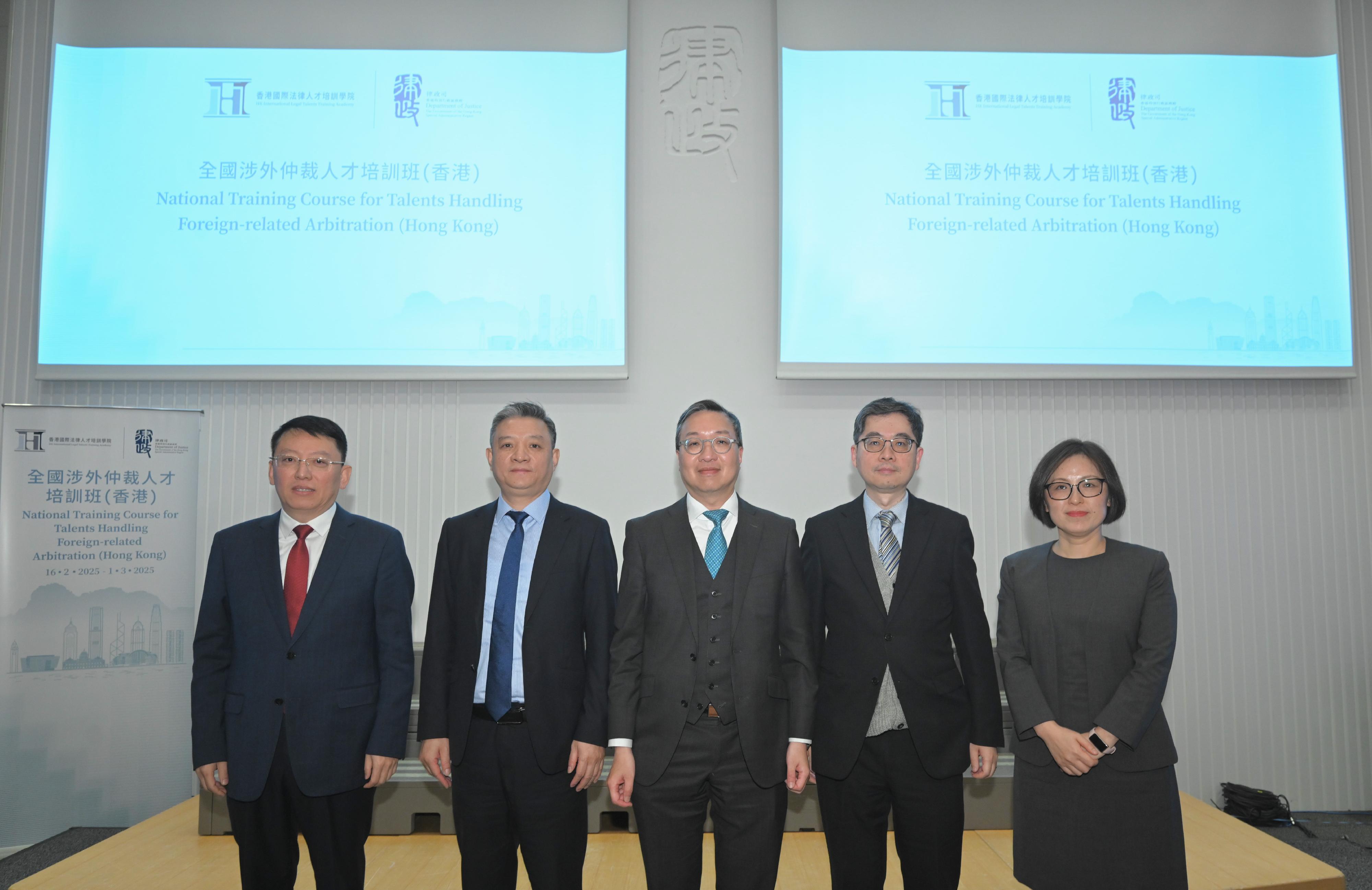
Hong Kong International Legal Talents Training Academy and Ministry of Justice organise National Training Course for Talents Handling Foreign-related Arbitration (Hong Kong) (with photos)

     The opening ceremony of the National Training Course for Talents Handling Foreign-related Arbitration (Hong Kong), organised by the Hong Kong International Legal Talents Training Academy and the Ministry of Justice, was held today (February 18).

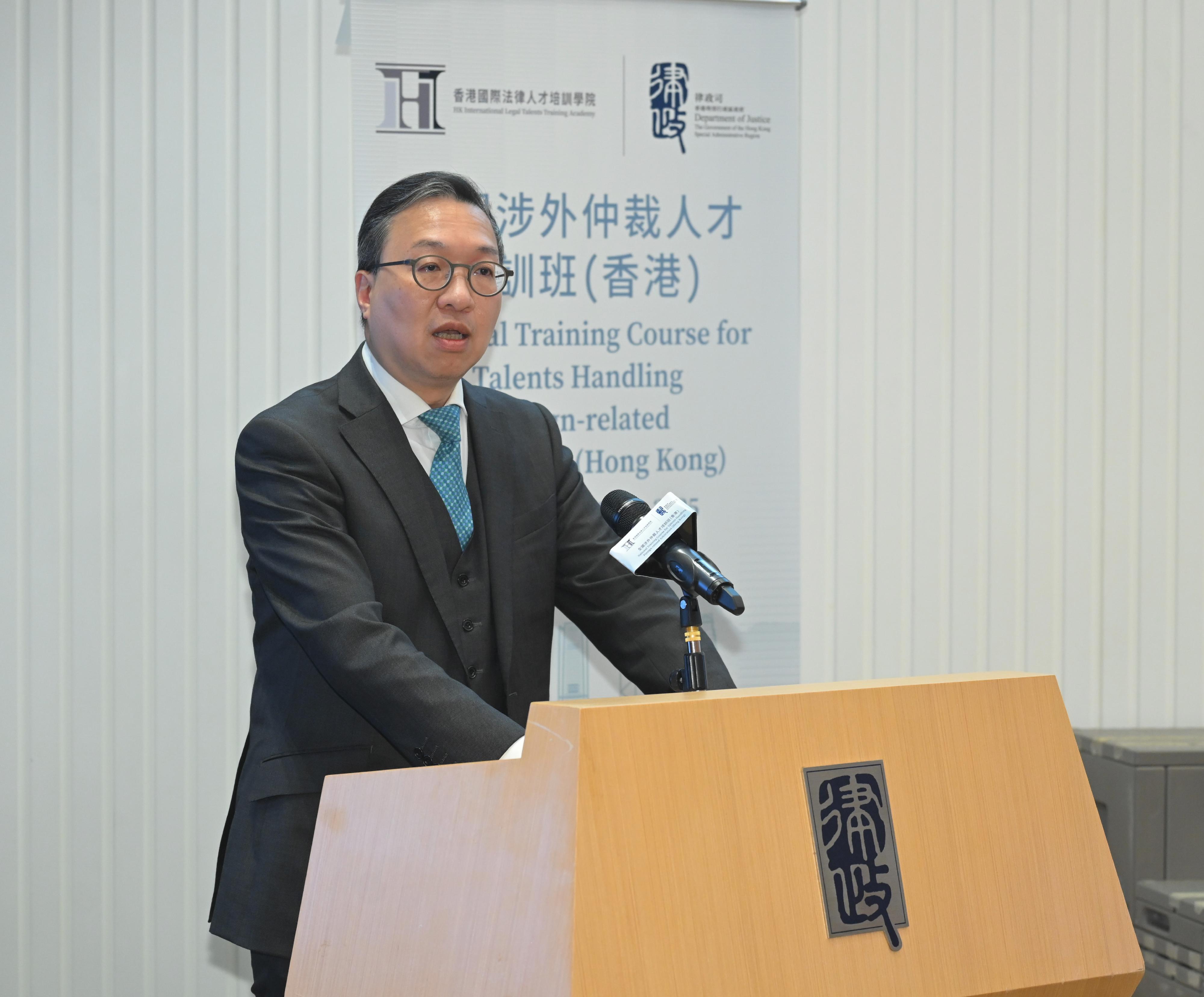
     The Secretary for Justice, Mr Paul Lam, SC, and representatives of the Bureau of Public Legal Services Administration of the Ministry of Justice, the China University of Political Science and Law, and the China Legal Service (H.K.) Limited attended the opening ceremony. Addressing the opening ceremony, Mr Lam expressed his gratitude to the Ministry of Justice for its support and trust in the Academy, and thanked the China University of Political Science and Law and the China Legal Service (H.K.) Limited for its strong support for the training course. He said that the Hong Kong Special Administrative Region Government has been sparing no effort in implementing a number of measures, including improving the legal framework related to arbitration, attracting internationally renowned arbitral institutions to establish a presence in Hong Kong, and hosting large-scale international conferences related to legal and dispute resolution services to promote Hong Kong's international legal and arbitration services. He expressed the hope that the course will facilitate exchanges that bridge the arbitration systems of Hong Kong and the Mainland, and deepen participants' understanding of arbitration and dispute resolution in Hong Kong so that they can put what they have learned into practice in future.

     The two-week training course commenced yesterday (February 17). The course, conducted in English, provides a comprehensive introduction of the system and practice of arbitration in Hong Kong to more than 80 participants comprising Mainland in-house counsel, experienced arbitrators, lawyers and arbitration practitioners through lectures, exchanges and visits. Speakers include experienced Hong Kong legal professionals and members of the Hong Kong International Legal Talents Training Expert Committee.

     The training course will facilitate co-operation between the Hong Kong and Mainland in the field of dispute resolution. By studying arbitration practices in Hong Kong, Mainland legal professionals can gain a deeper understanding of Hong Kong's legal system, thereby strengthening understanding and co-operation between the two places in cross-boundary dispute resolution.

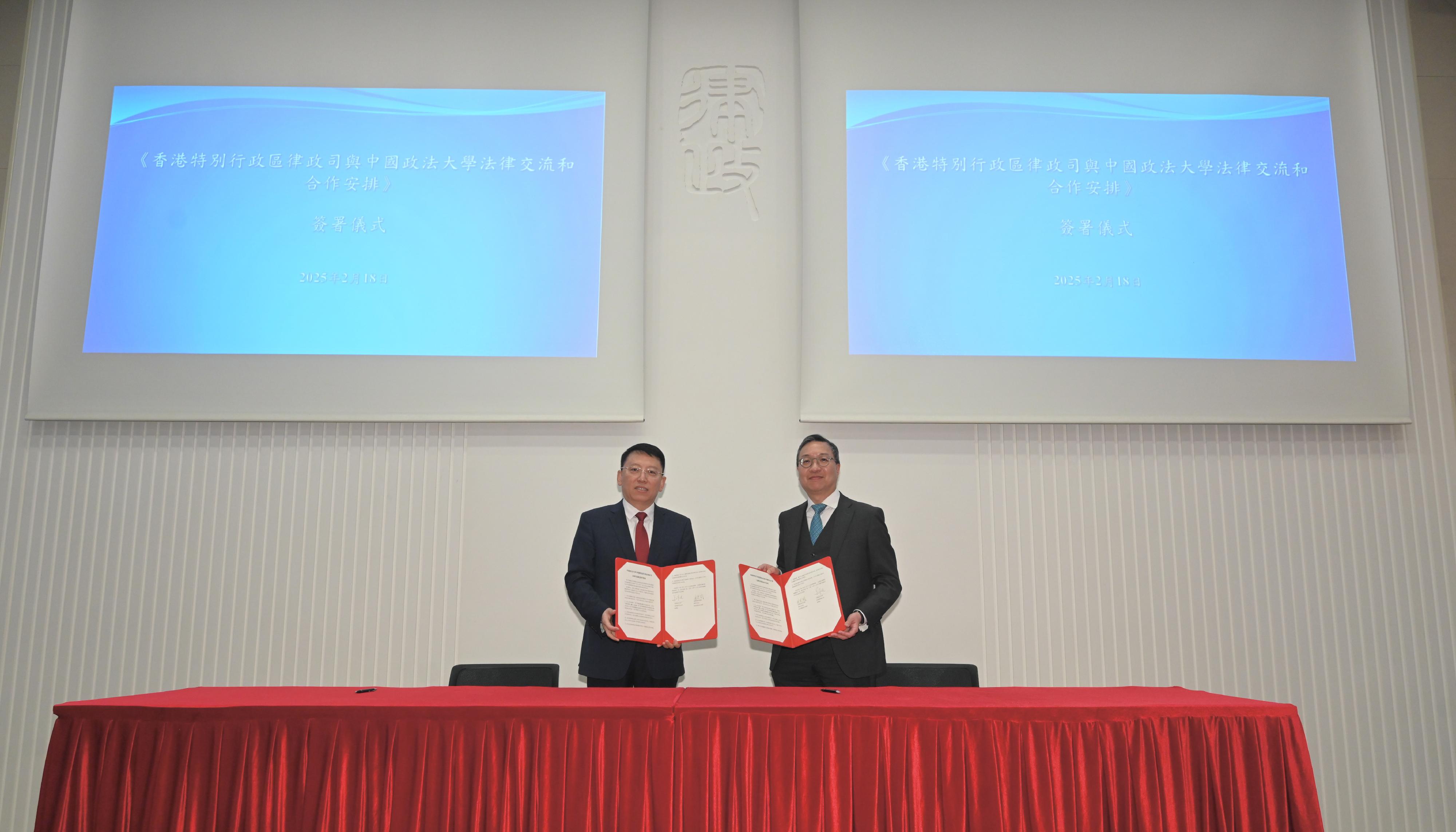
     Before the opening ceremony, Mr Lam signed a new legal exchange and co-operation arrangement with the China University of Political Science and Law to replace the arrangement signed by the two sides in 2016 and to deepen legal exchanges and co-operation between the two sides. Mr Lam said that since 2016, legal exchanges and co-operation between the two sides have been achieving good progress. The signing of the new co-operation arrangement will enhance the two sides' co-operation on nurturing foreign-related legal talents and promoting the rule of law, as well as exchanges on relevant legal issues such as international arbitration, mediation and the national development strategy of the Belt and Road Initiative. 

Photo  Photo  Photo  


Enhanced tenancy arrangement for public rental housing elderly residents joining Portable Social Security Schemes

The following is issued on behalf of the Hong Kong Housing Authority :
 
     The Hong Kong Housing Authority (HA)'s Subsidised Housing Committee endorsed today (February 18) the extension of the response period for all public rental housing (PRH) elderly residents joining the Portable Social Security Schemes (PSSS) (i.e. the Portable Comprehensive Social Security Assistance Scheme, Guangdong Scheme and Fujian Scheme) who opt to retire on the Mainland from the current three months to six months for the surrender of PRH flats or deletion of their names from PRH tenancies.
 
     To cater for the needs of PRH elderly residents choosing to reside in Residential Care Homes for the Elderly (RCHEs) (including both RCHEs in Hong Kong and the Mainland) or return to the Mainland for good, and to maximise the utilisation of housing resources, the HA has established an arrangement to issue a Letter of Assurance (LA) or Letter of Reinstatement (LR) to PRH elderly residents admitted to RCHEs or joining the PSSS upon the surrender of their PRH flats or deletion of their names from the PRH tenancies. Currently, PRH elderly residents admitted to RCHEs under the Residential Care Services Scheme are allowed to retain their PRH flats/tenancies for six months to facilitate them to sort out their family arrangements and adaptation to the new environment, while the response period for those joining the PSSS is three months. Upon implementation of the new arrangement, the response period for both will be aligned to six months.
 
     "The Government has been implementing various strategies and policies to address the issue of an ageing population. The HA is willing to support the Government's policy to actively facilitate the retirement of Hong Kong elderly persons on the Mainland and help those PRH elderly residents who opt to retire there," a spokesman for the HA said.
 
     "It is believed that the extension of the response period for the surrender of PRH flats or deletion of names from PRH tenancies could ease and address the PRH elderly residents' worries and concerns about the adaptation to living when they choose to retire on the Mainland. If they decide to retire on the Mainland and return the PRH flats, the HA may recover more PRH flats for allocation to those in housing need," the spokesman added.
 
     The enhanced measures will take effect in the first quarter of 2025. The HA will collaborate with the Social Welfare Department for the implementation arrangements.


Exchange Fund Bills Tender Results

The following is issued on behalf of the Hong Kong Monetary Authority:

     Exchange Fund Bills tender results:
 

Tender date : February 18, 2025
Paper on offer : EF Bills
Issue number : Q2508
Issue date : February 19, 2025
Maturity date : May 21, 2025
Amount applied : HK$148,500 MN
Amount allotted : HK$64,966 MN
Average yield accepted : 3.40 PCT
Highest yield accepted : 3.48 PCT
Pro rata ratio* : About 41 PCT
Average tender yield : 3.54 PCT
****************************
Tender date : February 18, 2025
Paper on offer : EF Bills
Issue number : H2537
Issue date : February 19, 2025
Maturity date : August 20, 2025
Amount applied : HK$43,900 MN
Amount allotted : HK$13,000 MN
Average yield accepted : 3.40 PCT
Highest yield accepted : 3.48 PCT
Pro rata ratio* : About 8 PCT
Average tender yield : 3.58 PCT

 
*"Pro rata ratio" refers to the average percentage of allotment with respect to each tender participant's tendered amount at the "highest yield accepted" level.
 
———————————————————

     Hong Kong Monetary Authority Tenders to be held in the week beginning February 24, 2025:
 

Tender date : February 25, 2025
Paper on offer : EF Bills
Issue number : Q2509
Issue date : February 26, 2025
Maturity date : May 28, 2025
Tenor : 91 Days
Amount on offer : HK$65,577 MN
****************************
Tender date : February 25, 2025
Paper on offer : EF Bills
Issue number : H2538
Issue date : February 26, 2025
Maturity date : August 27, 2025
Tenor : 182 Days
Amount on offer : HK$14,000 MN


Remarks by CE at media session before ExCo (with video)

     Following are the remarks by the Chief Executive, Mr John Lee, at a media session before the Executive Council meeting today (February 18):
 
Reporter: Good morning, Mr Lee. Firstly, with regards to the taxi strike, the Hong Kong Tele-Call Taxi Association has earlier threatened that it would organise a five-day strike if the Government does not respond positively to their demands to crack down on ride-hailing. About the strike, you know, how seriously does the Government view this threat by the taxi sector, and would this threat sway the Government's stance on ride-hailing regulation? Secondly, the Secretary for Labour and Welfare has previously said that the Government administration would exchange data between departments to create a database for identifying hidden cases of at-risk carers. Do you think that the Government perhaps is a bit too slow in identifying hidden elderly or hidden carers? And also, can the Community Care Teams perhaps do more before the Government can set up this database in the meantime? Thank you.
 
Chief Executive: The Government position in respect of the improvement of taxi service and also to have a lawful system to govern online hailing platforms is clear. Taxi service needs to be improved. Car-hailing platforms need to be regulated, and enforcement action needs to be taken against unlawful hire car service. Any drastic action is not going to solve problems. Drastic actions may also hurt the interests of normal citizens in the course of their daily going-about of their lives. It is not going to receive public support. Also, there is a potential that the issue may change its nature, and the issue may be hijacked by some people with ulterior motives – that will be not in the interest of society and the citizens, and will not get public support. A large number of representatives from the taxi business have indicated that they will not support drastic actions. They will not take part. I think these issues need to be addressed with a good will, consciously, rationally, so as to find a solution to take the matter forward. The Transport and Logistics Bureau has already made a proposal to address the problem, and the proposal includes introducing taxi fleets so that the management control of taxi service can be enhanced. The proposal also includes having a legal framework to regulate online hailing platforms to ensure that citizens will have a lawful regime that ensures there will be proper and lawful service and allows them to use online hailing platforms.
 
     Improving taxi service and regulating online hailing platforms is a problem that has been accumulating over a long period of time. The Government, since our assumption of office, has made a determination to address the problem and make a workable solution. We have made that proposal. Tomorrow, a working group of the Transport Advisory Committee will hold a meeting, and has invited representatives from the taxi trade and also representatives from online hailing platforms. Government representatives will also join the meeting, and it is a good opportunity for everybody to talk through the whole thing rationally with a common will to move forward to find out a solution to solve this problem that has been accumulating over a long period of time. And I hope and believe that it would be in everybody's interest that all parties will rationally talk through the problem, give out their opinions, and then work together to push forward the implementation of the government proposal. I think that will be in the interest of all parties, in the interest of society and citizens.
 
     Regarding a very unfortunate and sad incident of carers who, because of a lack of support, were left alone in their own home and not receiving assistance, we feel very sad about it, and of course, we must find a solution to address it. The Secretary for Labour and Welfare has already indicated that he is pushing forward a database so that we can collect data of individuals who are in need, who may not readily be known to service providers otherwise, and already a lot of action has been taken to approach different departments for such information. The Labour and Welfare Bureau has already approached the Office of the Privacy Commissioner for Personal Data to see how we can push forward this database as soon as possible. My position is clear: the earlier this database can be created, the better. It does not have to be 100 per cent at the first moment, because where there are areas we can more easily get information, within the confines of the law, we should do it first. And slowly and slowly, we address the difficult cases. I've already seen strong commitment and goodwill amongst all departments and bodies concerned to find a way to address this problem as soon as possible. The Labour and Welfare Bureau will work hard on this and have this database created as soon as possible so that we can build it up. We can build it up, and add to the database as we collect more information because I think society has a very common understanding that for those hidden cases, we should do our best to help them. And of course, all the 18 districts will do their best, including district councillors, Care Teams as well as departments and bodies responsible for offering assistance in this area.
 
(Please also refer to the Chinese portion of the remarks.)