Second Phase Development of Yuen Long South New Development Area invites in-situ land exchange applications

     The Lands Department (LandsD) issued today (February 19) Practice Note No. 2/2025 inviting in-situ land exchange applications for designated development sites within the Second Phase Development of Yuen Long South New Development Area (YLS NDA). The Practice Note is available on the department's website (www.landsd.gov.hk), which provides the location of sites available for in-situ land exchange applications, application criteria and conditions, and application deadlines, etc.

     In accordance with the in-situ land exchange arrangements for the Enhanced Conventional New Town Approach as revised and promulgated in 2023 (please refer to Practice Note No. 13/2023) and taking into account other relevant considerations, the land exchange applications in this round cover two sites planned for industry development (about 4.9 hectares in total) which are mainly for logistics and storage uses, etc.

     The deadline for land exchange applications this round is May 19, 2025, while the deadline for acceptance of binding basic terms offer (with premium) is May 19, 2026. Applicants may choose standard rates for premium assessment, as an alternative to the conventional case-by-case assessment mechanism. The applicable level of standard rates will be announced later this year. If an application cannot be concluded within the specified deadline, the Government will proceed with land resumption and commencement of construction works in order not to delay the works programme of the entire YLS NDA.

     The YLS NDA and the adjacent HSK/HT NDA, together with the existing Yuen Long and Tin Shui Wai New Towns and the Lau Fau Shan/Tsim Bei Tsui/Pak Nai area under planning, are situated within the High-end Professional Services and Logistics Hub, one of the four major zones in the Northern Metropolis. This Hub can work with the Qianhai Shenzhen-Hong Kong Modern Service Industry Cooperation Zone and Nanshan District in Shenzhen in such areas as finance, professional services and logistics services, promoting and deepening high-end economic co-operation. The site formation and engineering infrastructure works for the First Phase Development of YLS NDA commenced in 2022, with the first batch of population intake targeted for 2029. Subject to funding approval by the Legislative Council, the site formation and engineering infrastructure works for the Second Phase Development is planned to commence from mid-2025.

     According to the revised Recommended Outline Development Plan announced in 2020, the entire YLS NDA will provide about 32 900 housing units accommodating a population of about 98 700, and about 727 000 square metres of gross floor area for various industrial and commercial uses. Also, about 13 700 job opportunities will be created. The Government is now reviewing the development area, development intensity and housing provisions under the Third Phase Development of YLS NDA. The target to complete the review is within 2025.


LCQ10: Colorectal Cancer Screening Programme

     Following is a question by Dr the Hon David Lam and a written reply by the Secretary for Health, Professor Lo Chung-mau, in the Legislative Council today (February 19):

Question:

     The Colorectal Cancer Screening Programme (CRCSP) has been implemented since 2016, under which participants will be arranged to undergo a Faecal Immunochemical Test (FIT) screening. According to the information released by the Government in December last year, about 60 per cent of the colorectal cancer patients diagnosed under CRCSP were in earlier stages (i.e. stage I and stage II) of cancer, which was higher than the 40 per cent of those who were not diagnosed under CRCSP. On the other hand, according to the information on the website of the Hong Kong Cancer Registry, among all cancers, the incidence rate of colorectal cancer dropped from the first place in 2016 to the third place in 2022, and the age-standardised mortality rate of colorectal cancer also dropped from about 14.1 to 12.7 per 100 000 population during the same period, indicating that CRCSP is effective in detecting colorectal cancer at an earlier stage and in lowering the mortality rate. However, there are views that only early detection and removal of advanced adenoma can further minimise the incidence rate of colorectal cancer. In recent years, studies have found that although FIT has a high sensitivity and specificity for colorectal cancer, the sensitivity for advanced adenoma ranges from 25 per cent to 34 per cent only, which is lower than that of the newer multi-target stool DNA test (about 42 per cent) and faecal bacterial gene markers test (about 57 per cent). Moreover, the Asian Pacific Association of Gastroenterology and the Asian-Pacific Society for Digestive Endoscopy do not even recommend the use of FIT for screening of colorectal polyps. In this connection, will the Government inform this Council whether it has plans to review CRCSP and consider adopting screening other than FIT for testing by participants; if so, of the relevant progress; if not, the reasons for that?

Reply:

President,

     The reply, in consultation with the Department of Health (DH), to the question raised by Dr the Hon David Lam is as follows:

     The Government attaches great importance to cancer prevention and control. In 2001, it established the Cancer Coordinating Committee (CCC) to formulate strategies for cancer prevention and control and to steer the direction of work covering cancer prevention and screening, surveillance, research and treatment. The CCC is chaired by the Secretary for Health and comprising members who are cancer experts, academics, doctors in public and private sectors as well as public health professionals. The Cancer Expert Working Group on Cancer Prevention and Screening (CEWG) established under the CCC regularly reviews local and international scientific evidence and makes recommendations on cancer prevention and screening applicable to the local setting.

     From the public health perspective, the Government must carefully assess various factors when formulating a cancer screening programme with reference to evidence-based advice from the relevant experts. These include the local prevalence of the cancer concerned, the accuracy and safety of the relevant screening tools, and the effectiveness and cost-effectiveness in reducing incidence and mortality rates. Meanwhile, a screening programme will lead the public and relevant medical specialties to change the demand and supply model of related medical services. The Government needs to carefully assess the impact of a screening programme on the current healthcare system to avoid a severe imbalance in the use of limited healthcare resources, with a view to ensuring the optimal use of the overall public health and healthcare resources. 

     Regarding screening for colorectal cancer (CRC), the CEWG recommends that average-risk (e.g. without hereditary bowel syndromes), asymptomatic individuals aged 50 to 75 should consider annual or biennial faecal occult blood test; or sigmoidoscopy every five years; or colonoscopy every 10 years.

     Based on the CEWG recommendations, the Government launched the Colorectal Cancer Screening Programme (the Programme) in 2016, which currently subsidises asymptomatic Hong Kong residents aged between 50 and 75 to undergo screening tests every two years in the private sector. The programme adopts faecal immunochemical test (FIT) as the screening tool. If the FIT result is positive, the participant will be referred to an enrolled colonoscopy specialist to receive a colonoscopy examination subsidised by the Government. If the FIT result is negative, the participant is advised to undergo the screening two years later. 

     As of the end of 2024, the cumulative total number of eligible persons participated in the Programme was approximately 510 000. About 77 000 persons (15 per cent) had positive FIT results, about 40 000 persons (7.7 per cent) were diagnosed to have colorectal adenomas after colonoscopy examination, and about 3 400 persons (0.7 per cent) had CRC. In 2024, there were around 86 000 new participants in the Programme, a record annual high since its launch. Among the CRC cases diagnosed under the Programme, a preliminary analysis of around 2 400 cases has been conducted, and about 56 per cent of these cases were in earlier stages, while less than 40 per cent of CRC cases in the general population (excluding cases from the Programme) belonged to earlier stages. This demonstrates that participation in the Programme allows early detection and treatment of CRC, thereby leading to a more favourable prognosis.

     Regarding the screening method, the Programme uses FIT as the primary screening tool, which is in line with practices of the CRC screening programmes of most overseas places (such as Singapore, the United Kingdom and Australia). The CEWG has reviewed the scientific evidence on other non-invasive tests for CRC screening such as stool DNA, RNA, "microbial marker" and blood DNA tests in 2023, including the Joint Asian Pacific Association of Gastroenterology (APAGE)–Asian Pacific Society of Digestive Endoscopy (APSDE) clinical practice guidelines on the use of non-invasive biomarkers for diagnosis of colorectal neoplasia published in 2023. Upon CEWG's review, there was currently insufficient evidence on better effectiveness and cost-effectiveness in reducing CRC incidence and mortality by these newer non-invasive CRC screening tools. The CEWG therefore reaffirmed the recommendations on CRC screening. In general, the cost of FIT ranges from several dozens to several hundred dollars, while the service charge of other newer non-invasive CRC screening tests mentioned above could amount to several thousand dollars. The CEWG shall continue to keep in view further local and overseas scientific evidence and practice related to CRC screening.

     Apart from participating in regular CRC screening, leading a healthy lifestyle is also important in the prevention of CRC. According to CEWG's current recommendation on prevention of CRC, the public is advised to adopt healthy lifestyle such as increasing intake of dietary fibre, reducing consumption of red and processed meat, having regular exercise, maintaining a healthy body weight and waist circumference, avoiding drinking alcohol and smoking. The DH has long been promoting a healthy lifestyle as the primary strategy for cancer prevention. The DH makes every effort in stepping up public education related to cancers with a view to raising public awareness of cancer prevention and screening. 

     At the same time, the Primary Healthcare Commission is actively promoting the Life Course Preventive Care Plan via District Health Centres (DHCs)/DHC Expresses and family doctors. Based on the core principles of prevention-oriented and whole-person care, a personalised preventive care plan will be formulated to address the health needs of citizens across different life stages with reference to the latest evidence. Family doctors and primary healthcare professionals will collaborate to provide health advice and education on chronic disease and cancer screening, and healthy lifestyles according to personal factors, such as recommending persons aged 50 or above to undergo CRC screening.


Discussion held on “space oil drug” and cross-sectoral drug treatment and rehabilitation services between ND and healthcare professionals

     Accompanied by the Cluster Chief Executive of New Territories East of the Hospital Authority (HA), Dr Chung Kin-lai, and the Hospital Chief Executive of Tai Po Hospital of the HA, Dr Sin Ngai-chuen, representatives of the Narcotics Division (ND) of the Security Bureau visited the designated ward for substance abusers at Tai Po Hospital yesterday (February 18) to learn about the support provided to drug abusers and to discuss with frontline professionals combating "space oil drug" and treatment for the relevant drug abusers.
 
     Hong Kong has long adopted a multi-modality approach in providing drug treatment and rehabilitation (T&R) services to meet the different needs of drug abusers from different backgrounds. The HA plays a crucial role in this regard. During the meeting with the medical and allied health personnel of Tai Po Hospital, the Commissioner for Narcotics, Mr Kesson Lee, expressed gratitude for their tireless support for patients. He said, "Collaboration is an important approach for effective drug T&R services. The ND encourages hospitals to strengthen collaboration with different sectors on various fronts. For example, the cross-sectoral and cross-disciplinary collaborative model in Tai Po Hospital can effectively support drug-abusing patients, address their diverse backgrounds and T&R needs, and ultimately help them quit drugs."
 
     Regarding the prevailing problem of "space oil drug", the medical and allied health professionals at Tai Po Hospital shared their research findings, observations, and treatment approaches for relevant patients. They noted a recent rise in the number of patients seeking medical services or even hospitalisation due to "space oil drug" abuse and expressed concerns that there was no shortage of young people among those patients. They also expressed worries about e-cigarettes becoming an apparatus for drug taking. Mr Lee indicated that the Government has launched targeted anti-"space oil drug" publicity in response to the situation and upon the listing of etomidate, the main active ingredient of "space oil drug", and its three analogues (metomidate, propoxate and isopropoxate) as dangerous drugs on February 14, 2025. In addition to education and publicity, T&R is also a component in addressing the drug problem. He pointed out that the Government will continue to encourage drug abusers to quit drugs on their own volition and expressed hope that abusers of "space oil drug" would seek early assistance from service units such as Substance Abuse Clinics of the HA and Counselling Centres for Psychotropic Substance Abusers in the community. All participants in the meeting agreed that "space oil drug" could cause harm to physical and mental health, and young people are no exception.
 
     For issues related to "space oil drug" or other drug problems, the public can contact professional social workers for information or assistance through WhatsApp or WeChat at 98 186 186, or call the 24-hour hotline at 186 186.


Working Group for Enhancing Personalised Point-to-Point Transport Services under TAC convenes second meeting

The following is issued on behalf of the Transport Advisory Committee:
 
     The Working Group for Enhancing Personalised Point-to-Point Transport Services under the Transport Advisory Committee (TAC) convened its second meeting today (February 19).
 
     The Working Group met with stakeholders including representatives of taxi trades and online car hailing platforms, and listened to their views and suggestions on the regulation of online car hailing platforms. After meeting with the trades, the Working Group was also briefed on the Transport Department (TD)'s work progress on the study to enhance personalised point-to-point transport services.
 
     The Working Group will continue to advise on the study on personalised point-to-point transport services being conducted by the TD. After considering the study outcome by the TD and views of the stakeholders, the Working Group will focus on the proposed arrangements of regulating online car hailing platforms and prepare a submission for the Government's consideration.
 
     The TAC and the Working Group Chairman, Professor Stephen Cheung, said, "Today’s meeting with various stakeholders was held successfully. Having listened to their views in detail, the Working Group will consolidate and carefully consider the views received, and will submit to the Government as soon as possible a report on proposals of regulating online car hailing platforms to facilitate the healthy and sustainable development of personalised point-to-point transport services in the long run."
 
     Set up by the TAC in July 2024, the Working Group comprises a number of TAC members, representatives from relevant organisations/departments, namely the Insurance Authority and Tourism Commission, as well as representatives from the Transport and Logistics Bureau and the TD.


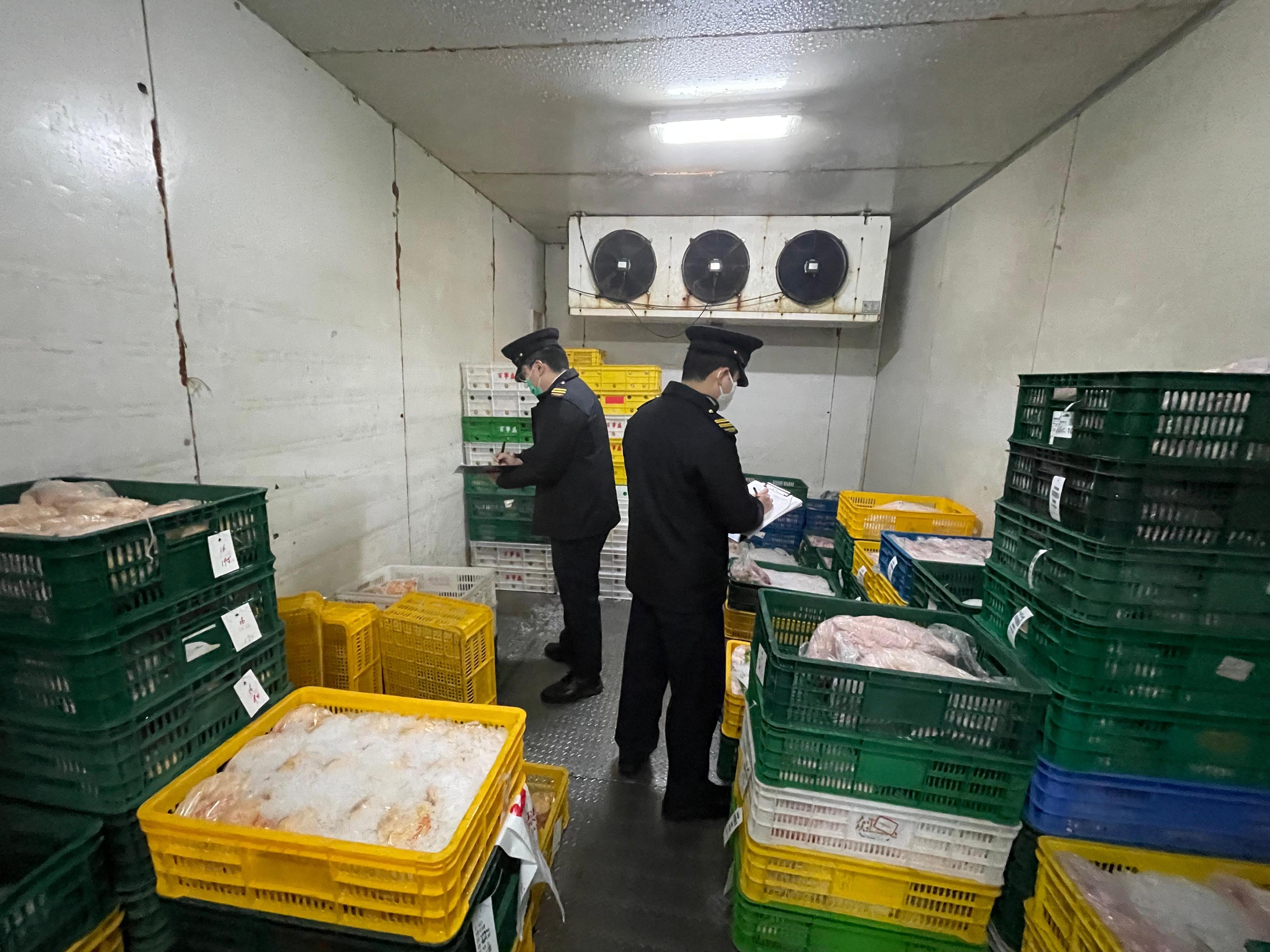
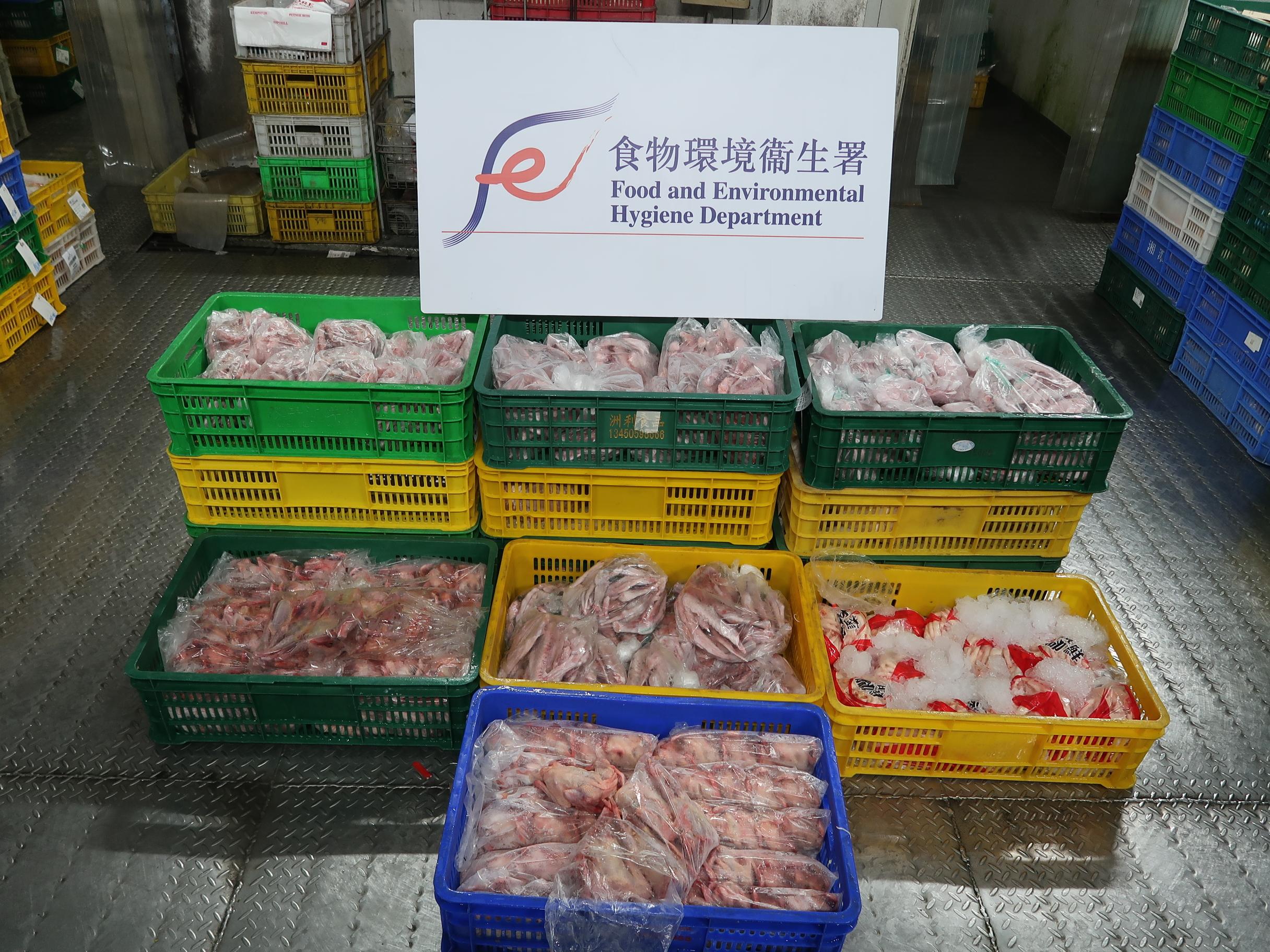
FEHD raids unlicensed cold store in Yuen Long District (with photos)

     The Food and Environmental Hygiene Department (FEHD) raided an unlicensed cold store last night (February 18) at Tai Shu Ha Road West, Yuen Long.

     During the operation, the FEHD arrested one person and initiated procedures on prosecution for the suspected operation of an unlicensed cold store. About 6 956 kilograms of chilled poultry with official health certificates were found on the premises, and about 173kg of chilled poultry and offal without official health certificates were seized for disposal.

     Under the Food Business Regulation, the maximum penalty for operating an unlicensed cold store is a fine of $50,000 and six months' imprisonment upon conviction.

     "We will continue our stringent enforcement action against unlicensed food business to safeguard food safety and public health," a spokesman for the FEHD said.

     Members of the public can report any suspected illegal food business activities by calling the FEHD hotline at 2868 0000.

Photo  Photo