CHP announces one new melioidosis case

     The Centre for Health Protection (CHP) of the Department of Health today (February 21) said that one new melioidosis case had been recorded in the past week (February 14 to 20).

     The case involved a 91-year-old male with underlying illnesses. During the incubation period, he first lived in Tung Chung and then moved to North District. He developed a fever and attended North District Hospital on February 11, and was admitted for treatment on the same day. His clinical sample was confirmed to be positive for Burkholderia pseudomallei upon testing.

     The CHP is investigating the infection source of the case. Epidemiological investigations are ongoing.
 
     So far, three melioidosis cases have been recorded in Hong Kong this year. In 2024, 23 melioidosis cases were recorded.

     Person-to-person transmission and animal-to-human transmission are rare, but the bacteria causing melioidosis can survive in the local environment. Melioidosis is an endemic disease in Hong Kong and melioidosis cases have been recorded in Hong Kong each year.
 
     According to literature, melioidosis cases are more common after typhoons or rainstorms. The bacterium Burkholderia pseudomallei in soil and muddy water may become exposed to the ground after typhoons or rainstorms, and the bacteria could spread more easily with strong winds or rainstorms. As such, the number of melioidosis cases may increase.

     With this in mind, where practicable, members of the public should stay indoors during typhoons and rainstorms, avoid travelling to areas with potential flooding, and do not wade in or have contact with muddy water and soil. In addition, high-risk individuals should avoid paths near stormwater drains where aerosols may be generated from contaminated water.

     Members of the public should also take the following preventive measures against infection:
 

  • Avoid contact with contaminated soil;
  • Wear appropriate protective clothing or footwear when participating in activities with possible contact with soil or water, e.g. using gloves and wearing boots. High-risk individuals may also consider wearing a surgical mask;
  • Wash or shower after exposure to contaminated water or soil;
  • Always clean any wounds as soon as possible and cover them with waterproof dressings;
  • Wash hands with liquid soap and water after handling soil or gardening;
  • Observe food hygiene and avoid drinking raw water; and
  • Travellers can contract the disease through outdoor water sports. Risk of infection can be minimised by avoiding exposure to water sources (such as rivers, ponds or lakes) that might be contaminated.

     â€‹
     â€‹The CHP appealed to members of the public to seek medical advice if they develop symptoms, in particular people with diabetes or other immunocompromising conditions, in order to receive an appropriate medical diagnosis and treatment. For more information on melioidosis, please visit the website of the CHP at www.chp.gov.hk/en/healthtopics/content/24/101110.html.
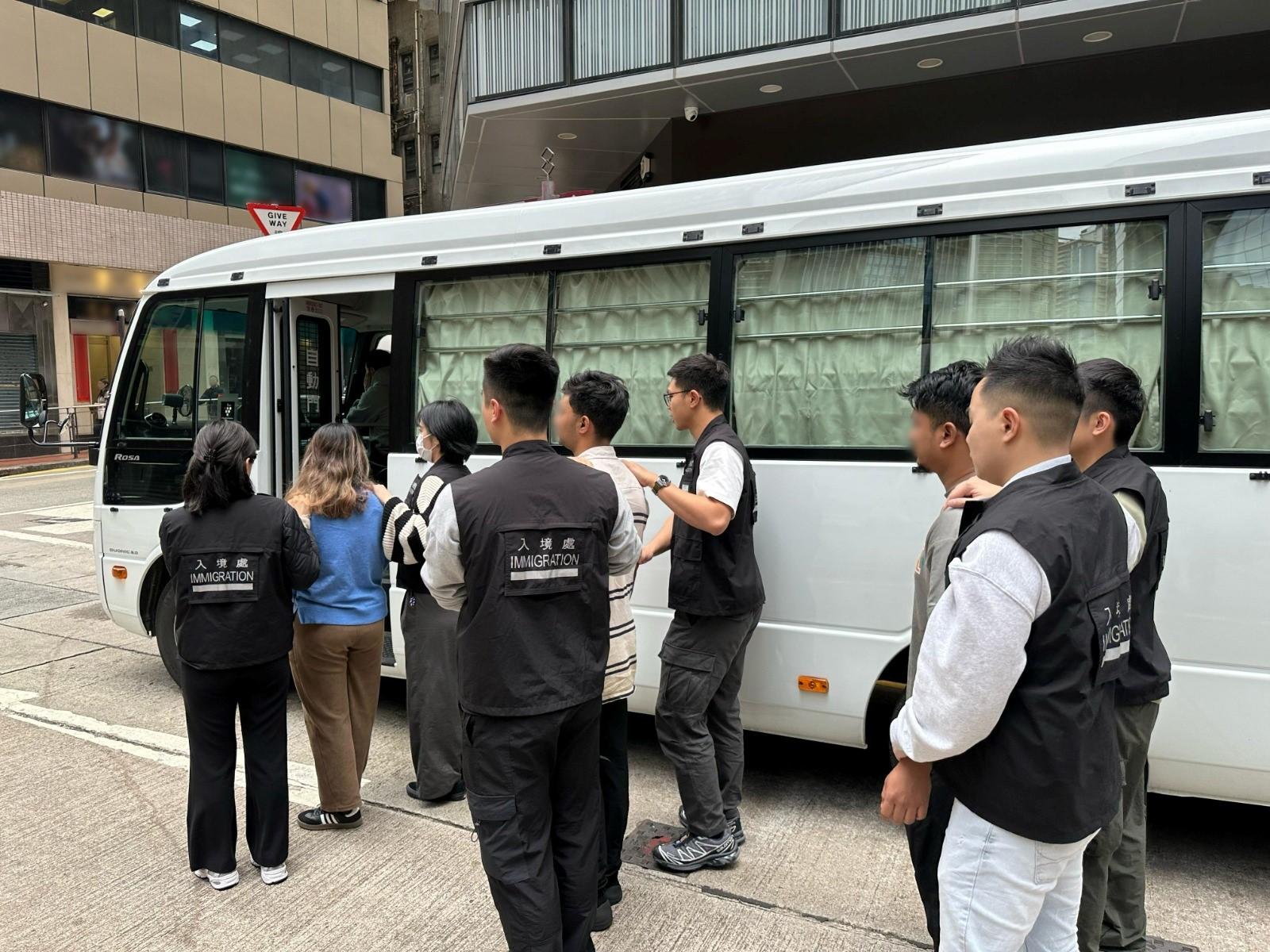


12 persons arrested during anti-illegal worker operations (with photo)

     The Immigration Department (ImmD) mounted a series of territory-wide anti-illegal worker operations codenamed "Twilight", and a joint operation with the Hong Kong Police Force codenamed "Windsand", for three consecutive days from February 18 to yesterday (February 20). A total of eight suspected illegal workers, three suspected employers and one suspected aider and abettor were arrested.
 
     During the anti-illegal worker operations, ImmD Task Force officers raided nine target locations including premises under renovation and restaurants. The arrested suspected illegal workers comprised five men and three women, aged 27 to 53. Among them, one woman was also suspected of using and being in possession of a forged Hong Kong identity card. Two men and one woman, aged 44 to 61, were suspected of employing the illegal workers. One man aged 63, who was suspected of aiding and abetting a person who breached the condition of stay in Hong Kong, was also arrested.

     An ImmD spokesman said, "Any person who contravenes a condition of stay in force in respect of him or her shall be guilty of an offence. Also, visitors are not allowed to take employment in Hong Kong, whether paid or unpaid, without the permission of the Director of Immigration. Offenders are liable to prosecution and upon conviction face a maximum fine of $50,000 and up to two years' imprisonment. Aiders and abettors are also liable to prosecution and penalties."
 
     The spokesman warned, "As stipulated in section 38AA of the Immigration Ordinance, an illegal immigrant, a person who is the subject of a removal order or a deportation order, an overstayer or a person who was refused permission to land is prohibited from taking any employment, whether paid or unpaid, or establishing or joining in any business. Offenders are liable upon conviction to a maximum fine of $50,000 and up to three years' imprisonment. Under the prevailing laws, it is an offence to use or possess a forged Hong Kong identity card or a Hong Kong identity card related to another person. Offenders are liable to prosecution and upon conviction face a maximum fine of $100,000 and up to 10 years' imprisonment."
 
     The spokesman reiterated that it is a serious offence to employ people who are not lawfully employable. Under the Immigration Ordinance, the maximum penalty for an employer employing a person who is not lawfully employable, i.e. an illegal immigrant, a person who is the subject of a removal order or a deportation order, an overstayer or a person who was refused permission to land, has been significantly increased from a fine of $350,000 and three years' imprisonment to a fine of $500,000 and 10 years' imprisonment to reflect the gravity of such offences. The director, manager, secretary, partner, etc, of the company concerned may also bear criminal liability. The High Court has laid down sentencing guidelines that the employer of an illegal worker should be given an immediate custodial sentence.
 
     According to the court sentencing, employers must take all practicable steps to determine whether a person is lawfully employable prior to employment. Apart from inspecting a prospective employee's identity card, the employer has the explicit duty to make enquiries regarding the person and ensure that the answers would not cast any reasonable doubt concerning the lawful employability of the person. The court will not accept failure to do so as a defence in proceedings. It is also an offence if an employer fails to inspect the job seeker's valid travel document if the job seeker does not have a Hong Kong permanent identity card. Offenders are liable upon conviction to a maximum fine of $150,000 and to imprisonment for one year. In that connection, the spokesman would like to remind all employers not to defy the law by employing illegal workers. The ImmD will continue to take resolute enforcement action to combat such offences.
 
     Under the existing mechanism, the ImmD will, as a standard procedure, conduct an initial screening of vulnerable persons, including illegal workers, illegal immigrants, sex workers and foreign domestic helpers, who are arrested during any operation with a view to ascertaining whether they are trafficking in persons (TIP) victims. When any TIP indicator is revealed in the initial screening, the ImmD officers will conduct a full debriefing and identification by using a standardised checklist to ascertain the presence of TIP elements, such as threats and coercion in the recruitment phase and the nature of exploitation. Identified TIP victims will be provided with various forms of support and assistance, including urgent intervention, medical services, counselling, shelter or temporary accommodation and other supporting services. The ImmD calls on TIP victims to report crimes to the relevant departments immediately.

Photo  


Update on dengue fever

     The Centre for Health Protection (CHP) of the Department of Health today (February 21) reported the latest number of dengue fever (DF) cases, and urged the public to maintain strict environmental hygiene, mosquito control and personal protective measures both locally and during travel.

     From February 14 to yesterday (February 20), the CHP recorded three imported DF cases. The patients had travelled to Malaysia, Fiji and Indonesia respectively during their incubation periods.

      As of yesterday, five imported DF cases were recorded this year. A total of 161 cases of DF were recorded in 2024, including 156 imported and five local cases. In 2023, 62 imported cases of DF were recorded.

     According to the World Health Organization (WHO), the global incidence of DF has markedly increased over the past two decades, posing a substantial public health challenge. In 2023, ongoing transmissions, combined with an unexpected spike in DF cases, resulted in over 6.5 million cases and more than 7 300 dengue-related deaths reported in over 80 countries/territories. In 2024, the WHO recorded over 13 million cases, which was a record number of cases.

     Detailed information on the latest DF situation in Hong Kong, as well as neighbouring and overseas countries and areas, has been uploaded to the CHP website.

     Members of the public returning from areas affected by DF should apply insect repellent for 14 days upon arrival in Hong Kong. If feeling unwell, seek medical advice promptly and provide travel details to a doctor.

     The public should take heed of the following advice on mosquito control:
 

  • Thoroughly check all gully traps, roof gutters, surface channels and drains to prevent blockage;
  • Scrub and clean drains and surface channels with an alkaline detergent compound at least once a week to remove any deposited mosquito eggs;
  • Properly dispose of refuse, such as soft drink cans, empty bottles and boxes, in covered litter containers;
  • Completely change the water of flowers and plants at least once a week. The use of saucers should be avoided if possible;
  • Level irregular ground surfaces before the rainy season;
  • Avoid staying in shrubby areas; and
  • Take personal protective measures such as wearing light-coloured long-sleeved clothes and trousers, and apply insect repellent containing DEET to clothing or uncovered areas of the body when doing outdoor activities.

     â€‹
     â€‹DEET-containing insect repellents are effective and the public should take heed of the tips below:
     

  • Read the label instructions carefully first;
  • Apply right before entering an area with risk of mosquito bites;
  • Apply on exposed skin and clothing;
  • Use DEET of up to 30 per cent for pregnant women and up to 10 per cent for children*;
  • Apply sunscreen first, then insect repellent; and
  • Reapply only when needed and follow the instructions.

     * For children who travel to countries or areas where mosquito-borne diseases are endemic or epidemic and where exposure is likely, those aged 2 months or above can use DEET-containing insect repellents with a DEET concentration of up to 30 per cent.

     The public should call 1823 in case of mosquito problems and may visit the following pages for more information: the DF page of the CHP and the Travel Health Service, the latest Travel Health Newstips for using insect repellents, and the CHP Facebook Page and YouTube Channel.


Education Bureau alerts public to website of organisation falsely claiming to have support from “Hong Kong Education Bureau”

     The Education Bureau (EDB) today (February 21) called on the public to stay vigilant against an organisation calling itself "Kyiv State University of Economics and Business (Hong Kong Campus)". Its website falsely claims to have the support from the "Hong Kong Education Bureau" and contains a hyperlink to the EDB website.
      
     The EDB solemnly clarifies that it has no connection with the organisation in question. The EDB has reported the matter to the Police.


Import of poultry eggs from Chhindwara District of Madhya Pradesh State in India suspended

     The Centre for Food Safety (CFS) of the Food and Environmental Hygiene Department announced today (February 21) that in view of a notification from the World Organisation for Animal Health (WOAH) about an outbreak of highly pathogenic H5N1 avian influenza in Chhindwara District of Madhya Pradesh State in India, the CFS has instructed the trade to suspend the import of poultry eggs from the area with immediate effect to protect public health in Hong Kong.

     A CFS spokesman said that Hong Kong has currently established a protocol with India for the import of poultry eggs but not for poultry meat. According to the Census and Statistics Department, no eggs were imported into Hong Kong from India last year.

     "The CFS has contacted the Indian authority over the issue and will closely monitor information issued by the WOAH and the relevant authorities on the avian influenza outbreak. Appropriate action will be taken in response to the development of the situation," the spokesman said.