Government gazettes compulsory testing notice

     The Government exercises the power under the Prevention and Control of Disease (Compulsory Testing for Certain Persons) Regulation (Cap. 599J) and publishes in the Gazette a compulsory testing notice, which requires any person who had been present at 40 specified places during the specified period (persons subject to compulsory testing) to undergo a COVID-19 nucleic acid test.

     In view of a number of cases testing positive, 40 specified places are included in the compulsory testing notice. The Government strongly reminds members of the public to strictly follow the compulsory testing requirements and undergo testing on time as required. Mobile specimen collection stations have been set up by the Government in different districts to facilitate testing to be conducted in compliance with the compulsory testing notice. The above compulsory testing requirement applies to those who have completed a COVID-19 vaccination course as well.

     Persons who have tested positive in the past three months (including positive cases tested either by nucleic acid tests recorded by the Department of Health (DH) or by rapid antigen tests (RATs) that have been self-declared to the DH) do not need to undergo compulsory testing. For those who are subject to compulsory testing (save for those who have declared their positive RAT results as mentioned above), they must undergo nucleic acid tests in accordance with relevant compulsory testing notices and cannot use RATs to fulfil the requirement of such notices. In other words, a negative RAT result cannot be deemed as fulfilling the compulsory testing requirement. Furthermore, unless a person subject to compulsory testing has obtained a medical certificate proving that he or she is unfit to undergo testing using a sample taken through combined nasal and throat swabs because of health reasons, the person cannot provide a deep throat saliva sample to fulfil the compulsory testing requirement.

     Details of the compulsory testing notice are available on the Centre for Health Protection (CHP)'s website via the following link: www.chp.gov.hk/files/pdf/ctn_20220506.pdf.

     If any persons test positive under compulsory testing, such positive cases will be handled in the same manner as in those identified through other nucleic acid tests or self-declared through RATs. Their isolation arrangements (as well as the quarantine arrangements of their household members) are no different from other positive cases.

     Persons subject to compulsory testing in accordance with a compulsory testing notice must go to any of the mobile specimen collection stations, community testing centres (CTCs) or recognised local medical testing institutions to undergo professional swab sampling in fulfilling the requirements for compulsory testing. Young children may continue to undergo the test using a stool specimen. For details on obtaining stool specimen bottles, please refer to the COVID-19 thematic website: www.coronavirus.gov.hk/pdf/Stool_bottle_collection_points.pdf.

     The Comirnaty and CoronaVac vaccines are highly effective in preventing severe cases and deaths from COVID-19. They can provide protection to those vaccinated to prevent serious complications and even death after infection. The Government appeals to persons who are not yet vaccinated to get vaccinated without delay. The Government is working towards the goal of boosting the vaccination rates of children, teenagers and the elderly so that they can be protected by the vaccines as early as possible. Furthermore, the Scientific Committee on Vaccine Preventable Diseases and the Scientific Committee on Emerging and Zoonotic Diseases under the CHP of the DH has updated the consensus interim recommendations, and persons aged 60 or above who have taken three doses of vaccine are recommended to receive an additional dose (i.e. fourth dose) of either Comirnaty vaccine or CoronaVac vaccine at least three months after their last dose. Members of the public who are eligible should get the fourth dose as early as possible for better protection.

     CTCs provide testing services for the public. Booking and walk-in services are available. Members of the public only need to provide simple personal information on the 24-hour booking system (www.communitytest.gov.hk/en). The system shows the booking status of the centres for the coming two weeks to facilitate the public's planning and selection of a suitable testing centre and a time slot for testing. The testing centres will accord priority to serve individuals with advance bookings. As of 6pm today (May 6), there was around 97 per cent availability for booking places for the coming two weeks. Members of the public may call the testing centres for enquiries on the availability of bookings or walk-in quotas before visiting the centres.
 
     The Government will set up additional mobile specimen collection stations at Wah Fu (I) Estate in Pok Fu Lam, Fu Shan Estate in Diamond Hill and Bellagio in Sham Tseng tomorrow (May 7). The mobile specimen collection station at hard-surfaced soccer pitch of Lai Chi Kok Park Stage I will be relocated to Lai Chi Kok Park Entrance (near Exit D of Mei Foo MTR Station). Separately, ticketing machines have been installed in a number of service points for on-site ticket arrangement. Members of the public who have obtained a ticket can visit the CTC website (www.communitytest.gov.hk/en) to check the real-time queueing ticket status. Booking service is also provided for some large-scale mobile specimen collection stations, and members of the public may use the 24-hour booking system (www.communitytest.gov.hk/en) to reserve a suitable time slot for testing.
 
     Other than persons subject to compulsory testing, all members of the public may conduct free testing at CTCs or mobile specimen collection stations (if the service scope is applicable). The opening dates and operating hours of the mobile specimen collection stations are stated in the Annex.

     Persons subject to compulsory testing may choose to undergo testing via the following routes:

(a) For tests which require using a sample taken through combined nasal and throat swabs
1. To visit any of the mobile specimen collection stations (see the list and target groups (if applicable) at www.coronavirus.gov.hk/eng/early-testing.html) for testing;
2. To attend any of the CTCs (see the list at www.communitytest.gov.hk/en);
3. To self-arrange testing provided by private laboratories which are recognised by the DH and can issue SMS notifications in respect of test results (see the list at www.coronavirus.gov.hk/pdf/List_of_recognised_laboratories_RTPCR.pdf), and the relevant sample must be taken through combined nasal and throat swabs; or
4. To use a specimen bottle distributed to the relevant specified premises by the CHP (if applicable), and return the specimen bottle with the stool sample collected as per relevant guidelines.

(b) For persons holding a medical certificate issued by a registered medical practitioner proving that they are unfit to undergo testing using a sample taken through combined nasal and throat swabs because of health reasons
1. To obtain a deep throat saliva specimen collection pack from post offices, vending machines set up at MTR stations or designated general out-patient clinics (GOPCs) of the Hospital Authority and return the specimen to one of the designated specimen collection points (see the distribution points and times, and the specimen collection points and times, at www.coronavirus.gov.hk/eng/early-testing.html);
2. To undergo testing at any of the GOPCs of the Hospital Authority as instructed by a medical professional of the Hospital Authority; or
3. To self-arrange testing provided by private laboratories which are recognised by the DH and can issue SMS notifications in respect of test results.

     A spokesman for the Food and Health Bureau cautioned that testing received at the Accident and Emergency Departments of the Hospital Authority, or testing provided by private laboratories which cannot issue SMS notifications in respect of test results, does not comply with the requirements of the aforementioned compulsory testing notice.

     "If persons subject to compulsory testing have symptoms, they should seek medical attention immediately and undergo testing as instructed by a medical professional. They should not attend the mobile specimen collection stations or the CTCs."

     Persons subject to compulsory testing must keep the SMS notifications containing the result of the test and the relevant medical certificate (if applicable) for checking by a law enforcement officer when the officer requires the persons to provide information about their undergoing the specified test.

     Any enquiries on compulsory testing arrangements may be addressed to the hotline at 6275 6901, which operates daily from 9am to 6pm.

     The Government will continue to trace possibly infected persons who had been to relevant premises, and seriously verify whether they had complied with the testing notices. Any person who fails to comply with the testing notices commits an offence and the maximum penalty upon conviction is a fine at level 4 ($25,000) and imprisonment for six months. The fixed penalty for discharging the liability is $10,000. The person may also be issued with a compulsory testing order requiring him or her to undergo testing within a specified time frame. Any person in breach of the compulsory testing order would be liable to a fine at level 5 ($50,000) and imprisonment for six months.

     The spokesman said, "The Government urges all individuals who are in doubt about their own health conditions, or individuals with infection risks (such as individuals who visited places with epidemic outbreaks or had contact with cases tested positive), to undergo testing promptly for early identification of infected persons."


SWD announces special testing arrangement for residents of RCHEs/nursing homes

     The Social Welfare Department (SWD) today (May 6) announced that residents of all residential care homes for the elderly (RCHEs)/ nursing homes in Hong Kong will undergo nucleic acid testing in phases, with a view to further achieving "early identification, early isolation and early treatment", and preventing transmission of the COVID-19 virus. The first phase of the special testing started today involves 89 homes. 

     The Government has arranged designated testing companies to deliver the testing kits to the RCHEs/nursing homes. Staff members of the homes are required to take nasal samples from all their residents. Those who had received positive results from nucleic acid tests or rapid antigen tests within three months before this testing are exempted. If taking samples by nasal swabs is not possible for some residents, the homes can collect deep throat saliva samples from these residents. If any positive cases are found among the residents in the special testing, the Centre for Health Protection of the Department of Health will contact the homes for follow-up.

     The SWD has strongly appealed the homes for their assistance in this special testing for the well-being of the residents.


SWD announces restricted visiting arrangement for RCHEs and RCHDs

     The Social Welfare Department (SWD) announced today (May 6) that, in light of the latest epidemic situation, a restricted visiting arrangement will be implemented starting from May 13 in the residential care homes for the elderly and the residential care homes for persons with disabilities, on the premise that infection-preventive measures are observed to protect the health of residents and staff members of residential care homes (RCHs).
 
     The persons-in-charge of the RCHs must ensure that, on the day of the visit, there are no residents or staff members having infected with COVID-19 or having been identified as close contacts. Except for official visitors, the RCHs must confirm that the visitors and the residents concerned have complied with relevant requirements in order to conduct the visit. Relevant records should also be kept by the RCHs. The relevant requirements are listed below:
 
(A) Visitors 
– must have completed at least two doses of COVID-19 vaccine and present records to the RCHs; and must have obtained negative results from COVID-19 rapid antigen tests (RAT) (please refer to www.coronavirus.gov.hk/rat/eng/rat.html) conducted at the designated area of the RCHs prior to the visit; and

– if either the visitor or the resident concerned has not taken COVID-19 vaccine due to health reasons with written proofs provided by doctors, must have obtained negative results from polymerase chain reaction-based nucleic acid tests for COVID-19 within 48 hours as well as negative RAT results conducted at the designated area in the RCHs prior to the visit. 

(B) The residents concerned
– must have completed at least two doses of COVID-19 vaccine, or have not taken COVID-19 vaccine due to health reasons with written proofs provided by doctors.
 
     For those visitors/residents concerned who are recovered patients of COVID-19 within three months (starting from the 14th day after receiving confirmation of infection), they will be exempted from the above vaccination and/or testing requirements when they conduct the visits.
 
     Completion of a COVID-19 vaccination course in general refers to having received two doses of a COVID-19 vaccine at least 14 days prior to the visit. For persons previously infected with COVID-19, completion of a vaccination course means having received one dose of a COVID-19 vaccine at least 14 days prior to the visit. For persons who received COVID-19 vaccines in places outside Hong Kong and have received all of the recommended dose(s) of a COVID-19 vaccine at least 14 days prior to the visit, they will also be regarded to have completed the vaccination course of the relevant COVID-19 vaccine, subject to the vaccine used being included on the list of vaccines recognised for specified purposes as published on www.coronavirus.gov.hk/pdf/list_of_recognised_covid19_vaccines.pdf.
 
     In addition, for persons who need to conduct emergency visits based on compassionate grounds but did not complete/have not completed the COVID-19 vaccination course or have not obtained negative results from polymerase chain reaction-based nucleic acid tests for COVID-19 within 48 hours, they must obtain negative results from RAT conducted in the designated area of the RCHs before the visit. They are also required to submit negative test results from polymerase chain reaction-based nucleic acid tests for COVID-19 to the RCHs within two days after the visit.
 
     RCHs are reminded to continue to enhance their communication with the residents and their relatives on the visiting arrangement and relevant measures. They should also visit the dedicated webpage on COVID-19 (www.coronavirus.gov.hk/eng/index.html) from time to time to keep a close watch on the Government's latest public health information.  


Government announces additional rapid antigen test to “test-and-hold” arrangements at airport

     The Government announced today (May 6) that with effect from May 9, an additional rapid antigen test (RAT) will be conducted during the "test-and-hold" at the airport to strengthen the testing arrangements for inbound persons for earlier detection and isolation of infected persons, and to enhance the process of closed-loop management from the airport to designated quarantine hotels (DQHs) so as to shorten the waiting time for inbound persons at the airport.
 
     Starting from 0.00am on May 9, all persons arriving at Hong Kong via Hong Kong International Airport (HKIA) from overseas places or Taiwan will be required to undergo a polymerase chain reaction (PCR) nucleic acid test by professional swab sampling as well as an RAT with professional specimen collection at the same time upon arrival under the "test-and-hold" arrangement at the Temporary Specimen Collection Centre (TSCC) at the airport. If the RAT result of the relevant person is negative, he or she can then proceed with immigration procedures, and upon the instruction of the staff on site be transferred by designated transport to DQHs where he or she will wait for the nucleic acid test result and undergo compulsory quarantine under closed-loop management. If the result of the nucleic acid test is also negative, the relevant quarantined person can continue his or her compulsory quarantine in DQHs. He or she will be subject to daily RATs as well as nucleic acid tests on the fifth and 12th days of arrival at Hong Kong.
 
     If any result of an RAT or nucleic acid test during "test-and-hold" arrangement or quarantine is positive and the relevant inbound person is classified as a confirmed case, he or she will be transferred to a community isolation facility hotel (CIF hotel) for isolation should he or she have no obvious symptoms and does not need any medical support. For those requiring treatment, they will be transferred to a public hospital facility for treatment and monitoring. The presence of viral genome fragments inside the body of some recovered persons who had infected COVID-19 may still be detectable through nucleic acid tests. In this regard, for inbound persons who have tested positive by nucleic acid tests with a low viral load during the "test-and-hold" arrangement at HKIA or compulsory quarantine in DQHs and are recovered persons infected within 90 days, the Department of Health will, having regard to data of the nucleic acid test results and recovery records, consider whether the persons concerned should not be classified as confirmed cases and allow them to continue to undergo compulsory quarantine in the DQHs instead of transferring them to CIF hotels for compulsory isolation.
 
     A Government spokesman said, "The relevant arrangements ensure the continued stringent control and management of importation risks while further shortening the stay of relevant inbound passengers at the airport."
 
     The abovementioned arrangements will not be applicable to persons arriving via HKIA from the Mainland or Macao who are subject to home quarantine, those who come to Hong Kong under the Return2hk Scheme or the Come2hk Scheme and are thus exempted from compulsory quarantine, and other inbound persons who are not required to undergo compulsory quarantine in DQHs. These relevant inbound persons must undergo a nucleic acid test at the TSCC at the airport. They can only proceed with their immigration procedures upon confirmation of negative nucleic acid test results.
 
     The Government will continue to closely monitor the epidemic situation of different places in accordance with the principle of guarding against the importation of cases. A basket of factors, including public health factors such as epidemic situation in particular places, testing rate, vaccination rate, volume of arrivals and actual imported cases, as well as the developments of the local epidemic situation and relevant local socio-economic factors, will be considered under the risk-based principle to adjust the boarding, quarantine and testing requirements for overseas arrivals based on risk levels as the situation warrants.


SFH promotes new pathway to medical students and practitioners in Australia on admitting qualified non-locally trained doctors to practise in Hong Kong (with photos)

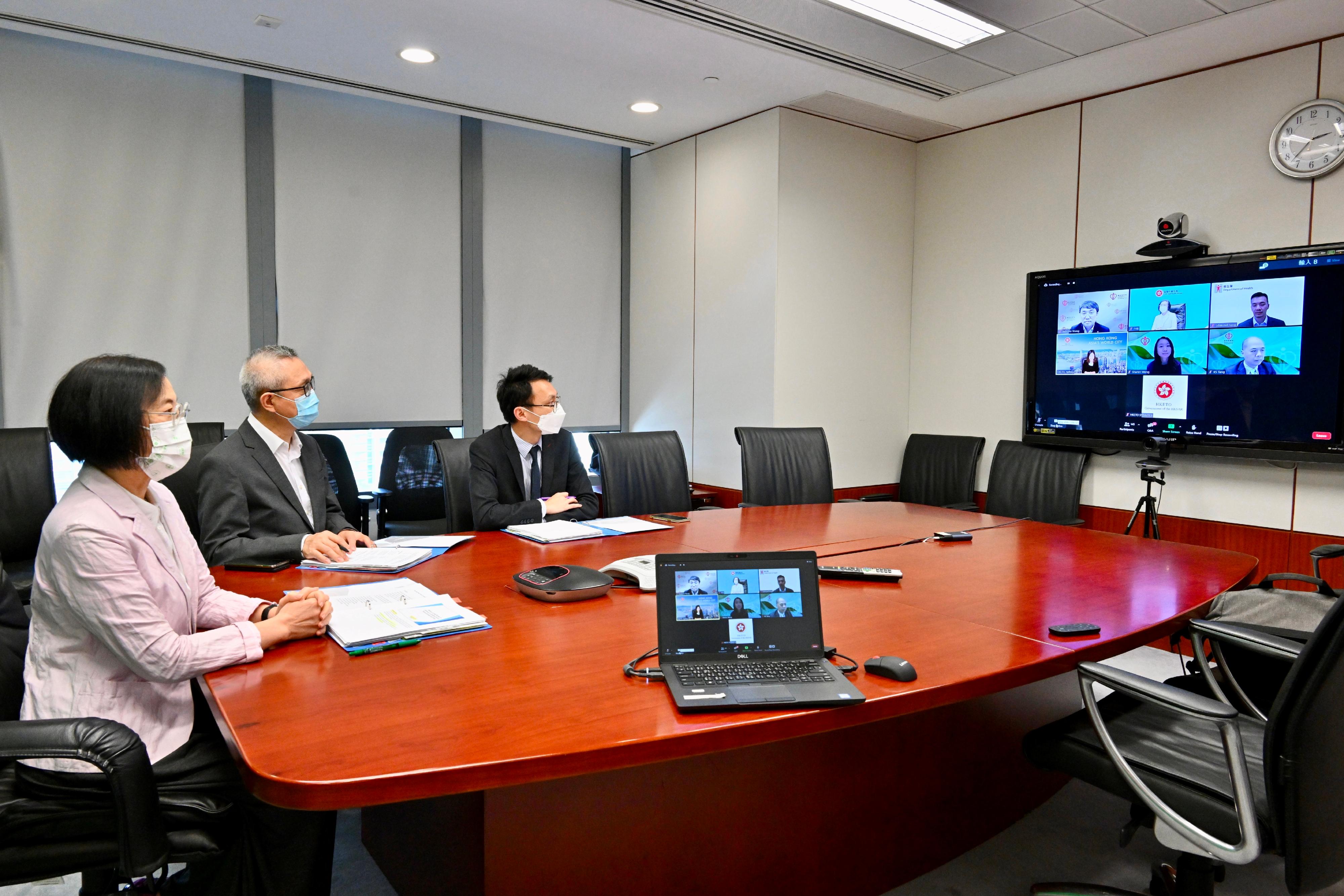
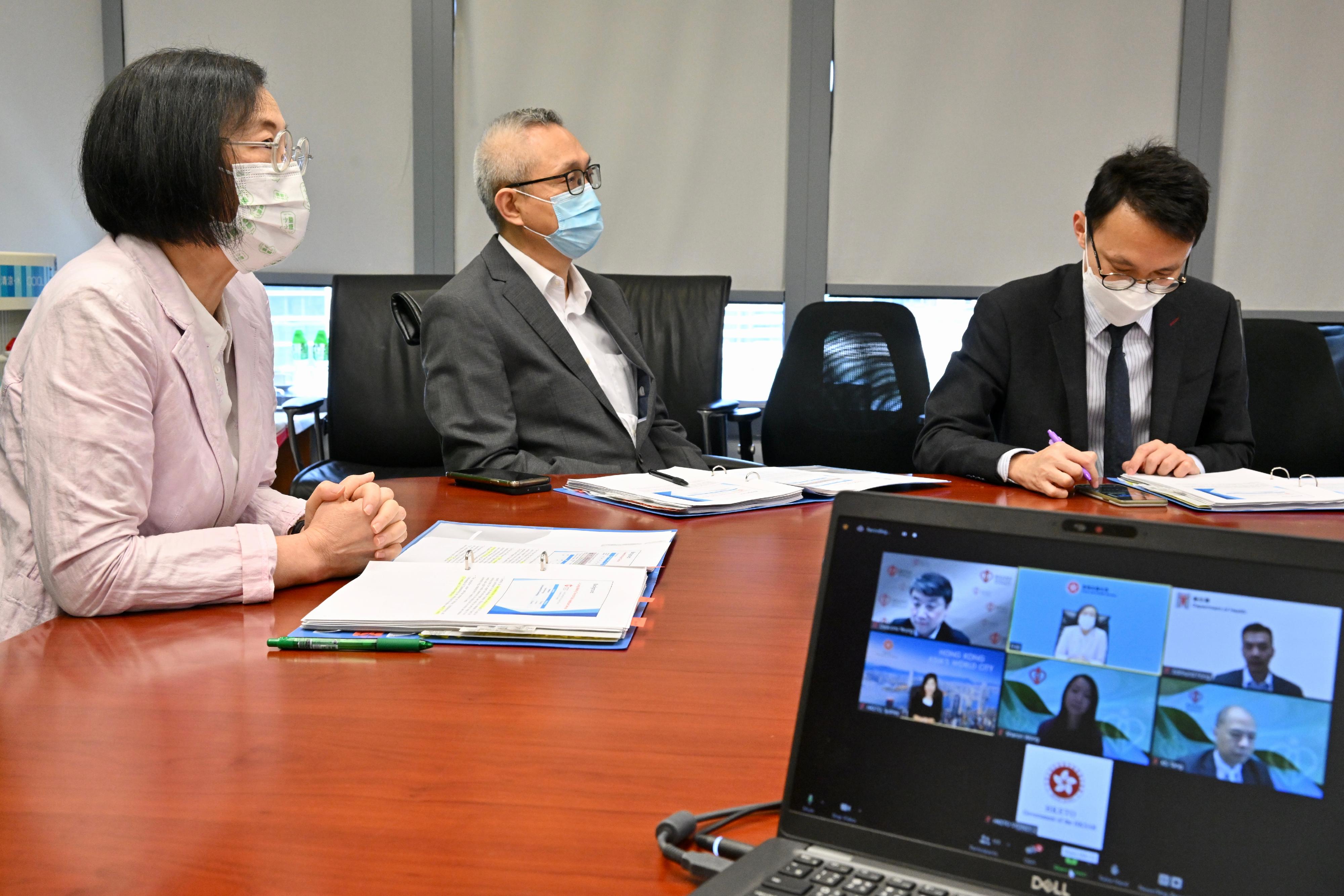
     The Secretary for Food and Health, Professor Sophia Chan, attended a webinar jointly organised by the Hong Kong Economic and Trade Office, Sydney and the Australasian Medical Services Coalition today (May 6) to promote the new pathway for qualified doctors trained outside Hong Kong to obtain full registration and practise in Hong Kong.  Around 200 participants, including medical students and practitioners in Australia, joined the webinar.

     During the webinar, Professor Chan briefed the attendees on the details of the new pathway under the amended Medical Registration Ordinance, the promulgation of the first batch of recognised medical qualifications in late April and other follow-up actions taken by the Government to facilitate the admission of non-locally trained doctors to practise in Hong Kong.  Representatives from the Department of Health (DH) and the Hospital Authority (HA) also introduced the career opportunities in their respective organisations to the attendees.
  
     Professor Chan said, "Further to the enactment of the Medical Registration (Amendment) Ordinance 2021, non-locally trained doctors who possess recognised medical qualifications, subject to their fulfilment of certain criteria, may apply for special registration to practise in the public healthcare institutions (i.e. the DH, the HA, the University of Hong Kong and the Chinese University of Hong Kong) in Hong Kong. After serving for a certain period, obtaining recognised specialist qualifications and passing the assessment, they will be granted full registration to practise in Hong Kong. For non-locally trained medical graduates who possess the recognised medical qualifications but have yet to undergo internship outside Hong Kong, subject to their fulfilment of relevant criteria, they may take the Licensing Examination of the Medical Council of Hong Kong in order to apply for special registration to practise in the public healthcare institutions in Hong Kong.  They may also obtain full registration after meeting the requirements applicable to all special registration doctors."
 
     "Established in November 2021, the Special Registration Committee (SRC) is to determine the list of recognised medical qualifications after reviewing programmes offered by non-local medical schools with quality comparable to those provided by the two medical schools in Hong Kong.  The first batch of the list, consisting of two medical qualifications in Australia, was gazetted on April 29.  The SRC is pressing ahead with the assessment of other non-local medical programmes and we expect that the second batch of the list will be promulgated within June 2022."
 
     Medical students and practitioners who attended the webinar welcomed the introduction of the new pathway which allows qualified non-locally trained doctors to obtain full registration and practise in Hong Kong.  They opined that it will help attract overseas Hong Kong doctors to return to Hong Kong, and were eager to know more about the job opportunities in Hong Kong.  Lastly, Professor Chan encouraged all medical students and practitioners in Australia to come to Hong Kong and serve citizens in the public healthcare institutions.

Photo  Photo