October’s monthly gravidtrap index for Aedes albopictus drops further

     The Food and Environmental Hygiene Department (FEHD) today (November 29) announced that the monthly gravidtrap index for Aedes albopictus in October dropped further to 2.8 per cent from 5.3 per cent in September, which was at Level 1 at its lowest, indicating that distribution of Aedes albopictus in the areas surveyed was not extensive.

     Among the 64 survey areas, there was only one area (Yuen Long Town) with the area gravidtrap index (AGI) exceeding the alert level of 20 per cent. The gravidtraps in the district concerned were mostly located in the vicinity of private residential areas, schools, recreational and sports facilities and public places. The FEHD has collaborated with relevant government departments by taking immediate action to strengthen mosquito prevention and control work in the area concerned. The AGI in the district concerned in November has dropped significantly to a lower level at 8.5 per cent.

     Moreover, the monthly density index for Aedes albopictus in October remained at 1.3, which represented that an average of 1.3 Aedes albopictus adults were found in the Aedes-positive gravidtraps, indicating that the number of adult Aedes albopictus was not abundant in the survey areas. The gravidtrap and density indices for Aedes albopictus in different survey areas as well as information on mosquito prevention and control measures are available on the department's website at www.fehd.gov.hk.

     A spokesman for the FEHD said, "Under the concerted efforts and collaboration of various government departments, the index in October dropped further. The FEHD will continue to monitor the mosquito infestation in all districts, and will conduct prompt and effective mosquito prevention and control work."

     The FEHD appeals to members of the public to work together to carry out mosquito prevention and control measures early, including inspecting their homes and surroundings to remove potential breeding grounds, changing water in vases and scrubbing their inner surfaces, removing water in saucers under potted plants at least once a week, properly disposing of containers such as soft drink cans and lunch boxes, and drilling large holes in unused tyres. The FEHD also advises members of the public and estate management bodies to keep drains free of blockage and level all defective ground surfaces to prevent the accumulation of water. They should also scrub all drains and surface sewers with an alkaline detergent at least once a week to remove any mosquito eggs.

     Aedes albopictus is a kind of mosquito that can transmit dengue fever (DF) as well as Zika virus infection. DF is commonly found in tropical and subtropical regions of the world, and has become endemic in many countries in Southeast Asia. The dengue activity in neighbouring areas has remained high and Hong Kong has recorded 21 imported DF cases so far this year. Members of the public should stay vigilant and continue to carry out effective mosquito prevention and control measures.


Government gazettes compulsory testing notice

     The Government exercises the power under the Prevention and Control of Disease (Compulsory Testing for Certain Persons) Regulation (Cap. 599J) and publishes in the Gazette a compulsory testing notice, which requires any person who had been present at 54 specified places during the specified period (persons subject to compulsory testing) to undergo a COVID-19 nucleic acid test.

     In view of a number of cases testing positive, 52 specified places are included in the compulsory testing notice. Furthermore, since some sewage samples collected in Ma On Shan and Tseung Kwan O have tested positive, two specified places are included in the compulsory testing notice. The Government strongly reminds members of the public to strictly follow the compulsory testing requirements and undergo testing on time as required. Community testing centres (CTCs)/community testing stations (CTSs)/ad-hoc mobile specimen collection stations have been set up by the Government in different districts to facilitate testing to be conducted in compliance with the compulsory testing notice. The above compulsory testing requirement applies to those who have completed a COVID-19 vaccination course as well.

     Persons who have tested positive in the past three months (including positive cases tested either by nucleic acid tests recorded by the Department of Health (DH) or by rapid antigen tests (RATs) that have been self-declared to the DH) do not need to undergo compulsory testing. For those who need to undergo compulsory testing, they must undergo nucleic acid tests in accordance with relevant compulsory testing notices and cannot use RATs to fulfil the requirement of such notices. In other words, a negative RAT result cannot be deemed as fulfilling the compulsory testing requirement. Furthermore, unless a person subject to compulsory testing has obtained a medical certificate proving that he or she is unfit to undergo testing using a sample taken through a "throat swab" because of health reasons, the person cannot provide a deep throat saliva sample to fulfil the compulsory testing requirement.

     Details of the compulsory testing notice are available on the Centre for Health Protection (CHP)'s website via the following link: www.chp.gov.hk/files/pdf/ctn_20221127.pdf.

     If any persons test positive under compulsory testing, such positive cases will be handled in the same manner as in those identified through other nucleic acid tests or self-declared through RATs. Their isolation arrangements (as well as the quarantine arrangements of their household members) are no different from other positive cases.

     Persons subject to compulsory testing in accordance with a compulsory testing notice must undergo professional swab sampling at any of the ad-hoc mobile specimen collection stations, CTCs/CTSs or recognised local medical testing institutions in order to fulfil the requirements for compulsory testing. Young children may continue to undergo the test using a stool specimen. For details on obtaining stool specimen bottles, please refer to the COVID-19 thematic website: www.coronavirus.gov.hk/pdf/Stool_bottle_collection_points.pdf.

     If the Tropical Cyclone Warning Signal No. 3 or above, the Red or Black Rainstorm Warning Signal or the post-super typhoon "extreme conditions" announcement by the Government is in force at any time during the period for undergoing the compulsory testing, the period for undergoing the compulsory testing will be extended for one day.

     Vaccines are highly effective in preventing severe cases and deaths from COVID-19. They can provide effective protection to those vaccinated to prevent serious complications and even death after infection. The Government appeals to persons who are not yet vaccinated to get vaccinated without delay. In view of the arrival of the Comirnaty Original/Omicron BA.4-5 bivalent vaccine in Hong Kong, eligible persons aged 12 or above may, following the current vaccination schedule, choose to receive the BioNTech bivalent vaccine as an alternative to the fourth dose (or the third dose for recovered persons) from December 1, while the Sinovac or the BioNTech ancestral strain vaccines can still be used. Online reservations has opened starting from today (November 27).  Eligible persons aged 60 or above with same-day tickets may choose the type of vaccine to be administered on site.
     
     CTCs/CTSs across the city provide free nucleic acid testing services for the public, including eligible persons of targeted groups, visitors to public hospitals and residential care homes and all elderly people aged 60 or above. Relevant persons who wish to undergo a free test just need to make an online booking or use the Testing Registration QR code in the "LeaveHomeSafe" mobile application for registration. 

     Booking services are available for all 85 CTC/CTSs. Members of the public can make bookings through the online booking system (booking.communitytest.gov.hk/form/index.jsp). Members of the public can also fill in their personal information in advance to obtain the Testing Registration Code QR code through the "LeaveHomeSafe" mobile application. They can present that QR code for scanning before testing at a service point thereafter, thus saving their time spent on registration and queueing.

     The Government will reopen the ad-hoc mobile specimen collection station at Rhine Garden in Sham Tseng tomorrow (November 28). The opening dates and service hours of the ad-hoc mobile specimen collection stations are stated in the Annex.

     Persons subject to compulsory testing may choose to undergo testing via the following routes:

(a) For tests which require using a sample taken through "combined nasal and throat swabs" or "throat swab"
1. To visit any of the ad-hoc mobile specimen collection stations (see the list and target groups (if applicable) at www.coronavirus.gov.hk/eng/early-testing.html) for testing;
2. To attend any of the CTCs/CTSs (see the list at www.communitytest.gov.hk/en);
3. To self-arrange testing provided by private laboratories which are recognised by the DH and can issue SMS notifications in respect of test results (see the list at www.coronavirus.gov.hk/pdf/List_of_recognised_laboratories_RTPCR.pdf), and the relevant sample must be taken through "combined nasal and throat swabs" or "throat swab"; or
4. To use a specimen bottle distributed to the relevant specified premises by the CHP (if applicable), and return the specimen bottle with the stool sample collected per relevant guidelines.

(b) For persons holding a medical certificate issued by a registered medical practitioner proving that they are unfit to undergo testing using a sample taken through a "throat swab" because of health reasons
1. To obtain a deep throat saliva specimen collection pack from post offices, vending machines set up at MTR stations or designated general out-patient clinics (GOPCs) of the Hospital Authority and return the specimen to one of the designated specimen collection points (see the distribution points and times, and the specimen collection points and times, at www.coronavirus.gov.hk/eng/early-testing.html);
2. To undergo testing at any of the GOPCs of the Hospital Authority as instructed by a medical professional of the Hospital Authority; or
3. To self-arrange testing provided by private laboratories which are recognised by the DH and can issue SMS notifications in respect of test results.

     A Government spokesman cautioned that testing received at the Accident and Emergency Departments of the Hospital Authority, or testing provided by private laboratories which cannot issue SMS notifications in respect of test results, does not comply with the requirements of the aforementioned compulsory testing notice.

     "If persons subject to compulsory testing have symptoms, they should seek medical attention immediately and undergo testing as instructed by a medical professional. They should not attend the ad-hoc mobile specimen collection stations or the CTCs/CTSs."

     Persons subject to compulsory testing must keep the SMS notifications containing the result of the test and the relevant medical certificate (if applicable) for checking by a law enforcement officer when the officer requires the persons to provide information about their undergoing the specified test.

     Any enquiries on compulsory testing arrangements may be addressed to the hotline at 6275 6901, which operates daily from 9am to 6pm.

     The Government will continue to trace possibly infected persons who had been to relevant premises, and seriously verify whether they had complied with the compulsory testing notices. Any person who fails to comply with the compulsory testing notices commits an offence and the maximum penalty upon conviction is a fine at level 4 ($25,000) and imprisonment for six months. The fixed penalty for discharging the liability is $10,000. The person may also be issued with a compulsory testing order requiring him or her to undergo testing within a specified time frame. Any person in breach of the compulsory testing order would be liable to a fine at level 5 ($50,000) and imprisonment for six months.

     The spokesman said, "The Government urges all individuals who are in doubt about their own health conditions, or individuals with infection risks (such as individuals who visited places with epidemic outbreaks or had contact with cases tested positive), to undergo testing promptly for early identification of infected persons."
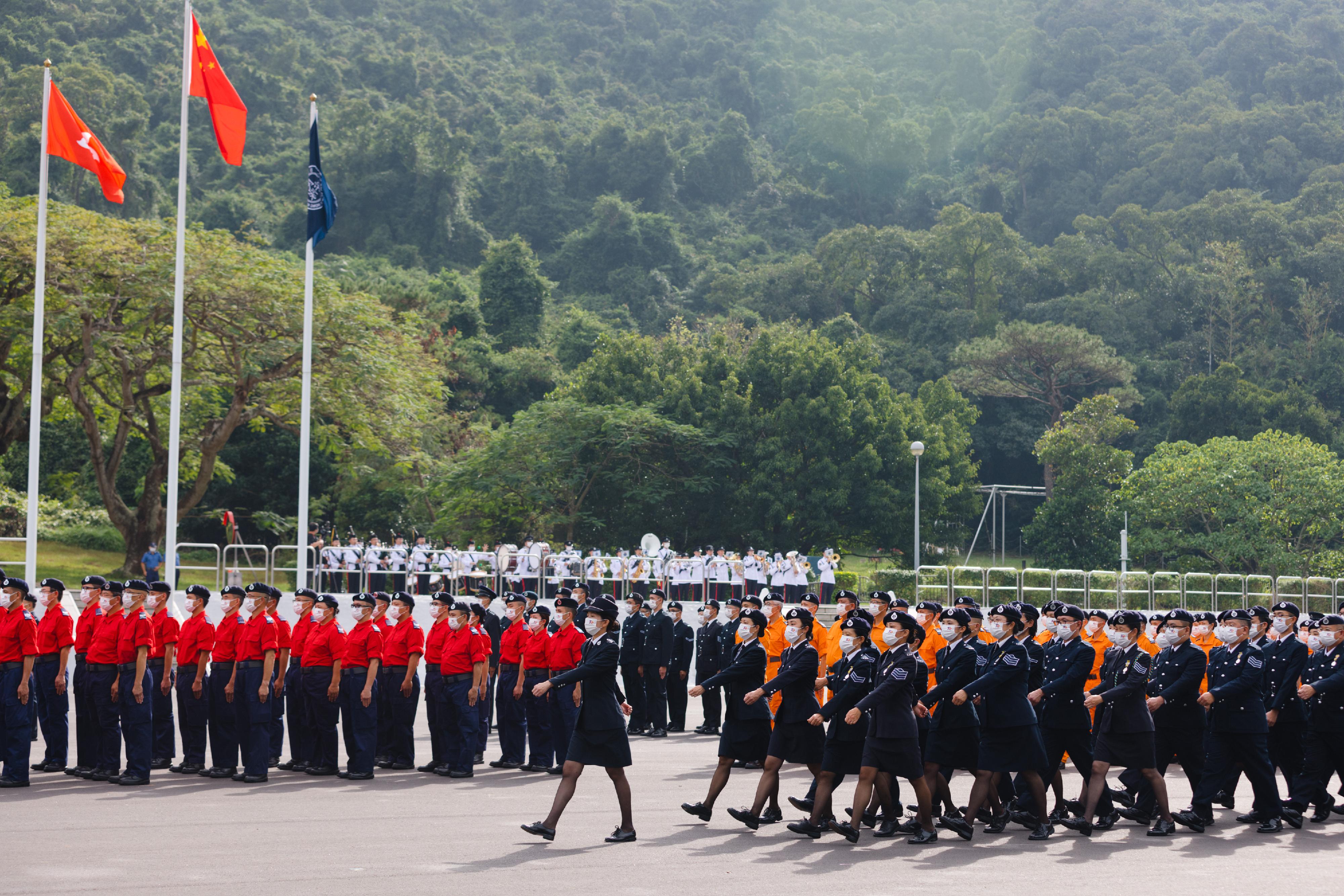
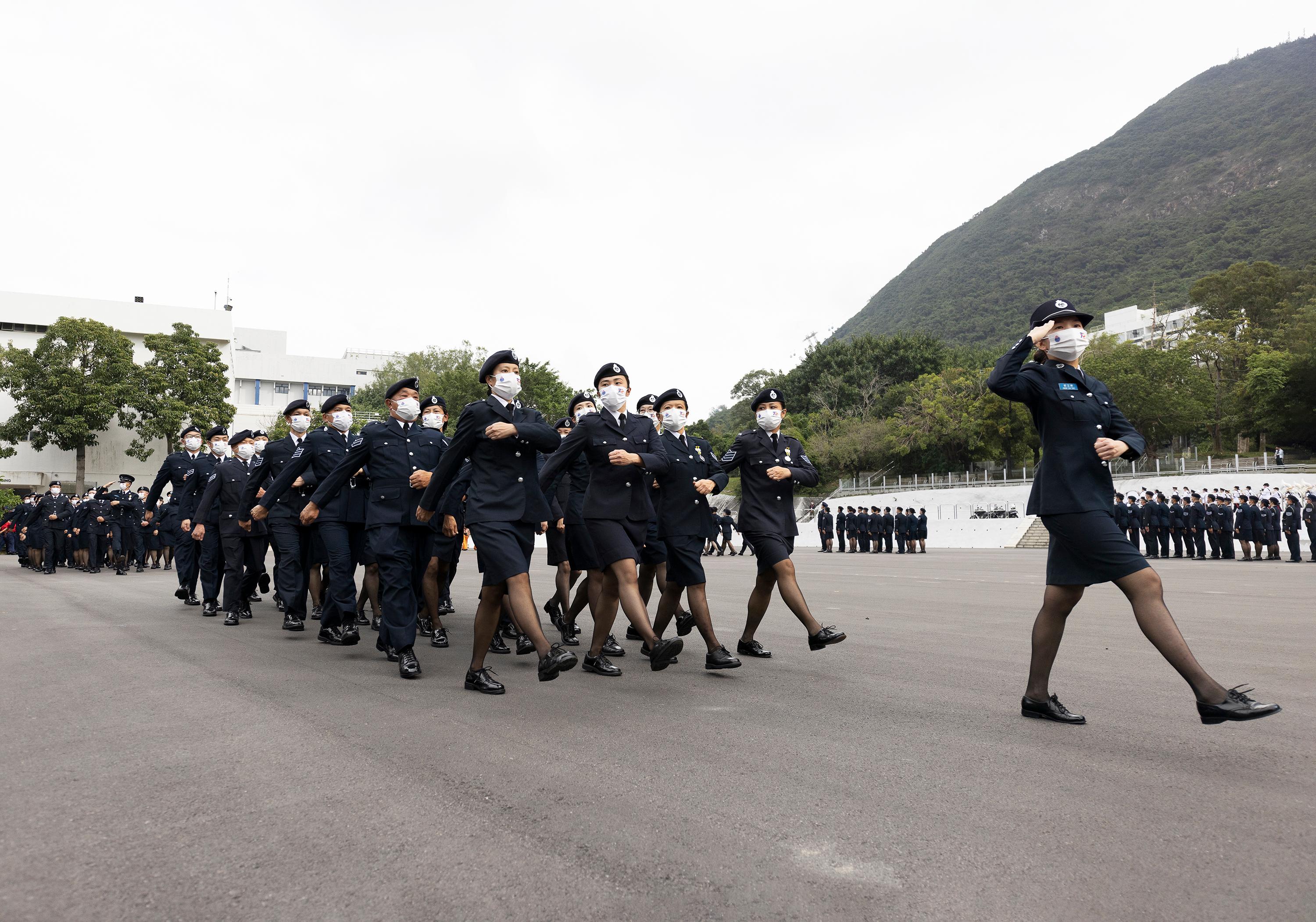
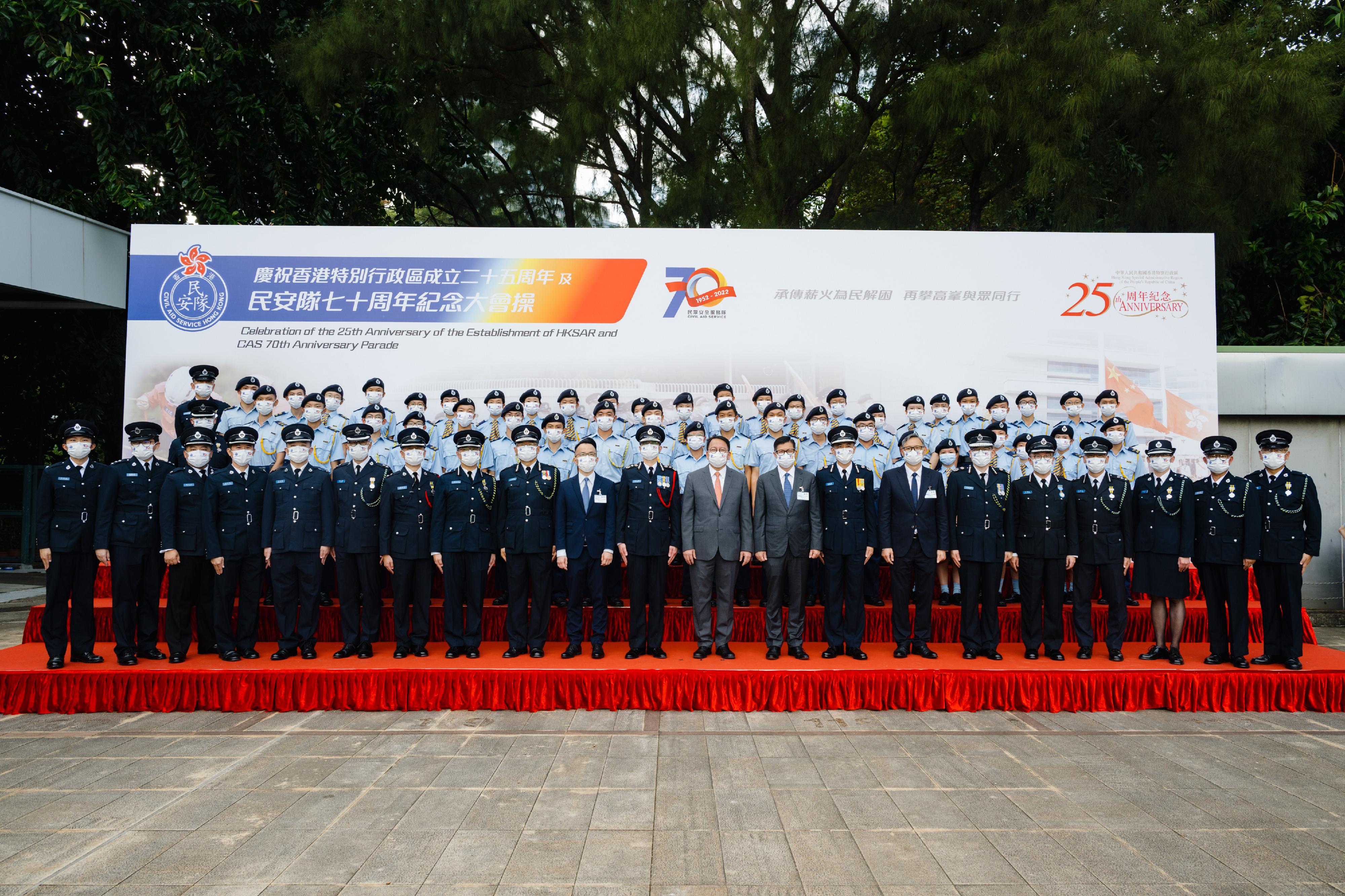
Civil Aid Service holds “Celebration of the 25th Anniversary of the Establishment of HKSAR and CAS 70th Anniversary Parade” (with photos)

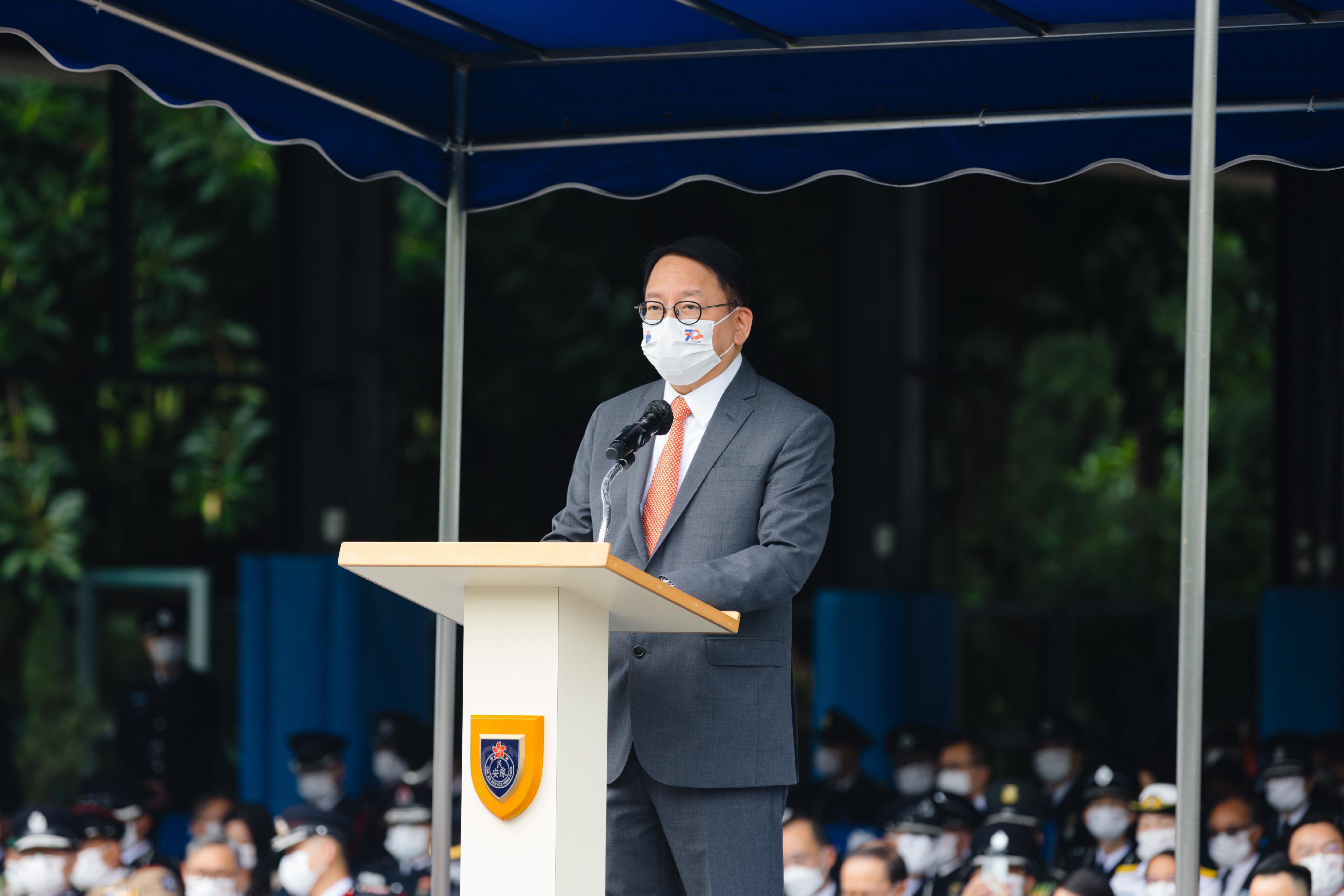
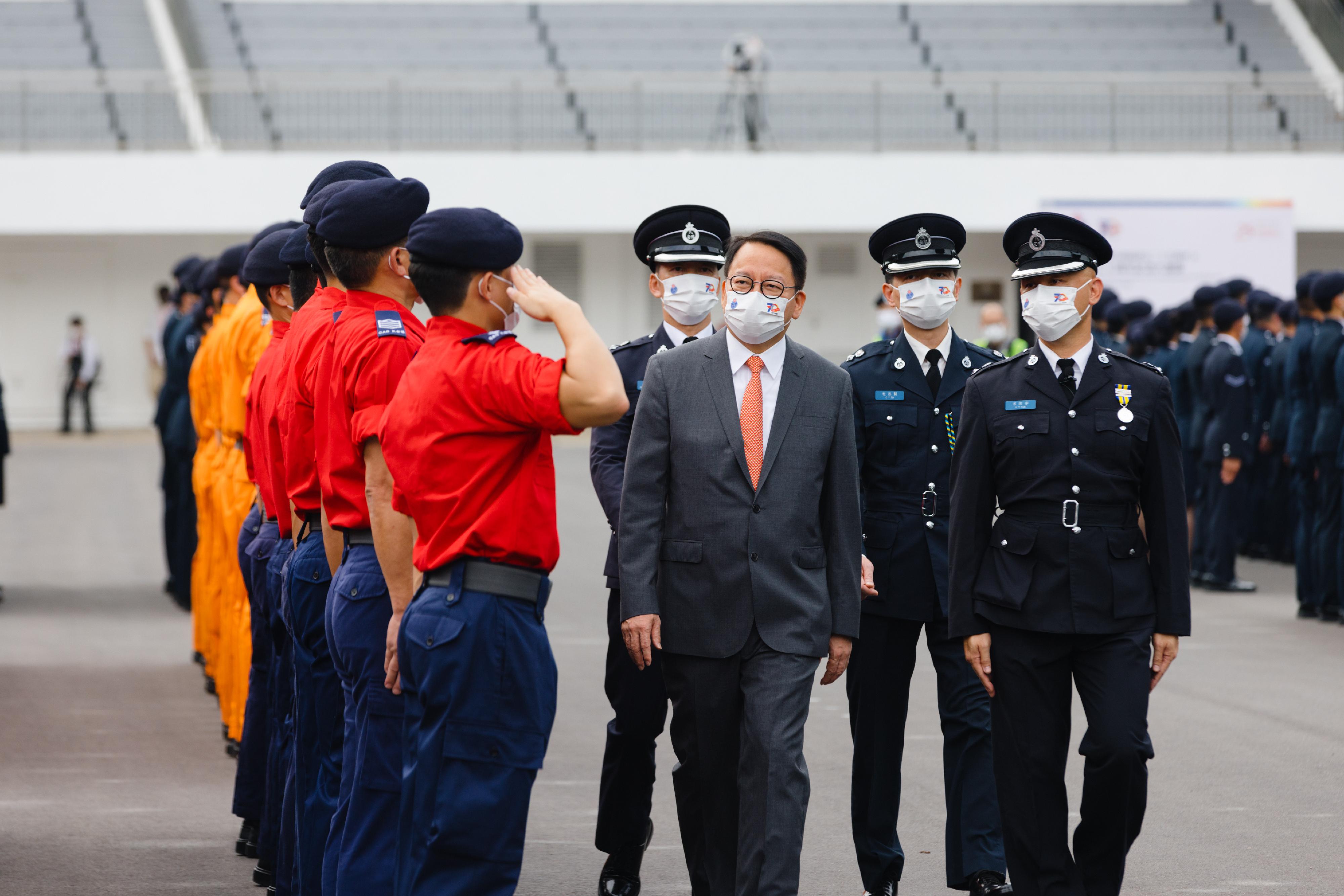
     The Civil Aid Service (CAS) held the "Celebration of the 25th Anniversary of the Establishment of HKSAR and CAS 70th Anniversary Parade" today (November 27) at the Hong Kong Police College. The Chief Secretary for Administration, Mr Chan Kwok-ki, officiated at the ceremony and acted as the reviewing officer for the Parade. Other guests included Legislative Council members, representatives from government bureaux, departments and organisations, as well as approximately 800 serving and retired CAS officers and members.
      
     The Parade featured an impressive line-up of squads from CAS Hong Kong, Kowloon and New Territories Regions, as well as the CAS Tactical Force, Support Force, Training and Development Force and Cadet Corps, which were backed up by its Administration Force.
      
     In order to demonstrate national identity and patriotic sentiment for the motherland, the CAS has fully adopted from today the Chinese-style foot drill that requires exacting standards, and demonstrated the drill's protocols for the first time in the Parade. The parade members performed synchronised movements in uniformity with sonorous and vigorous steps, which fully displayed the CAS team spirit. The full adoption of the Chinese-style foot drill has represented an important milestone for the CAS, embodying the essence of keeping abreast of new developments in contemporary times.
      
     As an auxiliary force under the Security Bureau, the CAS has been honouring the pledge of "Provide Emergency Relief, Serve the Community", and has been rendering immediate assistance during emergencies to protect Hong Kong citizens. Taking COVID-19 as an example, the CAS has remained steadfast on the front line of the anti-epidemic operations by rapidly assisting in setting up a number of community isolation facilities and managing quarantine hotels. In addition, the CAS is committed to discharging duties related to typhoon rescues, fighting hill fires and searching for missing persons in mountaineering accidents.
      
     Looking forward to the future, the CAS will step up efforts to nurture more talents committed to serving the community, and will continue to safeguard the prosperity and stability of Hong Kong.

Photo  Photo  Photo  Photo  Photo  


HAD distributes complimentary COVID-19 rapid test kits to households, cleansing workers and property management staff in Sha Tin, Yuen Long and North Districts

     In light of positive test results for the COVID-19 virus from sewage samples collected in Sha Tin, Yuen Long and North Districts, the Home Affairs Department (HAD) said today (November 27) that the Sha Tin District Office (STDO), the Yuen Long District Office (YLDO) and the North District Office (NDO) have distributed a total of about 78 000 COVID-19 rapid test kits to households, cleansing workers and property management staff living and working in the Districts.

     The STDO distributed rapid test kits to households, cleansing workers and property management staff living and working in King Tin Court, Golden Lion Garden Stage II, Sheung Keng Hau and Ha Keng Hau for voluntary testing through the property management companies, the owners' corporations and the Village Representatives.

     The YLDO commenced distributing rapid test kits to households, cleansing workers and property management staff living and working in Meadowlands, Tak Hing Building, Tak Cheung Building, Parkview Garden, Sheffield Villas, Tin Sam Villa and Casa De Oro for voluntary testing through the property management companies and the owners' corporations.

     In addition, the NDO distributed rapid test kits to households, cleansing workers and property management staff living and working in residential premises around Luen Cheong Street for voluntary testing through the property management company and NDO staff members.

     The HAD made the above arrangements in the hope of identifying infected persons early.

     Members of the public may refer to the demonstration video produced by the Centre for Health Protection (CHP) under the Department of Health (DH) via www.youtube.com/watch?v=yzFAUzTtmKk to learn how to use the rapid antigen test (RAT) kit.

     Persons testing positive through an RAT should take a photo of the test result and declare the result within 24 hours via the Declaration System for Individuals Tested Positive for COVID-19 Using Rapid Antigen Test (www.chp.gov.hk/ratp). If members of the public encounter difficulties in using the online platform, they can call the automated system at 183 6119 to register their identification document and telephone number. The CHP under the DH will contact the relevant person later to complete the report procedure. There is no need to declare negative test results.

     The Government appeals for the co-operation of members of the public to safeguard the health of themselves and their families by undergoing testing on a voluntary basis and fighting the virus together. The Government urges all individuals who are in doubt about their own health condition, or individuals with infection risks (such as individuals who visited places with epidemic outbreaks or had contact with cases that tested positive), to undergo testing promptly for early identification of infected persons to reduce the transmission risks of COVID-19.


LCSD’s Cantonese Opera Day organises diverse activities to celebrate 20th anniversary today (with photos)

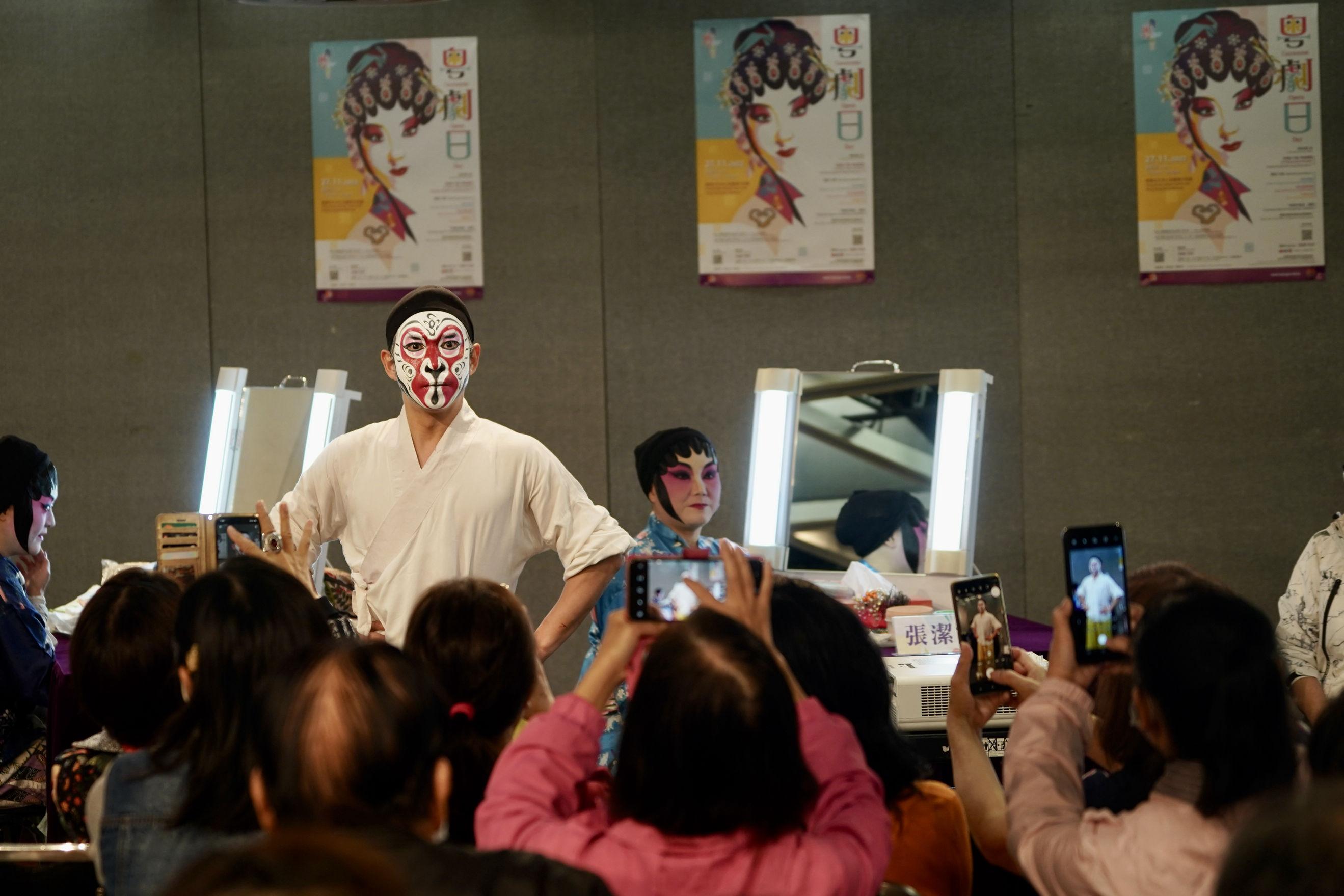
     The annual Cantonese Opera Day, presented by the Leisure and Cultural Services Department (LCSD), celebrated its 20th anniversary today (November 27) with an array of free activities at the Hong Kong Cultural Centre (HKCC) and the Hong Kong Space Museum, attracting 5 000 visitors taking part in the event.

     One of the programmes "Cantonese Opera Excerpts and Cantonese Operatic Songs" was staged at the Concert Hall of the HKCC in which young Cantonese opera talents as well as winners of the Hong Kong Schools Music Festival Cantonese Opera Competition took turns to perform classic excerpts and familiar duet and solo pieces. The distinctive performance received rounds of applause from the audiences.

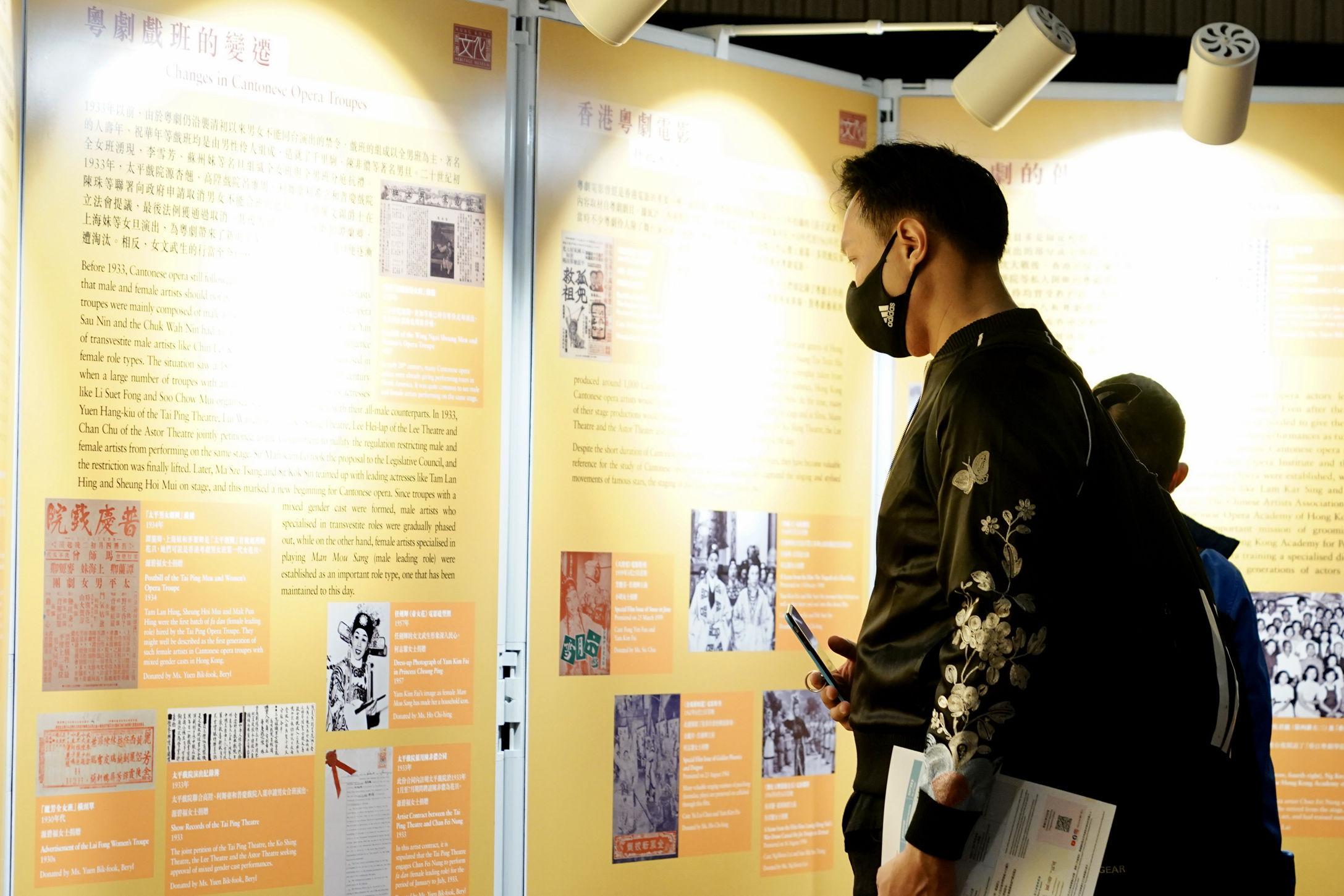
     To enable participants to learn more about Cantonese opera, a world intangible cultural heritage item, from multiple perspectives, a number of talks and demonstration sessions were held during this year's Cantonese Opera Day, covering areas such as Cantonese opera make-up, costumes, percussion and traditional Cantonese singing. In addition, the "Cantonese Opera in Hong Kong" exhibition, co-ordinated by the Hong Kong Heritage Museum, was held at the Foyer Exhibition Area to introduce the local development and evolution of Cantonese opera over the years. These different types of educational and recreational activities have allowed Cantonese opera lovers and participants of all ages to spend a fun-filled Sunday together.

     Various Cantonese opera related programmes such as film screenings, Cantonese opera performances and an exhibition were held at the same time at various LCSD venues (including the Hong Kong Film Archive, Ko Shan Theatre and the Red Brick Building) in support of the Cantonese Opera Day to share the joy and promote the art of Cantonese opera to the general public.

Photo  Photo  Photo  Photo  Photo