CMAB and HYAB brief Hong Kong members of provincial committees of Chinese People’s Political Consultative Conference on proposals to improve governance at district level (with photos)

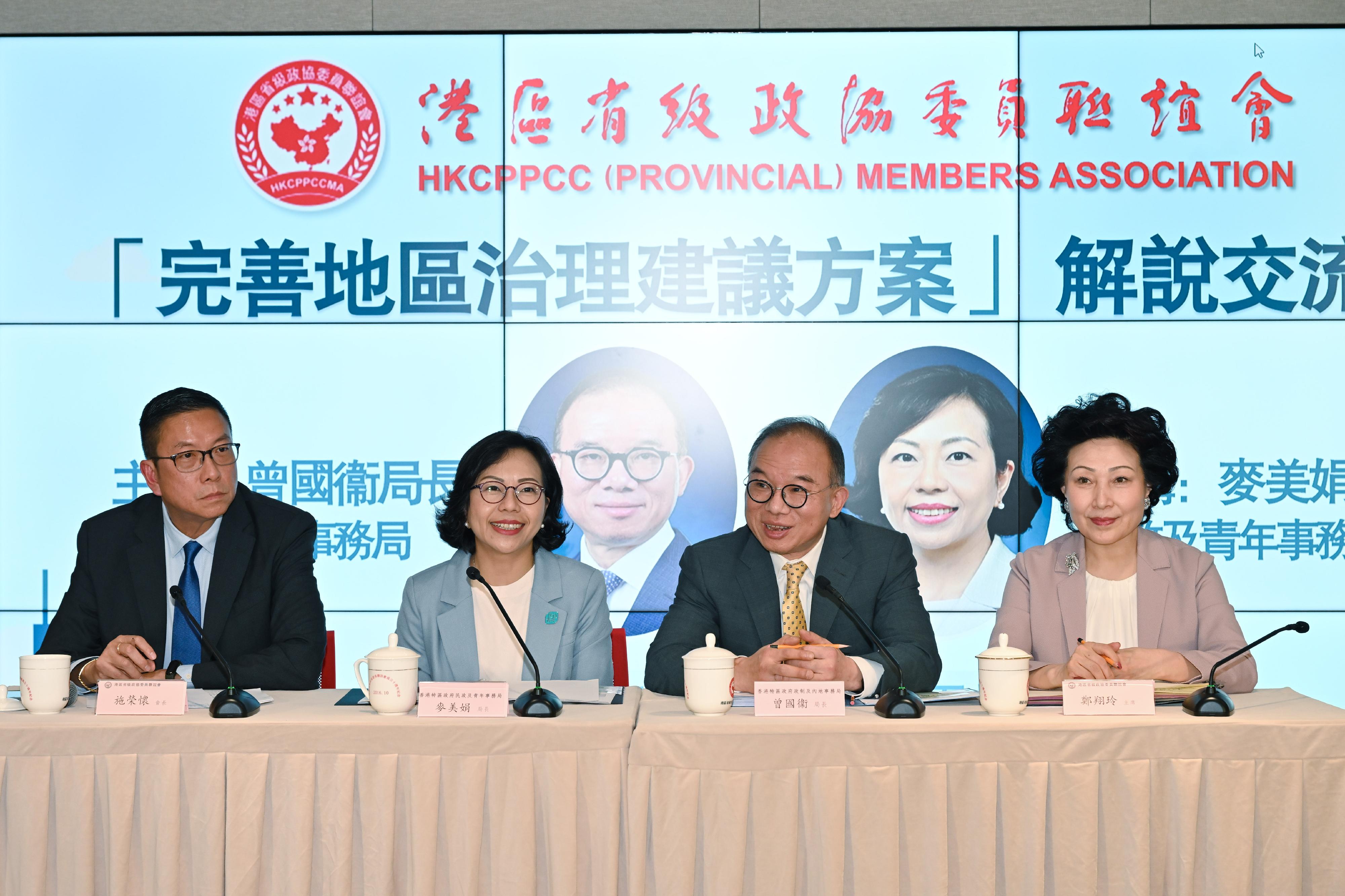
     The Government has commenced explanatory and publicity work for various sectors after the announcement of the proposals on improving governance at the district level on May 2. The Secretary for Constitutional and Mainland Affairs, Mr Erick Tsang Kwok-wai, and the Secretary for Home and Youth Affairs, Miss Alice Mak, today (May 25) continued to explain the proposals to Hong Kong members of provincial committees of the Chinese People's Political Consultative Conference.

     Mr Tsang and Miss Mak said at the briefing session that the majority of the public support the proposals on improving governance at the district level and endorse the three guiding principles of the proposals: national security must be put as the topmost priority and the "one country, two systems" principle must be fully and faithfully implemented to ensure the effective and sustained implementation of the systems prescribed by the Constitution and the Basic Law, including the district advisory bodies which are not organs of political power formed in accordance with Article 97 of the Basic Law; the principle of "patriots administering Hong Kong" must be fully implemented; and executive-led governance must be manifested. The Government is confident of having firm control of governance at the district level and grooming strong and abled service teams, so as to increase its capability to mobilise the community.

     The two Directors of Bureaux thanked members for attending the briefing session and for speaking overwhelmingly in support of the proposals and providing valuable advice. The two Directors of Bureaux also encouraged them to proactively brief various sectors of the community to continue garner understanding and support from different sectors of the community.

     The Government will introduce a Bill into the Legislative Council (LegCo) as soon as possible to implement the proposed reformation of the District Councils (DCs) in the proposals on improving governance at the district level. The Government targets to secure the LegCo's passage of the Bill before the summer recess of the LegCo so that the District Council Ordinary Election can be held at the end of this year and the seventh-term DCs can take office on January 1 next year.
Photo  


S for S continues Guangdong-Hong Kong-Macao Greater Bay Area visit in Dongguan and Huizhou (with photos)

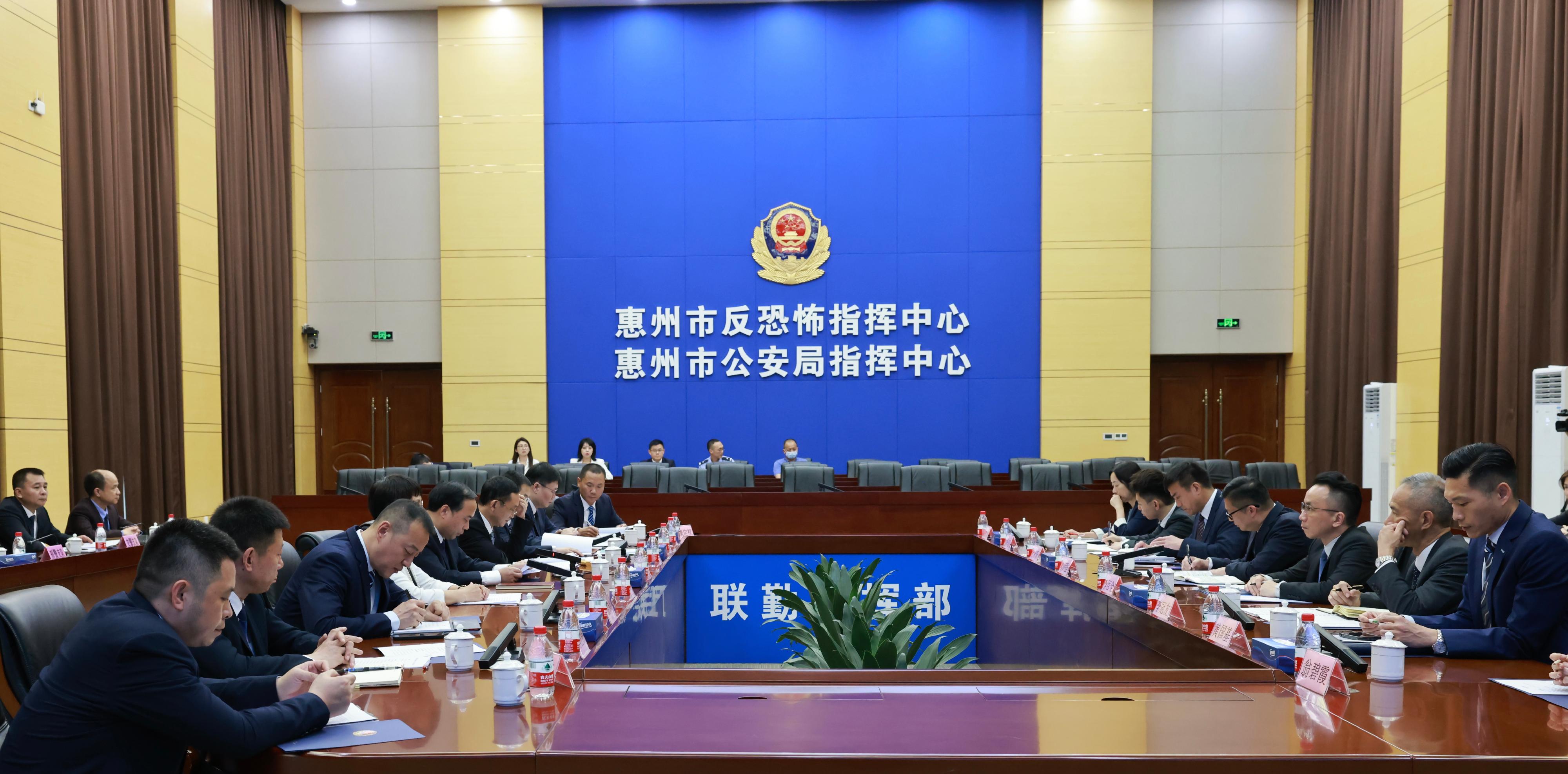
     The Secretary for Security, Mr Tang Ping-keung, continued his visit to the Guangdong-Hong Kong-Macao Greater Bay Area (GBA) today (May 25). He completed the visit programme in Dongguan this morning and travelled to Huizhou in the afternoon to call on public security and emergency management units.
 
     Upon arrival in Huizhou in the afternoon, Mr Tang called on the Vice Mayor of Huizhou cum Director-General of Huizhou Municipal Public Security Bureau, Mr Chen Haibo, to exchange views on issues such as facilitating the flow of talent, emergency management as well as fire services and rescue. Mr Tang expressed his gratitude to Huizhou Municipal Public Security Bureau for maintaining close ties and co-operation with Hong Kong's Security Bureau and its disciplined services. He introduced the new Greater Bay Area Emergency Response Operational Plan formulated by the Hong Kong Special Administrative Region Government for enhancing the capability of GBA cities in handling incidents together to Mr Chen and deputy head of Huizhou Municipal Emergency Management Bureau Mr Li Zhengcheng who was also in attendance.
 
     During his stay in Dongguan and Huizhou, Mr Tang visited Huawei's terminal headquarters in Songshan Lake of Dongguan and the TCL Technology Group Corporation's headquarters in Huizhou to learn about the cutting-edge technologies and equipment of the two leading high-technology enterprises. He also learned about the technical knowledge related to law enforcement and emergency management of the disciplined forces to explore the enhancement of service and law enforcement capabilities with innovation and technology.
 
     Mr Tang concluded the two-day visit to Guangzhou, Dongguan and Huizhou, and returned to Hong Kong in the evening.

Photo  Photo  Photo  


CHP follows up on cluster of Candida auris carrier cases

     The Centre for Health Protection (CHP) of the Department of Health is today (May 25) following up on a cluster of Candida auris carrier cases involving a total of four residents from a residential care home for the elderly (RCHE) in Tsuen Wan, and reminded members of the public about the proper use of antimicrobials and maintaining personal hygiene against infection.

     The CHP received notification from the Hospital Authority on May 9, 22, and 24 respectively that three residents (one male and two females) of that RCHE, who were admitted to Princess Margaret Hospital or Yan Chai Hospital (YCH), were confirmed to have carried Candida auris upon testing. The trio with underlying illnesses, aged between 73 and 93, have no symptoms of infection. Two of them have been discharged.

     Upon receiving the notification, the CHP conducted follow-up epidemiological investigation against the RCHE including carrying out contact tracing and screening for contacts. It was found that a 78-year-old male resident, who had multiple admissions to YCH from November last year to January this year, has earlier been confirmed to have carried Candida auris upon testing. He is now in a stable condition and was discharged. The CHP is now investigating the infection source of the cluster and carrying out contact tracing and screening. The possibility of transmission in the RCHE is not ruled out.

     The CHP has provided infection control advice and staff training to staff of the RCHE. The RCHE is advised to follow the prevailing guidelines to enhance infection control measures including specific placement of carrier residents, strict observation of infection control precautions, enhancement of environmental cleansing and disinfection, use of dedicated medical equipment, toilet and bathing facilities to prevent the spread of Candida auris. The CHP will keep in close liaison with the RCHE concerned and monitor the situation of the residents, and ensure the RCHE has carried out the various infection control measures.

     A spokesman for the CHP explained that Candida is a fungus commonly found in the natural environment, particularly in moist and warm environments. In humans, it is commonly found in body sites such as the oral cavity, the digestive tract, skin and the vagina. It is a common fungus living on or in the human body but can occasionally cause infections, especially in individuals with impaired immunity.

     â€‹Among the different candida species, Candida auris is more drug-resistant. Infections vary from being mild to potentially life-threatening or fatal, depending on which part of the body is affected and the general health condition of the patient. ​The spokesman stressed that proper use of antimicrobials and maintaining personal hygiene, especially hand hygiene, are crucial to the prevention of emergence and cross-transmission of Candida auris.


Housing Bureau holds briefing session on operation of Light Public Housing (with photos)

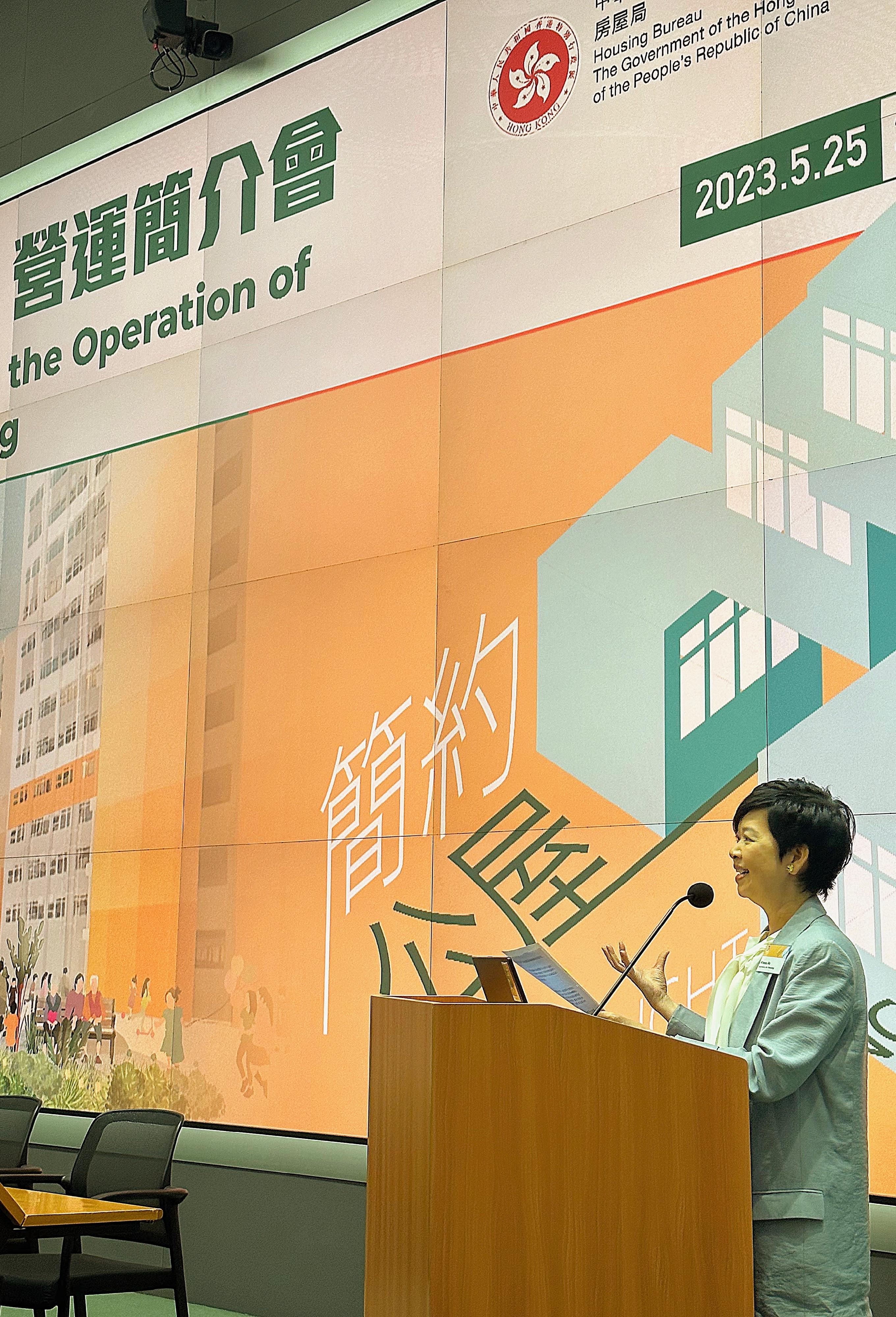
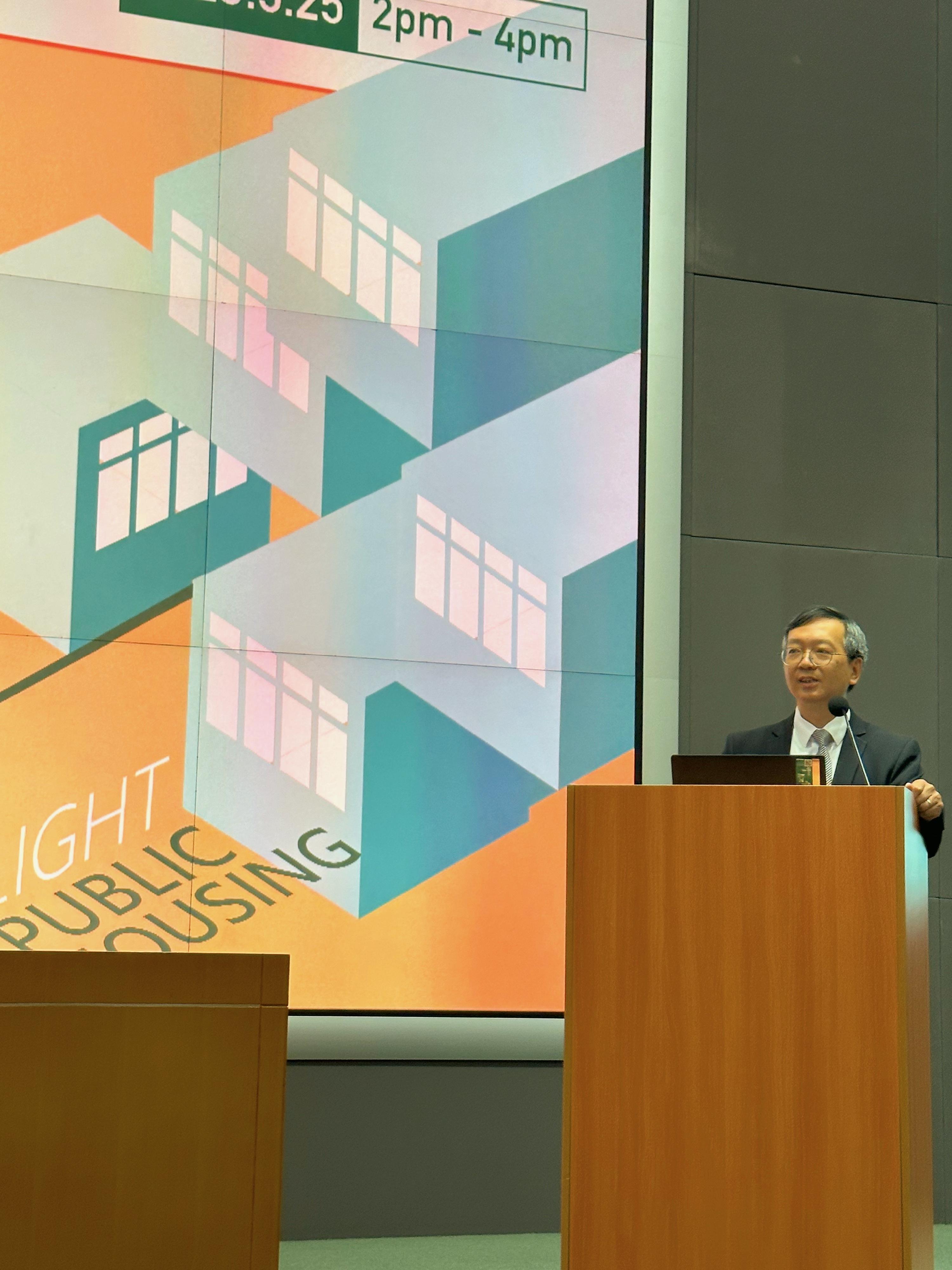
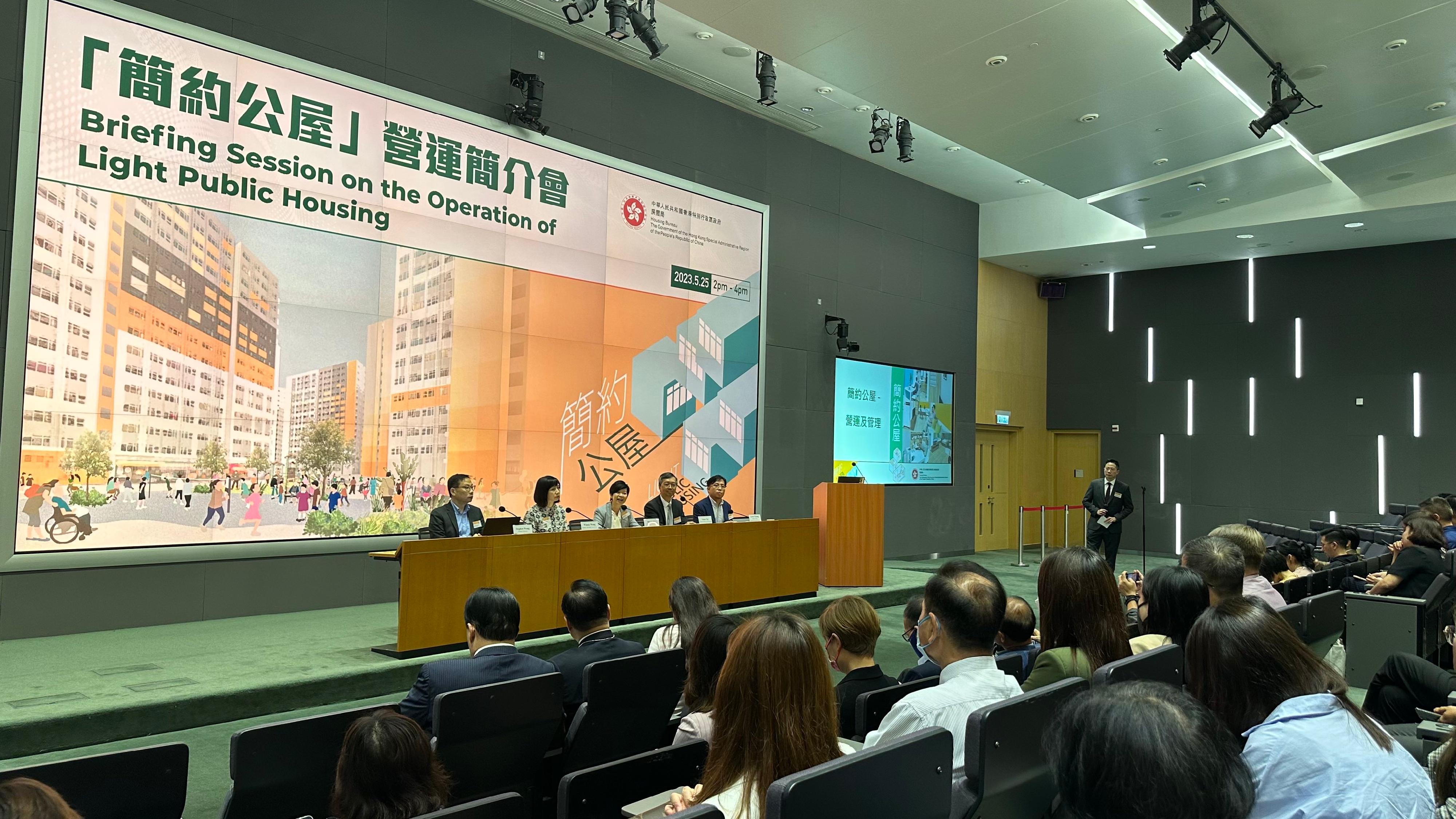
     The Housing Bureau (HB) held a briefing session this afternoon (May 25) on the operation of Light Public Housing (LPH). Organisations that are interested in the operation were briefed on the operation and management plan of LPH, as well as the tender process of the operation contracts. The briefing session also provided a platform for the organisations to exchange views and share comments.
 
     Representatives from over 60 non-government organisations (NGOs) and property service agents attended the briefing session. The Secretary for Housing, Ms Winnie Ho, said at the briefing session that drawing reference from the experience of transitional housing, apart from spearheading the construction of LPH projects, the Government would take one step further to take the lead in the operation and management of LPH.
 
     Operating organisations, commissioned through open tenders, have to follow the criteria set by the Government to allocate flats; handle day-to-day tenancy matters; operate and manage the facilities of respective projects; provide various social services to tenants; and arrange the moving-out of tenants when a project ends, etc.
 
     Apart from the tender price, the HB places equal emphasis on the management capability, relevant experience and past service performance of the tenderers, as well as the proposed operation and management modes in their proposals. The Government will decide on the most suitable organisations for operating LPH through assessment based on a number of factors.
 
     In the coming five years (i.e. from 2023-24 to 2027-28), the Government plans to build about 30 000 LPH units. The tendering exercises for the first four LPH projects (located at Yau Pok Road, Yuen Long; Choi Hing Road, Ngau Tau Kok; Tuen Mun Area 3A; and Olympic Avenue, Kai Tak respectively) are expected to start by phases from the first quarter of 2024 at the earliest. For individual projects of larger scale, the contracts will be split into smaller ones as appropriate.
 
     The HB hopes that LPH not only improves the living conditions of people residing in inadequate housing soon, but also gathers different stakeholders in society, through operating LPH projects, to work with the Government to further enhance the living standard of the underprivileged and build a more harmonious, inclusive and caring community.

Photo  Photo  Photo  


Update on dengue fever

     The Centre for Health Protection (CHP) of the Department of Health today (May 25) reported the latest number of dengue fever (DF) cases, and urged the public to maintain strict environmental hygiene, mosquito control and personal protective measures both locally and during travel.

     From May 19 to yesterday (May 24), the CHP recorded one imported DF case. The patient had been to Indonesia during the incubation period.

     As of yesterday, 10 imported cases of DF had been recorded in 2023. In 2022, 26 imported cases of DF were recorded.

     The latest surveillance data shows that there is an increase in DF cases noted in some countries and areas in Southeast Asia and South America compared to the same period last year, and the trend is rising. Members of the public, while travelling abroad, should stay vigilant and carry out effective mosquito prevention and control measures. Detailed information on the latest DF situation in Hong Kong, as well as neighbouring and overseas countries and areas, has been uploaded to the CHP's website (www.chp.gov.hk/files/pdf/df_imported_cases_and_overseas_figures_eng.pdf).

     "Apart from general measures, travellers returning from areas affected by DF should apply insect repellent for 14 days upon arrival in Hong Kong. If feeling unwell, seek medical advice promptly and provide travel details to the doctor," a spokesman for the CHP said.

     The public should take heed of the following advice on mosquito control:
 

  • Thoroughly check all gully traps, roof gutters, surface channels and drains to prevent blockage;
  • Scrub and clean drains and surface channels with an alkaline detergent compound at least once a week to remove any deposited mosquito eggs;
  • Properly dispose of refuse, such as soft drink cans, empty bottles and boxes, in covered litter containers;
  • Completely change the water of flowers and plants at least once a week. The use of saucers should be avoided if possible;
  • Level irregular ground surfaces before the rainy season;
  • Avoid staying in shrubby areas; and
  • Take personal protective measures such as wearing light-coloured long-sleeved clothes and trousers and apply insect repellent containing DEET to clothing or uncovered areas of the body when doing outdoor activities.

     â€‹DEET-containing insect repellents are effective and the public should take heed of the tips below:
 

  • Read the label instructions carefully first;
  • Apply right before entering an area with risk of mosquito bites;
  • Apply on exposed skin and clothing;
  • Use DEET of up to 30 per cent for pregnant women and up to 10 per cent for children*;
  • Apply sunscreen first, then insect repellent; and
  • Re-apply only when needed and follow the instructions.

* For children who travel to countries or areas where mosquito-borne diseases are endemic or epidemic and where exposure is likely, those aged 2 months or above can use DEET-containing insect repellents with a DEET concentration of up to 30 per cent.

     The public should call 1823 in case of mosquito problems and may visit the following pages for more information: the DF page of the CHP and the Travel Health Service, the latest Travel Health Newstips for using insect repellents, and the CHP Facebook Page and YouTube Channel.