Landlord convicted of overcharging subdivided unit tenant for water

     A landlord was convicted today (May 31) of overcharging his subdivided unit (SDU) tenants for water, in contravention of regulation 47 of the Waterworks Regulations (WWR). The landlord pleaded guilty to two offences at the Kowloon City Magistrates' Courts and was fined $1,800 and $2,000 for each contravention, for a total fine of $3,800. 
      
     The Water Supplies Department (WSD) received a complaint in November 2022 concerning overcharging SDU tenants for water of a flat on Yee Kuk Street, Sham Shui Po, Kowloon. Upon completion of the investigation and evidence collection, prosecution was initiated against the person who contravened the relevant regulation. 
           
     The WSD has been making proactive inspections and instituting prosecutions against illegal acts of overcharging SDU tenants for water. This is the eighth similar conviction case since the first conviction in June 2022, with the associated fines ranging from $1,000 to $5,000.
 
      According to the amended regulation 47 of the WWR, the registered consumer of the water account (usually the landlord) is only allowed to recover from the occupants of the premises (usually the tenants) the water charge paid to the WSD. If the amount recovered exceeds the water charge paid to the WSD, the registered consumer shall be guilty of an offence and be liable to a maximum fine of $10,000.
      
      A WSD spokesman said that the Government is committed to combating illegal acts through an inter-departmental and multi-pronged approach. In addition to stepping up inter-departmental joint inspections and improving the application procedures for the installation of separate water meters, publicity and education efforts have also been strengthened, with a view to enhancing the deterrent effect in preventing SDU tenants from being overcharged for water by the landlord.
      
      The spokesman mentioned that the WSD has launched a scheme and streamlined procedures to help the landlords install separate water meters for SDUs. To encourage landlords' participation in the scheme, payment of the water fee deposit and the charge for providing a meter for each separate water meter installed under the scheme will be waived. Every such water meter account will have a separate water bill for paying water charge, and the first 12 cubic metres of water consumed for each four-month period will be free of charge.
      
      While applications for installing separate water meters in SDUs are to be submitted by the landlords, the SDU tenants can also make a request directly to the WSD. The department will then approach the landlords concerned for follow-up actions and provide appropriate technical support. Details of the scheme can be obtained from the WSD's website.
      
      The WSD encourages the public to report any illegal act of overcharging SDU tenants for water to the WSD for follow-up and investigation. A WhatsApp hotline 5665 5517 has been set up to handle matters related to water overcharging in SDUs and installation of separate water meters for SDUs. Alternatively, the public can also call the WSD's Customer Enquiry Hotline 2824 5000 to report water overcharge cases. After calling the hotline and choosing a language, they can press "7" for reporting to staff directly.


Shipping Legislation (Electronic Certificates and Electronic Log-books) (Amendment) Bill 2023 to be gazetted on Friday

     The Shipping Legislation (Electronic Certificates and Electronic Log-books) (Amendment) Bill 2023 will be published in the Gazette this Friday (June 2) to amend seven pieces of shipping legislation, namely Merchant Shipping (Safety) Ordinance (Cap. 369), Merchant Shipping (Prevention and Control of Pollution) Ordinance (Cap. 413), Merchant Shipping (Liability and Compensation for Oil Pollution) Ordinance (Cap. 414), Merchant Shipping (Registration) Ordinance (Cap. 415), Merchant Shipping (Seafarers) Ordinance (Cap. 478), Merchant Shipping (Security of Ships and Port Facilities) Ordinance (Cap. 582) and Bunker Oil Pollution (Liability and Compensation) Ordinance (Cap. 605), to facilitate the use of electronic certificates/licences/permits (collectively referred to as e-certs) and electronic log-books (e-logbooks) for Hong Kong-registered ships which are ocean-going vessels under the Hong Kong Shipping Register and seafarers.  

     The use of e-certs and e-logbooks for Hong Kong-registered ships and seafarers was announced in the Chief Executive's 2022 Policy Address, with a view to enhancing the efficiency of marine services and reducing the workload of seafarers, which is also in line with the trend of digitalisation in the maritime sector.

     A spokesman for the Transport and Logistics Bureau today (May 31) said, "As an international shipping centre, Hong Kong has been implementing measures on various fronts to strengthen marine and shipping services. The current legislative amendments will further improve the services of the Hong Kong Shipping Registry, which is the fourth largest register in the world in terms of gross tonnage, by providing a higher degree of convenience to shipowners in applying for and receiving certificates and facilitating the recording of vessels activities by seafarers."

     The Panel on Economic Development of the Legislative Council (LegCo), the Hong Kong Fleet Operation Advisory Committee and the Seafarers' Advisory Board of the Marine Department have been consulted. Members supported the proposal. 

     The Bill will be introduced into the LegCo on June 7.


LCQ18: Planning for primary and secondary school places

     Following is a question by Dr the Hon Chow Man-kong and a written reply by the Secretary for Education, Dr Choi Yuk-lin, in the Legislative Council today (May 31):
 
Question:
 
     Regarding the planning for public sector (including government and aided) and Direct Subsidy Scheme (DSS) primary and secondary school places, will the Government inform this Council:
 
(1) of the respective numbers of public sector and DSS primary and secondary schools which have ceased or will cease operation, have been or will be merged or reprovisioned in each of the past three school years and the coming school year, and set out in Table 1 the following information of such schools by the three regions, namely Hong Kong Island, Kowloon and the New Territories, as well as District Council district: (i) name, (ii) school sponsoring body, (iii) school's founding year, and (iv) their (a) number of classes, (b) total number of students and (c) total number of teachers and school staff in the school year preceding the cease of operation, merger or reprovisioning;
 
Table 1 Year:               

Region District Council district (i) (ii) (iii) (iv)
(a) (b) (c)
Hong Kong Island              
             
Kowloon              
             
New Territories              


(2) of the respective numbers of public sector and DSS primary schools operating only one Primary One class in each of the past three school years and the coming school year, and set out in Table 2 the following information of such schools by the three regions, namely Hong Kong Island, Kowloon and the New Territories, as well as District Council district: (i) name, (ii) school sponsoring body, (iii) school's founding year, and (iv) their (a) number of classes, (b) total number of students and (c) total number of teachers and school staff in the past school year;
 
Table 2 Year:               

Region District Council district (i) (ii) (iii) (iv)
(a) (b) (c)
Hong Kong Island              
             
Kowloon              
             
New Territories              


(3) whether it has assessed the respective demands for secondary school places in various districts in each of the coming three school years; if so, of the figures concerned; if not, the reasons for that;
 
(4) regarding the students affected by schools which have ceased operation or merged, whether a mechanism is in place to arrange for their transfer to other public sector or DSS primary and secondary schools in the same district to continue their studies; if so, of the details; if not, the reasons for that;
 
(5) regarding the teachers affected by schools which have ceased operation or merged, whether a mechanism is in place to assist them in transferring to other public sector or DSS primary and secondary schools to continue working as teachers, thereby retaining talents for the sector; if so, of the details; if not, the reasons for that; and

(6) whether a mechanism is in place to assist the public sector and DSS primary schools which have failed to receive public funding to operate Primary One classes in transforming into vocational training centres designed for persons with special educational needs, community education centres for providing employees retraining courses, or universities' learning centres in urban areas; if so, of the details; if not, the reasons for that?
 
Reply:
 
President,
 
     Based on the population projections, it is anticipated that the continuous decrease in future school-age population is structural rather than transient. Therefore, with top priority accorded to the interests of students and aiming for a "soft landing", the Education Bureau (EDB) will adopt long-term measures in planning for public sector primary and secondary school places. We encourage and support school sponsoring bodies (SSBs) and schools, in the interest of the society at large, to make early plans and to consolidate resources in an orderly manner, so as to ensure a healthy and sustainable education ecosystem. In the meantime, we have to take account of the pace of development in different communities in a holistic manner and grasp the opportunity to redeploy and optimise resources, focusing on enhancing the overall education quality in meeting the various educational needs of students.
 
     Our reply to Dr the Hon Chow Man-kong's question is as follows:
 
(1) and (2) In the 2020/21 to 2023/24 school years, the details of schools which ceased operation, merged or reprovisioned are set out at Annex 1. The number of public sector primary schools operating one class at Primary 1 (P1) level in the 2020/21 to 2022/23 school years is tabulated at Annex 2, while the number for the 2023/24 school year is subject to the actual student enrolment in the student headcount in September 2023.
 
     Since the number of classes, total number of students and total number of staff members in the previous school year of a school ceasing operation, merging, being reprovisioned or operating one class at P1 level does not reflect the general situation of the school, it is not appropriate to provide such information to avoid misunderstanding. Besides, the EDB does not keep information on the year of establishment of schools.
 
(3) As the fertility rate in Hong Kong is decreasing continuously in recent years, a structural decline in the overall school-age population in the territory has been shown. The annual demand for public sector secondary school places is affected by a number of factors, including the number of cross-boundary students, the number of school-age newly-arrived children, the impacts of various talent admission schemes and initiatives, as well as the wastage of students between school years (such as students transferring to private schools or pursuing studies overseas or in the Mainland), etc. According to the latest projected demand for school places, including by referencing the number of primary school students in the corresponding school years (i.e. the number of Primary 4 to Primary 6 students this year who will progress to Secondary One (S1) in the next three school years), the demand for S1 school places is expected to increase slightly in 2024, and to decrease continuously starting from 2025. The provision of public sector secondary school places is planned on a territory-wide basis, and the age distribution of population in different school nets is uneven. Based on past experience, there is movement of people between districts from time to time, the demand for school places will fluctuate between school years, and even within the same school year. We will closely monitor the demographic changes in student population and conduct dynamic assessment of the demand and supply of S1 school places. Please see Annex 3 for the number of students in primary schools by region, District Council district and grade in the 2022/23 school year.
 
(4) The EDB has kept reminding parents through different channels that when choosing a school for their children, they should first identify children's characteristics, personalities, abilities and interests, and then consider various factors such as the sponsoring body, location, characteristics, etc, of a school. Parents may obtain information of schools and be updated on the latest school news through the school websites and the Primary School Profiles or Secondary School Profiles in order to help them choose a suitable school for their children.
 
     In respect of primary schools not being able to operate subsidised P1 classes, the EDB will take the initiative to contact the parents whose children have been offered a P1 place by these schools at the Discretionary Places Admission Stage to explain the situation and arrange an alternative P1 place for their children. Parents may select another school from the school lists provided by the EDB or participate in the Central Allocation for their children. During the process, the EDB will maintain close communication with the parents concerned and provide appropriate and timely assistance to cater for the special circumstances and needs of individual parents as far as practicable.
 
     When a public sector school ceases operation, the EDB will also provide placement service for current students to let them complete their primary or secondary education in other public sector schools. Students who have completed Secondary 3 could pursue senior secondary education in other subvented schools through participating in Central Placement.
 
(5) The EDB has all along been committed to maintaining a stable teaching profession of high quality. Schools would employ teachers according to established mechanism to fill the teaching vacancies arising from retirement, pursuing further studies, changing schools, taking up employment outside the teaching profession, and leaving the post due to other personal reasons. If there are redundant or surplus teachers arising from changes in the development planning of or the numbers of classes in aided primary and secondary schools, we will encourage sponsoring bodies and the schools concerned to absorb these teachers as far as possible to fill teaching vacancies in schools under the sponsorship of the same sponsoring bodies and the schools. In tandem, to facilitate redundant teachers to find teaching posts in other aided primary schools, primary schools are required to report all vacancy information to the EDB for dissemination through the EDB's homepage for the reference of redundant teachers, so that they can apply to related schools for the posts. The EDB will continue to closely monitor the manpower situation of teachers in public sector schools to ensure the delivery of quality school education and continuous development of teachers. 
 
(6) Under the established Central Clearing House mechanism for vacant school premises sites, the EDB will review the vacant or to-be-vacant school premises' suitability for school use having regard to factors including the size, location, physical conditions, etc, of the premises, as well as the educational needs and relevant policy measures. Upon confirming that such school premises are not required to be retained for school use, the EDB will, in accordance with the mechanism, release the sites for the Planning Department’s consideration of suitable alternative long-term uses. The Planning Department will regularly update the list of vacant school premises sites reviewed on its website. Non-governmental organisations or social enterprises may apply to the Lands Department or the departments managing the sites for use of the sites for community, institutional or non-profit making purposes on a short-term tenancy.
 
     In the past, there have been cases that certain vacant school premises sites were converted to other uses such as tertiary education and vocational training after being reviewed under the mechanism. Examples include the former school premises of North Point Methodist Primary School and Pui Shing Catholic Secondary School, which were allocated to the Education University of Hong Kong and the Vocational Training Council for operating an educational centre and a vocational training centre respectively.


LCQ3: Animal release activities

     Following is a question by the Hon Steven Ho and a reply by the Secretary for Environment and Ecology, Mr Tse Chin-wan, in the Legislative Council today (May 31):

Question:

     There are views that the situation of some members of the public releasing animals casually, including releasing animals into unsuitable habitats, as well as releasing aggressive, alien or cross-bred species, has not improved over the years, raising doubts that the existing legislation cannot achieve any deterrent effect. In this connection, will the Government inform this Council:
 
(1) given that the Agriculture, Fisheries and Conservation Department has publicised through posters the impacts that may be bought about by animal release, and appealed to members of the public to consider taking other virtuous actions in lieu of animal release, such as tree-‍planting, making donations and participating in voluntary services, whether the Government has assessed the effectiveness of the relevant publicity and education work, including the number of relevant reports received, the respective numbers of persons arrested, prosecuted and convicted, as well as the trend of such figures, in each of the past three years;
 
(2) given that while the last-term Government proposed introducing offences in relation to "release or abandonment of animals leading to unnecessary suffering" under the Prevention of Cruelty to Animals Ordinance, there are views that such proposal neither targets at the problem of casual animal release nor the impacts of the relevant activities on the ecology, whether the Government will amend the Ordinance by following the practice of "scientific animal release" as advocated by the country and drawing reference from the country's Provisions on the Propagation and Release of Aquatic Organisms; and

(3) whether it will consider regulating animal release activities and promoting scientific animal release, such as requiring members of the public to conduct animal release activities through organisations which are permitted to undertake or host scientific animal release or restocking activities?

Reply:

President,

     Improper release of animals, including placing animals in an unsuitable habitat, such as releasing freshwater species into the sea, might cause unnecessary suffering to those animals or even deaths. If the released species is an alien species or is incompatible with the local ecology, or may compete for resources with the native species, the local ecology may be adversely affected. According to the Prevention of Cruelty to Animals Ordinance (Chapter 169), any person who improperly releases an animal and causes unnecessary suffering to the animal, will be liable on conviction to a maximum fine of $200,000 and imprisonment for three years.
 
     On the questions raised by Hon Steven Ho, we would like to reply as follows:
 
(1) Due to religious beliefs and cultural tradition, animal release activities have been common in Hong Kong for many years. The Agriculture, Fisheries and Conservation Department (AFCD) has all along been collaborating with organisations which are concerned about animal release activities, including the Kadoorie Farm and Botanic Garden, the Society for the Prevention of Cruelty to Animals and the Hong Kong Society of Herpetology Foundation, to enhance public education, reminding the public to carefully consider how to arrange, choose and operate before participating in animal release activities, to avoid causing unnecessary suffering to animals or affecting the ecology and environment. In addition to placing relevant posters advocating against animal release on public transport, the AFCD displays promotional banners at release hotspots such as streams, temples, parks under the Leisure and Cultural Services Department and public ferry piers etc. The AFCD will also inspect these hotspots and conduct publicity during certain festivals when release activities are more prevalent, to ensure animal release activities do not cause unnecessary suffering to animals.

     Furthermore, the AFCD proactively liaises with major religious groups to discuss possible impact of animal release on animal welfare and local environment and ecology, and jointly recommend the public to consider other virtuous actions and living habits in lieu of animal release, such as environmental protection, tree planting, forest protection, vegetarianism and conservation etc. Appeals are also made to worshippers to avoid improper animal releases, since not only would they harm animal welfare and affect the local ecology, such activities would also deviate from the original intentions of religious animal release.

     According to the AFCD's observations, the aforementioned publicity and education work has been successful to a certain extent. Animal release practices by the public have changed in recent years and such activities are not as prevalent as before. Past common practices of releasing freshwater animals into the sea are no longer common. Animal release activities are now usually conducted during certain religious festivals at some hotspots, such as piers, streams and ponds etc. The released species are common seafood and turtles etc. These activities generally do not amount to animal welfare problems. The AFCD staff conducted inspection and public education at animal release hotspots during the recent Buddha's Birthday, and no cases related to animal cruelty were found. From the perspective of conservation, since species currently released are generally some common seafood and turtles etc, there is no sign of significant adverse impact caused by animal release activities on the local ecology.

     From 2020 to 2022, the number of complaints received by the AFCD were two, 11 and one respectively. Nobody was arrested for releasing animals and thus committing the animal cruelty offence.

(2) and (3) Although our publicity and education work has attained certain results in reducing improper animal releases, the Government believes there is still room for further improvement. In addition to continuously enhancing public education, we plan to further reduce improper animal releases through two approaches. In terms of animal welfare, we plan to amend the Prevention of Cruelty to Animals Ordinance (the Ordinance), to specify that the release or abandonment of an animal which causes it to suffer, such as releasing freshwater fish or turtles into the sea which is an unsuitable habitat, is an act of cruelty to animals and an offence. We also plan to propose raising the penalties regarding cruelty acts to animals in order to increase deterrent effect. We are now pressing ahead with the preparation work for amending the Ordinance and expect that the proposed legislative amendments can be submitted to the Legislative Council for deliberation around the end of this year or early next year.

     On the other hand, we plan to further reduce traditional animal releases through promoting scientific restocking on trial basis. Restocking refers to the releasing of aquatic species in the sea and rivers, including adult fish and fish fry or even other species. This type of scientific restocking exercise can enhance fisheries resources and improve the marine and riverine environment.

     The AFCD already makes reference to the "Provisions on the Propagation and Release of Aquatic Organisms" formulated by the nation, when conducting restocking in suitable Hong Kong waters. In order to further reduce traditional animal releases, the AFCD will invite relevant religious groups and fishermen organisations to jointly explore the feasibility of engaging the public in restocking exercises organised and implemented by the Government, as well as guiding the public to participate in scientific restocking or other virtuous actions to replace traditional animal releases through education and publicities. The AFCD will identify suitable locations, including protected waters such as marine parks etc. to conduct a trial programme and invite relevant fishermen organisations, religious groups, other organisations which are concerned about animal release activities and the general public to try participating in restocking exercises. Specifically speaking, through suitable arrangements, we hope that the public can release animals that enhance fisheries resources and improve the marine and riverine environment at specified suitable locations, so as to achieve multiple wins. The AFCD will communicate with relevant organisations and make arrangements for the proposed trial programme.

     Thank you, President.
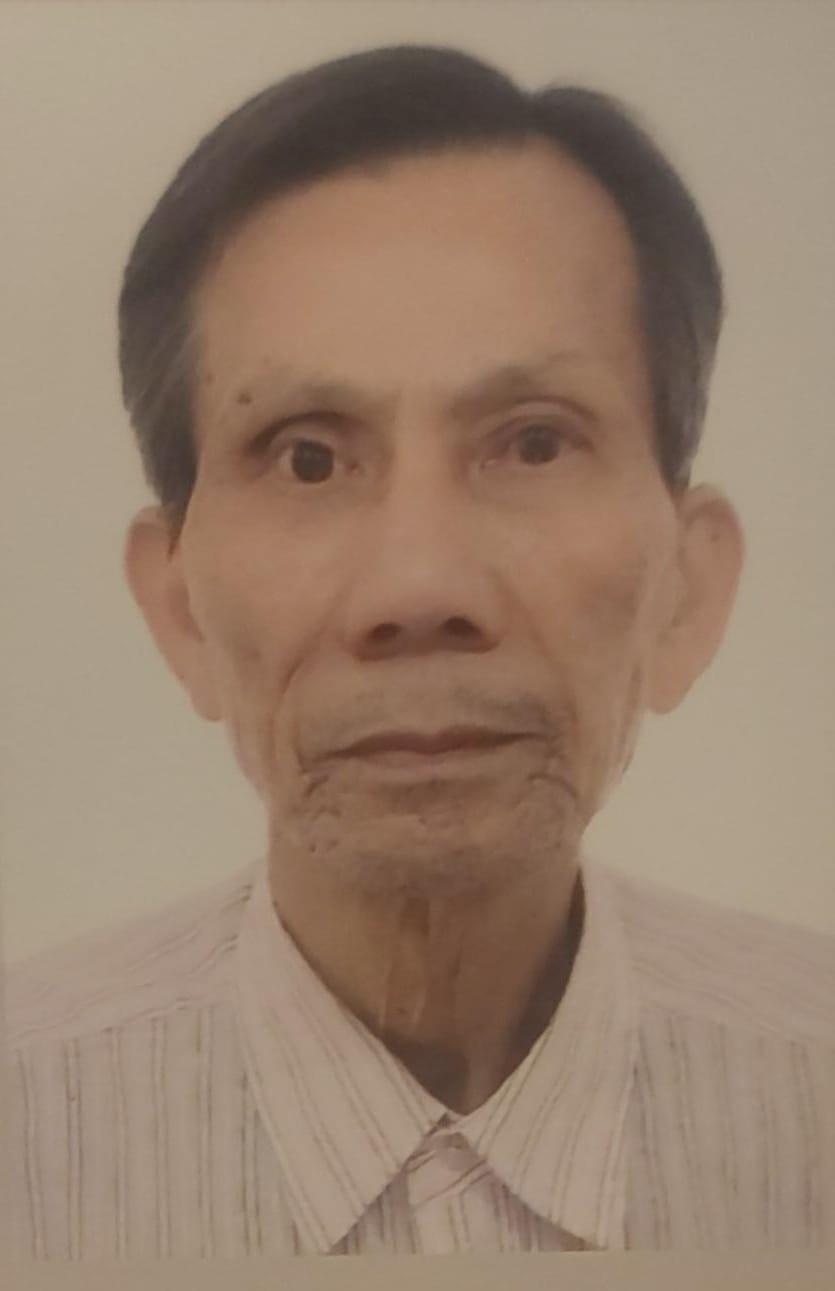


Appeal for information on missing man in Kwun Tong (with photo)

     Police today (May 31) appealed to the public for information on a man who went missing in Kwun Tong.

     Chong Tim-yu, aged 69, went missing after he left his residence in Lam Tin Estate yesterday (May 30) morning. His family made a report to Police on the same day.
         
     He is about 1.65 metres tall, 60 kilograms in weight and of thin build. He has a long face with yellow complexion and short grey hair. He was last seen wearing a white short-sleeved shirt, black trousers, black shoes and a light brown cap.
          
     Anyone who knows the whereabouts of the missing man or may have seen him is urged to contact the Regional Missing Persons Unit of Kowloon East on 3661 0335 or 9886 0060 or email to rmpu-ke-2@police.gov.hk, or contact any police station.

Photo