CMAB and HYAB continue to brief association representatives on proposals to improve governance at district level (with photo)

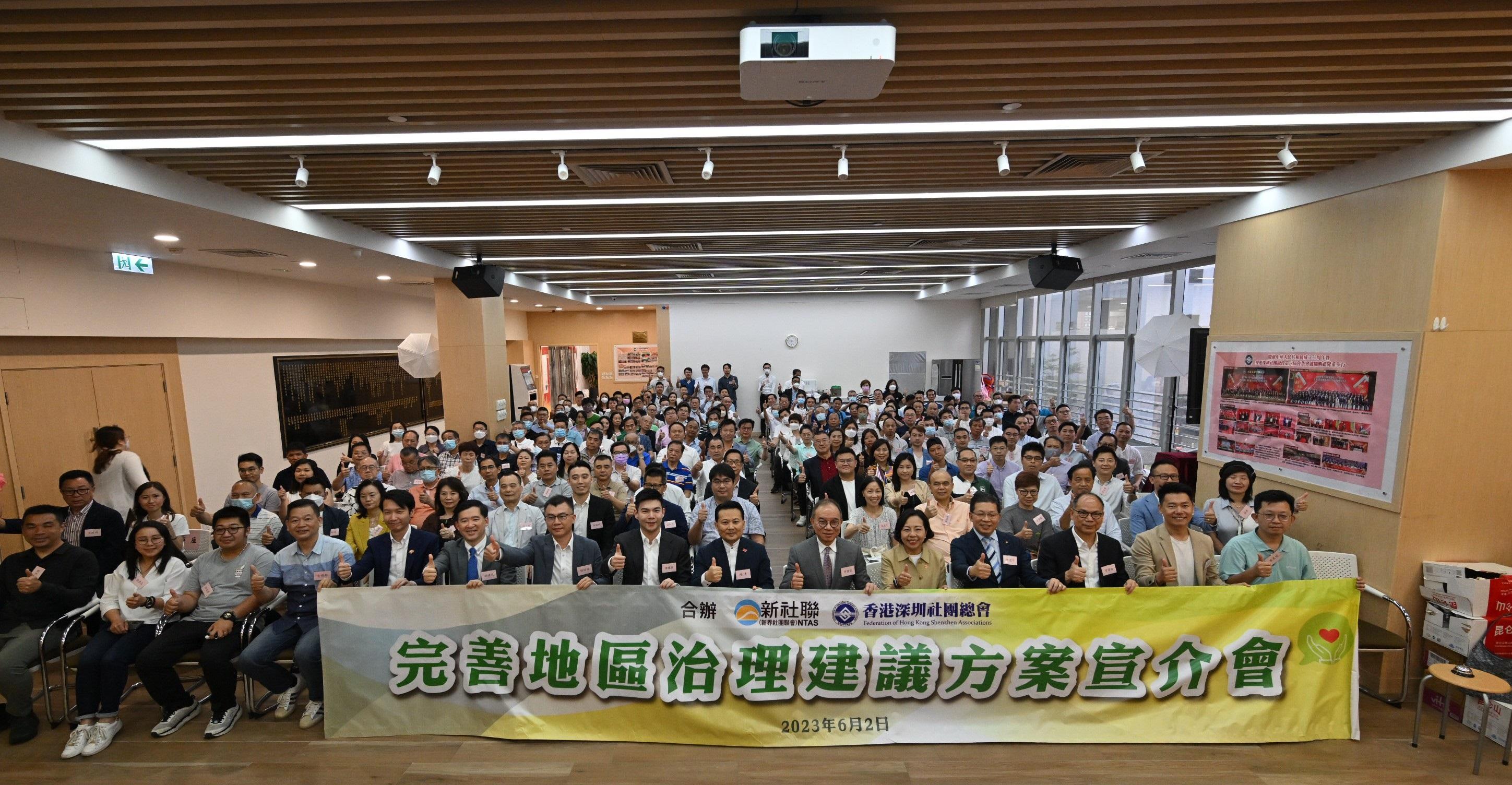
     Since the Government's announcement of the proposals on improving governance at the district level on May 2, the Secretary for Constitutional and Mainland Affairs, Mr Erick Tsang Kwok-wai, and the Secretary for Home and Youth Affairs, Miss Alice Mak, have been actively carrying out explanatory and publicity work for various sectors. The two Directors of Bureaux today (June 2) explained the proposals on improving governance at the district level to representatives of the New Territories Association of Societies and the Federation of Hong Kong Shenzhen Associations, and had in-depth discussions and exchanges with them.

     Mr Tsang and Miss Mak said that the majority of the public support the proposals and endorse the three guiding principles of the proposals: national security must be put as the topmost priority and the "one country, two systems" principle must be fully and faithfully implemented; the principle of "patriots administering Hong Kong" must be fully implemented; and executive-led governance must be manifested with firm control of governance at the district level and grooming strong and able service teams to increase the capability to mobilise the community.

     The two Directors of Bureaux also mentioned that the reformed District Councils (DCs) will revert to their positioning as district advisory and service organisations in accordance with Article 97 of the Basic Law. The proposals also enable the Government to co-ordinate district work more effectively, enhance efficacy of district governance and earnestly address people's concerns and difficulties in daily life, thereby increasing their sense of contentment and happiness, and leading the whole society to be more patriotic and fully support the administration of the Hong Kong Special Administrative Region Government.

     The attending association representatives spoke enthusiastically and gave constructive views on strengthening the district governance structure. The two Directors of Bureaux said that the two associations are reliable working partners of the Government and hoped that they will continue to explain and promote the advantages of the proposals to the public through various means, so as to deepen different sectors of the community's understanding of the proposals and mobilise the whole society to work together to promote the reformation work of district governance.

     The District Councils (Amendment) Bill 2023 has been introduced into the Legislative Council (LegCo) for the First Reading and the Second Reading. The Government will proactively facilitate the scrutiny of the LegCo and solicit support for the early passage of the Bill from Members of the LegCo, so that the DC Ordinary Election can be held at the end of this year and the seventh-term DCs can assume office on January 1 next year as scheduled.

Photo  


LegCo Panel on Administration of Justice and Legal Services visits the Judiciary (with photos)

The following is issued on behalf of the Legislative Council Secretariat:

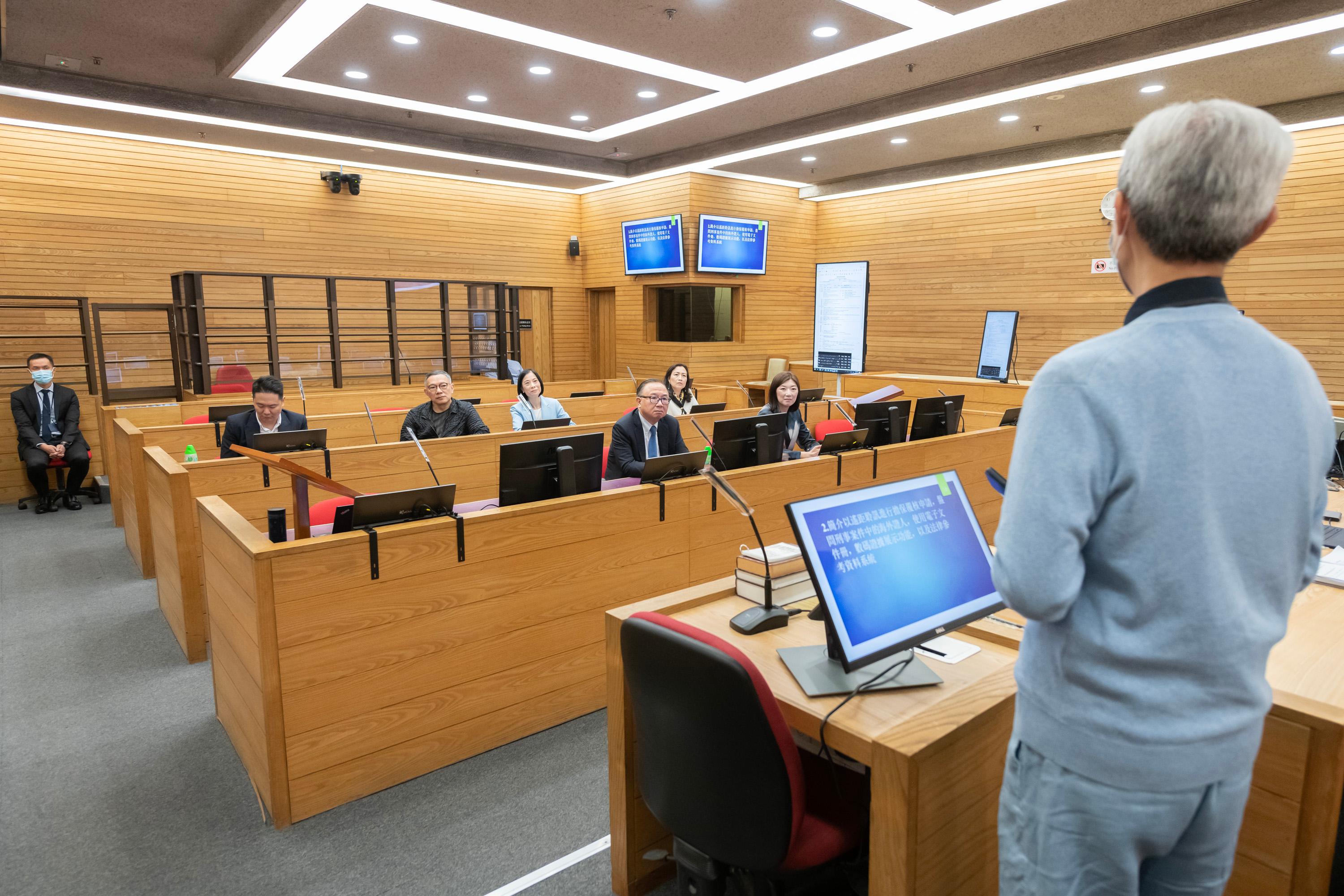
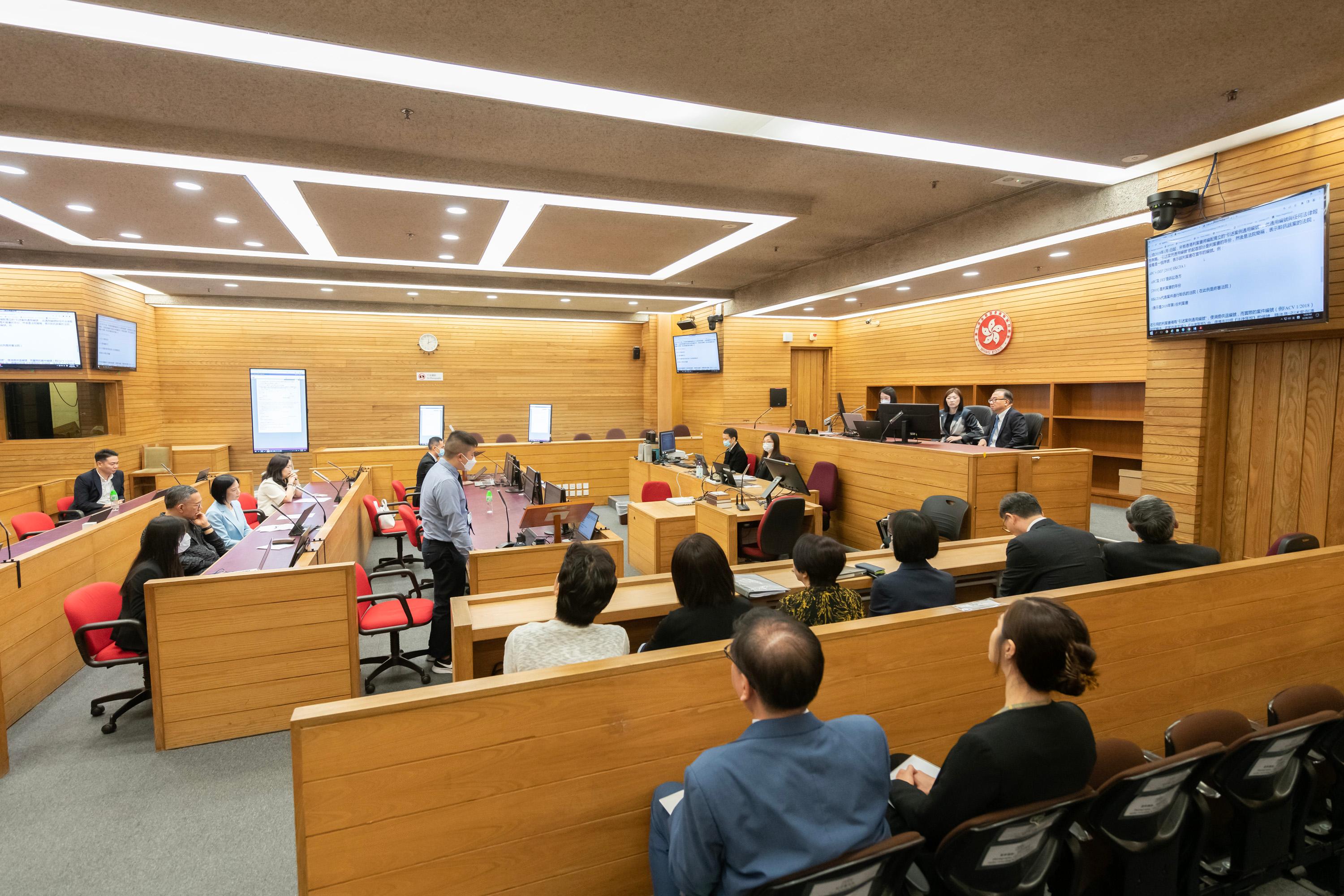
     The Legislative Council (LegCo) Panel on Administration of Justice and Legal Services visited the High Court Building today (June 2) to meet with members of the Judiciary and toured its facilities.

     Members first met with the Chief Justice of the Court of Final Appeal, Mr Andrew Cheung Kui-nung; the Chief Judge of the High Court, Mr Justice Jeremy Poon Shiu-chor; and the Judiciary Administrator, Ms Esther Leung Yuet-yin, to exchange views on issues of mutual concern relating to the Judiciary at the High Court Building. Topics included the latest development in the use of technology in the Judiciary, long time taken for the listing of cases in courts, shortage of judges and judicial officers and matters related to the Family Procedure Bill.

      Led by Chief Justice Cheung, Members then observed the demonstration on the application of various technology including the integrated Court Case Management System, remote hearing, e-bundles as well as digital evidence presentation and exhibits handling at court hearings. Members were shown how the efficiency of court operations and the transparency of court procedures have been enhanced by the greater use of technology in order to strengthen public confidence in the judicial process.

     Members who joined the visit were the Chairman of the Panel, Mr Martin Liao; the Deputy Chairman, Ms Yung Hoi-yan; and Panel members Mr Paul Tse, Mr Holden Chow, Mr Dennis Leung, Ms Maggie Chan and Ms Carmen Kan.

Photo  Photo  Photo  Photo  


LegCo Panel on Security visits correctional facilities (with photos)

The following is issued on behalf of the Legislative Council Secretariat:
 
     The Legislative Council Panel on Security visited five correctional facilities today (June 2) to enhance Members' understanding on the rehabilitation services provided by the Correctional Services Department (CSD) for young people in custody.
 
     Accompanied by the Commissioner of Correctional Services, Mr Wong Kwok-hing, Members visited Sha Tsui Correctional Institution, Lai Chi Rehabilitation Centre, Lai King Correctional Institution, Chi Lan Rehabilitation Centre and Pik Uk Correctional Institution respectively. They toured various detention, teaching and training as well as rehabilitation facilities at those institutions, including prison dormitories, the classroom for providing secondary school education, workshops for providing half-day vocational training courses (covering catering, creative media, hairstyling, pastry making, beauty care, building services, etc.), and the training restaurant.
 
     During the visit, representatives of the CSD shared with Members the diversified rehabilitation programmes it had designed to help young people in custody rehabilitate. These include its "Shall We Talk" broadcasting programme for youths and "Project PATH", which aims to enhance young people in custody's respect of the law through psychological rehabilitation and rebuilding at "Youth Lab". Members further learnt that the CSD had launched "Project JET" in October last year, a life planning project that provides more employment opportunities for young people in custody. Young people in custody also demonstrated their participation in Chinese-style foot drill and physical trainings to and shared their experiences with Members.
 
     Members also took the opportunity to discuss with the Administration about how to better support young people in custody reintegrate into society after release.
 
     A total of 13 members and non-members of the Panel on Security joined the visit.

Photo  Photo  Photo  Photo  


12 persons arrested during anti-illegal worker operations (with photos)

     The Immigration Department (ImmD) mounted a series of territory-wide anti-illegal worker operations codenamed "Fastrack", "Lightshadow" and "Twilight" and joint operations with the Hong Kong Police Force codenamed "Champion" and "Windsand" for four consecutive days from May 29 to yesterday (June 1). A total of seven suspected illegal workers, four suspected employers and one person who breached his condition of stay in Hong Kong were arrested.

     During the anti-illegal worker operations, ImmD Task Force officers raided 64 target locations including massage parlors, residential buildings, restaurants and warehouses. Four suspected illegal workers and three suspected employers were arrested. The arrested suspected illegal workers comprised two men and two women, aged 26 to 48. Among them, one woman was a holder of recognisance form, which prohibits her from taking any employment. One man and two women, aged 34 to 58, were suspected of employing the illegal workers were also arrested.
 
     During operation "Champion", enforcement officers raided 36 target locations in Western district, including a park, restaurants and retail shops. Two suspected illegal workers, one suspected employer and one person who breached his condition of stay in Hong Kong were arrested. The arrested suspected illegal workers comprised two men, aged 32 and 60. Among them, one man was a holder of recognisance form, which prohibits him from taking any employment. One man, aged 40, was suspected of employing the illegal worker and was also arrested. Moreover, one male Mainland fisherman deckhand, aged 32, who breached his condition of stay in Hong Kong, was also arrested.

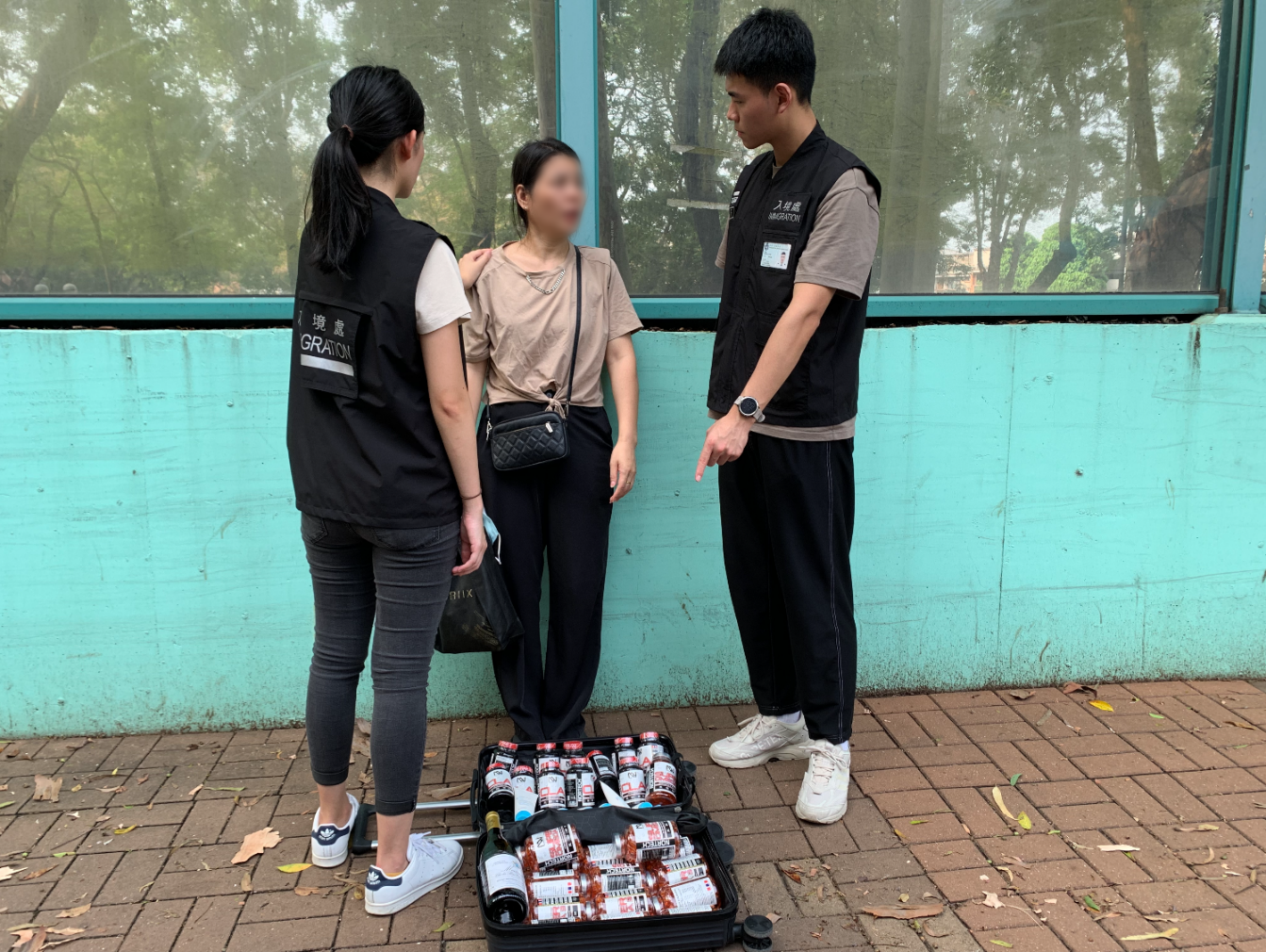
     Furthermore, during operation "Windsand", one female Mainland visitor, aged 39, was arrested for breaching her condition of stay by being involved in suspected parallel trading activities at Po Wan Road in Sheung Shui district. The goods mainly included health products and skincare products.

     An ImmD spokesman said, "Any person who contravenes a condition of stay in force in respect of him or her shall be guilty of an offence. Also, visitors are not allowed to take employment in Hong Kong, whether paid or unpaid, without the permission of the Director of Immigration. Offenders are liable to prosecution and upon conviction face a maximum fine of $50,000 and up to two years' imprisonment. Aiders and abettors are also liable to prosecution and penalties."

     The spokesman warned, "As stipulated in section 38AA of the Immigration Ordinance, an illegal immigrant, a person who is the subject of a removal order or a deportation order, an overstayer or a person who was refused permission to land is prohibited from taking any employment, whether paid or unpaid, or establishing or joining in any business. Offenders are liable upon conviction to a maximum fine of $50,000 and up to three years' imprisonment. Under the prevailing laws, it is an offence to use or possess a forged Hong Kong identity card or a Hong Kong identity card related to another person. Offenders are liable to prosecution and upon conviction face a maximum fine of $100,000 and up to 10 years' imprisonment."

     The spokesman reiterated that it is a serious offence to employ people who are not lawfully employable. Under the Immigration Ordinance, the maximum penalty for an employer employing a person who is not lawfully employable, i.e. an illegal immigrant, a person who is the subject of a removal order or a deportation order, an overstayer or a person who was refused permission to land, has been significantly increased from a fine of $350,000 and three years' imprisonment to a fine of $500,000 and 10 years' imprisonment to reflect the gravity of such offences. The director, manager, secretary, partner, etc, of the company concerned may also bear criminal liability. The High Court has laid down sentencing guidelines that the employer of an illegal worker should be given an immediate custodial sentence.

     According to the court sentencing, employers must take all practicable steps to determine whether a person is lawfully employable prior to employment. Apart from inspecting a prospective employee's identity card, the employer has the explicit duty to make enquiries regarding the person and ensure that the answers would not cast any reasonable doubt concerning the lawful employability of the person. The court will not accept failure to do so as a defence in proceedings. It is also an offence if an employer fails to inspect the job seeker's valid travel document if the job seeker does not have a Hong Kong permanent identity card. Offenders are liable upon conviction to a maximum fine of $150,000 and to imprisonment for one year. In that connection, the spokesman would like to remind all employers not to defy the law by employing illegal workers. The ImmD will continue to take resolute enforcement action to combat such offences.

     Under the existing mechanism, the ImmD will, as a standard procedure, conduct an initial screening of vulnerable persons, including illegal workers, illegal immigrants, sex workers and foreign domestic helpers, who are arrested during any operation with a view to ascertaining whether they are trafficking in persons (TIP) victims. When any TIP indicator is revealed in the initial screening, the ImmD officers will conduct a full debriefing and identification by using a standardised checklist to ascertain the presence of TIP elements, such as threats and coercion in the recruitment phase and the nature of exploitation. Identified TIP victims will be provided with various forms of support and assistance, including urgent intervention, medical services, counselling, shelter or temporary accommodation and other supporting services. The ImmD calls on TIP victims to report crimes to the relevant departments immediately.

Photo  Photo  


Four illegal workers jailed

     Four Thai illegal workers were jailed by the Shatin Magistrates' Courts on June 1.

     During a joint operation conducted by the Immigration Department (ImmD) and the Hong Kong Police Force codenamed "Champion" on May 29, enforcement officers raided a massage parlour in Cheung Sha Wan. Four Thai females, aged 40 to 48, were arrested while working as masseuses.

     The illegal workers were charged at the Shatin Magistrates' Courts on June 1 with taking employment while being a person who, having been given permission to land in Hong Kong, had remained in Hong Kong in breach of their limit of stay imposed in relation to the permission and breached their condition of stay. They pleaded guilty to the charge and were sentenced to 2 to 15 months' imprisonment. Meanwhile, three of the Thai females were also charged with one count of overstaying in Hong Kong. They were sentenced to 10 days' to 16 days' imprisonment. All sentences are to run concurrently, making a total of 15 months' imprisonment.
      
     The ImmD spokesman warned that, as stipulated in section 38AA of the Immigration Ordinance, an illegal immigrant, a person who is the subject of a removal order or a deportation order, an overstayer or a person who was refused permission to land is prohibited from taking any employment, whether paid or unpaid, or establishing or joining in any business. Offenders are liable upon conviction to a maximum fine of $50,000 and up to three years' imprisonment. Under the prevailing laws, it is an offence to use or possess a forged Hong Kong identity card or a Hong Kong identity card related to another person. Offenders are liable to prosecution and upon conviction face a maximum penalty of a $100,000 fine and up to 10 years' imprisonment.

     The spokesman reiterated that it is a serious offence to employ people who are not lawfully employable. Under the Immigration Ordinance, the maximum penalty for an employer employing a person who is not lawfully employable, i.e. an illegal immigrant, a person who is the subject of a removal order or a deportation order, an overstayer or a person who was refused permission to land, has been significantly increased from a fine of $350,000 and three years' imprisonment to a fine of $500,000 and 10 years' imprisonment to reflect the gravity of such offences. The director, manager, secretary, partner, etc, of the company concerned may also bear criminal liability. The High Court has laid down sentencing guidelines that the employer of an illegal worker should be given an immediate custodial sentence.

     According to the court sentencing, employers must take all practicable steps to determine whether a person is lawfully employable prior to employment. Apart from inspecting a prospective employee's identity card, the employer has the explicit duty to make enquiries regarding the person and ensure that the answers would not cast any reasonable doubt concerning the lawful employability of the person. The court will not accept failure to do so as a defence in proceedings. It is also an offence if an employer fails to inspect the job seeker's valid travel document if the job seeker does not have a Hong Kong permanent identity card. Offenders are liable upon conviction to a maximum fine of $150,000 and to imprisonment for one year. In that connection, the spokesman would like to remind all employers not to defy the law by employing illegal workers. The ImmD will continue to take resolute enforcement action to combat such offences.
 
     Under the existing mechanism, the ImmD will, as a standard procedure, conduct an initial screening of vulnerable persons, including illegal workers, illegal immigrants, sex workers and foreign domestic helpers, who are arrested during any operation with a view to ascertaining whether they are trafficking in persons (TIP) victims. When any TIP indicator is revealed in the initial screening, the officers will conduct a full debriefing and identification by using a standardised checklist to ascertain the presence of TIP elements, such as threats and coercion in the recruitment phase and the nature of exploitation. Identified TIP victims will be provided with various forms of support and assistance, including urgent intervention, medical services, counselling, shelter, temporary accommodation and other supporting services. The ImmD calls on TIP victims to report crimes to the relevant departments immediately.