Hong Kong Customs detects two cases with seizures of suspected duty-not-paid manufactured tobacco worth about $52 million (with photos)

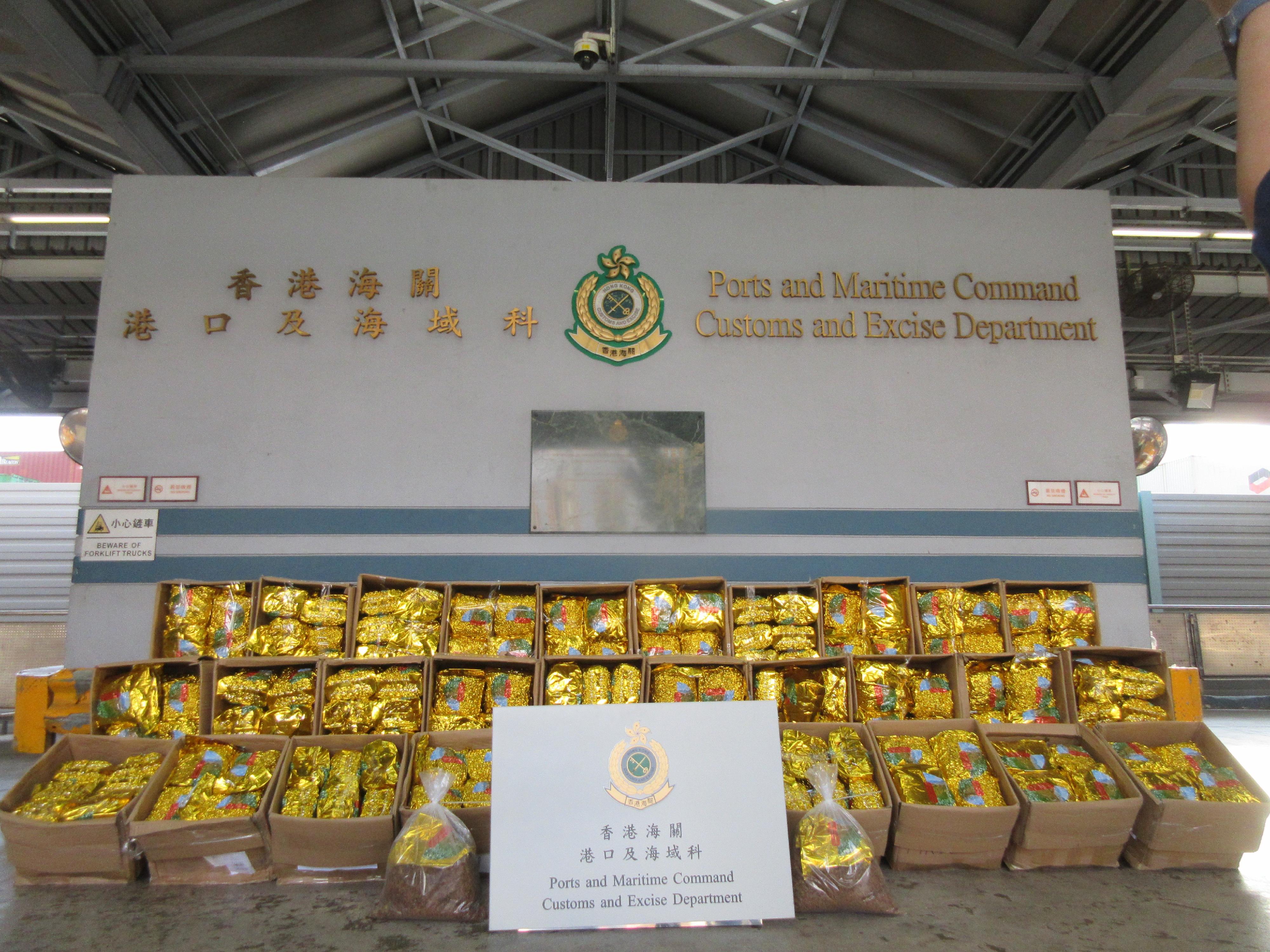
     â€‹Hong Kong Customs detected two suspected smuggling cases at the Kwai Chung Customhouse Cargo Examination Compound on June 2 and yesterday (June 5). A total of about 11.6 tonnes of suspected duty-not-paid manufactured tobacco, with an estimated market value of over $52 million and a duty potential of about $35 million, were seized.

     In the first case, through risk assessment, Customs on June 2 selected for inspection a 40-foot container, declared as carrying carpets, arriving from Guangdong, the Mainland to Hong Kong for re-exporting to Australia. Upon a thorough inspection, Customs officers found about 410 carton boxes, which carried a batch of suspected duty-not-paid manufactured tobacco packed in transparent plastic bags, inside the container. The total weight of the tobacco was about 9 900 kilograms and the estimated market value was about $44.8 million.

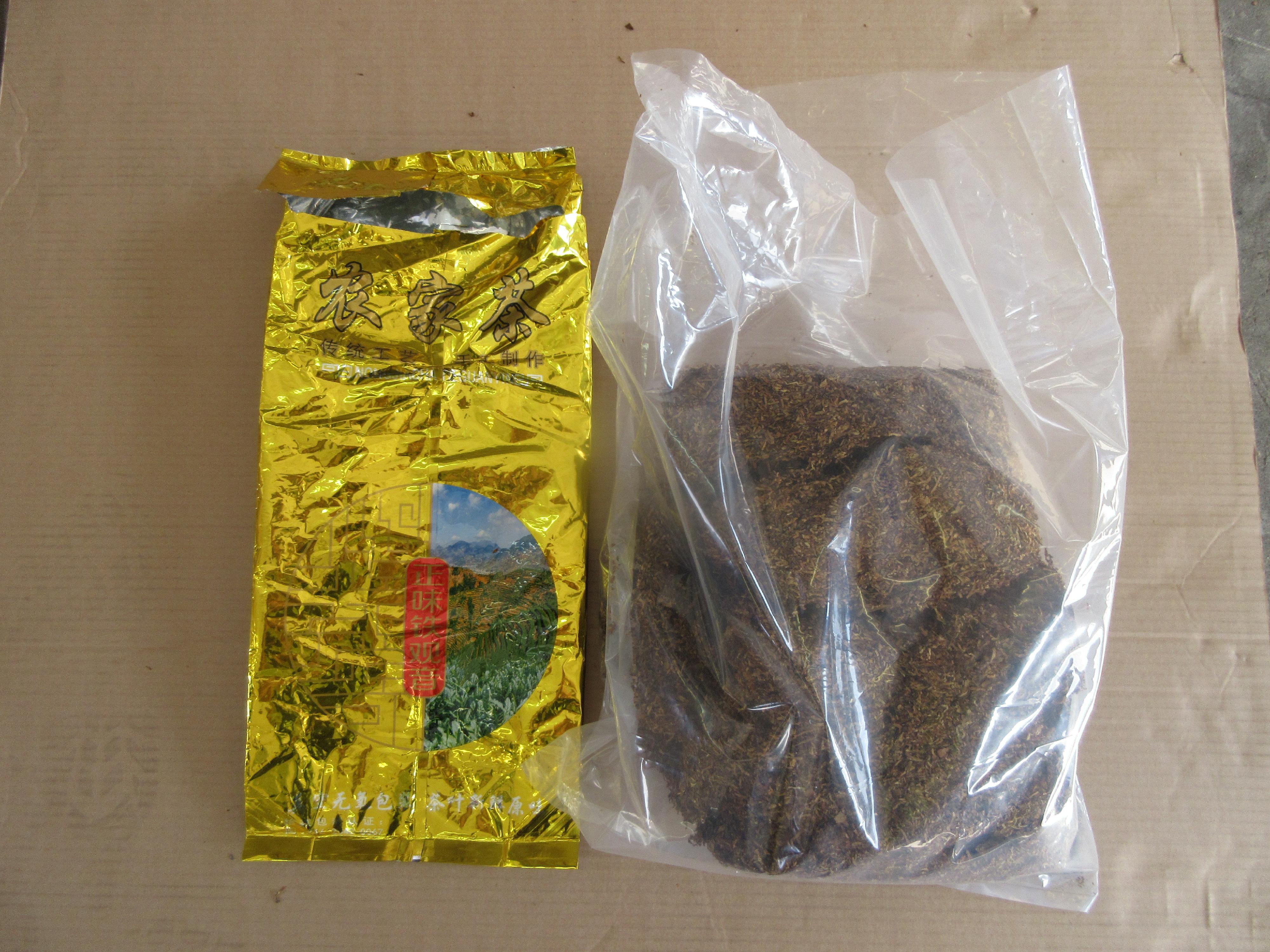
     In the second case, Customs yesterday selected for inspection a 40-foot container, declared as carrying assorted goods, through risk assessment. The container was also arriving from Guangdong, the Mainland to Hong Kong for re-exporting to Australia. Upon a thorough inspection, Customs officers found about 80 carton boxes, which carried a batch of suspected duty-not-paid manufactured tobacco packed in tea leaf packaging bags, inside the container. The total weight of the tobacco was about 1 700kg and the estimated market value was about $7.5 million.

     Investigations of the above-mentioned two cases are ongoing.

     Customs will continue its risk assessment and intelligence analysis for interception at source to combat illicit cigarette activities for protection of revenue.

     Smuggling is a serious offence. Under the Import and Export Ordinance, any person found guilty of importing or exporting unmanifested cargo is liable to a maximum fine of $2 million and imprisonment for seven years.

     Members of the public may report any suspected illicit cigarette activities to Customs' 24-hour hotline 2545 6182 or its dedicated crime-reporting email account (crimereport@customs.gov.hk).
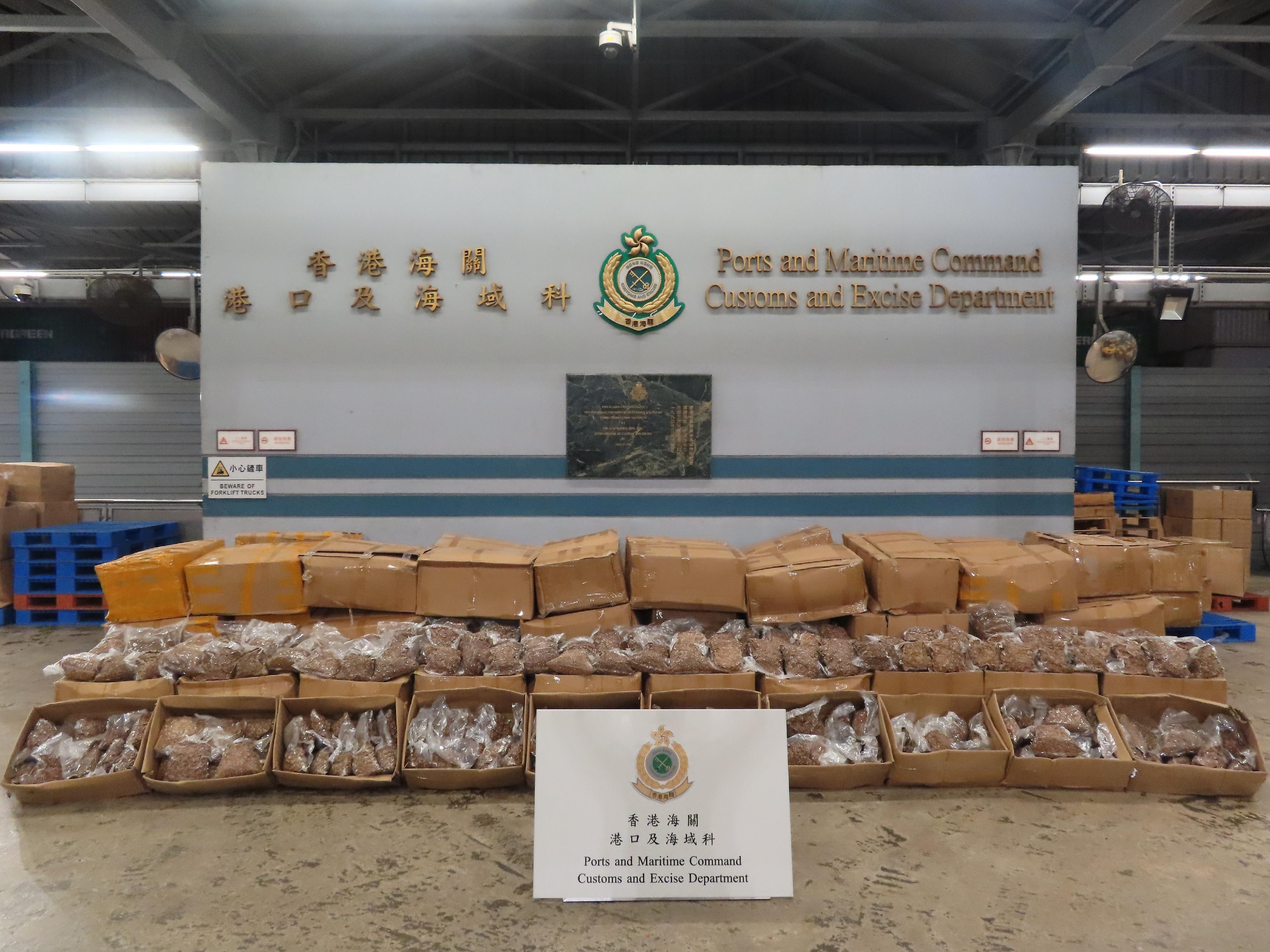
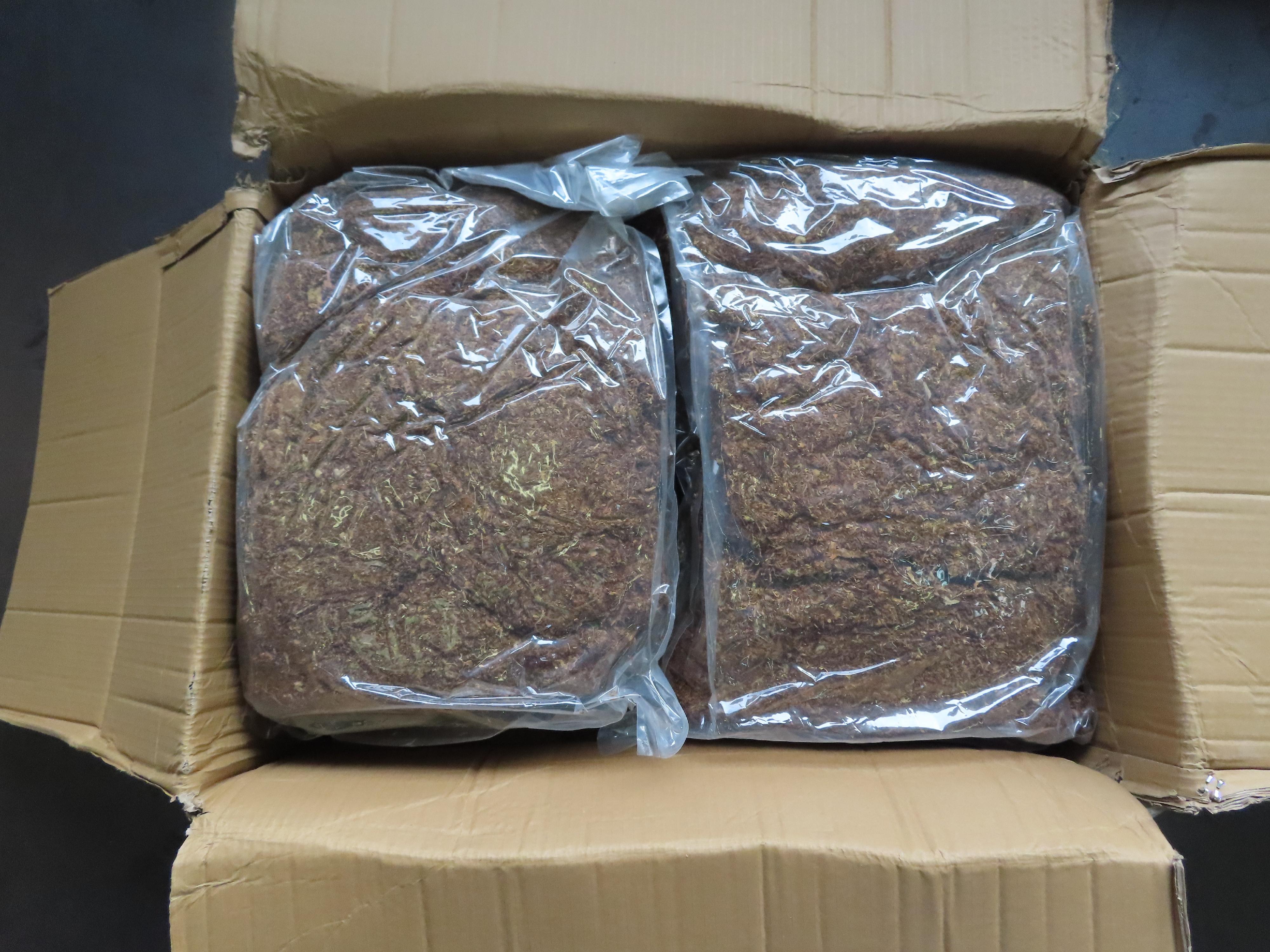
Photo  Photo  Photo  Photo  


AFCD seizes suspected ivory products (with photo)

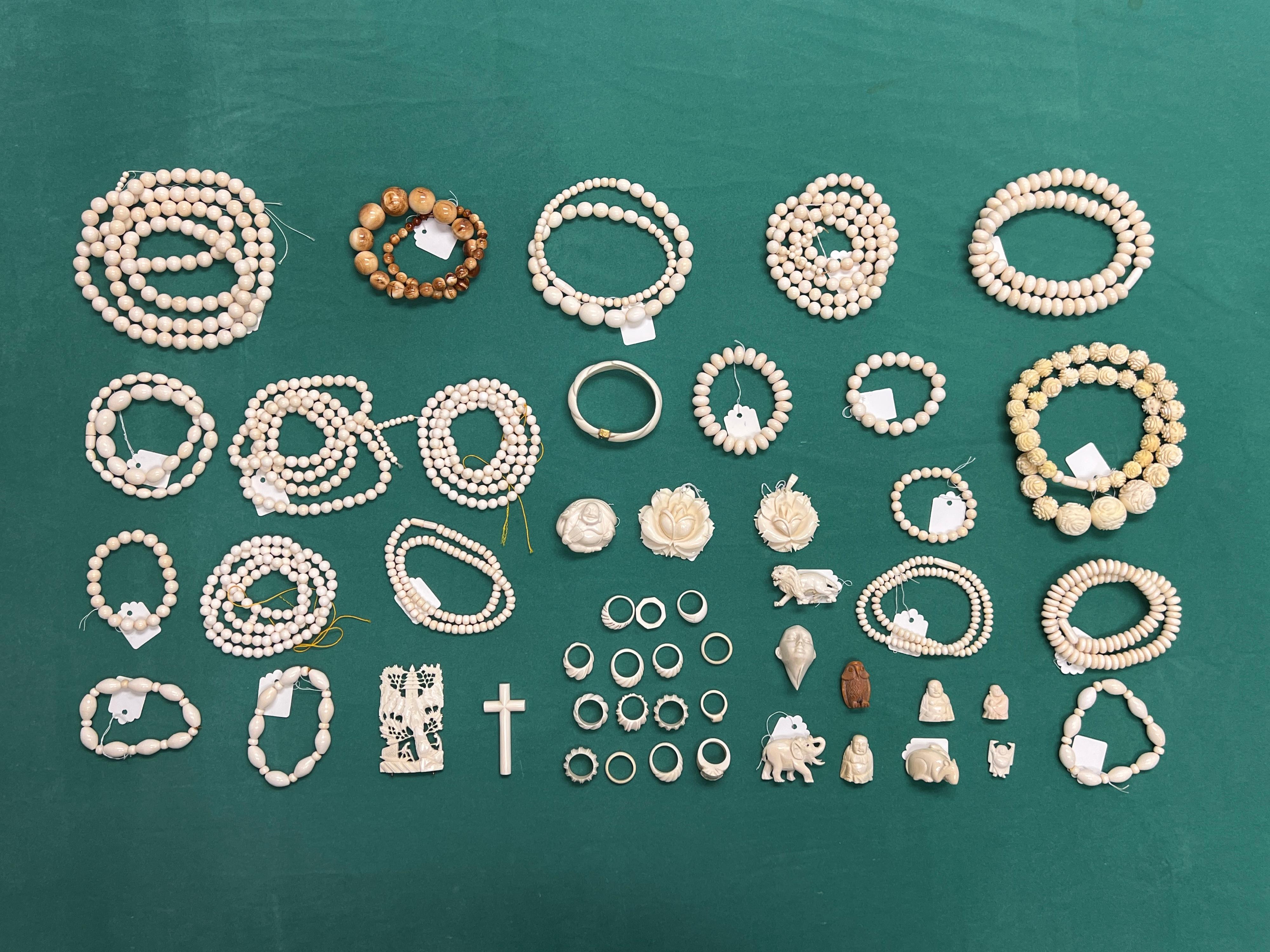
     The Agriculture, Fisheries and Conservation Department (AFCD) yesterday (June 5) seized 50 pieces of suspected elephant ivory products from a shop in Yau Tsim Mong District.

     The AFCD received a complaint alleging that a shop in Yau Tsim Mong District was suspected to be offering scheduled elephant ivory for sale illegally. Staff were immediately sent to inspect the shop concerned. A total of 50 pieces of suspected elephant ivory items were found on the premises and they were seized for further investigation. 

     A spokesman for the AFCD said, "The Government is committed to the protection of endangered species, including elephants. Since December 31, 2021, the import, re-export and commercial possession of elephant ivory (except for 'antique elephant ivory') have been banned. The AFCD has stepped up inspection efforts, and will remain in close contact with relevant government departments including the Customs and Excise Department to combat smuggling and the illegal trade of ivory."

     The spokesman added, "'Commercial purposes' as defined under the Protection of Endangered Species of Animals and Plants Ordinance (Cap. 586), is not limited to sale. Enticing customers with free ivory or displaying ivory labelled as 'not for sale' in a shop may also contravene the Ordinance. To avoid inadvertent breaching of the law, ivory shall not be displayed on commercial premises."

     According to the Ordinance, "commercial purposes" means:

(1) a purpose relating to trade or business; or
(2) a purpose of obtaining profit or other economic benefit (whether in cash or in kind) and directed towards sale, resale, exchange, provision of a service or other form of economic use or benefit, whether direct or indirect.

     According to the Ordinance, "antique elephant ivory" means:

(1) a piece of elephant ivory that was, before July 1, 1925:
(i) removed from the wild;
(ii) significantly altered from its natural state for jewellery, adornment, art, utility or musical instruments; and
(iii) acquired by a person after the alteration in such altered state that required no further carving, crafting or processing to effect its purpose; and

(2) does not include an elephant hunting trophy.

     Traders possessing "antique elephant ivory" for commercial purposes must prove that the ivory meets the above-mentioned definition of "antique elephant ivory". Examples of acceptable proof of "antique elephant ivory" include a qualified appraisal or scientifically approved aging methods carried out by an accredited laboratory or facility.

     Any person importing, re-exporting or possessing elephant ivory not in accordance with the Ordinance will be liable to a maximum fine of $10 million and imprisonment for 10 years upon conviction. The specimens will also be forfeited.

Photo  


Transcript of remarks by CE at media session before ExCo (with video)

     Following is the transcript of remarks by the Chief Executive, Mr John Lee, at a media session before the Executive Council meeting today (June 6):
 
Reporter: Good morning. Over the weekend, two dozen people had been arrested in North Point and Causeway Bay, apparently in relation to June 4, but they didn't really say anything to suggest overturning the Government, so could you explain clearly now, after those arrests, why? What’s wrong with their behaviours that warrant the enforcement actions? And was the National Security Law invoked? Or is it just about unlawful assembly because these are individuals, apparently? And why the Government did not specify beforehand about these consequences because there was really nothing specific from you or other officials to warn people about what would happen on their actions?
 
Chief Executive: I think the government position is very clear. Anybody must act in accordance with the law and they are responsible for what they do. The law is already very well, clearly stated in Hong Kong. In all public events, of course, the law governing these events include the Public Order Ordinance and also the laws governing activities that may be related to incitement, disorderly conduct, etc. The government position is very clear. Anybody must be acting in accordance with the law, and all such cases will be dealt with in accordance with the law based on the actual circumstances. The Police will continue to deal with such matters in accordance with these principles.
 
(Please also refer to the Chinese portion of the transcript.)


Red flag hoisted at Hap Mun Bay Beach

Attention TV/radio announcers:

Please broadcast the following as soon as possible:

     Here is an item of interest to swimmers.

     The Leisure and Cultural Services Department announced today (June 6) that due to big waves, the red flag has been hoisted at Hap Mun Bay Beach in Sai Kung District. Beachgoers are advised not to swim at the beach.


Application by HKSAR Government to Court for Injunction Order to prohibit unlawful acts relating to a song

     The Department of Justice of the Government of the Hong Kong Special Administrative Region (HKSAR) applied to the Court on June 5 for injunction and interim injunction (HCA 855/2023) to prohibit four items of unlawful acts relating to the song "Glory to Hong Kong" (or "《願榮光歸香港》", hereby referred to as "the Song"). Directions from the Court are awaited and the hearing date is to be fixed.

     The Song has been widely circulated since 2019. The lyrics of the Song contain slogan which has been ruled by the Court as constituting secession. Recently, the Song has also been mistakenly presented as the "national anthem of Hong Kong" (instead of the correct one "March of the Volunteers") repeatedly. This has not only insulted the national anthem but also caused serious damage to the country and the HKSAR. As a matter of fact, past events have shown that it is highly likely that the Song will continue to be widely disseminated contrary to the Law of the People's Republic of China on Safeguarding National Security in the Hong Kong Special Administrative Region (National Security Law) and the Crimes Ordinance. In order to discharge the constitutional responsibility of the HKSAR Government to safeguard national security by effectively preventing, suppressing and imposing punishment on acts or activities endangering national security, after careful consideration, the HKSAR Government has decided to apply to the Court for an injunction restraining any person from performing any of the following acts:

(1) Broadcasting, performing, printing, publishing, selling, offering for sale, distributing, disseminating, displaying or reproducing in any way (including on the internet and/or any media accessible online and/or any internet-based platform or medium) the Song, whether its melody or lyrics or in combination (including any adaptation of the Song, the melody and/or lyrics of which are substantially the same as the Song); and in particular to advocate the separation of the HKSAR from the People's Republic of China:

   (i) with the intent of and in circumstances capable of inciting others to commit secession, contrary to Article 21 of the National Security Law; or

   (ii) with a seditious intention as defined in section 9 of the Crimes Ordinance;

(2) Broadcasting, performing, printing, publishing, selling, offering for sale, distributing, disseminating, displaying or reproducing in any way (including on the internet and/or any media accessible online and/or any internet-based platform or medium) the Song, whether its melody or lyrics or in combination (including any adaptation of the Song, the melody and/or lyrics of which are substantially the same as the Song), with intent to insult the national anthem, contrary to section 7 of the National Anthem Ordinance, in such a way: 

   (i) as to be likely to be mistaken as the national anthem insofar as the HKSAR is concerned; or 

   (ii) as to suggest that the HKSAR is an independent state and has a national anthem of her own; or

(3) Assisting, causing, procuring, inciting, aiding and abetting others to commit or participate in any of the acts as set out in (1) or (2) above; or 

(4) Knowingly authorising, permitting or allowing others to commit or participate in any of the acts as set out in (1) or (2) above.

     "The purpose of the HKSAR Government applying for the injunction is to restrain anyone from disseminating or performing, etc, the Song, with the intention of inciting others to commit secession, or with a seditious intent, or from disseminating or performing, etc, the Song as the national anthem of Hong Kong with the intent to insult the national anthem, with a view to safeguarding national security and preserving the dignity of the national anthem. The HKSAR Government respects and values the rights and freedoms protected by the Basic Law (including freedom of speech), but freedom of speech is not absolute. The application pursues the legitimate aim of safeguarding national security and is necessary, reasonable, legitimate, and consistent with the Bill of Rights. In fact, the injunction complements existing laws and serves to clarify to members of the public that acts mentioned above may constitute criminal offences; they should not take their chances and attempt to break the law," the Government spokesman pointed out.