Mass Participation Events of 15th National Games announced

     The 15th National Games (NG), to be cohosted by Guangdong, Hong Kong and Macao, is the highest-level and largest national multisport event in the country. From November 9 to 21, elite athletes from different provinces, municipalities and special administrative regions will converge on the three places to compete for top honours.

     The 15th NG includes 34 competition events and mass participation events. The mass participation events covering 23 sports will be divided into two categories: competition and demonstration. Competition events will cover 19 sports, namely table tennis, badminton, tennis, football, basketball, light volleyball, shuttlecock, roller sports, dragon boating, go, Chinese chess, chess, bridge, Chinese wrestling, orienteering, karate, gateball, modelling and bowling. Demonstration events will cover four sports, namely health qigong, tai chi, dragon and lion dancing, and broadcast gymnastics. The final events of various mass participation games will be held in Guangdong, Hong Kong and Macao from May to November. Members of the public are encouraged to participate in the activities of the NG in welcoming the event to be held in November.

     In upholding the NG's ideal of "benefit ordinary people, make a healthy China", national sports associations or relevant organisations will conduct free-of-charge athlete selections or objective technical tests to assess the skill level of athletes in the selection of eligible athletes to represent the Hong Kong Special Administrative Region in the mass participation events of the 15th NG.

     Hosting eight NG competition events for the first time, Hong Kong will also stage one mass participation event, which is bowling. Besides being spectators to cheer for the athletes, members of the public will have the opportunity to personally participate in this national mega sports event by competing in the mass participation events on behalf of Hong Kong.

     The athlete selections of the mass participation events are being conducted. The bowling event will be hosted by Hong Kong starting in April. The selection criteria and enrolment details of the mass participation events are available on the LCSD-designated website www.lcsd.gov.hk/en/ngames/2025/competitions/participation.html.


Housing Department’s response to Ombudsman’s direct investigation report

     Regarding a report released by the Office of the Ombudsman today (March 13) on its direct investigation into "Estate Management of Public Rental Housing (PRH) by the Housing Department: Illegal Parking", the Housing Department (HD) thanked the Ombudsman for understanding that the daily management of public housing estates involves an extensive range of tasks and that the estate offices (EOs) assume significant responsibilities and heavy workloads; recognising that some estate roads are unable to install a vehicle access control system due to site constraints, prompting illegal parking which requires EOs to make more efforts to combat illegal parking. At the same time, EOs will also consider the needs of residents, particularly the elderly, young children and wheelchair users, as well as the visitation needs of their family and friends. In light of this, the HD will handle short-term parking in a reasonable and compassionate manner, in the spirit of being people-oriented.
 
     The Housing Authority (HA)/HD have shown great concern for road management in PRH estates, continuously strengthening management practices and introducing various facilities equipped with innovative technologies, including IoT (Internet of Things) sensors, artificial intelligence, etc to enhance enforcement effectiveness in combating illegal parking. In addition, the HA/HD promote law-abiding awareness among residents through publicity and education with the aim of maintaining estate roads, especially to keep emergency vehicular access (EVA) unobstructed, and timely reviews relevant measures to ensure overall effectiveness.
 
     HD staff will continue to conduct daily monitoring, surprise inspections and regular meetings with service contractors to ensure that they have effectively executed their contractual obligations such as road control. To strengthen road control, the Mobile Operations Unit under the HD will base on the actual circumstances and requests from EOs to carry out surprise enforcement actions on roads with higher instances of illegal parking, especially the EVA.
 
     "Regarding the direct investigation report initiated by the Ombudsman, we are thankful for its valuable views on our current road control mechanisms. We agree with and accept all the suggestions made by the Ombudsman. In fact, most of the suggestions are already implemented in PRH estates. We will continue to enhance the existing measures against illegal parking, make timely manpower deployments and increase resources, actively explore the use of innovative technologies to enhance management effectiveness, and collaborate with other government departments to conduct joint operations against illegal parking, ensuring that estate roads, especially the EVA remain unobstructed," the spokesman said.


Council on Human Reproductive Technology launches consultation on proposed amendments to Code of Practice on Reproductive Technology and Embryo Research

The following is issued on behalf of the Council on Human Reproductive Technology:
 
     The Council on Human Reproductive Technology (Council) today (March 13) launched a consultation with stakeholders, including licensed centres and relevant organisations, on the proposed amendments to the Code of Practice on Reproductive Technology and Embryo Research (Code). The consultation period is until April 13. Details of the proposed amendments to the Code have been uploaded to the Council's website (https://www.chrt.org.hk).
      
     Currently, under section 15(2) of the Human Reproductive Technology (Licensing) Regulation (Cap. 561A), gametes or embryos for own use can be stored for at most 10 years. For cancer patients or any other patients who may be rendered infertile as a result of chemotherapy, radiotherapy, surgery, or other medical treatments, the maximum storage period for embryos is 10 years, and that for gametes is 10 years or until the patient reaches 55 years of age, whichever is the longer.
      
     Pursuant to section 45(2)(f) of the Human Reproductive Technology Ordinance (Cap. 561), the Council may make regulations on the maximum period of storage of embryos and gametes. Based on the feedback from stakeholders during the consultation of the last review of the Code in 2023, and referencing the practices in other jurisdictions, the Council conducted a comprehensive review of the legal limits on the storage of gametes (including sperms and eggs) or embryos from medical, ethical, social and legal perspectives. The relevant work has recently been completed and the Council preliminarily proposes to amend the Code based on the following major principles:
      
(i) lifting the legal restrictions on the storage period of gametes or embryos for own use, irrespective of the gender, age, or medical conditions of the patient;

(ii) the Council will amend the operational measures in the Code accordingly to ensure that the public is fully aware of the associated medical risks before engaging in unnecessary and prolonged storage of gametes or embryos without medical reasons;

(iii) the amended Code will require licensed centres to provide patients with relevant information, such as the risks of egg-retrieval procedures, the rapid decline in fertility or pregnancy rate associated with ageing of women, the risks of advanced maternal age, as well as the social impacts of delayed childbearing. Patients must sign a consent form to acknowledge the receipt of such information. After storing the gametes or embryos for a certain period, licensed centres are required to provide counselling tailored to the individual circumstances of the patients, and the storage of their gametes or embryos may only be extended with the written consent of the patients; and

(iv) the amended Code will request licensed centres to provide additional statistical data for regulatory purposes.
 
     Members of the public are also welcome to submit their comments on the above recommendations to the Council by post (The Secretariat, the Council on Human Reproductive Technology, Boards and Councils Office, Department of Health, Room 58, 17/F, Wu Chung House, 213 Queen's Road East, Wan Chai) or by email (hrtc@dh.gov.hk) before the end of the consultation period. The Council will consider the views received before making the official final recommendation to the Government.


2025 Award Scheme for Learning Experiences under Qualifications Framework opens for applications

     The 2025 Award Scheme for Learning Experiences under the Qualifications Framework (QF) will open for applications from tomorrow (March 14) until May 31. Practitioners from 23 industries implementing the QF (see Annex) are welcome to apply.
      
     A spokesman for the Education Bureau said that "Together, go further" continues to be the theme for this year's Award Scheme, which not only enables awardees' participation in learning activities outside Hong Kong but also promotes their professional growth and development in the workplace. The Award Scheme aims to encourage practitioners who have excelled in continuous learning to broaden their horizons through engaging in learning activities held locally or around the world, enabling them to keep abreast of the latest developments of the industry and extend their exposure and networks, thereby realising their personal and career goals.
      
     Since its inception in 2013, the Award Scheme has attracted over 2 600 applications from practitioners of various industries, over 700 of whom were awarded. Over half of the awardees participated in learning activities outside Hong Kong, while approximately 40 per cent engaged in local learning activities. The Award Scheme provides financial support for practitioners to engage in learning activities, and strengthens their commitment to lifelong learning. By pursuing continuous education, they are able to enhance their knowledge and skills, serve as role models for lifelong learning within their respective industries, and contribute to the promotion of the QF.
      
     The spokesman added that industry practitioners can participate in a variety of learning activities under the Award Scheme, including competitions, seminars, sharing sessions, exhibitions and study tours. Awardees participating in local learning activities will receive an award of $10,000, while those engaging in learning activities outside Hong Kong will receive an award of $30,000. Practitioners of various industries are encouraged to seize the opportunity to apply for the Award Scheme and go further in their careers.
      
     For details, please visit the website (www.hkqf.gov.hk/AwardScheme) or the Facebook page (www.facebook.com/QFAwardScheme) of the Award Scheme.


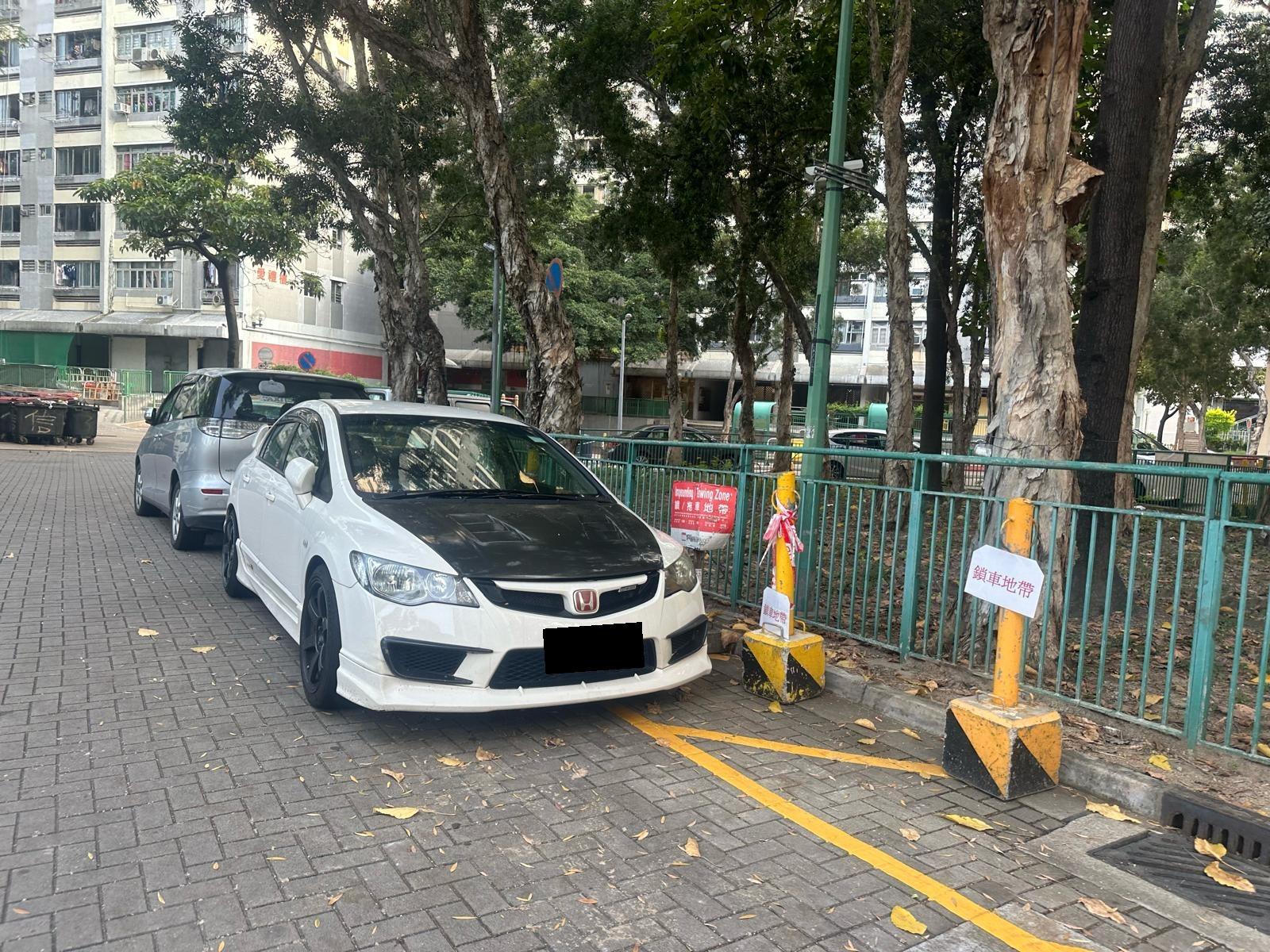
Ombudsman announces results of direct investigation operation into Housing Department’s handling of illegal parking in public housing estates (with photo)

The following is issued on behalf of the Office of The Ombudsman:
 
     The Ombudsman, Mr Jack Chan, today (March 13) announced the completion of a direct investigation operation into the Housing Department (HD)'s handling of illegal parking in public housing estates, and made 12 recommendations for improvement to the HD.
 
     Currently, there are 195 public housing estates in Hong Kong, with more than 780 000 households and about 2 million residents (not including residents of Tenants Purchase Scheme and Buy-or-Rent Option). The HD is responsible for the day-to-day management of estates and handling a wide range of issues. As proper management of public housing is a vital livelihood issue, this Office has decided to conduct detailed studies on it. Given the broad scope, the Office will initiate direct investigation operations into various aspects of public housing management in phases. This direct investigation operation focuses on illegal parking.
 
     From time to time, the Office takes note of public complaints and media reports about illegal parking in public housing estates. Particularly, the Office is concerned about the obstruction of emergency vehicular access by illegally parked vehicles, which may hinder the rescue operations of emergency vehicles in the event of contingencies and lead to serious consequences. In this connection, the Office probed the HD's enforcement mechanism against illegal parking in public housing estates, with site inspections conducted in four selected estates, namely Yau Oi Estate, Cheung Hong Estate, Lai Yiu Estate and Queens Hill Estate, where the installation of vehicle barrier gates in all vehicular access is infeasible due to geographical constraints.
 
     To tackle illegal parking in Yau Oi Estate, the Office learned that the HD has specifically strengthened road controls outside office hours. Apart from enforcement in collaboration with the HD's Mobile Operations Unit, the Estate Office has also enlisted the support of the Hong Kong Police Force (HKPF) on a case-by-case basis. The Estate Office has acquired more immobilisation devices and instructed the security service contractor to deploy more staff dedicated to patrolling. An additional closed-circuit television (CCTV) system has been installed in the estate, and the Internet of Things (IoT) sensors are piloted on specific road sections to facilitate the staff's remote real-time surveillance of traffic. As a result of the HD's commitment to improvement, the situation of illegal parking has been alleviated.
 
     As regards the other three public housing estates, the Office's investigators found illegal parking during site inspections. In Lai Yiu Estate, illegal parking was even found along the emergency vehicular access.
 
     Mr Chan said, "In certain public housing estates, the installation of vehicle barrier gates is infeasible due to geographical and environmental constraints, resulting in practical enforcement challenges against illegal parking, particularly outside office hours. Our site inspections revealed prolonged illegal parking of many vehicles in public housing estates at night; some of these vehicles may even obstruct emergency vehicles. The situation is unsatisfactory. Nevertheless, as the case of Yau Oi Estate has shown, strengthening enforcement is indeed conducive to alleviating illegal parking. Overall, we urge the HD to improve its handling of parking violations, especially to step up combating illegal parking along emergency vehicular access to minimise potential safety hazards."
 
     The Ombudsman's recommendations for improvement to the HD are:
 

  • continue to closely monitor the situation of illegal parking in public housing estates, especially on roads where the installation of vehicle barrier gates is infeasible, and formulate enforcement strategies;
  • step up enforcement against blackspots of illegal parking;
  • take enforcement action against illegal parking along emergency vehicular access immediately without warning, including impounding or towing away the vehicles;
  • strengthen collaboration with the HKPF to arrange joint operations for greater deterrence and increasing the non-compliance costs of offenders if necessary;
  • step up monitoring the follow-up actions taken by security service contractors, consider stipulating key performance indicators for contractors under their service contracts and requiring them to report enforcement results regularly;
  • consider compiling statistics and analysing the records of written warnings against illegal parking issued by the Estate Offices to facilitate their monitoring of illegal parking by frontline staff, with a view to supervising staff and reallocating resources where necessary;
  • conduct timely review on the effectiveness and results of the pilot use of CCTV surveillance and IoT sensors;
  • if the results of pilot arrangement are positive, proactively explore expanding the pilot arrangement to more public housing estates to facilitate effective detection by frontline staff of illegal parking;
  • organise sharing sessions and training for the Estate Offices and security service contractors regarding enforcement against illegal parking from time to time;
  • review existing manpower and, according to actual circumstances, explore any need to internally redeploy or obtain additional resources for enforcement;
  • step up publicity and education for motorists, stressing the importance of refraining from illegal parking on emergency vehicular access; and
  • draw up an implementation timetable for the above recommendations and conduct regular reviews.

 
     The Office is pleased to note that the HD has accepted all of its improvement recommendations.
 
     The full investigation report is available on the website of the Office of The Ombudsman at www.ombudsman.hk for public information.

Photo