Appeal for information on missing woman in Wong Tai Sin (with photo)

     Police today (June 7) appealed to the public for information on a woman who went missing in Wong Tai Sin.

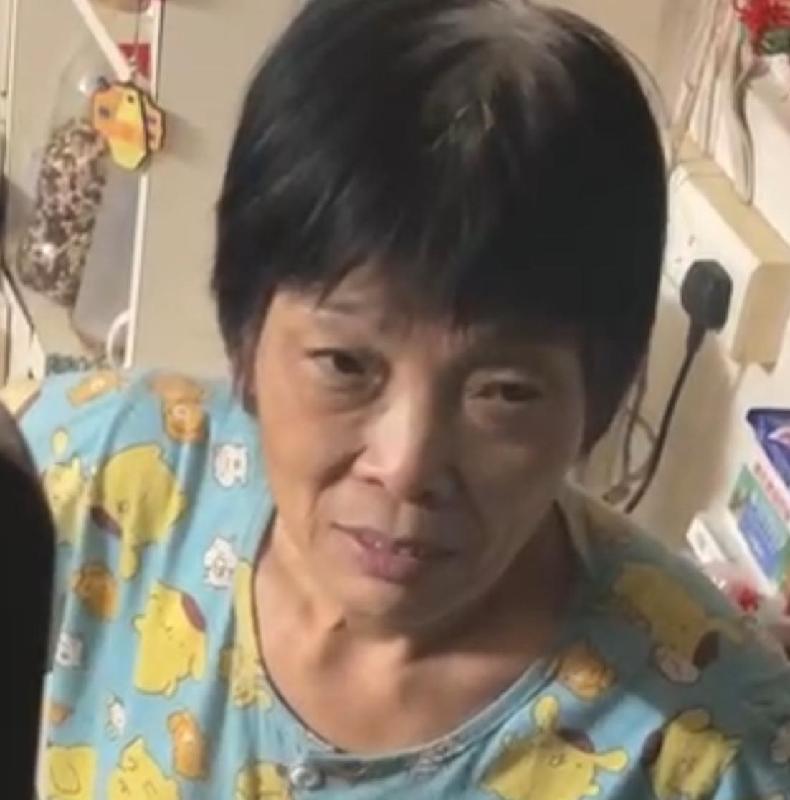
     Kung Yu-heung, aged 70, went missing after she was last seen in Lung Kwong House, Lower Wong Tai Sin Estate yesterday (June 6) afternoon. Her family made a report to Police on the same day.
         
     She is about 1.63 metres tall, 50 kilograms in weight and of normal build. She has a long face with yellow complexion and short black straight hair. She was last seen wearing a pink T-shirt, black trousers, black shoes and carrying a tote bag with black-and-white pattern, and a dark brown tote bag.

     Anyone who knows the whereabouts of the missing woman or may have seen her is urged to contact the Regional Missing Persons Unit of Kowloon East on 3661 0335 or 9886 0060 or email to rmpu-ke-2@police.gov.hk, or contact any police station.

Photo  


LCQ22: Fare mechanism of franchised buses and green minibuses

     Following is a question by the Hon Tony Tse and a written reply by the Secretary for Transport and Logistics, Mr Lam Sai-hung, in the Legislative Council today (June 7):
 
Question:

     It is learnt that when eligible elderly persons and persons with disabilities travel on franchised buses or green minibuses (GMBs) under the Government Public Transport Fare Concession Scheme for the Elderly and Eligible Persons with Disabilities (commonly known as the $2 Scheme), the beneficiaries would only need to pay $2 per trip irrespective of the distance of the journey or the fares of the routes at present. Even if these beneficiaries take a higher-fare long-haul route for a very short journey, the Government would still need to provide the operators with subsidies of the amounts equivalent to the fare differentials between the nominal fares and‍ $2. Some members of the public are of the view that such situation has costed the Government more public money, and suggest that the Government should urge franchised bus and GMB operators to adopt section fares or distance-based fares (i.e. fares based on the distance between boarding and alighting of passengers) on a wider basis, so as to reduce such unnecessary public expenditure. In this connection, will the Government inform this Council:

(1) of the respective amounts of public expenditure spent on subsidising operators of franchised buses and GMBs under the $2 Scheme in each of the past five years; whether the Government and the public transport operators concerned have investigated if there is a large number of cases of "taking long-haul routes for short journeys" under the $2 Scheme;

(2) whether it knows the situation regarding the adoption of section fares for franchised bus and GMB routes currently; what measures are put in place by the Government to require or encourage the public transport operators concerned to adopt more section fares for their routes;

(3) whether it will consider requiring or encouraging operators of franchised buses and GMBs to adopt a distance-based fare mechanism; if not, of the reasons for that; and

(4) whether it will consider requiring or encouraging operators of franchised buses and GMBs to install at bus stops/minibus stops "Octopus card readers at alighting" for the section fare or distance-‍based fare mechanism, so that passengers under such fare mechanism would not have to move to the front of the bus/minibus compartment to tap their Octopus cards again and slow down the vehicle concerned; if not, of the reasons for that?

Reply:
 
President,
 
     In consultation with the Labour and Welfare Bureau and Transport Department (TD), my reply to the question raised by the Hon Tony Tse is as follows:

(1) The purpose of the Government Public Transport Fare Concession Scheme for the Elderly and Eligible Persons with Disabilities (the $2 Scheme) is to help build a caring and inclusive society by encouraging beneficiaries to travel more. The expenditure spent on reimbursing franchised buses and green minibuses (GMBs) under the $2 Scheme in the past five years is tabulated at the Annex.
 
     The Government has rolled out TV and radio announcements of public interest (APIs) and posted posters at major public bus and public light bus termini as well as public light bus compartments on the routes for which two-way section fares are offered to encourage beneficiaries of the $2 Scheme to make appropriate use of short-haul routes and to assist passengers to understand the operation of two-way section fare, so as to reduce the differential fares under the $2 Scheme and ensure proper use of public funds. The TD will devise a feasible plan to collect data on beneficiaries taking long-haul routes for short trips as soon as possible.

(2) and (4) At present, section fares are available on about 530 (around 80 per cent) franchised bus routes. With most of the remaining 20 per cent being short-haul routes, the fares are already relatively low due to their short journey distance, and section fares are thus deemed unfeasible. The Government will continue to encourage franchised bus operators to offer fare concessions, including one-way or two-way section fares, as far as possible having regard to their commercial considerations such as operating and financial conditions, overall economic environment and passenger needs, as well as factors relating to bus resources.
 
     There are currently about 380 (around 60 per cent) GMB routes offering section fares. The TD similarly encourages GMB operators to consider, where their operational and financial conditions permit, offering concessionary one-way or two-way section fares to short-haul passengers. During the TD's regular assessments of the overall service performance of a GMB route, the offer of new concessionary section fares to passengers by the operator is one of the considerations for the TD to further extend the period of the operator's Passenger Service Licence.
      
     On two-way section fares for franchised buses, the existing collection arrangements require a passenger to either tap on the card reader again in the presence of the bus captain before alighting, or tap on the card reader at the bus stop after alighting. The specific arrangement adopted depends on many factors, such as the actual characteristics of a bus stop (including pedestrian and vehicular flows), and the availability of power supply nearby.
      
     As for GMBs, boarding passengers may either press the section fare button to enjoy the section fare concession, or ask the driver to make the switch for them. Given the limited space on board a green minibus, and the limited number of passengers it carries, passengers can easily pay by tapping their cards in the presence of the driver. Such arrangement is swift and convenient that there may not be any need to install separate card-reading systems at the GMB stops.

(3) Distance-based fares are similar to section fares in concept, but involve rather complicated technical and operational arrangements. For instance, we have to address and balance the different travel needs of short-haul and long-haul passengers, in order to avoid ineffective use of public transport resources where short-haul passengers take up capacity of long-haul routes or, when they alight midway, the occupancy rates of such routes become too low. Currently, the fares of franchised bus routes are already determined in accordance with their corresponding route group and journey distance. In principle, fares for routes with longer journeys are higher than those for routes with shorter journeys. Similarly, the TD imposes maximum cap for scales of fares based on the journey distances of individual GMB routes. The GMB operators will take into account the journey distances of their various routes, to propose fares not exceeding the corresponding caps for approval by the TD.
      
     Going forward, we will carefully consider the implications and feasibility of the relevant proposals.


Red flag hoisted at Hap Mun Bay Beach

Attention TV/radio announcers:

Please broadcast the following as soon as possible:

     Here is an item of interest to swimmers.

     The Leisure and Cultural Services Department announced today (June 7) that due to big waves, the red flag has been hoisted at Hap Mun Bay Beach in Sai Kung District. Beachgoers are advised not to swim at the beach.


LCQ14: Boosting utilisation rates of community halls and community centres

     Following is a question by the Hon Chan Chun-ying and a written reply by the Secretary for Home and Youth Affairs, Miss Alice Mak, in the Legislative Council today (June 7):
     
Question:
      
     It is learnt that the community testing centres and community testing stations set up in response to the COVID-19 epidemic have ceased operation in batches in recent months, and the relevant community halls and community centres (CHs/CCs) have been returned to the Home Affairs Department (HAD) and reopened for hiring by local organisations. However, according to the HAD's website, the occupancy rates of some facilities in CHs/CCs have been relatively low. For instance, as at April 3, less than 3 per cent of the available time slots for booking of some function rooms in the Kennedy Town Community Complex were booked for the whole month of April, while the available time slots for booking of some other function rooms were almost fully booked. In this connection, will the Government inform this Council:
 
(1) of the monthly utilisation rates of various facilities (including halls, function rooms and conference rooms) in CHs/CCs in various districts from January to May this year;
 
(2) whether it has looked into the reasons for the relatively low utilisation rates of some facilities; if so, of the details; if not, the reasons for that; and
 
(3) whether it has drawn up plans to boost the utilisation rates of the under-utilised facilities; if so, of the details; if not, the reasons for that?
 
Reply:
 
President,
 
     Our reply to the question raised by the Hon Chan Chun-ying is as follows:
 
(1)The average usage rates of multi-purpose halls, conference rooms and other facilities (including function rooms/classrooms, etc.) in community halls/community centres (CHs/CCs) of the territory are 76.3 per cent, 42.6 per cent and 44.5 per cent respectively for the first five months in 2023. The average usage rates of these facilities in CHs/CCs (CH/CC facilities) in each district from January to May 2023 are at Annex.
 
 
(2)The usage rates of CH/CC facilities are related to their respective locations, the activities of district organisations, and availability of similar facilities in the neighbourhood areas. In general, usage rates are higher for CHs/CCs located in more densely populated areas with better accessibility, and lower for those in relatively remote areas. According to experience, as the larger floor area of multi-purpose halls in CHs/CCs renders them suitable for organising a wide range of activities, they are generally more popular among hirers. On the contrary, conference rooms/function rooms/classrooms in CHs/CCs are relatively smaller in size, and can only be used for small meetings or group activities in classes. Their usage rates are hence lower than that of multi-purpose halls in general. The usage rates of CH/CC facilities may also be affected by repair and maintenance works arranged on a need basis. 
 
     Regarding the Kennedy Town Community Complex mentioned in the question, there are six function rooms and one conference room available for booking by district organisations. Owing to the deployment of two function rooms and the conference room on 2/F for anti-epidemic use up to the end of March this year and their reopening for hiring by the public at short notice, their usage rates were low at the initial reopening period in April when compared to the function rooms located on the other two floors of the Complex. 
 
(3)To encourage district organisations in making full use of the CH/CC facilities, the Home Affairs Department (HAD) has been striving continually to improve the ancillary facilities in CHs/CCs, including replacing the air-conditioning, lighting and other related systems, upgrading the stage and audio-visual equipment, providing automatic drink vending machines, and procuring collective copyright licences of audio-visual works so that venue hirers can use these works free of charge.
 
     In addition, unallocated timeslots of CH/CC facilities after balloting are uploaded onto the HAD website for applications by eligible district organisations on a "first-come-first-served" basis. To maximise the use of CH/CC facilities, District Offices also adopt different measures having regard to local circumstances and needs, such as deploying some unoccupied conference rooms/function rooms as study rooms during the examination seasons.
 
     We will continue to maintain close contact with different stakeholders and explore various other ways to optimise the utilisation of CH/CC facilities for the purpose of serving more people.


Transcript of remarks by SDEV at media session

     Following is the transcript of remarks by the Secretary for Development, Ms Bernadette Linn, at a media session after attending the Legislative Council meeting today (June 7):
 
Reporter: Secretary Linn, can the Government pledge that it will build housing on the golf course at the very least? Also, we want to ask will the Government give up on its housing plan due to opposition from the golf club and also some business representatives. If it won't, how will the Government plan to gain their support? Thank you.
 
Secretary for Development: First of all, I have to repeat and repeat again that we have not given up our plan to pursue a public housing project on the northern part of the Fanling Golf Course that 32 hectares to be returned to the Government. The 32 hectares, a large part of it, will be opened up to the public for conservation and passive recreation purpose. That is our intention. And that is why the Leisure and Cultural Services Department is now planning the exact arrangement to be made, come the first of September, when the land is returned. 
 
     As regard the northern part of that portion, it remains our intention to pursue a public housing development there, but we have to respect the statutory processes. In particular, I am talking about the Environmental Impact Assessment (EIA) process which just last month has given us a conditional approval. The condition is that we have to review the layout and the density of the public housing development to minimise the impact on visual and the landscape in that area, so we are doing what we have to do to respect a statutory system and I hope that the community will accord the same standard in treating our handling of this case and other cases which also have to go through other statutory processes. So if I, as the Secretary for Development, ignore the process and just make pledges without looking into the review that is being done to fulfill the condition, that will be irresponsible on my part I believe.

Reporter: Secretary, is it a normal practice to change the land use from "Residential" to "Undetermined"? And also about the Heung Yee Kuk plan, do you think it is a feasible and also a replacement for the Golf Course?
 
Secretary for Development: First of all, in the process of a statutory town planning regime, we are now in that process, we gazetted the Outline Zoning Plan last year and we are now about to proceed with the public hearing. In the process, if there are circumstances warranting a change in our recommendation to the zoning, the government departments will do that professionally, so this is not the first time in which the government department proposes a refinement to the zoning before the proceeding of the public hearing.
 
     And secondly, what we are doing is to take forward and respect a condition set in the EIA statutory process. So pending that process, we believe it is only responsible and professional of the relevant government department to propose a practical zoning before their review is completed.
 
(Please also refer to the Chinese portion of the transcript.)