LCQ4: Further building Hong Kong into an offshore Renminbi hub

     Following is a question by the Hon Carmen Kan and a reply by the Secretary for Financial Services and the Treasury, Mr Christopher Hui, in the Legislative Council today (June 28):
 
Question:
 
     There are views that Hong Kong, as an international financial centre and offshore Renminbi (RMB) hub, should continue to leverage its own advantages in the process of actively dovetailing itself with the high-quality Belt and Road development. In this connection, will the Government inform this Council:
 
(1) as there are views pointing out that with the increasing recognition of RMB in the Belt and Road countries, the market demand for the internationalisation of RMB is on the rise, how the Government continues to further build Hong Kong into an offshore RMB hub, such as launching more products that comply with international trading rules and promoting issuance of offshore RMB bonds in Hong Kong by multinational enterprises from the Belt and Road countries;
 
(2) as there are views that Hong Kong is performing an important function of reallocating RMB funds to the world, how the Government continues to strengthen market entities' awareness of exchange rate risk neutrality, enhance the transparency of market regulation, improve market support facilities and enhance the level of mutual access of RMB financial markets, so as to bring convenience to the optimal allocation of RMB funds around the world; and
 
(3) on the aspect of international co-operation on digital currencies, how the Government will further enhance market infrastructure, explore flexible interface of multiple systems, expand application scenarios and develop retail central bank digital currencies, so as to promote safe, convenient and inexpensive cross-border payment by digital RMB?
 
Reply:
 
President,
 
     Hong Kong has unique advantages under the "One Country, Two Systems" and serves as a bridge linking the Mainland and the rest of the world. The Government is committed to seizing historic opportunities offered by the national development and contributes to the Belt and Road initiative with quality financial services.
 
     In consultation with the Hong Kong Monetary Authority (HKMA), my reply to the three parts of the question raised by Hon Kan is as follows:
 
(1) and (2) With the increasing economic and trade connectivity between the Mainland and the Belt and Road countries and regions, the use of and demand for Renminbi (RMB) in bilateral trade, investment and reserves continue to grow. As a global offshore RMB business hub, Hong Kong can provide support for related RMB economic activities and at the same time further promote the sustainable development of its own offshore RMB business.
 
     As at April this year, RMB deposits (including outstanding Certificates of Deposit) in Hong Kong was at about RMB980 billion, providing liquidity support to offshore RMB transactions and financial activities in the Belt and Road countries and regions, and globally. Statistics of the Society for Worldwide Interbank Financial Telecommunications (SWIFT) also indicate that about 75 per cent of global offshore RMB payments are processed in Hong Kong.
 
     Following the expansion of scope of eligible securities under Stock Connect to cover exchange-traded funds (ETFs) as well as eligible constituent stocks of the Shanghai Stock Exchange A Share Index and the Shenzhen Stock Exchange Composite Index and stocks of overseas enterprises primary listed in Hong Kong since July 2022 and March 2023 respectively, Northbound trading of Swap Connect was launched on May 15, 2023, extending the mutual access arrangements in the realm of financial derivatives products. This provides a convenient and secure channel for offshore investors holding onshore bonds to trade interest rate swap products in the Mainland via a connection between the infrastructure institutions in the two places. On the first day of the programme's launch, 27 offshore investors traded onshore RMB interest rate swaps with a notional value exceeding RMB8,200 million.
 
     The "Hong Kong Dollar (HKD)-RMB Dual Counter Model" was launched on June 19 in the securities market, so that investors can trade securities of the same issuer in both HKD and RMB, and transact across HKD and RMB counters. Twenty-four listed companies stocks are designated as dual-counter securities by Hong Kong Exchanges and Clearing Limited (HKEX), accounting for about 40 per cent of the daily turnover for equity securities. The operation of the model has been smooth after the launch. HKEX will continue to closely communicate with the trade to assist relevant parties to familiar with the trading and clearing processes. At the same time, we are collaborating closely with the Mainland with a view to setting up RMB securities trading counter under Southbound Trading of Stock Connect promptly.
 
     Looking ahead, the Government and the regulators will continue to explore with relevant Mainland authorities various proposals on expansion of mutual market access and enriching the product choices, including the provision of more diversified risk management tools such as launching Mainland Government bond futures in Hong Kong.
 
     Besides, we also actively promote the issuance of more offshore RMB bonds in Hong Kong. Last year, the issuance of offshore RMB bonds (including Certificates of Deposit) in Hong Kong reached RMB330 billion, increasing by more than 100 per cent compared to 2021. Earlier this month, we successfully issued green bonds worth around US$6 billion under the Government Green Bond Programme, including RMB tranches of RMB15 billion with a new 10-year tenor. These help extend the offshore RMB yield curve and enrich offshore RMB product offerings.
 
(3) The Government is committed to promoting the development of Central Bank Digital Currency (CBDC). On wholesale CBDC, with the concerted efforts of the Digital Currency Institute of the People's Bank of China (PBoC), the HKMA, the Bank of Thailand, the Central Bank of the United Arab Emirates and the Bank for International Settlements Innovation Hub Centre in Hong Kong, the Multiple Central Bank Digital Currency Bridge (mBridge) Project went beyond experimentation and entered into the pilot phase in the third quarter of 2022. The HKMA and other members of the project team will continue to work towards developing the mBridge platform into a Minimum Viable Product and ultimately a production-ready system.
 
     On retail CBDC, the HKMA is making preparation and laying the foundation for the possible implementation of e-HKD under a three-rail approach. The work under Rail 1 is in good progress. As regards Rail 2, the HKMA announced the commencement of the e-HKD Pilot Programme in May 2023 and will conduct a series of pilots in close collaboration with various stakeholders to examine the use cases, as well as implementation and design issues relating to e-HKD.
 
     The Digital Currency Institute of the PBoC and the HKMA are also exploring the use of e-CNY in cross-boundary payments. The first phase of technical testing was completed in December 2020. The second phase of technical testing commenced in July 2022, involving more banks in Hong Kong and the use of Faster Payment System to top up e-CNY wallets, thus allowing residents to use e-CNY wallets more conveniently in future.
 
     We will continue to make good use of Hong Kong's distinctive strengths as an international financial centre and a global offshore RMB business hub with a view to actively contributing to the Belt and Road Initiative. Thank you President.


LCQ5: Combating deceptive activities jointly with banking sector

     Following is a question by the Hon Lam San-keung and a reply by the Secretary for Financial Services and the Treasury, Mr Christopher Hui, in the Legislative Council today (June 28):

Question:
 
     In the first quarter of this year, Hong Kong recorded 8 886 deception cases, representing an increase of about 65 per cent as compared to the same period last year, and accounting for more than 40 per cent of the overall crime figure. Besides, last year, bank staff assisted in preventing 232 deception cases from happening, and the Anti-Deception Coordination Centre also successfully intercepted defrauded money of more than $1.3 billion in 888 deception cases. On the other hand, the Hong Kong Monetary Authority will launch a platform for sharing information on corporate mule accounts among banks, and encourage banks to enhance the adoption of Regtech and data analytics, so as to expedite the detection of suspicious accounts, guard against account abuses, as well as prevent and combat deception cases. In this connection, will the Government inform this Council:
 
(1) of the number of deception cases involving the accounts of four major banks (i.e. HSBC, Bank of China, Standard Chartered Bank and Hang Seng Bank) with the defrauded money being $500,000 or above, and the total amount of defrauded money in the past year; and
 
(2) whether the Government or regulatory bodies can disclose to banks the personal data of all holders of bank accounts involved in deception cases and immediately terminate fund transfers to and from such bank accounts, as well as establish a database and a "blacklist of account holders", so as to prevent the persons involved in the cases from opening bank accounts again for deception; if not, of the reasons for that?

Reply:
 
President,
 
     Hong Kong has a robust anti-money laundering and counter-financing of terrorism regime. Banks conduct their customer due diligence, ongoing monitoring, and file suspicious transaction reports to the Joint Financial Intelligence Unit in accordance with relevant legislation (including the Anti-Money Laundering and Counter-Terrorist Financing Ordinance, Banking Ordinance, the Organized and Serious Crimes Ordinance, etc.) and regulatory requirements. The Hong Kong Monetary Authority (HKMA) is responsible for providing guidance and supervising banks' compliance with legal and regulatory requirements, and has worked closely with the Hong Kong Police Force (HKPF) and the banking industry through public-private partnerships to proactively detect and disrupt deception and other financial crimes.

     Regarding the various parts of the question, in consultation with the HKMA, the Security Bureau, and the HKPF, my reply is as follows:

(1) The HKMA and HKPF do not maintain the number of deception cases and total amounts involved by individual banks. Under the current mechanism, regardless of scale, banks are required to monitor bank accounts continuously, particularly on identifying complex or unusual transactions. In the event that banks determine a transaction is suspicious, they need to file a suspicious transaction report to the Joint Financial Intelligence Unit in accordance with the relevant legal requirements. Besides, if banks receive information that a particular customer or account is suspected to be involved in deception cases, they will follow up as soon as possible, including taking appropriate risk-mitigation measures, such as restricting further funds transfers to or from the accounts, and co-operating with Law Enforcement Agencies' (LEAs) investigations.

(2) The HKMA has been working with the HKPF and the banking industry to enhance information sharing to tackle deception cases and relevant mule account networks. In particular, the HKPF already has a mechanism to provide information on bank accounts involved in deception cases during their investigations to enable banks to follow up. With the support of the HKMA, the Fraud and Money Laundering Intelligence Taskforce (FMLIT) was established by the HKPF in 2017. Ten retail banks participated initially, which will increase to 28 retail banks at the end of June 2023. Since the establishment of FMLIT, through enhanced information sharing between the HKPF and the banks and applying data analytics, banks have identified over 21 000 previously unknown mule accounts and taken prompt action, including restricting further fund transfers to or from the accounts etc, to support law enforcement investigations.

     In addition, through the collaboration between the HKMA, the Hong Kong Association of Banks (HKAB) and the HKPF, a bank-to-bank information sharing platform (Financial Intelligence Evaluation Sharing Tool (FINEST)) came into operation on June 20, 2023. With five major retail banks participating initially, the focus of the platform is on sharing information on corporations suspected of being involved in deception-related money laundering. The HKMA and HKAB will expand the platform in phases in the future to include more participating banks, cover personal accounts, and share information on other financial crimes such as trade based money laundering.

     As for the recommendation on preventing the persons involved in the cases from opening bank accounts again, according to the current mechanism, banks are required to abide by strict anti-money laundering guidelines and conduct customer due diligence for persons applying to open bank accounts. In general, factors considered by banks include any past involvement of the applicant in fraud or money laundering activities, as well as information shared by HKPF and other banks. With the launch of the bank-to-bank information sharing platform, we believe that banks would be better equipped to handle applications for bank account opening and preventing accounts from being used for illegal purposes.

     The HKMA will continue to work closely with banks and the LEAs to strengthen the ability of the entire anti-money laundering ecosystem to jointly tackle the rapidly evolving deception and financial crimes. Thank you President.


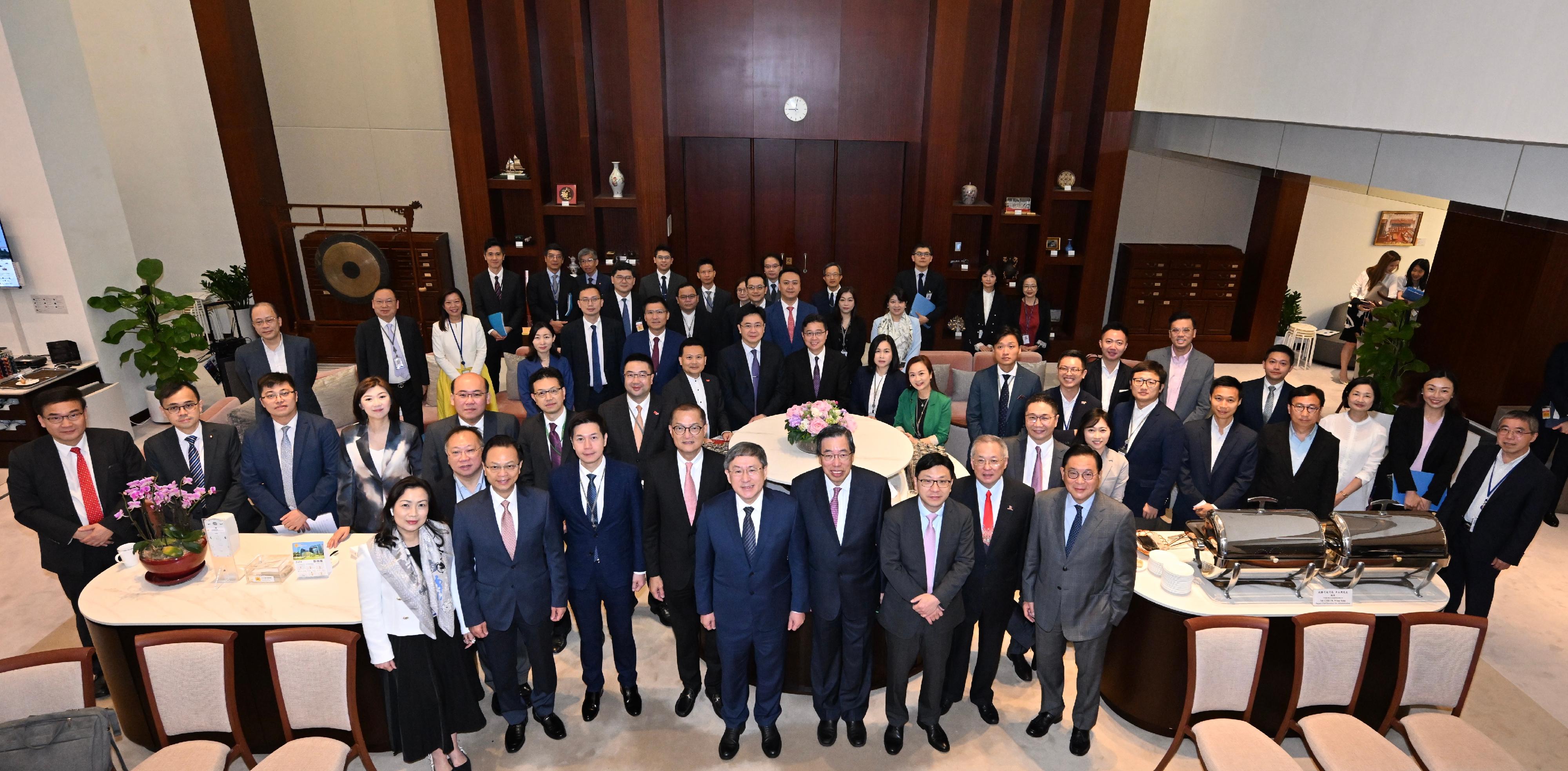
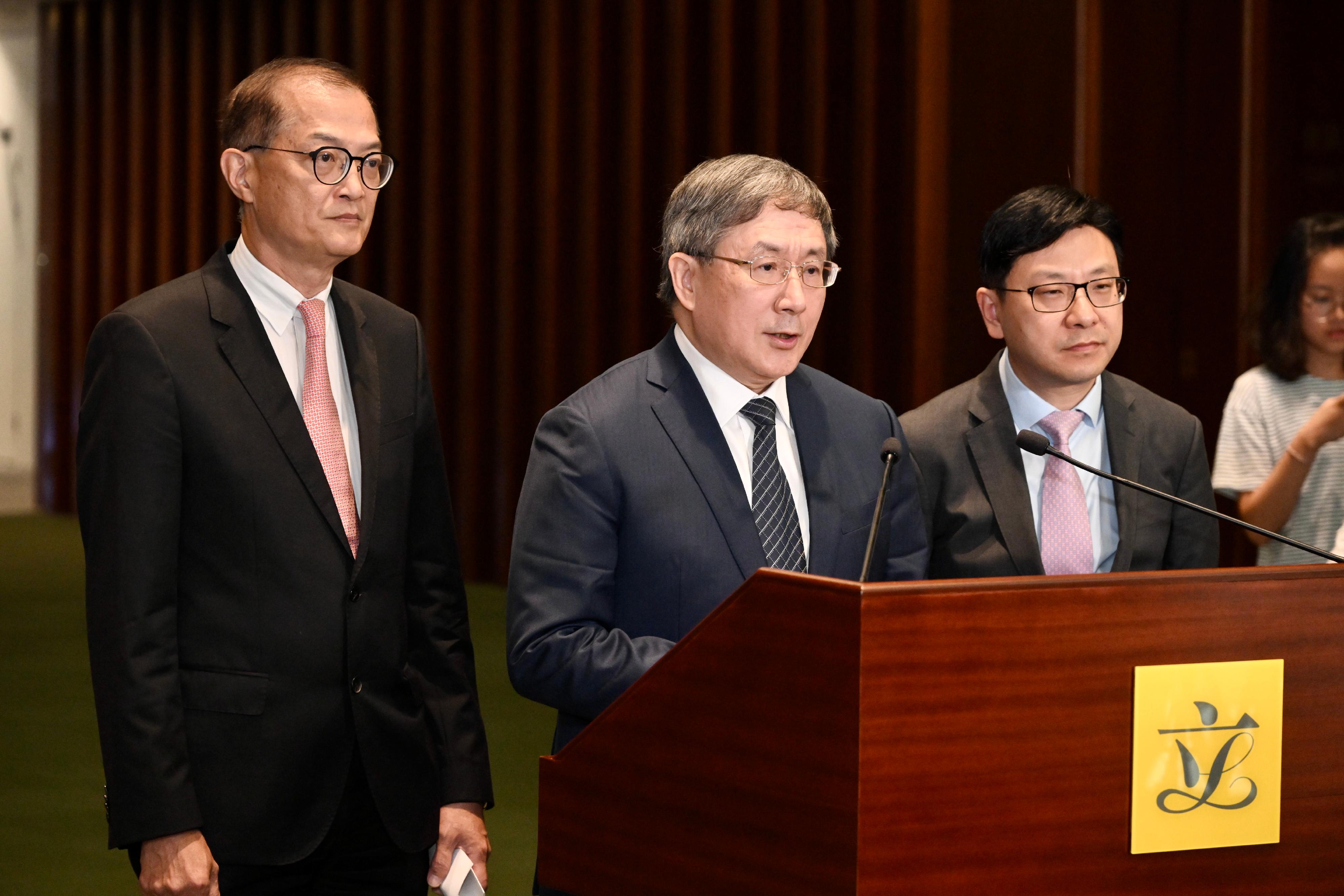
Transcript of remarks by S for Health after Ante Chamber exchange session (with photos)

     Following is the transcript of remarks by the Secretary for Health, Professor Lo Chung-mau, at a media session after attending the Ante Chamber exchange session this morning (June 28):
 
Reporter: Are there any new thoughts on making good use of the medical resources and the Mainland after the Ante Chamber meeting, for example, the Health Care Voucher and also the psychological centre which helps in the primary healthcare, how is that? The second question is about the non-locally trained pathway, how is that in solving the labour crunches so far?
 
Secretary for Health: We had a very good discussion with the Legislative Councillors regarding the collaboration with the Mainland in the development of healthcare services across the boundary. For the Elderly Health Care Voucher, we heard a lot of good suggestions from our legislators, regarding the extension of the use to more hospitals on the Mainland, particularly those managed by institutions with experience in the healthcare services and the Elderly Health Care Voucher Scheme in Hong Kong. We are now developing the criteria for approving these additional Elderly Health Care Voucher utilisation hospitals, we will soon be accepting applications. The intention is to make sure that these spots for the use of the Elderly Health Care Voucher can be linked with our future spots for the residential care homes for the elderly in order to facilitate the provision of healthcare services to these elderly people across the boundary. So there were lot of discussions, especially about whether we can extend the Elderly Health Care Voucher Scheme to Fujian. Fujian is a province with quite a number of elderly retiring there.
 
     Regarding the admission of non-locally trained healthcare workers, we are glad that the Special Registration Committee under the Medical Council (The Medical Council of Hong Kong) and the leadership of the chairperson, Professor Grace Tang, has come up with the fourth batch of approved curriculums – medical curriculums in the scheme, an additional 25 medical curriculums, including five medical schools on the Mainland with seven different curriculums. I am quite confident that this addition will be able to facilitate more non-locally trained doctors to return to Hong Kong and come to Hong Kong to support our healthcare services, and to create a positive cycle for more healthcare workers to work in the Hospital Authority and our public healthcare service in order to improve the care for our people, for the citizens of Hong Kong. Thank you.
 
(Please also refer to the Chinese portion of the transcript.)

Photo  Photo  


LCQ6: Making the “Three Instruments of Peace”

     Following is a question by the Hon Doreen Kong and a reply by the Secretary for Labour and Welfare, Mr Chris Sun, in the Legislative Council today (June 28):

Question:

     It has been reported that the elderly population in Hong Kong will increase to 24.6 per cent in 2026, and by then Hong Kong will become a "super-aged society" as defined by the World Health Organization. However, a survey has found that over 80 per cent of the respondents have not made the "Three Instruments of Peace" (i.e. an enduring power of attorney (EPA), an advance medical directive (AMD) and a will), so as to make adequate end‍-‍of‍-‍life preparation. In this connection, will the Government inform this Council:

(1) whether it knows the respective numbers of EPAs signed under the witness of public hospital doctors as well as valid AMDs received and executed by public hospitals in each of the past five years; of the Government's comprehensive publicity plans to enhance public awareness of the "Three Instruments of Peace" as well as life and death education;

(2) of the progress of and detailed timetable for taking forward the legislative proposals relating to the Continuing Powers of Attorney Ordinance and the Advance Decision on Life-Sustaining Treatment Bill; and

(3) whether it has plans to properly store signed documents on the "Three Instruments of Peace" by electronic means or by setting up a central repository in the future?

Reply:

President,

     Having consulted the Judiciary, the Health Bureau (HHB), the Home and Youth Affairs Bureau, the Education Bureau (EDB) and the Department of Justice (DoJ), my consolidated reply to the Member's question is as follows:

(1) In the past five years from 2018 to 2022, a total of 8 032 advance medical directives (AMDs) were made in the Hospital Authority (HA), ranging from 1 455 to 1 742 per year, as detailed in Annex 1.

     As the creation of an enduring power of attorney (EPA) requires witnessing by a solicitor, the HA generally does not take part in matters relating to the creation of an EPA and does not maintain the number of valid EPAs. In addition, the HA does not maintain the number of AMDs executed.

     According to the Enduring Powers of Attorney Ordinance (EPA Ordinance) (Cap. 501), the registration of an EPA with the High Court is the final formal procedure in relation to an EPA as required by the law. According to the information of the High Court, a total of 4 012 EPAs were registered in the past five years from 2018 to 2022, increasing from 440 in 2018 to 1 401 in 2022, as detailed in Annex 2.

     Life and death education aims at breaking the taboo surrounding death, helping people to view death in a positive light and learn about will making, EPA making and advance care planning. Various relevant departments have been carrying out promotion work. The Elderly Health Service (EHS) of the Department of Health promotes public education on life and death issues through webpage, publications, online videos, etc. The content of the webpage includes viewing death from a positive perspective and treating birth, ageing, illness and death as inevitable stages of life. If planning in different areas can be done in advance, better preparations can be made for ourselves and our families. The EHS also conducts health talks for elderly persons and their carers on ageing, life and death education and bereavement at residential care homes for the elderly, elderly centres and the Elderly Health Centres through its multi-disciplinary team including nurses and allied health professionals. From 2008 to 2022, a total of 2 236 health talks related to these topics were conducted.

     In parallel, the EDB has been promoting life education in primary and secondary schools via updating curriculum guidelines, developing learning and teaching resources, providing professional development programmes for teachers, etc, to support schools to help students understand the journey and meaning of life through learning experiences within and beyond the classroom, so as to cultivate proper values and positive attitude towards life.

     In addition, the Hong Kong Public Libraries collaborate with organisations to organise talks on life and death education every year, including talks on the "three instruments of peace" at times. The Social Innovation and Entrepreneurship Development Fund (SIE Fund) (Note 1) also subsidises ventures related to life and death education and the "three instruments of peace".

     Regarding the promotion of the use of EPAs, the DoJ, through the Enduring Powers of Attorney (Amendment) Ordinance 2011, gives effect to the Law Reform Commission (LRC)'s recommendation to relax the requirement for the execution of EPA, so as to allow a donor and a solicitor to sign an EPA within 28 days after it has been signed by a registered medical practitioner. The Amendment Ordinance also gives effect to another LRC's recommendation to adopt a new statutory form and associated explanatory information presented in plain language and in a more user-friendly format. The DoJ also provides practical details relevant to EPAs and promotes the use of EPAs through radio programmes and an Announcement in the Public Interest. In addition, the DoJ sponsored the Community Legal Information Centre website of the University of Hong Kong to prepare content on EPA-related topics.

     Regarding the promotion of the use of wills, according to section 3 of the Wills Ordinance (Cap. 30), a person may by will, executed in accordance with that Ordinance, dispose of his/her property. The Government has compiled various publications on inheritance matters which are available for public access at the District Offices and the Estate Beneficiaries Support Unit of the Home Affairs Department, and can be downloaded online. The Government will keep in view the relevant information in the materials to meet the needs of the community. There are also schemes funded by the Government to provide information related to will making, e.g. the Free Legal Advice Scheme administered by the Duty Lawyer Service.

(2) The LRC published the Report on "Enduring Powers of Attorney: Personal Care" in July 2011 (2011 Report), which recommended the extension of the scope of an EPA to cover not only decisions on a donor's property and financial affairs, but also decisions on a donor's personal care. The DoJ set up an inter-departmental working group to study the 2011 Report and launched a public consultation on the draft Continuing Powers of Attorney Bill to implement the recommendations of the 2011 Report in December 2017. The DoJ briefed the Legislative Council (LegCo) Panel on Administration of Justice and Legal Services on the consultation in January 2018. Subsequently, the Government reported the implementation of the 2011 Report to the Panel annually. The Government including the DoJ and the Labour and Welfare Bureau is deliberating the follow-up actions.

     As for AMDs, they are important policy measures to respect the choice of patients and improve the quality of life of the terminally ill. An AMD generally refers to a written statement in which a person indicates, while mentally capable, what life-sustaining treatment he/she would refuse when he/she is no longer capable of doing so.

     Subsequent to two rounds of public consultation in relation to the end-of-life care legislative proposals, the Government is currently drafting the Advance Decision on Life-Sustaining Treatment Bill with a view to introducing the Bill within 2023. The HHB consulted the LegCo Panel on Health Services on the legislative framework of the relevant legislative proposals in May 2023.

(3) The Government will review and explore the feasibility of providing e-services from time to time. As for AMDs, the Government will retain the principles as recommended in the public consultation report, including the concept of "cautious making, easy revoking" (Note 2), in exploring the feasibility of using electronic means, apart from using paper means, to make, store and revoke an AMD.

Note 1: Launched in 2013, the SIE Fund seeks to drive social impact in alleviating poverty and social exclusion as well as fostering the well-being and cohesion of the society by promoting social innovation and nurturing social entrepreneurship.

Note 2: "Cautious making, easy revoking" refers to stringent safeguards for making AMDs while facilitating revocation.


Red flags hoisted at some beaches

Attention TV/radio announcers:

Please broadcast the following as soon as possible:

     Here is an item of interest to swimmers.

     The Leisure and Cultural Services Department announced today (June 28) that the Environmental Protection Department has classified the water quality at Lido Beach, Casam Beach and Ma Wan Tung Wan Beach in Tsuen Wan District as Grade 4, which means the beaches are not suitable for swimming. Red flags have been hoisted. Beachgoers are advised not to swim at these beaches until further notice.