Delegation of overseas government officials visits Hong Kong to foster exchanges (with photos)

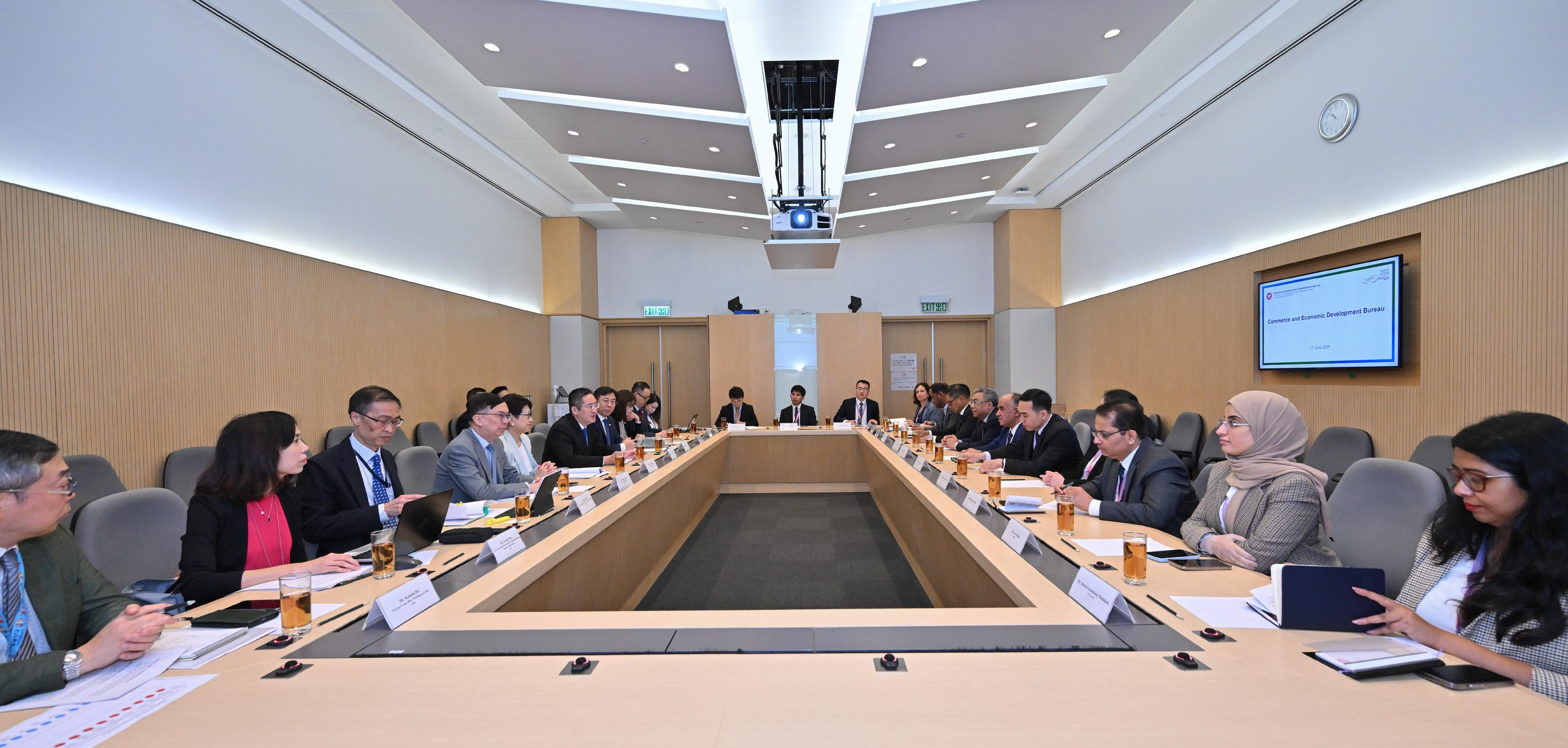
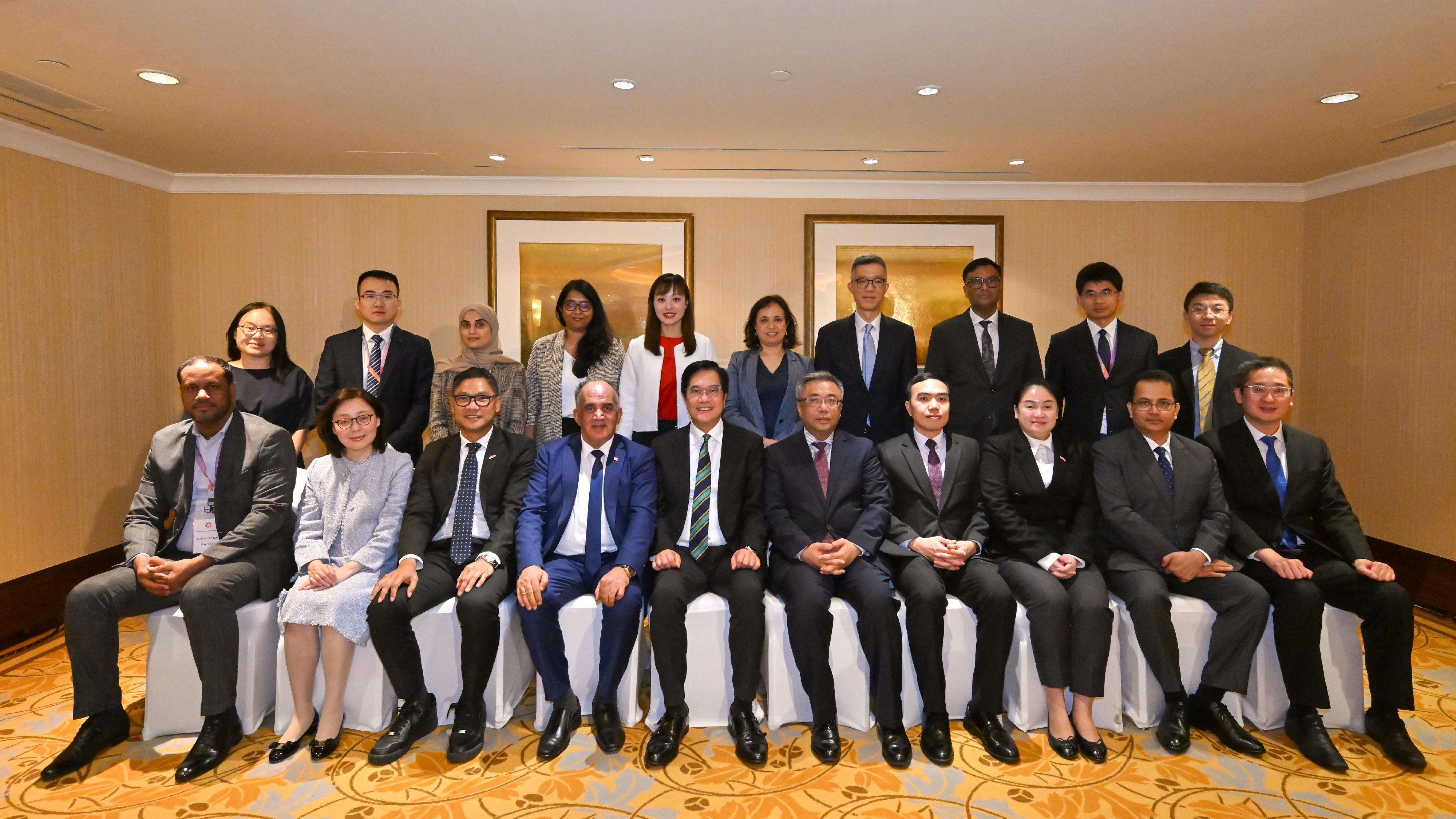
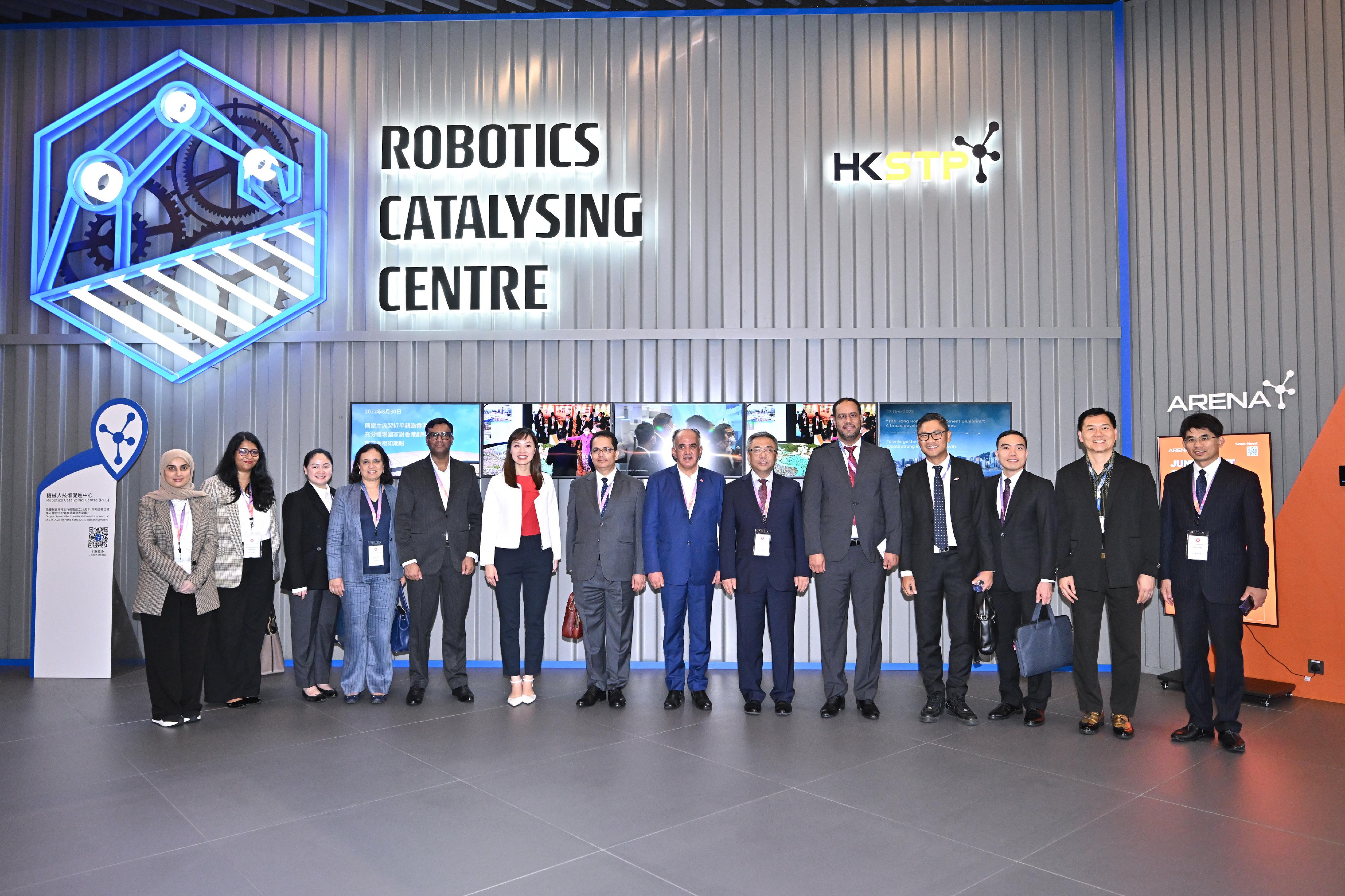
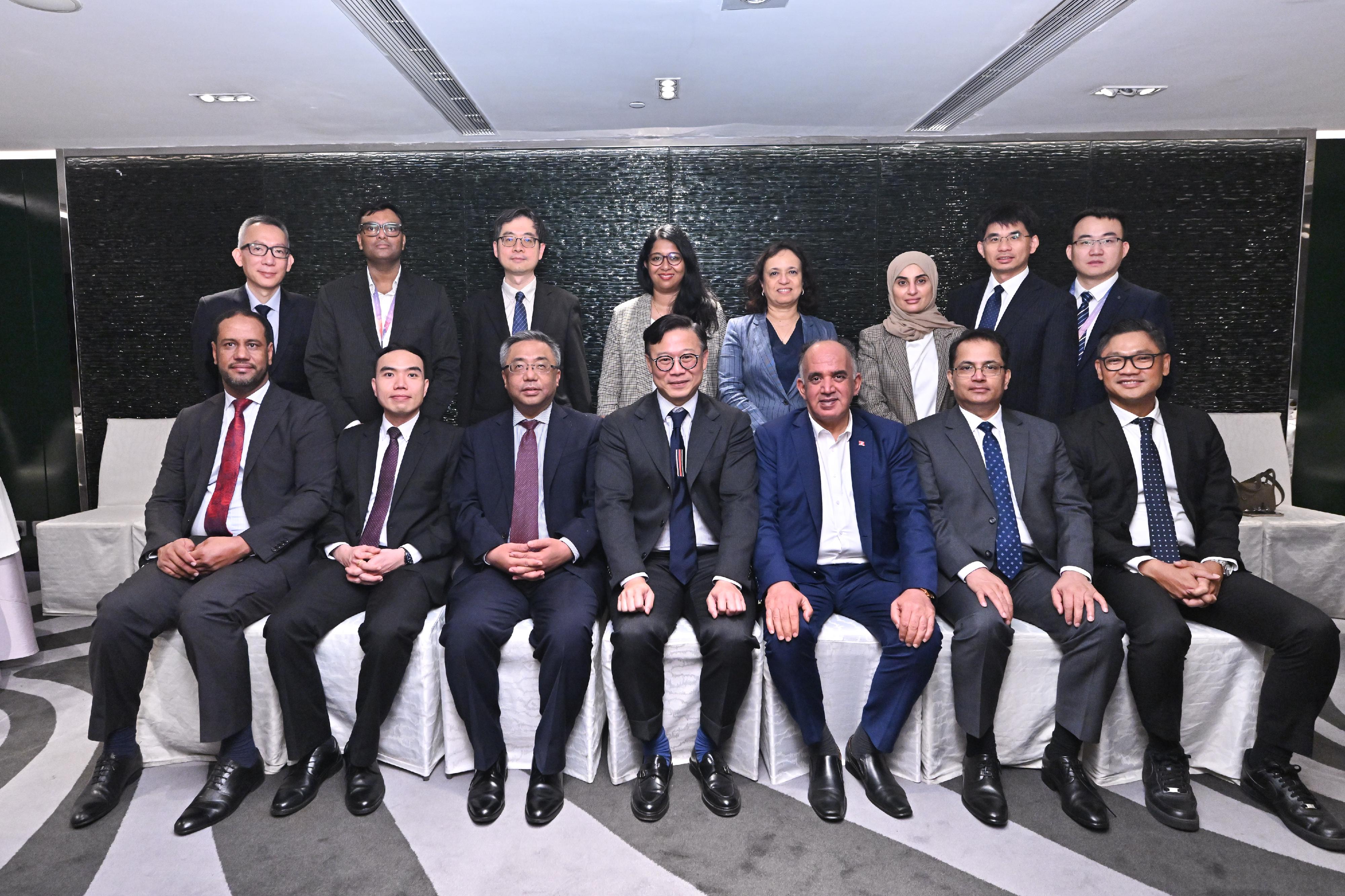
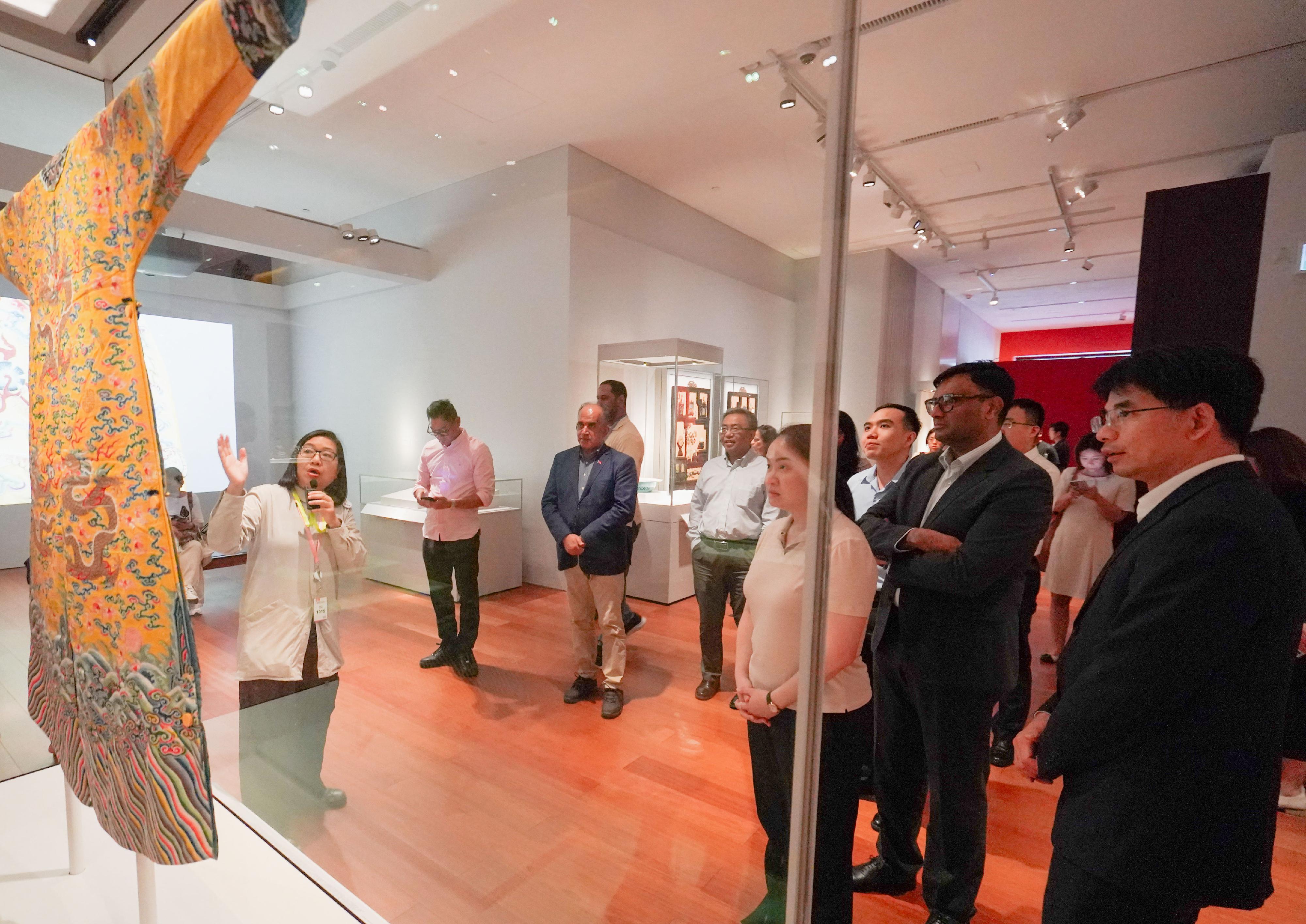
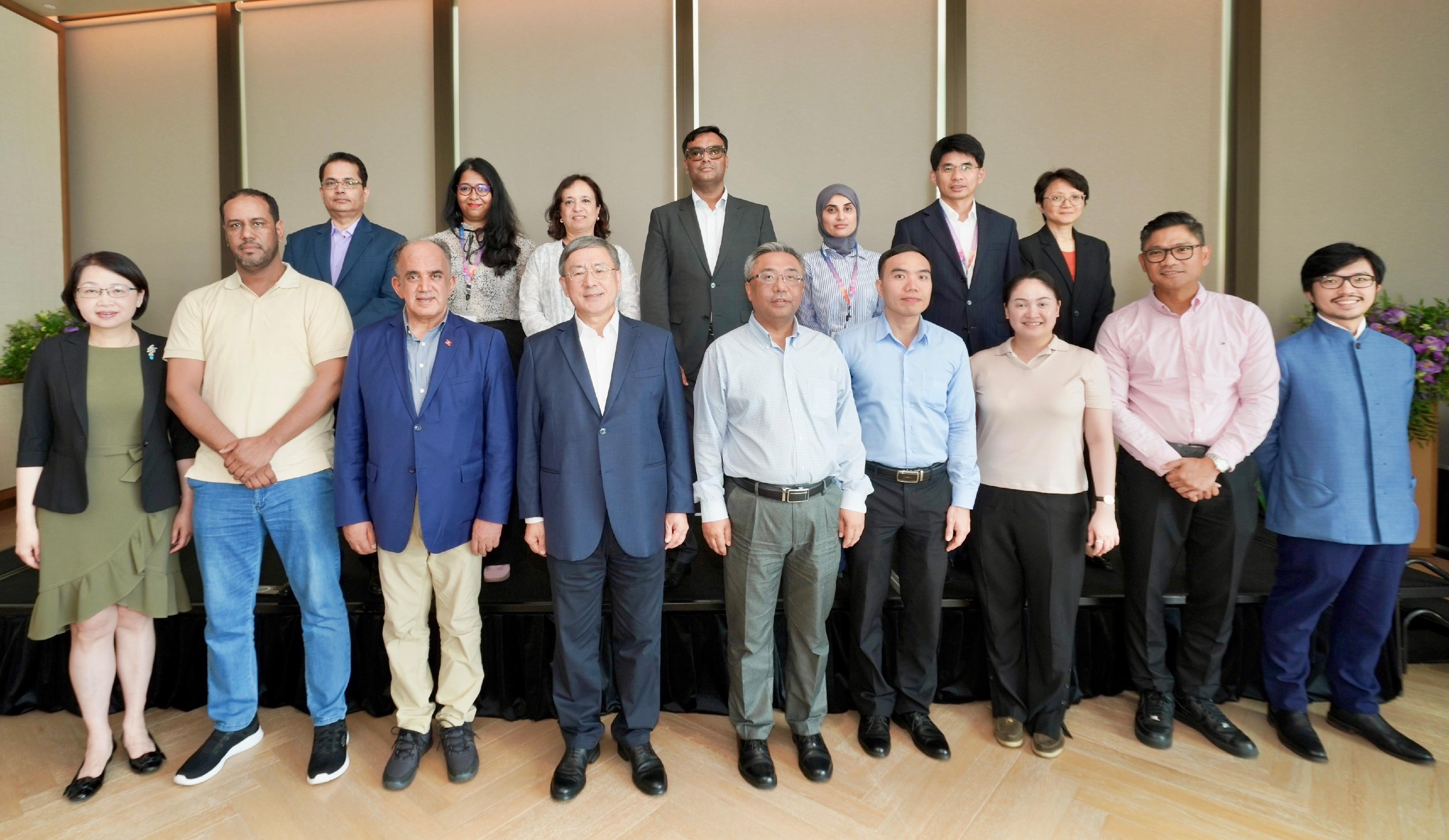
     A delegation of 10 overseas government officials completed their three-day visit to Hong Kong today (June 18). During the visit, they met with senior government officials of the Hong Kong Special Administrative Region and visited major cultural and innovation and technology facilities to deepen their understanding of Hong Kong's advantages and development opportunities.
 
     The visit was arranged by the Ministry of Foreign Affairs, which invited government officials from 10 countries across Africa and Asia. The aim was to enhance exchanges and co-operation between Hong Kong and countries around the world, as well as expand the "circle of friends" of Hong Kong.
 
     The 10 countries concerned are Cambodia, Indonesia, Laos, Mauritania, Morocco, Nepal, Pakistan, Qatar, Sri Lanka and Tunisia.
 
     During their stay in Hong Kong, the delegation met with the Acting Financial Secretary, Mr Michael Wong; the Deputy Chief Secretary for Administration, Mr Cheuk Wing-hing; and the Deputy Secretary for Justice, Dr Cheung Kwok-kwan, to exchange views and obtain a better understanding of Hong Kong's distinctive advantage of enjoying the strong support of the motherland while being closely connected to the world under the "one country, two systems" principle. The delegation also learned of Hong Kong’s important roles as a "super connector" and a "super value-adder" serving as a bridge between the Mainland and the rest of the world.
 
     They also met with the Secretary for Financial Services and the Treasury, Mr Christopher Hui; the Under Secretary for Commerce and Economic Development, Dr Bernard Chan; and the Under Secretary for Innovation, Technology and Industry, Ms Lillian Cheong, as well as representatives of a number of relevant institutions. The delegation also visited the Hong Kong Science Park and West Kowloon Cultural District to learn about the city's latest developments and opportunities in finance, trade, innovation and technology, and arts and culture.
 
     The delegation departed for Shenzhen after their visit to Hong Kong to learn more about the integrated development of the Guangdong-Hong Kong-Macao Greater Bay Area.

Photo  Photo  Photo  Photo  Photo  Photo  Photo  


Housing Authority’s response on three public housing projects

The following is issued on behalf of the Hong Kong Housing Authority:

     In response to media enquiries on the three public housing projects, a spokesman for the Hong Kong Housing Authority (HA) today (June 18) gave the following response:

     The HA noted the decision of the Court of First Instance of the High Court in favour of Aggressive Construction Company Limited (ACCL)'s application for an interim stay of the execution of the Building Department's decision to remove ACCL from the register of general building contractors, and the Building Department's follow up actions regarding this decision. In light of the latest developments, the HA is actively reviewing for practical arrangements and procedures to complete the remaining works, so that citizen in need can move into the public housing units at the earliest possible and minimise the impact on the waiting time for public rental housing.


CHP investigates confirmed Mpox case

     The Centre for Health Protection (CHP) of the Department of Health (DH) said today (June 18) that it is investigating a confirmed Mpox (also known as Monkeypox) case, and urged the public to be vigilant and avoid close physical contact with persons suspected of contracting Mpox. Meanwhile, high-risk target groups are advised to receive Mpox vaccinations.

     The case involves a 20-year-old male. He developed skin ulcer and swollen lymph nodes on June 10 and attended the Yau Ma Tei Male Social Hygiene Clinic of the DH on June 16. He is in stable condition and is being isolated at Princess Margaret Hospital.

     An initial investigation revealed that he had not received Mpox vaccination. He had a history of high-risk exposure in Hong Kong during the incubation period, but no epidemiological linkages have been established between this case and other confirmed cases previously recorded in Hong Kong. The CHP is continuing its epidemiological investigations of the case and will report it to the World Health Organization (WHO).

     The WHO held a special meeting on Mpox early this month and confirmed that Mpox remains a Public Health Emergency of International Concern. The WHO continued to appeal to member states to enhance surveillance and prevention and control measures for Mpox, in order to reduce the spread of Mpox. Hong Kong has put in place the Preparedness and Response Plan for Mpox (the Plan) since June 2022 and activated the alert response level under the Plan after the first confirmed case of Mpox in September of the same year. The CHP has implemented a series of measures (including enhanced surveillance, contact tracing, public education and vaccination) which have been effective in preventing local outbreaks of Mpox in the past three years.
      
     Since 2022, a total of 76 Mpox cases (62 local and 14 imported) have been recorded in Hong Kong, of which eight cases were recorded this year. All patients were male. Epidemiological investigations revealed that most cases had history of high-risk sexual behaviours, including having sex with strangers or without wearing condoms when having sex. Hong Kong has not yet detected any new Mpox strain (Clade Ib) cases. 

     The CHP reminded high-risk target groups to receive Mpox vaccinations in order to lower the risk of infection or the possibility of having more severe symptoms after infection. In addition, persons who experience Mpox symptoms (including rashes, fever, chills, swollen lymph nodes, exhaustion, muscle pain, and severe headaches) or suspect themselves of being infected are advised to seek medical attention and receive treatment at once. They should not engage in activities with others that may expose others to their skin rash or body fluids. Members of the public should maintain good personal and hand hygiene to prevent virus transmission or infection through contact. They should also avoid close physical contact with persons or animals suspected of being infected.

     The CHP has set up an Mpox telephone hotline (2125 2373), which operates from Monday to Friday from 9am to 5pm, excluding public holidays. Those who suspect or are concerned that they may have had high-risk contact with confirmed cases, particularly men who have sex with men or those who have sexual practices with strangers, can use the hotline to make enquiries and receive relevant health advice.

     Furthermore, the DH provides vaccination services to high-risk groups of Mpox. The following high-risk target groups are eligible for Mpox vaccinations on a voluntary basis:
 

  1. individuals with high-risk sexual practices, e.g. having multiple sexual partners, sex workers, or having a history of sexually transmitted infection within the past 12 months;
  2. healthcare workers responsible for caring for patients with confirmed Mpox;
  3. laboratory personnel working with zoonotic pox viruses; and
  4. animal care personnel with high risk of exposure in case of Mpox occurrences in animals in Hong Kong.

     The high-risk target groups can receive Mpox walk-in vaccinations at any of the DH's Social Hygiene Service Clinics (SocHS) (namely Chai Wan SocHS, Wan Chai Male SocHS, Wan Chai Female SocHS, Yau Ma Tei Male SocHS, Yau Ma Tei Female SocHS, Yung Fung Shee SocHS, Fanling SocHS and Tuen Mun SocHS) and the DH's Yau Ma Tei Integrated Treatment Centre.

     Meanwhile, the DH's Kowloon Bay Integrated Treatment Centre and the Hospital Authority's Special Medical Clinics at Queen Elizabeth Hospital and Princess Margaret Hospital also provide Mpox vaccination services for their clients.

     For more details, please visit the CHP's page on Mpox and Mpox Vaccination Programme.


LCQ5: Measures to monitor condition of water mains

     â€‹Following is a question by the Hon Yung Hoi-yan and a reply by the Secretary for Development, Ms Bernadette Linn, in the Legislative Council today (June 18):
 
Question:
 
     The earlier fresh water quality incidents at Queen's Hill Estate and Shan Lai Court, as well as the water mains burst incident in Tuen Mun, have aroused public concern about the condition of water mains. In this connection, will the Government inform this Council:
 
(1) of the staff establishment and work details of the working group established in connection with the water quality incidents at Queen's Hill Estate and Shan Lai Court, including the estimated number of times that the water tanks will be cleansed and the water quality will be tested, as well as the expenditures involved; whether the group will investigate if the incidents involved human negligence; of the total number of enquiries or requests for assistance from residents on water quality problems received by the offices of the two housing estates/housing courts so far;
 
(2) as the Water Supplies Department has indicated that it will replace all pipes in Hong Kong which are still coated with bitumen, of the distribution of the pipes concerned in various districts in Hong Kong at present, the names of the housing estates/housing courts involved, as well as the timetable for the relevant pipe replacement work; whether it has plans to inspect the fresh water supply systems of all housing estates/housing courts in Hong Kong to ascertain that they will not accumulate bitumen, resin or other impurities; if so, of the details (including the timetable, the manpower and the expenditure involved); if not, the reasons for that, and the measures in place to prevent similar incidents; and
 
(3) whether it has plans to enhance the application of technology and artificial intelligence to conduct 24-hour continuous monitoring and analysis of the conditions of water mains and water quality, so as to identify abnormalities in water mains at an early stage and carry out repairs; if so, of the details; if not, the reasons for that?
 
Reply:
 
President,
 
     My reply to the questions raised by the Hon Yung Hoi-yan is as follows:
 
(1) The Government is highly concerned about the incident of bitumen sediments found in the fresh water at Queen's Hill Estate and Shan Lai Court. After receiving reports of black spots in the water at the end of May, the Water Supplies Department (WSD) and the Housing Department (HD) immediately formed a joint working group to conduct a joint investigation on the incident and formulate measures to resolve the issue. The working group is co-led by the Director of Water Supplies and the Deputy Director (Estate Management) of the HD, with members including 11 staff such as in-service engineers and property management professionals responsible for the operation of the water supply facilities and estate management in that area. The WSD has cleaned 11 times for the water mains under its management and maintenance, while the HD has conducted six and three times of cleaning of the water pipes and water tanks under its management respectively. The HD has also installed 22 screen filters at the water inlet of each building and the estates. The WSD continues to collect water samples from the estates for testing. So far, all samples have complied with the Hong Kong Drinking Water Standards.
 
     Since the establishment with promotion of the 24-hour hotline on June 7, the Government has received a total of about 700 enquiries. In addition, the WSD has received over 1 500 requests for flushing water meters through various channels, including street counters and home visits organised by the members of District Council, the three district committees and the Care Teams, and the WSD has completed the flushing of water meters within one to two days. Currently, most of the residents reported an improvement in water quality and follow-up action is not required.
 
     The WSD believes that the black sediments in the fresh water originated from a 400-metre-long steel water main at the upstream water supply network at Ping Che Road. This water main uses bitumen as an inner lining serving as a protective coating, and the sediment is likely residue that was flushed into the inside service of the estates before the installation of screen filters at the WSD's water mains by the end of 2022. We have set up an expert group consisting of the Chairman and two members of the Drinking Water Safety Advisory Committee (DWSAC) to assist with the traceability work. The expert group believes that the above assessment is reasonable. The WSD will submit an investigation report of the incident to the DWSAC for review in the near term.
 
     Learning from this experience, we should be able to make improvement in the aspects of the explanation process and handling time. We are now working at full steam on the various tasks and the expenditure involved is part of the expenditure of relevant departments in providing service, making it difficult to be separated out for the time being.
 
(2) Similar to Hong Kong, water mains with bitumen lining as protection still exist in the water supply systems of some advanced cities. The material is prone to peeling after prolonged use. The WSD has ceased applying bitumen lining on fresh water mains since 2005. At present, we have conducted further classification of water pipes that still contain this type of lining. Only about 230 km are fresh water distribution mains, representing roughly 3.9 per cent of Hong Kong's total fresh water distribution mains. The distribution of their locations is set out at Annex of the reply.
 
     While the bitumen used in water supplies facilities is inert and insoluble in water, any peeled tiny particles in the water supply can still cause worries among the public. To address this situation, the WSD has installed over 1 000 screen filters in the related water supply network taking into account the amount of peeling, complaint cases and population supplied with the water, etc. These filters effectively prevent peeling materials from entering the inside service of the buildings. The WSD is reviewing the necessity of installing additional screen filters at suitable locations, and revising the guidelines to advise property management companies on the methods to maintain water mains and screen filters.
 
     To expedite the decommissioning of the water mains with bitumen lining at Ping Che Road related to Queen's Hill incident, the WSD has explored to adopt an out-of-the-box approach over the past week by using exposed temporary water mains. They, together with the Development Bureau (DEVB) and the contractor, collaborate with the Transport Department, the Hong Kong Police Force and the North District Office on inter-departmental and collaborative basis to formulate traffic arrangements. Despite busy traffic conditions and narrow work space of the site, through collective efforts, the WSD will immediately commence the project and work around the clock to complete the temporary water mains by early July. In other words, this section of bitumen lining steel water mains will decommission from early July onwards. The WSD will also strive to replace the exposed temporary water mains with a permanent underground water mains by the end of this year.
 
     Last year, the WSD obtained funding approval from the Legislative Council for replacing or rehabilitating about 20 km (Note) of steel mains with bitumen lining on the inner wall. In response to this incident and ageing water mains burst, the WSD will submit short and medium term proposals for water mains replacement to the DEVB for review. We expect to discuss this at the meeting of the Panel on Development next month.
 
(3) The WSD will expand the monitoring area of Water Intelligent Network (WIN) to include fresh water trunk mains and all fresh water distribution mains. The sensors used for monitoring the water flow and pressure will also be upgraded to expedite the identification and repair of water mains with potential burst risk. The entire project is expected to be completed in 2027. We have asked the WSD to explore the possibility of early completion.
 
     The WSD will collaborate with the Hong Kong Polytechnic University to set up the joint laboratory of "In-line Robot" this August to conduct high-precision inspections of water mains.
 
     As regards the monitoring of water quality, the WSD has installed 24-hour online water quality monitoring systems in some key reservoirs and water treatment works. In addition, the WSD randomly collects water samples from some 28 000 consumers' taps in Hong Kong for testing every year. The sampling ratio, testing methods, and parameters covered adhere to international standards. The WSD has also commenced a study since 2023 to construct more water quality monitoring points in the water supply network in the following few years to enhance the alert capability. The study is expected to be completed within this year.
 
     Thank you, President.
 
Note: Distributed in Sai Kung, Tuen Mun, Eastern and Sham Shui Po


HKMC alerts public of fraudulent website

The following is issued on behalf of the Hong Kong Monetary Authority:

     â€‹The Hong Kong Mortgage Corporation Limited (HKMC) has recently received public inquiries about a fraudulent website at https://www.noblewincapitallimited[.]com which largely replicates the official website of the HKMC.
      
     The HKMC advises that such fraudulent website has no affiliation with the HKMC and any of its subsidiaries (collectively "HKMC Group") or any business of the HKMC Group (including the AMIGOS By HKMC loyalty programme). The genuine official website address of the HKMC is www.hkmc.com.hk
      
     The HKMC urges the public to beware of suspicious calls, websites or other communications, and to remain vigilant in protecting personal information. If you receive any suspicious communication purportedly from a member of the HKMC Group, please call the HKMC's general line at 2536 0000 to verify.  If you suspect that you are the victim of fraudulent acts, you should report promptly to the Police.