Effective Exchange Rate Index
The effective exchange rate index for the Hong Kong dollar on Wednesday, April 2, 2025 is 106.7 (same as yesterday's index).
The effective exchange rate index for the Hong Kong dollar on Wednesday, April 2, 2025 is 106.7 (same as yesterday's index).
The effective exchange rate index for the Hong Kong dollar on Wednesday, April 2, 2025 is 106.7 (same as yesterday's index).
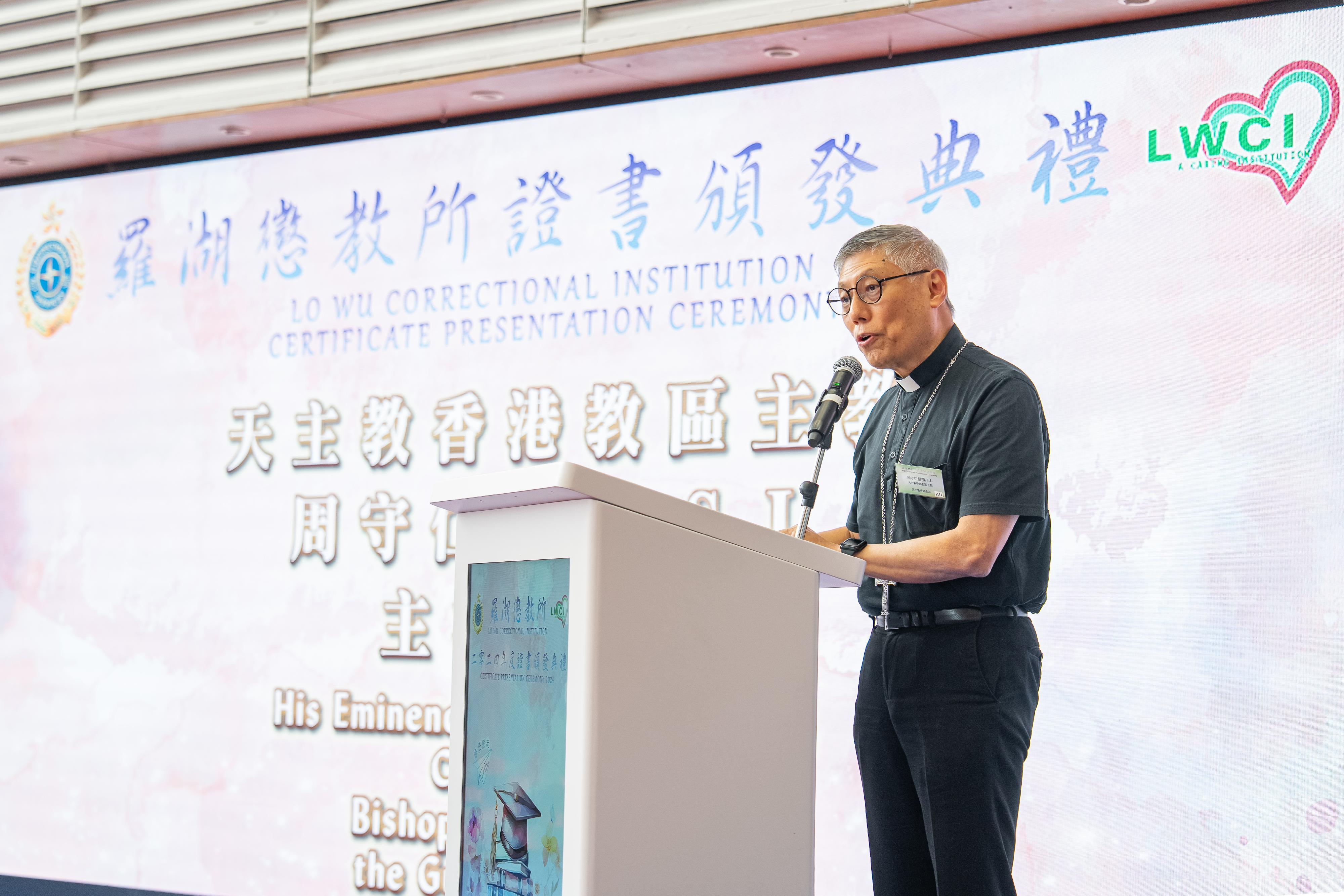
Sixty-eight persons in custody (PICs) at Lo Wu Correctional Institution (LWCI) of the Correctional Services Department (CSD) were presented with certificates at a ceremony today (April 2) in recognition of their continuous efforts in pursuing further studies.
In 2024, a total of 125 PICs at LWCI passed 215 papers with 106 distinctions and credits in various distance learning course and public examinations, covering different subjects including language and literature, English language, business finance, economics, marketing and psychology, organised by the Hong Kong Metropolitan University (HKMU), the Hong Kong Examinations and Assessment Authority, and Caritas Institute of Community Education. The 68 PICs who received certificates today passed 111 papers with 44 distinctions and credits. Among them, two PICs were awarded Bachelor's Degrees in Social Sciences and one was awarded an Associate Degree in General Studies by the HKMU.
Officiating at the ceremony, the Bishop of the Catholic Diocese of Hong Kong, Cardinal Stephen Chow, said that the Diocese has long attached importance to the well-being of PICs and provided prison ministry services for PICs to serve their religious needs and spread the Gospel. The Diocese has been highly supportive of the rehabilitation work of the CSD. It set up the Light Up Education Fund of the Catholic Church in 2023, running for at least three years, with an annual donation of $1 million to the CSD to provide education subsidies for PICs aged 35 or below with financial difficulties, so as to actively encourage them to pursue continuing studies. The Diocese has also collaborated with the CSD to help PICs create a new life plan and rebuild family relationships, as well as to provide them with job opportunities after their release.
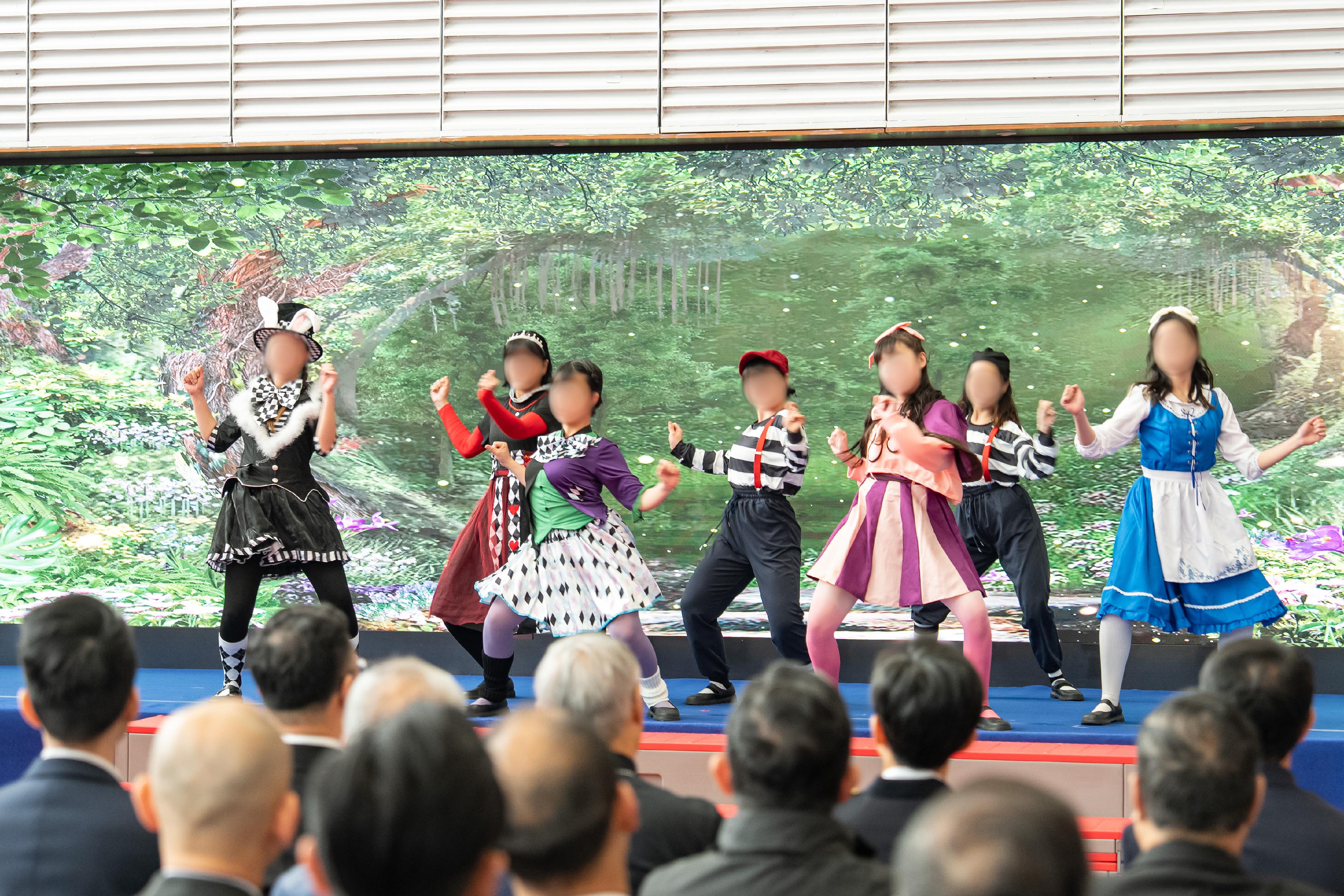
During the ceremony, about 30 PICs took part in a musical to demonstrate their determination to turn over a new leaf in the prison and reset life goals for rehabilitation. Thereafter, the PICs presented thank-you cards to the volunteer vocal tutor and choreography tutor to express gratitude for their guidance, which enabled them to overcome challenges with perseverance and hard work.
In the sharing session, a PIC shared her experience in the course of rehabilitation and thanked her family members for their unwavering support. She resumed her studies during imprisonment and found her direction in life in the course of pursuing her studies. Her mother also shared her happiness of witnessing her daughter's positive changes and expressed gratitude for the CSD's assistance in helping her daughter rehabilitate.
Also attending the ceremony were representatives of non-governmental and community organisations, community leaders and family members of the certificate recipients.
​
LWCI is a medium security institution for female adult convicted PICs, female adult remand PICs and female adult drug addicts undergoing treatment programmes under the Drug Addiction Treatment Centres Ordinance.


Having considered the proposal submitted by the Hong Kong Jockey Club (HKJC), views from the Betting and Lotteries Commission (BLC), and other related issues concerning illegal basketball gambling, the Government today (April 2) launched a consultation on the proposed regulation of basketball betting activities.
In recent years, quite some members of the public have expressed concerns about the problem of illegal basketball betting in Hong Kong. According to the latest assessment of the HKJC, the turnover of illegal basketball betting reached $70 billion to $90 billion in 2024. To combat illegal betting activities in an effective manner, the Government announced in the 2025-26 Budget that it will explore regulating basketball betting activities.
The Government proposes establishing a regulatory regime for basketball betting by modelling on the existing regime for football betting. Through amending the Betting Duty Ordinance (Cap. 108), the Secretary for Home and Youth Affairs will be granted the power to issue a licence for basketball betting to the HKJC and to impose licensing conditions to minimise the negative impact of gambling on the public, especially on young people.
Mirroring the regulatory regime on football betting, major licensing conditions of the proposed regulation of basketball betting activities are as follows-
(1) A fixed duration shall be set on the licensing period;
(2) The Government shall impose restrictions on the number of bet types and classes of competitions;
(3) The licensed operator shall not accept bets on basketball matches involving Hong Kong teams and/or matches that take places in Hong Kong, to promote a betting-free and healthy environment for the sport in Hong Kong;
(4) The licensed operator shall not accept bets from juveniles;
(5) The licensed operator shall not accept credit betting; and
(6) The licensed operator shall display notices reminding the public of the seriousness of the problems caused by excessive gambling, and provide information on the services available for those with gambling disorder.
A spokesman for the Home and Youth Affairs Bureau (HYAB) said, "As a matter of policy, the Government does not encourage gambling. The Government adopts a multipronged strategy to address gambling-related issues, combining regulation of gambling activities through legislation, law enforcement against illegal gambling, public education and publicity on the harms of gambling addiction, and provision of counselling and support services to people in need.
"There is, however, undeniably an actual and persistent demand for gambling in Hong Kong which, if left unregulated, would likely give rise to illegal gambling activities and associated social problems and other criminal activities. As such, the Government adopts a pragmatic approach by allowing only a limited number of authorised gambling outlets, which includes authorising the HKJC to conduct horse race betting, Mark Six Lottery and football betting in accordance with the Betting Duty Ordinance (Cap. 108)."
Please refer to the website of the HYAB (www.hyab.gov.hk/file_manager/en/documents/policy_responsibilities/consultation_paper.pdf) for the consultation document on the regulatory regime for basketball betting and details of submissions. Members of the public may submit their views by post to 13/F, West Wing, Central Government Offices, 2 Tim Mei Avenue, Tamar, Hong Kong (Attention: Home Affairs Division, Home and Youth Affairs Bureau) (date of the stamp chop will be taken as the submission date), by fax to 2591 6002 or by email to ha@hyab.gov.hk on or before May 2.
Furthermore, having consulted the BLC, the Government has decided to renew the licence for football betting of the HKJC Football Betting Limited for five years with effect from July 18, 2025. The conditions under the existing regime will remain largely the same, including the prohibition on accepting bets from juveniles, the prohibition on accepting credit betting, requirements to display warnings about the seriousness of excessive gambling and provide information on the services available for those with gambling disorder, and more. The licensing authority will continue to request the licensed operator not to accept bets on football matches involving Hong Kong teams and/or matches that take places in Hong Kong, to promote a betting-free and healthy environment for the sport in Hong Kong. Moreover, restrictions shall be imposed on the number of bet types and classes of competitions that the licensed operator may offer.
Following is a question by the Hon Luk Chung-hung and a reply by the Secretary for Health, Professor Lo Chung-mau, in the Legislative Council today (April 2):
Question:
It has been reported that obsessive use of mobile phones by infants and young children will bring them such harms as social deprivation, sleep deprivation, attention fragmentation and addiction, which are detrimental to the development of their physical movement, fine motor, language, cognitive and social skills. Earlier on, legislation was enacted in Australia to prohibit the use of social media platforms by children and adolescents under the age of 16. The Guidelines (Trial) on Early Childhood Development Services issued by the National Health Commission has also pointed out that infants and young children aged 0 to 3 should not be exposed to any form of products with display screens. In this connection, will the Government inform this Council:
(1) whether the Government will draw on the experience of our country, Australia and other regions to enact legislation restricting or prohibiting the use of electronic screen products by infants and young children aged 0 to 3;
(2) whether the Government will consider devising relevant guidelines on the use of computers and the Internet by primary and secondary school students and adolescents; and
(3) as there are views that parents should, through such means as parent-child exchanges, help their infants and young children acquire the abilities to engage in interpersonal exchanges, express emotions and consider other people's feelings, whether the Government will consider promoting to society the importance for children to stay away from electronic screen products, as well as providing parents with consultation channels in order to help them establish a correct concept of family education?
Reply:
President,
The Government attaches great importance to the physical and mental health of children and adolescents, and provides comprehensive health promotion and medical services by deploying substantial resources in education, public health and medical systems. In particular, we are concerned about the impact of excessive use of the Internet and electronic screen products on their physical and mental development. The Department of Health (DH) set up an Advisory Group on Health Effects of Use of Internet and Electronic Screen Products (Advisory Group) as early as 2013 comprising of members from the Education Bureau (EDB), the Social Welfare Department and relevant Colleges of the Hong Kong Academy of Medicine, etc, and published the Report of Advisory Group on Health Effects of Use of Internet and Electronic Screen Products in 2014 with recommendations for children, adolescents, parents and teachers on healthy use of the Internet and electronic screen products.
In consultation with the EDB, the DH and the Primary Healthcare Commission (PHC Commission), the reply to the question raised by the Hon Luk Chung-hung is as follows:
(1) and (3) The Mainland and other regions in the world have provided guidelines and recommended the time for infants and young children to use electronic screen products, instead of restricting or prohibiting the use of electronic screen products by infants and young children by legislation. The Australian Government enacted legislation last year to prohibit the use of social media platforms by children and adolescents under the age of 16, but has not restricted or prohibited the use of electronic screen products. Regulating the use of electronic screen products by way of legislation requires consideration of a number of factors, including public acceptance, how to regulate, how to enforce and feasibility of enforcement. The Government does not have any relevant legislative plans at present.
With reference to international guidelines, the DH updated the relevant health advice on the use of electronic screen products in 2018 and suggested that infants and young children aged below 2 should avoid exposure to electronic screen products, except for interactive video-chat under parents' guidance; and that children aged between 2 and 5 should limit their daily screen time to within one hour, and that such screen activities should be interactive and educative, and should be carried out under the guidance of parents. These recommendations are similar to the guidelines of the Mainland, Singapore, the United States and Australia. The DH will continue to keep in view international experience and the local situation, and review the relevant recommendations in a timely manner.
As a matter of fact, the period before the age of 6 is the prime time for the development of infants and young children. Parents should seize the time to carry out more parent-child communication activities to enhance healthy and all-round development of children, which is particularly important for their future development in learning, thinking and socialising. The DH provides information on childcare and parenting through the Maternal and Child Health Centres, including the abovementioned health advice on the use of electronic screen products. In addition, the DH also promotes relevant health advice on the use of electronic screen products through thematic webpages, social media, public seminars, online and on-site parent seminars at schools and parent workshops, etc.
(2) Regarding the use of the Internet and electronic screen products by primary and secondary school students and adolescents, taken into account overseas scientific information and the local context, the Advisory Group recommended that primary school students aged between 6 and 12 should limit the recreational screen time to less than two hours a day, while secondary school students aged 12 to 18 should learn good time management and take regular breaks if prolonged screen time for study purpose is unavoidable. They should also remember the 20-20-20 rule: take a 20-second break to view something at least 20 feet away for every 20 minutes.
The DH has been providing free annual health assessment for primary and secondary school students, including growth monitoring, vision and hearing assessments, to continuously monitor various health indicators of all students in Hong Kong. Students found to have health problems will be referred for further assessment and treatment. According to the latest statistics, due to the COVID-19 epidemic, the overall time spent by primary and secondary school students on the Internet and electronic screen products for recreational purposes has increased by more than 10 percentage points as compared with that before the epidemic. The DH will hold a press conference this afternoon and release the "Student Health Service Annual Health Report for 2023/24 School Year", summarising the key findings of the annual health assessment service provided to all primary and secondary school students in Hong Kong during the year, including the time in using the Internet and electronic screen products.
As a matter of fact, home and school are both the major places where children learn and establish healthy habits. Collaboration between home and school is the key to helping children develop good use of the Internet and electronic screen products. The EDB provides the "Information Literacy for Hong Kong Students" Learning Framework for schools to strengthen the relevant information literacy learning elements in primary and secondary curricula with a view to fostering students' ability and attitude to use information and communication technology effectively such that they are able to use the Internet and electronic devices properly and healthily.
In the meantime, to cultivate healthy lifestyle among children and adolescents from an early age, the DH has launched the Whole School Health Programme (WSHP) to assist schools in systematically reviewing and formulating measures to promote physical activity, healthy eating, mental health and social well-being. It is announced in "The Chief Executive's 2024 Policy Address" that the WSHP will be extended to cover all primary and secondary schools in Hong Kong, and that health reports will be compiled for each participating school to recommend targeted school-based health promotion measures with a view to further promoting students' physical and mental health. Besides, the PHC Commission is actively promoting the Life Course Preventive Care Plan and formulating a personalised preventive care plan to address the health needs of citizens (including school children) across different life stages, such as making recommendations on daily screen time based on the school children's age groups.
Thank you, President.