Import of poultry meat and products from Rural Municipality of Wallace of Manitoba Province in Canada suspended

     The Centre for Food Safety (CFS) of the Food and Environmental Hygiene Department announced today (May 13) that in view of a notification from the World Organisation for Animal Health (WOAH) about an outbreak of highly pathogenic H5N1 avian influenza in the Rural Municipality of Wallace of Manitoba Province in Canada, the CFS has instructed the trade to suspend the import of poultry meat and products (including poultry eggs) from the area with immediate effect to protect public health in Hong Kong.

     A CFS spokesman said that according to the Census and Statistics Department, no poultry meat and eggs were imported into Hong Kong from Canada in the first three months of this year. 

     "The CFS has contacted the Canadian authority over the issue and will closely monitor information issued by the WOAH and the relevant authorities on the avian influenza outbreak. Appropriate action will be taken in response to the development of the situation," the spokesman said.


AFCD announces new quarantine arrangements for cats and dogs imported from Mainland

     The Agriculture, Fisheries and Conservation Department (AFCD) announced today (May 13) that new quarantine arrangements for cats and dogs imported from the Mainland will be implemented. With effect from June 3, the Mainland will be included in Group IIIA. Cats and dogs imported from the Mainland that meet the relevant quarantine requirements and are accompanied by an animal health certificate issued by Mainland official veterinarians will have their quarantine period significantly reduced from the current 120 days to 30 days upon arrival in Hong Kong. The new arrangements will facilitate animal owners in bringing their pet cats and dogs from the Mainland to Hong Kong.

     Applicants who import cats and dogs from the Mainland must ensure that the animals comply with the requirements of Group IIIA and submit the necessary proof to the AFCD. These include having the animals implanted with a conforming microchip, holding a valid vaccination certificate for rabies and designated infectious diseases, obtaining satisfactory results from rabies antibody titer testing conducted at a laboratory approved by the AFCD on a blood sample taken not less than 90 days and not more than one year before departure, and possessing an animal health certificate issued by Mainland official veterinarians.

     An AFCD spokesman said that to ensure strict implementation of the relevant quarantine regulations, the AFCD has agreed with the Mainland authorities that official veterinarians of Shenzhen Customs will issue the animal health certificates in the first phase of implementation. Detailed requirements for issuing health certificates by the Mainland can be obtained from Shenzhen Customs. Details of the quarantine arrangements and the application procedures for importing cats and dogs from the Mainland, including the method of reserving quarantine facilities and information on recognised laboratories on the Mainland, are available on the AFCD website.

     The AFCD will continue to closely refer to the latest information on animal diseases announced by the World Organisation for Animal Health, and optimise the quarantine requirements of imported dogs and cats in a timely manner based on operational experience, risk assessment and other factors.


Hunan cuisine restaurant brand LAOMAQUE opens first outlet outside Mainland in Hong Kong (with photos)

     ​Invest Hong Kong (InvestHK) announced that Hunan cuisine restaurant brand, LAOMAQUE, officially opened its first restaurant outside the Mainland in Hong Kong today (May 13), marking the well-established Hunan brand's strategic expansion into the Greater Bay Area (GBA) market.

     Acting Director-General of Investment Promotion at InvestHK, Mr Arnold Lau, said, "We welcome LAOMAQUE to our vibrant culinary landscape, celebrating the rich flavours of healthy and fresh Hunan cuisine. This addition not only enhances Hong Kong's diverse dining scene but also strengthens our position as a global gastronomic destination."

     Located in Wan Chai, LAOMAQUE views this new location as a strategic building block in extending LAOMAQUE's presence throughout the GBA. "The decision to set up in Hong Kong aligns perfectly with LAOMAQUE's central strategy of establishing a strong foothold in the GBA and fulfilling our ambition to become the premier Hunan restaurant brand in the region," said the CEO of LAOMAQUE, Mr Dai Yong.

     LAOMAQUE was awarded the "Dazhong Dianping Must-Eat List" and "Guangdong top 50 restaurants". The group's brand "Cheers" was selected in the Guangzhou Michelin Guide from 2022 to 2024.

     LAOMAQUE specialises in seafood from Hunan cuisine, with its signature dishes including "boiled fish fillet with soybean milk" and "chop chili and steam fish head". Its dishes have been well received by customers for breaking the stereotype of Hunan cuisine as being overly spicy and greasy. Before entering the Hong Kong market, the restaurant attracted repeat requests from the city's visitors to set up a presence in Hong Kong. Timed with new market opportunities, the group now officially enters the Hong Kong market, showing its full commitment to and confidence in the Hong Kong market.

     "There is a saying in Hunan that 'The old sparrow of Dongting Lake, no stranger to stormy waves.' The name LAOMAQUE is inspired by this local proverb, with an underlying philosophy originating from Dongting Lake – the 'old sparrow' brings with it an abundance of seafood and ingredients. With over two decades of adhering to strict standards in food sourcing and preparation, LAOMAQUE has built a loyal patronage, including many from Hong Kong. Over the next one to three years, we aim to open more outlets across the city. In response to market trends and consumer feedback, the brand continues to update its menu and services and introduce banquet-style restaurants with mid-to-high-end private dining to cater to the diverse needs of its customers," added Mr Dai.

     The Hong Kong operation serves as a regional office, overseeing day-to-day operations, scouting additional sites for expansion, and recruiting local talent. LAOMAQUE is committed to bringing healthy and modernised Hunan cuisine to a broad audience.

     To get a copy of the photos, please visit www.flickr.com/photos/investhk/albums/72177720326073089.
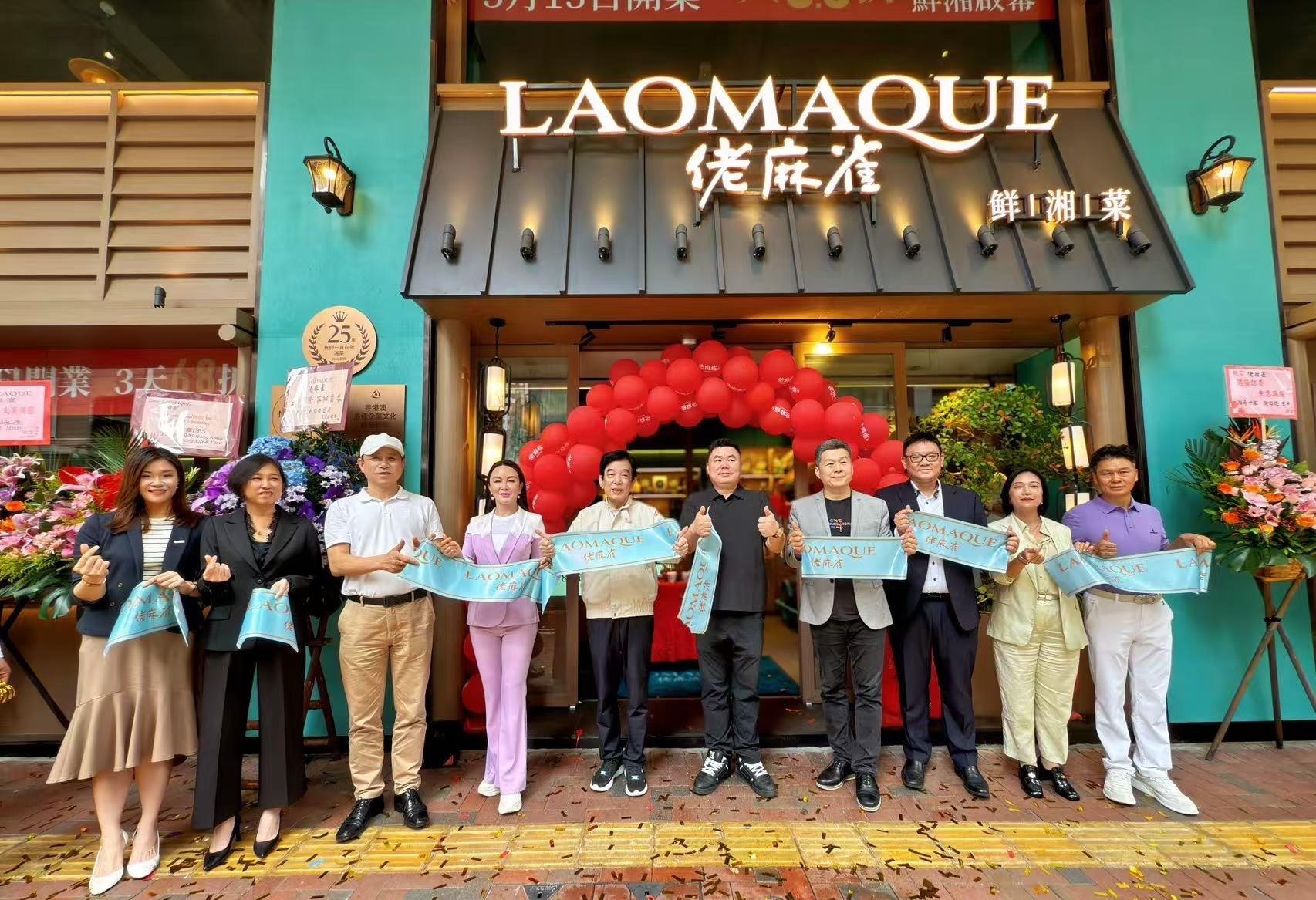
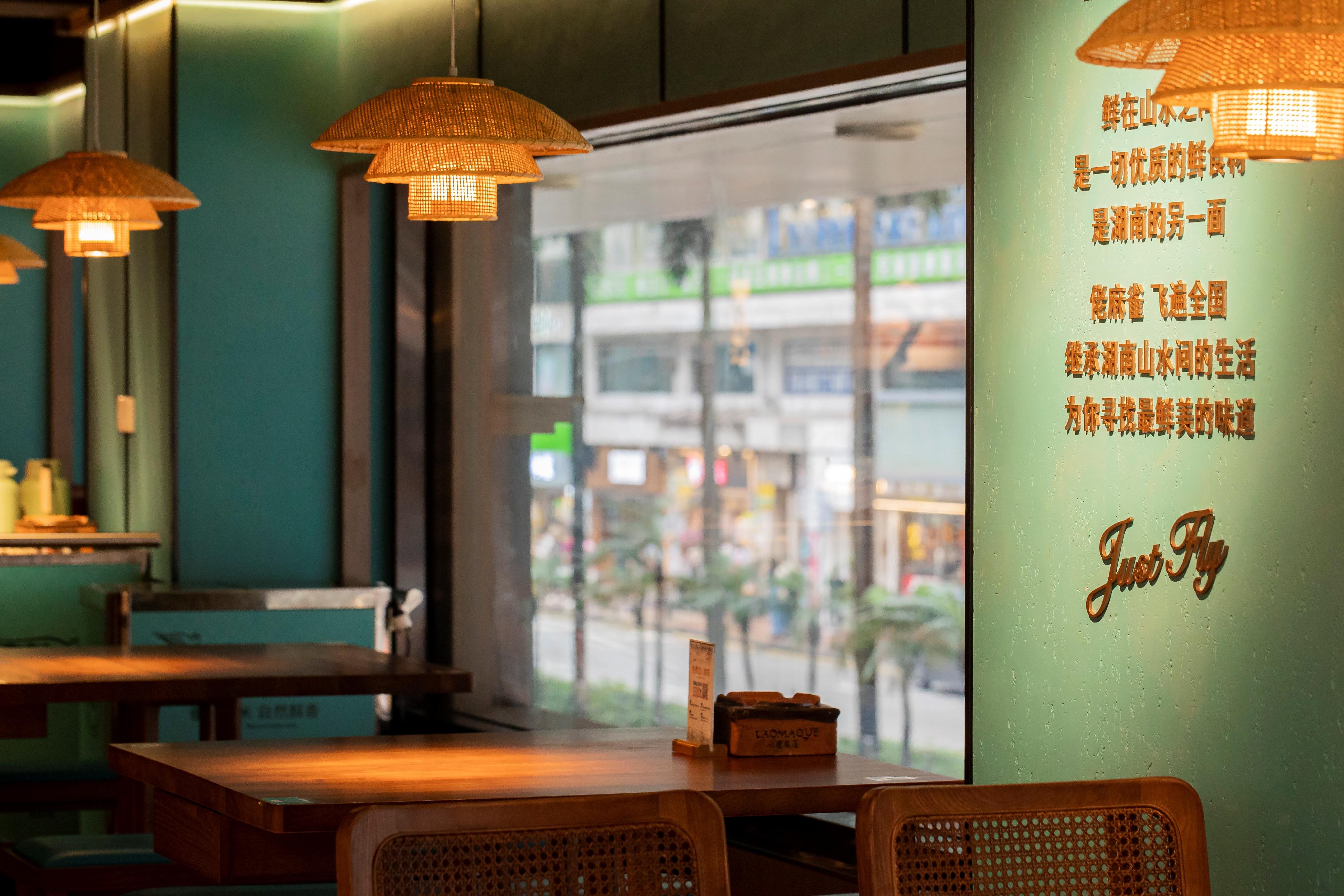
Photo  Photo  


Effective Exchange Rate Index

     The effective exchange rate index for the Hong Kong dollar on Tuesday, May 13, 2025 is 104.8 (down 0.1 against yesterday's index).


Inspection of aquatic products imported from Japan

     In response to the Japanese Government's plan to discharge nuclear-contaminated water at the Fukushima Nuclear Power Station, the Director of Food and Environmental Hygiene issued a Food Safety Order which prohibits all aquatic products, sea salt and seaweeds originating from the 10 metropolis/prefectures, namely Tokyo, Fukushima, Ibaraki, Miyagi, Chiba, Gunma, Tochigi, Niigata, Nagano and Saitama, from being imported into and supplied in Hong Kong.
 
     For other Japanese aquatic products, sea salt and seaweeds that are not prohibited from being imported into Hong Kong, the Centre for Food Safety (CFS) of the Food and Environmental Hygiene Department is conducting comprehensive radiological tests to verify that the radiation levels of these products do not exceed the guideline levels before they are allowed to be supplied in the market.
 
     As the discharge of nuclear-contaminated water is unprecedented and will continue for 30 years or more, the Government will closely monitor the situation and continue to implement the enhanced testing arrangements. Should anomalies be detected, the Government does not preclude further tightening the scope of the import ban.
 
     From noon on May 12 to noon today (May 13), the CFS conducted tests on the radiological levels of 141 food samples imported from Japan, which were of the "aquatic and related products, seaweeds and sea salt" category. No sample was found to have exceeded the safety limit. Details can be found on the CFS's thematic website titled "Control Measures on Foods Imported from Japan" (www.cfs.gov.hk/english/programme/programme_rafs/programme_rafs_fc_01_30_Nuclear_Event_and_Food_Safety.html).

     In parallel, the Agriculture, Fisheries and Conservation Department (AFCD) has also tested 50 samples of local catch for radiological levels. All the samples passed the tests. Details can be found on the AFCD's website (www.afcd.gov.hk/english/fisheries/Radiological_testing/Radiological_Test.html).
 
     The Hong Kong Observatory (HKO) has also enhanced the environmental monitoring of the local waters. No anomaly has been detected so far. For details, please refer to the HKO's website
(www.hko.gov.hk/en/radiation/monitoring/seawater.html).
 
     From August 24, 2023, to noon today, the CFS and the AFCD have conducted tests on the radiological levels of 135 528 samples of food imported from Japan (including 89 287 samples of aquatic and related products, seaweeds and sea salt) and 31 236 samples of local catch respectively. All the samples passed the tests.