CE: Middle East visit yields fruitful results and elevates Hong Kong’s relations with Qatar and Kuwait to new level (with photos/videos)

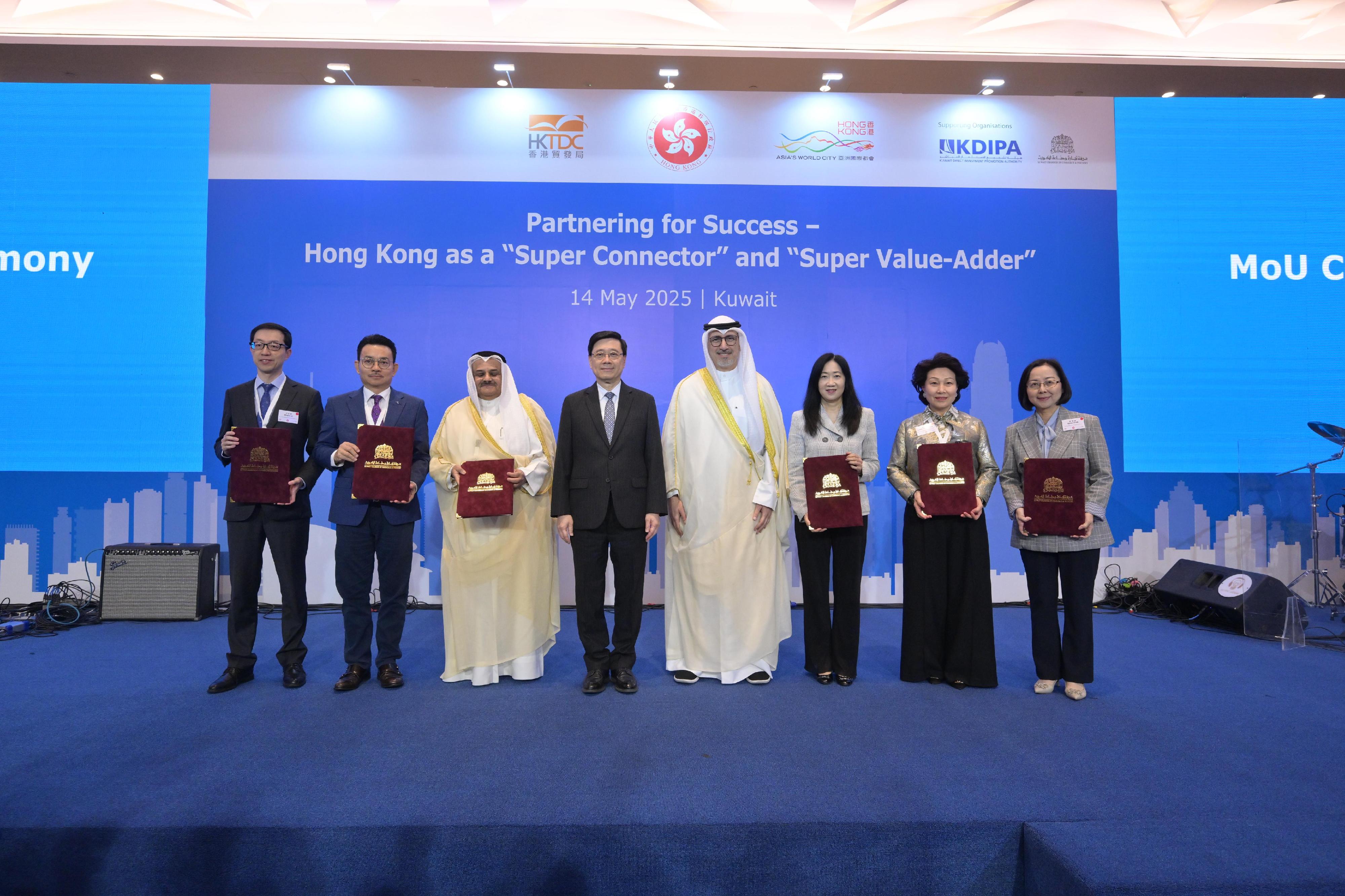
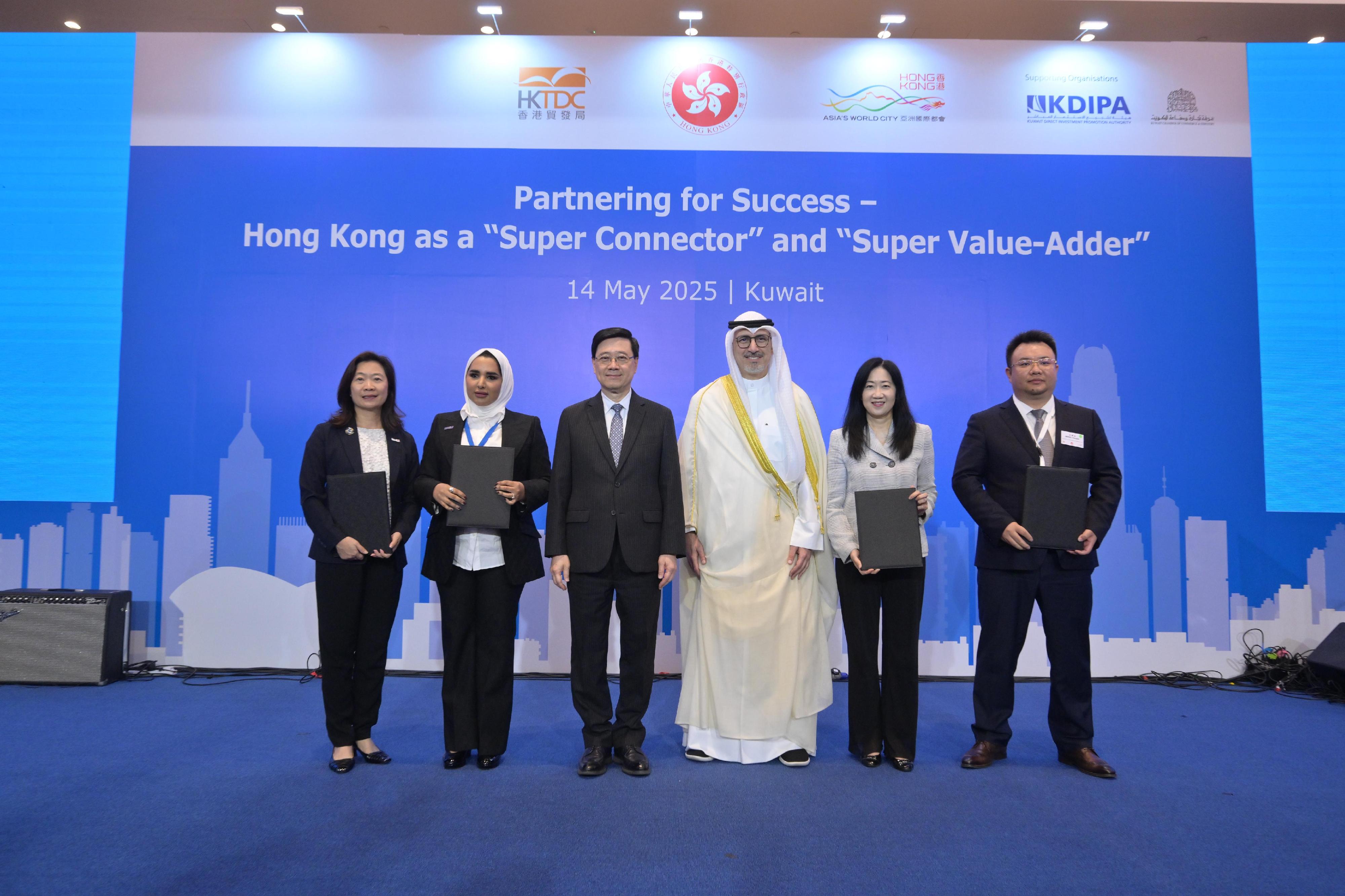
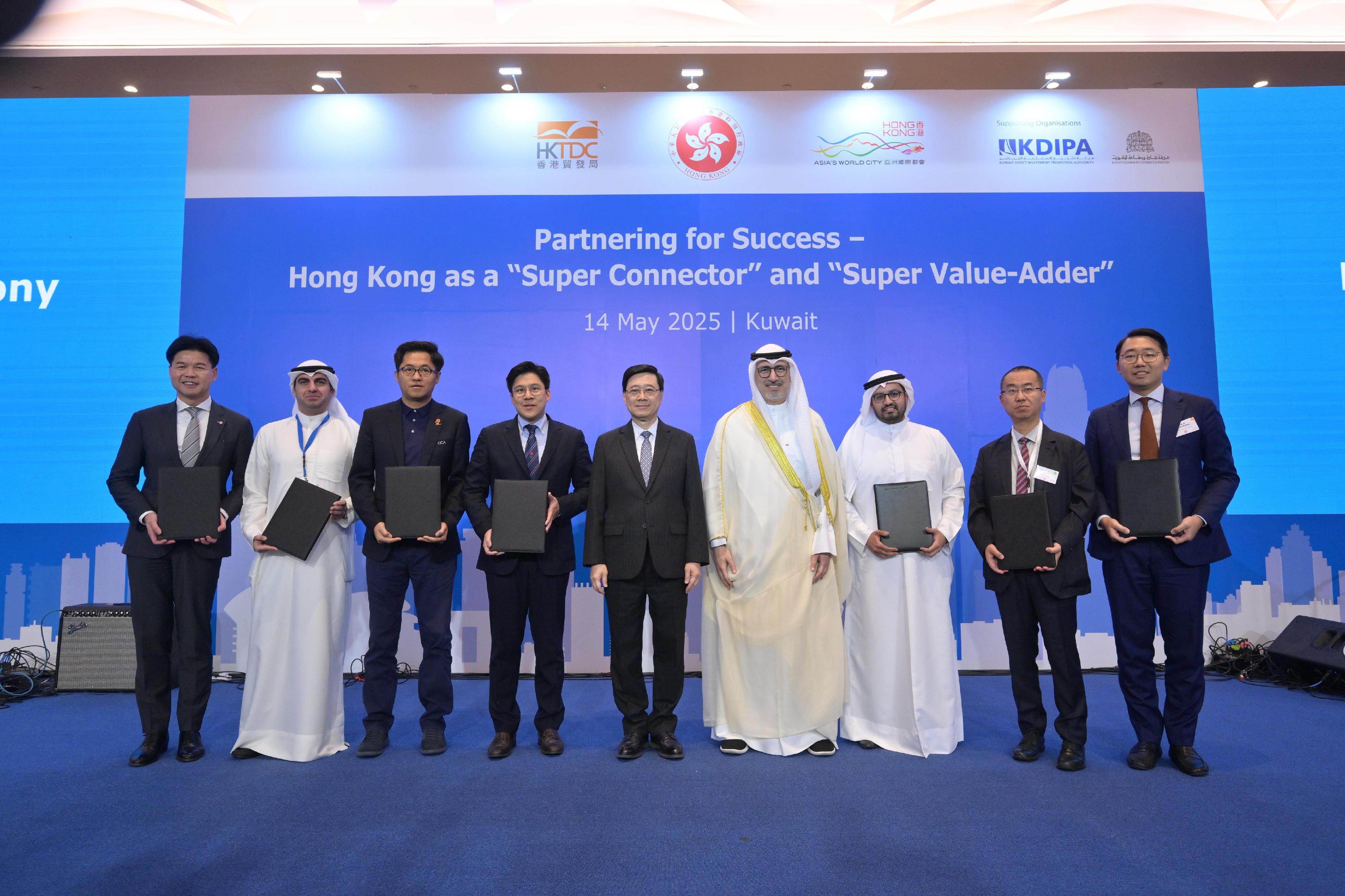
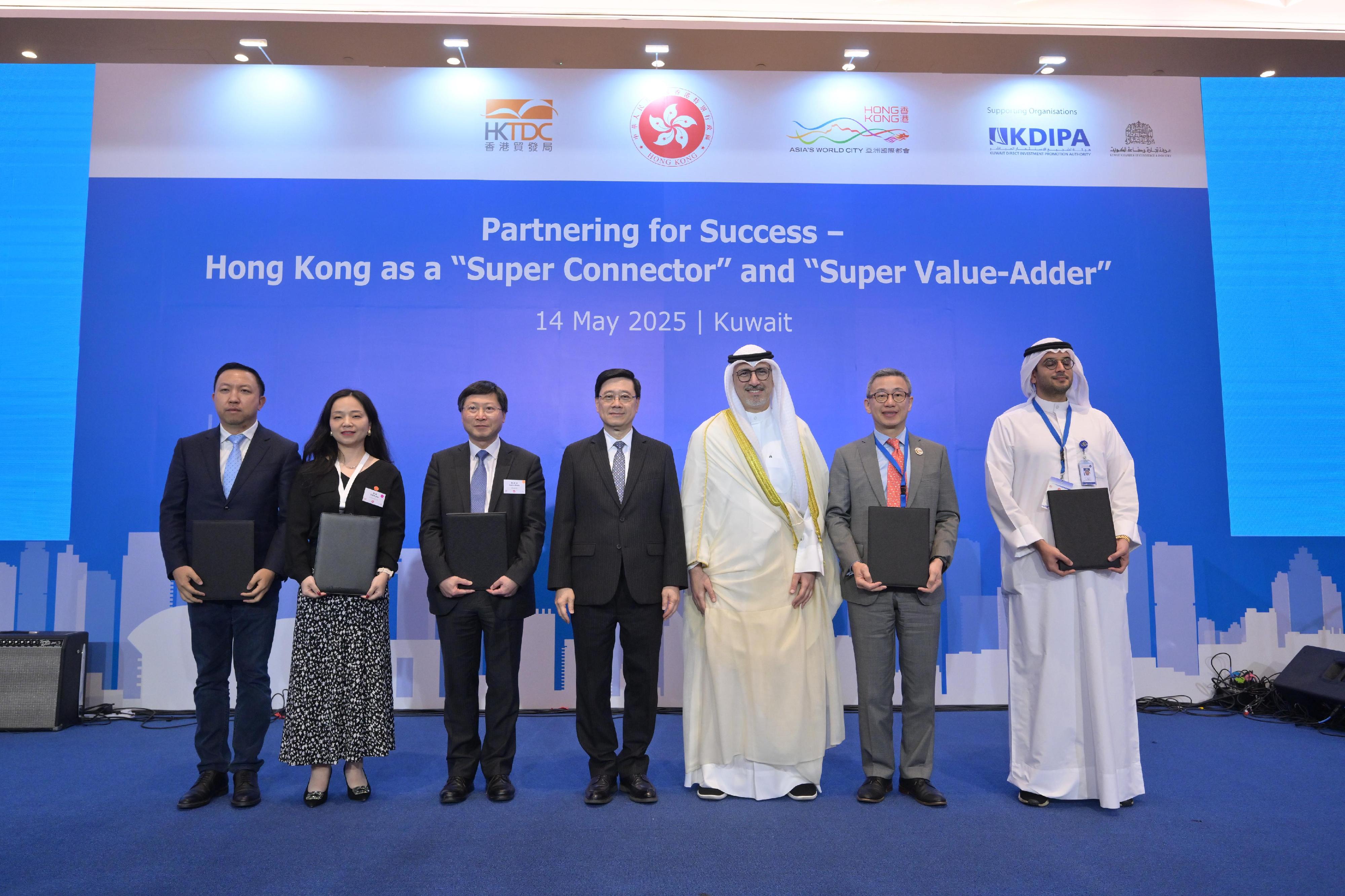
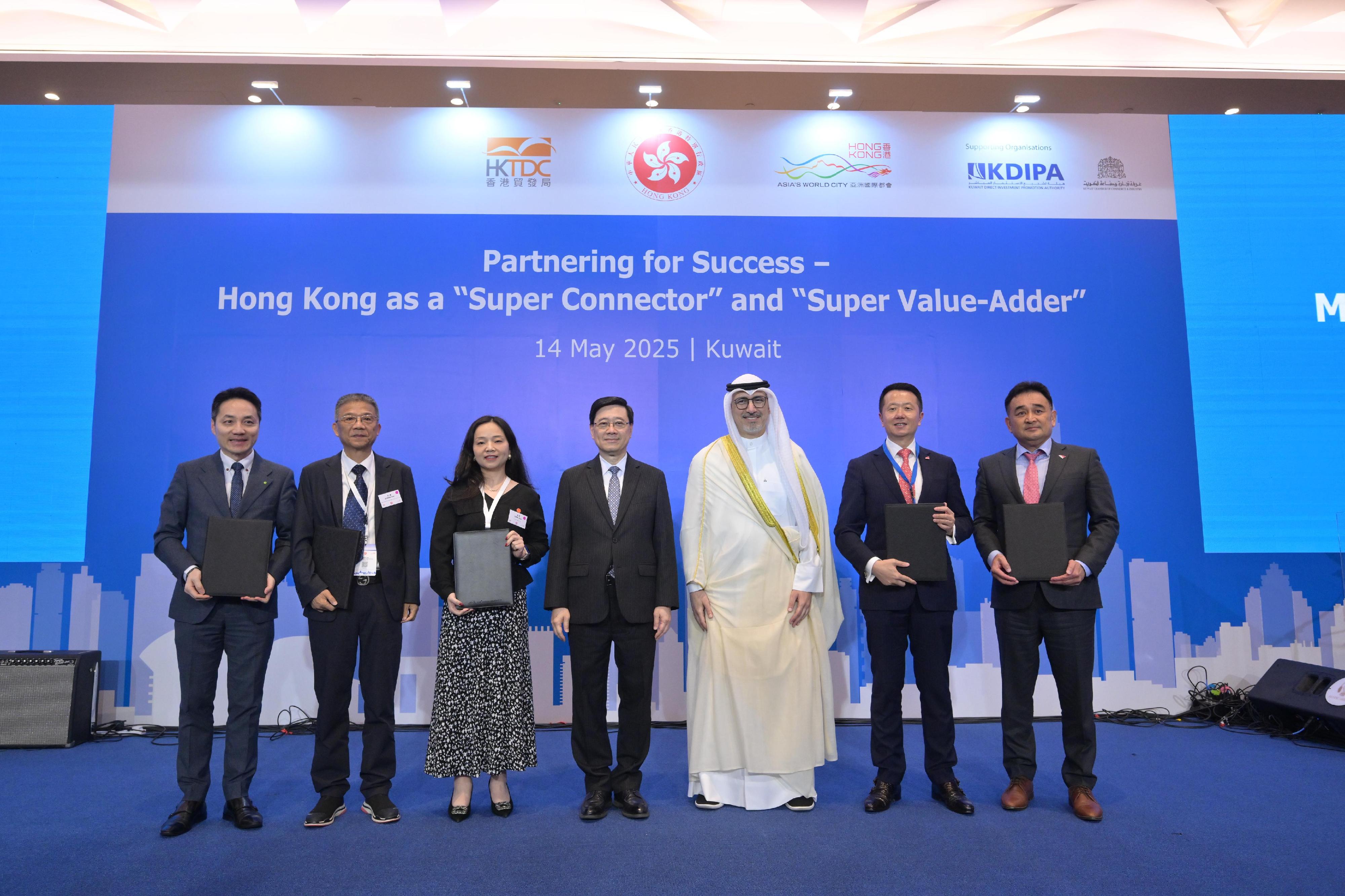
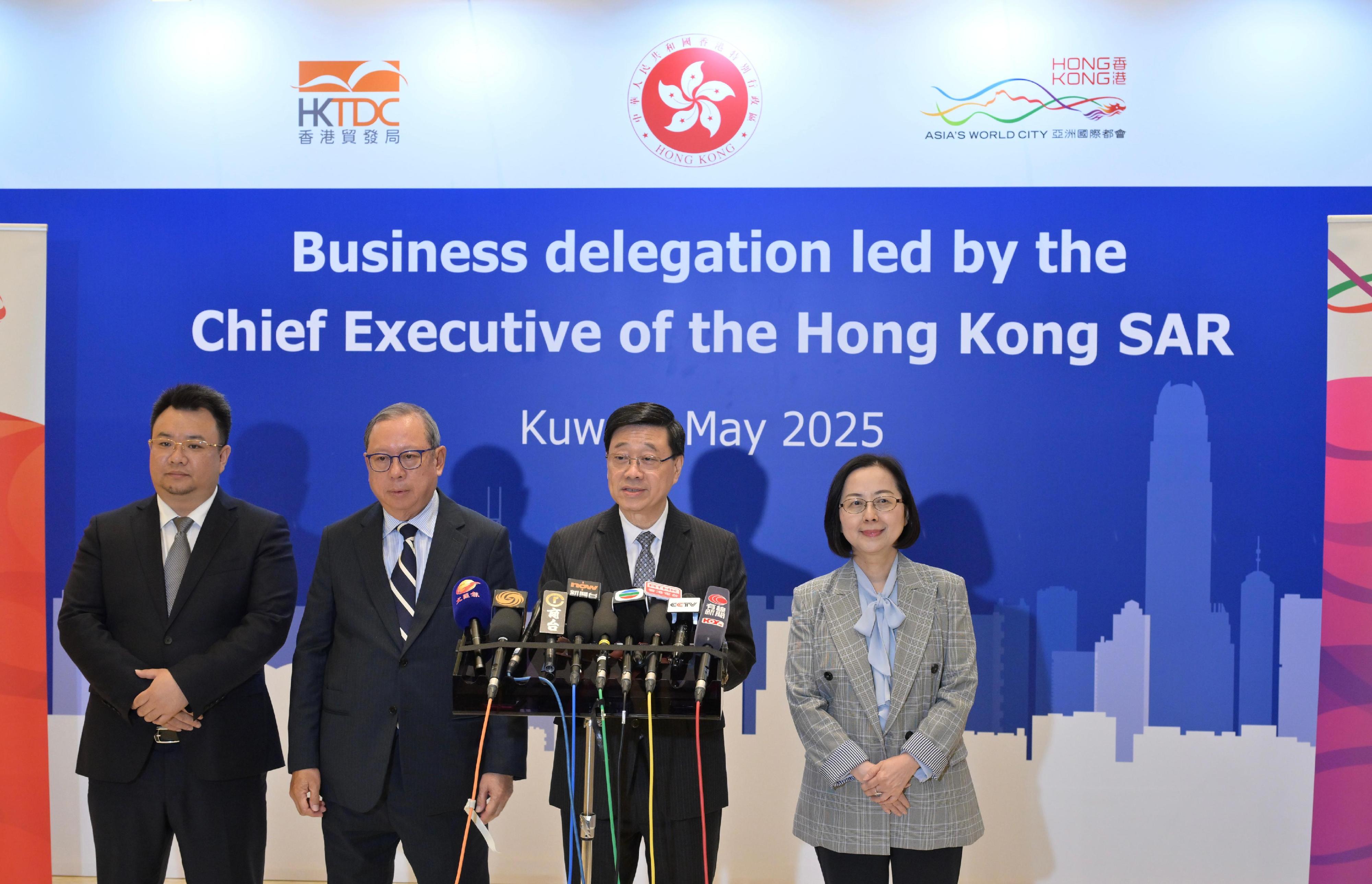
     â€‹The Chief Executive, Mr John Lee, today (May 14) led a business delegation comprising representatives from Hong Kong and Mainland enterprises to continue its visit programme to Kuwait. He met with representatives of the Kuwait Direct Investment Promotion Authority (KDIPA) and exchanged views with local political and business leaders. He witnessed the achievement of multiple outcomes of co-operation between government departments, enterprises and organisations of Hong Kong, the Mainland and Kuwait, including the signing of Memoranda of Understanding (MOUs). He also visited a local enterprise.
      
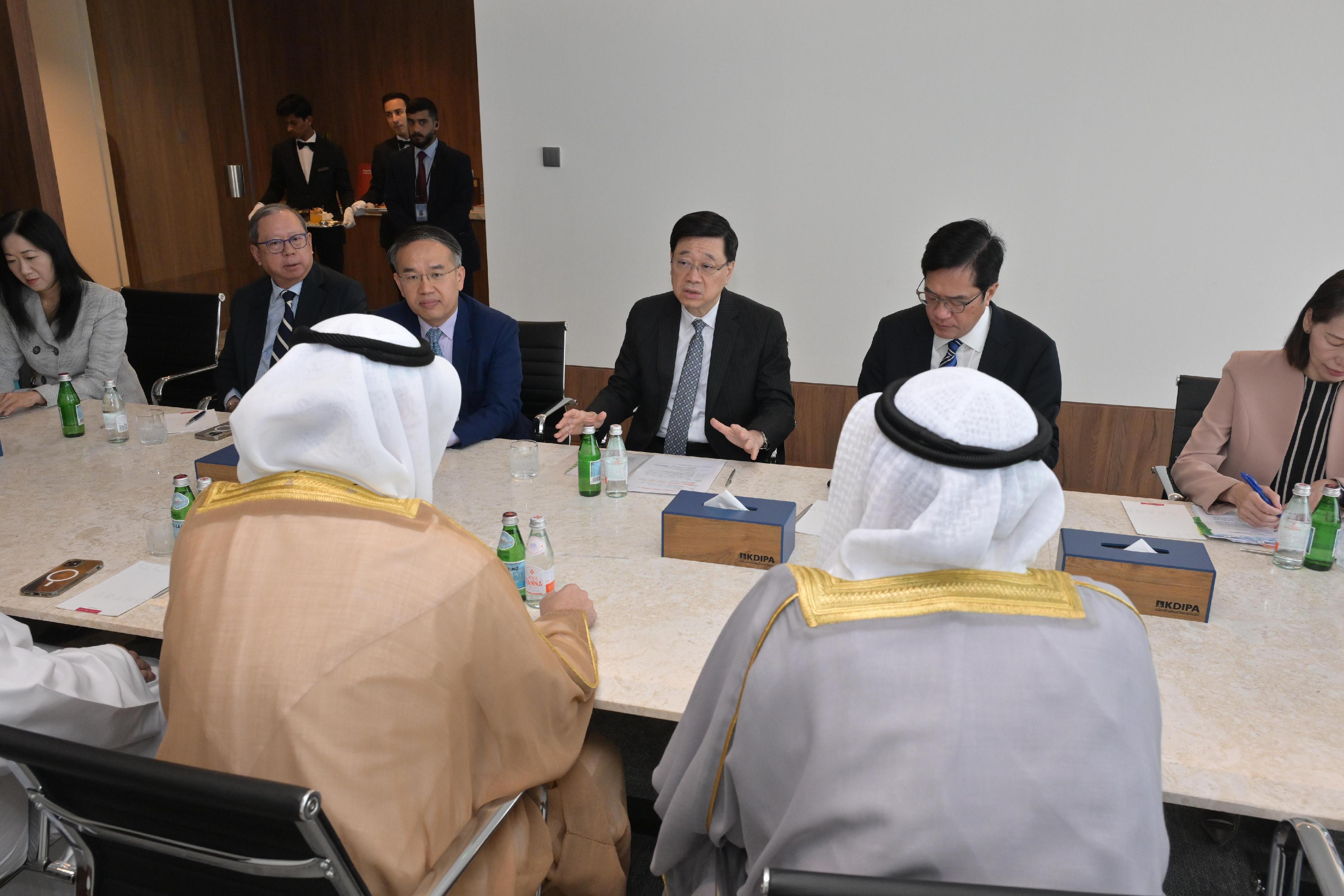
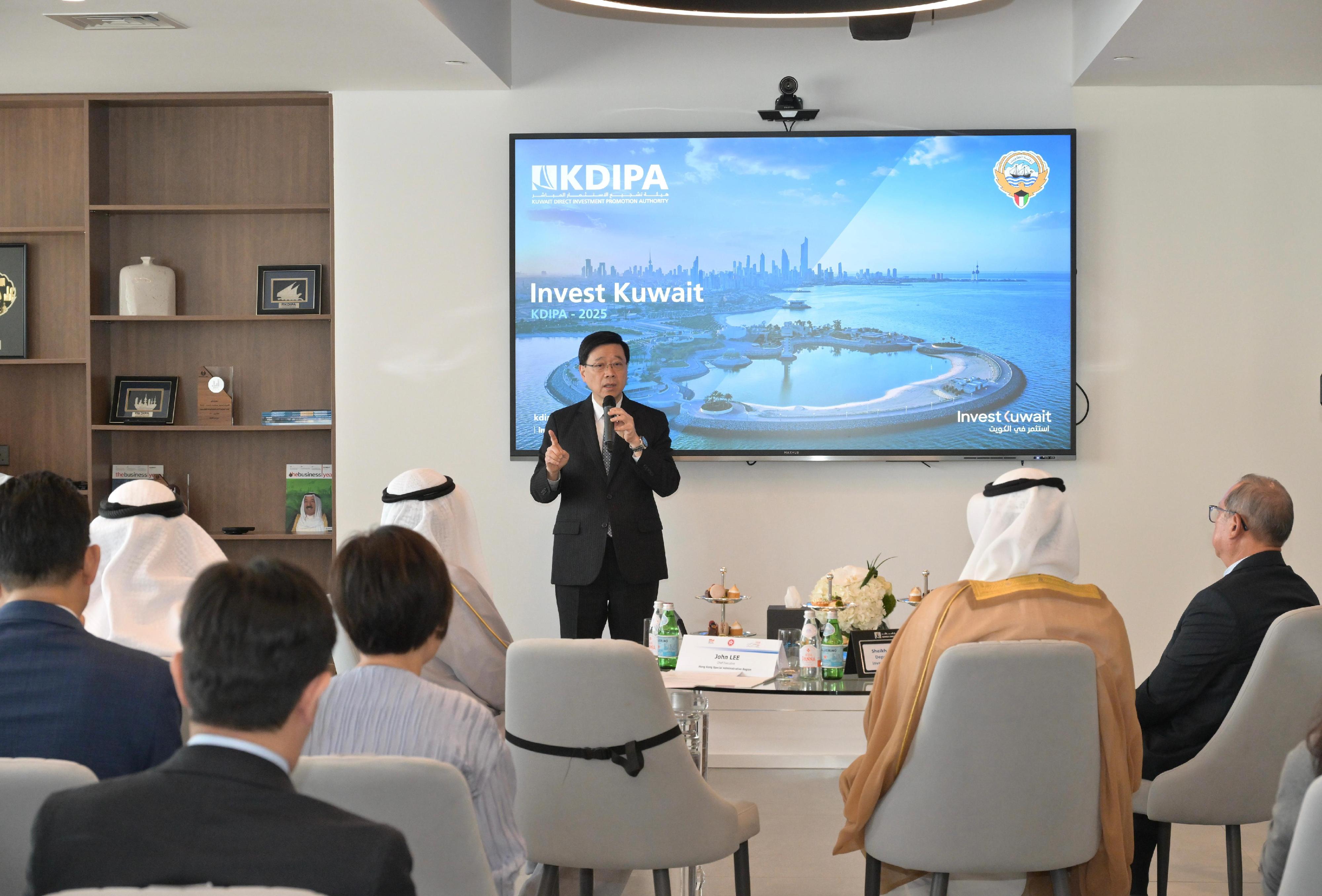
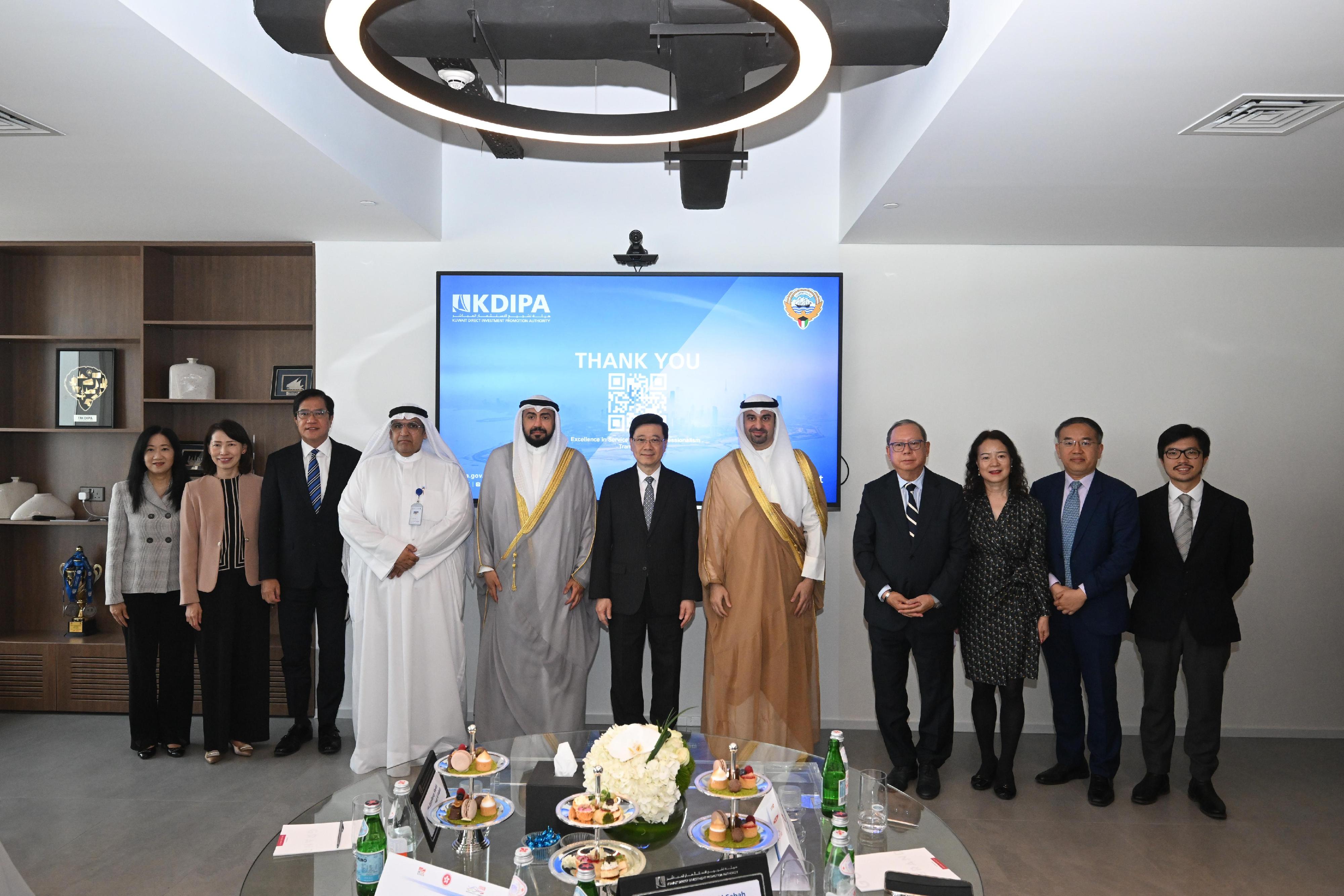
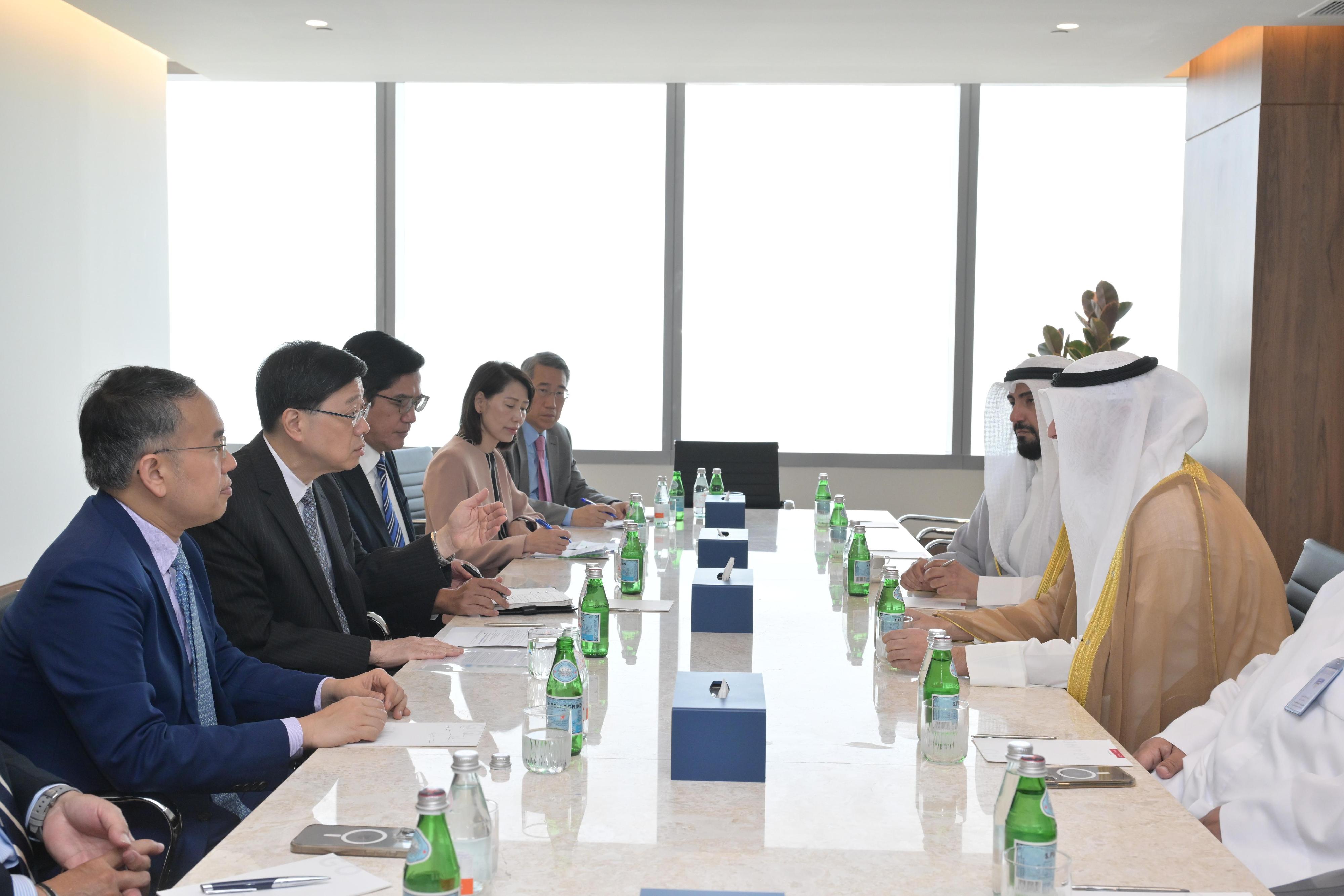
     In the morning, Mr Lee met with the Director General of the KDIPA, Dr Meshaal Jaber Al-Ahmad Al-Sabah, to learn about Kuwait's strategies and achievements in attracting business and investment. Mr Lee noted that last year, Kuwait was Hong Kong's sixth-largest trading partner in the Middle East, and both places have significant room for development in trade and business between the two places. Hong Kong will continue to serve as a bridge to assist enterprises in going global and attracting external investment, welcoming Kuwaiti enterprises to leverage Hong Kong's world-class financing support and professional services to explore international markets.
      
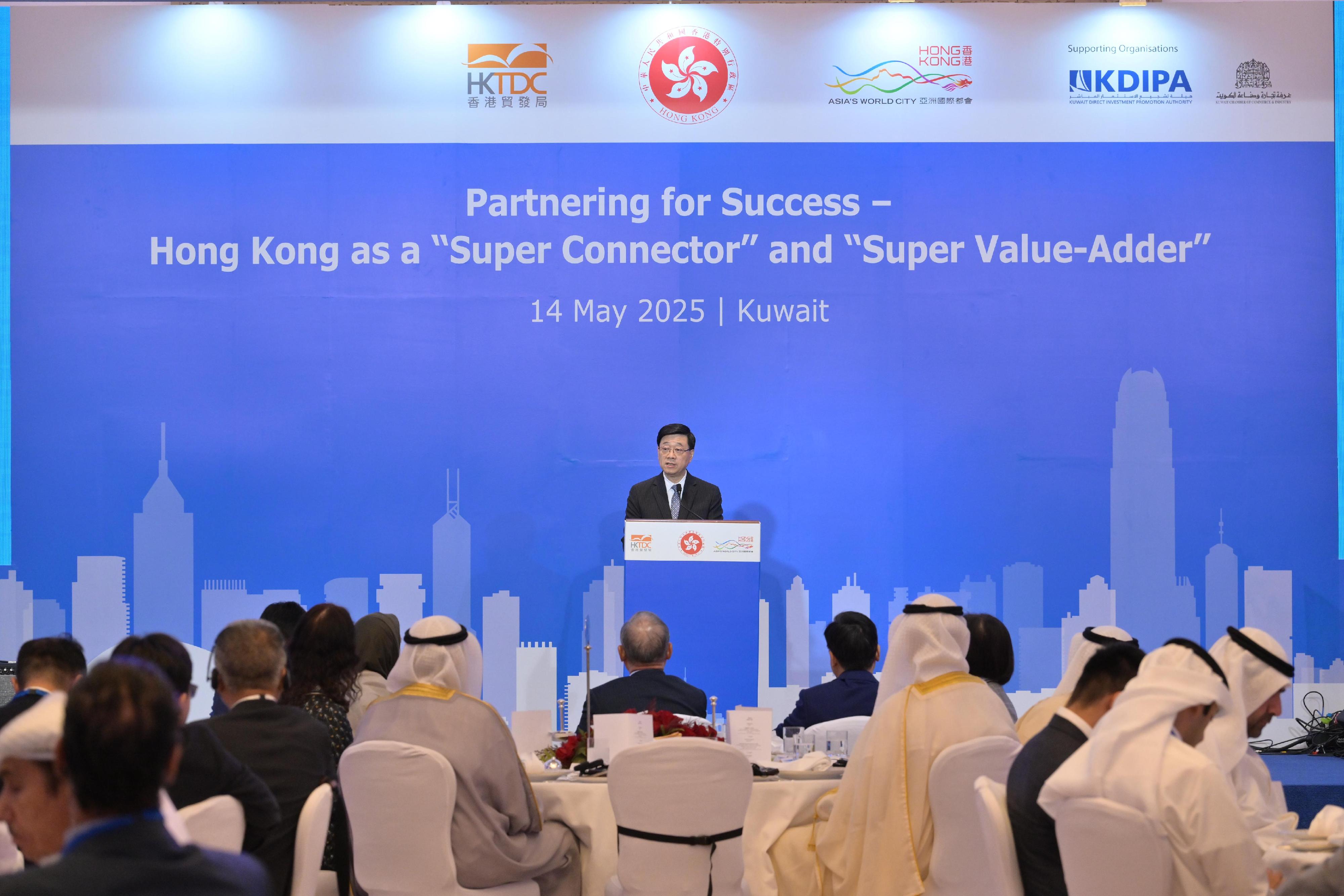
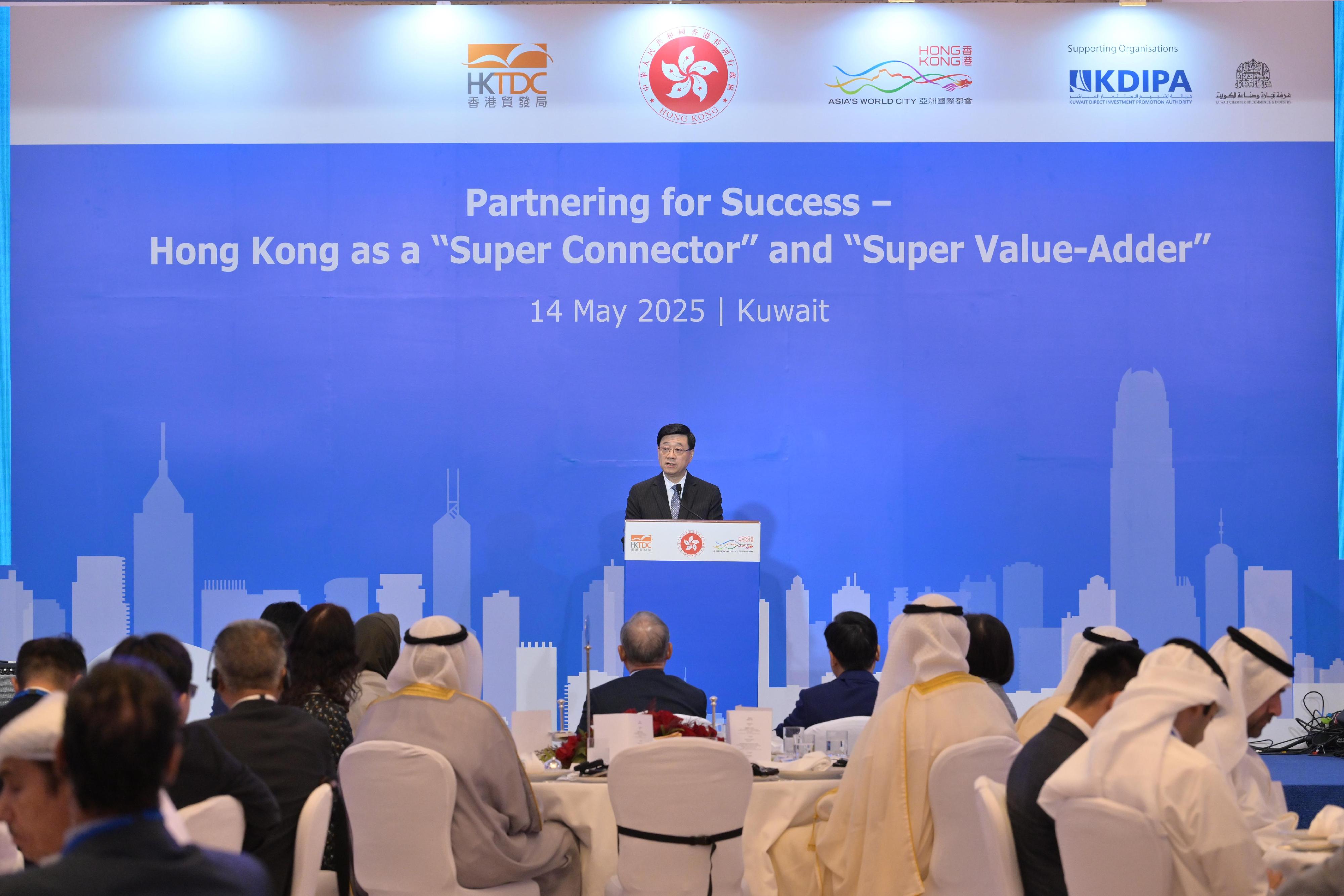
     Mr Lee later attended a business luncheon cohosted by the Hong Kong Economic and Trade Office in Dubai and the Hong Kong Trade Development Council, where he delivered a speech to near 300 local business leaders promoting Hong Kong's business advantages and development opportunities. He highlighted that the merchandise trade between Hong Kong and the Cooperation Council for the Arab States of the Gulf (GCC) reached nearly US$20 billion last year, an increase of over 53 per cent in the past four years, while Hong Kong's merchandise trade with Kuwait last year amounted to US$200 million, up more than 20 per cent from the previous year. Hong Kong is an international financial centre and the world's largest offshore Renminbi business hub. Hong Kong and Mainland enterprises can complement each other's strengths. Hong Kong will give full play to its role as a "super connector" and "super value-adder" to deepen international exchanges and co-operation. Mr Lee added that he believes the ties and co-operation between Hong Kong and Kuwait will continue to flourish.
      
     At the luncheon, government departments, enterprises, and organisations from Hong Kong, the Mainland, and Kuwait exchanged and announced 24 MOUs and co-operation agreements, covering areas such as economy and trade, investment, financial services, technology, legal co-operation, cargo clearance and flow, aviation, and post-secondary education.
      
     In the afternoon, Mr Lee and the delegation visited Zain Group, a major mobile telecommunications company, to learn about its business in innovative technologies and digital communications, and exchanged views with company representatives on topics such as drones, AI, and smart city development. Mr Lee remarked that Hong Kong is actively developing into an international innovation and technology centre, and he welcomes the company to invest and pursue co-operation opportunities in Hong Kong.
      
     In the evening, Mr Lee will host a dinner for members of the business delegation comprising representatives from Hong Kong and Mainland enterprises to thank them for their active participation in the programme of the past four days and for working together to explore co-operation opportunities for Hong Kong and the Mainland in the Middle East.
      
     Concluding the visit, Mr Lee said that the business delegation comprising representatives from Hong Kong and Mainland enterprises, which he led to visit Qatar and Kuwait, has yielded fruitful results. He mentioned that the Middle East visit successfully made achievements in six areas, namely:
     

  1. further strengthening the relationship between the Hong Kong Special Administrative Region (HKSAR) Government and the governments of Qatar and Kuwait, and building consensus for collaboration;
  2. reaching a total of 59 MOUs and agreements, laying a diversified foundation;
  3. leveraging Hong Kong's strengths under the "one country, two systems" principle in connecting the Mainland and the world, deepening international exchanges and co-operation, and demonstrating the synergistic power of the complementary advantages between Hong Kong and the Mainland;
  4. further building relations with the GCC countries to explore greater business opportunities;
  5. deepening mutual understanding and strengthening commercial and trading networks; and
  6. further enhancing cultural exchanges with the GCC countries.

 
     Mr Lee said that Hong Kong has the distinctive advantages of enjoying strong support of the motherland and being closely connected to the world, noting that the Middle East countries are actively diversifying risks and seeking investment opportunities in China and the HKSAR, which aligns with the global economic shift towards the East. The opportunities in Hong Kong are limitless. This Middle East visit has elevated Hong Kong's relations with Qatar and Kuwait to a new level, bringing more business opportunities to Hong Kong.
      
     Mr Lee will return to Hong Kong tomorrow (May 15).

Photo  Photo  Photo  Photo  Photo  Photo  Photo  Photo  Photo  Photo  Photo  


Visa-free access for HKSAR passport holders to Qatar and the UAE/Visa-free period for HKSAR passport holders visiting Oman extended

     â€‹The Government of the Hong Kong Special Administrative Region (HKSAR) has received notifications from the Consulate General of The State of Qatar in the HKSAR, the Consulate General of the United Arab Emirates (UAE) in the HKSAR and the Honorary Consulate of the Sultanate of Oman (Oman) in the HKSAR regarding the latest visa-free arrangements offered to HKSAR passport holders.

     HKSAR passport holders may visit Qatar and the UAE visa-free (previously visa-on-arrival) for a stay of up to 30 days. In addition, the visa-free period for HKSAR passport holders visiting Oman has been extended from a stay of up to 10 days to 14 days. Further to the measure regarding Qatar announced earlier, the other two measures will take effect on May 15, 2025.

     A spokesman of the Immigration Department said, "Qatar, the UAE and Oman are along the Belt and Road and are member states of the Cooperation Council for the Arab States of the Gulf (GCC). Under the Belt and Road Initiative, these visa-free arrangements and the extension of the visa-free entry period will bring greater travel convenience for HKSAR passport holders and strengthen the tourism, cultural and economic ties between Hong Kong and relevant GCC member states."

     As of today, 174 countries and territories have granted visa-free access or visa-on-arrival to HKSAR passport holders, including all six member states of the GCC. Among these, Qatar, the UAE and Oman offer visa-free access, while Bahrain, Kuwait and Saudi Arabia provide visa-on-arrival facilitation. Please visit the following website for details: www.immd.gov.hk/eng/service/travel_document/visa_free_access.html or scan the attached annex.


Hong Kong Customs seizes suspected dangerous drugs worth about $10.25 million (with photos)

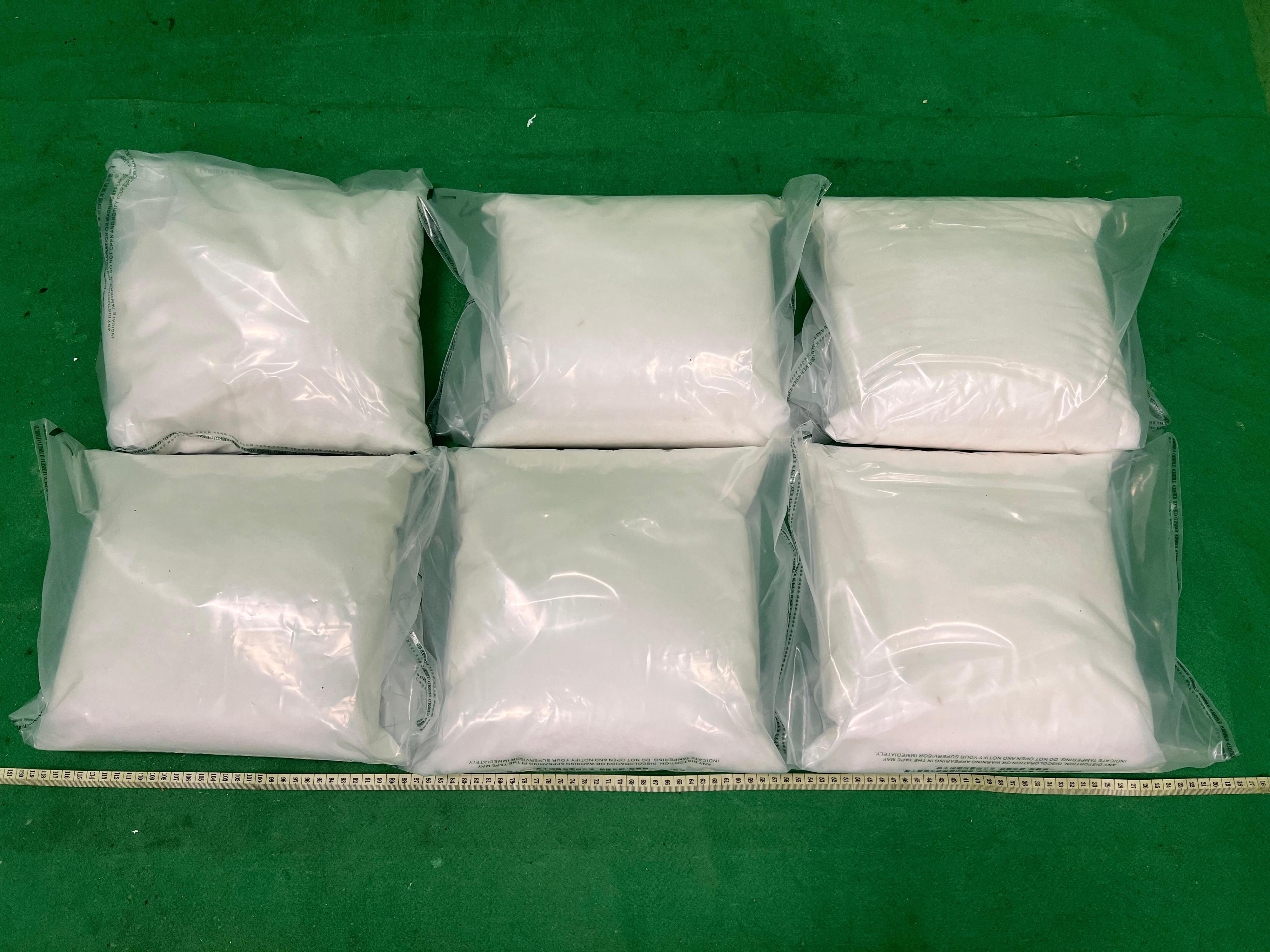
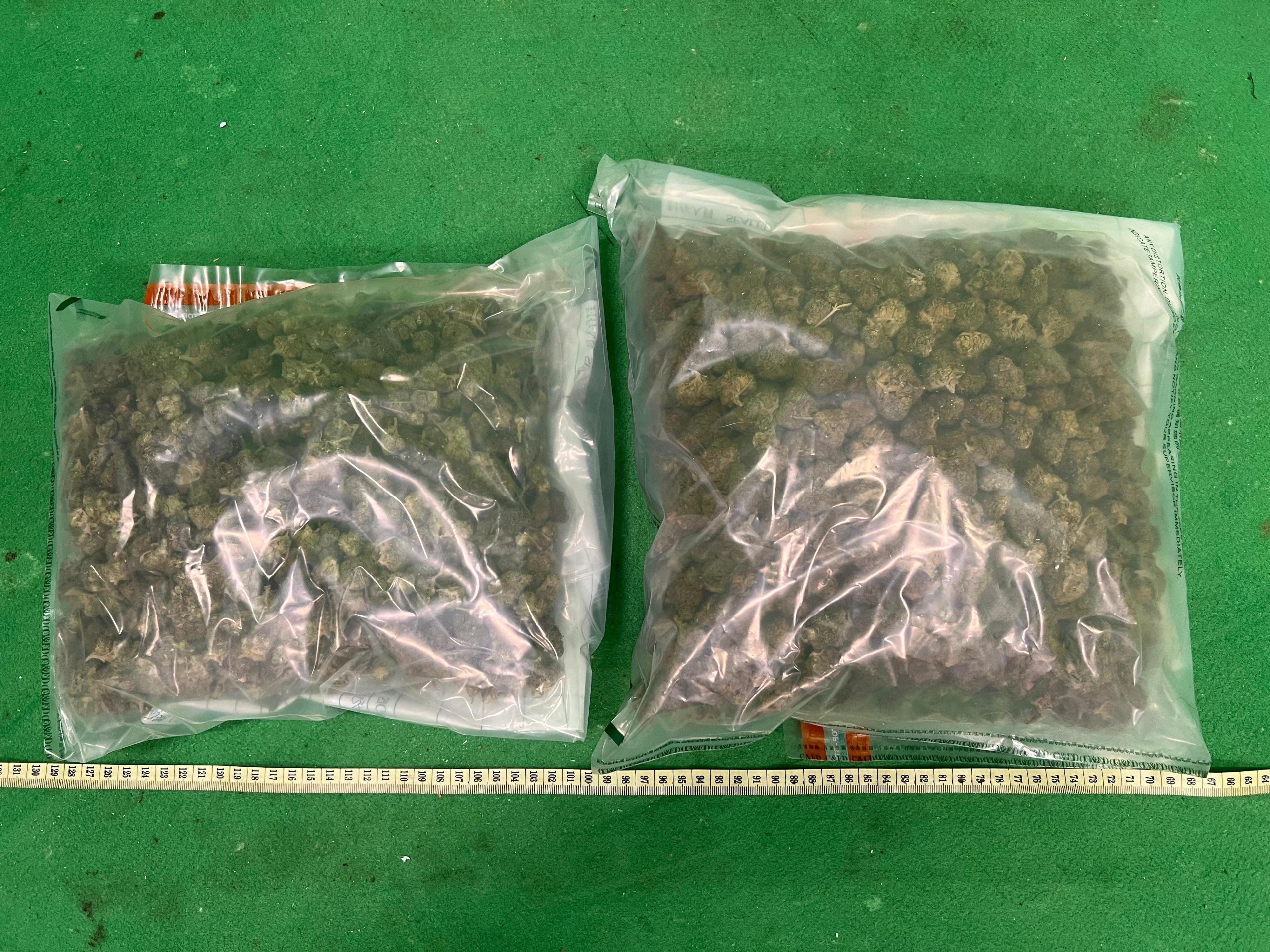
     Hong Kong Customs on May 12 and yesterday (May 13) seized about 21 kilograms of suspected ketamine and about 1.1kg of suspected cannabis buds with a total estimated market value of about $10.25 million at Hong Kong International Airport and in Sau Mau Ping.

     Through risk assessment, Customs on May 12 inspected an air cargo consignment, declared as audio cable and arriving in Hong Kong from Belgium, at the airport. The consignee address was a residential address in Sau Mau Ping. Upon inspection, Customs officers found about 21kg of suspected ketamine, with an estimated market value of about $10 million, concealed in the consignment.

     After a follow-up investigation, Customs officers conducted a controlled delivery operation yesterday (May 13) and arrested a male consignee, aged 24, in the aforesaid residential unit in Sau Mau Ping. Customs officers later searched the premises and further seized about 1.1kg of suspected cannabis buds with an estimated market value of about $250,000.

     The arrested person has been charged with two counts of trafficking in a dangerous drug. He will appear at the Kwun Tong Magistrates' Courts tomorrow (May 15).

     Customs will continue to step up enforcement against drug trafficking activities through intelligence analysis. The department also reminds members of the public to stay alert and not to participate in drug trafficking activities for monetary return. They must not accept hiring or delegation from another party to carry controlled items into and out of Hong Kong. They are also reminded not to carry unknown items for other people, nor to release their personal data or home address to others for receiving parcels or goods.

     Customs will continue to apply a risk assessment approach and focus on selecting passengers from high-risk regions for clearance to combat transnational drug trafficking activities.

     Under the Dangerous Drugs Ordinance, trafficking in a dangerous drug is a serious offence. The maximum penalty upon conviction is a fine of $5 million and life imprisonment.

     Members of the public may report any suspected drug trafficking activities to Customs' 24-hour hotline 182 8080 or its dedicated crime-reporting email account (crimereport@customs.gov.hk) or online form (eform.cefs.gov.hk/form/ced002).

Photo  Photo  


Speech by CE at Partnering for Success – Hong Kong as a “Super Connector” and “Super Value-adder” High-level Business Luncheon in Kuwait (English only) (with photo)

     Following is the speech by the Chief Executive, Mr John Lee, at the Partnering for Success – Hong Kong as a "Super Connector" and "Super Value-adder" High-level Business Luncheon in Kuwait today (May 14):

Your Excellency Khalifa Abdullah Dhahi Al-Ajeel Al-Askar (Minister of Commerce and Industry of Kuwait), Excellency Ambassador Zhang Jianwei (Ambassador Extraordinary and Plenipotentiary of the People's Republic of China to the State of Kuwait), Excellency Mr Rabah Al-Rabah (Director General of Kuwait Chamber of Commerce and Industry), distinguished guests, ladies and gentlemen, 

     As-salamu alaykum. Good afternoon. It is a great pleasure to be with you today in Kuwait, home to one of the world's largest oil reserves, and a country as committed to talent development as it is to economic diversification. 

     This is our second day in your resplendent capital, Kuwait City, where past, present and future – in design, culture, lifestyle and so much more – come together like no other city in the world.

     Yesterday, I was honoured to have met with His Highness Sheikh Meshal Al-Ahmad Al-Jaber Al-Sabah, the Amir of Kuwait; His Highness Sheikh Sabah Al-Khaled Al-Hamad Al-Mubarak Al-Sabah, the Crown Prince of Kuwait; His Excellency Sheikh Fahad Yousuf Saud Al-Sabah, Acting Prime Minister of Kuwait, and other senior government officials. I thanked them sincerely for the time, interest and hospitality they have shown us, from the moment we arrived in Kuwait. Kuwait has generously arranged for our government delegates to stay at Bayan Palace, a majestic landmark in Kuwait City. I reaffirmed to them the commitment, and sincerity, of Hong Kong and Mainland China in strengthening relations with Kuwait.  

     Yes, I am delighted to be here. So too, are the business and professional leaders with me, a delegation counting some 30 Hong Kong business and institutional heads, together with high-profile representatives of over 20 Chinese Mainland companies from seven provinces and municipalities across the country.

     The delegation brings with them wide-ranging expertise, and invaluable experience, from both Hong Kong and Mainland China, in green development, and innovation and technology, including advanced manufacturing, artificial intelligence, new energy and materials, health and smart city evolution. They also offer Hong Kong's wealth of experience in finance, infrastructure, transport and logistics, as well as global business operations and deal-making.

     We are here to better understand the opportunities of Kuwaiti business and investment. To explore how Hong Kong, Mainland China and Kuwait, working together, can create long-term mutual opportunities.

     We're also here to explore closer ties with the Gulf Cooperation Council (Cooperation Council for the Arab States of the Gulf, GCC), which, as all of you know, includes Kuwait. Kuwait currently holds the presidency of the GCC, wielding significant influence in the region's development.

     Our ties run deep and far. China, our country, and Kuwait established diplomatic ties in 1971 – making Kuwait the first GCC country to do so. Last year, trade between China and Kuwait reached well over US$16 billion. 

     Kuwait, I'm pleased to note, was the first country in the Middle East to sign a Belt and Road co-operation document with China. From of the Central Bank of Kuwait's headquarters building and housing projects, to telecommunications and smart city developments, Chinese enterprises have participated in numerous infrastructure and business projects here.

     Hong Kong treasures its trade ties with Kuwait, too. Last year, our bilateral merchandise trade totalled US$200 million, up more than 21 per cent over the year before. 

     Hong Kong's trade with the GCC last year reached nearly US$20 billion, up 53 per cent over the past four years. And that robust growth is underpinned by our mutual will to advance trade ties.

     Thanks to our internationally recognised professional services sector, Hong Kong is a pivotal player in the Belt and Road Initiative. In 2023, we included a Middle East Forum, for the first time, at our annual Belt and Road Summit. And we continue to feature Middle East speakers and guests at the Summit. 

     Hong Kong's Belt and Road Summit will take place in September this year. As earlier the Chairman of the Trade Development Council (Hong Kong Trade Development Council) said, it's our 10th anniversary Summit, and I invite you all to join us, to take part in a world of Belt and Road opportunities – in business, investment and more.

     And the Asian Financial Forum, Hong Kong's flagship event bringing together prominent leaders in finance and business sectors, hosted its first GCC Chapter this January. 

     Yes, the ties between Hong Kong and the Middle East continue to grow and diversify. 

     They include the launching of the Middle East's first two exchange-traded funds tracking Hong Kong stocks. Hong Kong is partnering with a Middle East sovereign wealth fund, too. Together, we are committed to jointly establishing a US$1 billion fund, investing in companies connected to Hong Kong and the Guangdong-Hong Kong-Macao Greater Bay Area.  

     The Greater Bay Area, let me add, is a cluster city development that brings together Hong Kong, Macao and nine southern cities in China. The fast-integrating regional economic powerhouse presents a collective GDP (Gross Domestic Product) that closely rivals the world's 10th largest economy.

     Hong Kong has much to offer Kuwait. Asia's financial hub and one of the world's three biggest financial centres, Hong Kong is also the world's largest offshore Renminbi business centre. Coupled with our Islamic finance experience, Hong Kong is a trusted partner in your project financing – today and long down the road. 

     Free trade is among our great competitive advantages, fuelling our success for the past two centuries. Hong Kong is a free port, and we will continue to be a free port. Like our country, we are a vocal advocate of a multilateral, rules-based global economy, in spite of mounting protectionism and geopolitical tensions.

     And that, ladies and gentlemen, is a testament to our "one country, two systems" governing principle at work. 

     Under the principle, the Hong Kong Special Administrative Region has its own legal, legislative and judicial systems. Our legal system is a common law system, similar to that in many major financial hubs around the globe. We maintain our own currency, with no capital or foreign exchange controls. Information, capital, goods and people flow freely in Hong Kong. 

     The principle of "one country, two systems" also gives Hong Kong unparalleled access to our country's markets and wide-ranging opportunities. It allows us, as well, to pursue our longstanding ties with the world at large, the Middle East very much included. 

     As today's luncheon title, Partnering for Success: Hong Kong as a "super connector" and "super value-adder" emphasises, we do more than connecting companies and people. We also add value to their businesses, their services and their future.

     With companies and investors from Mainland China, and all over the world, looking for a financial haven in this time of global economic uncertainty, Hong Kong is flourishing, and keen to work with you, our partners. 

     An international financial newspaper, spotlighting the Hong Kong Exchange and its record quarterly profits, recently noted that Hong Kong has, and I quote, "benefited from a spate of initial public offerings and rising interest from Mainland Chinese and global investors in Hong Kong-listed shares, especially of technological-related companies, driven by optimism over China's progress in artificial intelligence". 

     That speaks of Hong Kong's "one country, two systems" advantages working for you – linking a world of investors to the secure and rapidly growing Chinese market.

     It helps, and greatly, that Hong Kong's economy is inextricably tied to our common law system and a judiciary that exercises its powers independently, a legal regime that resembles many of the world's leading financial hubs. They give international companies and investors – Kuwait certainly included – all the confidence and the certainty they need to do business, in Hong Kong and throughout China. Kuwait certainly included.

     Ladies and gentlemen, I'm pleased to note that during our visit, Hong Kong and Kuwait have reached consensus on 24 concrete deliverables, through MOUs and related agreements. A ceremony will take place in just a moment.  

     The agreements cover a broad range of collaboration, from trade and the economy, to investment promotion, financial services, aviation and the maritime industries, post-secondary education, the legal profession, sports and more. 

     And our customs authorities will commence negotiations on the mutual recognition of respective Authorized Economic Operator Programmes. This will create smoother, more convenient international links for our respective companies, making it much easier to do business together.  

     Our Airport Authority Hong Kong will soon sign a new MOU with Kuwait Airways, aimed at enhancing air connectivity between the two regions, fostering operational excellence, supporting sustainability, and advancing talent development in the aviation sector.  

     They will lay a solid foundation for long-term collaboration between our two economies and our two peoples. 

     That just touches on our growing co-operation. Indeed, we are now looking into opening a second Hong Kong Economic and Trade Office in the GCC region, to manage our many ongoing Middle East projects and prospects in the offering.

     One key area is boosting merchandise trade between our economies. Hong Kong, I'm pleased to say, has signed Comprehensive Double Taxation Agreements (IPPA) with five of the six GCC states. We have also entered into Investment Promotion and Protection Agreements with three of the states, with Kuwait being the first. We have also substantially concluded negotiations on an IPPA with Qatar, our previous stop on this trip, and commenced negotiations with another state. 

     Indeed, our burgeoning trade and investment co-operation, I believe, could well add momentum to the possibility of a free trade agreement between Hong Kong and the GCC. I look forward to our continuing discussions with the Council.

     Beyond business and investment connectivity, there is boundless promise, too, in co-operating in sectors such as arts and culture. 

     Yesterday, we had the pleasure of visiting the dazzling Sheikh Abdullah Al Salem Cultural Centre, one of the world's largest museum complexes. Seeing, firsthand, Kuwait's compelling commitment to arts, culture and science. I must add that Kuwait is this year's Arab Culture Capital, presenting nearly 100 activities as part of the country's cultural celebration.

     Like Kuwait, Hong Kong believes in the primacy of arts and culture. Meanwhile, Hong Kong's West Kowloon Cultural District is rising as one of the world's largest cultural developments. And we are committed to becoming the world's East-meets-West centre for international cultural exchange. That very much includes Kuwait and the Middle East in general.

     My thanks to our Hong Kong Economic and Trade Office in the Middle East and the Hong Kong Trade Development Council for organising today's welcome gathering. And to the Kuwait Direct Investment Promotion Authority and the Kuwait Chamber of Commerce and Industry for kindly supporting us on this memorable occasion.

     Ladies and gentlemen, I know you will enjoy today's luncheon. Including, let me add, a musical performance by TroVessional, a Hong Kong group dedicated to Cantonese and Chinese ethnic music, brought to engaging life with classic Chinese instruments.

     Enjoy it and thank you!
Photo  


LCQ6: Expansion of United Christian Hospital

     Following is a question by the Hon Tang Ka-piu and a reply by the Secretary for Health, Professor Lo Chung-mau, in the Legislative Council today (May 14):

Question:

     There are views pointing out that the expansion project of United Christian Hospital (UCH) has been delayed since its launch in 2015, and that the design specifications do not meet the latest medical requirements. In this connection, will the Government inform this Council:

(1) of the progress of the aforesaid expansion project and the exact date when the expanded facilities will officially commence operation; whether the completion date of the project is later than originally planned; if so, of the main reasons for that;

(2) as there are views that the design of the renovated buildings and facilities (e.g. height of storeys and load bearing standards, etc) under the aforesaid expansion project is different from the specifications of new hospitals nowadays and may not meet the storage or operational requirements of some medical devices, whether the Government knows if the Hospital Authority has put in place remedial measures or make appropriate arrangements in this regard; and

(3) whether the playground site adjacent to UCH be retained for use in the next phase of the hospital's expansion project; if so, of the specific boundary of the site and the timetable for planning and survey works; if not, the reasons for that?

Reply:

President,

     Established in 1973, the United Christian Hospital (UCH) is a major acute general hospital in the Kowloon East Cluster (KEC). It provides 24-hour accident and emergency (A&E) services and a range of specialist out-patient, inpatient, ambulatory, extended care and community medical services. Together with the Tseung Kwan O Hospital and the Haven of Hope Hospital in the cluster, the UCH provides comprehensive clinical services to the residents of the Kwun Tong and Sai Kung districts. To meet the ever-increasing healthcare service demand of the two districts, the Government obtained funding approval from the Legislative Council to carry out the main works of the expansion project of the UCH in 2020, which is one of the 16 projects under the First Hospital Development Plan (HDP).

     Having consulted the Hospital Authority (HA), the reply to various parts of the question raised by the Hon Tang Ka-piu is as follows:

(1) The UCH expansion project will not only bring about additional diagnostic and medical facilities to comprehensively improve the ambulatory care services and integrated healthcare services, but also provide a new oncology centre and an additional 560 beds as well as five operating theatres. The area of the expanded A&E Department will be increased to more than 250 per cent, from the existing 1 600 square metres to 4 240 square metres.

     The main works of the expansion project commenced in September 2020 and were originally planned for completion by 2024. Due to some delays, the Ambulatory Block is now anticipated to be progressively completed starting from the end of 2025 and to commence operation in phases in mid-2026 the earliest.

     The expansion project of the UCH involves in-situ expansion and redevelopment. During the works period, on-going clinical operations have to be maintained to provide service and the new block has to interface with the existing hospital premises. As such, adjustments are required to address various construction constraints during the works period. The works progress is therefore affected and deviates from the previously over-optimistically estimated completion time. In addition, other major reasons of the delay can be summarised in the following three points: 

(a) Site constraints

The limited space and vehicular access at UCH, the extensive and complex nature of the project, its location in an old district and the adjacent slope, together with the numerous underground utility pipes and facilities and the difference between their actual and expected locations have resulted in modifications to the design from time to time. The existing underground utilities were also needed to accommodate the actual ground conditions. 

(b) Unsatisfactory performance of the consultants and the contractors of the works

The HA has repeatedly urged the consultants and contractors of the works to take measures to catch up with works progress. If it is proved that the delay was caused by inappropriate design or works arrangements, the HA will follow up in accordance with the terms of the contracts.

(c) Impact from the COVID-19 epidemic and inclement weather 

The contractors' deployment of manpower and supplies of materials had long been affected by the COVID-19 since the commencement of works in September 2020. The severe epidemic situation during the fifth wave of the epidemic in early 2022 had hindered the progress of the works project. Besides, major exterior works were also affected by inclement weather, resulting in the extension of the overall construction period.

     The expansion project involves in-situ redevelopment, with clinical services being maintained under sub-optimal conditions. I would like to express my gratitude towards all healthcare staff of the UCH and KEC for their patient-oriented spirit in providing high-quality services to the patients unwaveringly, as well as towards the public for their understanding and patience towards the inconveniences during the works period. The HA will continue to maintain close communication with District Councils and the community and report the related works progress and service developments in a timely manner. 

(2) In respect of hospital works projects involving in-situ redevelopment or expansion, as the projects need to be undertaken amidst on-going hospital operations with new block(s) interfacing with existing portions of hospital premises, constraints would be imposed to the relevant designs and the works. Such constraints, however, are not insurmountable. The HA has been taking measures to address them. In setting up healthcare services and facilities in the UCH, existing conditions and constraints, as well as the operational needs have been taken into consideration while new medical facilities are set up in accordance with the relevant standards and specifications, with the structure of the building reinforced according to the requirements in the Building (Construction) Regulation if necessary to ensure that such facilities can operate and meet service needs.

(3) The Government announced in 2018 that it has invited the HA to commence planning for the Second HDP, which was to be implemented to meet the service demand up to 2036. With the changes in the planning and development strategies in Hong Kong and the population policy of the Government, as well as the latest corresponding change in population projections in Hong Kong, the Health Bureau and the HA are currently reviewing the Second HDP by extending the planning horizon to up to 2041 and beyond to project the healthcare services demand. The Health Bureau and the HA also consider the supply of the land required, various major transport infrastructure development plans, etc, as well as the development need of individual hospitals and its cost-effectiveness for optimising the Second HDP, so as to determine the distribution, scale and priority, etc of various hospital development projects under the Second HDP. 

     In the light of the experience gained under the First HDP, the Government will, in the Second HDP, strive to implement hospital development projects on clear sites as far as practicable (such as a composite development in an adjacent government site of existing hospitals) so as to optimise the development potential of the projects, minimise the impact on existing hospital operations and enhance the cost-effectiveness of the redevelopment. In the case of UCH, exploring the use of the adjoining recreational ground as a decanting site for further expansion is an option that may be considered.

     After the completion of the review, the Government will announce the details of the Second HDP at an appropriate juncture.

     Thank you, President.