Inspection of aquatic products imported from Japan

     In response to the Japanese Government's plan to discharge nuclear-contaminated water at the Fukushima Nuclear Power Station, the Director of Food and Environmental Hygiene issued a Food Safety Order which prohibits all aquatic products, sea salt and seaweeds originating from the 10 metropolis/prefectures, namely Tokyo, Fukushima, Ibaraki, Miyagi, Chiba, Gunma, Tochigi, Niigata, Nagano and Saitama, from being imported into and supplied in Hong Kong.
 
     For other Japanese aquatic products, sea salt and seaweeds that are not prohibited from being imported into Hong Kong, the Centre for Food Safety (CFS) of the Food and Environmental Hygiene Department is conducting comprehensive radiological tests to verify that the radiation levels of these products do not exceed the guideline levels before they are allowed to be supplied in the market.
 
     As the discharge of nuclear-contaminated water is unprecedented and will continue for 30 years or more, the Government will closely monitor the situation and continue to implement the enhanced testing arrangements. Should anomalies be detected, the Government does not preclude further tightening the scope of the import ban.
 
     From noon on May 15 to noon today (May 16), the CFS conducted tests on the radiological levels of 191 food samples imported from Japan, which were of the "aquatic and related products, seaweeds and sea salt" category. No sample was found to have exceeded the safety limit. Details can be found on the CFS's thematic website titled "Control Measures on Foods Imported from Japan" (www.cfs.gov.hk/english/programme/programme_rafs/programme_rafs_fc_01_30_Nuclear_Event_and_Food_Safety.html).

     In parallel, the Agriculture, Fisheries and Conservation Department (AFCD) has also tested 50 samples of local catch for radiological levels. All the samples passed the tests. Details can be found on the AFCD's website (www.afcd.gov.hk/english/fisheries/Radiological_testing/Radiological_Test.html).
 
     The Hong Kong Observatory (HKO) has also enhanced the environmental monitoring of the local waters. No anomaly has been detected so far. For details, please refer to the HKO's website
(www.hko.gov.hk/en/radiation/monitoring/seawater.html).
 
     From August 24, 2023, to noon today, the CFS and the AFCD have conducted tests on the radiological levels of 136 475 samples of food imported from Japan (including 89 785 samples of aquatic and related products, seaweeds and sea salt) and 31 386 samples of local catch respectively. All the samples passed the tests.


Fraudulent website and internet banking login screen related to The Bank of East Asia, Limited

The following is issued on behalf of the Hong Kong Monetary Authority:

     The Hong Kong Monetary Authority (HKMA) wishes to alert members of the public to a press release issued by The Bank of East Asia, Limited relating to a fraudulent website and an internet banking login screen, which have been reported to the HKMA. A hyperlink to the press release is available on the HKMA website.
      
     The HKMA wishes to remind the public that banks will not send SMS or emails with embedded hyperlinks which direct them to the banks' websites to carry out transactions. They will not ask customers for sensitive personal information, such as login passwords or one-time password, by phone, email or SMS (including via embedded hyperlinks).
      
     Anyone who has provided his or her personal information, or who has conducted any financial transactions, through or in response to the website or login screen concerned, should contact the bank using the contact information provided in the press release, and report the matter to the Police by contacting the Crime Wing Information Centre of the Hong Kong Police Force at 2860 5012.


Red tide sighted

     A red tide was sighted during the past week, an interdepartmental red tide working group reported today (May 16).
 
     On May 10, staff of the Marine Department spotted a red tide at Victoria Harbour near Hung Hom. The red tide has dissipated. No associated fish deaths have been reported as of today.
 
     A spokesman for the working group said, "The red tide was formed by Noctiluca scintillans, which is commonly found in Hong Kong waters and non-toxic."
 
     Red tide is a natural phenomenon. The AFCD's proactive phytoplankton monitoring programme will continue to monitor red tide occurrences to minimise the impact on the mariculture industry and the public.


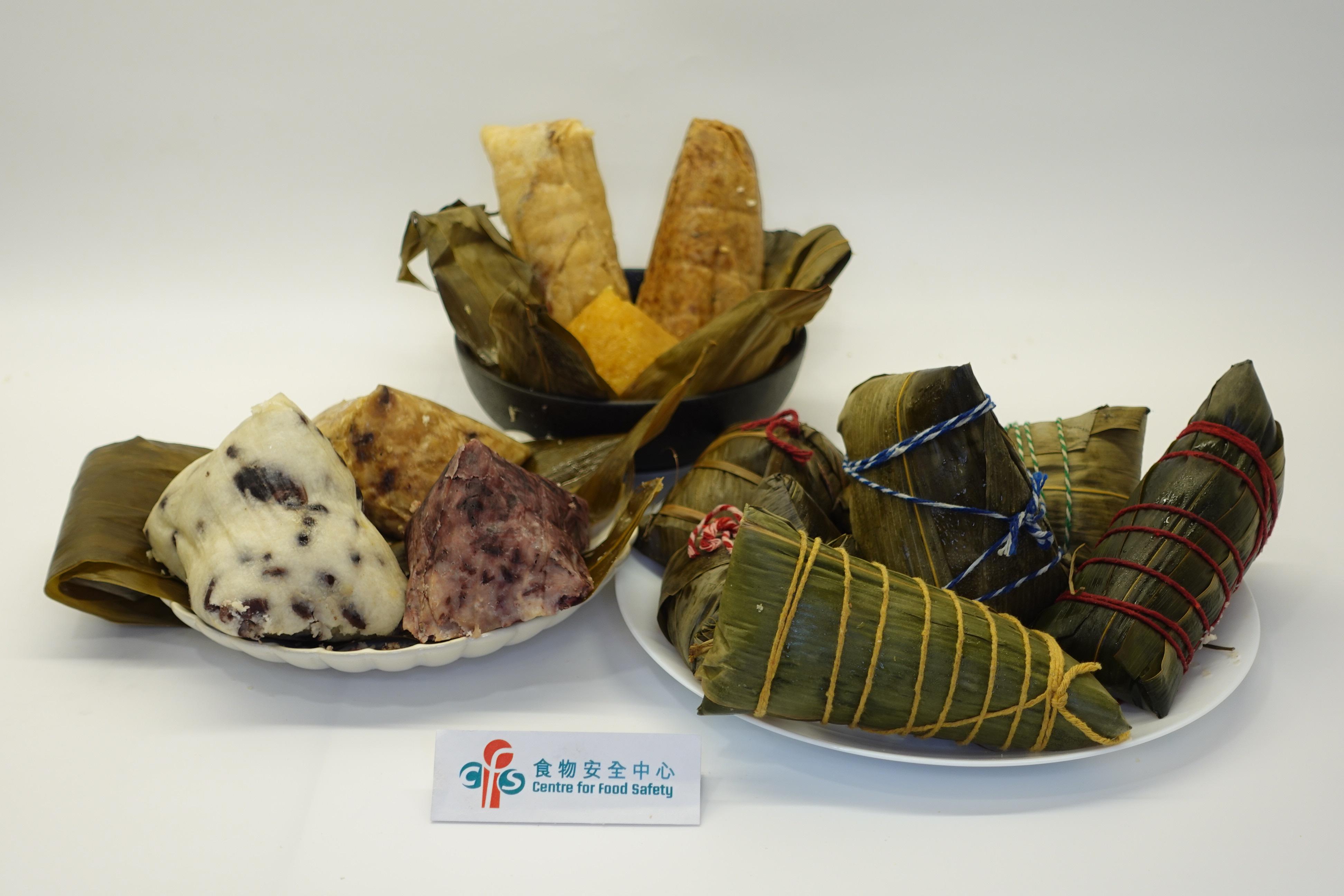
CFS announces results of seasonal food surveillance on rice dumplings (first phase) (with photo)

     The Centre for Food Safety (CFS) of the Food and Environmental Hygiene Department today (May 16) announced that the test results of 47 rice dumpling samples collected under a recently completed seasonal food surveillance project on rice dumplings (first phase) were all satisfactory.

     Rice dumplings are a popular festive food for the Tuen Ng Festival. The project aims to provide information on safe consumption of rice dumplings to consumers and the trade in a timely manner.

     "The CFS collected samples of rice dumplings from different retail outlets (including online retailers) and food premises (including restaurants and food factories) for chemical and microbiological analyses. The chemical analyses included tests for colouring matters, preservatives, metallic contamination and pesticide residues. The microbiological analyses covered coagulase-positive staphylococci organisms and Bacillus cereus," a spokesman for the CFS said.

     The spokesman reminded members of the public to observe the following food safety tips in purchasing, preparing, storing and consuming rice dumplings:

Buying rice dumplings
————————-
* Buy rice dumplings from reliable outlets;
* When purchasing non-prepackaged rice dumplings, choose those that are securely wrapped in wrapping leaves; and
* When purchasing prepackaged rice dumplings, check the expiry date and whether the packaging is intact.

Home-made rice dumplings
——————————-
* Buy wrapping leaves from reliable suppliers and avoid leaves that are unnaturally bright green or with chemical odours;
* Wash hands and utensils thoroughly before and after handling food; and
* Handle raw and cooked food separately to avoid cross-contamination.

Storing and preparing rice dumplings
——————————————
* Consume rice dumplings as soon as possible and avoid prolonged storage;
* Both the glutinous rice and stuffing should be well covered until the rice dumplings are unwrapped. Do not come into direct contact with the strings upon cooking to prevent contamination at all times;
* Store rice dumplings at 4 degrees Celsius or below, or store them properly according to the instructions on the package if they are not consumed or cooked immediately;
* Keep cooked rice dumplings that are not consumed immediately in a covered container and put them in the upper compartment of the refrigerator. Keep raw food in the lower compartment to prevent cross-contamination;
* Reheat rice dumplings thoroughly until the core temperature reaches 75 degrees C or above before consumption;
* Do not reheat rice dumplings more than once; and
* Consume reheated rice dumplings as soon as possible.

Consuming rice dumplings
——————————
* Wash hands with running water and liquid soap, and rub for at least 20 seconds before consumption; and
* Reduce seasonings such as soy sauce or granulated sugar during consumption.

     The spokesman said, "Rice dumplings in general are relatively high in energy, fat and salt. During the festival, people should maintain a balanced diet and consume rice dumplings moderately, with due consideration of their health condition. People are recommended to share rice dumplings with their family members and friends, as this not only enhances the festive atmosphere, but also allows them to taste rice dumplings of different flavours and avoid over-consumption. People are also advised to make use of nutrition labels on prepackaged food to compare their nutritional contents for healthier food choices."

     The spokesman also reminded the food trade to purchase food ingredients from reliable suppliers and maintain proper records to facilitate source tracing when necessary. They should follow Good Manufacturing Practice in the preparation of food products and comply with legal requirements when using food additives. The spokesman advised the food trade to adopt the Hazard Analysis Critical Control Point System to identify, assess and control possible hazards in the food production process.

     The CFS will continue to conduct surveillance on rice dumplings in the second phase, the results of which will be released in due course to ensure food safety.

Photo  


Postal services to Malta return to normal

     â€‹Hongkong Post announced today (May 16) that, as advised by the postal administration of Malta, mail delivery services previously impacted by the implementation of a new import system by the local customs have returned to normal.