CHP reminds public on precautions against heat stroke during very hot weather

     The Centre for Health Protection (CHP) of the Department of Health (DH) today (May 22) reminded members of the public, particularly those undertaking outdoor activities, to take heed of necessary measures against heat stroke and sunburn in very hot weather.
     
     "The public should carry and drink plenty of water to prevent dehydration while engaging in outdoor activities," a spokesman for the CHP said.

     "Those engaged in strenuous outdoor activities should avoid beverages containing caffeine, such as coffee and tea, as well as alcohol, as they speed up water loss through the urinary system," the spokesman explained.

     "Infants and children, the elderly, pregnant women, those with chronic illnesses such as heart disease or high blood pressure, outdoor/manual workers, and individuals who are overweight are more vulnerable to heat stroke. They should pay special attention," the spokesman added.

     The public should adopt the following precautions:
 

  • Wear loose and light-coloured clothing to reduce heat absorption and facilitate sweat evaporation and heat dissipation;
  • Avoid vigorous exercise and prolonged activities like hiking or trekking as heat, sweating and exhaustion can place additional demands on the physique;
  • Perform outdoor activities in the morning or the late afternoon, if possible;
  • For indoor activities, open all windows, use a fan or use air-conditioning to maintain good ventilation;
  • Do not stay inside a parked vehicle; and
  • Reschedule work to cooler times of the day if feasible. If working in a hot environment is inevitable, introduce shade in the workplace where practicable. Start work slowly and pick up the pace gradually. Move to a cool area for rest at regular intervals to allow the body to recuperate.

     
     â€‹The public should also note the latest and the forecast Ultraviolet (UV) Index released by the Hong Kong Observatory (HKO). When the UV Index is high (6 or above):
 

  • Minimise direct exposure of the skin and the eyes to sunlight;
  • Apply a broad-spectrum water-resistant sunscreen product with a sun protection factor (SPF) of at least 30 or higher when participating in outdoor activities. Reapply every two hours if you need to stay outdoors for a prolonged period, or after swimming, sweating or towelling off;
  • While using DEET-containing insect repellents for personal protection against mosquito-borne diseases, apply sunscreen first, then insect repellent;
  • Seek shade;
  • Wear UV-blocking sunglasses;
  • Wear long-sleeved and loose-fitting clothes; and
  • Wear a wide-brimmed hat or use an umbrella.

    
     â€‹If symptoms develop, such as dizziness, headache, nausea, shortness of breath or confusion, rest and seek help immediately, and seek medical advice as soon as possible.
     
     â€‹The public may obtain more information from the DH's Health Education Infoline (2833 0111), heat stroke page and UV radiation page; the HKO's Dial-a-Weather (1878 200), latest weather report and forecastUV Index and weather information for hiking and mountaineering; and press releases of the Labour Department on precautions against heat stroke for outdoor workers and their employers when the Very Hot Weather Warning is in force.


Buildings Department expresses grave concern regarding ICAC’s arrest action at a construction site at Anderson Road

     â€‹The Buildings Department (BD) expressed grave concern today (May 21) regarding the arrests made by the Independent Commission Against Corruption (ICAC) at a construction site at Anderson Road on suspicion of offering and accepting advantages. The BD emphasised that illegal or non-compliant behaviours would not be tolerated. The BD has been actively co-operating with the ICAC's investigation, including providing information and assisting in evidence collection and enforcement action. As the investigation is still on-going, the BD will not comment on the details of the case.

     The main contractor involved is a registered general building contractor (RGBC) under the Buildings Ordinance (BO). Apart from assisting in the ICAC's investigation, the BD is also conducting an investigation on the quality of works at the subject site under the BO. The BD received a report in August last year alleging that the steel reinforcements of some structural elements in the superstructure works of six blocks of residential buildings being carried out at the site had not been installed in accordance with the standards under the BO. The BD took the matter very seriously and deployed its staff to the site for inspection four times in September last year. It was found that the number of steel reinforcements installed at some beams was less than that required in the approved plans. The BD thus served an order under section 23 of the BO ordering the cessation of works for the entire site in October last year. The BD subsequently deployed its staff to carry out site inspections on many occasions, conducted interviews and collected project information from the project registered structural engineer (RSE) and registered contractor (RC), including requiring open-up of concrete at various locations of the superstructure works of the six buildings to determine whether the quantity, distribution, position, and size of the steel reinforcements complied with the plans, as well as testing the strength of the concrete.

     The BD has largely completed the concrete open-up investigation. The results of the inspections conducted so far show that there are major deviations in part of the steel reinforcement installation from the approved plans in the six blocks of residential buildings, including positional discrepancy and displacement of steel reinforcements, discrepancy in the size of steel reinforcements, as well as fewer steel reinforcements than those shown in the plans. The BD is currently consulting the Department of Justice in considering prosecution against the relevant individuals based on the evidence in accordance with the provisions of the BO.

     Following thorough inspection and structural assessment by the BD, and considering the scope, quantity, nature of the problematic steel reinforcement works, and the adjoining structures, it has been determined that there is no obvious danger to the overall structure of the buildings. Current inspection results indicate that the quantity of main steel reinforcements within the structural components is, on average, below 10 per cent less than of that in the approved plans. Taking into account the overall configuration of the steel reinforcements and the load-bearing design of the adjacent concrete walls which are sufficient to support the loads, no obvious danger is thus posed to the overall structure. The BD has requested the project RSE and RC to submit an incident report and the necessary remedial measures, including localised strengthening of the buildings, demolition of part of the structural elements where necessary, and reinstalling the steel reinforcements and recasting the concrete.

     In addition to the Anderson Road project involved, the main contractor is currently the RGBC of five other private developments that have not yet been completed. Of these five developments, three are for residential use, one for commercial use and one for commercial/residential use. The commercial/residential project is nearing completion, while the remaining four projects are expected to be completed between the second quarter of next year and the third quarter of 2027.

     In view of the problem of steel reinforcements of the Anderson Road project, the BD has, during the past period, proactively stepped up inspections of the five private developments being undertaken by the main contractor. This includes doubling the number of surprise site inspections and conducting audit checks on the completed concrete structural elements by using non-destructive covermeter testing technology. No deviation in the quantity and position of steel reinforcements from the approved plans, or any obvious structural safety issues, were found. Notwithstanding the above, to ensure building safety, the BD will immediately issue letters to the developers of the five developments, requesting them to urge their appointed RSEs to conduct a comprehensive review of all the supervision records of steel reinforcement installation at the sites concerned; to provide the BD within two months a review report and a testing proposal for checking the steel reinforcement installation; to engage an independent accredited laboratory to conduct the tests according to the testing proposal upon agreement by the BD; and to submit to the BD an independent testing report, so as to ensure the structural safety of the projects. If the developers concerned fail to comply with the BD's requirements, the BD will consider issuing orders to the authorized persons of the projects under section 22(3) of the BO to require them to carry out the tests deemed necessary by the BD to ensure that the works comply with the relevant requirements. 

     The BD emphasises that this case is a rare individual incident and that the current regulatory system of building works is robust and well-functioning. Under the existing system, registered building professionals (RBPs), RCs, and technically competent persons (TCPs) bear the overall responsibility for supervising building works. They should ensure that all stages of the works are carried out in accordance with the BO and its subsidiary regulations, as well as the approved plans, while ensuring construction safety. If any irregularities in the works are found, the relevant procedures should be initiated to effect rectification. In other advanced regions and cities, including Singapore and the United Kingdom, building design and supervision are also carried out by qualified building professionals and contractors. Under the system, RBPs, RCs, and TCPs monitor each other to ensure that the overall construction process is not compromised by the errors or non-compliance of any single individual. The BD ensures that the relevant parties properly discharge their statutory responsibilities and that the works comply with the standards and regulations through surprise site inspections, audit checks of site supervision records, sampling for verification tests, reviewing test reports, etc. In case of any violations of the BO, the BD will impose sanctions through prosecution, refusal of renewal of registration, and disciplinary actions, while the relevant professional bodies may also consider imposing sanctions.

     The BD will review the experience from this case and double the number of construction sites for audit inspections of the configuration of steel reinforcements prior to the casting of concrete at sites, from the current annual sampling rate of at least 12 per cent to at least 25 per cent of projects. For the configuration of steel reinforcements after the casting of concrete, the BD will also conduct audit checks with an annual sampling rate of 25 per cent of projects as a regularised practice, using covermeter technology for sampling tests to further strengthen the monitoring mechanism.


Hospital Authority’s statement regarding worker passed away at the Prince of Wales Hospital redevelopment project construction site

The following is issued on behalf of the Hospital Authority:

     The spokesperson for the Hospital Authority (HA) has the following statement today (May 21) regarding a worker passed away at the Prince of Wales Hospital (PWH) redevelopment project construction site:

     The HA received notification this afternoon from the main contractor of the PWH redevelopment project that a worker employed by the concrete works subcontractor suddenly collapsed during work. Site management called for an ambulance and the worker was sent to the Accident and Emergency Department (AED) of PWH, where the worker was subsequently certified dead upon arrival at the AED.

     The HA expresses deep sorrow over this incident and extends sincere condolences to the deceased worker's family. The HA has directed the main contractor to provide appropriate assistance to the family and support them in handling the family member's after-death arrangements. The HA treats this incident with utmost seriousness. The PWH has referred the case to the Coroner for follow-up investigation. The HA has also requested the main contractor to conduct a thorough investigation and submit a detailed report. The HA notes that the contractor will report this incident to the Labour Department, and the HA will ensure the contractor's full co-operation with investigations by the Labour Department and other relevant law enforcement agencies.

     The HA has always placed paramount importance on industrial safety at hospital construction sites. Project consultants would supervise contractors to ensure compliance with relevant regulations and guidelines, providing suitable and safe working conditions for workers, including appropriate rest periods and heat stroke prevention measures during hot weather. The HA will review the contractor's safety arrangements to ensure site safety and regulatory compliance, while requiring contractors to prioritize workers' welfare and occupational health.


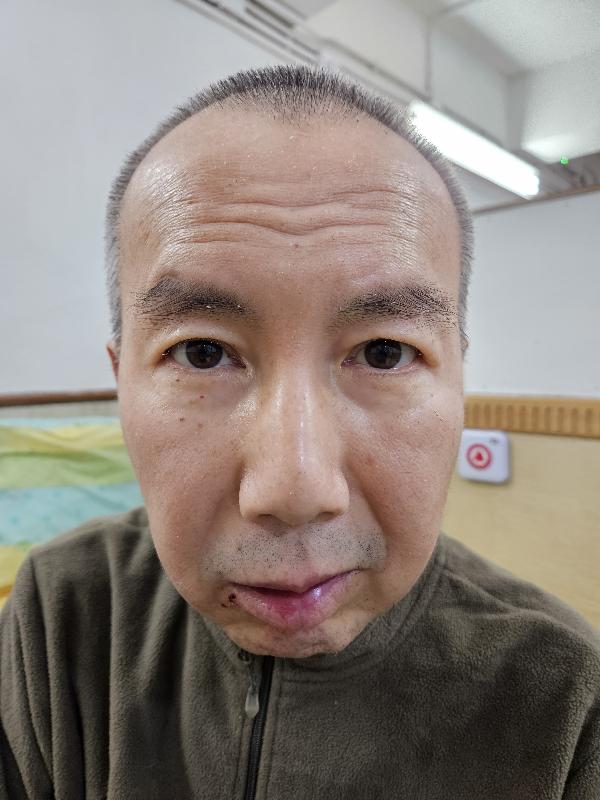
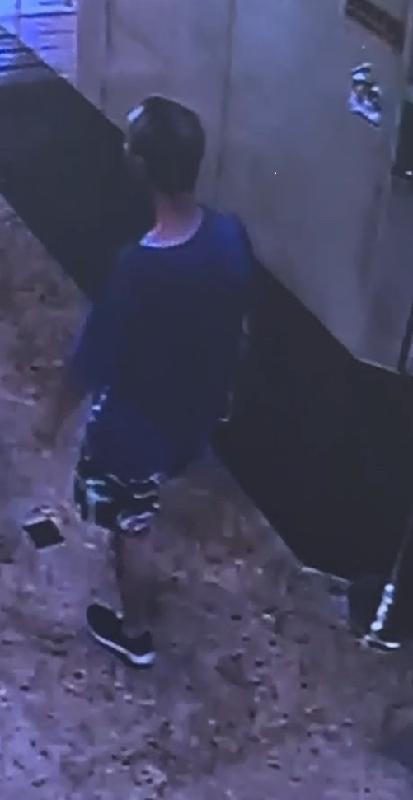
Appeal for information on missing man in Cheung Sha Wan (with photos)

     Police today (May 21) appealed to the public for information on a man who went missing in Cheung Sha Wan.

     Tsai Muk-lun, aged 61, went missing after he left his caring home on Castle Peak Road, Cheung Sha Wan on May 19 afternoon. Staff of the caring home made a report to Police yesterday (May 20).

     He is about 1.7 metres tall, 60 kilograms in weight and of medium build. He has a round face with yellow complexion and short black hair. He was last seen wearing a blue T-shirt, shorts with floral patterns and black sports shoes.

     Anyone who knows the whereabouts of the missing man or may have seen him is urged to contact the Regional Missing Person Unit of Kowloon West on 3661 8036 or 9020 6542 or email to rmpu-kw@police.gov.hk, or contact any police station.

Photo  Photo  


LCQ15: Small Claims Tribunal

     Following is a question by the Hon Chan Kin-por and a written reply by the Chief Secretary for Administration, Mr Chan Kwok-ki, in the Legislative Council today (May 21):
 
Question:
 
     The jurisdictional limit of the Small Claims Tribunal (SCT) was increased from $50,000 to $75,000 in 2018. In this connection, will the Government inform this Council:
 
(1) whether it knows the number of cases filed to SCT over the past three years and its percentage in the total number of court cases, together with a breakdown by the claim amount (i.e. (i) ‍$50,000 or less, (ii) ‍$50,001 to $74,999, and (iii) $75,000);
 
(2) given that in the reply to a question raised by a Member of this Council on the Estimates of Expenditure 2025-2026, the Judiciary has indicated that when considering adjusting the jurisdictional limit of SCT, it would analyse a host of factors, including public demand for SCT's services and changes in economic indicators, and that it is learnt that the amounts involved in civil disputes in recent years have significantly increased, with the claim amount of some cases filed to SCT already reaching the limit of $75,000, whether the Government knows when the Judiciary will adjust the jurisdictional limit of SCT and whether it will consider raising the claim limit; and
 
(3) given that, according to information from the Judiciary, the average waiting time for cases in SCT from filing to first hearing over the past three years was 35 to 41 days, which is better than the target time of 60 days, there are views that the relevant situation indicates that even if the jurisdictional limit of SCT is adjusted, SCT still has sufficient manpower to handle additional caseload, whether the Government knows how the Judiciary assesses the impact of adjusting the jurisdictional limit of SCT on the average waiting time for cases filed?
 
Reply:
 
President,
 
     Based on the information provided by the Judiciary, the Government's reply is as follows:
 
(1) In the past three years (2022 to 2024), around 80% of cases filed in the Small Claims Tribunal (SCT) involve claim amounts of $50,000 or less. The breakdown of the relevant cases by respective claim amounts is as follows:
 

Claim amount (HK$) Number of cases filed
2022 (%) 2023 (%) 2024 (%)
≤ 25,000 26 483 (64%) 33 817 (65%) 39 510 (69%)
> 25,000 to ≤ 50,000 6 329 (15%) 7 820 (15%) 8 180 (14%)
> 50,000 to ≤ 75,000 8 702 (21%) 10 667 (20%) 9 764 (17%)
Total 41 514 (100%) 52 304 (100%) 57 454 (100%)

 
Note: In the past three years (2022 to 2024), a total of more than 1.6 million cases were filed in all levels of court (including the Court of Final Appeal, the High Court, the District Court, the Magistrates' Courts and various Tribunals), and about 10% of them were filed in the SCT. However, we should note that since the jurisdiction, case types and resources of courts at different levels vary, the caseloads among them should not be directly compared.
 
(2) and (3) The SCT adopts a less formal approach to proceedings, providing a relatively quick and less costly avenue for litigants to resolve civil disputes involving lower claim amounts. One of the features of the proceedings in the SCT is that legal representation is not allowed. In considering any proposal for adjustment to the jurisdictional limit of the SCT, the Judiciary will comprehensively and objectively analyse all relevant factors, including the functions of the SCT, the demand for its services and its operational impact, changes in economic indicators and views of stakeholders, so as to ensure an appropriate distribution of cases between the District Court and the SCT, thereby enhancing access to justice for the members of the public in need.
 
     The jurisdictional limit of SCT was increased from $50,000 to $75,000 with effect from December 3, 2018. Since then, the Judiciary has been closely monitoring the caseload of the SCT. According to the Judiciary’s case statistics from 2019 to 2024, while the total number of cases filed to SCT has increased by 2.8% from 55 879 to 57 454, those cases involving claim amounts exceeding $50,000 has been substantially reduced by 32% from 14 315 (26% of total number of cases) to 9 764 (17% of total number of cases). 
 
     The average court waiting times of the SCT in 2023 and 2024 recorded at 35 and 41 days respectively, which were within the target waiting time of 60 days. It should be noted that waiting times of the SCT is only one of the indicators of its operation, and do not reflect the substantial resources involved in the process of cases by the SCT, particularly on the part of the Adjudicators and Tribunal Officers in assessing, liaising with litigants/parties and facilitating settlement of cases through alternative dispute settlement out of court (including mediation) instead of trial proceedings. Such cases accounted for around 90% of the cases disposed of at the SCT.
 
     In the light of the above, the Judiciary considers that the jurisdictional limit of the SCT is currently at an appropriate level, and has no plan to make adjustments at the moment. The Judiciary will continue to keep relevant factors mentioned above under review to assess whether there is a need to adjust the jurisdictional limit of the SCT in the future, thereby ensuring appropriate distribution of cases between the District Court and the SCT.