LD reminds employers and employees to take heat stroke preventive measures in times of Heat Stress at Work Warning

     â€‹As the Heat Stress at Work Warning is now in effect, the Labour Department (LD) reminds employers and employees to take appropriate measures during the effective period of the warning to prevent heat stroke when working in hot weather or hot environments.
      
     Employees who work outdoors or in non-air-conditioned indoor environments face high levels of heat stress and are at a relatively higher risk of heat stroke. Employers should assess the risk factors of heat stress for employees at work and, based on the identified risk factors, take necessary preventive and control measures, including rescheduling work periods, setting up shading covers, providing ventilation and heat dissipation equipment, and reminding employees to replenish water and rest in a timely manner.
      
     The Heat Stress at Work Warning is formulated by the LD based on the Hong Kong Heat Index. There are three levels of the warning: Amber, Red and Black, which help employers and employees better understand the level of heat stress while working outdoors or indoors without air-conditioning systems.
      
     A spokesman for the LD said that when the department issues the Heat Stress at Work Warning, employers must refer to the criteria and recommendations provided in the "Guidance Notes on Prevention of Heat Stroke at Work" to conduct risk assessments, according to the workloads and other relevant heat stress risk factors, for employees who work outdoors or in non-air-conditioned indoor workplaces. Appropriate rest breaks should be arranged every hour, as far as reasonably practicable, based on various levels of the Heat Stress at Work Warning, to reduce employees' risk of heat stroke.
      
     Employees must also follow instructions to rest on time. Whenever there are any symptoms of heat-related illnesses, such as headache, dizziness, thirst, and nausea, they should rest in a cool and shady place, drink water, and inform employers/supervisors to take appropriate action immediately.
      
     The LD issued the "Guidance Notes on Prevention of Heat Stroke at Work", detailing the various risk factors that should be considered when conducting heat stress risk assessments and recommending corresponding control measures for identified risk factors for employers' and employees' reference. For the Heat Stress at Work Warning and related guidelines, please refer to the department's thematic webpage: www.labour.gov.hk/eng/news/prevention_of_heat_stroke_at_work.htm.


HKMA partners with Land Registry to promote opening up of government data via CDI-CDEG linkage

The following is issued on behalf of the Hong Kong Monetary Authority:
 
     The Hong Kong Monetary Authority (HKMA) announced today (May 22) the successful connection between the HKMA's Commercial Data Interchange (CDI) and the Land Registry (LR) through the Government's Consented Data Exchange Gateway (CDEG) (LR@CDI), enabling CDI participating banks to automate their land search processes. The linkage marks another major achievement in meeting banks' demand for government data after the connection of the Companies Registry (CR) to CDI through CDEG (CR@CDI).
      
Key features and benefits of LR@CDI
 
     By connecting to the LR via the CDI-CDEG linkage, banks can search land and ownership information in a straight-through manner via Application Programming Interface (API), effectively streamlining their processes in relation to property valuation, mortgage and loan assessments for individual and corporate customers. This would in turn enable banks to enhance risk assessment, improve customer experience and reduce time costs.
      
     With the launch of LR@CDI, CDI participating banks can also access e-Alert notifications via API when further charge/mortgage documents related to the mortgaged properties are lodged for registration with the LR, thereby providing banks with timely updates on the risk profile of their mortgage lending.
      
     Deputy Chief Executive of the HKMA, Mr Howard Lee, said, "We are delighted to partner with the LR to promote the benefits of the CDI-CDEG linkage for the banking sector. The launch of LR@CDI marks a significant milestone in our efforts to provide banks with seamless and secure access to government data, unlocking new efficiencies for banks to enhance risk management, better serve their customers and stay ahead of the curve in a rapidly evolving digital economy. Together with the Digital Policy Office (DPO), we will explore further data sharing opportunities with more government bureaux and departments leveraging the CDI-CDEG linkage, with the aim of contributing to the advancement of Hong Kong's digital economy."
      
     The Commissioner for Digital Policy, Mr Tony Wong, said, "The DPO actively develops CDEG and promotes innovative application and sharing of data, with a view to enhancing efficiency and quality of government services and bringing greater benefits to citizens and businesses. We are pleased to see the growing recognition of the significant benefits and transformative power of sharing government data with the private sector. The DPO and the HKMA are committed to accelerating the process of collaboration between the public and private sectors. By fostering a robust ecosystem of consented data sharing, we aim to unlock new opportunities for businesses and bolster the overall competitiveness of Hong Kong's economy."
 
     The Land Registrar, Ms Joyce Tam, said, "The LR has been proactively driving innovation in service delivery to meet customer needs and support digital government initiatives. LR@CDI is the latest such initiative to enable interchange of LR data via API for digitising and streamlining banking processes in financial institutions. Our collaboration with the HKMA and the DPO demonstrates our commitment to enhancing data accessibility and increasing efficiency between both government and financial services."
 
Growing utilisation of CR@CDI
 
     Since the CDI-CDEG linkage came into full operation in August 2024, CR@CDI has been well received by banks, with average monthly data transfers amounting to approximately 1.5 million. Eight banks are actively utilising the CR@CDI connection to enhance their operational efficiency and risk management capabilities in different business scenarios such as automating online account opening process and conducting customer due diligence. More banks are expected to join the CDI service to obtain company search records in a more streamlined manner with the use of API.


Speech by FS at International Forum for Patient Capital (English only) (with photos/video)

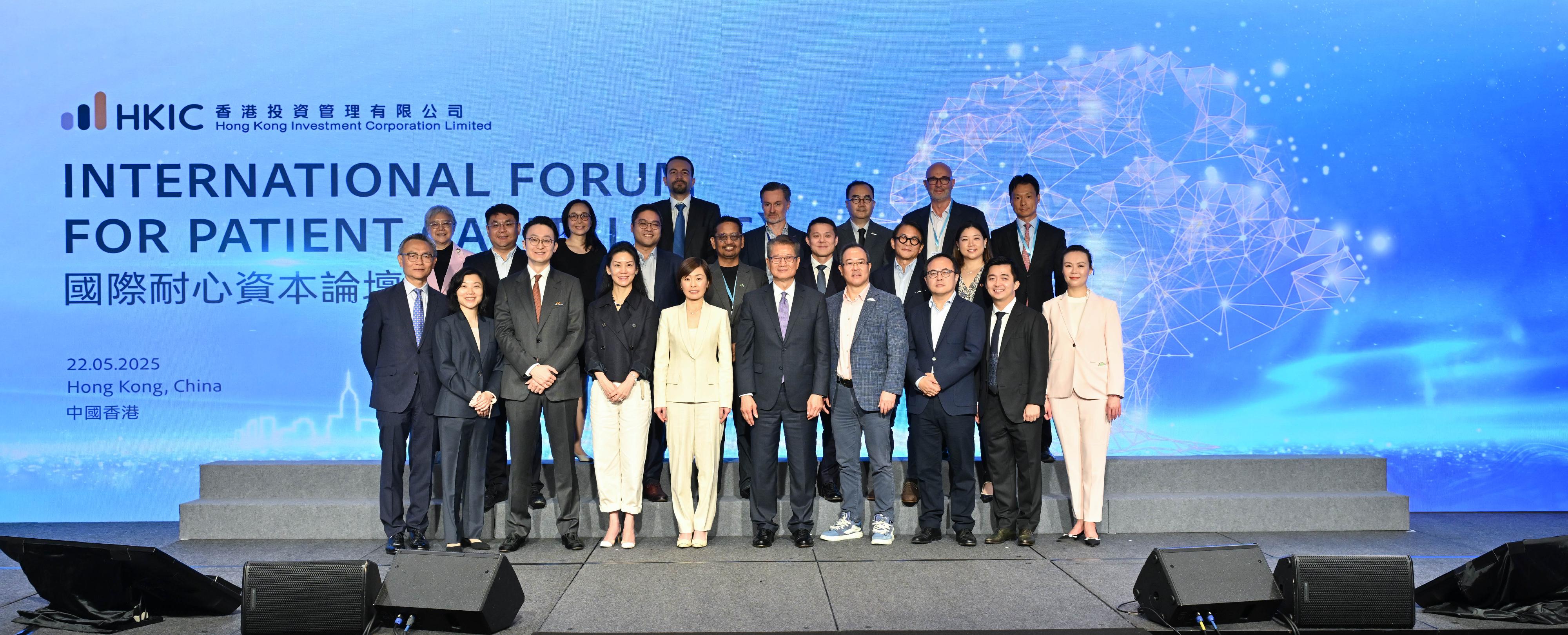
     â€‹Following is the speech by the Financial Secretary, Mr Paul Chan, at the International Forum for Patient Capital today (May 22):
 
Clara (Chief Executive Officer of the Hong Kong Investment Corporation, Ms Clara Chan), distinguished guests, ladies and gentlemen,
 
     Good morning.
 
     It is a great pleasure to welcome you all to the inaugural International Forum for Patient Capital, organised by the Hong Kong Investment Corporation Limited (HKIC).
 
     This gathering brings together a remarkable group of global patient capital leaders and enterprises at the forefront of cutting-edge technologies. We are delighted to host you in this dynamic city of opportunities and promise. 
 
The case for patient capital
 
     Technological innovation is the engine of progress, and cutting-edge technologies are its spark. They ignite transformative change, turning bold imagination into world-changing reality. Yet, these frontier innovations often mean navigating uncharted waters. The risks are high, the outcomes are uncertain, and the timelines can be long – though the return could be huge.
 
     This is precisely where and why patient capital plays a critical role.
 
     Grounded in long-term vision, with the courage to weather the ups and downs of economic cycles and the willingness to embrace future possibilities, patient capital is guided not only by profits but more importantly, by purpose and impact.
 
     Around the world, governments and institutions are recognising the strategic importance of patient capital in powering technological advancement, industrial transformation and economic growth.
 
     For instance, our country, China, has emphasised the need to make long-term investments in nascent hard-tech enterprises, supporting deep-tech ecosystems and building new quality productive forces.
 
Hong Kong's vision and pathway
 
     Here in Hong Kong, we understand the importance of patient capital in our pursuit of a more diversified economic structure with leading-edge competitiveness.
 
     It is our aspiration not only to be a leading international financial, shipping and trade centre, but also a world-class innovation and technology (I&T) hub. Looking ahead, finance, trading and I&T will be the key engines powering Hong Kong's economic growth
 
     Over the years, we have made substantial investments in the tech sector. We have formulated a comprehensive strategy to expedite I&T development across the entire spectrum. From supporting basic research and the commercialisation of research outcomes, to nurturing start-ups, attracting strategic enterprises and promoting advanced manufacturing, we are scaling the tech ecosystem in Hong Kong from upstream to downstream.
 
     Our edge in innovation is amplified by our synergistic development with sister cities in the GBA (Guangdong-Hong Kong-Macao Greater Bay Area). In fact, the Shenzhen-Hong Kong-Guangzhou science and technology cluster has been ranked second globally by the Global Innovation Index for five consecutive years.   
 
     Our tech ecosystem benefits from a complete and deep funding chain, from angel investments, venture capital, private equity to IPOs. 
 
     However, at times traditional investors are hesitant to enter the early, risky stages of innovation, where potential may be the greatest, yet certainty is the lowest. To address this gap in the funding chain, the Government may need to take the lead.
 
     That is why we established the HKIC. One of its key priorities is to channel market capital into high-potential, nascent-stage industries, and attract innovative enterprises to help us build the related ecosystem in Hong Kong.
 
     The HKIC carries a dual mandate: to enhance the long-term competitiveness and economic vitality of Hong Kong and, at the same time, seek reasonable financial returns over the medium to long term.

     So far, the HKIC has participated in over 100 projects. It has drawn in four dollars of long-term private capital for every dollar it invested.
 
     On the tech front, the HKIC focuses on artificial intelligence (AI), hard tech, biotech, new materials and new energy. These sectors were chosen with strategic ambition. In AI, Hong Kong is home to outstanding academic institutions and uniquely positioned at the convergence of Mainland and international data and talent. In healthcare, we are proud to host two of the world's top 40 medical schools, and maintain the highest regulatory and professional standards. In green tech, we have more than 300 such start-ups in our Science Park and Cyberport, and many of them are already exporting solutions overseas.
 
     Let me stress one point: the HKIC is not just an investor. It is a co-investor and a collaborator. We work alongside strategic partners to support sectors where we see long-term potential and where Hong Kong has distinct advantages.
 
     HKIC's vision extends beyond borders. We are committed to supporting regional and global collaboration, guided by the conviction that openness and partnership are the best pathways to sustainable growth and shared success.
 
     I'm sure Clara will talk more about the work of the HKIC shortly.
 
Opportunities ahead
 
     Looking to the future, geo-economic fragmentation has no doubt cast a shadow over global growth and investment flows. But even in fragmentation, opportunities emerge.
 
     As supply chains realign and countries localise critical industries, patient capital can fund scalable alternatives. As technological divides widen, new spaces are open for alternative platforms, creative new entrants and innovative breakthroughs.
 
     A compelling example is the "DeepSeek Moment". Although start-ups may have a modest and recent beginning, DeepSeek demonstrates how ingenuity, creativity and agility can overcome resource constraints and lead to success on a global scale.
 
     What matters is whether we are willing and ready to support start-ups like them, and provide the capital bridge they need to succeed.
 
Our appeal
 
     That brings us to today's Forum. More than a dialogue, this event is a platform to connect global patient capital with the transformative ideas and projects that will shape our future.
 
     There is no better place than Hong Kong to host this initiative. 
 
     Under the "one country, two systems" framework, we remain firmly committed to our status as an open, diverse and international city, with free flow of capital, goods, talent and information. We uphold the common law system, underpinned by a judiciary exercising powers independently, with robust intellectual property rights protection. These are the foundations of Hong Kong’s success, and the reasons why we are trusted as a hub for global capital.
 
     We are also committed to working with international partners to chart new and sustainable pathways of growth, and to allow the dividends of innovation to transcend borders and benefit the people.
 
     I am therefore deeply encouraged to see so many leaders of capital and technology coming together today. The conversations you begin here will lead to partnerships, to investments, and to shared progress.
 
     Allow me to conclude by quoting an African proverb: "If you want to go fast, go alone. If you want to go far, go together."
 
     Ladies and gentlemen, let us go far – together. Thank you very much.
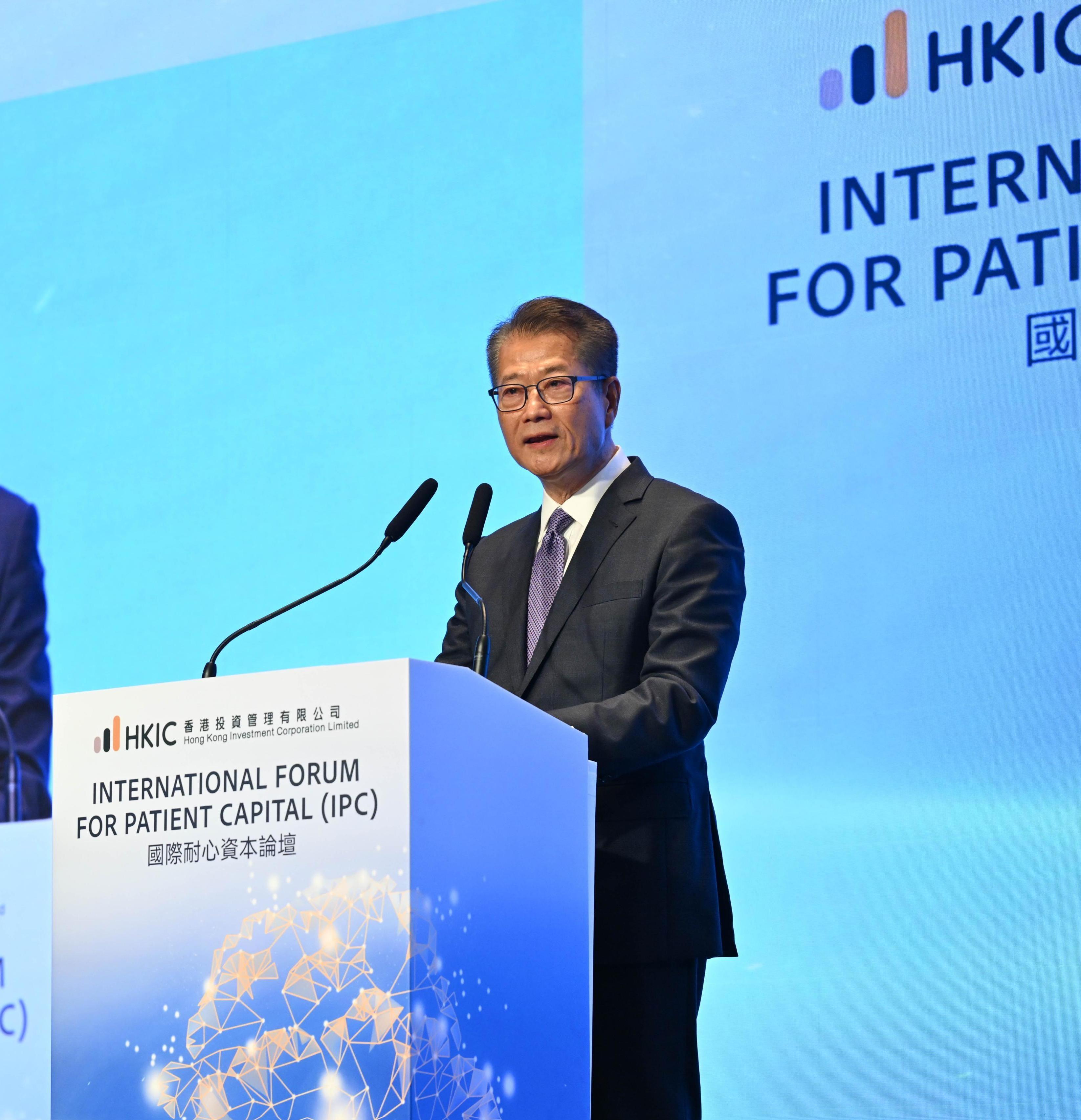
Photo  Photo  


Upgrading of Eastern District Health Centre Express to District Health Centre and change of Kwai Tsing District Health Centre operator announced

     The Health Bureau (HHB) announced today (May 22) that the operation service contract for the Eastern District Health Centre (DHC) has been awarded through open tender to the Hong Kong Society for Rehabilitation (HKSR) to upgrade the existing Eastern DHC Express (DHCE) to the Eastern DHC, which is expected to commence operations in the fourth quarter of this year. Meanwhile, the existing operation service contract for the Kwai Tsing DHC will expire in the third quarter this year.  After an open tender exercise, the HHB has awarded the operation service contract of the Kwai Tsing DHC to the Yan Chai Hospital Board. Both service contracts are for three years.
  
     The core centre of the Eastern DHC will be located at the Siu Sai Wan Health Integrated Building, 11 Harmony Road, Siu Sai Wan, Chai Wan, with a total floor area of about 1 000 square metres, representing an increase of about three times the size of the current Eastern DHCE. The core centre will provide additional consultation rooms, rehabilitation facilities and an audio-visual assessment room. Facilities for health education activities will also be enhanced. According to the operation service contract, the HKSR is required to establish two satellite centres in the district within the first year of operation to enhance service accessibility. The core centre and two satellite centres will operate six days a week with a minimum of 10 hours of service per day.

     Moreover, after changing the operator of the Kwai Tsing DHC, its core centre will remain on 30/F, Tower 2, Kowloon Commerce Centre, 51 Kwai Cheong Road, Kwai Chung. The main services provided, including chronic disease management and community rehabilitation services, will remain unchanged. Meanwhile, the satellite centres will be relocated. In accordance with the operation service contract, the Yan Chai Hospital Board is required to establish four satellite centres in the district within the first year of operation. The core centre and four satellite centres will operate six days a week with a minimum of 10 hours of service per day. 

     After changing the operator of the Kwai Tsing DHC, the existing members can continue to use the services of the DHC without the need for re-registration. The Primary Healthcare Commission (PHC Commission) will discuss with the relevant operators and implement the handover of the Kwai Tsing DHC services and premise to ensure a smooth transition. The PHC Commission will also discuss with the relevant operators and implement the transitional plan for upgrading the Eastern DHCE to a DHC. Both DHCs will continue to co-ordinate primary healthcare services in the districts, serving as case managers to support primary healthcare doctors while also acting as resource hubs for district healthcare services that connect various public and private service organisations across sectors in the community. The DHCs will continue to assist citizens in pairing with family doctors, providing comprehensive advice on disease prevention through the Life Course Preventive Care Plan, promoting the Chronic Disease Co-Care Pilot Scheme, as well as offering health education and promotion, health risk assessments, community rehabilitation services, dedicated nurse clinic and allied health services, and more.
 
     The Chief Executive announced in the 2024 Policy Address the upgrading of more DHCEs to DHCs. With the Eastern DHC, the Central and Western DHC and the Yau Tsim Mong DHC expected to commence operations within this year as announced earlier, the total number of DHCs across the city will increase to 10 this year. The PHC Commission will continue to implement the relevant upgrading plans to establish DHCs across the 18 districts at the earliest juncture, with a view to strengthening the prevention-oriented, district-based, and family-centric primary healthcare network.


Very Hot Weather Warning issued

Attention TV/radio announcers:

Please broadcast the following as soon as possible:

     The Hong Kong Observatory has issued the Very Hot Weather Warning.

     To prevent heat stroke, avoid prolonged activities outdoors.

     If engaged in outdoor work or activities, wear a wide-brimmed hat and light-coloured, loose-fitting clothes. Stay in shaded areas as much as possible.

     Drink plenty of water, and avoid beverages containing caffeine or alcohol.

     If you feel sick, consult a doctor right away.