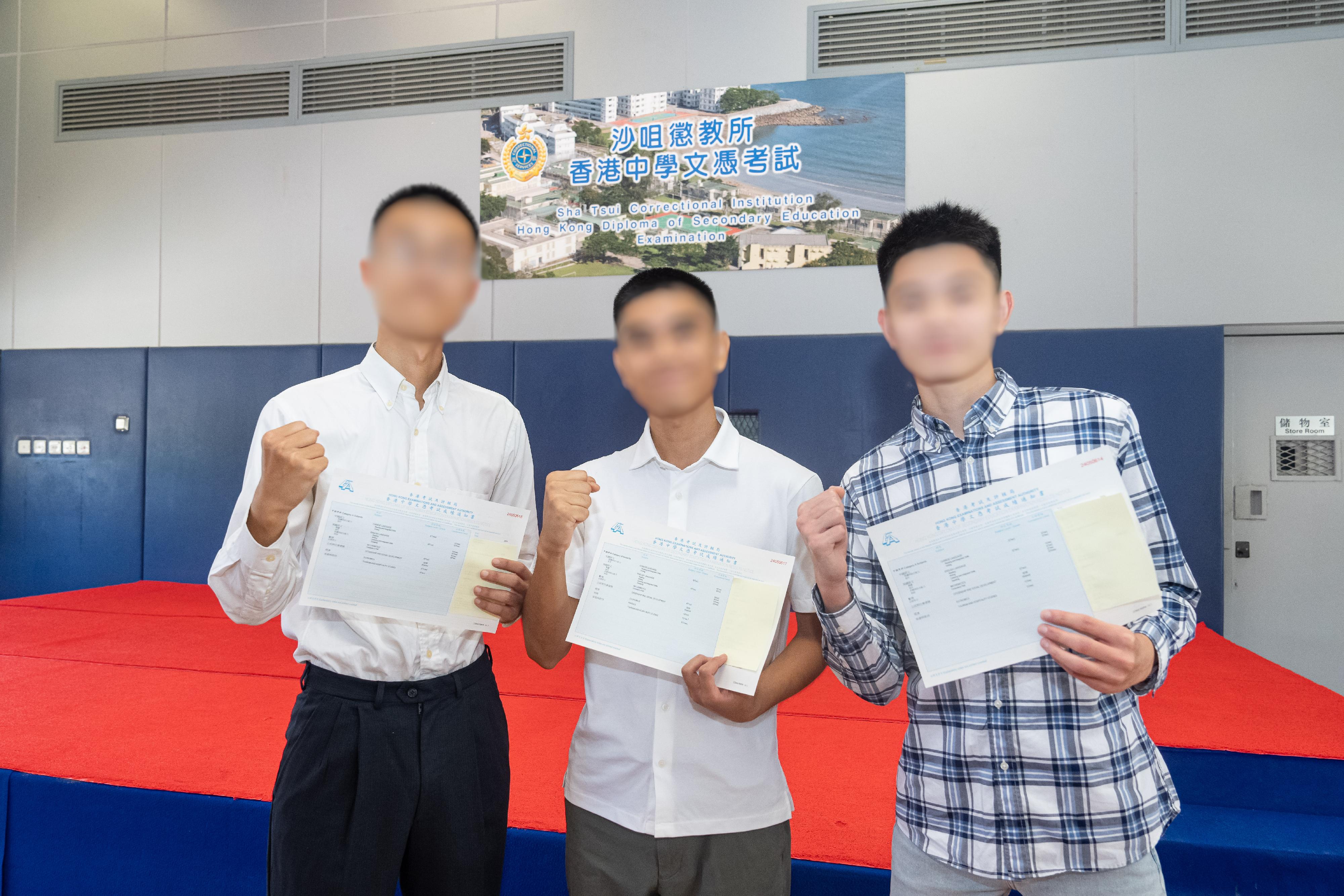
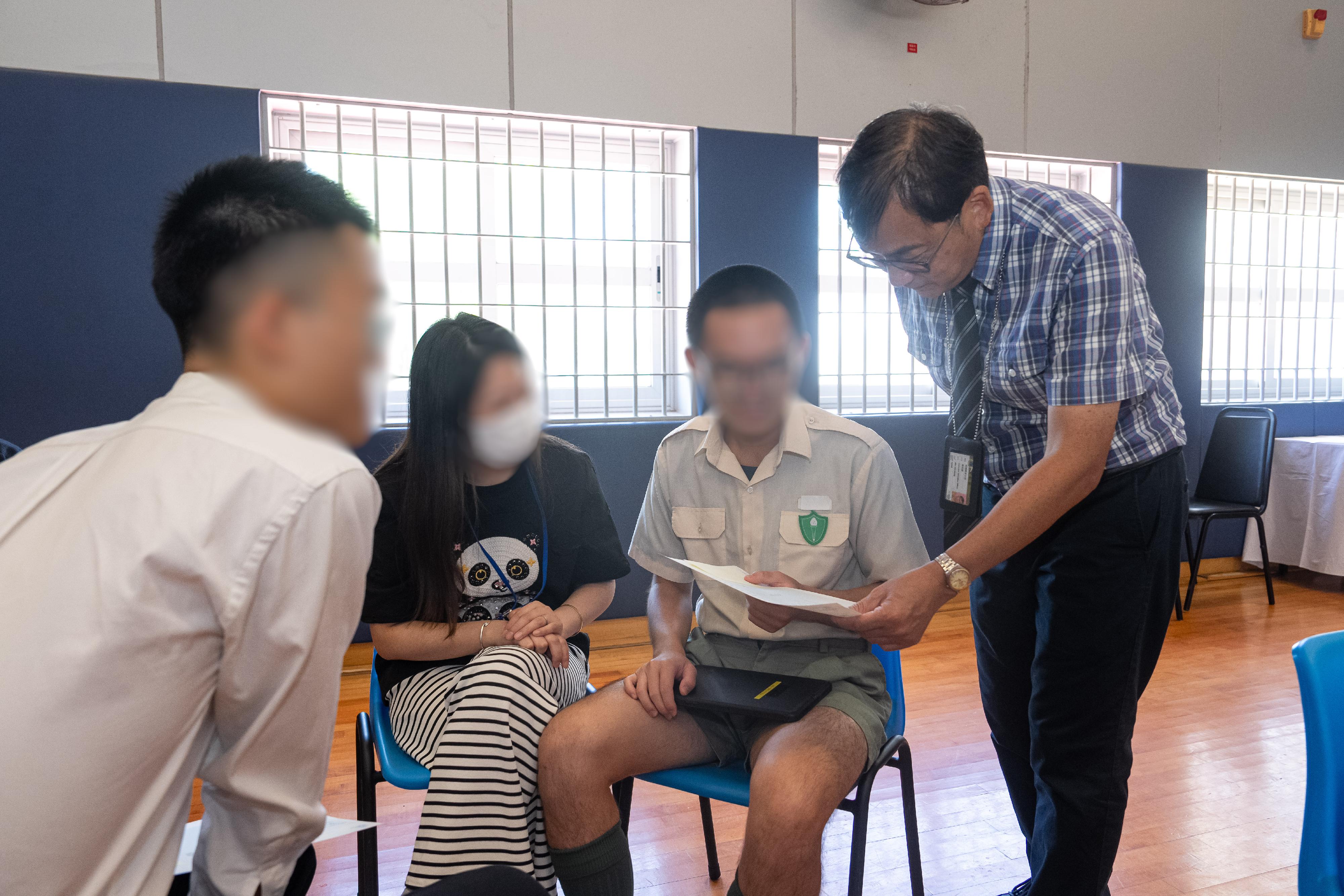
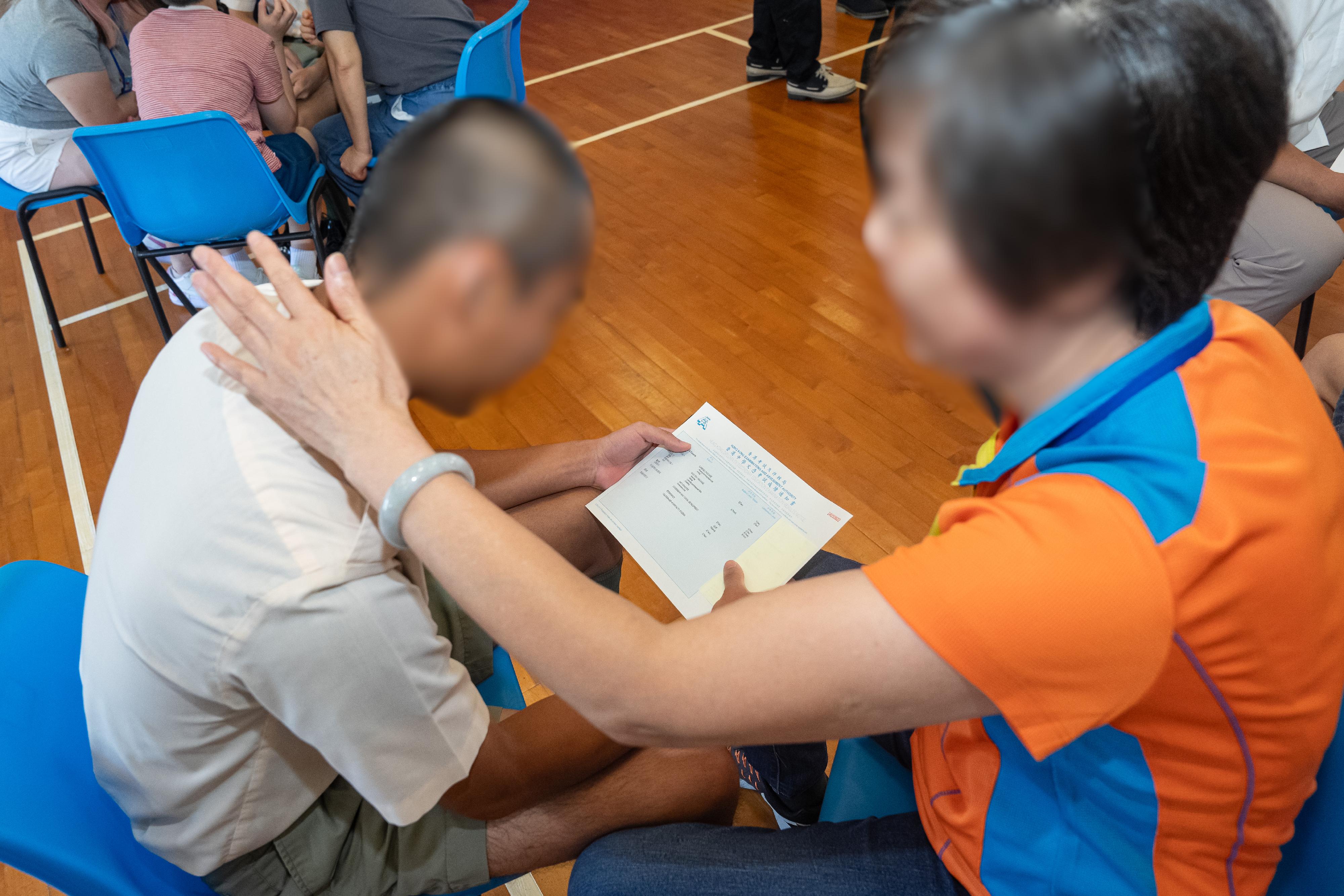
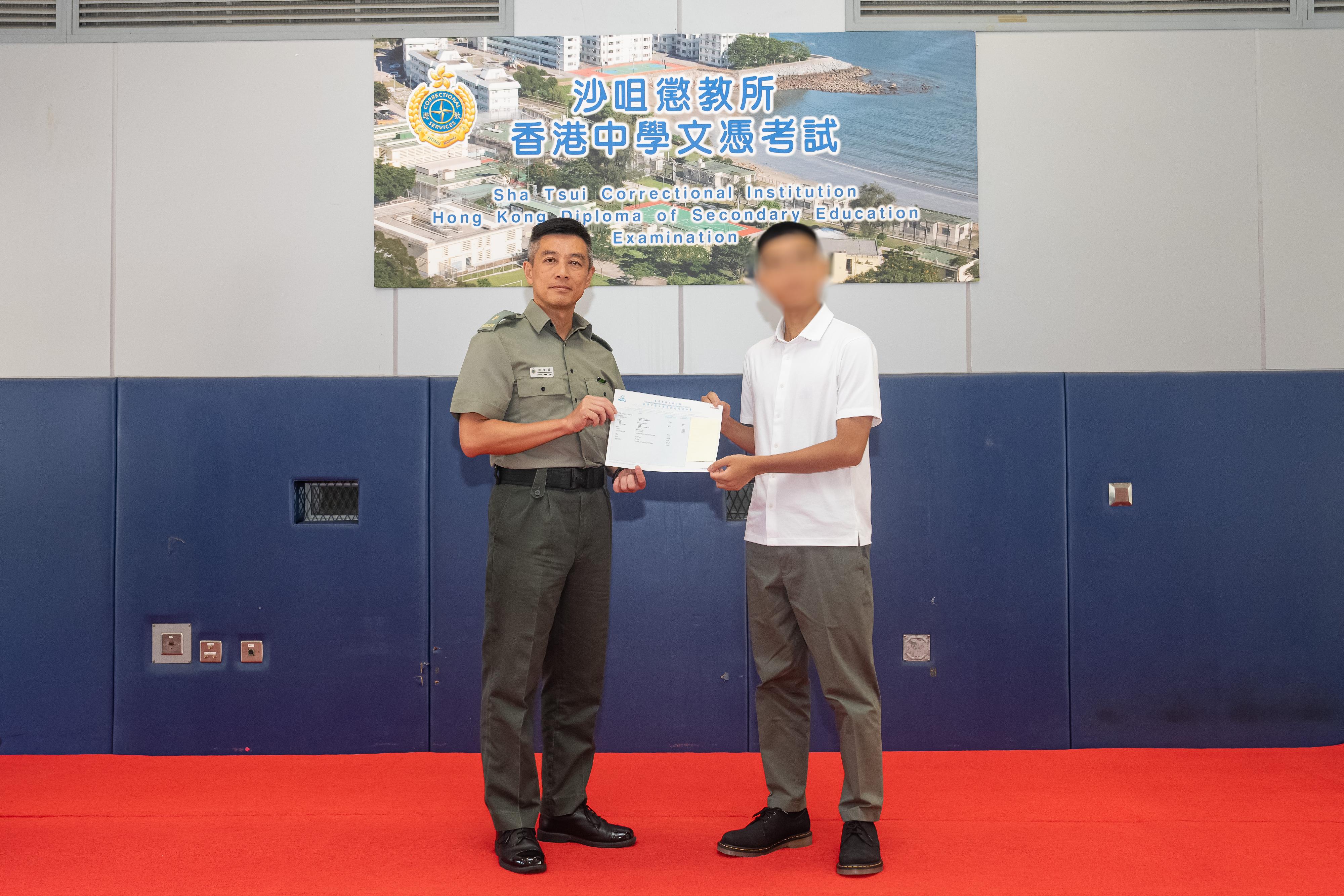
Young persons in custody sit for HKDSE Examination for self-enhancement (with photos)

     The results of the Hong Kong Diploma of Secondary Education (HKDSE) Examination were released today (July 17). Young persons in custody (PICs) obtained satisfactory results in the examination this year.

     A total of 14 young PICs from Sha Tsui Correctional Institution (STCI), Pik Uk Correctional Institution and Lai King Correctional Institution enrolled in the HKDSE Examination this year. They took a total of 86 examination papers and obtained level 2/"Attained" or above in 80 papers, or 93 per cent of all papers taken. Four of them met the general entrance requirements for local universities, among whom one candidate at STCI scored 22 marks in the best five subjects and obtained "Attained" in Citizenship and Social Development, with level 5 in Economics and Physics respectively.

     The exams sat included the four core subjects of Chinese Language, English Language, Mathematics and Citizenship and Social Development, as well as two electives of Economics and Tourism and Hospitality Studies etc.

     The Superintendent of STCI, Mr Chan Man-yat, said, "The Correctional Services Department (CSD) has strived to improve academic standards of young PICs through education. The Department encourages and assists young PICs to sit for the HKDSE Examination, enabling them to develop good character and obtain recognised academic qualifications so as to enhance their
employment prospects and facilitate their further education, preparing them for reintegration into society."

     Preparation of young PICs for the HKDSE Examination is not an easy task, Mr Chan added. He was glad to see that the PICs had worked tirelessly, demonstrated determination and perseverance, and overcome learning difficulties with a positive attitude throughout the process. Family support as well as guidance and assistance from the staff and teachers of the CSD also gave them great encouragement. He encouraged young PICs to maintain a proactive and positive attitude to meet the challenges ahead.

     The CSD has provided education to help young PICs below 21 years of age to gain accredited qualifications and develop positive values, hoping that they can further their studies, find jobs and reintegrate into society after release.

Photo  Photo  Photo  Photo  


LCQ2: Medical incidents in public hospitals

     Following is a question by the Hon Joephy Chan and a reply by the Secretary for Health, Professor Lo Chung-mau, in the Legislative Council today (July 17):

Question:

     It has been reported that earlier a four-year-old girl developed cardiac arrest after she underwent wound suture at the Accident and Emergency Department of Yan Chai Hospital. During the suturing process, her head was positioned with the assistance of non-healthcare personnel. It took 18 minutes from the discovery of the girl's loss of consciousness and pulse to the return of spontaneous circulation after emergency treatment. There are views that, before the outcome of a formal investigation into the incident is available and before a full communication with the girl's family is made, the hospital is suspected of misleading the public by unilaterally convening a press conference and indicating that it will find out whether the girl has hidden diseases. In this connection, will the Government inform this Council:

(1) whether it knows if the Hospital Authority (HA) currently has sufficient mechanisms or guidelines covering different clinical procedures and specifying the duties of different personnel (including non-healthcare personnel) in carrying out such procedures; if HA has, of the details; whether HA will update the relevant guidelines after experiencing the incident; if so, of the details; if not, the reasons for that;

(2) whether it knows HA's mechanisms or guidelines for external reporting of medical incidents, and whether the mechanisms or guidelines specify the circumstances under which information on such incidents should be disseminated externally, as well as the form and material contents of the necessary communication with the affected patients and their families before the dissemination of information on such incidents; and

(3) of the measures put in place by the Government and HA to reduce medical incidents, so as to safeguard the healthcare quality of Hong Kong and maintain public confidence in the public healthcare system?

Reply:

President,

     The Hon Joephy Chan has mentioned a truly unfortunate and very upsetting incident in her speech. I am deeply saddened by the circumstances of the girl in this case of cardiac arrest. I take this opportunity to extend my deepest sympathy to the patient and her family. The Hospital Authority (HA) is making every effort to take care of the patient, and is actively providing assistance to the patient and her family in every aspect. The Chief Executive of the HA, Dr Tony Ko, had also visited the girl, met with and apologise to her family before meeting with the press the day before yesterday, i.e. July 15. Every medical incident involves patients' privacy. Out of respect for the patient and her family and to avoid causing "secondary harm" to them, and given that this case has entered investigation and enforcement proceedings, it is not suitable for public discussion at the Legislative Council. I therefore will not comment on the case in question, and I hope that everyone will refrain from going into details of the case in the question-and-answer process. The Health Bureau (HHB) had also reported and discussed the overall quality and safety issues of public hospital services at the meeting of the Panel on Health Services of the Legislative Council on July 12 last week.

     In consultation with the HA, the reply to the question raised by the Hon Joephy Chan is as follows:

(1) The safety of patients and healthcare staff is the prime concern of hospital operations. As such, when planning and delivering patient-oriented services, the HA accords prime consideration to service quality and safety, and establishes a governance structure, systems, procedures and training covering different clinical services to ensure that these services meet stringent clinical standards. 

     At present, the Quality and Safety Division of the Hospital Authority Head Office (HAHO) is responsible for steering the establishment and implementation of the clinical quality and standard system. The quality and safety teams at all levels in hospital clusters as well as individual hospitals are responsible for implementing and monitoring relevant measures in various areas including credentialing, clinical audit, patients' safety and risk management as well as patients' relations, while maintaining close communication and collaboration with the HAHO to ensure that the HA provides quality and safe healthcare services.

     With the rapid and ever-changing development of clinical medicine, the HA has put in place systems and guidelines for different clinical diagnoses, treatments and procedures, and they are continuously updated on evidence-based principle, so as to ensure that the service quality and standards are kept abreast of the times. The Coordinating Committees of various specialties and Central Committees under the HA are responsible for formulating various clinical standards, e.g. bedside application of cardiopulmonary resuscitation and clinical guidelines for treating diabetes and hypertension. They also play a key role in aspects such as clinical audit and implementation of best practice. There are also service guidelines on nursing care covering clinical nursing care procedures like blood transfusion and distribution of medications. Nursing audit is also conducted regularly to identify and improve potential issues. For supporting staff, the HA has also put in place guidelines and training requirements, e.g. caring skills for patients, workflow for procedures such as feeding and lifting patients, etc. Guidance and support will also be provided alongside introduction of modern technology and equipment to ensure that supporting staff can effectively and safely assist the work of healthcare staff.

(2) For reporting of medical incidents, the HA has established a full set of medical incident reporting and investigation procedures to cope with clinical risks. At present, all public hospitals have to report sentinel events and serious untoward events to the HAHO, including surgeries involving wrong patients or body parts, or misidentification of patients that could have led to death or permanent harm.

     When any incident occurs in a hospital, should report has been made to the HAHO by the relevant hospital afterwards, the corresponding hospital, hospital cluster and the HAHO will take various actions according to the nature of the incident, including follow-up investigation, risk assessment, review of the causes and formulation of improvement measures, which is particularly important, to prevent re-occurrence of similar incidents in the future. Meanwhile, the hospital will disclose the relevant incident to the patient and his or her family in an open and honest manner, and determine the timing, mode and content of the public announcement. Throughout the process of handling an incident, the Patient Relations Officer serves as a bridge of communication and will maintain contact with the patient and his or her family, and update them with the available information and situation in a timely manner. Relevant hospital departments will also provide appropriate treatment and different assistance as needed. The hospital will also inform the affected patient and his or her family of the relevant arrangement before disseminating to the public the incident information.

(3) To reduce the risk of recurrence of incidents, the HA regularly reviews, monitors and evaluates specific risk mitigation and preventive measures to ensure that they can achieve the expected outcomes. The HA is committed to building a culture of analysing and sharing the causes of medical incidents, as well as disseminating relevant information through various channels and actively introducing advanced technologies such as clinical artificial intelligence to further enhance patients' safety and risk management. The HA has also relaunched the hospital accreditation programme to objectively and systematically assess the risks and deficiencies in areas such as management of facilities and operation of hospitals through the assistance of external and independent professional organisations in hospital accreditation, with a view to continuously improving service quality and safeguarding patients' safety.

     To further manifest the commitment of the Government and the HA in continuous improvement of the public healthcare system and address public concern on recent medical incidents, the HHB has instructed the HA to, apart from actively following up on recent individual incidents, reviewing their causes and adopting improvement measures, conduct a comprehensive and independent review of the systemic and structural issues involved in the overall management of public hospitals. The review covers multiple levels including the HAHO, hospital clusters, hospitals, service units/teams and staff, while involving multiple aspects including governance, appraisal, accountability, operations, risk control and compliance.

     The Review Committee on the Management of the Public Hospital System (the Committee) has a membership comprising individuals of various backgrounds, and will complete the review and submit improvement recommendations to the HA Board within three months (i.e. before the end of September). The HA Board will consider the Committee's recommendations and submit a report to the HHB.

     The HHB and the HA will consider taking appropriate follow-up actions subsequently according to on the recommendations at different levels and in various aspects in the report, so as to continuously enhance the overall quality and safety of the public healthcare system, maintaining public trust in public healthcare services.

     Thank you, President.


LCQ8: Unauthorised building works and occupation of government land by housing on hillsides

     Following is a question by the Hon Ma Fung-kwok and a written reply by the Secretary for Development, Ms Bernadette Linn, in the Legislative Council today (July 17):

Question:

     It has been reported that the landslide at Redhill Peninsula on the Hong Kong Island caused by the once-in-a-century torrential rain last year has not only uncovered the serious problem of unauthorised building works (UBWs) at the houses there, but also revealed that issues such as UBWs on hillsides and unlawful occupation of government land are involved. In the light of the incident, the Government has indicated that it would conduct large-scale inspections targeting houses. On the other hand, there are views that the risk borne by housing situated on hillsides involving UBWs will increase significantly with the typhoon season approaching. In this connection, will the Government inform this Council:

(1) upon the comprehensive inspection conducted in respect of the UBW‍ problems of the houses at Redhill Peninsula, of the districts in which housing situated on dangerous hillsides and soil have been inspected by the authorities, and whether they have grasped the respective numbers of such housing involving UBWs, illegal addition works and unlawful occupation of government land;

(2) of the approaches adopted/to be adopted by the authorities to handle the cases mentioned in (1), as well as the number of actions taken and their effectiveness;

(3) of the actions taken by the authorities in the past year in respect of housing situated on hillsides involving UBWs, illegal addition works or unlawful occupation of government land, as well as their effectiveness; and

(4) in respect of housing situated on hillsides involving UBWs, illegal addition works or unlawful occupation of government land, apart from issuing removal orders, whether the Government will, on the premise that the structures concerned are assessed by professional Authorised Persons to be safe, consider adopting other rectification or compensation methods to address the problems?

Reply:

President,

     Our reply to various parts of the question is as follows:

(1) As pointed out in Hon Ma's question, the rainstorm in September last year revealed the safety risks of houses with irregularities situated on the slope. Therefore, the Buildings Department (BD) and the Lands Department (LandsD) commenced a joint operation from September to November last year to inspect 89 houses situated on the slope along the seafront of Redhill Peninsula (including the four houses at the landslide location), with a view to combating unauthorised building works (UBWs) and unlawful occupation of government land. The two departments then commenced a joint inspection of all 40 houses on Beaulieu Peninsula in Tuen Mun in December last year; and completed inspections of all 16 houses in Block B of Flamingo Garden in Sai Kung, and all 18 houses in Seaview Villas in Tai Po in the first half of this year.

(2) and (3) The BD issues removal orders for UBWs to the owners in accordance with the Buildings Ordinance (Note 1) and registers the removal orders in the Land Registry (commonly known as "imposing an encumbrance"). The LandsD posts statutory notices requiring the cessation of occupation of government land and the demolition of structures on government land in accordance with the Land (Miscellaneous Provisions) Ordinance (Note 2).  

     Regarding the joint operation against 89 houses situated on the slope along the seafront on Redhill Peninsula, 32 houses involved both UBWs and unlawful occupation of government land, 41 involved UBWs, one involved unlawful occupation of government land. No UBWs or unlawful occupation of government land was found for the remaining 15 houses. The two departments respectively issued 72 removal orders and posted statutory notices to 33 houses. As at end-June this year, among the 72 removal orders, substantive progress has been made for 42 orders, i.e. the orders have been complied with, remedial works were in progress, or the owners have appointed registered building professionals to prepare or submit proposals and building plans for the remedial works. Appeals against two orders have been dismissed by the Appeal Tribunal. Twenty-seven orders were pending processing by the Appeal Tribunal. One order has not yet expired. As for unlawful occupation of government land, more than half of the house owners concerned have submitted or were going to submit proposals for demolition works. Demolition and reinstatement works for some of the houses were in progress.

     For the joint operation on Beaulieu Peninsula, the two departments initiated investigation into 40 houses. Amongst these houses, 12 involved both UBWs and unlawful occupation of government land, 27 involved UBWs and one involved unlawful occupation of government land. The two departments respectively issued 46 removal orders and posted statutory notices to 13 houses. As at end-June this year, substantive progress has been made for 11 orders, seven orders were pending processing by the Appeal Tribunal, 16 orders have not yet expired. For the remaining 12 non-complied orders which have expired, the BD has initiated or is considering initiating prosecution action. As regards the statutory notices issued by the LandsD, nine have not yet expired and the remaining four have expired. Depending on the progress of individual cases, the department would consider instigating prosecution after seeking legal advice.

     As regards the joint operation against Flamingo Garden, the two departments initiated investigation into 16 houses. Amongst these houses, nine involved both UBWs and unlawful occupation of government land, six involved UBWs. No UBWs or unlawful occupation of government land was found for the remaining house. The two departments respectively issued 15 removal orders and posted statutory notices to nine houses. As at end-June this year, none of the removal orders and statutory notices have expired. Amongst which, two statutory notices have been complied with.

     As for Seaview Villas, the two departments initiated investigation into 18 houses. Amongst these houses, 14 involved both UBWs and unlawful occupation of government land, three involved UBWs and one involved unlawful occupation of government land. The two departments respectively issued 17 removal orders and posted statutory notices to 15 houses. As at end-June this year, none of the removal orders have expired, and remedial works for two orders were in progress. As regards the statutory notices issued by the LandsD, demolition works were in progress for three notices. Fourteen notices have not yet expired.

     The two departments will continue to follow up on the compliance of the remaining removal orders/statutory notices in the above operations. If the orders/notices are still not complied with after expiry, depending on the progress of individual cases, the departments will consider instigating prosecution.

     Apart from instigating prosecution against persons for non-compliance with expired removal orders or statutory notices, the two departments will also consider taking further prosecution action against persons (including owners, professionals and contractors participating in the relevant works) involved in the contraventions cases. For example, the LandsD has invoked section 6(4A) of the Land (Miscellaneous Provisions) Ordinance this year to instigate prosecution directly against the act of erecting structures on government land with regard to three cases on the Redhill Peninsula.  Legal proceedings of the above cases are ongoing. Depending on the outcome of the cases, the LandsD will consider extending application to other severe cases. The BD is also seeking advice from the Department of Justice on instigating prosecution under section 40(1AA) of the Buildings Ordinance against parties involved in some of the cases on the Redhill Peninsula for knowingly carrying out building works without having obtained prior approval from the BD (Note 3).

(4) ​The prior approval systems for building works are effective in ensuring that all building works as well as completed structures comply with the requisite building standards for safety and health, and are constructed by registered building professionals and registered contractors as required in accordance with the requirements of the Buildings Ordinance and its subsidiary legislation.

     Serious UBWs such as any unauthorised basements, damage to retaining walls or construction of unauthorised storeys in buildings situated on the slope will pose a risk to the structural safety of buildings, whose overall safety may not necessarily be ascertained by means of inspections afterwards. In addition, if the Government grants exemption in the form of compensation for serious cases such as large-scale UBWs or UBWs on slopes, such as payment of land premium, payment of punitive fines or other fees, this will convey a wrong message to the community that serious contraventions can be legitimised or legalised by financial means. As evident from the UBW problems unfolded on the Redhill Peninsula and other estates, there are strong calls in the community that the Government should take robust enforcement action against UBWs posing danger to public safety and/or with serious contraventions. Furthermore, in view of slope safety considerations, it would be problematic for the Government to consider regularisation arrangements for UBWs situated on slopes.

     As announced in the Chief Executive's 2023 Policy Address, the Government is reviewing the Buildings Ordinance to consider increasing the relevant penalties, lowering prosecution threshold, etc, so as to enable the Government to focus more effectively on and combat UBWs of high risk and serious contraventions. We will put forth recommendations for legislative amendments within this year for consultation with the industry and the public.
     
Note 1: The maximum penalty for non-compliance of removal orders issued by the BD without reasonable excuse is a fine of $200,000 and one-year imprisonment, and a further fine of $20,000 for each day that the offence continues.
 
Note 2: For persons who, without reasonable excuse, fail to demolish structures on government land or continue to occupy government land in accordance with the notices issued by the LandsD, if convicted on the first occasion, the maximum penalty is a fine of $500,000 and imprisonment of six months, and a further fine of $50,000 for each day that the offence continues; on each subsequent occasion of conviction, the maximum penalty is a fine of $1,000,000 and imprisonment of six months, and a further fine of $100,000 for each day that the offence continues.
 
Note 3: The maximum penalty is a fine of $400,000 and two-year imprisonment, and a further fine of $20,000 for each day that the offence continues.


Chief Executive in Council approves West Kowloon Cultural District Authority’s proposal

     The Secretary for Culture, Sports and Tourism, Mr Kevin Yeung, announced today (July 17) that the Chief Executive in Council on July 16 conditionally approved the relaxation of the Enhanced Financial Arrangements (EFA) for the West Kowloon Cultural District (WKCD) that were approved in 2016, to lift the "Build-Operate-Transfer (BOT) only" restriction for residential developments within Zone 2 of the WKCD and to permit sale of the residential developments. There is no change to the maximum total residential gross floor area of 170 280 square metres permitted under the extant WKCD Development Plan.
      
     The West Kowloon Cultural District Authority (WKCDA) shall strictly observe a number of key performance indicators (KPIs) on financial discipline set by the Government, including a triennial cap on operating deficits and a cap on the percentage of staff cost to the total annual operating expenditure. In respect of new capital projects, the WKCDA shall demonstrate to the satisfaction of the Government the reasonableness of the cost estimates for any new projects before they can be given the status of committed projects.
      
     In respect of tenders for developments with residential components, the WKCDA shall submit its tender schedules for the agreement of the Development Bureau (DEVB) and seek comments of the DEVB on the mechanism for setting the reserve price of the residential components of such tenders and the tender award recommendations for each sale exercise with residential components.
      
     Mr Yeung said, "The WKCDA is operating the WKCD under a self-financing principle. Following the completion of a number of cultural projects, the WKCD has emerged as a cultural landmark of Hong Kong, promoting international exchange in arts and culture. The Culture, Sports and Tourism Bureau (CSTB) has long been working closely with the WKCDA. Apart from providing support for arts and cultural developments, the CSTB is also concerned about the WKCDA's financial situation and challenges. The relaxation of the EFA will provide the economic prerequisites for the operation of the WKCD and resolve the current cash flow problem of the WKCDA. The WKCDA has to make good use of the land resources provided by the Government to ensure its own financial sustainability and thus ultimately achieve self-financing, which was the original intention of the WKCD's business model."
      
     The said relaxation will allow the WKCDA to continue its operations for about 10 years. During this period, the WKCDA will devise and implement robust revenue generation and commercialisation measures, and strictly control operating costs in order to fulfil its commitment to operate the WKCD project on a self-financing basis. The CSTB will closely monitor the financial status and performance of the WKCDA based on the KPIs, and work with the WKCDA to identify feasible measures to resolve its long-term financial challenges.


Inspection of aquatic products imported from Japan

     In response to the Japanese Government's plan to discharge nuclear-contaminated water at the Fukushima Nuclear Power Station, the Director of Food and Environmental Hygiene issued a Food Safety Order which prohibits all aquatic products, sea salt and seaweeds originating from the 10 metropolis/prefectures, namely Tokyo, Fukushima, Ibaraki, Miyagi, Chiba, Gunma, Tochigi, Niigata, Nagano and Saitama, from being imported into and supplied in Hong Kong.

     For other Japanese aquatic products, sea salt and seaweeds that are not prohibited from being imported into Hong Kong, the Centre for Food Safety (CFS) of the Food and Environmental Hygiene Department will conduct comprehensive radiological tests to verify that the radiation levels of these products do not exceed the guideline levels before they are allowed to be supplied in the market.

     As the discharge of nuclear-contaminated water is unprecedented and will continue for 30 years or more, the Government will closely monitor and step up the testing arrangements. Should anomalies be detected, the Government does not preclude further tightening the scope of the import ban.

     From noon on July 16 to noon today (July 17), the CFS conducted tests on the radiological levels of 246 food samples imported from Japan, which were of the "aquatic and related products, seaweeds and sea salt" category. No sample was found to have exceeded the safety limit. Details can be found on the CFS's thematic website titled "Control Measures on Foods Imported from Japan" (www.cfs.gov.hk/english/programme/programme_rafs/programme_rafs_fc_01_30_Nuclear_Event_and_Food_Safety.html).

     In parallel, the Agriculture, Fisheries and Conservation Department (AFCD) has also tested 50 samples of local catch for radiological levels. All the samples passed the tests. Details can be found on the AFCD's website (www.afcd.gov.hk/english/fisheries/Radiological_testing/Radiological_Test.html).

     The Hong Kong Observatory (HKO) has also enhanced the environmental monitoring of the local waters. No anomaly has been detected so far. For details, please refer to the HKO's website
(www.hko.gov.hk/en/radiation/monitoring/seawater.html).

     From August 24 to noon today, the CFS and the AFCD have conducted tests on the radiological levels of 68 496 samples of food imported from Japan (including 44 014 samples of aquatic and related products, seaweeds and sea salt) and 16 294 samples of local catch respectively. All the samples passed the tests.