Government posts land resumption notices for development works at Tung Chung New Town Extension

     The Lands Department today (July 25) posted land resumption notices in accordance with relevant ordinances to provide land for the construction of public facilities, and carrying out road and sewerage works at Tung Chung New Town Extension.
      
     Section 4 of the Lands Resumption Ordinance (Chapter 124), section 14 of the Roads (Works, Use and Compensation) Ordinance (Chapter 370) and section 14 of Chapter 370 as applied by section 26 of the Water Pollution Control (Sewerage) Regulation (Chapter 358, Subsidiary Legislation AL) will be invoked.
      
     Six hundred and thirty-two private lots with a total area of about 65 100 square metres will be resumed by the Government. The land will revert to the Government upon the expiry of a period of three months from the date of affixing the notices (i.e. October 26, 2024).
      
     The Government will maintain close liaison with the relevant land owners and affected parties, and properly handle their compensation matters.
      
     The works mentioned above will provide public facilities for the public, and also serve the anticipated traffic demand under Tung Chung New Town Extension Development. The sewerage works will improve the sanitary conditions in Tung Chung West. The works is expected for completion in stages in around six years.
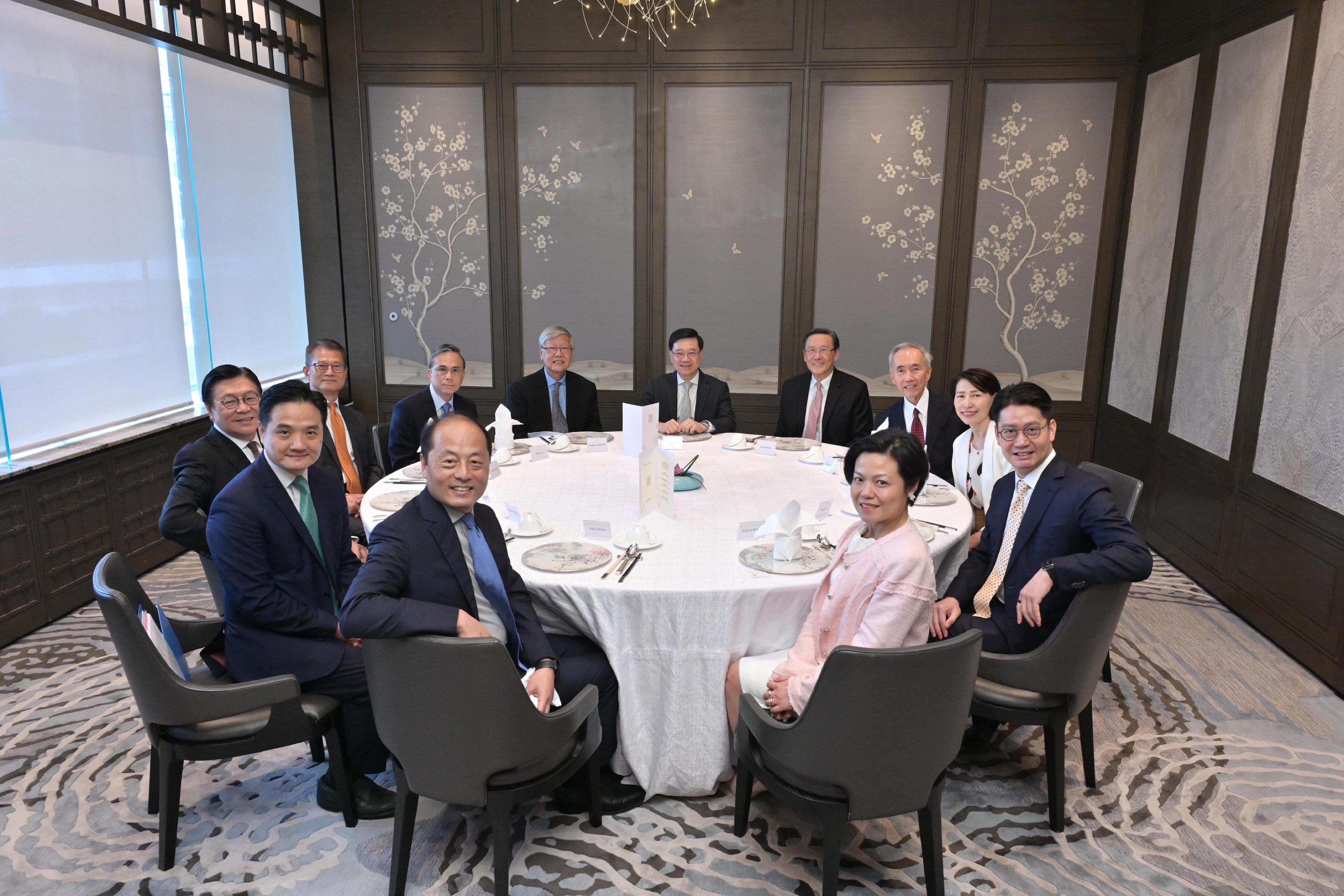
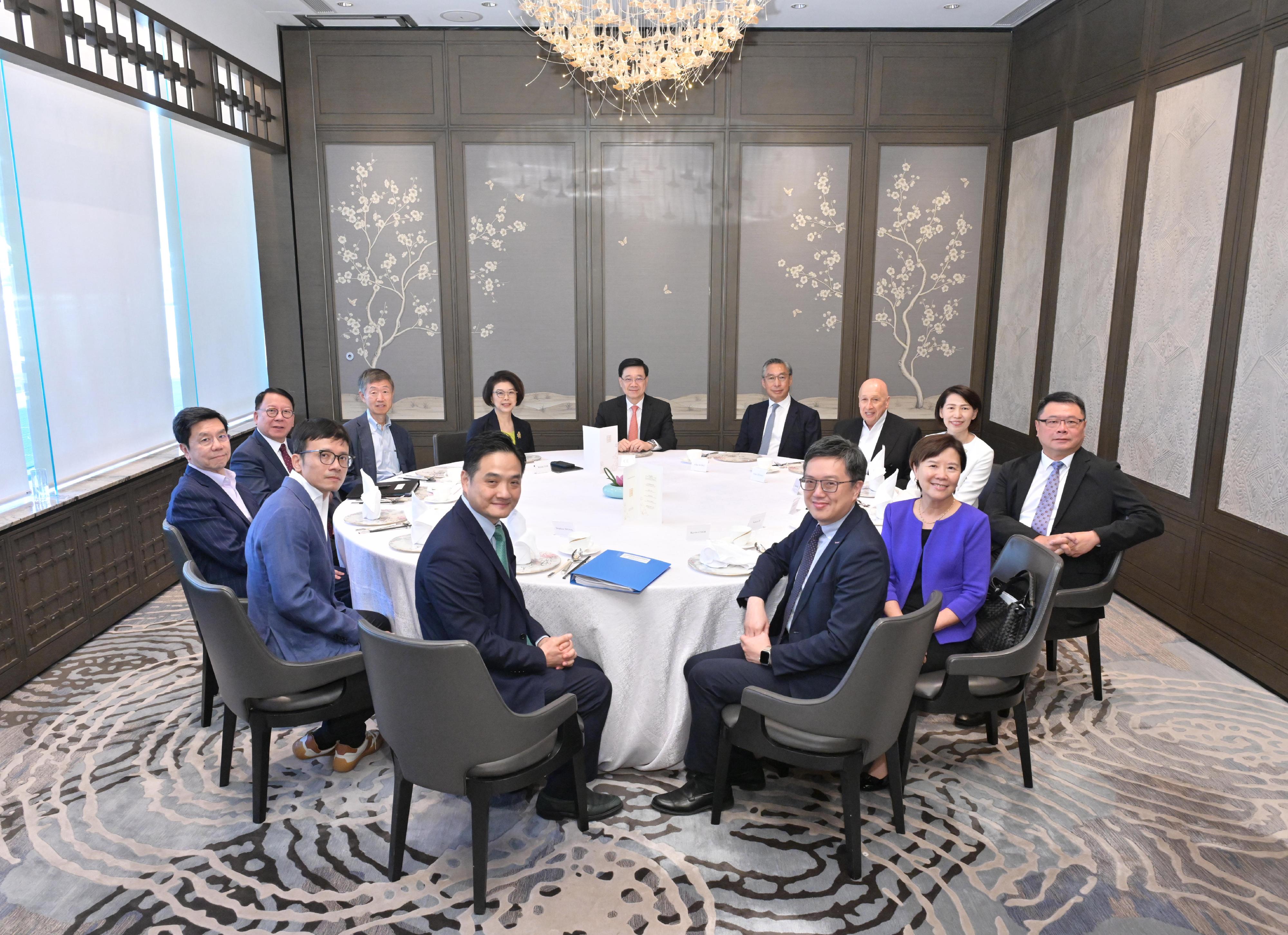
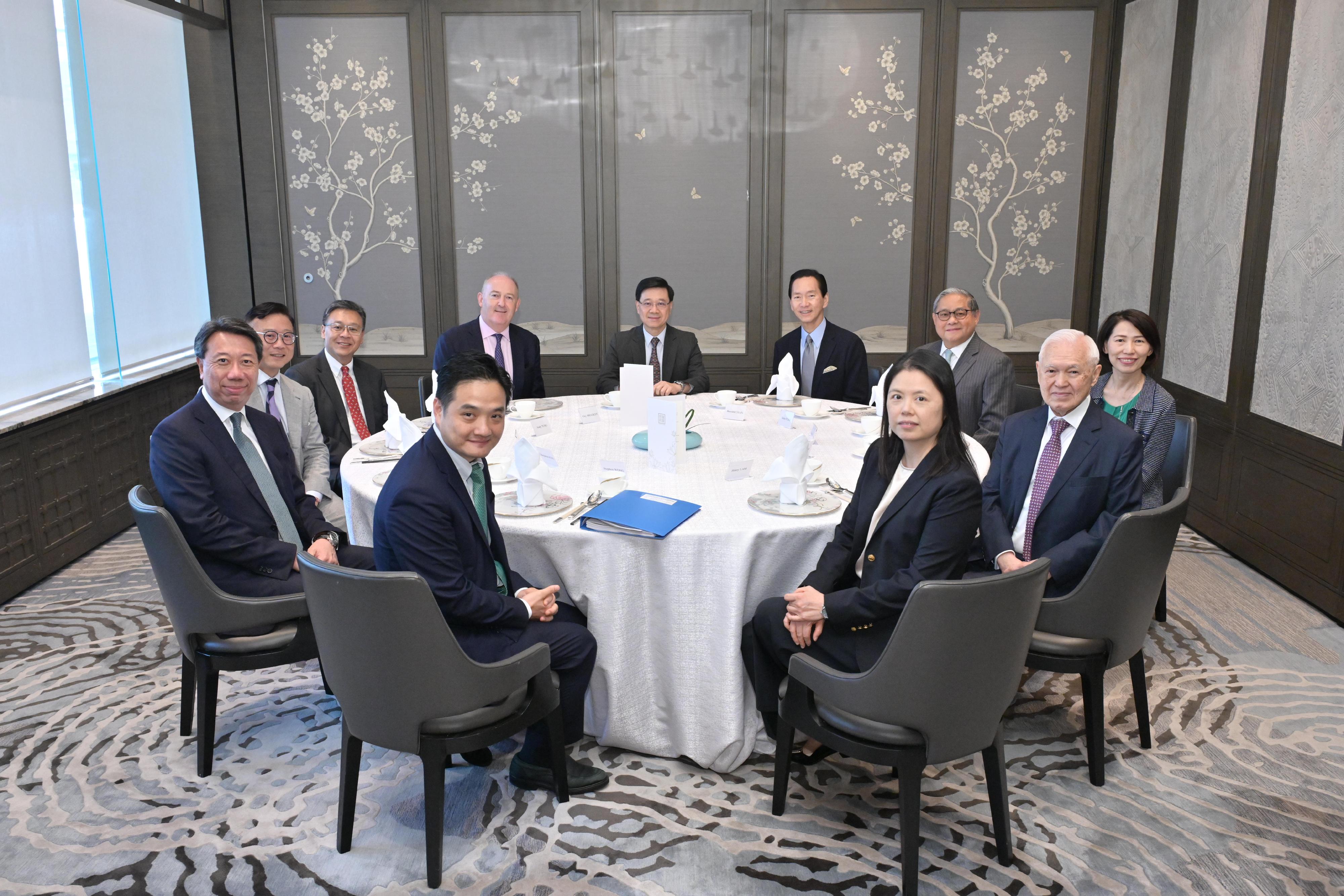

CE listens to views expressed by CECA on Policy Address (with photos)

     The Chief Executive's Council of Advisers (CECA), chaired by the Chief Executive, Mr John Lee, held luncheon meetings on July 22, July 23 and today (July 25) to listen to the views expressed by CECA members for the forthcoming Policy Address.
 
     Chaired by the Chief Executive, the three meeting sessions were conducted according to the three streams the CECA members belonged to, namely the economic advancement and sustainability, innovation and entrepreneurship as well as regional and global collaborations streams. The Chief Secretary for Administration, Mr Chan Kwok-ki; the Financial Secretary, Mr Paul Chan; and the Acting Secretary for Justice, Mr Cheung Kwok-kwan, attended the three sessions respectively. The Director of the Chief Executive's Office, Ms Carol Yip, and ​the Head of the Chief Executive's Policy Unit, Dr Stephen Wong, attended all sessions.
 
     The CECA had in-depth discussions on an array of important issues pertaining to Hong Kong's future developments. These include consolidating Hong Kong's position as the international financial, shipping and trade centres amid economic restructuring and geopolitical changes, enhancing integration into the overall national development for new opportunities, and supporting innovation and technology developments through the attraction of capital and talent.
 
     Mr Lee said, "I thank all CECA members for attending the meetings despite their busy schedules, and for providing me with insights and counsel regarding the current situation and future developments of Hong Kong. These are helpful for my preparation for the upcoming Policy Address."
 
     Mr Lee will deliver his third Policy Address this October, for which the public consultation commenced on July 16.
 
     The Chief Executive established the CECA in March 2023 to seek advice on the strategic developments of Hong Kong with a view to leveraging the opportunities from national and global developments. For the membership of the CECA, please refer to the website of the CEPU (www.cepu.gov.hk), which serves as the secretariat of the CECA.

Photo  Photo  Photo  


Effective Exchange Rate Index

     The effective exchange rate index for the Hong Kong dollar on Thursday, July 25, 2024 is 106.1 (down 0.3 against yesterday's index).


CSD condemns misleading article by Mr Chan Man-mun in Ming Pao on Safeguarding National Security Ordinance

     The Correctional Services Department (CSD) strongly disapproved of and condemned Mr Chan Man-mun for his article entitled "Retrospective Effect" published in Ming Pao yesterday (July 24), in which unfounded and misleading remarks were made about the arrangements for the serving of sentences of persons in custody (PICs) convicted of offences endangering national security.
      
     The grant of early release has never been a guaranteed right of PICs under the laws of Hong Kong; PICs should in principle serve the full sentence imposed by the court before they can be released. The mechanism of granting of remission or early release of PICs under the legislation is established to encourage good conduct and industry of PICs. Any discretion by the Commissioner of Correctional Services to grant early release of PICs or any referral of a PIC's case to the relevant board for consideration of the early release of the PIC must be exercised or handled in accordance with the provisions of the relevant laws, such as the Long-term Prison Sentences Review Ordinance, the Post-Release Supervision of Prisoners Ordinance and the Prison Rules.
      
     As regards PICs serving their sentences in respect of their convictions of offences endangering national security, the Safeguarding National Security Ordinance amended the aforementioned ordinances, such that if a PIC is serving a sentence for a conviction of an offence endangering national security, the PIC must not be granted remission or his case must not be referred to the relevant board for consideration of early release or sentence review, unless the Commissioner is satisfied that the grant of remission or the early release of the PIC will not be contrary to the interests of national security.
      
     The CSD has the responsibility to effectively prevent acts and activities endangering national security in accordance with the law. Under the new provisions, the Commissioner must first consider whether the grant of remission or the early release of PICs convicted of offences endangering national security will not be contrary to the interests of national security. The relevant provisions are applicable to all PICs serving sentences in respect of their convictions of offences endangering national security, irrespectively of whether they were sentenced before, on or after the commencement of the relevant amendments. The new provisions are not punitive measures; they do not increase the length of sentences imposed by the court, nor do they affect those who have already been released early. Therefore, the new provisions definitely do not engage the provisions under Article 12 of the Hong Kong Bill of Rights against retrospective criminal offences or penalties.
      
     The two so-called "controversial" points mentioned in the article published by Ming Pao are factually inaccurate. First, section 7 of the Safeguarding National Security Ordinance provides for a clear definition of "offence endangering national security". Therefore, there is no such case as alleged in the article that "the Commissioner decides on his own to expand the scope of offences endangering national security". Further, the principles established under the case law are that the court must not, when sentencing a defendant, consider whether the defendant will be granted remission or early release in accordance with the law.
      
     Through these false remarks, the article misled readers to believe that if a PIC is not granted remission or early release in accordance with the law, it would be tantamount to receiving a heavier sentence and a breach of the Hong Kong Bill of Rights. The CSD strongly disapproved of and condemned the remarks. The Commissioner will, as always, carry out his relevant duties in strict accordance with the laws and deal with every case fairly and impartially.


Inspection of aquatic products imported from Japan

     In response to the Japanese Government's plan to discharge nuclear-contaminated water at the Fukushima Nuclear Power Station, the Director of Food and Environmental Hygiene issued a Food Safety Order which prohibits all aquatic products, sea salt and seaweeds originating from the 10 metropolis/prefectures, namely Tokyo, Fukushima, Ibaraki, Miyagi, Chiba, Gunma, Tochigi, Niigata, Nagano and Saitama, from being imported into and supplied in Hong Kong.
 
     For other Japanese aquatic products, sea salt and seaweeds that are not prohibited from being imported into Hong Kong, the Centre for Food Safety (CFS) of the Food and Environmental Hygiene Department will conduct comprehensive radiological tests to verify that the radiation levels of these products do not exceed the guideline levels before they are allowed to be supplied in the market.
 
     As the discharge of nuclear-contaminated water is unprecedented and will continue for 30 years or more, the Government will closely monitor and step up the testing arrangements. Should anomalies be detected, the Government does not preclude further tightening the scope of the import ban.
 
     From noon on July 24 to noon today (July 25), the CFS conducted tests on the radiological levels of 250 food samples imported from Japan, which were of the "aquatic and related products, seaweeds and sea salt" category. No sample was found to have exceeded the safety limit. Details can be found on the CFS's thematic website titled "Control Measures on Foods Imported from Japan" (www.cfs.gov.hk/english/programme/programme_rafs/programme_rafs_fc_01_30_Nuclear_Event_and_Food_Safety.html).

     In parallel, the Agriculture, Fisheries and Conservation Department (AFCD) has also tested 50 samples of local catch for radiological levels. All the samples passed the tests. Details can be found on the AFCD's website (www.afcd.gov.hk/english/fisheries/Radiological_testing/Radiological_Test.html).
 
     The Hong Kong Observatory (HKO) has also enhanced the environmental monitoring of the local waters. No anomaly has been detected so far. For details, please refer to the HKO's website
(www.hko.gov.hk/en/radiation/monitoring/seawater.html).
 
     From August 24 to noon today, the CFS and the AFCD have conducted tests on the radiological levels of 70 934 samples of food imported from Japan (including 45 528 samples of aquatic and related products, seaweeds and sea salt) and 16 694 samples of local catch respectively. All the samples passed the tests.