Special announcement on fire in Tin Shui Wai

Attention TV and radio duty announcers:

     Please broadcast the following special announcement as soon as possible, and repeat it at suitable intervals:

     Fire broke out at a warehouse in Ha Tsuen, Tin Shui Wai, at 12.40pm today (May 27). The Fire Services Department is conducting a firefighting operation.

     Members of the public who are being affected by the smoke and an unusual odour carried by the wind are advised to close their doors and windows and stay calm.


Remarks by CE at media session before ExCo (with video)

     Following are the remarks by the Chief Executive, Mr John Lee, at a media session before the Executive Council meeting today (May 27):
 
Reporter: Good morning Mr Lee. So firstly, what is Hong Kong's position and response on the potential ban by the US (United States) Government in foreign student enrolment at Harvard University? And with the Education Bureau urging local universities to attract top talent, what can institutions in Hong Kong offer to ensure that those who are affected by the US administration's decision will choose to come to Hong Kong? And secondly, regarding last week's MTR service disruption, there have been comments saying that the penalty and the special fare day is not sufficient to compensate passengers. Would the Government consider asking for more compensation from MTRC (MTR Corporation) and is there any need to review the railway firm's overall operations? Thank you.
 
Chief Executive: Hong Kong will welcome any students who have been discriminated by the US policy, who face difficulties to study or continue their studies, in the US universities. We welcome them to come to Hong Kong to continue their studies in our universities. The Hong Kong SAR (Special Administrative Region) Government, together with the eight UGC (University Grants Committee)-funded universities, will do all our best to facilitate and assist any students who suffered from this discriminatory and unfair treatment, so that they will find a way to study in Hong Kong. We will do the maximum facilitation and assistance. We will be in touch with the Harvard Alumni Association so that both of us can work together to help the unfairly treated students. I have already raised the enrolment ceiling of (non-local students) in the eight UGC-funded universities during my term from 20 per cent to 40 per cent, doubling the quota. We have room in this quota to accept students who have problems studying in the US to come to these eight UGC-funded universities. If there is the need, I will consider further raising this ceiling. So, I want this message to go out to any students who face discriminatory and unfair treatment in the US, so that they know that Hong Kong's doors are wide open to them to come to study in the universities of Hong Kong.
 
     In regard to the suspension of service of MTRC, particularly the event last Thursday during which the suspension of service lasted for over five hours, this incident, together with two other incidents that happened this year, reflect that there are inadequacies in the emergency response and contingency planning of MTRC. Yesterday (May 26), Transport and Logistics Bureau, together with MTRC, attended LegCo (Legislative Council) to report on the matter, and Transport and Logistics Bureau has already asked MTRC to submit a comprehensive investigation report within one month and recommend remedial action.
 
     The MTR is a major transportation system in Hong Kong. It serves over 5 million passengers every day, so any disruption is going to cause inconvenience of a different scale. Yes, we have been focusing on rectification, in which we have systems to impose punishment on MTRC, but I think it is more important to focus on prevention, so that there will be no disruption to happen. And we should also focus on response when there are, unfortunately, such incidents. So I have made four directions:
 
     First, MTRC must review the entire railway network system comprehensively and systematically to enhance it. This includes improving maintenance standards, renewing equipment and components, use of new technologies, and establishing a regular risk-monitoring and assessment system.
 
     Second, MTRC must strengthen its emergency response and contingency handling capabilities in training. This includes incident reporting and information dissemination, setting up dedicated emergency response teams, increasing manpower, strengthening mobilisation and enhancing communication equipment and conducting regular drills.
 
     Third, MTRC must improve alternative transport arrangements during suspension of service, regularly conduct stress tests and drills, and design an effective information dissemination mechanism that focuses priorities on passengers' needs and ensures timely and comprehensive information is disseminated to reduce public inconvenience and anxiety.
 
     Fourth, the Transport and Logistics Bureau, the Transport Department and the EMSD (Electrical and Mechanical Services Department) must exercise leadership and guidance, particularly in MTRC's implementation of its five-year plan for facilitating the upgrade, maintenance and technology applications, and system and personnel enhancements. Prevention is better than rectification, so MTRC has to comprehensively work in those directions.
 
(Please also refer to the Chinese portion of the remarks.)


SFST visits Toronto and calls on enterprises to develop wealth management and family businesses in Hong Kong (with photos)

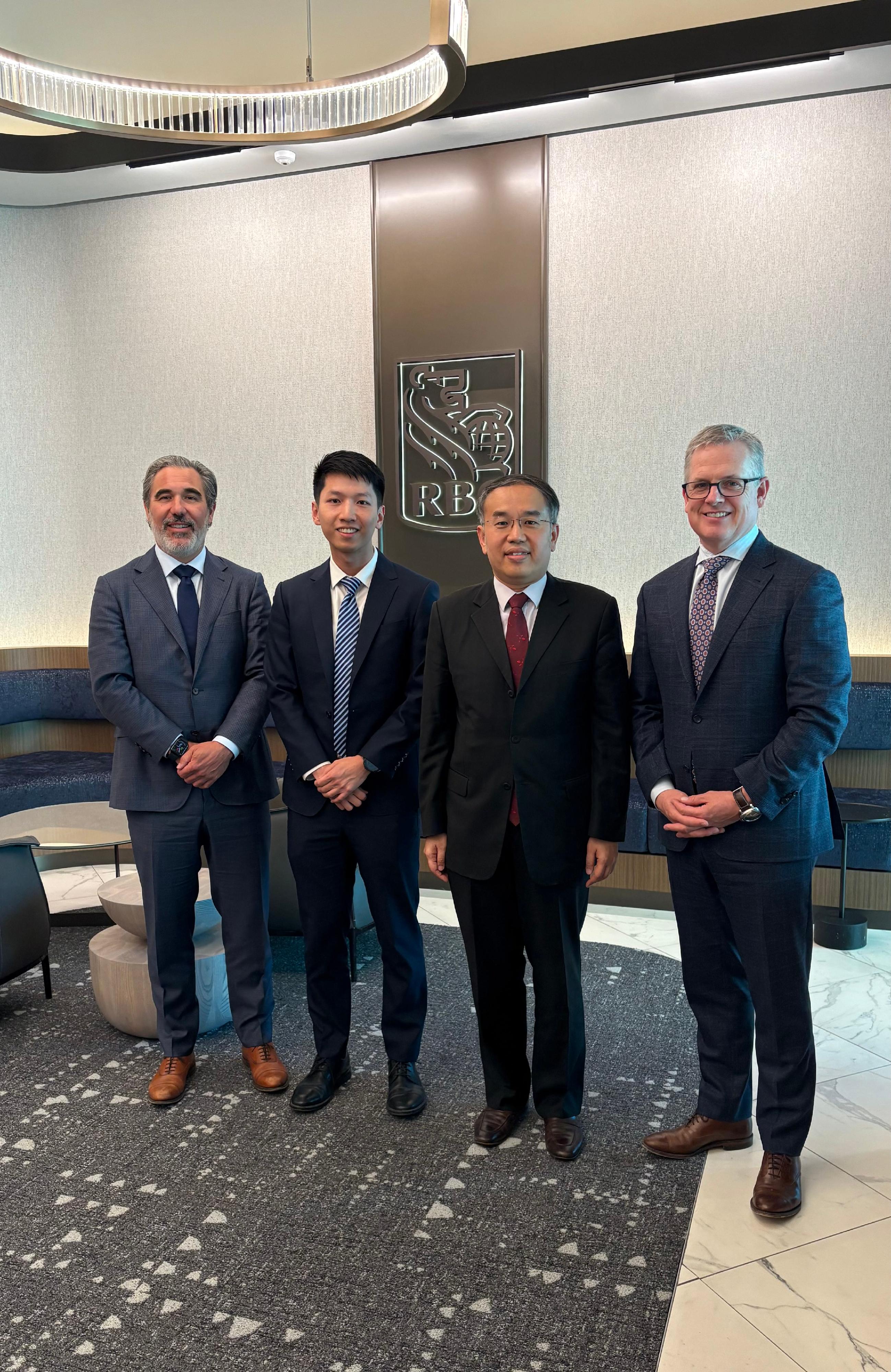
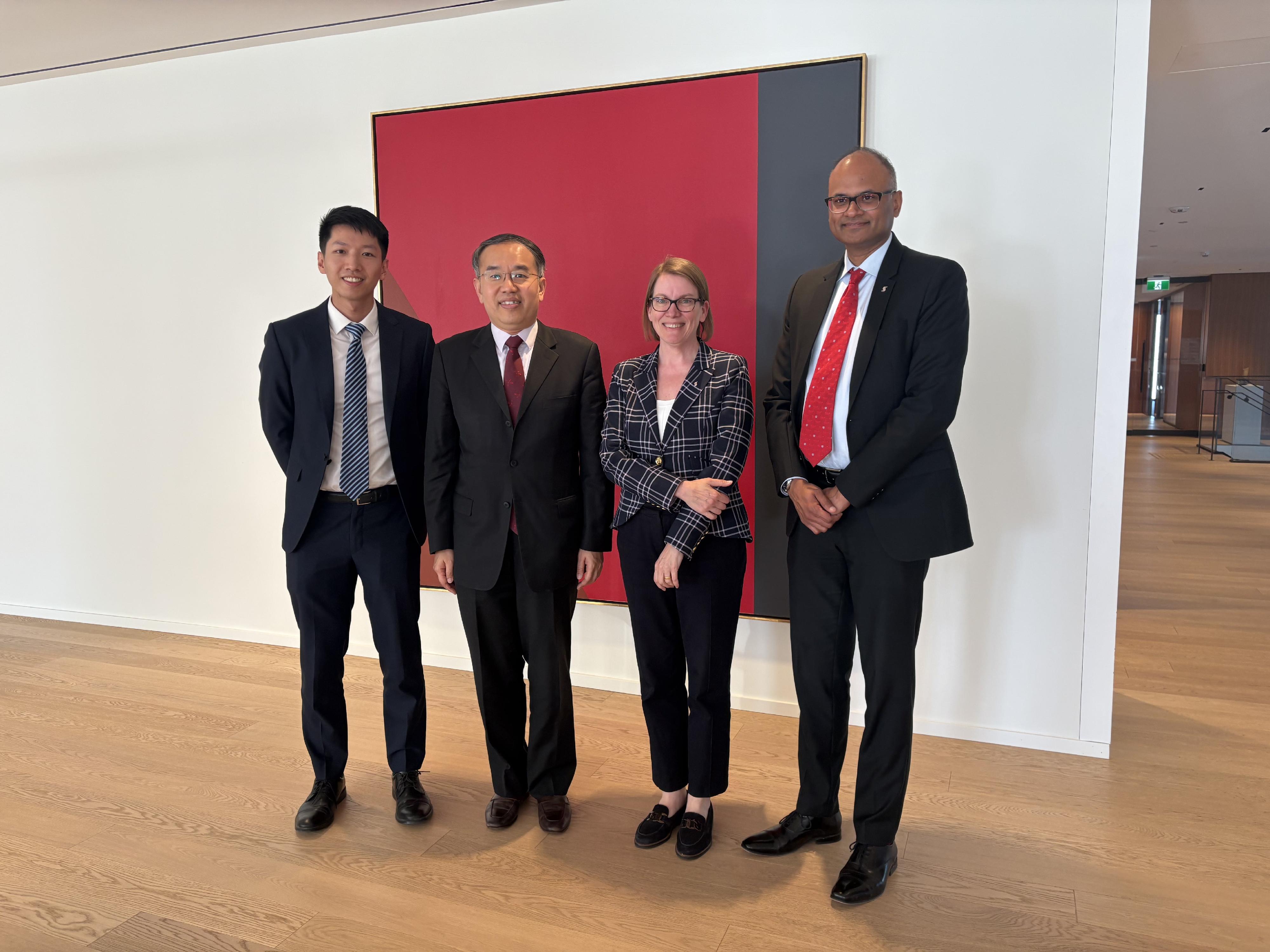
     The Secretary for Financial Services and the Treasury, Mr Christopher Hui, started his five-day visit to Canada on May 26 (Toronto Time). His first stop was Toronto, where he met with representatives of two banks and an insurance group immediately after his arrival in the city.

     Mr Hui arrived in Toronto in the afternoon. He started his itinerary with a meeting with the Group Head, RBC Wealth Management, Mr Neil McLaughlin, and Executive Vice President and Global Head, Strategy, Products and Digital Investing, Mr Stuart Rutledge, of the Royal Bank of Canada. He then proceeded to Scotiabank to meet with its Group Head for Global Wealth Management, Ms Jacqui Allard, and Vice President, Strategic Cultural Segments, Mr Amit Brahme.

     Both banks are deeply interested in the development of the wealth management business in Hong Kong. Mr Hui shared that Hong Kong is currently the largest cross-border wealth management hub in Asia, and some anticipate that Hong Kong will leap into first place globally by 2028. The family office business is an important segment of the asset and wealth management sector in Hong Kong. As of end-2023, the size of private banking and private wealth management business attributed to family offices and private trusts clients reached US$185.2 billion (HK$1,452 billion), providing huge business opportunities for the asset and wealth management sector and other related professional services (such as legal and accounting services). Mr Hui also highlighted the diversity of financial products in Hong Kong and the latest passage of the stablecoins legislation, providing investors with numerous investment options. The banks were encouraged to utilise the developmental strengths of Hong Kong's asset and wealth management industry and establish their presence in Hong Kong.

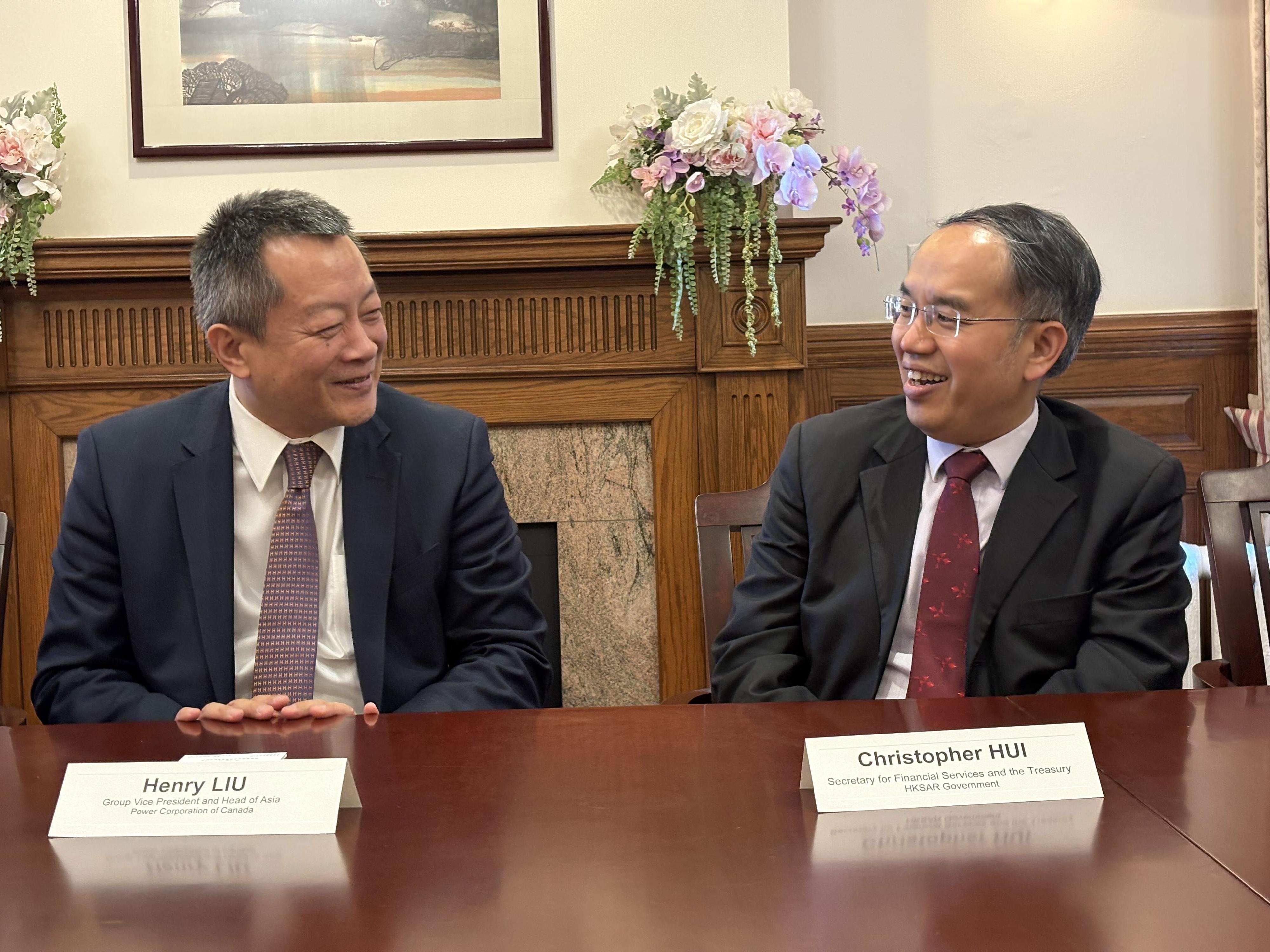
     Mr Hui also met with the Group Vice President and Head of Asia of Power Corporation of Canada, Mr Henry Liu, this evening. He introduced to him the facilitation and concession provided by the Government to family offices looking to set up or expand their business in Hong Kong, such as no licence being required for a single family office under the Securities and Futures Ordinance if it does not carry on a business of regulated activity in Hong Kong. Single family offices can also enjoy profit tax exemption for qualifying transactions. Mr Hui highlighted the Government's efforts in enhancing the preferential tax regimes for funds, single family offices and carried interest, including expanding the scope of "fund" under the tax exemption regime, increasing the types of qualifying transactions eligible for tax concessions for funds and single family offices and enhancing the tax concession arrangement on the distribution of carried interest by private equity funds. The Government targets working out the details of the proposals by this year and submitting the legislative proposals to the Legislative Council for consideration in 2026, striving to implement the relevant measures from the year of assessment 2025/26. Mr Hui called on the company to leverage the ideal business environment with stability and predictability to set up family offices in Hong Kong. Power Corporation of Canada operates a wide range of businesses covering North America, Europe and Asia, including insurance, wealth management and investment businesses.

     On May 27 (Toronto Time), Mr Hui will visit two insurance companies, meet with the Hong Kong-Canada Business Association (Toronto Chapter) and attend a business luncheon with financial leaders in Toronto. He will also pay a courtesy call to the Consul-General of the People's Republic of China in Toronto.

Photo  Photo  Photo  


Speech by FS at International Data Industry Alliance Global Summit (English only)

     Following is the speech by the Financial Secretary, Mr Paul Chan, at the International Data Industry Alliance (IDIA) Global Summit today (May 27):

Allen (Honorary Chairman of the IDIA, Mr Allen Yeung), Herbert (Co-Chairman of the IDIA Mr Herbert Chia), Vincent (Co-Chairman of the IDIA Mr Vincent Chan), Leo (President of KN Group, Mr Leo Chan), representatives of governments from around the world, distinguished guests, ladies and gentlemen,

     Good morning.

     It is a pleasure to join you today for the inaugural Global Summit of the International Data Industry Alliance, IDIA. This is a timely and important gathering, a platform to champion the development of the digital economy and explore its vast potential together. It also reflects our shared commitment to shaping a more innovative, interconnected and inclusive digital future.

     For those who have travelled from afar, a very warm welcome to Hong Kong.

The promise of data

     There is no doubt that data has become the lifeblood of the digital era. If oil was the "black gold " of the 20th century, then data is the "digital gold" of the 21st century. Generated through our daily lives and increasingly intelligent technologies, data is reshaping industries, business models and the way we live, and redefining value creation. 

     In 2024, China generated 41 zettabytes of data, a 25 per cent increase from the previous year. That is equivalent to some 136 billion books if stored on paper. The value of data is immense. Last year, China's digital economy delivered over US$4.8 trillion in revenue.

     With the rise of artificial intelligence (AI), this value will only grow. High-quality, accessible and well-governed data is essential for training large language models, optimising applications, and unlocking new industrial and commercial opportunities. That makes cross-boundary and cross-sector collaboration all the more important.  

Hong Kong's approach to data

     Hong Kong is an active participant in cross-boundary data collaboration. Allow me to share our journey – our approach to data, our strengths, what we are building, and where we are heading. I hope our experience can offer insights for the discussions today.

Our strengths

     Our digital strategy is anchored on three core principles: openness, global connectivity and value creation. Under the "one country, two systems" arrangement, Hong Kong remains an open, diverse and international city with the free flows of goods, capital, talent – and crucially, data. This is our unique institutional strength and a key pillar of our competitiveness.

     We also continue to serve as a "super connector" between China and the rest of the world, a point that I will return to later.  

What we are building 

     Building on these strengths, Hong Kong has a clear vision to foster an AI-driven digital economy. This requires a whole-of-community approach, and the Government is leading by example. 

     To this end, we established the Digital Policy Office last year. It oversees digitalisation of government services, develops digital infrastructure, supports digital transformation of the community, facilitates cross-boundary data flow, and more. Our goal is to drive the use of data that benefit people and businesses.

     We are also committed to opening and sharing data with the private sector and academia. The aim here is to expand their application scenarios, and enable more diversified and inclusive services. Over 5 500 datasets are now available through our Open Data Portal, with over 60 billion downloads in 2024 alone.

     One of the recent remarkable initiatives is the Commercial Data Interchange and the Consented Data Exchange Gateway. They facilitate sharing of government data with financial institutions, on a consent basis, for more efficient credit assessments. As of April 2025, over 20 million data exchanges have been processed.

     Cross-boundary data flow is of strategic importance and indeed a unique benefit offered by Hong Kong. This brings us back to the "super connector" role of Hong Kong, where data from the Mainland and overseas converge.

     A compelling demonstration of this is the Shenzhen-Hong Kong Science and Technology Innovation Co-operation Zone in the Hetao area. It is one of the four major tech collaboration platforms in the Greater Bay Area. Within the Co-operation Zone, we are pioneering the safe and orderly flow of research and other data, including biosamples, with proper safeguards and user consent. This paves the way for deeper innovation collaboration, especially in data-intensive industries such as AI and biotech.

     I am therefore very pleased to see the establishment of the International Data Industry Research Centre by the IDIA. It is another meaningful step towards advancing global data dialogue and co-operation.

Developing AI-empowered digital economy 

     As we move into the "AI+" era, Hong Kong is pressing ahead on five critical fronts: data, computing power, algorithms, talent and capital. 

     We launched an AI Supercomputing Centre in Cyberport last year. We are supporting local institutions and enterprises in accessing its services.

     On algorithms, Hong Kong is home to 16 world-class AI research labs. They include the Hong Kong Generative AI Research and Development Center, which is building local foundation models. In this year's Budget, I allocated HK$1 billion to set up the Hong Kong AI Research and Development (R&D) Institute, to strengthen upstream R&D and translate breakthroughs into real-world applications.

     Supporting this is our vibrant innovation and technology ecosystem. We nurture start-ups in Science Park and Cyberport; at the same time, we also attract global tech businesses and talent to Hong Kong.

     To this end, the Hong Kong Investment Corporation Limited, or the HKIC, provides patient capital that supports tech ventures at various stages of development. AI is one of the HKIC's focus areas. To date, it has invested in over 100 projects, mobilising four dollars of long-term capital for every dollar it invested. Last week, the HKIC organised the inaugural International Forum for Patient Capital. The event brought together long-term funds from 15 jurisdictions with a total AUM (assets under management) of over US$20 trillion to forge more partnerships with high-potential projects. 

     Adding to that is our comprehensive funding chain and vibrant capital markets, with options from angel rounds to IPOs (initial public offerings). A recent highlight is the launch of a "TECH" Channel by the Hong Kong Stock Exchange to provide dedicated advice and support to tech companies seeking to list in Hong Kong. The response has been overwhelmingly positive. 

     Meanwhile, our Office for Attracting Strategic Enterprises (OASES) has already brought in over 80 companies – including in AI, biotech, fintech and new energy. Invest Hong Kong also attracted some 120 innovation and technology companies in 2024.  

Looking ahead: our priorities

     Looking ahead, there is still a lot of work to be done.  

     First, we must continue to expand our talent pool and enhance digital literacy of our community. Our talent admission schemes have so far been a success. We received over 470 000 applications since December 2022. More than 310 000 of them have been approved and 200 000 individuals have arrived in the city. Amid the backdrop of geopolitical tension, Hong Kong is the destination of choice for many tech academics and talent, and we welcome them with open arms. Meanwhile, we are also advancing digital education from primary schools and across the wider community. 

     Second, we must strive to create an environment conducive to the application of data. That means reviewing legislation and regulations that may form barriers, encouraging new application scenarios, and adopting regulatory tools such as sandboxes to test innovative solutions. Besides, we see long-term potential for Hong Kong to become an international data trading hub – where the value of data can be fully unlocked and reflected in the market.

     Third, data governance. As technologies evolve, so must our regulatory frameworks. In Hong Kong, we are building a data governance system based on three pillars: (1) clear policies, laws and technical standards; (2) supporting facilities such as data centres; and (3) protection of data security through enhancing the preparedness of institutions and infrastructure.

Closing remarks

     Ladies and gentlemen, let me close by reflecting on the "DeepSeek Moment" and the many other tech breakthroughs emerging from our country. Amid rising geopolitical tensions and technological barriers, these stories remind us that creativity, agility and innovation can overcome limitations, and bring success on a global scale.

     And their success is not just about technological prowess, but also their commitment to open-source, accessible and affordable solutions. They remind us that data and digitalisation can – and should – help us build a more inclusive, sustainable and shared future.  
  
     My sincere thanks to the IDIA for organising this important event. And to all of you for lending your time and expertise to make this inaugural Summit a success. Let's join hands to foster meaningful dialogue, deepen partnerships, and shape a smarter and more connected world. Thank you very much.

Adjustment in ceiling prices for dedicated LPG filling stations in June 2025

     â€‹The Electrical and Mechanical Services Department (EMSD) today (May 27) announced an adjustment to the auto-LPG (liquefied petroleum gas) ceiling prices for dedicated LPG filling stations from June 1 to June 30, 2025, in accordance with the terms and conditions of the contracts for dedicated LPG filling stations.
 
     A department spokesman said that the adjustment on June 1, 2025, would reflect the movement of the LPG international price in May 2025, and the average movement of the latest Composite Consumer Price Index and Nominal Wage Index. The overall adjusted auto-LPG ceiling prices for dedicated LPG filling stations would range from $3.61 to $4.53 per litre, amounting to a decrease of $0.05 to $0.06 per litre.
 
     The spokesman said that the auto-LPG ceiling prices were adjusted according to a pricing formula specified in the contracts. The formula comprises two elements – the LPG international price and the LPG operating price. The LPG international price refers to the LPG international price of the preceding month. The LPG operating price is adjusted on February 1 and June 1 annually according to the average movement of the Composite Consumer Price Index and the Nominal Wage Index. The latest year-on-year rates of change of the Composite Consumer Price Index and the Nominal Wage Index are +1.7 per cent and +3.7 per cent respectively.
 
     The auto-LPG ceiling prices for respective dedicated LPG filling stations in June 2025 are as follows:
 

Location of
Dedicated LPG Filling Station
Auto-LPG
Ceiling Price in
June 2025 (HK$/litre)
Auto-LPG
Ceiling Price in
May 2025 (HK$/litre)
Kwai On Road, Kwai Chung 3.61 3.67
Sham Mong Road, Mei Foo 3.68 3.73
Wai Lok Street, Kwun Tong 3.73 3.79
Cheung Yip Street, Kowloon Bay 3.78 3.83
Ngo Cheung Road, West Kowloon 3.79 3.84
Yuen Chau Tsai, Tai Po 3.84 3.90
Tak Yip Street, Yuen Long 3.95 4.01
Hang Yiu Street, Ma On Shan 3.97 4.03
Marsh Road, Wan Chai 3.98 4.04
Fung Mat Road, Sheung Wan  4.01 4.06
Yip Wong Road, Tuen Mun 4.11 4.16
Fung Yip Street, Chai Wan  4.53 4.59

 
    The spokesman said that the details of the LPG international price and the auto-LPG ceiling price for each dedicated LPG filling station had been uploaded to the EMSD website (www.emsd.gov.hk) and posted at dedicated LPG filling stations to enable the trades to monitor the price adjustment.
 
     Details of the pricing adjustment mechanism for dedicated LPG filling stations can also be viewed under the "What's New" section of the department website at www.emsd.gov.hk/en/what_s_new/current/index.html.