Two persons arrested during anti-illegal worker operation (with photo)

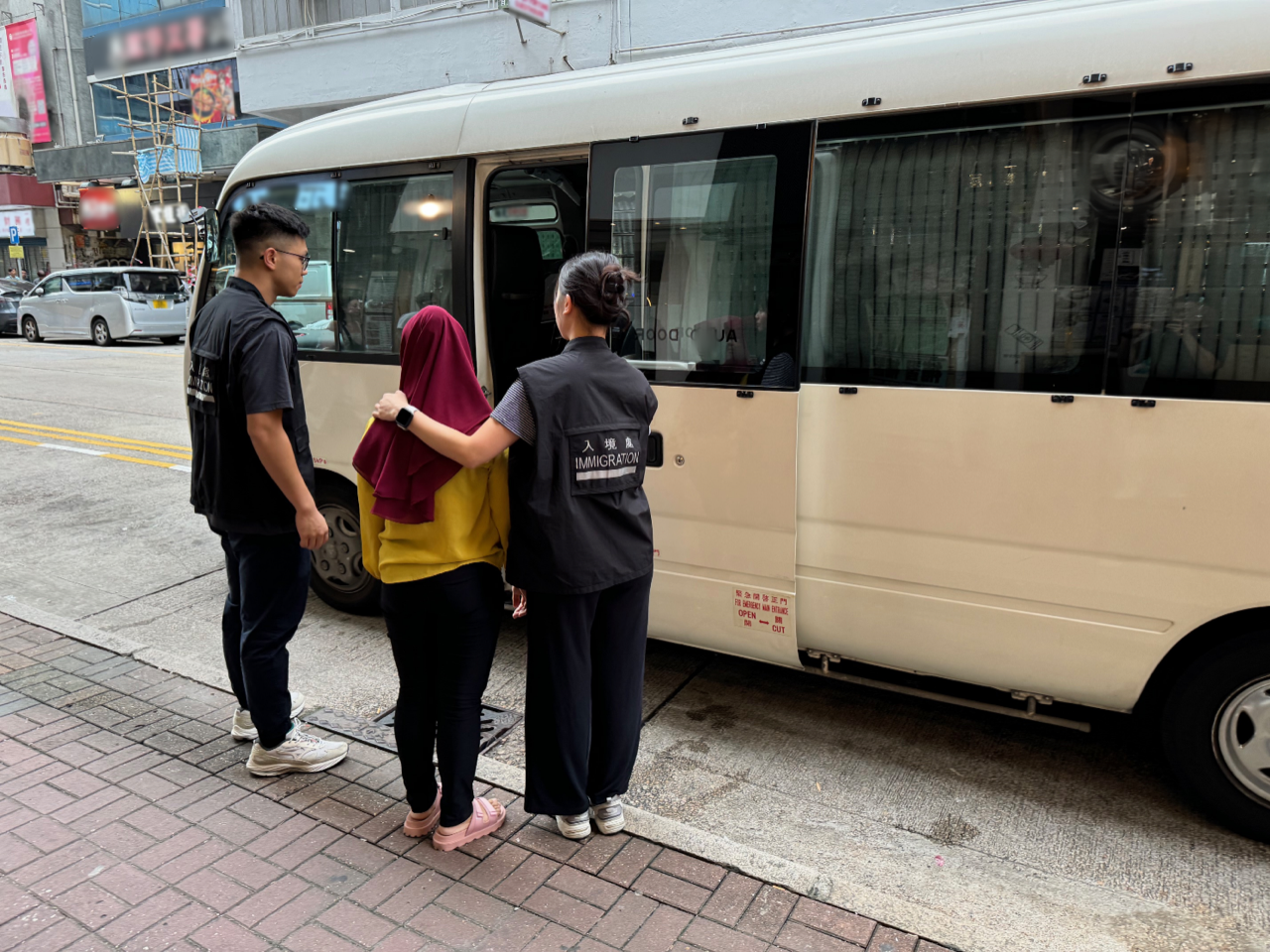
     The Immigration Department (ImmD) mounted a joint enforcement operation with the Food and Environmental Hygiene Department (FEHD) yesterday (August 11) in the vicinity of Mong Kok Road. ImmD Task Force and Foreign Domestic Helpers Special Investigation Section officers arrested two suspected illegal workers during the operation, who are foreign domestic helper women aged 44 and 47. They were suspected to have breached their condition of stay in Hong Kong by engaging in illegal hawking and selling food on a pedestrian footbridge. FEHD officers seized some hawker equipment and commodities in the vicinity that were suspected to have been abandoned.
    
     An ImmD spokesman said, "A foreign domestic helper should only perform domestic duties for the employer specified in the Standard Employment Contract. The helper could not carry out any non-domestic work, or take up, or join or establish any business other than the contracted domestic work, whether paid or unpaid, in Hong Kong. Any person who contravenes a condition of stay in force in respect of him or her shall be guilty of an offence. Offenders are liable to prosecution and upon conviction face a maximum fine of $50,000 and up to two years' imprisonment. Aiders and abettors are also liable to prosecution and penalties."
 
      Under the existing mechanism, the ImmD will, as a standard procedure, conduct an initial screening of vulnerable persons, including illegal workers, illegal immigrants, sex workers and foreign domestic helpers, who are arrested during any operation with a view to ascertaining whether they are trafficking in persons (TIP) victims. When any TIP indicator is revealed in the initial screening, the ImmD officers will conduct a full debriefing and identification by using a standardised checklist to ascertain the presence of TIP elements, such as threats and coercion in the recruitment phase and the nature of exploitation. Identified TIP victims will be provided with various forms of support and assistance, including urgent intervention, medical services, counselling, shelter or temporary accommodation and other supporting services. The ImmD calls on TIP victims to report crimes to the relevant departments immediately.
Photo  


WSD urges public to be alert to fraudulent SMS message

     The Water Supplies Department (WSD) today (August 12) alerted the public to a fraudulent SMS message purportedly issued by the department.

     The WSD received enquiries from members of the public concerning an SMS message purportedly issued by the department. The message requested that recipients settle outstanding payments and click a link (https://wsd-gov.com), which is not a WSD website address.

     The WSD clarified that it did not send the SMS message in question and would not direct customers to other websites with hyperlinks embedded in an SMS message. The department has reported the case to the Police.

     Anyone who has provided his or her personal information to the website concerned should contact the Police. For enquiries, please call the WSD's customer enquiry hotline at 2824 5000.


Prepackaged wheat starch sample in breach of food labelling regulation

     The Centre for Food Safety (CFS) of the Food and Environmental Hygiene Department announced today (August 12) that a sample of prepackaged wheat starch was found to contain sulphur dioxide, a preservative which is allowed to be used in certain foods, but the functional class and the name of the additive were not declared on the food label. Members of the public should not consume the affected batch of the product. The trade should also stop using or selling the affected batch of the product immediately if they possess it.

     Product details are as follows: 

Product name: Wheat Starch
Brand: Lee Cheung Woo
Place of origin: Australia
Net weight: 600 grams
Best-before date: December 21, 2025
Sole agent: Shun Fat Ma Kee

     "The CFS collected the above-mentioned sample from a retail outlet in Sha Tin for testing under its routine Food Surveillance Programme. The test result showed that the sample contained sulphur dioxide. Although the sulphur dioxide level detected is within the legal limit, the functional class and the name of the additive were not declared on the food label of the sample," a spokesman for the CFS said.

     "The CFS has informed the sole agent concerned of the irregularity and instructed it to stop sale and remove from shelves the affected batch of the product. The sole agent concerned has initiated a recall according to the CFS's instructions. Members of the public may call its hotline at 3422 3698 during office hours for enquiries about the recall," the spokesman added. 

     Sulphur dioxide is a preservative which can be used in a variety of foods including dried vegetables, dried fruits, pickled vegetables and salted fish products. Sulphur dioxide is water-soluble, and most of it can be removed through washing and cooking. However, susceptible individuals who are allergic to this preservative may experience breathing difficulties, headaches and nausea after consumption.

     The spokesman reminded the food trade that the use of preservatives in food must comply with the Preservatives in Food Regulation (Cap. 132BD). Furthermore, the Food and Drugs (Composition and Labelling) Regulations (Cap. 132W) require that for all prepackaged food for sale in Hong Kong containing sulphite in a concentration of 10 parts per million or more, the functional class of the sulphite and its name shall be specified in the list of ingredients. Offenders are liable to a maximum fine of $50,000 and six months' imprisonment upon conviction.

     The CFS will alert the trade, continue to follow up on the incident and take appropriate action. An investigation is ongoing.


SCS encourages non-ethnic Chinese interns to add value to themselves (with photos)

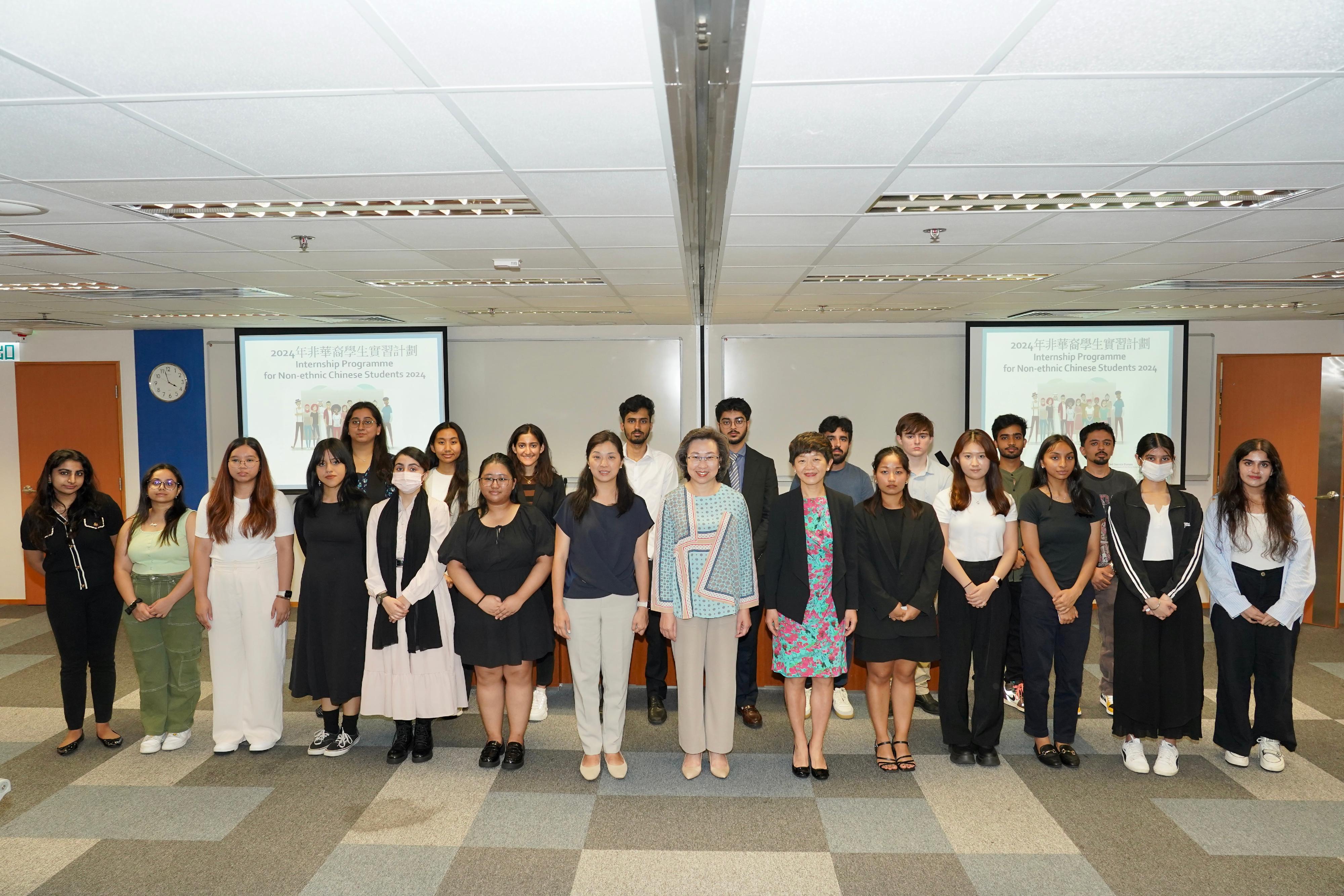
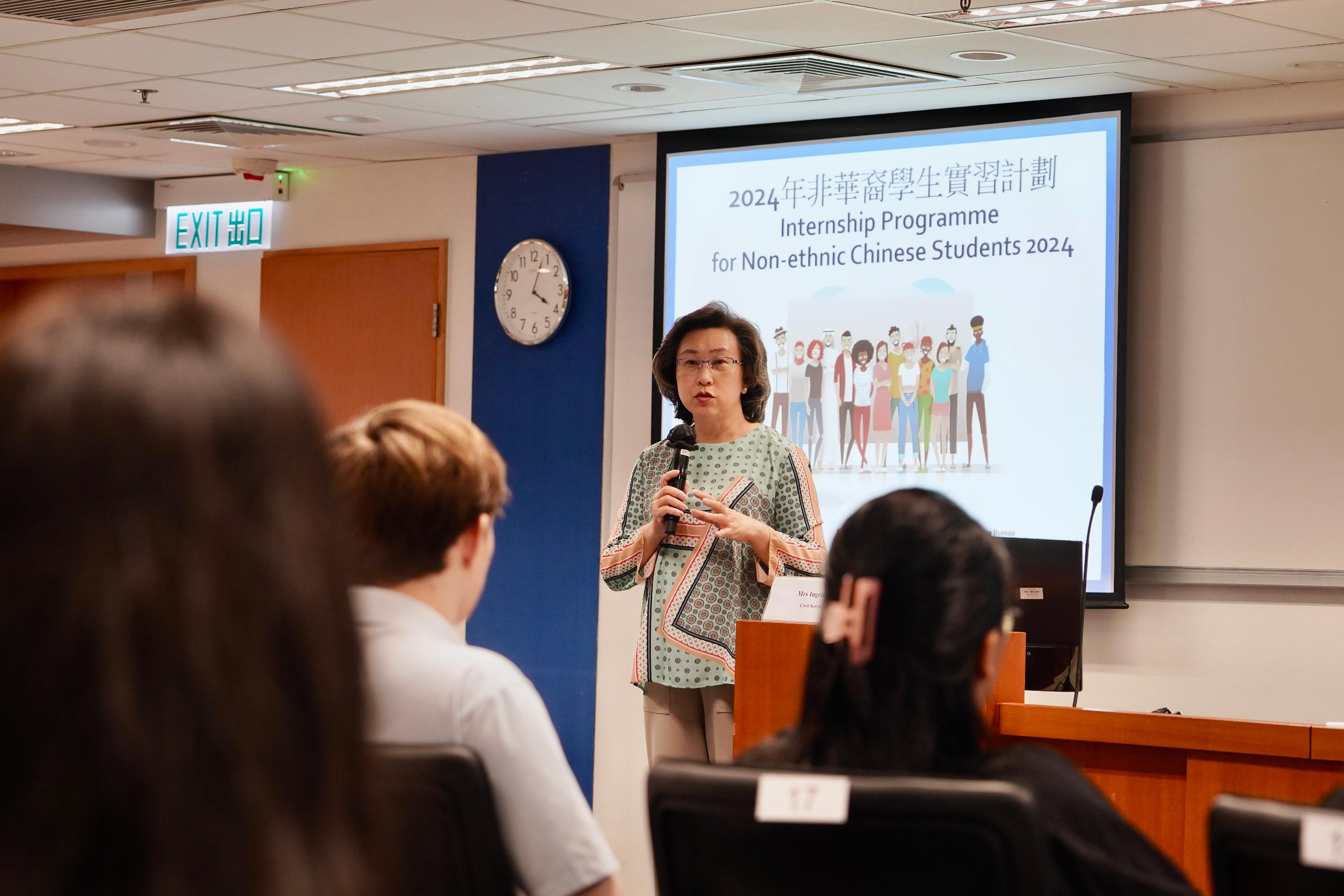
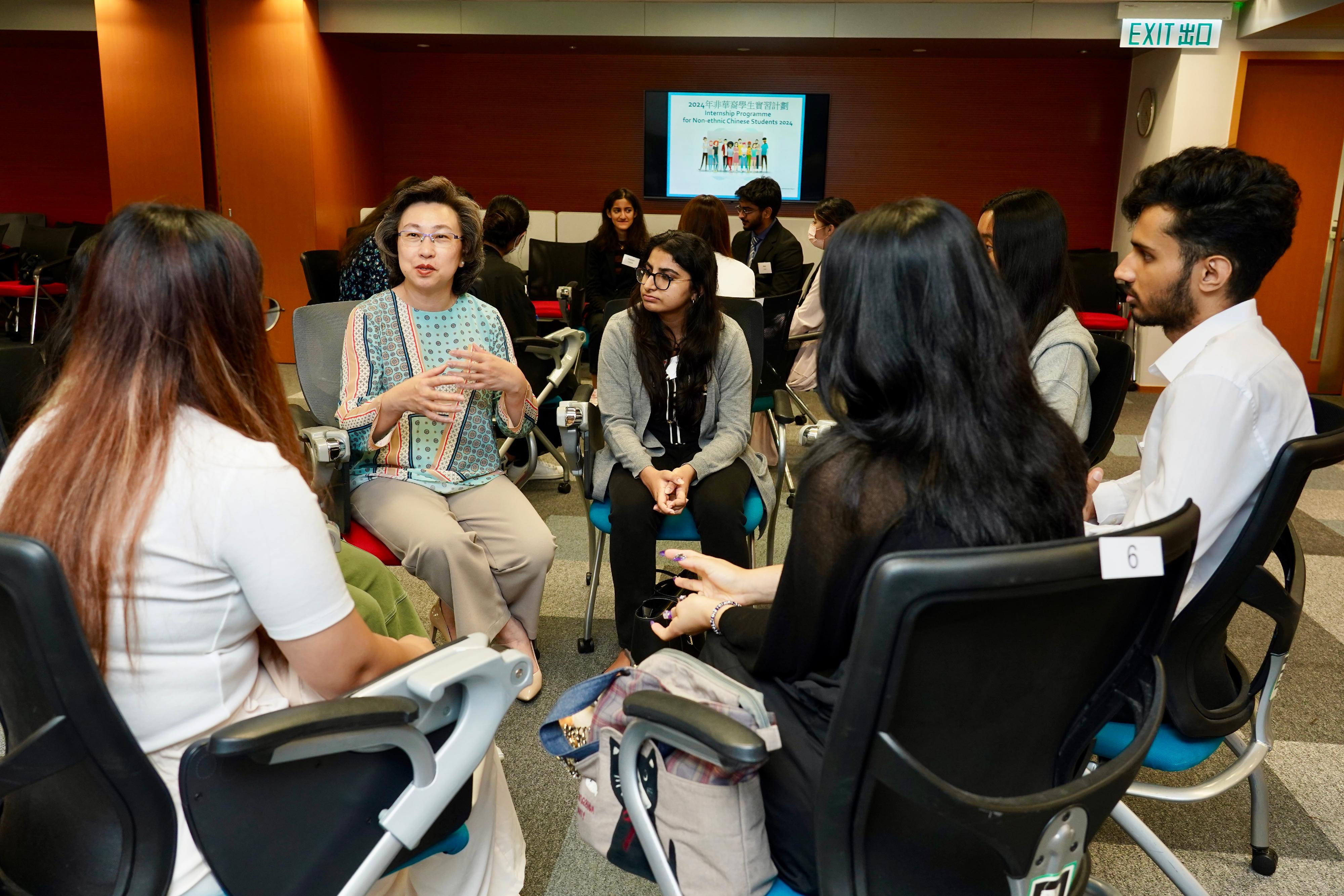
     The Secretary for the Civil Service, Mrs Ingrid Yeung, attended a sharing session on the Internship Programme for Non-ethnic Chinese (NEC) Students today (August 12) to listen to the students sharing their internship experiences and takeaways, learn how their internship experience has inspired them to pursue their future career paths, and encourage them to prepare for future employment.

     The Civil Service Bureau has been organising the Internship Programme for NEC Students since 2019 with a view to helping young NECs accumulate work experience and strengthen their competitiveness in seeking jobs, as well as deepening their understanding of the operation of the Government through the internship experience. Since the launch of the internship programme, 180 NEC students, including the 36 students who joined this year, have participated in the programme and were arranged to undertake internships in various bureaux and departments for about eight weeks.

     Mrs Yeung said she was delighted with the students' positive responses about the programme. She said, "The Government attaches great importance to youth training and development, and NECs are important members of Hong Kong. Since last year, we have been providing various online Chinese language self-learning resources to help interns in the internship programme understand the Chinese language used and the level of Chinese language proficiency required in daily work, thereby increasing their motivation to learn Chinese and encouraging them to continue with efforts in learning the Chinese language in a bid to add value to themselves. A successful example is that an NEC student who had participated in the internship programme recently applied successfully for the post of Executive Officer after accumulating work experience through her own efforts.

     "I encourage people with aspirations to serve the community to join the Government in serving the public. Civil service recruitment is conducted under the principle of open and fair competition, and the Government will ensure that the Chinese language proficiency requirement for civil service grades is no more than necessary for performing the job. We also encourage departments to design their own language tests having regard to the job requirements of individual civil service grades, so as to provide applicants with an additional avenue for meeting the appointment requirements in respect of language proficiency."

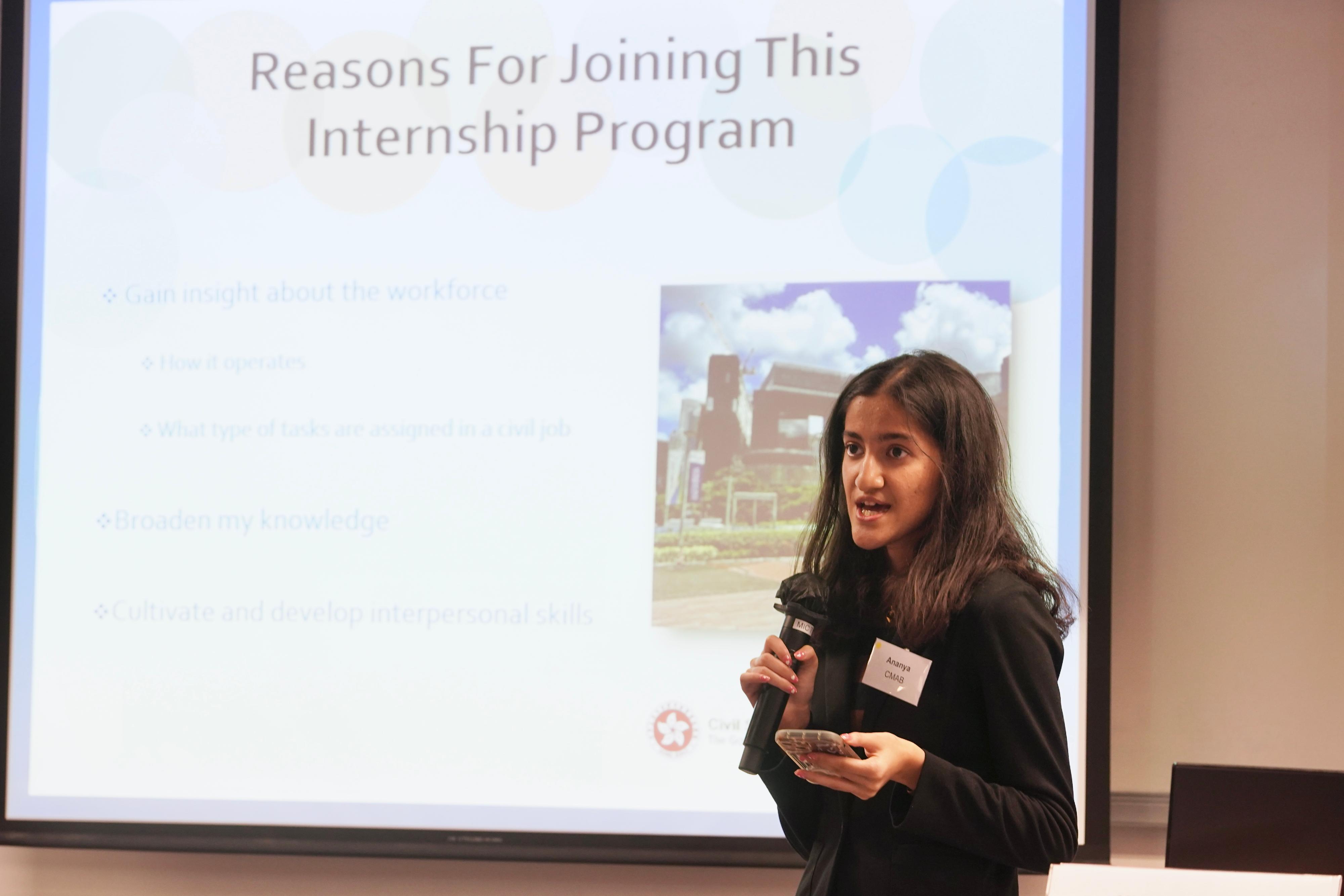
     Miss Singh Ananya is one of the interns and was posted to the Constitutional and Mainland Affairs Bureau. She helped with data collation and research work on different subjects, and assisted in the introduction of webpages presented in ethnic minority languages. She also had the chance to participate in various events of the Equal Opportunities Commission. She said that the internship has broadened her horizons and helped develop her social skills.

     Another intern, Miss Caicedo Varas Carla Cristina, who is studying data science at the university, just finished her internship in the Electrical and Mechanical Services Department (EMSD). She had the opportunity to participate in the research and development of the EMSD's self-developed artificial intelligence chiller optimisation system and assist in writing programmes for the Energy Data Management System operated and managed by the EMSD. This allowed her to apply her theoretical knowledge to practical work, and gain work experience that is not easy to come by in daily life, thus boosting her confidence in undertaking future work.

Photo  Photo  Photo  Photo  


Update on cases of Legionnaires’ disease

     The Centre for Health Protection (CHP) of the Department of Health today (August 12) reported the latest number of cases of Legionnaires' disease (LD), and stressed the importance of using and maintaining properly designed man-made water systems, adding that susceptible groups should strictly observe relevant precautions.

     From August 4 to 10, the CHP recorded four community-acquired LD cases:
 

  1. A male patient, aged 65 with underlying illnesses, who lives in Shatin District;
  2. A male patient, aged 49 with underlying illnesses, who lives in Kowloon City District;
  3. A male patient, aged 71 with underlying illnesses, who lives in Kwai Tsing District; and
  4. A male patient, aged 66 with underlying illnesses, who lives in Sai Kung District.

     "Epidemiological investigations are ongoing to identify potential sources of infection, high-risk exposure and clusters, if any," a spokesman for the CHP said.

     As of August 10, 66 LD cases had been recorded this year. In 2023 and 2022, there were 121 and 80 cases respectively.

     "Men, people aged over 50, smokers, alcoholics and persons with weakened immunity are more susceptible to LD. Some situations may also increase the risk of infection, including poor maintenance of water systems; living in areas with old water systems, cooling towers or fountains; using electric water heaters, whirlpools and spas or hot water spring spas; and recent stays in hotels or vessels," the spokesman said.

     Legionellae are found in various environmental settings and grow well in warm water (20 to 45 degrees Celsius). They can be found in aqueous environments such as water tanks, hot and cold water systems, cooling towers, whirlpools and spas, water fountains and home apparatus that support breathing. People may become infected when they breathe in contaminated droplets (aerosols) and mist generated by artificial water systems, or when handling garden soil, compost and potting mixes.

     Immunocompromised persons should:
 

  • Use sterile or boiled water for drinking, tooth brushing and mouth rinsing;
  • Avoid using humidifiers, or other mist- or aerosol-generating devices; and
  • If using humidifiers, or other mist- or aerosol-generating devices, fill the water tank with only sterile or cooled freshly boiled water, and not water directly from the tap. Also, clean and maintain humidifiers/devices regularly according to manufacturers' instructions. Never leave stagnant water in a humidifier/device. Empty the water tank, wipe all surfaces dry, and change the water daily. 

     â€‹
     â€‹The public should observe the health advice below:
          

  • Observe personal hygiene;
  • Do not smoke and avoid alcohol consumption;
  • Strainers in water taps and shower heads should be inspected, cleaned, descaled and disinfected regularly or at a frequency recommended by the manufacturer;
  • If a fresh-water plumbing system is properly maintained, it is not necessary to install domestic water filters. Use of water filters is not encouraged as clogging occurs easily, which can promote growth of micro-organisms. In case water filters are used, the pore size should be 0.2 micrometres (µm) and the filter needs to be changed periodically according to the manufacturer's recommendations;
  • Drain and clean water tanks of buildings at least quarterly;
  • Drain or purge for at least one minute infrequently used water outlets (e.g. water taps, shower heads and hot water outlets) and stagnant points of the pipework weekly or before use;
  • Seek and follow doctors' professional advice regarding the use and maintenance of home respiratory devices and use only sterile water (not distilled or tap water) to clean and fill the reservoir. Clean and maintain the device regularly according to the manufacturer's instructions. After cleaning/disinfection, rinse the device with sterile water, cooled freshly boiled water or water filtered with 0.2 µm filters. Never leave stagnant water in the device. Empty the water tank, keep all surfaces dry, and change the water daily; and
  • When handling garden soil, compost and potting mixes: 
  1. Wear gloves and a face mask;
  2. Water gardens and compost gently using low pressure;
  3. Open composted potting mixes slowly and make sure the opening is directed away from the face;
  4. Wet the soil to reduce dust when potting plants; and
  5. Avoid working in poorly ventilated places such as enclosed greenhouses.

     â€‹â€‹The public may visit the CHP's LD page, the Code of Practice for Prevention of LD and the Housekeeping Guidelines for Cold and Hot Water Systems for Building Management of the Prevention of LD Committee, and the CHP's risk-based strategy for prevention and control of LD.