Inspection of aquatic products imported from Japan

     In response to the Japanese Government's plan to discharge nuclear-contaminated water at the Fukushima Nuclear Power Station, the Director of Food and Environmental Hygiene issued a Food Safety Order which prohibits all aquatic products, sea salt and seaweeds originating from the 10 metropolis/prefectures, namely Tokyo, Fukushima, Ibaraki, Miyagi, Chiba, Gunma, Tochigi, Niigata, Nagano and Saitama, from being imported into and supplied in Hong Kong.
 
     For other Japanese aquatic products, sea salt and seaweeds that are not prohibited from being imported into Hong Kong, the Centre for Food Safety (CFS) of the Food and Environmental Hygiene Department will conduct comprehensive radiological tests to verify that the radiation levels of these products do not exceed the guideline levels before they are allowed to be supplied in the market.
 
     As the discharge of nuclear-contaminated water is unprecedented and will continue for 30 years or more, the Government will closely monitor and step up the testing arrangements. Should anomalies be detected, the Government does not preclude further tightening the scope of the import ban.
 
     From noon on August 21 to noon today (August 22), the CFS conducted tests on the radiological levels of 202 food samples imported from Japan, which were of the "aquatic and related products, seaweeds and sea salt" category. No sample was found to have exceeded the safety limit. Details can be found on the CFS's thematic website titled "Control Measures on Foods Imported from Japan" (www.cfs.gov.hk/english/programme/programme_rafs/programme_rafs_fc_01_30_Nuclear_Event_and_Food_Safety.html).

     In parallel, the Agriculture, Fisheries and Conservation Department (AFCD) has also tested 50 samples of local catch for radiological levels. All the samples passed the tests. Details can be found on the AFCD's website (www.afcd.gov.hk/english/fisheries/Radiological_testing/Radiological_Test.html).
 
     The Hong Kong Observatory (HKO) has also enhanced the environmental monitoring of the local waters. No anomaly has been detected so far. For details, please refer to the HKO's website
(www.hko.gov.hk/en/radiation/monitoring/seawater.html).
 
     From August 24 to noon today, the CFS and the AFCD have conducted tests on the radiological levels of 78 469 samples of food imported from Japan (including 50 273 samples of aquatic and related products, seaweeds and sea salt) and 18 098 samples of local catch respectively. All the samples passed the tests.

Effective Exchange Rate Index

     The effective exchange rate index for the Hong Kong dollar on Thursday, August 22, 2024 is 104.2 (down 0.1 against yesterday's index).


HKMA and DFSA co-host Climate Conference to strengthen sustainable finance cooperation across Asia and the Middle East

The following is issued on behalf of the Hong Kong Monetary Authority:

     The Hong Kong Monetary Authority (HKMA) and the Dubai Financial Services Authority (DFSA) announced today (August 22) that the inaugural HKMA–DFSA Joint Climate Finance Conference will take place on September 16, 2024, in Hong Kong. The conference will be held in hybrid format.
      
     As the flagship initiative of the HKMA–DFSA partnership announced in December 2023, the conference further promotes Hong Kong and Dubai's deepening relationship on sustainable finance.
      
     Along the journey towards net zero, many in Asia and Middle East share the common challenge of reducing dependence on fossil fuels and shifting to a more sustainable growth model. The conference will focus on the opportunities and challenges of transition finance, driving practical discussions between both regions.
      
     It will feature an engaging fireside chat between the Chief Executive of the HKMA, Mr Eddie Yue, and the Chief Executive of the DFSA, Mr Ian Johnston, and will also include high-profile speakers who will lead insightful panels concentrating on topics such as the vision for net-zero transition, channelling capital into transition, and the future of transition.
      
     Details of the conference can be found here.
 
About HKMA

     The HKMA is Hong Kong's central banking institution. The HKMA's main functions are: (i) maintaining currency stability within the framework of the Linked Exchange Rate System; (ii) promoting the stability and integrity of the financial system, including the banking system; (iii) helping to maintain Hong Kong's status as an international financial centre, including the maintenance and development of Hong Kong's financial infrastructure; and (iv) managing the Exchange Fund.
 
About DFSA

     The DFSA is the independent regulator of financial services conducted in and from the Dubai International Financial Centre (DIFC), a purpose built financial free zone in Dubai. The DFSA's regulatory mandate covers asset management, banking and credit services, securities, collective investment funds, custody and trust services, commodities futures trading, Islamic finance, insurance, crowdfunding platforms, money services, an international equities exchange and an international commodities derivatives exchange. In addition to regulating financial and ancillary services, the DFSA is responsible for administering Anti-Money Laundering and Combating the Financing of Terrorism legislation that applies to regulated firms and Designated Non-Financial Businesses and Professions in the DIFC. Please refer to the DFSA's website for more information.


Hong Kong signs MOU with Guizhou on education co-operation (with photos)

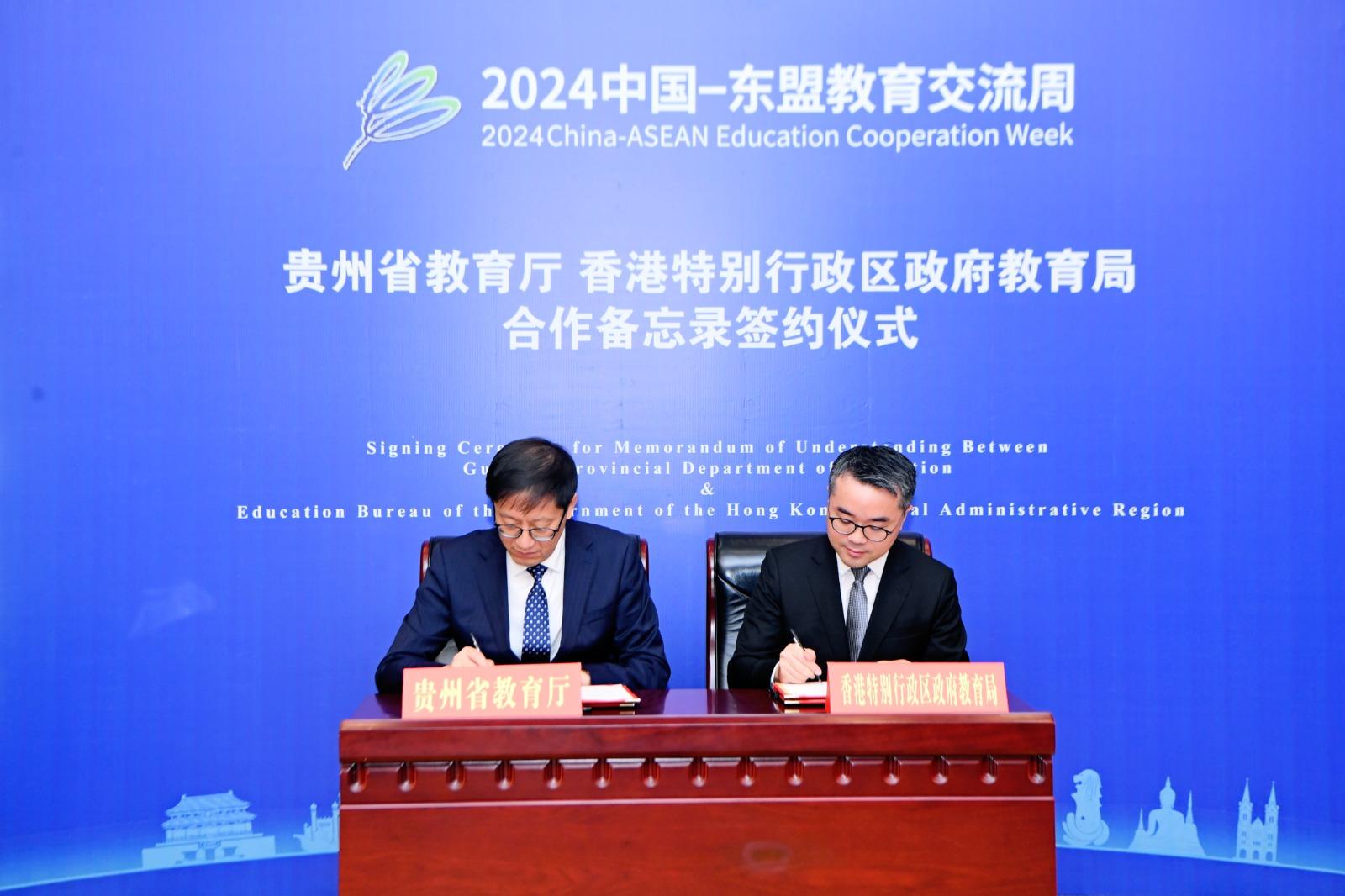
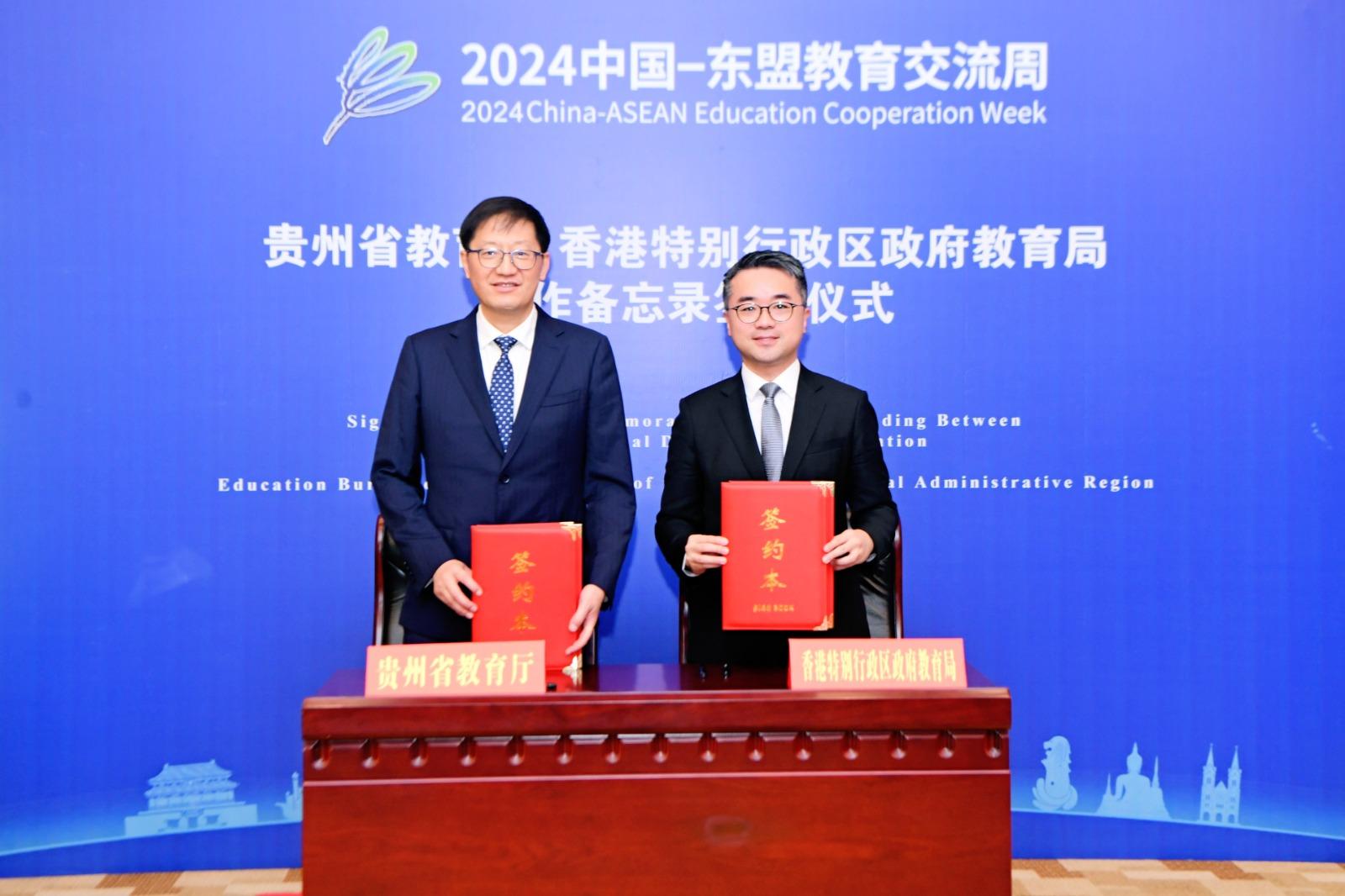
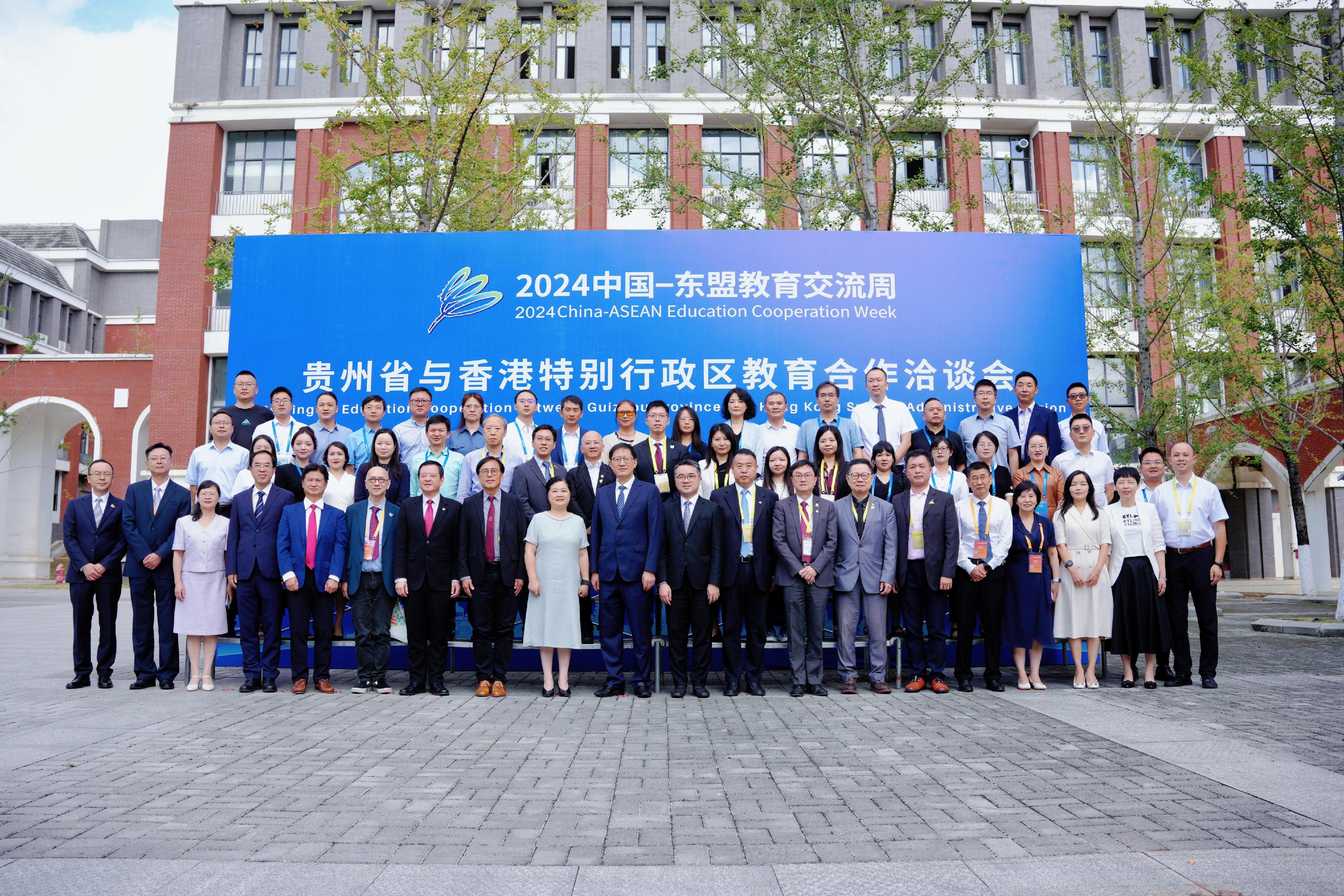
     The Education Bureau of the Hong Kong Special Administrative Region Government and the Department of Education of Guizhou Province today (August 22) held a signing ceremony of a Memorandum of Understanding (MOU) on education co-operation in Guizhou to further enhance education exchanges and collaboration between the two places. The MOU was signed by the Under Secretary for Education, Mr Sze Chun-fai, and the Director-General of the Department of Education of Guizhou Province, Dr Zou Lianke.
 
     Mr Sze said that Hong Kong and Guizhou Province have long maintained close ties. Higher education institutions in the two places have been conducting professional exchanges through different means. Co-operation covers talent cultivation, student admissions and employment, and scientific research. On basic education, the Department of Education of Guizhou Province has been providing staunch support, facilitating the smooth conduct of Hong Kong students' study tours and exchanges on the Mainland. With the signing of the MOU today, Mr Sze enthusiastically looked forward to more diversified, broader and higher-level education collaboration between Guizhou and Hong Kong, and both working together to scale new heights in education interflow and co-operation.
 
     The MOU provides a framework to strengthen education exchanges and co-operation between Guizhou and Hong Kong. Initiatives include supporting collaboration in higher education and vocational education between the two places, development of the sister school platform, and international exchanges and collaboration with the two places, and encouraging teachers and students to conduct exchanges and mutual visits. Under the MOU framework, Guizhou and Hong Kong will further promote the sharing of education resources to complement each other, and work together to innovate, develop and cultivate talent for contribution to the country.

Photo  Photo  Photo  


LD reminds employers and employees to take heat stroke preventive measures in times of Heat Stress at Work Warning

     â€‹As the Heat Stress at Work Warning is now in effect, the Labour Department (LD) reminds employers and employees to take appropriate measures during the effective period of the warning to prevent heat stroke when working in hot weather or hot environments.
      
     Employees who work outdoors or in non-air-conditioned indoor environments face high levels of heat stress and are at a relatively higher risk of heat stroke. Employers should assess the risk factors of heat stress for employees at work and, based on the identified risk factors, take necessary preventive and control measures, including rescheduling work periods, setting up shading covers, providing ventilation and heat dissipation equipment, and reminding employees to replenish water and rest in a timely manner.
      
     The Heat Stress at Work Warning is formulated by the LD based on the Hong Kong Heat Index. There are three levels of the warning: Amber, Red and Black, which help employers and employees better understand the level of heat stress while working outdoors or indoors without air-conditioning systems.
      
     A spokesman for the LD said that when the department issues the Heat Stress at Work Warning, employers must refer to the criteria and recommendations provided in the "Guidance Notes on Prevention of Heat Stroke at Work" to conduct risk assessments, according to the workloads and other relevant heat stress risk factors, for employees who work outdoors or in non-air-conditioned indoor workplaces. Appropriate rest breaks should be arranged every hour, as far as reasonably practicable, based on various levels of the Heat Stress at Work Warning, to reduce employees' risk of heat stroke.
      
     Employees must also follow instructions to rest on time. Whenever there are any symptoms of heat-related illnesses, such as headache, dizziness, thirst, and nausea, they should rest in a cool and shady place, drink water, and inform employers/supervisors to take appropriate action immediately.
      
     The LD issued the "Guidance Notes on Prevention of Heat Stroke at Work", detailing the various risk factors that should be considered when conducting heat stress risk assessments and recommending corresponding control measures for identified risk factors for employers' and employees' reference. For the Heat Stress at Work Warning and related guidelines, please refer to the department's thematic webpage: www.labour.gov.hk/eng/news/prevention_of_heat_stroke_at_work.htm.