CHP announces one new confirmed melioidosis infection case over past week

     The Centre for Health Protection (CHP) of the Department of Health today (August 23) said that one new confirmed melioidosis infection case had been recorded in the past week (August 16 to 22).

     The case involves a 74-year-old male with underlying illness who lives in Sham Shui Po. He developed a cough since July 20. He was admitted to Kwong Wah Hospital on August 15 due to fever and acute retention of urine. He is in stable condition. His clinical sample was confirmed positive for Burkholderia pseudomallei upon testing.

     The CHP is investigating the infection source of the case. Epidemiological investigations are ongoing. So far, 10 melioidosis infection cases have been recorded in Hong Kong this year. In 2023, 17 melioidosis infection cases were recorded.

     A spokesman for the CHP reiterated that person-to-person transmission and animal-to-human transmission are rare, but melioidosis bacteria can survive in the local environment. Melioidosis is an endemic disease in Hong Kong and melioidosis cases have been recorded in Hong Kong each year. According to literature, infection cases are more common after typhoons or storms. The bacterium Burkholderia pseudomallei of melioidosis in soil and muddy water may become exposed to the ground after typhoons or storms, and the bacteria could spread more easily with strong winds or storms. As such, the number of melioidosis cases may increase.

     The CHP reminded members of the public that melioidosis can be spread by contaminated soil and water during and after typhoons and storms. Where practicable, people should stay indoors during typhoons and storms, avoid travelling to areas with potential flooding, and refrain from wading in or coming into contact with muddy water and soil. In addition, high-risk individuals should avoid paths near stormwater drains where aerosols may be generated from contaminated water.

     Members of the public should also take the following preventive measures against infection:
 

  • Avoid contact with contaminated soil;
  • Wear appropriate protective clothing or footwear when participating in activities with possible contact with soil or water, e.g. using gloves and wearing boots. High-risk individuals may also consider wearing a surgical mask;
  • Wash or shower after exposure to contaminated water or soil;
  • Always clean any wounds as soon as possible and cover any cuts or grazes with waterproof dressings;
  • Wash hands with liquid soap and water after handling soil or gardening;
  • Observe food hygiene and avoid drinking raw water; and
  • Travellers can contract the disease through outdoor water sports. Risk of infection can be minimised by avoiding exposure to water sources (such as rivers, ponds or lakes) that might be contaminated.

     The CHP appealed to members of the public to seek medical advice if they develop symptoms, in particular people with diabetes or other immunocompromised conditions, in order to receive appropriate medical diagnosis and treatment. For more information on melioidosis, please visit the website of the CHP at www.chp.gov.hk/en/healthtopics/content/24/101110.html.


CSTB convenes meeting to co-ordinate preparations for visitor arrivals to Hong Kong during Mainland’s National Day Golden Week (with photos)

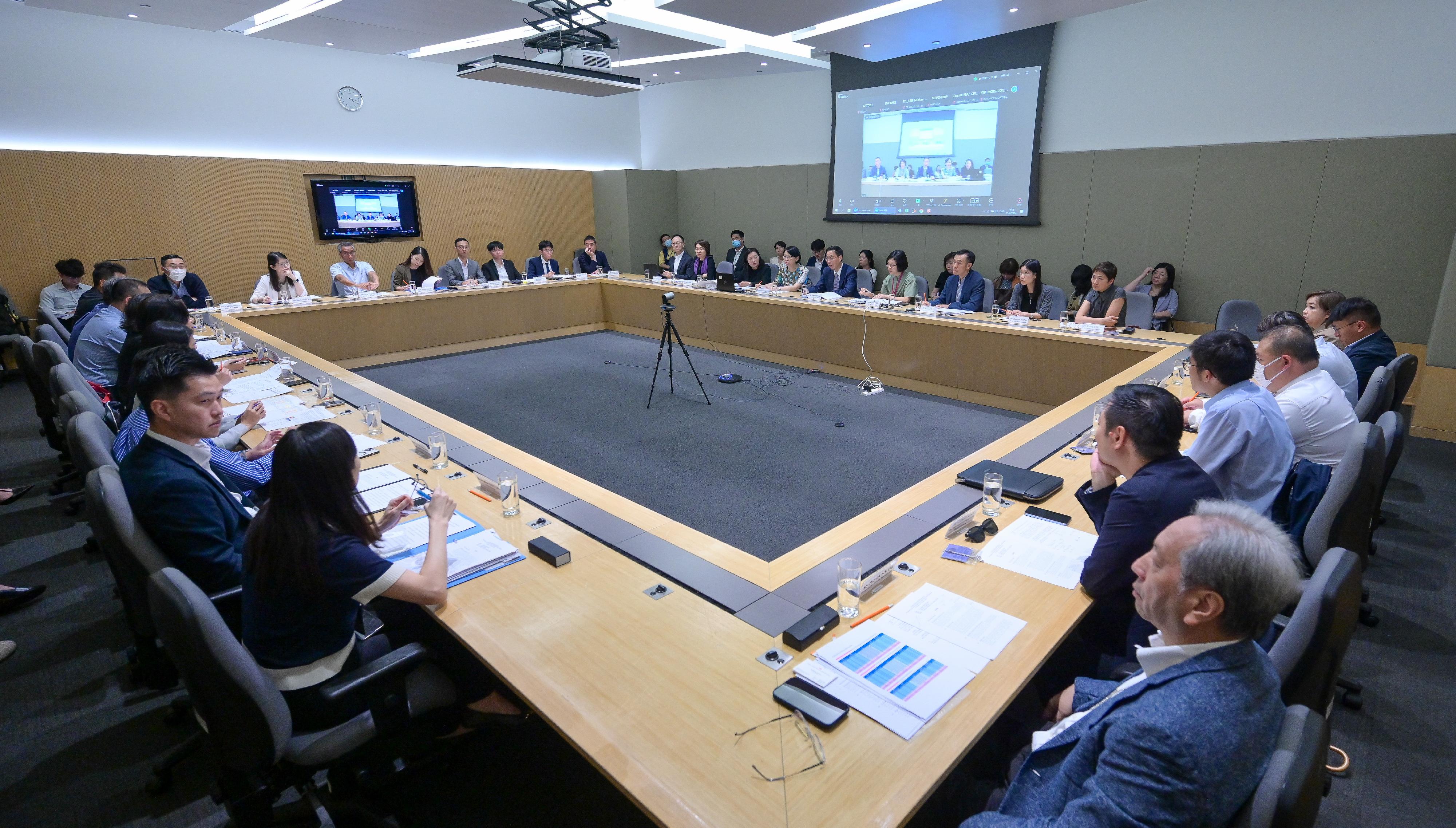
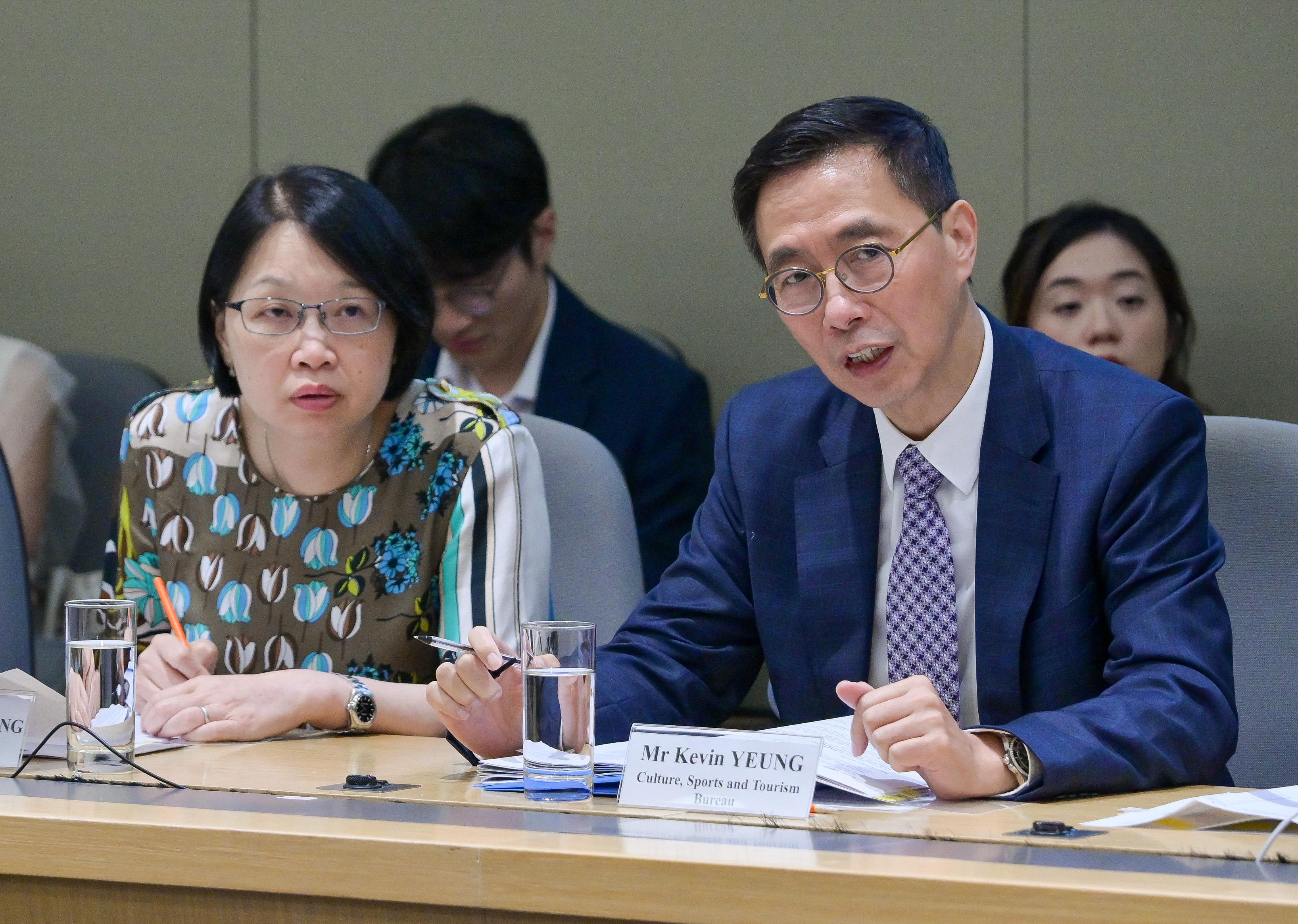
     â€‹The Culture, Sports and Tourism Bureau convened a meeting today (August 23) to co-ordinate the preparations for visitor arrivals to Hong Kong during the Mainland's National Day Golden Week from October 1 to 7. The meeting was hosted by the Secretary for Culture, Sports and Tourism, Mr Kevin Yeung, with representatives attending from government departments including Hong Kong Customs, the Hong Kong Police Force, the Immigration Department, the Transport Department, and various District Offices. Representatives from various tourism-related organisations, including the Travel Industry Authority, the Hong Kong Tourism Board, the Travel Industry Council of Hong Kong, the West Kowloon Cultural District Authority, major tourist attractions and the hotel industry, also attended.

     Mr Yeung said, "Since the number of visitors arriving in Hong Kong will increase during the Mainland's National Day Golden Week, government departments and relevant organisations will continue to work closely, making early preparations for active deployment of resources as well as stepping up co-ordination and communication with relevant Mainland counterparts. We will do our best to welcome visitors arriving in Hong Kong and provide them with high-quality travel experiences."
     â€‹
     Relevant parties will maintain close communication before the Mainland's National Day Golden Week to plan in advance and take forward various preparations in various areas for welcoming visitors to Hong Kong.


Photo  Photo  


Update on dengue fever

     The Centre for Health Protection (CHP) of the Department of Health today (August 23) reported the latest number of dengue fever (DF) cases, and urged the public to maintain strict environmental hygiene, mosquito control and personal protective measures both locally and during travel.

     From August 16 to yesterday (August 22), the CHP recorded seven DF cases, including six imported cases; the patients had been to the Philippines (four cases), Singapore (one case) and Vietnam (one case) respectively during the incubation periods. The other one was the local DF case announced on August 16.

     As of yesterday, 51 cases of DF, including 47 imported and four local cases, had been recorded in 2024. In 2023, 62 imported cases of DF were recorded.

     According to the World Health Organization, the global incidence of DF has markedly increased over the past two decades, posing a substantial public health challenge. In 2023, ongoing transmission, combined with an unexpected spike in DF cases, had resulted in close to a historic high of over 6.5 million cases and more than 7 300 dengue-related deaths reported in over 80 countries/territories. The latest surveillance data shows that there is an increase in DF cases noted in some places in Asia (such as Indonesia, Malaysia, Singapore and Thailand) compared to the same period last year. Since the beginning of 2024, the Americas, including Brazil, Argentina and Peru, have recorded over 11 million cases, a record number. Detailed information on the latest DF situation in Hong Kong, as well as neighbouring and overseas countries and areas, has been uploaded to the CHP website (www.chp.gov.hk/files/pdf/df_imported_cases_and_overseas_figures_eng.pdf).

     "Apart from general measures, travellers returning from areas affected by DF should apply insect repellent for 14 days upon arrival in Hong Kong. If feeling unwell, seek medical advice promptly and provide travel details to a doctor," a spokesman for the CHP said.

     The public should take heed of the following advice on mosquito control:
 

  • Thoroughly check all gully traps, roof gutters, surface channels and drains to prevent blockage;
  • Scrub and clean drains and surface channels with an alkaline detergent compound at least once a week to remove any deposited mosquito eggs;
  • Properly dispose of refuse, such as soft drink cans, empty bottles and boxes, in covered litter containers;
  • Completely change the water of flowers and plants at least once a week. The use of saucers should be avoided if possible;
  • Level irregular ground surfaces before the rainy season;
  • Avoid staying in shrubby areas; and
  • Take personal protective measures such as wearing light-coloured long-sleeved clothes and trousers, and apply insect repellent containing DEET to clothing or uncovered areas of the body when doing outdoor activities.

     DEET-containing insect repellents are effective and the public should take heed of the tips below:
 

  • Read the label instructions carefully first;
  • Apply right before entering an area with risk of mosquito bites;
  • Apply on exposed skin and clothing;
  • Use DEET of up to 30 per cent for pregnant women and up to 10 per cent for children*;
  • Apply sunscreen first, then insect repellent; and
  • Reapply only when needed and follow the instructions.

* For children who travel to countries or areas where mosquito-borne diseases are endemic or epidemic and where exposure is likely, those aged 2 months or above can use DEET-containing insect repellents with a DEET concentration of up to 30 per cent.

     â€‹The public should call 1823 in case of mosquito problems and may visit the following pages for more information: the DF page of the CHP and the Travel Health Service, the latest Travel Health Newstips for using insect repellents, and the CHP Facebook Page and YouTube Channel.


Fourth stop of “Anti-drug Info Zone: Stride Ahead Into A Drug-free Future” Roving Exhibition to be staged at Olympian City

     The "Anti-drug Info Zone: Stride Ahead Into A Drug-free Future" Roving Exhibition (Anti-drug Roving Exhibition) will move to Olympian City on August 24 and 25. Members of the public are welcome to visit the Anti-drug Roving Exhibition at the Central Atrium on the ground floor of Olympian City 2 from 10am to 9pm.
 
     The Anti-drug Roving Exhibition is co-organised by the Narcotics Division (ND) of the Security Bureau and the Action Committee Against Narcotics, and is designed with the theme of interstellar space. Drugs are portrayed in the exhibition as aliens that should be defeated. This visual representation helps present the adverse effects caused by drugs on one's mind and body in a vivid manner. And by seeing the aliens, everyone will be strongly reminded again to stay away from drugs at all times, and of the dire consequences of committing drug crimes. 
 
     Including elements of STEM (science, technology, engineering and mathematics) and multimedia, the Anti-drug Roving Exhibition is divided into different theme zones with games, digital exhibition panels and a photo booth to spread anti-drug knowledge to visitors, and provide them with information about criminal liability for drug offences, how to seek help and so on. Anti-drug videos, animations and leaflets will also be available at the Anti-drug Roving Exhibition to provide visitors with precise information about resisting drugs and seeking help.
 
      After the fourth stop, the Anti-drug Roving Exhibition will be held at shopping malls in different districts and at tertiary institutes until the end of March next year. For more details of the Anti-drug Roving Exhibition, please visit the dedicated webpage on the ND's website (www.nd.gov.hk/en/rovingexhibition.html).
 
     In addition, the ND has been closely monitoring drug trends in and outside Hong Kong and carrying out preventive education and publicity in a timely manner to deepen the public’s understanding of the harmful effects of drug abuse. The ND has just produced an animated video about "Space oil", which is about a youngster falling into a drug abyss after inhaling "Space oil" by vaping. “Space oil” is a kind of liquid to which harmful substances have been illegally added. Usually, its main ingredient is etomidate, an anaesthetic that can only be prescribed by a doctor according to the law. Anyone who illegally possesses and uses this substance commits an offence. "Space oil" may also be mixed with other drugs, including cannabis, methamphetamine (commonly known as "Ice"), ketamine (commonly known as "K"), etc. “Space oil” will cause addiction as well as serious physical and mental harm, and even death. Therefore, vaping "Space oil" is the same as taking drugs. The animated video has been uploaded onto the ND’s website (www.nd.gov.hk/en/publicity_materials.html) as well as social media platforms (Facebook page and Instagram account of "narcotics.divisionhk").


Government relaunches outreach vaccination service special programme for residential care homes

     â€‹To enhance protection for the residents of residential care homes (RCHs) against COVID-19 and encourage timely COVID-19 vaccination so as to cope with the possible winter surge of respiratory tract infections including COVID-19, the Government announced today (August 23) that the outreach vaccination service special programme for residents in RCHs will be relaunched between August 26 and November 17. A special allowance will be provided to visiting doctors of RCHs participating in the special programme to encourage them to pay more visits to residential care homes for the elderly (RCHEs) and residential care homes for persons with disabilities (RCHDs) to provide vaccination service to the residents.
      
     The Centre for Health Protection (CHP) of the Department of Health (DH) pointed out that the overall activity of COVID-19 has increased since June, with JN.1 and its descendant lineages remaining the predominant circulating strains. According to the latest surveillance data as of August 17, a total of 15 outbreaks in RCHEs and eight outbreaks in RCHDs (affecting 124 and 46 persons respectively) was recorded in the recent four weeks (between July 21 and August 17), which was more than that of the previous four weeks (between June 23 and July 20), when seven RCHE and three RCHD COVID-19 outbreaks (affecting 49 and 22 persons respectively) were recorded.
      
     According to the recommendation by the Scientific Committee on Vaccine Preventable Diseases and the Scientific Committee on Emerging and Zoonotic Diseases under the CHP, high risk groups (including all persons aged 50 years or above and persons aged 18-49 years with chronic diseases) are recommended to receive a booster COVID-19 vaccination at least six months after the last dose or COVID-19 infection (whichever is later), regardless of the number of doses received previously. However, the percentage of RCHE residents who received a booster vaccination or recovered from COVID-19 infection in the past six and 12 months were about 30 per cent and 44 per cent respectively, while that of RCHD residents were about 27 per cent and 41 per cent respectively.
      
     A CHP spokesman stressed that vaccination can effectively prevent serious cases. The CHP strongly appeals to high risk groups, particularly children, the elderly and chronic disease patients, to receive a COVID-19 booster as soon as possible. Hence, the Government will relaunch the outreach vaccination service special programme for RCHs. The new phase of the special programme will last for 12 weeks. Visiting doctors are invited to enhance visits to their responding RCHs and provide outreach vaccination service to the residents who are due for COVID-19 vaccination as soon as possible. The Government will provide a special allowance to visiting doctors participating in the special programme to cover the additional manpower and transportation costs arising from the programme.
      
     The Government has conducted six phases of the outreach vaccination service special programme for RCHs. Under the concerted efforts of the RCH sector and visiting doctors, over 15 500 doses of COVID-19 vaccines were administered in the last phase between December 14, 2023, and March 6, 2024. 
      
     The Hospital Authority also continues to provide timely COVID-19 vaccinations to long-stay patients in their hospitals. The public may visit the CHP's Vaccination Schemes page and COVID-19 Vaccination Programme website for vaccination arrangements.