Speech by FS at the Australian Financial Review Asia Summit (English only) (with photos)
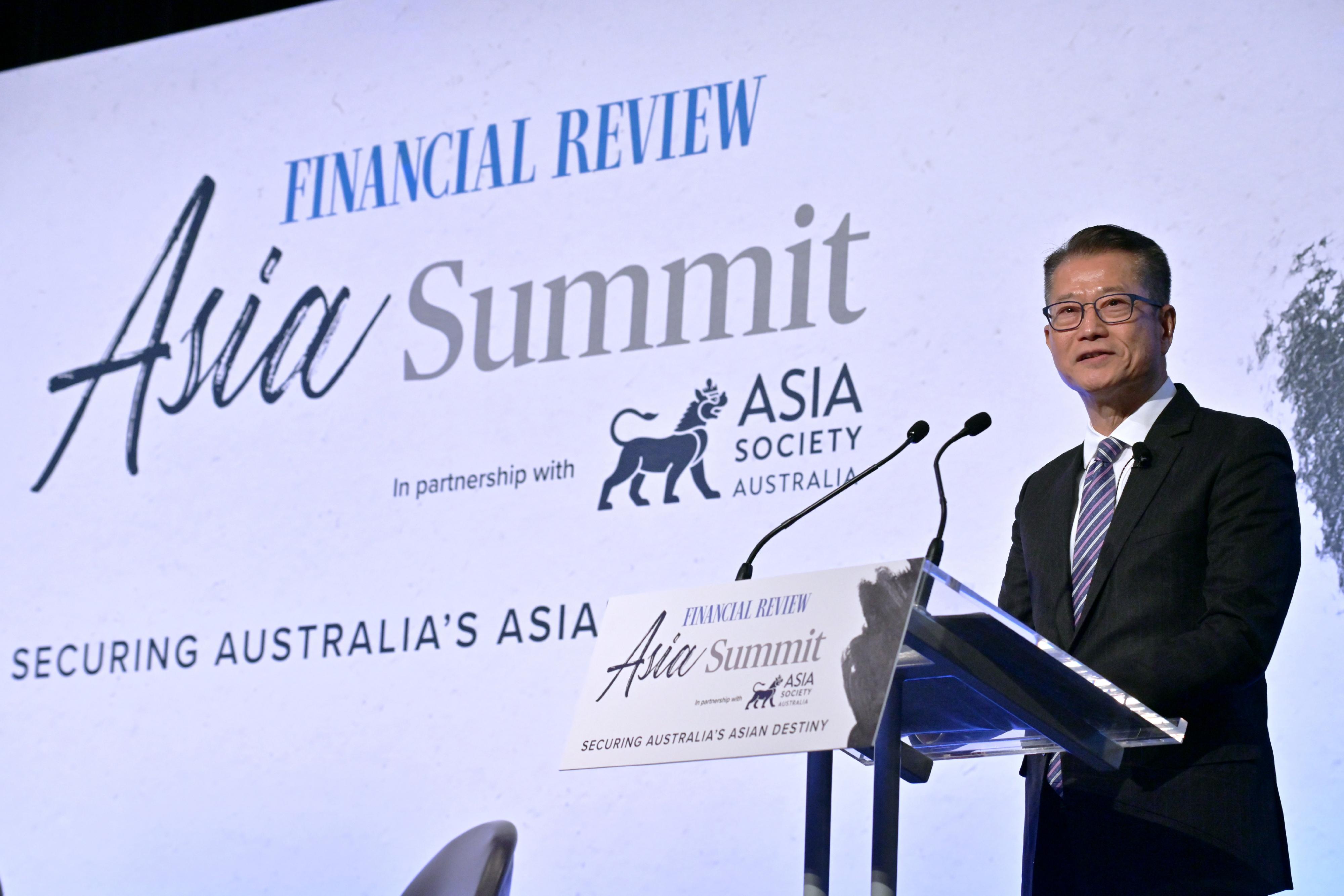
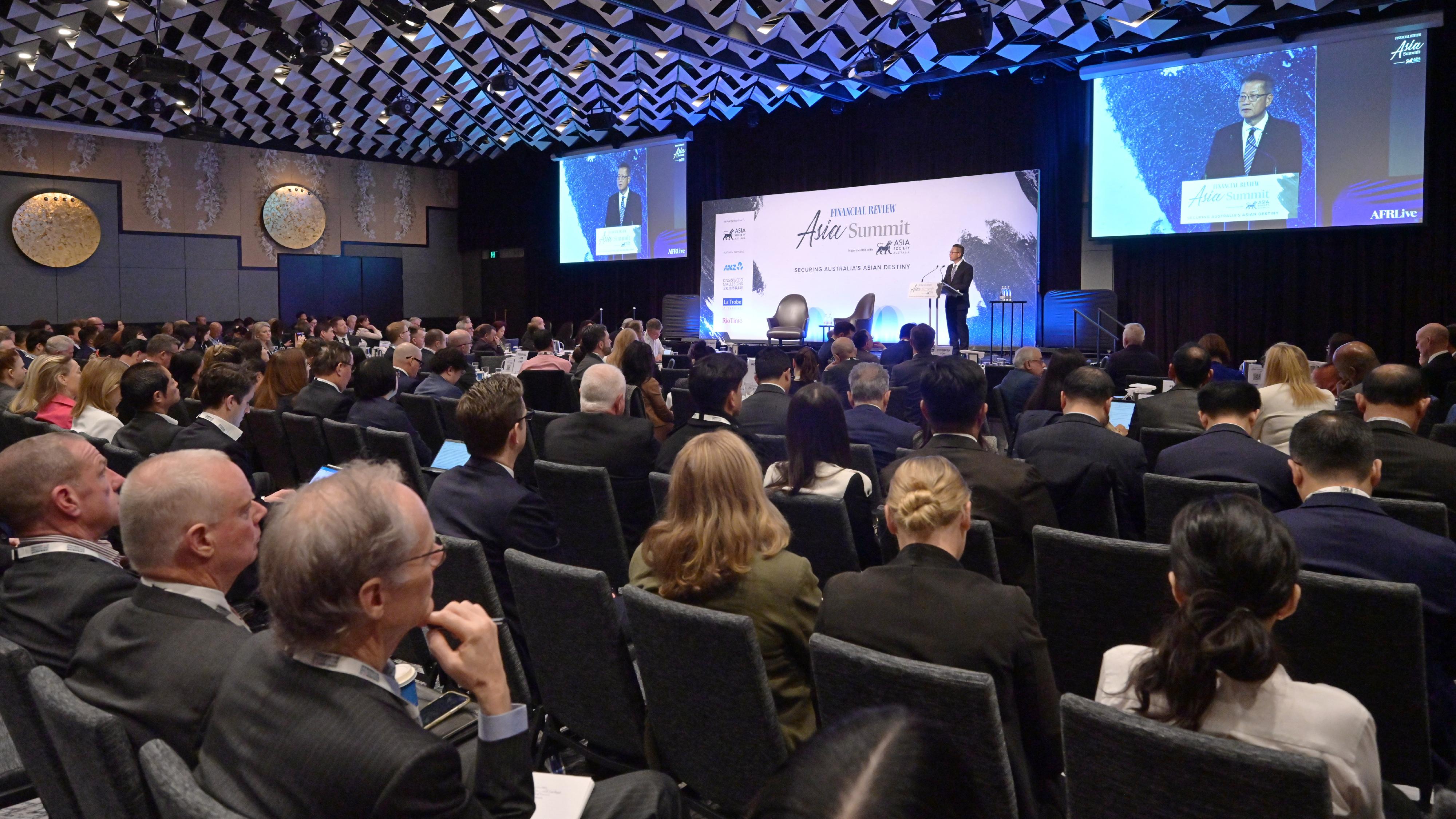
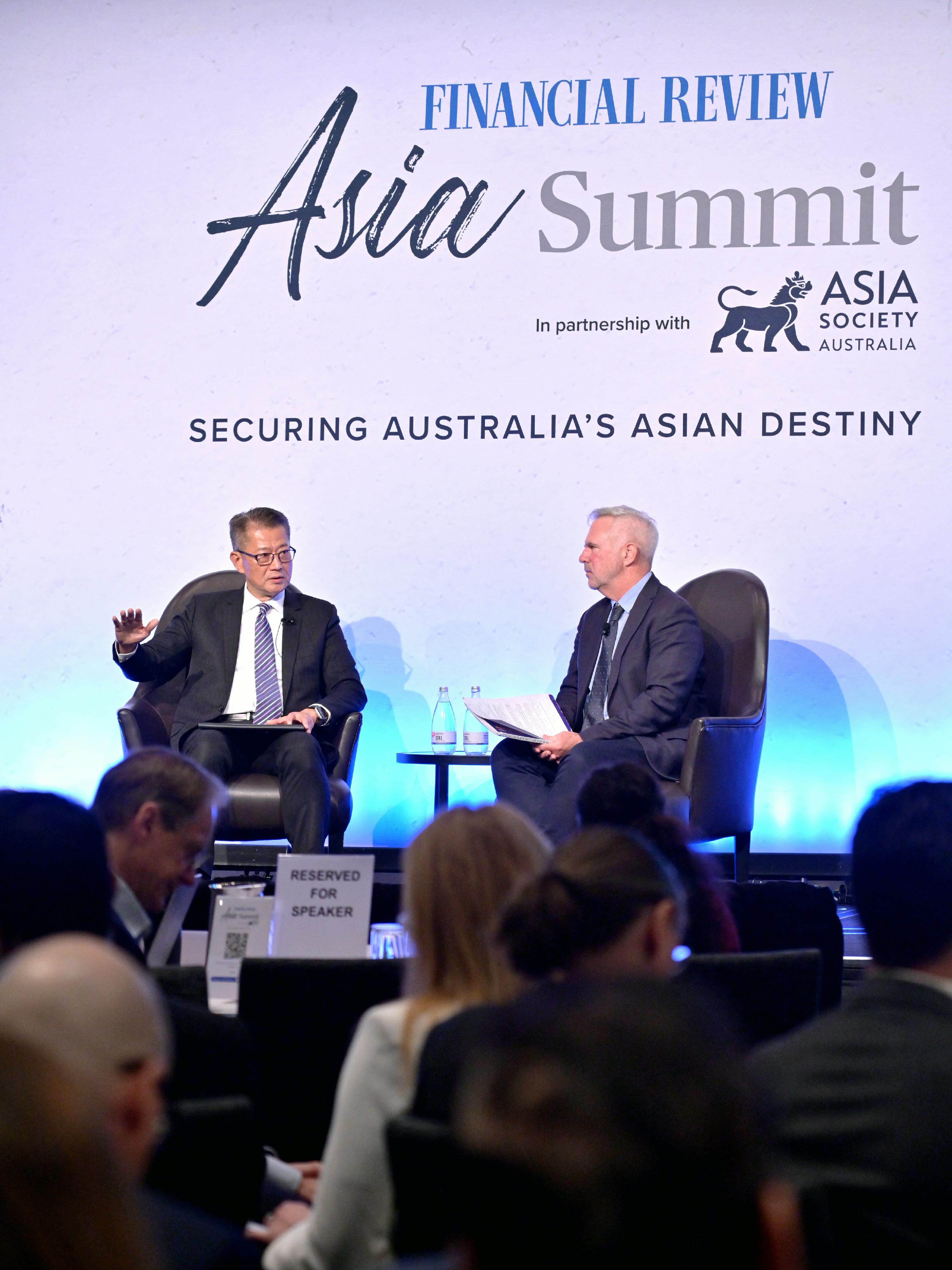
​Following is the speech by the Financial Secretary, Mr Paul Chan, at the Australian Financial Review Asia Summit today (September 3, Melbourne time):
Distinguished guests, ladies and gentlemen,
Good morning.
I'm delighted to be here, in magnificent Melbourne, one of the world's most livable cities, and Australia's events capital, to have this welcome opportunity to speak to you at this prestigious international event, the Asia Summit organised by the Australian Financial Review in partnership with the Asia Society Australia.
I'm here today to update you on Hong Kong – our economy, business environment, financial prospects and the wide-ranging opportunities available in Hong Kong for the Australian business and financial community.
I'm happy, as well, to address any questions you may have about Hong Kong, how it's evolving and growing, and why you should look to Hong Kong for your Asian business and investment future.
Hong Kong's economy
With COVID now behind us, Hong Kong is back in business and creating a world of opportunity.
Over the past year and a half, we have achieved solid economic growth, up 3.3 per cent last year and 3 per cent in the first half of 2024. Key growth drivers include exports, private consumption, and investments. Hong Kong serves as a major re-export hub between the Mainland of China and the rest of the world, with goods exports rising over 12 per cent, year-on-year, in the first seven months of 2024, despite high interest rates and geo-economic challenges.
Tourism is also a significant contributor to our economy, with 34 million visitors last year and an expected 46 million this year. We are hosting a wide range of mega events in 2024, including Art Basel and such upcoming financial gatherings as Fintech Week and the Global Financial Leaders Investment Summit.
Our flight capacity is recovering, with passenger throughput currently reaching over 80 per cent of pre-pandemic levels. We are expecting full resumption around the end of this year. The new Three-Runway System at the Hong Kong International Airport will begin operations this year. By 2035, it will handle over 120 million passengers and 10 million tonnes of goods annually.
While overall investment grew by 3.1 per cent in the first half of this year, private consumption faces challenges due to a strong Hong Kong dollar and shifting spending patterns by residents and tourists. Nonetheless, inflation remains low, at 1 per cent, and unemployment is just 3 per cent. Overall, Hong Kong is forecast to grow by 2.5 per cent to 3.5 per cent this year.
In the short term, Hong Kong's economic performance will still be affected by global uncertainties. But as we look to the long term, Hong Kong's prospects are promising, with all the advantages we have to offer under the "one country, two systems" arrangement.
"One country, two systems": alive and well
Ladies and gentlemen, maintaining the "one country, two systems" arrangement is in the vital interest of our country. President Xi Jinping has emphasised on several occasions the importance of sustaining this arrangement in the long term. He has highlighted how the Central Authorities value Hong Kong's unique role in connecting the world with the Mainland.
To fulfil our "super connector" role, Hong Kong must remain a trusted hub for international investors and businesses. This requires Hong Kong to uphold the "two systems" key features: a common law system, a judiciary that exercises powers independently, the free flow of capital, goods, information and talent, alongside all the other advantages that define Hong Kong's singular identity.
Upholding the rule of law
When it comes to the rule of law, I can report that we are doing well. Last year, Hong Kong ranked 23rd out of 142 economies in the World Justice Project Rule of Law Index. We may trail Australia, but we are ahead of the United States.
A survey by the American Chamber of Commerce in Hong Kong this year noted that nearly 80 per cent of its members have confidence in Hong Kong's rule of law.
Our Court of Final Appeal includes seven overseas non-permanent judges. Four of them, let me add, are from Australia, including Justice Patrick Keane.
In June, Justice Keane told the Financial Review that, in his view, the Hong Kong judiciary was competent and independent. He did not see that the Government was pressuring the judiciary or refusing to accept court decisions.
Yes, like many jurisdictions, we have a national security law. Article 23 of the Basic Law was legislated earlier this year, fulfilling our constitutional obligation. It ensures a stable and predictable environment for our economy, and the companies that make it thrive.
In the American Chamber of Commerce survey that I mentioned earlier, close to 70 per cent of the respondents indicated that their operations had not been affected by the National Security Law.
Eight centres and the Greater Bay Area
"One country, two systems" will continue to underpin Hong Kong's success and development as a global super connector. This is underscored by the roles Hong Kong will play in eight discrete areas: internationally, as finance, trade, shipping, aviation and innovation and technology centre, and regionally, as the Asia Pacific's legal and dispute resolution centre and intellectual property trading centre. And last but not least, as the East-meets-West centre for international cultural exchange.
These roles are supported by our close connectivity with the Guangdong-Hong Kong-Macao Greater Bay Area – the GBA. Counting Hong Kong, Macao and nine cities in Guangdong province, this cluster-city development boasts a population of 87 million and an aggregate GDP of about US$2 trillion. The per capita GDP is about US$23,000. That's equivalent to about US$40,000 on a purchasing-power parity basis. The GBA, in short, is a huge consumer market.
It's highly connected too, with seven airports connecting to 230 destinations and serving 220 million passengers a year. It is well served by high-speed rail and road networks, seamlessly connecting the region's cities. From Hong Kong, by high-speed rail, it's 45 minutes to Guangzhou, and Shenzhen is just 15 minutes away.
The recent Third Plenary Session of the Chinese Communist Party's Central Committee, let me add, reaffirmed the country's commitment to institutional reform, innovation and technology and green development, with a greater emphasis on openness. "Openness" is the key term, and it will create more opportunities for a world of business.
Our economic future
Among the eight discrete areas I mentioned, in the interest of time, I would like to highlight two, which are of vital importance to our future: financial services and innovation and technology.
Fund-raising is a key aspect of our financial services. Our stock exchange remains one of Asia's leaders, with a capitalisation of more than A$6 trillion, around 10 to 11 times our GDP. Through the first eight months of this year, our stock market handled 43 IPOs, with funds raised amounting to just A$3.8 billion. A variety of factors are affecting our IPO performance. They include uncertainties in the global economy, geo-economic fragmentation and persistent high interest rates. But we remain optimistic. In April, the China Securities Regulatory Commission announced that it is encouraging leading Mainland companies to list in Hong Kong. More than 100 companies are now in the pipeline to list in Hong Kong.
Moreover, many listed companies have done well in follow-on fundraising, raising some A$30 billion so far this year, from investors from all over the world. Hong Kong, in short, remains an attractive fund-raising platform.
Our private equity and venture-capital sectors are vibrant. Capital under management amounts to about A$340 billion, second-largest in Asia, just behind Mainland China's. And two-thirds of those funds come from outside Hong Kong. Hong Kong is also home to 2 700 single-family offices, more than half managing assets of over A$74 million. The GBA's growing affluence presents opportunities, and measures allowing them to access wealth-management products in Hong Kong is helping our sector. Quite a number of Australian asset-management firms have established their presence in Hong Kong, I'm pleased to note. They include global headquarters.
We are also making strides in offshore reminibi business, green and sustainable finance, digital assets, fintech and more. These fast-emerging areas hold great promise for Hong Kong and the companies that do business with us.
While our financial services are globally strong, we recognise the need to diversify. That means innovation and technology.
Hong Kong has unique advantages in I&T. We are the only city to count five of the world's top 100 universities. Our two medical schools are within the top 40 globally. Our basic research capabilities, combined with unparalleled access to both Mainland and international data, are enabling the development of such industries as AI and biotech.
For biotech and medicine, let me highlight that the Government is working to establish a primary evaluation system for medicine and medical devices. We are working to make Hong Kong a hub for the approval of medicines. And we will work to get them used in the Mainland cities and beyond.
Our efforts will be aided by our strong collaboration with the GBA. The GBA is a leader in innovation and technology. Shenzhen is strong in commericalisation and tech application. Cities like Dongguan and Huizhou are known for advanced manufacturing. Indeed, for the past five years, the Shenzhen-Hong Kong-Guangzhou science and technology cluster has been ranked second, globally, by the World Intellectual Property Organization.
Hong Kong and Shenzhen, let me add, are building an innovation and technology park together at the border. Among many other things, it will work to enable the cross-border flow of talent, investment, data and more.
To expedite our I&T development, we need technology enterprises and talent.
At the end of 2022, we set up the Office for Attracting Strategic Enterprises to attract high-tech companies from four areas: AI, biotech, fintech and advanced manufacturing and new energy.
To date, more than 100 companies have joined us, committing A$10 billion in investment and creating more than 15 000 jobs.
Among them are overseas partners from the US and the UK. AstraZeneca, for example, will set up an R&D (research and development) centre in Hong Kong. And many of these companies will bring their partners in research, innovation and manufacturing with them.
Our Top Talent Pass Scheme and other talent-attraction measures are also making a decided difference. Indeed, more than 340 000 applications have been received to date. We have approved 210 000 of them. And, I'm pleased to note, about 140 000 professionals have already arrived in Hong Kong, readying to build their career and their future in Hong Kong.
After all, they come for a good reason. Hong Kong remains a safe, vibrant, multicultural and open community. It is fast emerging as a cultural hub, led by the West Kowloon Cultural District, one of the world's largest arts and cultural developments. Our country parks count about 40 per cent of our total land area. And with nearly 200 Michelin-recommended restaurants, and no shortage of pubs, Hong Kong is easy to settle into, easy to call home.
Concluding remarks
Ladies and gentlemen, Hong Kong, together with the GBA, is committed to rising as a world-class bay area, one that combines the strengths of the San Francisco and New York Bay Areas.
As Josephine Orgill, Chairlady of the Australian Chamber of Commerce in Hong Kong, told the Financial Review earlier this year, and I quote, "People who've come back after a long time are very positively surprised by the ongoing ease of the operating environment, and that people see so much opportunity here." To that I can only add: come see for yourselves what Hong Kong is up to, what we can do for you, and your future. Thank you.