Inspection of aquatic products imported from Japan

     In response to the Japanese Government's plan to discharge nuclear-contaminated water at the Fukushima Nuclear Power Station, the Director of Food and Environmental Hygiene issued a Food Safety Order which prohibits all aquatic products, sea salt and seaweeds originating from the 10 metropolis/prefectures, namely Tokyo, Fukushima, Ibaraki, Miyagi, Chiba, Gunma, Tochigi, Niigata, Nagano and Saitama, from being imported into and supplied in Hong Kong.
 
     For other Japanese aquatic products, sea salt and seaweeds that are not prohibited from being imported into Hong Kong, the Centre for Food Safety (CFS) of the Food and Environmental Hygiene Department will conduct comprehensive radiological tests to verify that the radiation levels of these products do not exceed the guideline levels before they are allowed to be supplied in the market.
 
     As the discharge of nuclear-contaminated water is unprecedented and will continue for 30 years or more, the Government will closely monitor and step up the testing arrangements. Should anomalies be detected, the Government does not preclude further tightening the scope of the import ban.
 
     From noon on September 3 to noon today (September 4), the CFS conducted tests on the radiological levels of 201 food samples imported from Japan, which were of the "aquatic and related products, seaweeds and sea salt" category. No sample was found to have exceeded the safety limit. Details can be found on the CFS's thematic website titled "Control Measures on Foods Imported from Japan" (www.cfs.gov.hk/english/programme/programme_rafs/programme_rafs_fc_01_30_Nuclear_Event_and_Food_Safety.html).

     In parallel, the Agriculture, Fisheries and Conservation Department (AFCD) has also tested 50 samples of local catch for radiological levels. All the samples passed the tests. Details can be found on the AFCD's website (www.afcd.gov.hk/english/fisheries/Radiological_testing/Radiological_Test.html).
 
     The Hong Kong Observatory (HKO) has also enhanced the environmental monitoring of the local waters. No anomaly has been detected so far. For details, please refer to the HKO's website
(www.hko.gov.hk/en/radiation/monitoring/seawater.html).
 
     From August 24, 2023, to noon today, the CFS and the AFCD have conducted tests on the radiological levels of 81 570 samples of food imported from Japan (including 52 237 samples of aquatic and related products, seaweeds and sea salt) and 18 750 samples of local catch respectively. All the samples passed the tests.
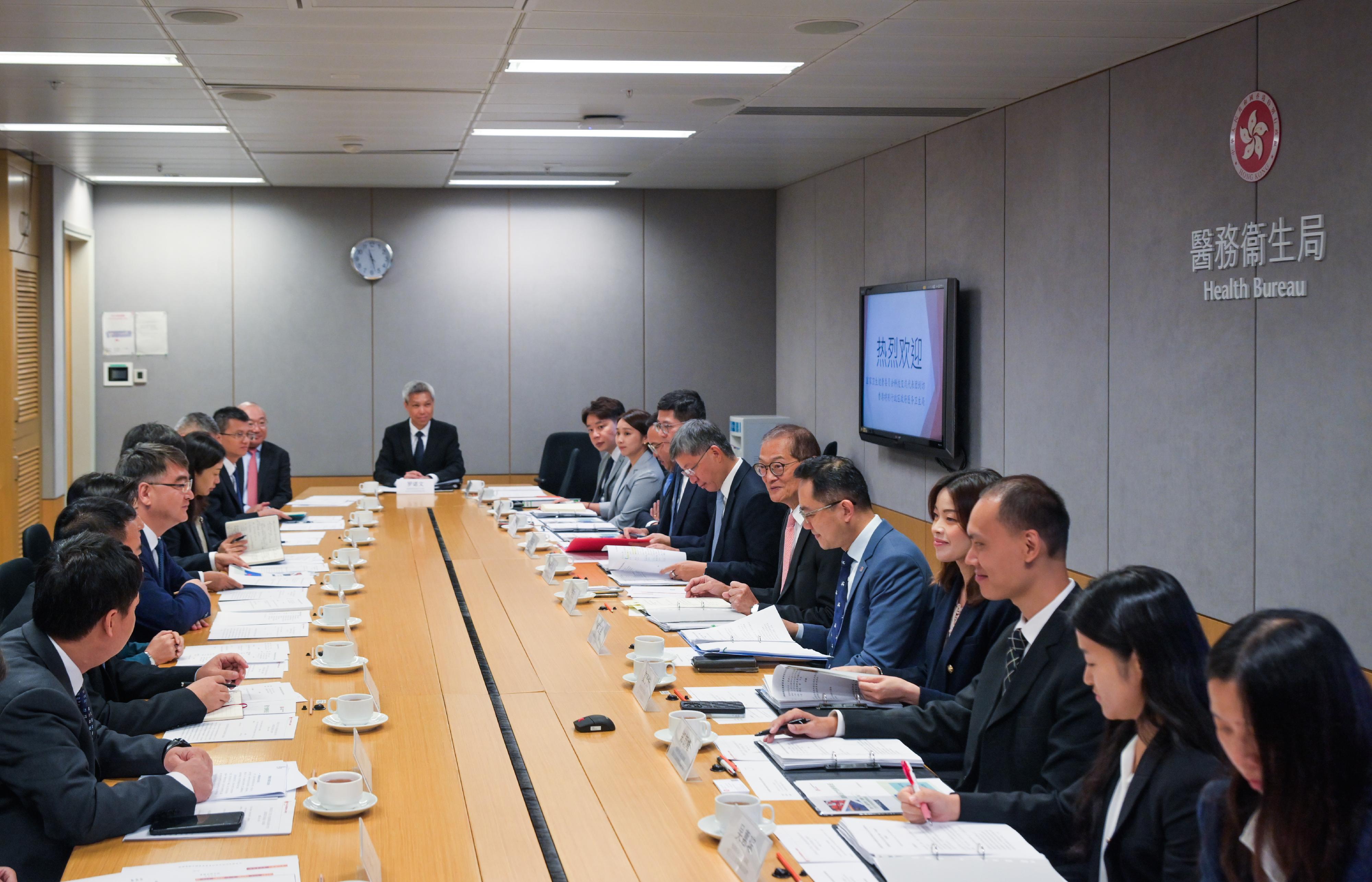
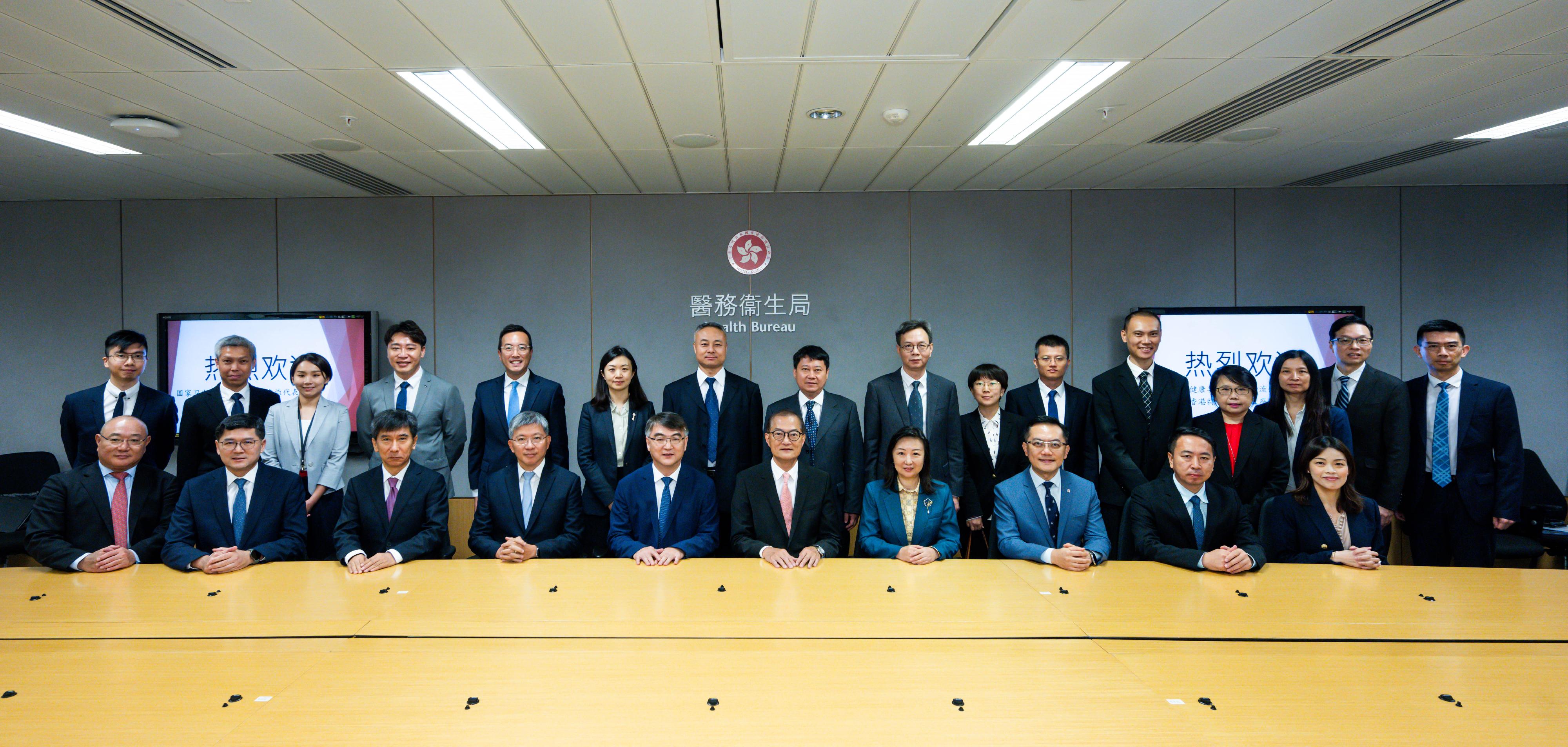


Secretary for Health meets delegation of National Health Commission for Science and Technology Exchange (with photos)

     â€‹The Secretary for Health, Professor Lo Chung-mau, met with a delegation of the National Health Commission (NHC) for Science and Technology Exchange led by the Supervisor of the Department of Health Science, Technology and Education of the NHC, Mr Zheng Zhongwei, today (September 4) to have in-depth discussions on the deepening of co-operation on health and medical innovation between the Mainland and the Hong Kong Special Administrative Region (HKSAR). 

     Professor Lo said, "The Third Plenary Session of the 20th Central Committee of the Communist Party of China (CPC Central Committee), which concluded victoriously on July 18, adopted the Resolution of the CPC Central Committee on Further Deepening Reform Comprehensively to Advance Chinese Modernization. Subsequent to the 19th Joint Meeting of Senior Health Officials of Mainland, Hong Kong and Macao held in Dunhuang, Gansu Province, last Thursday (August 29), today's meeting provides another opportunity for the Mainland and the HKSAR to engage in more in-depth discussions on developing Hong Kong into the country's international health and medical innovation hub." 

     The National 14th Five-Year Plan expressed clear support for Hong Kong's development into an international innovation and technology (I&T) centre, while the Development Plan for Shenzhen Park of Hetao Shenzhen-Hong Kong Science and Technology Innovation Co-operation Zone (HTCZ) promulgated by the State Council in August last year indicated clear support for the co-ordinated development of the Hong Kong Park and Shenzhen Park under the "one zone, two parks" model. Both Plans bolster the innovative applications of advanced biomedical technologies and establishment of an internationally competitive base for industrial pilot-scale testing and transformation. 

     "Health and medical innovation not only introduces good drugs for use in Hong Kong and brings the benefit of research and development to patients, but also fosters the transformation of I&T and development of the industry. Since putting forward in the Chief Executive's 2023 Policy Address the vision of developing Hong Kong into an international health and medical innovation hub, the HKSAR Government has been pushing ahead with multiple initiatives on all fronts, including strengthening the HKSAR's capacity of drug evaluation for progressing towards a primary evaluation approach, as well as establishing the Greater Bay Area International Clinical Trial Institute in the Hong Kong Park of the HTCZ within this year to drive collaboration of clinical trials with the Shenzhen Park under the 'one zone, two parks' model with a view to enhancing the healthcare quality of Hong Kong and the GBA in the long run, thereby benefitting more citizens," he stressed.

     "The HKSAR Government will strenuously work in line with the objective of deepening medical and healthcare reform as stipulated in the Resolution by pursuing innovation in the medical field. While actively integrating into the national development, the HKSAR will capitalise on its unique advantages to the fullest to develop the city into an international health and medical innovation hub, thereby enabling the innovative medical technologies to go global and attract foreign investment. Hong Kong will strive to give full play to our strengths so as to serve the country's needs amid the comprehensive deepening of reform." 

     The Permanent Secretary for Health, Mr Thomas Chan; the Director of Health, Dr Ronald Lam; and the Chief Executive of the Hospital Authority, Dr Tony Ko, also attended the meeting.

Photo  Photo  


Red flags hoisted at Pui O Beach and Hung Shing Yeh Beach

Attention TV/radio announcers:

Please broadcast the following as soon as possible:

     Here is an item of interest to swimmers.

     The Leisure and Cultural Services Department announced today (September 4) that due to big waves, red flags have been hoisted at Pui O Beach and Hung Shing Yeh Beach in Islands District. Beachgoers are advised not to swim at these beaches.


EDB announces arrangements for Basic Law and National Security Law Test in 2024/25 school year

     The Education Bureau (EDB) issued a circular memorandum to all schools in Hong Kong today (September 4), announcing arrangements for the Basic Law and National Security Law Test (BLNST) in the 2024/25 school year.
      
     The EDB will conduct a total of five rounds of the BLNST for degree holders and non-degree holders respectively in this school year.
      
     The first round of the BLNST is scheduled for October 26. The target participants are persons without a bachelor's degree and planning to join or change to another secondary school, primary school or kindergarten to take up a teaching post. Applications can be made through the EDB's online application system (www.edb.gov.hk/en/blnst) from 9am on September 6 to 5pm on September 19. Limited places for the test will be available on a first-come, first-served basis. Please note that a pass result in the test at a non-degree level is only applicable for applying for non-graduate teaching posts. Those who have already obtained a pass result in the BLNST organised by the EDB, the Civil Service Bureau or recruiting departments/grades will not be accepted to sit the test again.
      
     Starting from the 2023/24 school year, all newly appointed teachers in public sector schools, Direct Subsidy Scheme schools and kindergartens joining the Kindergarten Education Scheme (including newly joined teachers and teachers changing schools) are required to pass the BLNST in order to be considered for appointment. The requirement applies to all ranks of the teacher grade including principals.
      
     Details about the BLNST are available on the EDB webpage (www.edb.gov.hk/en/blnst). The second to fifth rounds of the test will be held in December 2024 and April, June and July 2025 respectively. Relevant arrangements will be announced in due course.


Moon watching tips for Mid-Autumn Festival 2024

     The Mid-Autumn Festival falls on September 17 (Tuesday) this year. If weather permits, a bright and round "super moon" (Note 1) with Saturn in its close proximity (Note 2) will also be observable with unaided eyes at night during the Mid-Autumn Festival period.
 
     To facilitate moon watching by the public, the times of moonrise, transit, moonset and full moon during the Mid-Autumn Festival period are listed in the table. At transit, the moon passes the local meridian, reaching its highest elevation for the night due south.
 

September 16 (Monday) – the eve of the Mid-Autumn Festival
Moonrise 5.17pm
Transit (elevation 54 degrees) 11.05pm
Moonset 4.57am (next morning)
September 17 (Tuesday) – Mid-Autumn Festival
Moonrise 5.58pm
Transit (elevation 61 degrees) 11.57pm
Moonset 6.02am (next morning)
September 18 (Wednesday) – the day following the Mid-Autumn Festival
Full moon (the moon is below the horizon of Hong Kong at this moment) 10.34am
Moonrise 6.37pm
Transit (elevation 69 degrees) 0.48am (next morning)
Moonset 7.07am (next morning)

 
     Although the full moon (Note 3) will occur on the morning of the day following the Mid-Autumn Festival, the moon will be near the perigee (the closest point to the Earth) at a distance of around 357 400km on the Festival and the following day. The diameter of the moon as observed through naked eyes from the earth will appear around 7 per cent (Note 4) larger than that seen when the moon is at an average distance from the Earth. While a partial lunar eclipse will be visible from South America, most parts of North America, Europe, Africa and western Asia during the full moon, the phenomenon will not be visible in Hong Kong.

     Please refer to the 9-day Weather Forecast issued by the Hong Kong Observatory and the Weather Information for Astronomical Observation webpage for the latest weather conditions and the astronomical observing conditions during the Mid-Autumn Festival period to plan moon-watching activities.
 
Note 1: "Super moon" is loosely defined as a full moon near the perigee.
Note 2: The Hong Kong Space Museum will organise an online activity on September 14, sharing tips to observe the moon, and introducing the astronomical phenomenon "Saturn-moon Conjunction".
Note 3: At full moon, the moon is completely illuminated as seen from the Earth, with the moon and the sun located on the opposite sides of the Earth.
Note 4: The difference in angular diameter will be around 14 per cent between the visual size of the moon at perigee (the biggest visually) and that at apogee (the smallest visually), where angular diameter is an angular measurement describing how large a distant object appears to an observer through naked eyes. The visual difference is illustrated in the Annex.