DH and Center for Drug Reevaluation of National Medical Products Administration sign Agreement on Authorizing the Department of Health of the Hong Kong Special Administrative Region to Use VigiLyze – the Uppsala Monitoring Centre Adverse Drug Event Information System

     The Department of Health (DH) and the Center for Drug Reevaluation (CDR) of the National Medical Products Administration (NMPA) today (September 13) signed the Agreement on Authorizing the Department of Health of the Hong Kong Special Administrative Region to Use VigiLyze – the Uppsala Monitoring Centre Adverse Drug Event Information System (Agreement). The Agreement authorises the DH to continue making use of the Uppsala Monitoring Centre (UMC) adverse drug event information system, VigiLyze. The Hong Kong Special Administrative Region (HKSAR) Government expresses gratitude to the NMPA for their trust and support to the HKSAR Government in the area of pharmacovigilance activities, which have played a positive role in developing Hong Kong into an international health and medical innovation hub.
      
     Developed and maintained by the UMC for the World Health Organization (WHO) Programme for International Drug Monitoring (PIDM), VigiLyze is a global signal detection and signal management tool for adverse events of medicinal products. It is a web-based platform accessible to national pharmacovigilance centres of member countries of the WHO PIDM. Through its close integration with the WHO global database of adverse event reports for medicines and vaccines, VigiLyze provides member countries with global data on adverse events on medicines and vaccines, and access to related investigations. Being a member country of the WHO PIDM enables China to utilise this platform and enhance the national pharmacovigilance system. As a part of China, Hong Kong needs to obtain authorisation from relevant national units in order to use the platform.
      
     The DH signed the Agreement with the NMPA for the first time in 2020. This Agreement played a significant role in the safety monitoring of COVID-19 vaccines during the COVID-19 pandemic. In response to the COVID-19 outbreak, two COVID-19 vaccines were authorised for emergency use in Hong Kong in 2021. The DH has put in place a pharmacovigilance system for COVID-19 vaccination, to detect potential signals of possible side effects of the vaccines. The DH has also established the Expert Committee on Clinical Events Assessment Following COVID-19 Immunisation (Expert Committee) to provide independent assessment on potential causal link between adverse events following immunisation (AEFIs) and COVID-19 vaccines used in Hong Kong and to provide expert advice to the Government on safety-related matters. The signing of the Agreement has allowed the DH to use VigiLyze's global adverse drug event data of COVID-19 vaccines to provide the Expert Committee with a reference to assist their causality assessment of AEFIs for COVID-19 vaccines, and also assisted the Expert Committee in identifying potential signs of possible side effects of the vaccines.
      
     The signing of a new Agreement between the NMPA and the DH allows the DH to continue using VigiLyze, which fully demonstrates the country’s recognition of the HKSAR. The DH expresses gratitude to the NMPA for the continuous trust and support to the HKSAR Government in the area of pharmacovigilance activities. The DH hopes to continue collaborating closely with the NMPA and the CDR to ensure all pharmaceutical products used in Hong Kong meet the criteria of safety, quality and efficacy, to effectively safeguard public health.
      
     At the same time, since putting forward in the Chief Executive's 2023 Policy Address the vision of developing Hong Kong into an international health and medical innovation hub, the HKSAR Government has been pushing ahead with multiple initiatives on all fronts to strengthen the HKSAR's capacity of drug evaluation for progressing towards a primary evaluation approach, and has achieved results, including the establishment of the Preparatory Office for the Hong Kong Centre for Medical Products Regulation (CMPR) under the DH on June 5, 2024, to put forward proposals and steps for the formal establishment of the CMPR, and to study the potential restructuring and strengthening of the regulatory and approval regimes for drugs and medical devices. The HKSAR Government will continue to strengthen policies and measures for the regulation of drugs and medical devices, and to build the capacity, recognition and status at different stages to ensure that the eventual approval mechanism of medical products in Hong Kong would be widely recognised internationally and by the Mainland, and develop Hong Kong into an international health and medical innovation hub, striving towards high-quality development.


Six former foreign domestic helpers jailed for overstaying and performing illegal work

     Six former foreign domestic helpers were jailed by the Shatin Magistrates' Courts yesterday (September 12) for overstaying and performing illegal work.

     During an anti-illegal worker operation conducted on September 10, Immigration Department (ImmD) officers from Foreign Domestic Helpers Special Investigation Section raided a food manufacturing plant in Tsuen Wan District. Six Indonesian females, aged between 33 to 46, were arrested while working as cleaning workers on different floors of the plant. Upon enquiry, they were found to be former foreign domestic helpers and have overstayed in Hong Kong. An employer suspected of employing the six illegal workers was also arrested and the investigation is ongoing.
 
     The six arrested illegal workers were charged at the Shatin Magistrates' Courts yesterday with taking employment while being a person who, having been given permission to land in Hong Kong, had remained in Hong Kong in breach of their limit of stay imposed in relation to the permission and overstaying in Hong Kong. They pleaded guilty to all charges and were sentenced to a total of 15 months' imprisonment respectively.
 
     An ImmD spokesman warned that, "As stipulated in section 38AA of the Immigration Ordinance, an illegal immigrant, a person who is the subject of a removal order or a deportation order, an overstayer or a person who was refused permission to land is prohibited from taking any employment, whether paid or unpaid, or establishing or joining in any business. Offenders are liable upon conviction to a maximum fine of $50,000 and up to three years' imprisonment."
 
     The spokesman reiterated that it is a serious offence to employ people who are not lawfully employable. Under the Immigration Ordinance, the maximum penalty for an employer employing a person who is not lawfully employable, i.e. an illegal immigrant, a person who is the subject of a removal order or a deportation order, an overstayer or a person who was refused permission to land, has been significantly increased from a fine of $350,000 and three years' imprisonment to a fine of $500,000 and 10 years' imprisonment to reflect the gravity of such offences. The director, manager, secretary, partner, etc, of the company concerned may also bear criminal liability. The High Court has laid down sentencing guidelines that the employer of an illegal worker should be given an immediate custodial sentence.

     According to the court sentencing, employers must take all practicable steps to determine whether a person is lawfully employable prior to employment. Apart from inspecting a prospective employee's identity card, the employer has the explicit duty to make enquiries regarding the person and ensure that the answers would not cast any reasonable doubt concerning the lawful employability of the person. The court will not accept failure to do so as a defence in proceedings. It is also an offence if an employer fails to inspect the job seeker's valid travel document if the job seeker does not have a Hong Kong permanent identity card. Offenders are liable upon conviction to a maximum fine of $150,000 and to imprisonment for one year. In that connection, the spokesman would like to remind all employers not to defy the law and employ illegal workers. The ImmD will continue to take resolute enforcement action to combat such offences.

     Under the existing mechanism, the ImmD will, as a standard procedure, conduct an initial screening of vulnerable persons, including illegal workers, illegal immigrants, sex workers and foreign domestic helpers, who are arrested during any operation, with a view to ascertaining whether they are trafficking in persons (TIP) victims. When any TIP indicator is revealed in the initial screening, the officers will conduct a full debriefing and identification by using a standardised checklist to ascertain the presence of TIP elements, such as threats and coercion in the recruitment phase and the nature of exploitation. Identified TIP victims will be provided with various forms of support and assistance, including urgent intervention, medical services, counselling, shelter, temporary accommodation and other supporting services. The ImmD calls on TIP victims to report crimes to the relevant departments immediately.


Hong Kong Customs detects sea smuggling case and seizes suspected illicit cigarettes worth about $33 million (with photo)

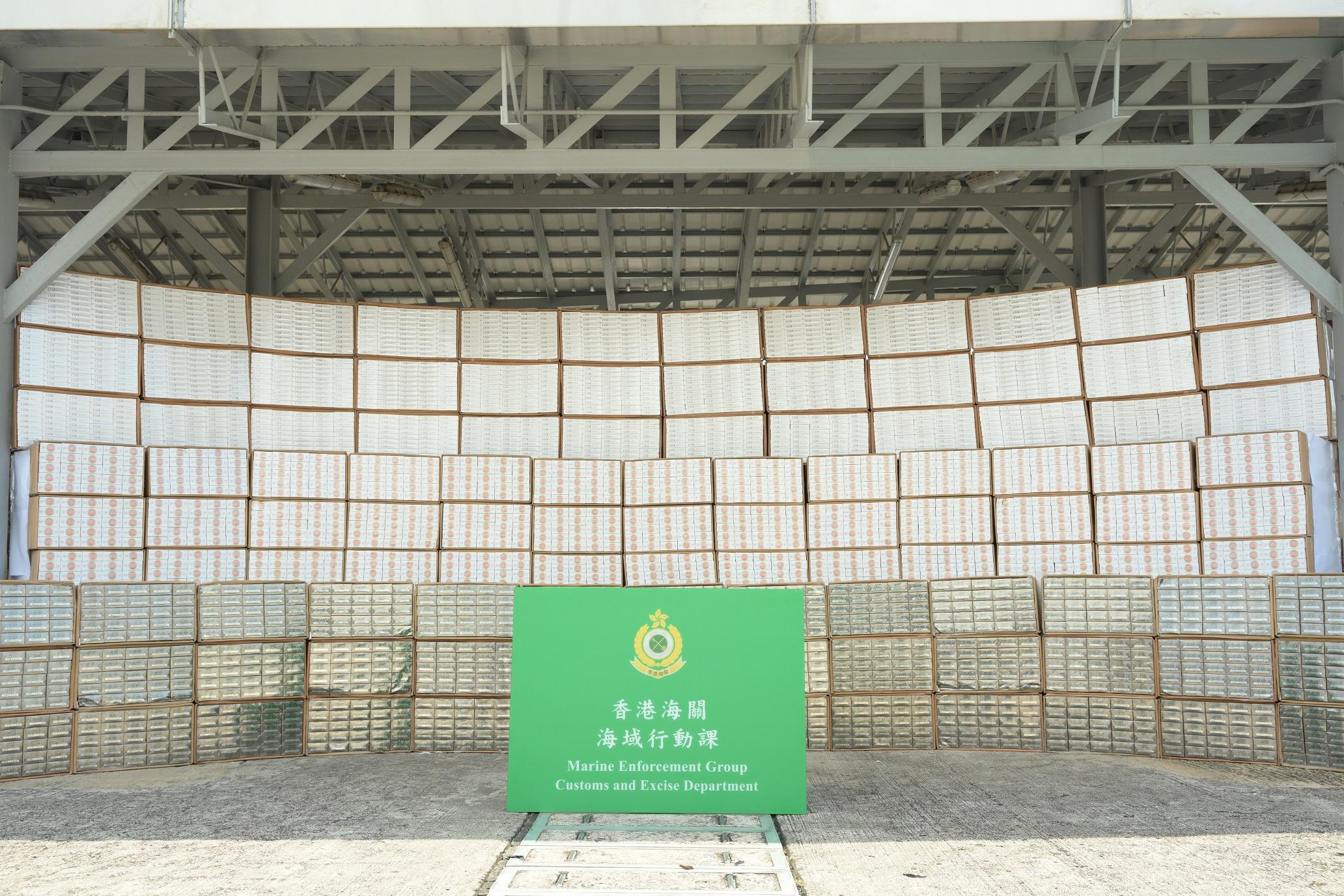
     â€‹Hong Kong Customs conducted an enforcement operation yesterday (September 12) in waters west of Aberdeen and seized about 7.4 million suspected illicit cigarettes, with an estimated market value of about $33 million and a duty potential of about $24 million, in a tugboat.

     During the anti-smuggling operation conducted in south-western waters of Hong Kong yesterday early morning, Customs, through intelligence analysis, spotted a suspicious tugboat heading from the south of Lamma Island to Aberdeen. Officers then immediately intercepted the tugboat and found a total of 730 carton boxes which contained about 7.4 million suspected illicit cigarettes inside two suspected altered compartments of the boat. The tugboat was also detained for further investigation.

     During the operation, Customs officers arrested three men, aged between 26 and 57, who declared themselves to be the crew members. They were suspected to be connected with the case.

     An investigation is ongoing. Customs will continue to trace the source and flow of the illicit cigarettes. The likelihood of further arrests is not ruled out.

     Smuggling is a serious offence. Under the Import and Export Ordinance, any person found guilty of importing or exporting unmanifested cargo is liable to a maximum fine of $2 million and imprisonment for seven years.

     Customs reminds members of the public that it is an offence to buy or sell illicit cigarettes. Under the Dutiable Commodities Ordinance, anyone involved in dealing with, possession of, selling or buying illicit cigarettes commits an offence. The maximum penalty upon conviction is a fine of $1 million and imprisonment for two years.

     Members of the public may report any suspected illicit cigarette activities to Customs' 24-hour hotline 2545 6182 or its dedicated crime-reporting email account (crimereport@customs.gov.hk) or online form (eform.cefs.gov.hk/form/ced002).

Photo  


Two more new drugs approved under “1+” mechanism

     A Government spokesman announced today that two more new drugs submitted for registration under the new drug approval mechanism ("1+" mechanism) announced in the Chief Executive's 2023 Policy Address have been approved for registration in Hong Kong. These new oral drugs in two different dosages are used to treat hypercalcaemia in patients with parathyroid carcinoma and in certain patients with primary hyperparathyroidism, bringing more treatment options for patients.
      
     The Hong Kong Special Administrative Region (HKSAR) Government has implemented the "1+" mechanism since November 1, 2023. Under the "1+" mechanism, new drugs used for treatment of life-threatening or severely debilitating diseases that are supported with local clinical data are only required to submit approval from a drug regulatory authority in one of the reference places (instead of two originally) and be recognised by local experts to be registered in Hong Kong.
      
     The above products for hypercalcaemia have been approved by the drug regulatory authority in Japan and submitted for registration application in Hong Kong under the "1+" mechanism. Having considered the clinical data submitted by the applicant and advices given by local expert, the Registration Committee under the Pharmacy and Poisons Board of Hong Kong considered that the new drugs satisfied the criteria of safety, efficacy and quality, and approved the registration of the new drugs. The Department of Health (DH) has already notified the applicant of the result of the application. The HKSAR Government will also complete the relevant registration processes in accordance with established procedures.
      
     The Chief Executive's 2023 Policy Address announced that the Government will leverage the medical strengths of the HKSAR with the long-term objective of establishing an authority that registers drugs and medical devices (medical products) under the "primary evaluation" approach, i.e. to directly approve applications for registration of medical products in Hong Kong based on clinical trial data, without relying on registration approval from other drug regulatory authorities. This will help accelerate the clinical use of new drugs and medical devices, and foster the development of industries relating to the research and development and clinical trials of medical products, developing Hong Kong into an international health and medical innovative hub.
      
     Since the implementation of the "1+" mechanism, two new drug applications for treating metastatic colorectal cancer and one for treating paroxysmal nocturnal haemoglobinuria were approved under the "1+" mechanism in December 2023 and July 2024 respectively. The first two new drugs approved under the "1+" mechanism for treating metastatic colorectal cancer have been listed under the category of "Special Drug" on the Hospital Authority (HA) Drug Formulary. Patients prescribed these two drugs under specified clinical applications are only required to pay standard fees and charges, which are substantially subsidised, greatly alleviating their financial burden. It is estimated that around 300 patients will benefit every year. The HA will encourage drug manufacturers or suppliers to apply for local registration of unregistered drugs with ongoing needs and continue to liaise closely with the DH regarding the "1+" mechanism.
      
     At the same time, the DH has been promoting the "1+" mechanism through different channels, and has received over 250 enquiries involving more than 70 pharmaceutical companies. More companies have expressed interest in applying for registration under the "1+" mechanism. While the "1+" mechanism brings good drugs for use in Hong Kong, the requirements of local clinical data and recognition by relevant expert for application for registration (the "+" under the "1+" mechanism) will ensure all the pharmaceutical products approved for registration have fulfilled the stringent requirements of safety, efficacy and quality. It will also strengthen the local capacity of drug evaluation and enhance the development of relevant software, hardware and expertise.


Fragrant flowers to go on display at Hong Kong Park (with photos)

     Members of the public will have a chance to take a closer look at different species of fragrant flowers at an exhibition to be held from September 20 (Friday) at the Forsgate Conservatory in Hong Kong Park under the Leisure and Cultural Services Department.

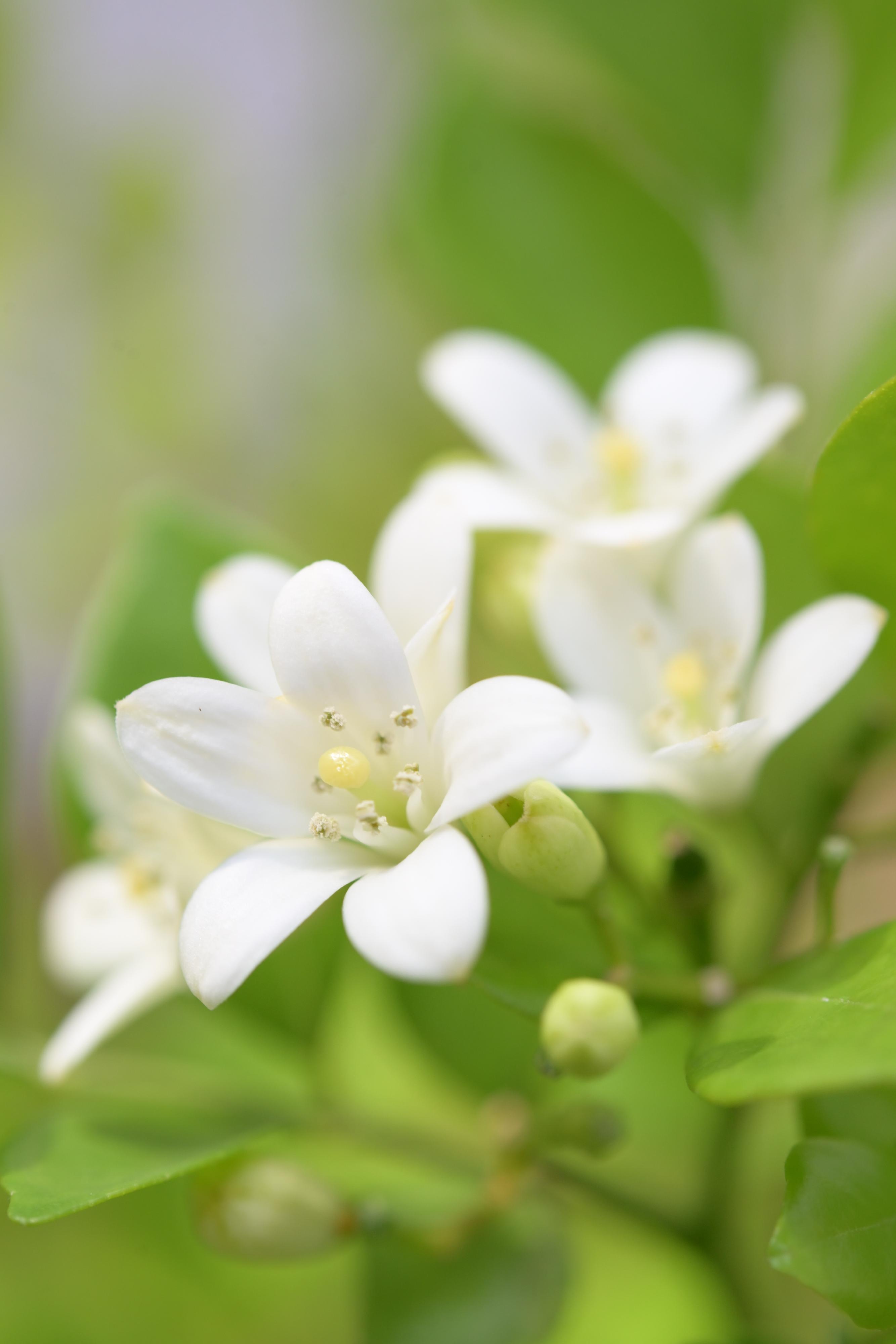
     Plants with fragrant flowers are commonly used in gardening and home greening because of the rich, pleasant and refreshing scents that they emit. A rich variety of about 700 fragrant flowers will be showcased at the upcoming exhibition, including Arabian jasmine, Orange-jessamine, Crepe jasmine, Kwai-fah and Banana shrub.

     As the national flower of the Philippines and Indonesia, Arabian jasmine is suitable for home cultivation. Its white flowers are fragrant and can be used for making tea.

     The white flowers of Orange-jessamine have a powerful fragrance. It is a common choice for hedges due to its resilience.

     The refreshing scent of the white flowers of Crepe jasmine makes it a popular choice for garden landscaping.

     With tiny yellowish-white flowers that emit long-lasting and refreshing fragrance, Kwai-fah is often used in making desserts, brewing scented tea and creating floral liqueur.

     The flowers of the Banana shrub are pale yellow with a rich, banana-like perfume. The Chinese name of the plant means "wearing a smile", because the flowers, usually partially open, resemble a person with a shy and reserved smile.

     In addition to the presentation of over 40 species of fragrant flowers, display boards will also be set up to introduce their characteristics, planting tips and propagation methods. Park visitors are invited to attend the exhibition, which will be open to the public free of charge from 9am to 5pm daily from September 20 to October 31 at the Forsgate Conservatory of Hong Kong Park, 19 Cotton Tree Drive, Central.

Photo  Photo  Photo